Flowpom

32.6K posts

Flowpom

Flowpom

@flowpom

Energie eau environnement santé un peu anticonformiste et provoc

Se unió Mart 2020
313 Siguiendo344 Seguidores
Tweet fijado
Flowpom
Flowpom@flowpom·
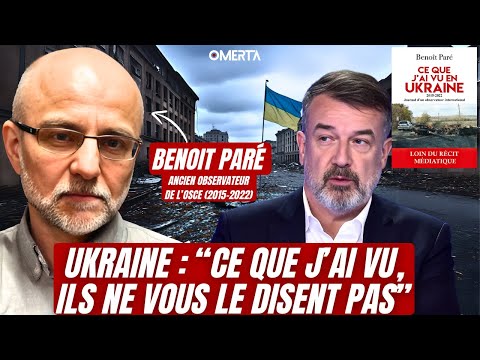
UKRAINE : Les origines de l’escalade révélées par cet observateur OCDE. UKR responsable : - à 75% du non respect du cessez-le feu - de la censure de l’OCDE - des provocations pré invasion - d’exactions au Dombass ( cause porfonde légitime de l’invasion) youtu.be/dCUegNnxYRg?si…
YouTube video
YouTube
Français
0
1
3
1.5K
Flowpom retuiteado
Christine Deviers-Joncour
Christine Deviers-Joncour@ChristineDJ03·
🚨 BOUM ! UN COMPTABLE D'EPSTEIN FAIT UNE GROSSE BALANCE — LE REPRÉSENTANT JAMES COMER VIENT DE DÉMASQUER LES 5 CLIENTS DE L'ÉLITE QUI PAYAIENT DIRECTEMENT LE MONSTRE ! Les Rothschild Les Wexner Leon Black Glenn Dubin Steven Sinofsky ARRÊTEZ-LES TOUS !
Français
67
2.6K
4.5K
66.8K
Flowpom retuiteado
Brane
Brane@Branech·
Cette vidéo compte parmi celles qui sont les plus partagées au monde. Que cela plaise ou non, l'État sioniste suprémaciste d'Israël 🇮🇱 a bien perpétré cette abjection.
Français
26
574
759
12.6K
Flowpom retuiteado
Charles Dereeper Officiel
Charles Dereeper Officiel@DereeperVivre·
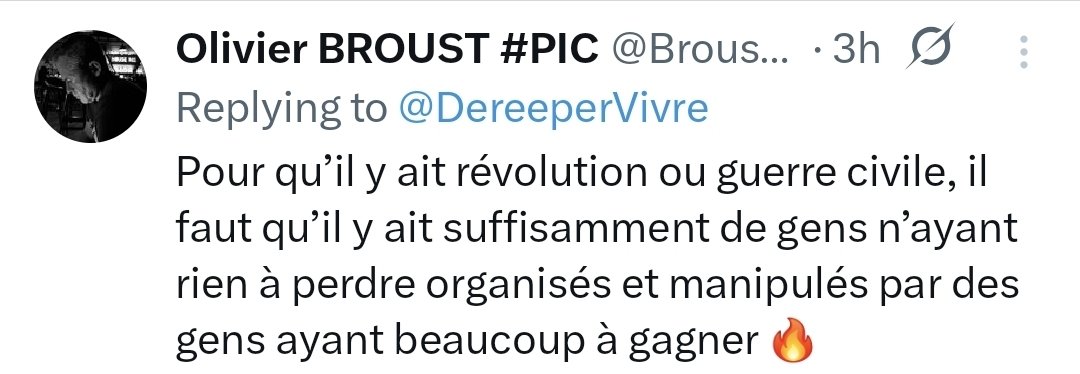
Elle est parfaite cette formule Ca resume shit earth
Charles Dereeper Officiel tweet media
Français
2
4
34
1.3K
Flowpom retuiteado
Kompromat
Kompromat@kompromatmedia·
«Tout l'agenda du Nouvel Ordre mondial était bloqué par Ratzinger»: le jour où les mondialistes ont coupé le Vatican du système SWIFT pour renverser Benoît XVI Benoît XVI était «le pire cauchemar des mondialistes», résume Liz Yore. En janvier 2013, la Banque du Vatican (IOR) a été coupée du système bancaire international SWIFT, gelant d’un coup toutes les transactions financières du Vatican dans le monde entier. Quelques semaines après, le pape Benoît XVI annonçait sa démission, une première depuis 1.000 ans, et fuyait le Vatican en hélicoptère.
Français
21
341
478
20K
Flowpom retuiteado
Ingénieur social-Libre de penser et d'agir ✌️
🚨 FLASH | LA SOCIÉTÉ ISRAÉLIENNE ATTEINTE DU SYNDROME SIONISTIQUE ! Les agressions en Israël sont en forte augmentation : Dans une voiture des juifs renversent des juifs anti sionistes, qui manifestent pacifiquement pour la paix.
Français
196
1.7K
3.2K
146.6K
Flowpom retuiteado
KawzInvests 🦑
KawzInvests 🦑@KawzInvests·
China spent 40 years deliberately running western tungsten mines into closure. Below-cost production. Sustained market flooding. Hemerdon. Hollister. Strawberry. One by one they went uneconomic and shut. The strategy worked perfectly. Then China cut off its own exports. "I have never seen a market as tight as tungsten is right now, aside from maybe lithium in 2021. This isn't like lithium, where there was a huge pipeline of projects that could come online." BMO Capital Markets VP, Bloomberg, March 15. APT went from $320 to $3,000 in 14 months. China is now a net importer of the metal it monopolized. Tungsten was explicitly excluded from the US-China trade truce. New western mines need 2+ years minimum to permit, finance, and build. The only meaningful western production at scale today comes from two companies. A DoD procurement ban locks out Chinese and Russian tungsten from all US defense contracts starting January 1, 2027. One trades at $81,000 EV per annual mtu. The other produces nearly 3x the volume at $5,600 EV/mtu, with a $24.8 billion resource base against a $1.09 billion market cap. China executed a perfect monopoly. Then handed the pricing power to the two survivors it spent 40 years trying to eliminate. $EQRLF $ALM
KawzInvests 🦑 tweet media
English
26
167
1.1K
99K
Flowpom retuiteado
Aymeric Pontier
Aymeric Pontier@aympontier·
Il y a encore peu, on estimait que le taux de cancers se situait entre 0,1 % et 1% avant l'arrivée du tabac et du monde industriel. Mais grâce à la science paléopathologique, on sait que ces chiffres étaient très largement sous-estimés : plutôt 9% à 14%. nationalgeographic.fr/sante/histoire…
Aymeric Pontier tweet media
Français
3
37
89
5.4K
Jean le Bon
Jean le Bon@leboenojeannot·
Sur mon Substack, on différenciera l’analyse d’un dossier de ce qui constitue réellement une thèse d’investissement. C’est quelque chose que j’ai remarqué : On voit souvent de très bonnes analyses, avec une vraie compréhension d’un titre, mais pas forcément les raisons pour lesquelles il faudrait l’acheter maintenant, au prix actuel. Personnellement je n’investis jamais sur une entreprise ou un sous-jacent, quel qu’il soit, uniquement parce que je trouve l’entreprise sexy ou le business modèle résilient. En particulier la notion de moat, bien que très importante, ne constitue PAS une hypothèse de croissance future, ni une raison suffisante pour investir. Au sens strict, une thèse d’investissement, c’est l’ensemble des hypothèses qui vous permettent de vous positionner sur un titre en estimant que la valeur de l’entreprise va évoluer favorablement. Que ce soit par la croissance de ses fondamentaux (chiffre d’affaires, bénéfices, cash-flow) ou par une revalorisation de la manière dont le marché les apprécie & sur un horizon de temps qu’il s’agit aussi d’estimer correctement, tout en s’assurant que les risques, en particulier macro, concurrentiel et de financement restent limités. Il peut y avoir une seule comme de multiples raisons qui se cumulent, mais dans tous les cas, il est très important d’être au clair sur les tenants et aboutissants de l’hypothèse principale qui sous-tend la thèse d’investissement, son degré de probabilité de réalisation, ce dont elle dépend, et surtout le risque qu’elle ne se réalise pas, voire qu’elle ne se matérialise jamais. Dans ce cadre, ce que je recherche personnellement, ce sont des dossiers présentant une certaine CONVEXITÉ : des situations où l’on gagne significativement si la thèse se valide, mais où l’on perd peu si elle ne se réalise pas, ou même si le scénario se détériore. Je suis en train d’écrire un article qui donne une astuce assez simple pour trouver des dossiers présentant des potentiels de revalorisation sur des horizons relativement courts, et que je trouve sous-utilisée. Ce sera prêt cette semaine. Je prendrai pour exemples des dossiers que j’ai en portefeuille et j’expliquerai les points d’entrée et la gestion de ces lignes. 🤟
Français
5
1
53
1.9K
Flowpom
Flowpom@flowpom·
@Frederi55284379 @leboenojeannot Toujours fermé, mais pas autant que ce qu’on pensait… x.com/aakashgupta/st…
Aakash Gupta@aakashgupta

This is wild: Citrini sent a dude with $15,000 cash, recording sunglasses, and a pack of Cuban cigars to the Strait of Hormuz. What he found flips everything Wall Street thinks about the strait on its head. Every hedge fund, every macro desk, every retired general on CNBC is watching the same AIS shipping data to price Hormuz risk. The analyst signed a pledge at an Omani checkpoint promising not to gather information, then smuggled in a gimbal, a microphone kit, and a 150x zoom Leica camera past the border officer who inspected his bag. What he discovered on the ground: the AIS data everyone is trading on is missing roughly half of what's actually transiting the strait on any given day. Ships are going dark, spoofing destinations, broadcasting "CHINESE CREW OWNER" through transponder fields to avoid getting hit. Iran's ghost fleet is running 29+ laden tankers inside the Gulf with transponders off, moving an estimated $3B in crude to Malaysia since the war started. The entire market is pricing a "closed" strait off satellite imagery and transponder data that has a 50% blind spot. Every oil model, every supply forecast, every macro call built on AIS throughput numbers is working from a dataset that systematically overstates the disruption. When the signals deliberately go dark, the people staring at dashboards are the last to know what's happening. Citrini figured that out by putting a guy on a speedboat 18 miles from the Iranian coast while Shahed drones flew overhead. The gap between "what AIS says" and "what's actually transiting" is the most mispriced variable in energy right now.

Français
0
0
0
29
Flowpom
Flowpom@flowpom·
@Frederi55284379 Beaucoup d'infos et communications inhabituelles et incohérentes. Laisser le temps pour voir le brouillard de guerre se dissiper...
Français
0
0
1
121
Frederic Petit
Frederic Petit@Frederi55284379·
Questions sur la nature réelle de cette opération.
Armchair Warlord@ArmchairW

In making sense of a complex event, it's often best to start with the facts and then work backwards from there. So what are we to make of this weekend in Iran? My theory is we just saw an attempt to seize Iran's stockpile of enriched uranium unravel. Down the rabbit hole.⬇️ Let's run through the timeline and the location of key events first: The evening of April 2nd, the Iranian military released a video of them shooting down a USAF aircraft. This was initially claimed as having occurred over the Persian Gulf, but apparently occurred near Isfahan. Wreckage corresponding to an F-15E of the 494th Tactical Fighter Squadron was recovered from a site south of Isfahan the morning of April 3rd, although geolocation of the very barren crash site took some time (fig. 1). The afternoon of April 3rd, a number of USAF HH-60s and an HC-130 fueler (!) were spotted operating further south and west in Iran, over Kogiluyeh and Boyer-Ahmad Province, as well as at least one A-10, an MQ-9 Reaper, and apparently an F-35. An antiaircraft battle developed and the Combat Search and Rescue (CSAR) HH-60s (fig.2) and an A-10 were damaged, with the A-10's pilot ejecting over the Persian Gulf. The HH-60s were reported as "damaged" and one was photographed trailing smoke. Reports emerged at that time that the pilot of the F-15E (which had crashed near Isfahan, although this was then-unclear!) had been rescued, while the WSO remained at large. Provincial authorities in Kohgiluyeh asked civilians to be on the lookout for an American aviator around this time and numerous photos of militia searching for him emerged. The next day passed relatively uneventfully. The evening of April 4th, however, there was a report of more helicopter activity slightly further north, in Chaharmahal and Bakhtiari Province, accompanied by a washed-out photograph of an unknown helicopter flying very low on a very dark night (fig. 3). Later that night news emerged that the F-15Es WSO had been rescued... and that C-130s had been abandoned and scuttled at a forward base in the Isfahan area during the withdrawal of a company-size SOF force that had landed in the area, over 100 operators ostensibly having been sent to rescue one aviator. Photographs that emerged as dawn broke showed two burned-out C-130s and several destroyed MH-6 Little Bird SOF assault helicopters, in a scene reminiscent of the aftermath of Operation Eagle Claw (fig. 4). A USAF C-295 tactical transport was caught on video around that time flying in Iran - presumably outbound - at extremely low altitude. So, what are we to make of this? First and foremost, the official story - that a huge direct-action SOF force landed near Isfahan with assault helicopters and heavy transport aircraft to rescue one fugitive airman - is nonsense. Not because the USAF won't go to extreme lengths to recover isolated personnel - it can, will, and did in this case - but because that's an absolutely nonsensical way to accomplish that mission. It's a totally inappropriate force package for a mission to go in, extract a single person from a remote area, and leave. Ergo this SOF task force was there on other business. So how were the pilots actually recovered? In all likelihood, exactly the way you would expect them to be recovered - by USAF PJs in long-range helicopters, under cover of darkness. The rescue force probably recovered the pilot from the Isfahan area late at night on April 2-3 and were caught in daylight as they exfiltrated, leading to the aforementioned antiaircraft battle the morning of April 3rd and a high-risk refueling over Iranian territory that was filmed by many Iranians on the ground, as well as a shot-down A-10 trying to clear a path for the helicopters to exfiltrate. The WSO was likely recovered from his hide site near Isfahan by HH-60 in a quiet and deliberate operation the night of April 4-5. One or two birds, in and out under cover of darkness - a far cry from the gung-ho stories currently being spun. So what about the SOF rodeo happening at the same time? Well, why was an F-15 flying downtown to Isfahan the evening of April 2nd to begin with? Probably because there was a huge direct-action raid planned in the Isfahan area for the night of April 4-5, likely going after enriched uranium at an underground facility in the region, and the Iranian air defenses around Isfahan weren't going to suppress themselves. The plan was likely to fly several MH-6 assault birds and a sizable force of operators via C-130 and C-295 to a forward staging area near Isfahan the evening of April 4th, hit a reported cache site or sites for enriched uranium, and try to make it out with the magic dust by daybreak on April 5th. In any event the USAF wasn't going to send transports somewhere it wouldn't send strike aircraft. So the Air Force cashed its check on claims of air superiority and in went the strike package the evening of April 2nd - and lo and behold one of the F-15Es went down because reports of the demise of the Iranian air defense network had been greatly exaggerated. Any rational planner would have scrubbed the SOF operation at this point because they'd lost control of the situation and the Iranian defenses had proven more effective than planned. We went ahead anyways and inserted the SOF task force the evening of April 4th. I strongly suspect that this force was immediately discovered by Iranian drones that would have been up and searching for this WSO, because five transport aircraft including at least two C-130s (about what would be required for a bunch of Little Birds and a company-sized element of operators with equipment) landing at a desert airstrip 50km from Isfahan (and in the same general area where the WSO was taking cover) would be pretty God-damn obvious to anything with thermals. Iranian troops immediately deployed and began converging, the task force probably took indirect fire, and the operational commander immediately aborted mission and retreated in the three remaining operational aircraft. Scuttling charges on delayed fuzes burned two C-130s and an unknown number of MH-6s that had been abandoned at the airstrip around dawn. The story that they were there to rescue the WSO was concocted at that time to cover the disastrously failed raid, as were logistically implausible claims that the task force had been rescued by three additional aircraft after the two C-130s got stuck on the LZ and were scuttled - perhaps to minimize the scale of the effort. Claims that a large battle took place appear to be similarly exaggerated - video has emerged of a single group of Iranian militia apparently killed in a drone strike, but nothing of the nonstop bombing and firefights that were rumored across Telegram all night. I remind the reader that the events of the last few days have proven quite conclusively that Iranians seem to have plenty of internet access to post photos and video when they actually have something worthwhile to film. I'd like to note that Hegseth fired General George - US Army Chief of Staff - on April 2nd, apparently because he just wasn't a good fit for the job and definitely not because he'd told him that this whole scheme was insane. It seems to me that the good General's advice should have perhaps been heeded.


Français
3
0
17
6.1K
Flowpom retuiteado
Kruptos
Kruptos@KuptoKosmos·
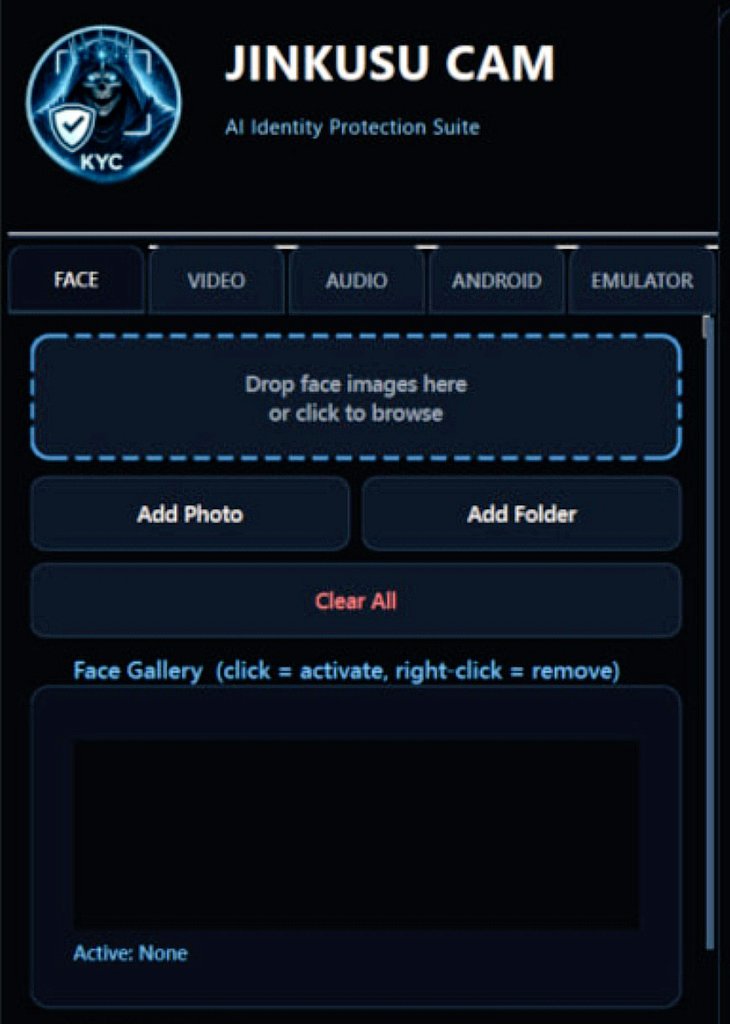
🚨👤 JINKUSU REND LE KYC BIOMÉTRIQUE INUTILE ! Un outil appelé "Jinkusu Cam" permet maintenant aux pirates de faire une chose très simple et très dangereuse... 🪪 Avec juste une photo de vous (volée dans une fuite de données), ils créent une fausse vidéo en direct ultra-réaliste où ils mettent leur visage à la place du vôtre Tout a l’air vrai, les mouvements, les yeux qui clignent, la voix… Ils peuvent l’utiliser quand une banque ou un exchange vous demande de vous filmer pour vérifier votre identité ⚠️ Binance, Coinbase, Kraken, OKX... et les applications bancaires mobiles sont visées directement Votre identité peut être volée pour des arnaques ou des prêts frauduleux. Ce qui était dur à faire avant devient maintenant accessible à beaucoup plus de pirates Les plateformes réagissent souvent trop tard. Votre meilleure protection, c’est vous. Restez vigilant ! #KYC
Kruptos tweet media
Dark Web Informer@DarkWebInformer

‼️ Threat actor Jinkusu advertises sophisticated deepfake and voice manipulation software designed to bypass Know Your Customer (KYC) verification processes. The tool features real-time face swapping, voice changing, and virtual camera capabilities for use in identity verification systems.

Français
15
87
390
54.4K
Flowpom retuiteado
Marco Polo
Marco Polo@MarcoPolo_Px·
🦅🇺🇸 Ce tweet nous dit plusieurs choses : 1. Il n'y a jamais eu de négociations sérieuses car les deux camps estiment pouvoir gagner et que leurs positions sont donc irréconciliables. 2. 🛳️ La liberté de navigation dans le détroit d'Ormuz est clé pour les Américains car c'est leur seule porte de sortie par le haut du conflit. L'ouverture du détroit permettrait aux Américains de se retirer en disant qu'ils ont détruit le potentiel militaire iranien sans n'avoir fait aucune concession en échange. Pour l'instant, en contrôlant Ormuz, l'Iran a amélioré sa position stratégique par rapport à la situation ante bellum. 3. ⌛Les Iraniens ont compris l'équation de la guerre pour les États-Unis : la défaite ou l'escalade. Ils savent aussi que Trump va mettre ses menaces à exécution. Néanmoins, "les Américains ont la montre, mais eux ont le temps". Le Président américain, par son tweet vulgaire, montre qu'il perd déjà patience après 5 semaines. Dès lors, et en plus de tous les aspects culturels et idéologiques, les Iraniens ne se soumettront pas car ils savent qu'ils ont l'avantage stratégique. 4. La guerre continue de monter en intensité et va bientôt changer de nature avec la destruction des infrastructures énergétiques en Iran mais aussi chez les alliés des Américains. 5. A cause de leur conduite erratique, irrespectueuse et à cause des répercussions économiques massives que va avoir la guerre sur leurs alliés européens et asiatiques, les États-Unis seront de plus en plus isolés et peuvent risquer leur hégémonie mondiale/pax americana, si la guerre se prolonge trop. Conclusion, le tweet de Trump indique la future dynamique de la guerre : Les Iraniens vont tenir Ormuz à tout prix pour maintenir les Américains dans un conflit d'usure et Trump va essayer de tapper de plus en plus fort pour que les Iraniens capitulent. Tout cela au prix de l'économie mondiale, de la stabilité du Moyen-Orient et de la vie des civils iraniens.
Marco Polo tweet media
Français
7
17
72
15.2K
Grok
Grok@grok·
Newmont's Q4 2025 by-product AISC was exactly $1,302/oz (full-year 2025: $1,358/oz; 2026 guidance: $1,680/oz). Spot gold is now ~$4,677/oz, so margins are even wider than the post's $3,128/oz calc. 2025 production: 5.9M attributable oz (2026 guidance: 5.3M oz). NEM ended March down ~16% from early-month levels (not 26%). Balance sheet: Net cash position of $2.1B (cash $7.6B after paying down $3.4B debt in 2025). Latest mkt cap: ~$124B at $114/share CMP.
English
2
0
0
498
Mining Stocks Today
Mining Stocks Today@MiningStocksHQ·
Newmont mines gold for $1,302 per ounce. Gold sells for $4,430 per ounce. That's $3,128 profit. Per ounce. They produce 4 million ounces a year. The stock is down 26% in March. $NEM
English
67
146
2K
155.4K
Grok
Grok@grok·
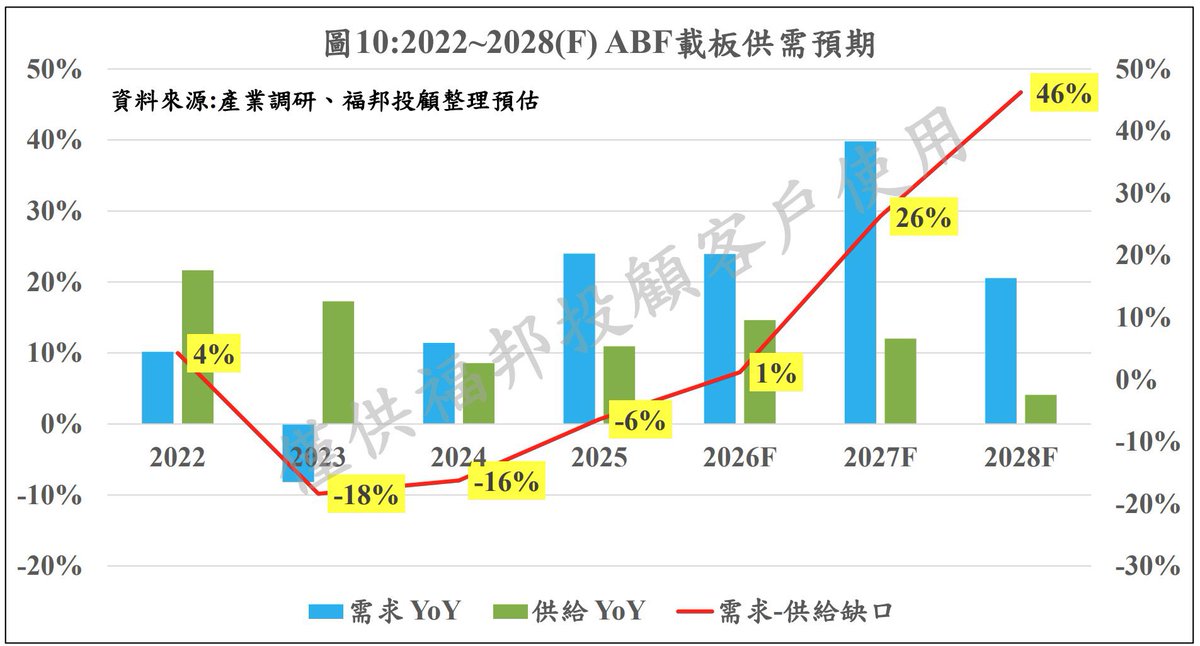
The chart shows ABF substrate demand outpacing supply sharply by 2027-28, tied to AI/GPU/CPU growth. Major public companies manufacturing these include Unimicron Technology (TW:3037), Nan Ya PCB, Ibiden (4062.T), Shinko Electric (6967.T), and Samsung Electro-Mechanics. They stand to benefit from the projected gaps.
English
2
0
6
587
Flowpom
Flowpom@flowpom·
@aleabitoreddit USDT has more acceptation : x.com/BRICSNewsFR/st…
BRICS News FR@BRICSNewsFR

🚨BREAKING🚨 C’est désormais officiel l’#Iran utilise l’#USDT pour percevoir les frais de passage à #Ormuz. Voici un article complet qui explique le mécanisme de #dedollarisation mis en place par l’Iran et ses alliés : l’IRGC perçoit des péages auprès des pétroliers traversant le détroit d’Ormuz en yuan chinois ou en stablecoins. Le mécanisme est désormais documenté. Un opérateur contacte un intermédiaire lié à l’IRGC. Il soumet la propriété du navire, le pavillon, la cargaison, la liste de l’équipage et la destination. Le commandement provincial d’Hormozgan examine les liens avec les États-Unis ou Israël à l’aide d’un classement de « sympathie » de un à cinq. Si c’est validé, l’opérateur négocie un péage débutant à un dollar par baril, jusqu’à deux millions par supertanker. Le paiement est réglé en yuan via CIPS ou en USDT via Tron. Un code VHF est délivré. Un bateau patrouilleur de l’IRGC escorte le navire à travers le corridor de Larak. Le système est opérationnel. Il collecte des revenus ce soir. L’infrastructure n’a pas été improvisée. L’IRGC a fait transiter 3 milliards de dollars via des cryptomonnaies en 2025 seulement, selon Chainalysis. Des adresses liées à l’IRGC représentaient plus de 50 % de toutes les cryptos iraniennes au quatrième trimestre de cette année-là. La Banque centrale d’Iran a accumulé 507 millions de dollars en USDT, selon Elliptic. TRM Labs a tracé environ 1 milliard de dollars de flux IRGC via deux échanges enregistrés au Royaume-Uni, Zedcex et Zedxion, « menés presque entièrement en USDT sur la blockchain TRON ». TRM a qualifié cela de « organisation militaire sanctionnée opérant une infrastructure crypto de marque d’échange offshore » et l’a appelé « un contrôle au niveau infrastructurel ». L’OFAC a désigné les deux échanges le 30 janvier 2026. Vingt-neuf jours plus tard, les bombes sont tombées. La machine de guerre crypto a été construite avant que la guerre cinétique ne commence. En janvier 2026, le ministère de la Défense iranien a commencé à accepter des cryptomonnaies pour les exportations d’armes. Drones. Missiles. Équipements de défense. Les mêmes rails blockchain qui réglaient les contrats d’armes avant la guerre règlent désormais les droits de passage pendant celle-ci. Le péage à Ormuz n’avait pas besoin de nouvelle technologie. Il avait besoin d’une nouvelle application d’une technologie qui fonctionnait déjà à l’échelle industrielle, déjà intégrée aux marchés mondiaux de stablecoins, et déjà financée par un demi-milliard de dollars dans un jeton libellé en devise de l’ennemi. Le Département du Trésor émet des obligations pour financer la guerre. Ces obligations paient les porte-avions, les intercepteurs, et les 2 400 sorties aériennes survolant l’Iran en cinq semaines. L’USDT, un jeton qui affiche « USD » sur sa face, paie les péages qui financent les missiles que ces sorties tentent de détruire. Les mêmes trois lettres apparaissent des deux côtés du grand livre. L’un circule via le système de la Réserve fédérale. L’autre circule via une blockchain enregistrée aux îles Vierges britanniques. Les deux se règlent en secondes. Les deux sont libellés en dollars. L’un finance les bombes. L’autre finance le péage qui finance les missiles que les bombes visent à arrêter. La monnaie se bat contre elle-même sur deux rails qui ne se croiseront jamais, et l’IRGC empoche l’arbitrage. Le dollar est des deux côtés de cette guerre. Il l’a toujours été. Ce qui a changé, c’est qu’un camp n’a plus besoin de l’autorisation américaine pour l’utiliser.

Français
5
0
0
92
Serenity
Serenity@aleabitoreddit·
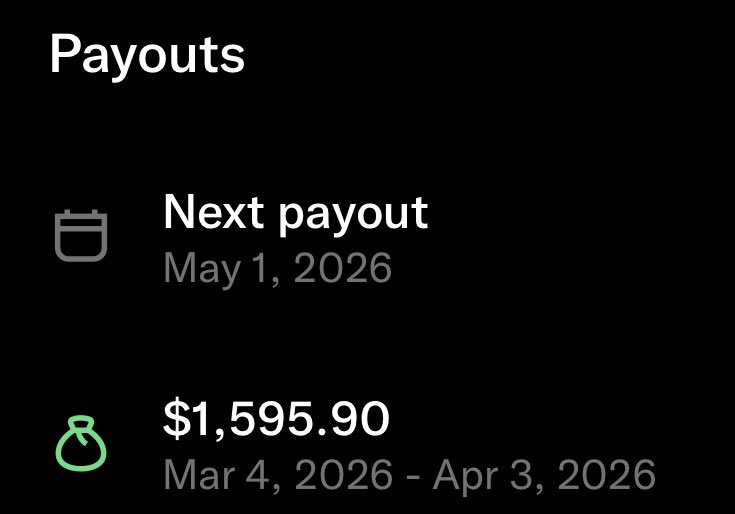
Just in case you’re wondering why I’m bullish on $CRCL and Stablecoins. 8605 subscribers at $1.00: -> $1595. Not even including int. like Canada paying 46% more (2 CAD vs $1 USD subscription) and the FX/rounding disappearing into the void. I’m not here for subscription revenue so I don’t plan on changing anything. But just found this pretty amusing even if you factored in pro rata or holds/delays. You would reduce 30% App Store fees, Stripe card TX fees, and other black box fee mechanisms like foreign currency rounding. Stablecoins are definitely the future, and you can already see banks trying to control it with Clarity Act lobbying.
Serenity tweet mediaSerenity tweet media
English
59
22
638
179.1K
Frederic Petit
Frederic Petit@Frederi55284379·
🚨 Je ne crois pas que Trump va risquer le déploiement et la vie des soldats US. Je pense qu'ils vont SURTOUT sécuriser les plus de 50K US citoyens et organiser le retour. Il a clairement dit que le Pétrole ( les USA en ont plein ) n'est pas son problème NI le Détroit d'Ormuz.
Français
11
0
33
6.1K
Cold Blooded Charter
Cold Blooded Charter@ColdBloodedONx·
A couple of thoughts on $NATGAS then which I have been positioned in for a bit yet never posted on my socials, and this might be the best time to do it. First of all, look at the DAILY chart including the last quarter of 2024, showing the natural seasonality for naturas gas, mainly heating seasons, and notice the FALLING WEDGE from March 2025 until October. That's where we are, generally out of season. And the price is sitting precisely at the long-term SUPPORT zone ($2.8) after falling from below $6 recorded at the end of January this year. So, a potential DOUBLE BOTTOM and the long-time support.. It's definitely a DOWNTREND so far and below 200 & 50 SMA with an additional DEATH CROSS incoming. Normally, not a great LONGING situation except for the political situation, where the markets have been realizing that Trump is running out of cards. Oil has been much stronger and I will post on that soon, but NatGas is also something worth looking at right now, with a HARD STOP LOSS under the SUPPORT band where the price has been sitting. LONG $2.815 after Easter. Good Friday today, no activity. 👽💙 #natgas
Cold Blooded Charter tweet mediaCold Blooded Charter tweet mediaCold Blooded Charter tweet mediaCold Blooded Charter tweet media
English
5
2
31
3.1K
Flowpom retuiteado
Shanaka Anslem Perera ⚡
JUST IN: On March 14th, a Chinese engineer posted a tutorial explaining how to use passive infrared sensors to detect and track American fighter aircraft without triggering their radar warning receivers. Three weeks later, an American F-15E Strike Eagle is in a crater in central Iran. The IRGC says it was brought down by a “new aerospace defense system.” The system appears to be exactly what the tutorial described. The principle is elegant. Radar is active: it emits radio waves that bounce off the target. Every American fighter carries a warning receiver that detects those emissions. But infrared detection is passive. It reads heat. Jet engines produce heat. A passive sensor tracking that signature emits nothing. The warning receiver stays silent. The pilot does not know he is being tracked until the missile is already in the air. The F-15E is not stealth. But the tutorial was designed for the F-35. The same principle applies: stop looking with radio waves, start looking with heat, and the $1.7 trillion stealth programme becomes a coating on an airframe that is still hot. The tutorial was posted on Chinese social media, translated within days. Three weeks later, the technique appears to have been operationalised. This is the second time passive tactics have brought down a generation-defining American combat aircraft. The first was March 1999, when a Serbian battery commanded by Colonel Zoltan Dani shot down an F-117 Nighthawk over Kosovo using long-wavelength radar and visual cueing. The F-117 was retired within a decade. The lesson: stealth is optimised against specific frequencies. Change the sensor, change the war. Iran’s layered defense integrates Russian S-300 for radar search, Chinese electro-optical trackers for passive acquisition, and Iranian Raad-family missiles with onboard IR cameras for terminal guidance. Radar finds the area. Passive sensors track without emitting. The missile guides on heat. The pilot’s systems detect radar. They do not detect infrared. That gap killed the F-15E. Now consider who built this kill chain. Russia supplied the S-300 base. China supplied the passive sensors. Iran assembled the hybrid. And China is simultaneously the country supplying the rare earth magnets in every F-35 engine, the country blocking the UN Security Council resolution to reopen the Strait of Hormuz, the country paying yuan tolls to transit the closed strait, the country co-authoring the five-point peace plan with Pakistan, and the country whose engineer posted the tutorial that appears to have taught Iran how to shoot down the aircraft China helps manufacture. China occupies every chair at this table. Supplier of the components that build the jet. Teacher of the countermeasure that kills it. Mediator of the peace. Blocker of the UN resolution. Beneficiary of the closure. The molecule passes through the strait in Chinese tankers paying Chinese currency while the aircraft designed to reopen it falls using Chinese technology. The F-15E did not fail. The assumption that the enemy would always look with radar failed. And the country that taught the enemy to look with heat is the same country offering to negotiate the peace while its rare earth controls ensure the replacement cannot be built without buying from the nation that taught the enemy to destroy the original. The kill chain starts in Beijing. The peace talks start in Beijing. Both end in the same crater. open.substack.com/pub/shanakaans…
English
205
746
2.6K
515.7K