Umang Saini

4.8K posts

Umang Saini banner
Umang Saini

Umang Saini

@poloolop

Electrical Engineer

Bangalore, India Se unió Mart 2007
596 Siguiendo413 Seguidores
Umang Saini
Umang Saini@poloolop·
@kmr_dilip How do they avoid becoming another Theranos? In terms of impact on healthcare, improving UltraSound/CT/MRI/Dexa scans etc may have a significantly higher net impact.
English
0
0
0
88
Dilip Kumar
Dilip Kumar@kmr_dilip·
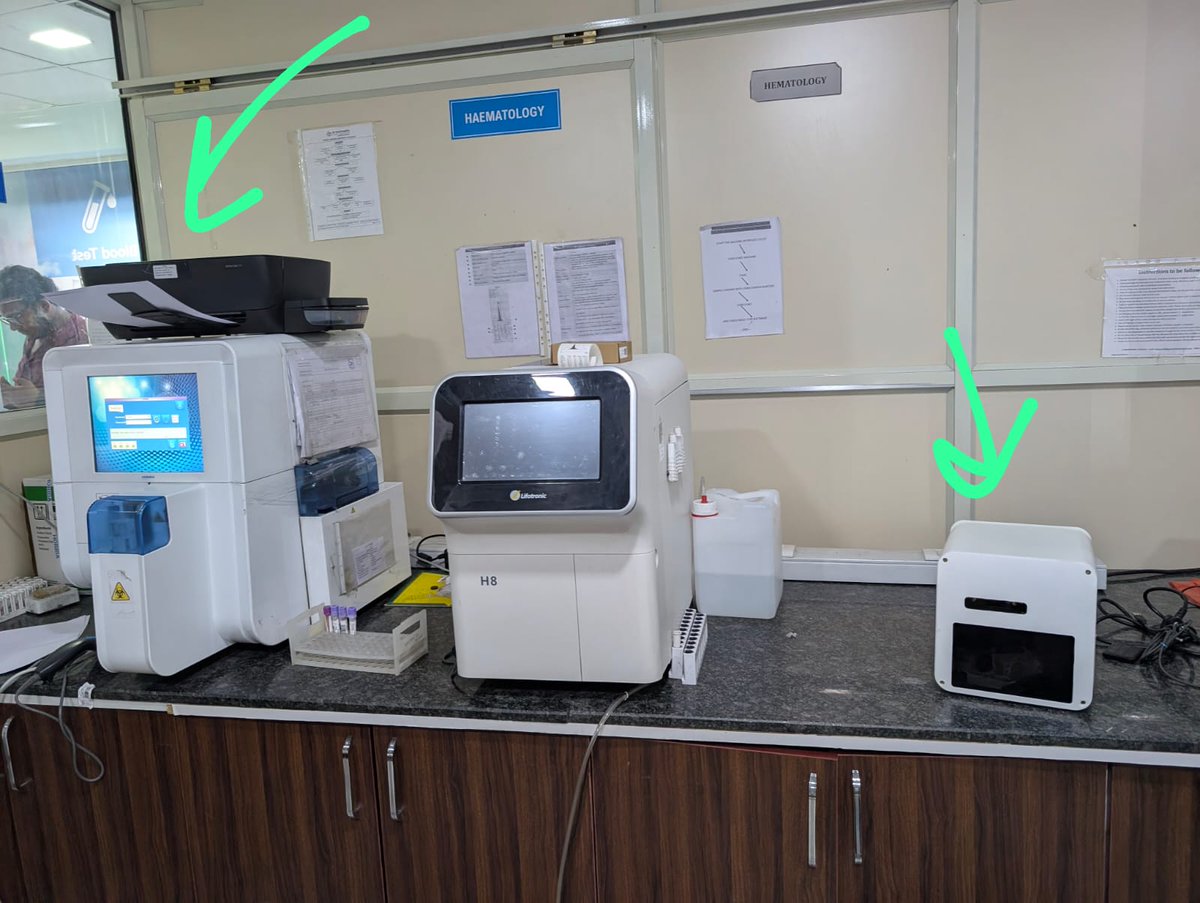
Most people are chasing the next big thing. Some are quietly fixing the most basic problems. Met Hardik who is passionately been building Adys from Jaipur that brings real impact in 10 mins and most people don’t know about them. Adsys has developed a device that does complete blood count test with just a finger prick and generates a report in 10 mins. For a country like India, where millions lack access to diagnostic labs especially in rural areas this is massive impact. Don’t need a lab or a technician. Just this small device and a phone to generate a report and it costs 6x less than anything else on the market. For the last 6 years, they’ve been on this. No noise, no headlines and trying to build something that works where it matters most and save lives.
Dilip Kumar tweet media
English
43
201
1.1K
66.7K
Umang Saini
Umang Saini@poloolop·
@thdxr I think it's still not enough i.e. they are under investing. This is a once in a generation build out. We are a single breakout app away from the capacity being wiped out overnight. You don't want to be caught on the wrong side of history. There is no upper limit.
English
0
0
0
110
dax
dax@thdxr·
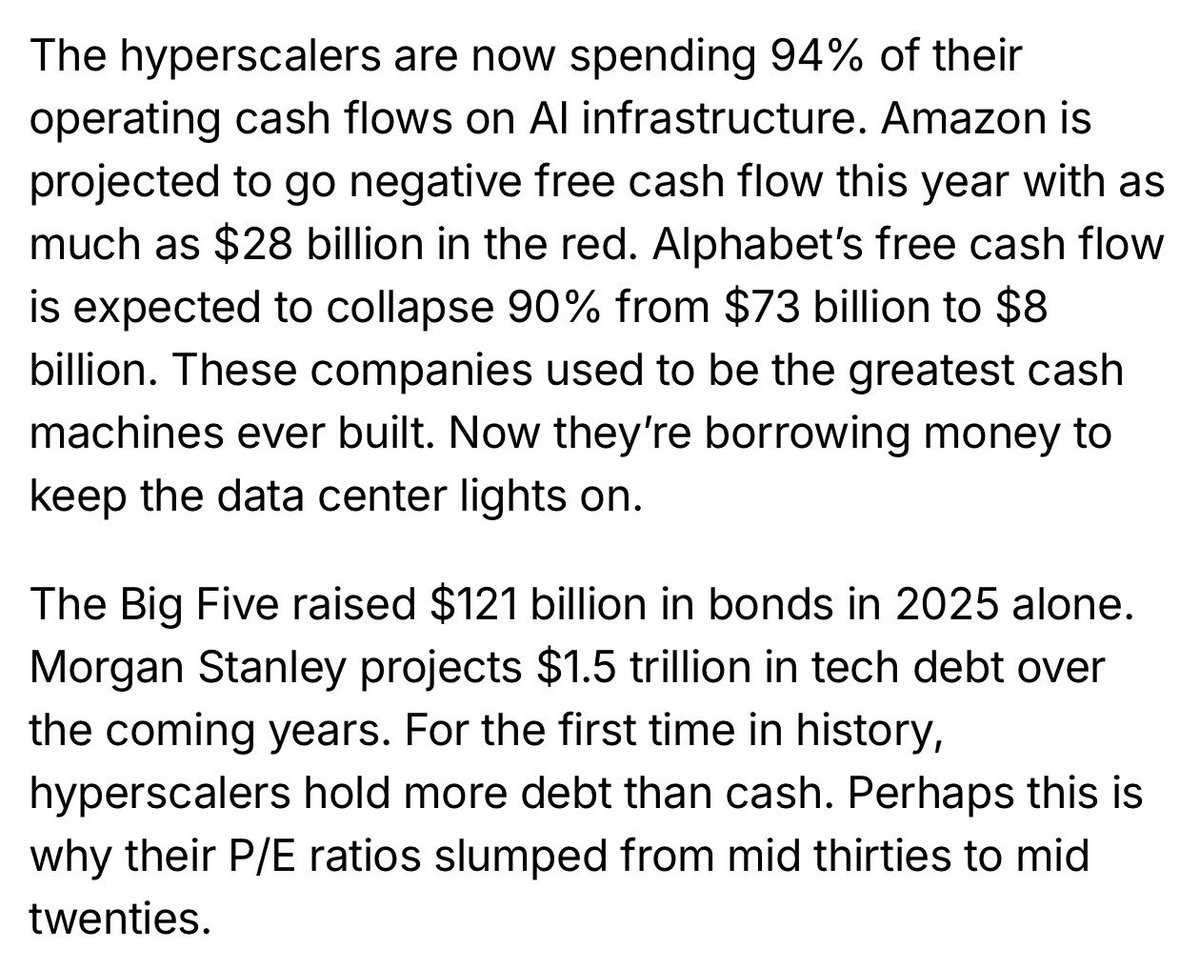
you're probably underestimating how crazy things are
dax tweet media
English
295
904
10.6K
1.7M
Umang Saini
Umang Saini@poloolop·
No Indian company made the cut. This is the reason why Jensen Huang skipped the AI Summit in New Delhi earlier last month. Only Kore.ai under AI for customer services has engineering here, but HQ is still USA.
Umang Saini tweet media
English
0
0
0
28
Umang Saini
Umang Saini@poloolop·
@SatanAtWink For every Uber/Ola one needs Rapido/Namma Auto to emerge. The sooner there is a Namma Help to counter Pronto/Snabbit/Urban Co, the better.
English
0
0
0
34
Ankit Sawant
Ankit Sawant@SatanAtWink·
Snabbit just hit 500,000 monthly jobs. Pronto went from a $12.5M valuation to a $100M valuation in under a year. Urban Company's InstaHelp crossed 50,000 daily bookings in 11 months. Combined, these three are burning through $100M+ in venture capital to solve a problem every Indian household knows intimately: finding someone to mop the floor. Let's be real. This isn't a new category. This is a 50-million-worker industry that has always existed - offline, informal, & largely invisible. What's new is that some people have figured out you can apply the Uber playbook to it. Ten-minute promise. Hyperlocal clusters. Trained & verified professionals. Rs. 150-199 per hour. I've been watching this with equal parts excitement & dread because I've seen this movie before. Excitement because perhaps those messages from society groups about controlling someone's salary threshold & bonus might stop & the quintessential Indian family might have to fight a company vs. another family to retain with better salaries; dread because - well, you know why! The early acts are always beautiful. Snabbit's workers earn Rs. 25,000-30,000 a month. Pronto has ditched the commission model entirely & offers guaranteed hours. Snabbit provides life insurance, health insurance, & an SOS button for workers who feel unsafe in someone's home. Urban Company's active service professionals reportedly earn an average of Rs. 28,322 per month. These are real, meaningful improvements over the old world - where a domestic worker negotiated wages alone, had zero recourse against harassment, & could be fired on a WhatsApp message. But here's the thing. We know how Act Two goes. Uber drivers in India once earned enough to quit bank jobs & buy new cars on EMIs. Today, IFAT reports those same drivers earn Rs. 500-800 a day after platform commissions - a 43-57% decline from pre-pandemic levels. Platform take rates crept from 20% to 30%. The delivery radius expanded from 4km to 20km. Incentives disappeared once market share was locked. A Bengaluru cab driver recently wrote on Reddit that he works 16 hours a day, earns Rs. 4,000, & still can't save a rupee. "Cheap labour is why others can enjoy privilege," he wrote. "Either be the exploiter or be exploited." This is the gig economy's original sin. The pitch deck says "upliftment." The P&L eventually says "margin." Snabbit charges customers Rs. 150/hour. Workers earn Rs. 25,000-30,000/month for what appears to be full-time work. Urban Company's InstaHelp is losing Rs. 381 per order as of Q3FY26, down from Rs. 760 in the quarter before, but still deeply negative. These unit economics have to converge somewhere. And historically, convergence has meant the worker absorbs the delta. I always ponder whether formalisation is genuinely better than the informal arrangement it replaces. A domestic worker in Bandra who works for three households directly might earn Rs. 15,000-20,000, set her own hours, build long-term relationships with families, & negotiate annual raises. A Snabbit expert earns more per month - but is now positioned 250 metres from the next job, managed by an algorithm, rated on every visit, & one bad review away from reduced assignments. The honest answer is: both realities exist simultaneously. And that's the uncomfortable truth about how progress actually works. India has 7.7 million gig workers today. NITI Aayog projects 23.5 million by 2029-30. The Social Security Code of 2020 mandated that 1-2% of platform revenue be allocated to a worker welfare fund. It still hasn't been implemented. Unions like IFAT & TGPWU exist with 40,000+ members, but most platforms refuse to engage with them. The Fairwork India ratings tell the story: Urban Company scored 5/10. Uber, Ola, & Porter scored 0. So does humanity do better? Here's what I think. Platform formalisation creates a visible top layer of workers who genuinely benefit - regular income, insurance, training, dignity of uniform & verification. Snabbit's 100% women-led workforce getting bank accounts & insurance is not a small thing. It's transformative for thousands of families. But the same platforms, at scale, inevitably create a long tail of fungible, algorithmically managed, & structurally unable-to-negotiate workers. The visibility that helps the top cohort also makes the bottom cohort easier to control. This is the pattern across every gig category. The first 5,000 Uber drivers in Bangalore did phenomenally well. The next 50,000 subsidised their lifestyle. The first 5,000 Snabbit experts might build real careers. But when it's 50,000 experts across 200 micro markets, the math changes. The house-help startups have a narrow window right now - maybe 18-24 months - before unit economics pressure forces the squeeze. Pronto's "guaranteed hours, no commission" model is the most worker-friendly structure I've seen in any Indian gig company. Whether it survives contact with a Series C investor asking about margins is the real test. I hope these companies prove the Uber trajectory wrong. I hope they build something where the worker's income goes up as the company scales, not down. But hope isn't a business model. The structural incentives of venture-backed, growth-at-all-costs marketplaces haven't changed. The question isn't whether we'll formalise domestic work. We will. The question is whether formalisation means Rs. 35,000/month with insurance & dignity - or Rs. 150/hour with an algorithm as your boss & a rating as your leash. I genuinely don't know which way this goes. But I know the answer depends on choices being made right now, in board rooms that most of these workers will never see.
English
43
61
618
68.9K
Umang Saini retuiteado
Rajan Anandan
Rajan Anandan@RajanAnandan·
Power is the most critical near term bottleneck to scaling AI datacenters. We are thrilled to partner with C2i - a seasoned team led by Ram, Preetam, Vikram and Dattatreya who are focused on building grid-to-core semiconductor solutions that improve power efficiency in AI clusters. Tape-out coming soon! @peakxvpartners
Peak XV Partners@peakxvpartners

Today, Peak XV is proud to lead C2i Semiconductors’ $15M Series A. 🚀 As India AI Impact Summit 2026 begins this week, this milestone reflects something important: the next phase of AI will require deeper ownership of core infrastructure. C2i is building grid-to-core semiconductor solutions that improve power efficiency and system performance in AI clusters. As workloads scale, efficiency at the power layer directly impacts cost, throughput, and sustainability. Founded with the ambition to build benchmark enterprise technology for the world, from India and by Indian talent, the team has grown to 65 engineers and taped out its first chips in under 18 months. India has long integrated and assembled global technologies. The opportunity ahead is to design and build them. C2i represents that shift. Congratulations to @Preetam_t, Ram Anant, Vikram Gakhar, and Dattatreya Suryanarayana on this milestone. We are excited to partner as you build foundational infrastructure for the AI era. 🙌🏽 #PeakXV #IndiaAI #Semiconductors #AIInfrastructure #IndiaAIImpactSummit2026 techcrunch.com/2026/02/15/as-…

English
2
5
61
8K
Umang Saini
Umang Saini@poloolop·
@championswimmer @waitin4agi_ It is an equaliser, and gives disproportionately more power to smaller teams. Scrappy solutions can take one significantly farther than earlier. Agency is the bottleneck. Build agency.
English
0
0
0
76
Arnav Gupta
Arnav Gupta@championswimmer·
@waitin4agi_ If you read my tweet those exact things are the reason I believe your main argument that bigcos dont have advantage over startups. But the fact AI itself can do the work of entry level people doesn't make it an equaliser, it gives more power to those with free cash flow.
English
1
0
32
2.5K
Arnav Gupta
Arnav Gupta@championswimmer·
This take is so terribly wrong in its premise (I'm not fighting the main point but the premise on which it is made) "Money is no longer a limiting factor in making things." In fact, money is now the only limiting factor in making things. Big companies with infinite bank balances have the equivalent of 1M SDE2s at their disposal now. The fact that a small company can band together a bunch of smart people who can code in someone's garage 10x faster than a big company can hire these people *WAS* what gave small companies advantage over a big company. If we assume that AI is basically an SDE2 equivalent then AI let's big companies turn money into SDE2s instantly instead of the 6 month hiring process they earlier had. > yes AI is probably not 1:1 same as an SDE2 and just having 10k Claude Code instants is not the same as having 10k SDE2s > yes small companies will continue to have other asymmetrical advantages over big companies But the basic premise that since AI can basically write a lot of code that you needed engineers for - is not a great leveller. It is the opposite of that. It gives unprecedented power to big companies with a) infinite token balances and b) the supply chain chops to literally build their own datacenters and GPUs to further pay less per token than a startup needs to.
Varun Mayya@waitin4agi_

There’s two ways to look at AI and job displacement. One is that the AI is taking away jobs and making big corps bigger without needing you. The other is that AI now gives everyone the ability to compete with the big corp. Money is no longer a limiting factor in making things. You can sit in your bedroom and make a new world class IP or app. In fact having big teams and approval processes in place slows things down with magical tools like this. AI is the great equalizer.


English
15
11
244
34K
Umang Saini
Umang Saini@poloolop·
@bhash Public money is a big responsibility. There is no doubt that the capacity is in place, however proof of the pudding will be in eating it. Keep cooking.
English
0
0
0
80
Bhavish Aggarwal
Bhavish Aggarwal@bhash·
Q3 FY26 marks a structural reset for Ola Electric. As EV penetration growth moderated and service execution required strengthening, we made a deliberate choice - fix the fundamentals, not chase short-term volume. We realigned our retail footprint, strengthened our cost structure, and redesigned our operating model for sustainable growth. The result is a structurally lower breakeven business with significantly improved operating leverage. The strength of these actions is visible in our numbers. We delivered a record 34.3% consolidated gross margin in Q3, the highest in the electric two-wheeler industry, expanding 15.7 percentage points YoY and 3.4 percentage points QoQ. This is not a temporary lift. It reflects the structural advantage we’ve built through deep vertical integration and the economics of our Gen3 platform. We continue to see gross margins stabilising in the 35-40% range in FY27. Over the past few years, we have invested approximately ₹5,300 crore across manufacturing infrastructure, battery innovation, and R&D. That investment, unmatched among Indian OEMs, has created full vertical integration across motors, batteries, cells, electronics and software. It has built scalable manufacturing and a proprietary technology stack. And importantly, the heavy capex phase is now largely behind us. With Gigafactory scaling toward 6 GWh by March’26 and capacity for 1 million vehicles already in place, the focus shifts from building capacity to scaling into it. The upfront strategic investments in cells to motors to software create a compounding advantage: as we scale into existing capacity, incremental revenue flows directly to margins with minimal additional fixed costs, accelerating profitability with each unit sold. We also confronted our biggest challenge head-on: service execution. The issue was service scale, not product quality. Independent surveys show over 90% product satisfaction and strong repurchase intent. Warranty provisions for FY26 are expected at just 2–3% of revenue, among the lowest in the Indian EV industry. That showcases our engineering depth. Through Hyperservice, we strengthened parts availability, expanded technician training, tightened governance, and deployed AI-led automation. Service backlogs have reduced nearly 50%, and we now complete close to 80% of service requests on the same day. As service performance stabilises, the strength of our product proposition will reassert itself in the market. Our recovery plan is simple and disciplined: restore trust through service stabilisation, reinforce product superiority in range, performance and value, and activate our installed base of nearly 11 lakh customers, the largest in the Indian EV ecosystem. With a structurally reset cost base and 85–90% of opex fixed, incremental volume recovery will directly translate into profitability. Q3 was not about short-term optics. It was about strengthening the foundation. We have reduced the EBITDA breakeven to approx. 15,000 units per month and embedded operating leverage into the business. The heavy build phase is behind us. Watch our metrics. Talk to our customers. The turnaround will speak for itself. Read the complete Shareholders’ Letter here: bit.ly/4kFnlVS
Bhavish Aggarwal tweet media
English
439
73
667
794.4K
Hitesh Modi
Hitesh Modi@imhiteshmodi·
Bhai, I personally had to carry my ailing mother to their office as connection was taken using her name. Otherwise, the process was not moving forward. So pathetic, IT infra they are using. I tried to complain it at many levels, but eventually I had to do what was speediest solution
English
1
11
110
26.3K
वरुण 🇮🇳
वरुण 🇮🇳@varungrover·
Bharat Gas won’t deliver LPG cylinder on our 3-year old connection we got after KYC (of course) till we re-do the eKYC. For eKYC the Bharat Gas app asks us to unlock the biometrics on Aadhaar. To unlock the biometric, Aadhaar website asks me to enter the OTP. After entering the OTP the UIDAI website gets stuck. Have tried multiple times since last few hours. Bharat Gas helpline number doesn’t work. Why are such simple things a monumental struggle in this system?
English
346
857
5.6K
231.9K
Umang Saini
Umang Saini@poloolop·
@Wegiveyouhealt1 It's the environment that shapes the child. Parents are merely part of the village which raises a child. The philosophical notion of a full life or the so-called good life is just a notion. Raising a child is a huge chore and most are bad at it. And yet the Earth keeps spinning
English
0
0
0
15
Dr SHRADDHEY KATIYAR
Dr SHRADDHEY KATIYAR@Wegiveyouhealt1·
People without children often hear this line as judgment. It is not. It is simply truth, said softly. You can live a full life without a child. You can travel, build, earn, heal, and enjoy freedom. All of that is real. But there is a dimension you will never touch until you become responsible for a life that exists because of you. A child changes the axis of time. Suddenly, the future is not abstract. It has a face, a voice, and tiny hands holding your finger. You learn a kind of love that is not romantic, not transactional, not conditional. A love that shows up even when you are tired, broke, scared, or failing. A love that humbles you daily and strengthens you quietly. You start measuring success differently. Not by applause. Not by money. But by whether you are becoming someone your child can feel safe with and proud of. Children force growth. They expose your impatience, your selfishness, your unresolved wounds. And then they give you a reason to fix them. Not tomorrow. Today. Legacy stops being a word and becomes a responsibility. You realize you are not just living your life. You are shaping a human who will walk the world long after you are gone. People without children are not missing happiness. They are missing this specific depth of meaning. And you do not know it is missing until it arrives.
English
382
999
6.3K
596.7K
Umang Saini
Umang Saini@poloolop·
@jsensarma @findmorty The key question here is not about agency. AI is a reckoning for several entities which should not exist in the first place. At some point it will include GCCs and Gig workers as well. If you can find your meaning/purpose, that is probably enough. LinkedIn has over 1.2bn users.
English
1
0
0
139
jss
jss@jsensarma·
@findmorty Gig work requires a lot of agency.
English
2
0
6
507
jss
jss@jsensarma·
One of the relatively unique life experiences I had was going through a PE acquisition. And dealing with an Indian body shopping firm. A short story related to AI and IT industry. In 2020 my last startup was acquired. It was a bottom scraper PE, who fired *every* single person. I was a little late on the chopping block because there were some legal transition issues in India. The firm tried to keep some engineers - but none stayed. So they got an Indian IT firm to take over development. This seemed like a L1 bidder type of firm. As the only old team member left, I had the honor of dealing with "engineers" at this firm. Absolute hot garbage. Seriously when MAGA rednecks abuse Indian IT engineers, they are actually not abusing enough. I had meetings where I shouted at that whole team and told them point blank they were completely incompetent and beyond repair. Of course, incompetence is not an ethnic issue. The product and engineering management of this rollup PE firm, based out of Texas (who were White fwiw) were also grossly incompetent. They were massively arrogant to boot. Neither side really gave a damn beyond earning their paycheck. The GM at the PE firm seemed decent - but there's little you can do when your job is simply to squeeze out the last drop of blood from a dead carcass. In any case - that team in India (maybe 20 odd) would be easily replaced with one good engineer who could understand a complex system and modern AI tools. No new features were being developed. Just pure maintenance. Now if I was running a PE rollup of this sort - I would just love AI. No dealing with and paying for hot garbage remote tech teams, just hire one decent AI engineer and both get better outcomes and a lower bill. How much of Indian IT is like this? Dunno - but many firms I know in this region advertise services that are similar to what this company did. And I never knew anyone within a few hops of my network working at such firms. It's just a very different, and sorry to say irredeemable, set of "engineers". Could these engineers use AI and become more effective? Sorry no. When your fundamentals are so massively screwed up - you can't guide AI. You don't know what to ask it, you bring absolutely nothing to the table. At that point it's better for management to just deal with AI agents. With an expert human to assist with escalations. Note that even in 2020 - Google and Stack Overflow existed. And there was no good reasons to be so grossly incompetent enough to not understand how to change ssh certificates (for example). Take what you want from this. It's a large country. It has many many good people and its very very competitive (as our competitive exams bear). But it also has a massive underclass whom singularity has long left behind and who simply were tolerated for lack of options. That underclass (and those who monetize them) are going to be in deep deep trouble.
English
10
18
170
34.7K
Umang Saini
Umang Saini@poloolop·
@NITINKML @arvindgunasekar I don't think there is any such restriction on ED. In terms of reputation loss, both parties are at risk. If their investigation is refuted, ED also suffers reputation damage. It is almost impossible to prove money laundering. This will still serve as a deterrent.
English
0
0
1
115
NITIN SESHADRI
NITIN SESHADRI@NITINKML·
@arvindgunasekar ED has no business publishing names of people. These are allegations. Have they been proved in a court of law ? You cannot tar the names of people in public - what happens if the charges are dismissed later ? Who will pay costs due to loss of reputation ?
English
9
0
27
8K
Arvind Gunasekar
Arvind Gunasekar@arvindgunasekar·
ED cracks whip on individuals who have bought properties in Dubai through payments routed via hawala channels in alleged violation of provisions of FEMA. “Investigation has revealed that Kapil Aggarwal and Sangeeta Aggarwal, both Persons Resident in India, had jointly acquired and held ten immovable properties in Dubai for a total consideration of AED 1,94,03,975, equivalent to ₹ 34.14 Crore without any corresponding outward remittance from India through authorised banking channels.” “Similarly, investigation revealed that S. Bhattacharya, a Person Resident in India, had acquired two immovable properties valued at AED 40,07,319, equivalent to ₹ 9.83 Crore without any corresponding outward remittance from India through authorised banking channels.”
English
40
119
725
122K
Umang Saini retuiteado
carl feynman
carl feynman@carl_feynman·
When I was about 14, we went to a company that manufactured oxygen sensors. You dip this probe into beer, sewage, or canned food a-stewing, and it tells you how much oxygen is in the slurry. It's got two electrodes, and there's some kind of electrochemical reaction that releases exactly one electron for each oxygen molecule consumed. Measuring the electric current lets you measure the oxygen concentration. However, the electrodes are delicate, and don't work if they're not clean. So they're inside a tiny compartment covered with a membrane of oxygen-porous but everything-else-proof plastic. The oxygen has to diffuse through the plastic before it can be consumed at the electrodes. The current is determined by the rate of diffusion. Gunk on the membrane can slow down diffusion, causing it to read an incorrect low concentration. And when you take the sensor from fresh air and dip it into something, it can take a long time to consume all the oxygen in the compartment and start reading the actual flow. So my dad suggested the following. Put a third electrode in the compartment, that regenerates one O2 molecule for each one consumed. Now the speed of diffusion doesn't matter because the oxygen isn't getting consumed. You're reading the concentration at the electrodes directly without affecting it. If the concentration around the sensor drops, oxygen can diffuse out of the compartment, instead of waiting for the oxygen to be consumed. And gunk on the membrane will slow down the reading, but it's still perfectly accurate. We went back next year and saw them manufacturing the three-electrode sensors. IIRC, my father didn't have any good ideas that year.
English
44
184
4.3K
278.3K
Umang Saini
Umang Saini@poloolop·
@elonmusk Any battle relying on court rulings is as good as lost. The six-seven front war will bleed resources like crazy and there is no clear winning scenario. History will see it as an estranged founder going after their own. It may be good to cut the losses and pick better battles.
English
0
0
0
5
Umang Saini
Umang Saini@poloolop·
I'm celebrating 10 years of Google Maps contributions!
GIF
English
0
0
1
20
Umang Saini
Umang Saini@poloolop·
Hi @vikramchopra, While the letter is likely to get a serious response from the PMO, it is clear that there is no urgency. Nothing short of a non-cooperation movement will resolve this. Refuse to pay taxes till annual AQI falls below 100. Walk the talk. Go to court.
Vikram Chopra@vikramchopra

I have emailed this letter to the Hon’ble Prime Minister @narendramodi sir. Sharing it here and tagging @PMOIndia so it reaches him without fail. Delhi-NCR cannot keep breathing like this. We need unified, urgent action now. #AirQuality #Delhipollution #DelhiAQI #Pollution

English
0
0
0
51