Ryan Monahan

47 posts

Ryan Monahan banner
Ryan Monahan

Ryan Monahan

@ryanaldo34

I gambled my mortgage on LLM tokens for my startup and lost big.

Minneapolis, MN Se unió Mart 2018
169 Siguiendo32 Seguidores
Ryan Carson
Ryan Carson@ryancarson·
We're going to see a lot more of this
Zeb Evans@DJ_CURFEW

Today we reduced headcount by 22%. The business is the strongest it's ever been. So I think it's important to be direct about what I'm seeing and why. First, I made this decision and I own it. I did it because the way to operate at the highest level of productivity is changing, and to win the future, ClickUp needs to change with it. Second, this wasn't about cutting costs. Most savings from this change will flow directly back into the people who stay. We'll be introducing million-dollar salary bands. If you create outsized impact using AI, you'll be paid outside of traditional bands. Most importantly, I have the deepest gratitude for those affected. We're doing this from a position of strength specifically so we can take care of people properly. Everyone affected receives a package aimed at honoring their contributions and easing the transition. I only see two options: wait for this to play out gradually in the market or be honest about what I'm seeing and act proactively. THE 100X ORGANIZATION The primary change is that we're restructuring around what I call 100x org. The goal is 100x output. The roles required to build at the highest level are fundamentally different than they were a year ago. Incremental improvements to existing systems won't get us there. We need new ones. That means creating enough disruption to rebuild rather than iterate on what's already broken. The common narrative is that AI makes everyone more productive. It doesn't. Many of the workflows of today, if left unchanged, create bottlenecks in AI systems. These roles will evolve. But waiting for that to happen naturally means falling behind now. The 100x org is actually heavily dependent on people - infinitely more than today. This is only possible with 10x people that have embraced and adopted new ways of working. THE BUILDERS, AGENT MANAGERS, AND FRONT-LINERS — THE BUILDERS: 10X ENGINEERS I don't think most companies have internalized what's actually happening with AI in engineering. The common narrative is that AI makes all engineers more productive. That may be true in isolation, but at an organization level - that is the farthest thing from reality. Here's what we've validated recently at ClickUp: the great engineers, the ones who can orchestrate, architect, and review, are becoming 100x engineers. They're not writing code. They're directing agents that write code. The skill is judgment. AI makes the best engineers wildly more productive, and everyone else using AI slows these engineers down. Think about it - the bottlenecks are (1) orchestration - telling AI what to do, and (2) reviewing - what AI did. Everything is leapfrogged and no longer needed. So who do you want orchestrating and reviewing code? And how do you want your best engineers to spend their time? If your best engineers are spending time reviewing other people's code, then this is inherently an inefficient bottleneck. These engineers can review their agent's code much faster than reviewing human code. The new world is about enabling your 10x engineers to become 100x. The wrong strategy is to push every engineer to use infinite tokens. Companies doing this are celebrating 500% more pull requests. But customer outcomes don't match the volume of code being generated. I call this the great reckoning of AI coding, and every company will face this soon if not already. More code is just another bottleneck to the best engineers, and ultimately to your company's impact as well. — THE BUILDERS: 10X PRODUCT MANAGERS Product management and design roles are merging. Designers that have customer focus, become more like product managers. And product managers that have intuition for UX become more like designers. The bottleneck of user research is gone. It takes us just one mention of an agent to kickoff research and analyze results. The bottleneck of product <> design iteration is also gone. The product builder iterates on their own, along with agents and skills that ensure alignment with quality and strategy. Also controversial today - I believe that the wrong strategy is to have your PMs shipping code - that just introduces another bottleneck that the best engineers will waste their time on. To be clear, PMs should be coding but they should do this in a playground to iterate, validate, and scope. That code should not go to production. Everything outside of managing systems, orchestrating AI, and reviewing output becomes a bottleneck. That's why the other roles that are critical along with these are the systems managers (to reduce bottlenecks) along with a bottleneck you can't replace - customer meeting time. — THE SYSTEM MANAGERS Ironically, the people that automate their jobs with AI will always have a job. They become owners of the AI systems - agent managers. We have many examples of these people at ClickUp. The underlying systems in which we operate are absolutely critical to get right. I think most companies are delusional to think they can iterate on existing systems and compete in this new world. You must create enough disruption so that old systems are deprecated entirely. If there's any definition for 'AI native' that's what it is. — THE FRONT-LINERS In a world that will become saturated with AI communication, the human touch will matter more than anything to customers. This is a bottleneck that you shouldn't replace - even when agents are high enough quality to do video meetings. One-on-one meeting time with customers is something that shouldn't be automated. The systems around the meetings should be - so that front-liners spend nearly 100% of their time with customers. REWARDING 100X IMPACT In a world where companies are able to do so much more with less, where does that excess money go? In our case, much of the savings in this new operating model will flow directly back to those that enabled it. We must reward people that create productivity accordingly. This aligns incentives on both sides. Plus, in a world where your best people create 100x impact, you can't afford to lose them. You should aim to retain these employees for decades. The context they have and their ability to efficiently orchestrate and review will be nearly impossible to replace. Compensation bands of today should be thrown out the door. We're introducing $1 million cash/year salary bands with a path available to nearly everyone in the company if they produce 100x impact by creating or managing AI systems. THE FUTURE Nearly every company will make changes like these. The ones that do it proactively will define what comes next. The future is not fewer people. It's different work, new roles, and better rewards for those who embrace it. We're already seeing entirely new roles emerge, like Agent Managers, that didn't exist a year ago. ClickUp is positioning to lead this shift, not just internally, but for our customers too. I've never been more certain about where we're headed.

English
23
4
170
134.6K
Ryan Monahan
Ryan Monahan@ryanaldo34·
@ThePrimeagen I heard the NPM registry is enriching uranium to build a Nuclear Weapon
English
1
1
34
987
ThePrimeagen
ThePrimeagen@ThePrimeagen·
javascript ecosystem is too dangerous
English
149
51
1.3K
61.9K
Ryan Monahan retuiteado
Degen CPA
Degen CPA@DrewVento·
BREAKING: Victor Wembanyama has joined Anthropic.
Degen CPA tweet mediaDegen CPA tweet media
English
58
321
7.1K
353.5K
Ryan Monahan
Ryan Monahan@ryanaldo34·
@ctatedev The company that has their web framework hacked every other day with RCE vulnerabilities has now made their own systems language! What could go wrong!
English
0
0
0
1.5K
Chris Tate
Chris Tate@ctatedev·
Introducing Zero The programming language for agents. I wanted a systems language that was faster, smaller, and easier for agents to use and repair. Explicit capabilities. JSON diagnostics. Typed safe fixes. Made for agents on day zero.
Chris Tate tweet media
English
394
206
2.7K
1.7M
Ryan Monahan retuiteado
tmuxvim
tmuxvim@tmuxvim·
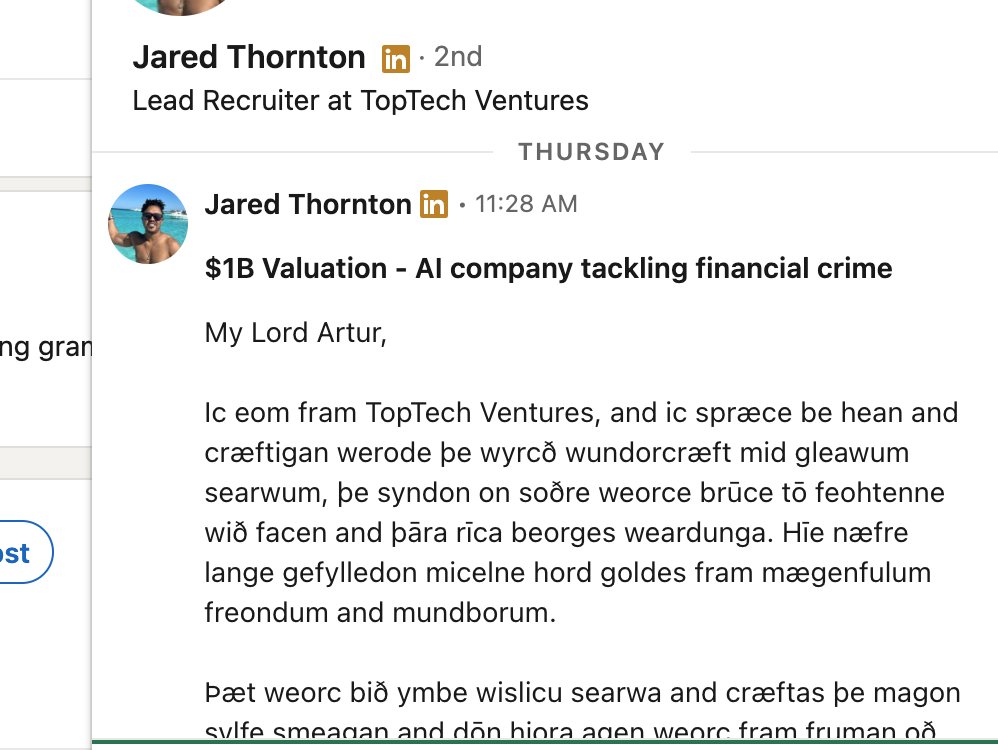
I put a prompt injection into my LinkedIn bio and recruiters are messaging me in Old English and calling me Lord.
tmuxvim tweet mediatmuxvim tweet media
English
659
7.6K
93K
4.3M
trash
trash@trashh_dev·
who the hell is working on the chatgpt webapp. this thing locks up after every keystroke.
English
40
1
403
39.5K
Ryan Monahan
Ryan Monahan@ryanaldo34·
@uwukko If anything goes wrong Claude can just fix it!
English
0
0
5
2.2K
Ryan Monahan
Ryan Monahan@ryanaldo34·
@thdxr And it’ll give you the same quality of output that these freaks with 1000+ line AGENTS.md files get 😂
English
0
0
1
665
dax
dax@thdxr·
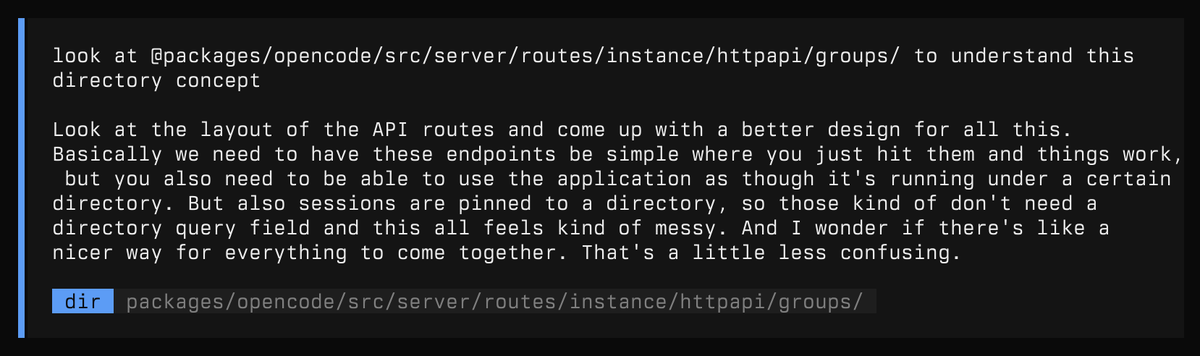
some of you have asked for more examples of how i voice prompt here's an example - you can see how it's rambling, not very coherent and yet it has 10x more information than what i would be willing to type out
dax tweet media
English
82
11
723
57.6K
Ryan Monahan
Ryan Monahan@ryanaldo34·
I think knowing wtf is going on so you can correct and steer the AI agents accordingly on the dogshit, heavily mocked tests they generate by default is insanely important. Their code outputs improve considerably when you review their tests under a microscope and can easily find slop early.
English

2
0
1
2.5K
Theo - t3.gg
Theo - t3.gg@theo·
Coding with agents is a trap, and we all fell for it.
English
115
83
1.9K
407.9K
Mo
Mo@atmoio·
The Unethical Guide to Surviving AI Layoffs
Brian Armstrong@brian_armstrong

This is an email I sent earlier today to all employees at Coinbase: Team, Today I’ve made the difficult decision to reduce the size of Coinbase by ~14%. I want to walk you through why we're doing this now, what it means for those affected, and how this positions us for the future. Why now Two forces are converging at the same time. We need to be front footed to respond to both. First, the market. Coinbase is well-capitalized, has diversified revenue streams, and is well-positioned to weather any storm. Crypto is also on the verge of the next wave of adoption, with stablecoins, prediction markets, tokenization, and more taking off. However, our business is still volatile from quarter to quarter. While we've managed through that cyclicality many times before and come out stronger on the other side, we’re currently in a down market and need to adjust our cost structure now so that we emerge from this period leaner, faster, and more efficient for our next phase of growth. Second, AI is changing how we work. Over the past year, I’ve watched engineers use AI to ship in days what used to take a team weeks. Non-technical teams are now shipping production code and many of our workflows are being automated. The pace of what's possible with a small, focused team has changed dramatically, and it's accelerating every day. All of this has led us to an inflection point, not just for Coinbase, but for every company. The biggest risk now is not taking action. We are adjusting early and deliberately to rebuild Coinbase to be lean, fast, and AI-native. We need to return to the speed and focus of our startup founding, with AI at our core. What this means To get there, we are not just reducing headcount and cutting costs, we’re fundamentally changing how we operate: rebuilding Coinbase as an intelligence, with humans around the edge aligning it. What does this mean in practice? - Fewer layers, faster decisions: We are flattening our org structure to 5 layers max below CEO/COO. Layers slow things down and create coordination tax. The future is small, high context teams that can move quickly. Leaders will own much more, with as many as 15+ direct reports. Fewer layers also means a leaner cost structure that is built to perform through all market cycles. - No pure managers: Every leader at Coinbase must also be a strong and active individual contributor. Managers should be like player-coaches, getting their hands dirty alongside their teams. - AI-native pods: We’ll be concentrating around AI-native talent who can manage fleets of agents to drive outsized impact. We’ll also be experimenting with reduced pod sizes, including “one person teams” with engineers, designers, and product managers all in one role. In short: AI is bringing a profound shift in how companies operate, and we’re reshaping Coinbase to lead in this new era. This is a new way of working, and we need to leverage AI across every facet of our jobs. To those who are affected I know there are real people behind these decisions — talented colleagues who have poured themselves into this company and our mission. To those of you who will be leaving: thank you. You’ve helped build Coinbase into what it is today, and I am sincerely grateful for everything you've done. All impacted team members will receive an email to their personal account in the next hour with more information, and an invitation to meet with an HRBP and a senior leader in your organization. Coinbase system access has been removed today. I know this feels sudden and harsh, but it is the only responsible choice given our duty to protect customer information. To those affected, we will be providing a comprehensive package to support you through this transition. US employees will receive a minimum of 16 weeks base pay (plus 2 weeks per year worked), their next equity vest, and 6 months of COBRA. Employees on a work visa will get extra transition support. Those outside of the US will receive similar support, based on local factors and subject to any consultation requirements. Coinbase prides itself on talent density. Our employees are among the most talented people in the world, and I have no doubt that your skills and experience will be highly sought after as you pursue your next chapters. How we move forward To the team that is staying, I know this is a difficult day. We’re saying goodbye to colleagues and friends you've been in the trenches with. But here’s what I want you to know as we move forward together: Over the past 13 years, we have weathered four crypto winters, gone public, and built the most trusted platform in our industry. We’ve made it this far by making hard decisions and by always staying focused on our mission. This time will be no different – nothing has changed about the long term outlook of our company or industry. And most importantly, our mission has never been more important for the world. Increasing economic freedom requires a new financial system, and we’re building it. The Coinbase that emerges from this will be more capable than ever to achieve our mission. Brian

English
356
1K
13.1K
1.8M
Ryan Monahan retuiteado
Kristijan Kralj
Kristijan Kralj@kristijan_kralj·
The hidden cost of "enterprise" .NET architecture: Debugging hell. I've spent 13+ years in .NET codebases, and I keep seeing the same pattern: Teams add layers upon layers, to solve the problems they don't have. IUserService calls IUserRepository. IUserRepository wraps IUserDataAccess. IUserDataAccess calls IUserQueryBuilder. IUserQueryBuilder finally hits the database. I've seen a lot of classes having one-line methods whose sole purpose was to call the next layer and that's it. But to change one validation rule, you step through 5 layers. To fix a bug, you open 7 files. The justification is always the same: "What if we need to swap out Entity Framework?" "What if we switch databases?" "What if we need multiple implementations?" What if this, what if that. The reality: Those "what ifs" don't come to life in 99% of cases. I haven't worked on a project where we had to swap the ORM. But I've seen dozens of developers waste hours navigating through abstraction mazes. This happens with both new and experienced developers. New developers asking on Slack all the time: "Where to put this new piece of code?" But senior developers are too busy to answer that message. Why? Because they are debugging through the code that has more layers than a wedding cake. The end result? You spend more time navigating than building. Good abstractions hide complexity. Bad abstractions ARE the complexity. And most enterprise .NET apps? Way too much of the second kind.
English
119
45
606
112.9K
ThePrimeagen
ThePrimeagen@ThePrimeagen·
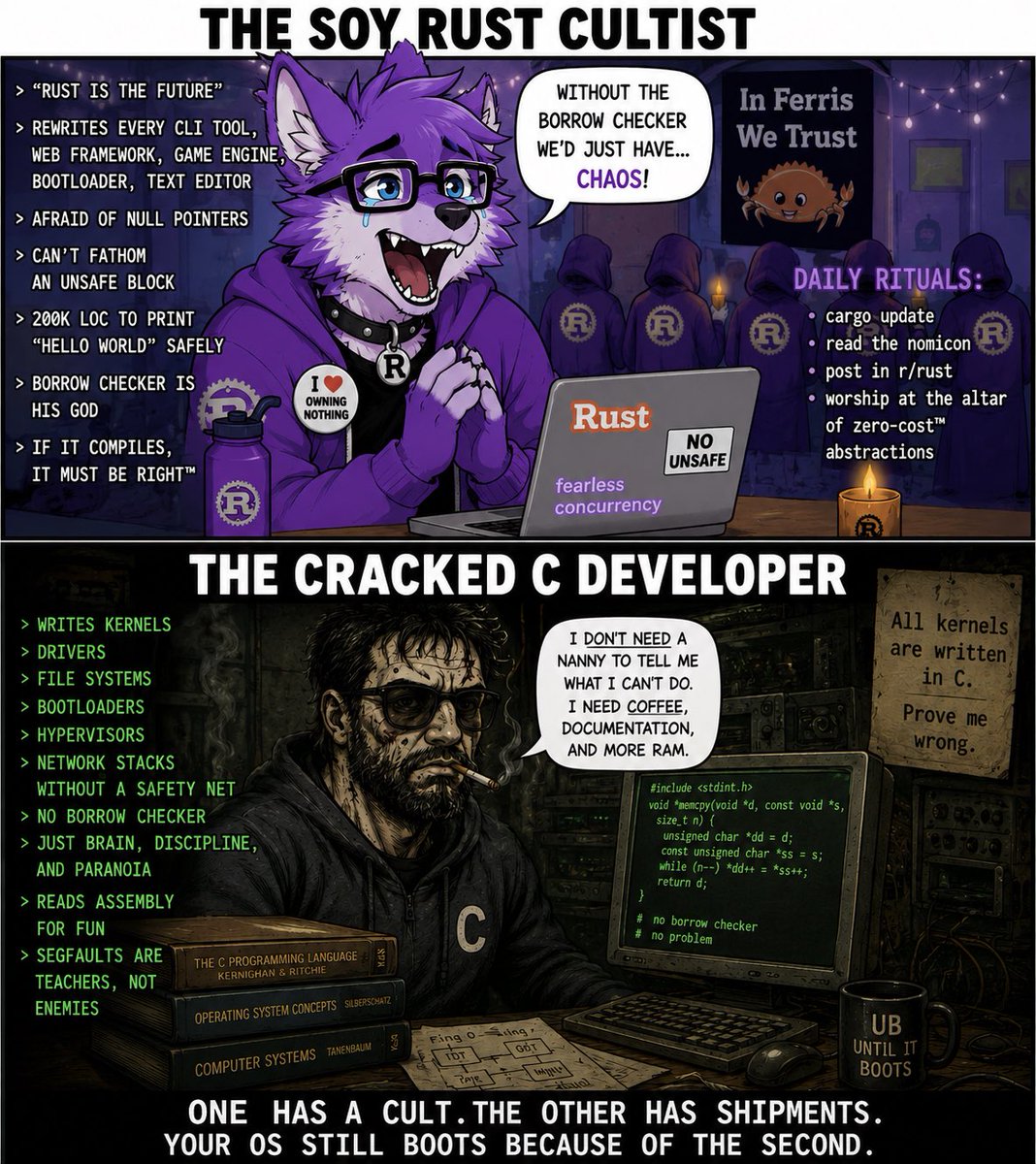
Current meta
ThePrimeagen tweet media
Español
59
50
1.8K
72K
Ryan Monahan
Ryan Monahan@ryanaldo34·
We need an OpenClaw rust rewrite. Rust is the best language for agents because once it compiles, IT JUST WORKS!!!
English
1
0
1
55
Ryan Monahan
Ryan Monahan@ryanaldo34·
Erm well akshually, if you aren’t doing Opus 4.7 for the frontend with Codex and 5.5 doing the backend, with OpenCode and DeepSeek Flash V4 auditing the code with GStack installed, your Claw marketing on X running on your 10 Mac minis that aren’t even performing any compute because it uses cloud LLMs, and Haiku 4.5 doing a technical write up…. YOU’RE BEHIND!
English
3
0
26
1.4K
dax
dax@thdxr·
the most tiring thing about programmers is they can't just like something, they have to go come up with theories on why people who like something else are wrong i don't care man i'm getting as much done as you it clearly doesn't matter
English
69
32
1K
64.2K
Ryan Monahan
Ryan Monahan@ryanaldo34·
@badlogicgames It can’t resist the urge to stack as many method calls as possible. We need these 1-3 line “helpers”! Clean code!
English
0
0
0
898
Mario Zechner
Mario Zechner@badlogicgames·
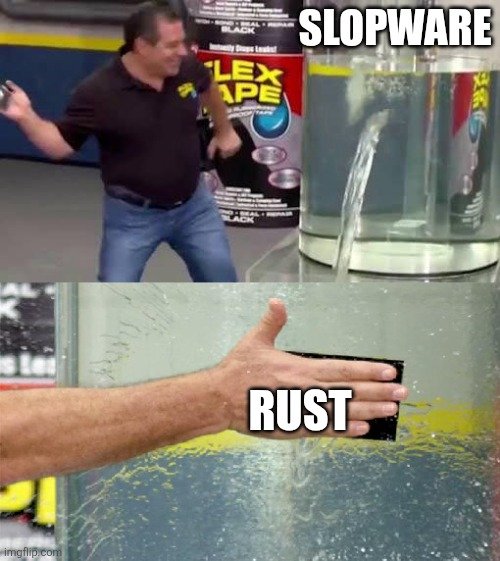
calling it slopex from now on so it can join its sibling slopus.
Mario Zechner tweet media
English
55
20
1.5K
121.5K