sitinDev

528 posts

sitinDev

sitinDev

@sitin_dev

🧑‍💻 Python & RPA | 📈 Growth + community | 6-yr founder | Building AI tools

Se unió Ağustos 2025
29 Siguiendo98 Seguidores
sitinDev
sitinDev@sitin_dev·
One thing I've learned recently: keep Claude Code updated. I used to install it once and forget about it. Then I finally ran npm update after skipping several releases, and realized I'd been missing a bunch of genuinely useful improvements. A few favorites: • Sandbox credential protection — sandboxed commands can no longer freely access your .env secrets and API keys. Huge security improvement. • CLI login for MCP — claude mcp login makes authenticating MCP servers much easier, especially over SSH. • Remote MCP timeouts — no more waiting forever when a tool hangs. • Smarter ! shell commands — after a command finishes, Claude automatically analyzes the output, so you don't have to copy and paste errors back into the chat. The biggest surprise isn't any single feature—it's how fast Claude Code ships. Many of these improvements never get a big announcement. They're quietly added to the changelog every few days. If you haven't updated in a while, you're probably working around problems that have already been solved.
sitinDev tweet mediasitinDev tweet mediasitinDev tweet mediasitinDev tweet media
English
2
0
5
88
sitinDev
sitinDev@sitin_dev·
Claude Tag might be one of the most important AI releases this year. The real innovation isn't a smarter model. It's turning AI from a personal tool into a team member. Shared context. Shared workflows. Shared memory. Instead of opening ChatGPT and asking a question, teams can now simply @Claude inside Slack and let it investigate, code, coordinate, follow up, and report back. AI is moving from chat windows into the flow of work. The next competitive advantage won't be access to AI. It'll be how well your organization connects AI to its permissions, context, tools, and workflows.
Claude@claudeai

Introducing Claude Tag, a new way for teams to work with Claude. In Slack, Claude joins as a team member with access to the channels and tools you choose. Tag Claude in and delegate tasks to it while you focus on other work.

English
1
0
3
91
sitinDev retuiteado
OpenAI
OpenAI@OpenAI·
We’re expanding OpenAI Daybreak to help democratize patching vulnerable software at machine speed: - Codex Security plugin: find, validate, and fix vulnerabilities right inside Codex - The full version of GPT-5.5-Cyber model: a great model for trusted defenders - Cyber Partner Program: powering products built on top of our best cyber capabilities for leading security companies to secure the world's software - Patch the Planet: working with maintainers to secure critical open source projects openai.com/index/daybreak…
English
306
491
4.3K
1.1M
sitinDev
sitinDev@sitin_dev·
One AI habit that has saved me a lot of time: Don’t treat ChatGPT, Claude, or Gemini as your long-term memory. Treat them as temporary workspaces. Put your real knowledge into your own knowledge base (Obsidian, Notes, Docs, etc.). Project context, SOPs, writing style, customer insights, research notes — anything you’ve explained to AI more than 3 times belongs in your knowledge base, not buried in chat history. A useful analogy: • Obsidian = IDE • AI = Programmer • Knowledge Base = Codebase If the codebase is messy, even the best programmer struggles. The same is true for AI. The biggest AI productivity upgrade isn't a better prompt. It's building a reusable knowledge base that every model and agent can work from. If you've explained something to AI three times, document it once.
English
1
0
4
69
sitinDev
sitinDev@sitin_dev·
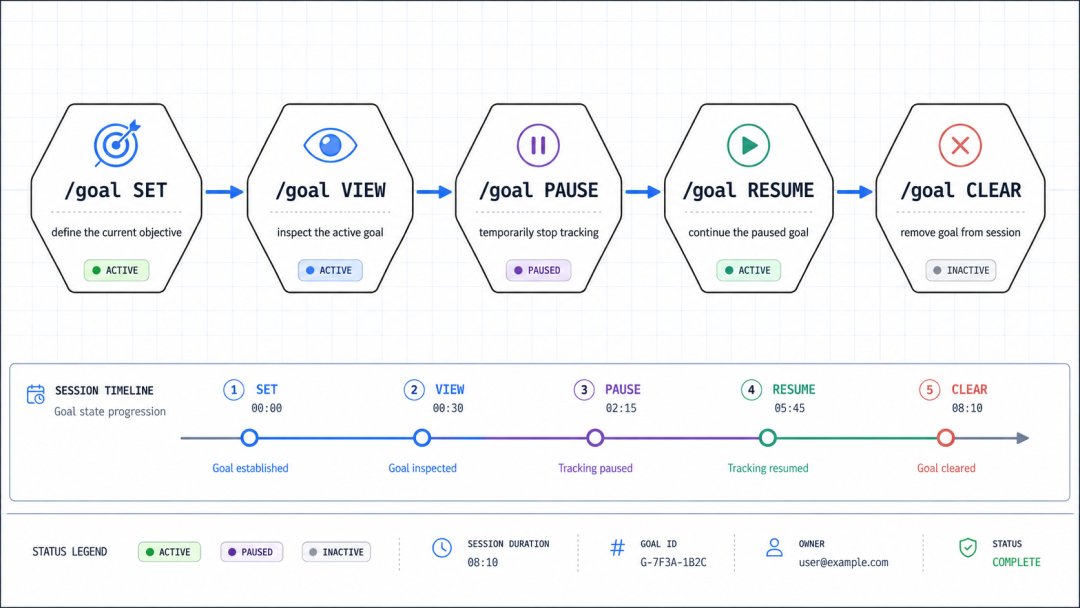
Codex CLI has a hidden gem for long-running tasks: /goal. Most AI coding failures aren’t caused by bad prompts. They happen because the model gradually forgets the original constraints after multiple turns. /goal solves this by pinning a session-wide objective that gets reinforced throughout the conversation. Example: /goal Refactor all React class components into hooks without introducing new dependencies. Benefits: • Keeps the model aligned across many turns • Supports pause / resume / update • Tracks task state (active, paused, blocked, complete) • Optional token budgets prevent runaway costs • Works especially well with /plan For large refactors, migrations, or multi-file bug fixes, starting with /goal noticeably reduces drift. One of the most interesting ideas in Codex isn't the model itself—it's how OpenAI manages long-horizon agent behavior.
sitinDev tweet mediasitinDev tweet mediasitinDev tweet mediasitinDev tweet media
English
3
0
7
117
sitinDev
sitinDev@sitin_dev·
Claude Design is becoming much more than a design tool. It can now export directly to PDF and PowerPoint, send work into the apps you already use, and connect natively with platforms like Adobe, Canva, Gamma, Lovable, Miro, Replit, and Vercel. One of the most interesting integrations is Replit: You can design an app inside Claude Design, send it to Replit, and turn it into a working application. Meanwhile, the Replit Connector / MCP Server inside Claude can create, update, and manage Replit apps using natural language. The emerging pattern is clear: Claude becomes the place for ideas, design, and context. Replit becomes the environment for building, running, and deploying. The gap between "I have an idea" and "it's live" keeps getting smaller.
English
1
0
0
63
sitinDev
sitinDev@sitin_dev·
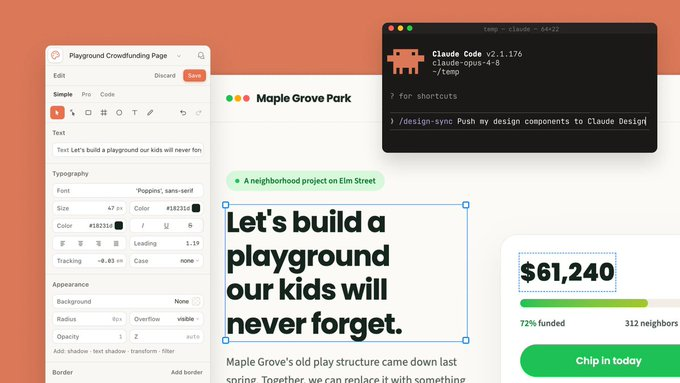
The real shift after Claude Code and Claude Design became connected isn't that "AI can design now." It's that the workflow between design and code is finally much smoother. Claude Design can now read your team's design system—components, colors, typography, layout rules, and more. Use /design-sync in Claude Code to sync your codebase's design system into Claude Design. Or use /design directly from the terminal to create, edit, and manage design projects. When a design is handed off to Claude Code, it's no longer guessing from a screenshot. It continues with the full project context already in place. The result: AI isn't generating random pages that "look okay." It's designing within your existing brand, components, and design language. For teams, that's the real value. The hardest part of design is rarely starting from scratch—it's making sure nothing drifts off-brand.
sitinDev tweet media
English
1
0
2
76
sitinDev
sitinDev@sitin_dev·
Anthropic recently analyzed ~400,000 Claude Code sessions, and the takeaway is interesting: AI coding doesn’t magically turn non-programmers into expert engineers overnight. What it does is amplify people who deeply understand the problem, the business, and the desired outcome. In many sessions, humans were mainly deciding what to build and what “done” looks like, while Claude handled much of the implementation. The surprising part: success wasn’t strongly tied to whether someone was a professional developer. A person with strong domain knowledge and clear requirements can often direct AI to build sophisticated technical solutions. Meanwhile, vague goals still lead to vague results, no matter how powerful the model is. The real shift isn’t just faster coding. It’s a new way of building software, where people increasingly act as problem definers, decision makers, and AI collaborators.
Anthropic@AnthropicAI

Our latest economic research introduces a framework for tracking Claude Code as it scales. Who is using Claude Code, and what are they using it for? How is the value of tasks changing? And how much does domain expertise shape whether a session succeeds? anthropic.com/research/claud…

English
0
0
2
59
sitinDev
sitinDev@sitin_dev·
Apple dropped a serious Docker Desktop alternative for Mac developers. The new open-source project, Container, already has 36k+ GitHub stars. Highlights: • Built by Apple in Swift • Apache 2.0 licensed (free for commercial use) • Optimized for Apple Silicon • Uses lightweight micro-VMs via Virtualization.framework • OCI-compatible (Docker Hub, GHCR, Harbor, etc.) • Near Docker-compatible CLI • Lower idle memory usage • Faster startup times Not perfect yet: • Requires Apple Silicon + macOS 26 • No native Docker Compose support • Still in 0.x with some networking bugs being worked on If you're tired of Docker Desktop eating RAM on your Mac, this is definitely worth watching. Apple entering the container runtime space could become one of the biggest shifts in the Mac developer ecosystem.
sitinDev tweet mediasitinDev tweet mediasitinDev tweet mediasitinDev tweet media
English
1
0
6
93
sitinDev
sitinDev@sitin_dev·
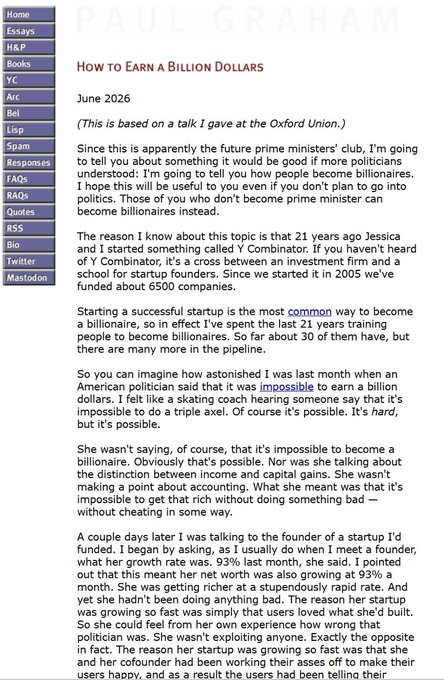
Just finished reading How to Earn a Billion Dollars by Paul Graham. A few ideas stood out: • Startup success is mostly about compounding. Small growth, sustained long enough, becomes massive. • The size of a company is largely determined by two numbers: growth rate and how long that growth can continue. • Real growth comes from users genuinely loving your product, not from tricks or exploitation. • Young founders often have an advantage because they're closer to future demand. Many great ideas looked weird at first—Apple, Facebook, Airbnb, Twitch. • The best startup ideas usually aren't discovered by "brainstorming startup ideas." They're built by people solving problems they personally care about. Build something you and your friends genuinely want. It may look small today, but that's often how the future starts.
sitinDev tweet media
English
2
0
2
49
sitinDev
sitinDev@sitin_dev·
AI's biggest competitive advantage won't come from using the best model. It will come from combining: • Human Capital = knowledge, judgment, relationships, experience • Token Capital = proprietary AI capabilities and workflows The real moat is the learning loop between the two. Companies that build their own AI memory, feedback systems, and organizational learning will compound faster than those relying solely on frontier models. The future is not just frontier models. It's frontier ecosystems.
Satya Nadella@satyanadella

x.com/i/article/2065…

English
1
0
3
53
sitinDev
sitinDev@sitin_dev·
The biggest upgrade in AI coding isn't a new model. It's going from: "Ask Claude to write code" to "Build workflows where Claude does the work." claude-howto is a great place to learn that shift.
sitinDev tweet mediasitinDev tweet media
English
0
0
0
24
sitinDev
sitinDev@sitin_dev·
Claude 5 is here, and it’s definitely getting better at getting things done. But I still like having multiple models review important work. Not because Claude is bad — but because every model has blind spots. So why not throw it into a 6-model review panel and let them challenge each other? The fun part isn’t when every model says “looks good.” The fun part is when they disagree, debate the details, and expose what others missed. Maybe three heads are better than one. Maybe six AI reviewers are even better.
sitinDev tweet media
English
0
0
0
20
sitinDev
sitinDev@sitin_dev·
The biggest limitation is that it works best when your input is already well-structured. If the logic is messy, the diagram will be too. Still, for content creators, product managers, consultants, educators, and operators, it's one of the more practical AI tools I've used recently.
English
0
0
0
14
sitinDev
sitinDev@sitin_dev·
Napkin helps you convert ideas into visual structure. That makes it useful for: • Turning long-form content into shareable infographics • Visualizing product workflows and business frameworks • Creating blog and newsletter illustrations • Building presentation-ready diagrams • Summarizing meetings, plans, and project updates • Turning data into funnels, Sankey diagrams, timelines, and other narrative charts The biggest advantage is speed. You don't need design skills, complex prompts, or hours in Figma.
sitinDev tweet mediasitinDev tweet media
English
1
0
0
20
sitinDev
sitinDev@sitin_dev·
One AI tool I’ve found surprisingly useful: Napkin AI. Most AI tools help you write. Napkin helps you solve a different problem: turning text nobody wants to read into visuals people actually want to look at. Drop in an article, meeting notes, a product explanation, a framework, or even a rough outline, and it automatically generates infographics, flowcharts, mind maps, comparison diagrams, and data visualizations. What makes it interesting is that it focuses on information design rather than graphic design. ·Canva helps you design. ·Figma helps you design. ·PowerPoint helps you present.
English
1
0
3
57
sitinDev
sitinDev@sitin_dev·
The biggest AI coding shift I've noticed: Writing code is no longer the hard part. The workflow now looks like: Plan → Execute → Adversarial Review → Iterate I use two commands constantly: • Goal-driven execution Give AI a verifiable end state, not a task. • Adversarial review Have another model actively attack the solution, assumptions, edge cases, rollback paths, and failure modes. Then combine them: "Keep reviewing and fixing until the result is production-ready." The tradeoff is time. A task that used to finish in 20 minutes might run for hours. But those hours are spent by the AI, not by me. Quality goes up. Rework goes down.
English
1
0
3
43