Budding_Trader

1.3K posts

Budding_Trader

Budding_Trader

@BuddingTrader2

LT Investor Taking Ginger Steps in to The Trading World Now

Inscrit le Mart 2021
1.8K Abonnements246 Abonnés
Budding_Trader retweeté

Sekhar
Sekhar@LearningEleven·
Timepass talk on Sunday 1. Windlas Bio - Optical Winter Still Ongoing While several pharma names have been making headlines this season, Windlas continued to remain relatively silent, largely because of the ongoing ESOP overhang. Q4FY26 saw healthy 17-18% YoY revenue growth, but reported profitability remained largely flat due to elevated ESOP expenses. However, if you adjust for ESOP costs, the underlying PAT growth in Q4FY26 was actually very strong. Operationally, the business continues to perform well. Once the ESOP impact normalizes over the next 3-4 quarters, reported PAT could see a sharp jump. Value investor should keep an eye on it for attractive levels! 2. Gas Turbines & HRSGs: The Complete Picture How Gas Turbines and HRSGs Are Connected A gas turbine by itself is inherently inefficient, it converts only about 35-40% of the fuel it burns into electricity, and the remaining energy exits as extremely hot exhaust gas at around 550-600°C. In a simple-cycle plant, all that heat is simply vented into the atmosphere, an enormous waste. The HRSG is the piece of equipment that captures that exhaust heat and puts it to work. It sits directly behind the gas turbine like a giant heat exchanger, using the hot exhaust to boil water and generate high-pressure steam. That steam then drives a separate steam turbine to produce additional electricity. This two-turbine arrangement, gas turbine + HRSG + steam turbine, is called a Combined Cycle Gas Turbine (CCGT) plant, and it dramatically improves total plant efficiency from ~38% in simple cycle to 55-60%, making it one of the most fuel-efficient forms of power generation in the world. The relationship is therefore symbiotic and inseparable, HRSG technology evolved together with gas turbine technology and is a critical component that makes the combined cycle power plant possible, acting as the connective tissue between the gas turbine and the steam turbine. You cannot build a CCGT plant without both. Every gas turbine order placed is also, implicitly, an HRSG order. Between roughly 2012 and 2020, the global power generation sector went through a prolonged slump. Renewables undercut gas plants on economics, and utility capital spending froze. Gas-fired combined cycle plants, and therefore HRSG orders, dried up dramatically. Of course, we all by now know how staggering the demand for CCGTs is. Approximately 80GW of gas turbine orders were placed in 2024, compared to an estimated production capacity among the three largest manufacturers of only 30GW. Annual orders are expected to surpass 100GW starting in 2027. 3. Dee Development Engineers - The HRSG Proxy DEE Development Engineers is specialized in the high-precision fabrication of HRSG piping systems, pressure vessels, and complex alloy pipe assemblies that go inside HRSGs and combined cycle plants, making it a critical Tier-2 supplier to the global HRSG ecosystem. In a sign of just how hot the HRSG supply crunch has become, DEE recently signed a landmark reservation agreement with an international EPC company under which 60% of its total fabrication capacity will be exclusively reserved for HRSG pipe spool fabrication, at a minimum annual contract value of US$15.27 million, effective June 2027 through December 2029, a rare long-term capacity reservation that underscores how desperately global HRSG builders are locking in fabrication supply chains ahead of the demand wave. Management confirmed that the recent orders (to be executed out of its Thailand facility) are directly linked to data center infrastructure. 4. The Evolution of OBSC Perfection An SME company once heavily dependent on the automotive CV segment has quietly evolved into a mini precision-engineering young turk. The company is building capabilities across machining, casting, forging, stamping, and moving toward becoming a full-fledged sub-system player. At the same time, it has diversified beyond automotive into defence, marine, medical implants, humanoid robots, and is now pursuing AS9100D certification. OBSC is setting up a dedicated Sanand plant for a global client while also developing a large integrated Supa facility to consolidate smaller plants. With expanding capabilities, capacities, and a strong client base, it remains an interesting company to track over the coming years. Disclosure: Since this is an SME company, for transparency, I have been invested since around ₹180-190 levels and recently added more quantities. 5. Kwality Pharma - The Young Turk Kwality Pharma posted ₹500+ Cr revenue in FY26 with ~24% EBITDA margins. By itself, that was already a strong update for the market. But that’s only part of the story. Management then guided for a ₹1,000 Cr revenue ambition by FY29 with ~30% EBITDA margins. And before investors could fully digest that, they added another interesting point: “We are not even including Hormones and Biosimilars in this guidance.” While the company is targeting a ₹300 Cr Oncology vertical by FY29, both Hormones and Biosimilars could quietly emerge as major value creators over the next 2–3 years. Here are a couple of molecules Kwality is currently working on in the Biosimilars space: Erythropoietin (EPO): A hormone replacement injection that treats severe anaemia in kidney disease and chemotherapy patients. It's a well-established, near-term revenue opportunity for Kwality, clinical data submission is just months away (approvals and launch may take sometime), and India's growing kidney disease burden makes it a reliable, steady seller. Pembrolizumab (Keytruda biosimilar): The crown jewel of the pipeline. This is a cancer immunotherapy drug, essentially a drug that "unshackles" the patient's own immune system to attack tumour cells, approved across 36+ cancer types. It is the world's best-selling drug at $31.7 billion in annual sales. With US patents expiring in 2028 and India potentially accessible earlier, a successful biosimilar here would be transformational for a company of Kwality's size. That's all for this edition. Have a great Sunday! Disclaimer: None or buy or sell recommendations. This publicly available information is shared for learning and education purposes.
English
14
46
422
40.7K
Budding_Trader retweeté
Sekhar
Sekhar@LearningEleven·
Timepass talk on Sunday 1. The Macros and the Micros There’s a popular dialogue from the movie Border: "Ghar ki chhat tapak rahi hai… baaki sab theek hai. Bablu ki haath ki haddi toot gayi… baaki sab theek hai." That, in many ways, sums up India’s current economic backdrop, at least from an investor’s perspective. Brent crude is hovering above $110. The Indian rupee breached the historic 96 mark against the USD for the first time. US inflation accelerated to 3.8% in April 2026 (chart below), the highest since May 2023. India’s wholesale inflation surged sharply to a 3.5-year high of 8.30% (provisional YoY) in April 2026, up from 3.88% in March 2026 and just 0.9% in April 2025. Fuel and power inflation rose to 24.71% in April 2026 from 1.05% in March 2026, while crude petroleum and natural gas inflation touched 67.2%. In contrast, headline retail inflation saw only a marginal uptick, inching up to 3.48% (provisional YoY) in April 2026 from 3.40% in March 2026. That -4% gap between factory-level inflation (8%) and retail inflation (4%) suggests that manufacturers have not fully passed on the increase in input costs to consumers. As a result, corporate profit margins are taking a hit. We have already seen several companies talk about raw material cost pressures impacting profitability. Q1FY27 could turn out to be even tougher on the margins front if inflationary pressures persist or intensify further. Some of these costs will eventually have to be passed on to consumers, while some will continue to be absorbed by manufacturers. Either way, the pressure is building on both sides. So, stay cognizant of the macro environment and avoid going overly aggressive with allocations. That said, it’s not all gloomy. Corporate sales growth for the December and March quarters has moved back into double-digit territory, and several small-cap companies have reported exceptionally strong PAT growth in Q4FY26. 2. Compressed Bio-Gas (CBG) theme picking up VA Tech Wabag & PEAK Sustainability Ventures: Back in 2024, VA Tech Wabag and PEAK Sustainability Ventures signed an MoU with a shared vision to establish 100 Bio-CNG plants across sewage treatment facilities in India and other global markets. On May 14, 2026, they officially launched the first commercial Bio-CNG project in Ghaziabad, Uttar Pradesh. The project is being developed at a 70 MLD (Million Litres per Day) Sewage Treatment Plant (STP), where raw methane generated during municipal sewage treatment is captured and upgraded into commercial-grade Bio-CNG. The story is just getting started! Reliance Industries: After perfecting pilot plants in Jamnagar and its first commercial-scale plant in Barabanki, UP, Reliance has moved into absolute mega-scale deployment, heavily targeting Andhra Pradesh. RIL signed an MoU with the Andhra Pradesh government committing ₹65,000 crore to establish 500 CBG plants over the next 4 to 5 years. Reliance focuses on Agricultural Residues (Paddy Straw, Press Mud, Napier Grass, and Cow Dung) as the feedstock. PlanET Biogas India & Delta Bio Gas: PlanET Biogas (a subsidiary of Germany’s PlanET Biogas Group) partnered with Hyderabad-based Delta Bio Gas to establish a 12 Tons Per Day (TPD) CBG facility in Andhra Pradesh. Mahindra Waste to Energy Solutions: Mahindra has also silently commercialized its waste-to-energy footprint in Andhra Pradesh. Here is where it gets more interesting. Public Sector OMCs (IOCL, HPCL, BPCL): Under the central policy framework, state-run Oil Marketing Companies have eliminated market risk for private developers by issuing long-term Letters of Intent (LOIs). OMCs are entering 10-to-15-year assured offtake contracts to purchase retail CBG at fixed commercial rates (typically around ₹45–55 per kg), ensuring predictable cash flow models for incoming plants 3. Suven Life Sciences: Key Clinical Milestones on the Horizon Suven has historically positioned itself as a specialty CNS-focused discovery company, working on therapies related to Alzheimer’s disease, Depression Schizophrenia, Sleep disorders, Cognitive impairment, and Other neuropsychiatric conditions. CNS drug development has one of the highest clinical failure rates in pharma but carry huge rewards if successful. Key Pipeline Updates Masupirdine (SUVN-502) – Alzheimer’s agitation & depression • Around 75% patient enrollment for the Phase 3 trial is complete. • Final trial data is expected by Q2/Q3FY28, opening up potential licensing or partnership opportunities. Samilisand (SUVN-3031) • Phase 3 trials have commenced. • Data is expected by end-2027 or early-2028. SUVN-911 • Phase 2 trials have been completed. • Data is expected within a month. If positive, the company may move into Phase 3 with a co-development partner to share R&D costs. Other Pipeline Molecules • SUVN-G4010 is expected to enter Phase 2 by year-end. • SUVN-D4010 has completed Phase 1 and is progressing toward Phase 2. Some of the deals in CNS space: Eli Lilly announced a definitive agreement to acquire Centessa Pharmaceuticals in a deal valued up to $7.8 billion Johnson & Johnson acquired Intra-Cellular Therapies in an all-cash deal valued at approximately $14.6 billion Neurocrine Biosciences announced an agreement to acquire Soleno Therapeutics in an all-cash deal valued at approximately $2.9 billion I am not suggesting that Suven will necessarily be acquired by someone. The intention is only to highlight the kind of value successful CNS molecules can potentially generate. Management also hinted at potential commercial partnerships at a later stage. That said, the success rate in CNS drug development is extremely low. No one can predict the future or guarantee clinical success, which is why these opportunities also come with very high risk. 4. RBZ Jewellers I had touched upon this in one of the earlier editions of “Timepass Talk on Sunday,” and here’s the follow-up update. The company remains on track to launch two large-format stores in Surat and Rajkot by Q2FY27. In addition, management is planning to open two mid-format stores in Gandhinagar and Eastern Ahmedabad within the current calendar year. Naturally, inventory levels are expected to rise in the near term, which could put some pressure on the balance sheet. However, the company is gradually transforming itself into a larger organized retail jewellery franchise. There are near-term headwinds due to the import duty hike and ongoing volatility in gold prices, but this could potentially evolve into a very interesting business by the end of FY27. The stock is currently available at around 0.78x P/S and could offer even better value if sentiment around gold jewellery players remains weak. At present, market liquidity is largely chasing themes such as AI/Data Centers, Electrification, and CDMO. However, value-oriented stories like these tend to get their due sooner or later. 5. EMS Companies, CCL, PCB, Ratnaveer This past week, Thanks to @Vedansh_Ag, I came across an interesting development in the electronics manufacturing ecosystem, there is currently a shortage of Copper Clad Laminate (CCL), a critical raw material used in Printed Circuit Boards (PCBs). At present, India is heavily dependent on imports for CCL requirements. Typically, CCL accounts for nearly 30–45% of the total PCB manufacturing cost. As a result, any sharp increase in CCL prices can significantly impact the margins of EMS and PCB players. In a prolonged shortage scenario, it could even lead to supply-chain disruptions and delivery delays. Against this backdrop, Ratnaveer Precision Engineering is entering the Copper Clad Laminate (CCL) segment. Management believes this offers a first-mover advantage and could emerge as a meaningful long-term growth driver for the company. The initial CapEx for one production line is around INR 45 crores. Management expects this line to generate approximately INR 108 crores in annual revenue, with EBITDA margins of around 20% and PAT margins of nearly 12%. The project is expected to be commissioned by July 2026, with commercial sales likely to commence from September 2026. While the contribution may initially account for only about 10% of the company’s annual revenue, and therefore may not materially impact near-term financials, it could become a strategically valuable asset over the longer term. Importantly, the company also has plans to set up four additional production lines in the future. That's all for this edition. Have a great Sunday! Disclaimer: None or buy or sell recommendations. This publicly available information is shared for learning and education purposes.
English

9
30
315
34.4K
Valdo
Valdo@reachvaldo·
I just finished my most valuable ebook collection yet: "The AI Funnel Mastery Vault" (5 books, 215 pages). I'm going to charge $247 for this in the future, but for now… Like + Reply "PDF" and I’ll DM it to you for FREE (must follow)
Valdo tweet media
English
153
12
144
8.1K
Nicolas Boucher
Nicolas Boucher@BoucherNicolas·
The Mega Claude Collection (31 free resources to master Claude for finance in 2026) 👉 Comment "Claude" and I will send your copy I am limiting the launch to only the first 100 comments so make sure to be quick! This is the most complete Claude resource pack I have ever released for finance teams and companies normally pay me $10,000+ for workshops where I teach this content Most finance pros I train are stuck using 5% of Claude's potential They watch random tutorials, copy prompts that do not work for finance and give up before they see real results So I bundled 31 of my best Claude resources into one free collection: The Mega Claude Collection 20 PDFs, 8 video tutorials, 4 newsletter deep-dives Sorted into 5 categories so you can find what you need straight away Inside the collection, you will find: 1. Start Here (3 orientation guides) → Which Claude model to use for what → How Claude compares to ChatGPT → What the new free tier unlocks 2. Claude Cowork (4 guides) → The Complete Cowork Guide → Cowork on Windows → Scheduled Tasks → 10 curated YouTube tutorials 3. Prompting Skills (3 references) → Bad vs Good vs Great Prompts → Prompt Templates → Top 100 Claude Tips 4. Claude for Finance (5 deep dives) → The Claude Finance Playbook → 5 Power Moves → Mastering Claude in Excel → Building Dynamic Models in Excel → Claude in PowerPoint 5. Models & Features (4 explainers) → Claude Opus 4.7 (text + visual) → Claude Sonnet 4.6 → Claude Voice Mode Plus a hand-picked links doc with 8 video tutorials and 4 AIFC newsletter editions I have seen FP&A managers and CFOs spend weeks trying to figure out Claude on their own and get mediocre results This collection is the shortcut I wish every finance team had from day one It can save you 10+ hours every week in 2026 👉 Comment "Claude" if you want to receive the link to download this collection Bonus: you will also get a free seat for my upcoming AI Finance Masterclass ♻️ Repost to help a colleague who is still using only 5% of Claude's potential
Nicolas Boucher tweet media
English
107
17
41
4.9K
Tommi Pedruzzi
Tommi Pedruzzi@TommiPedruzzi·
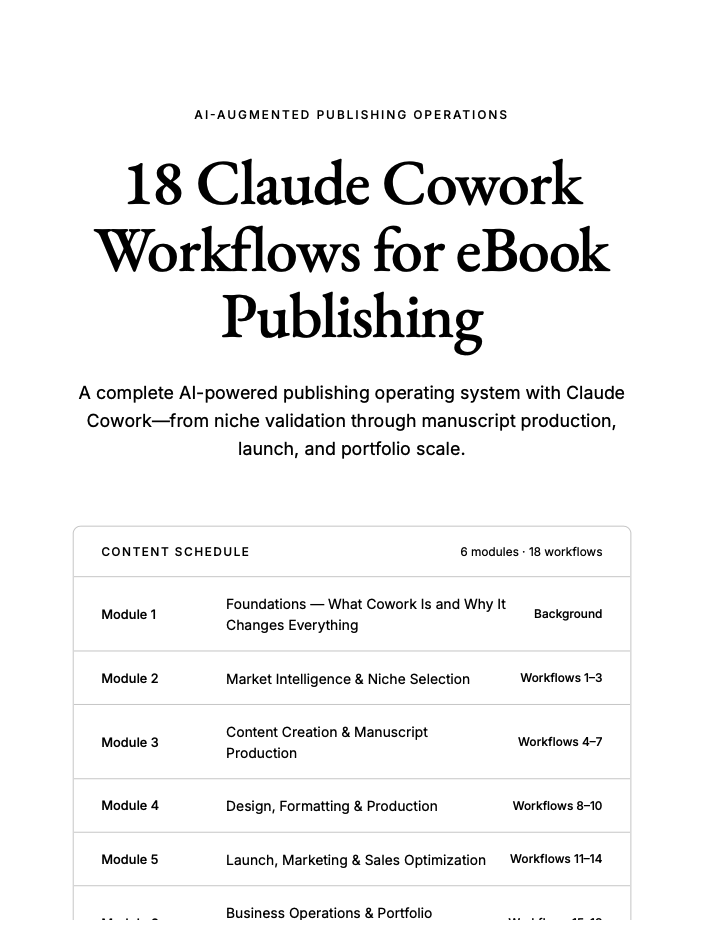
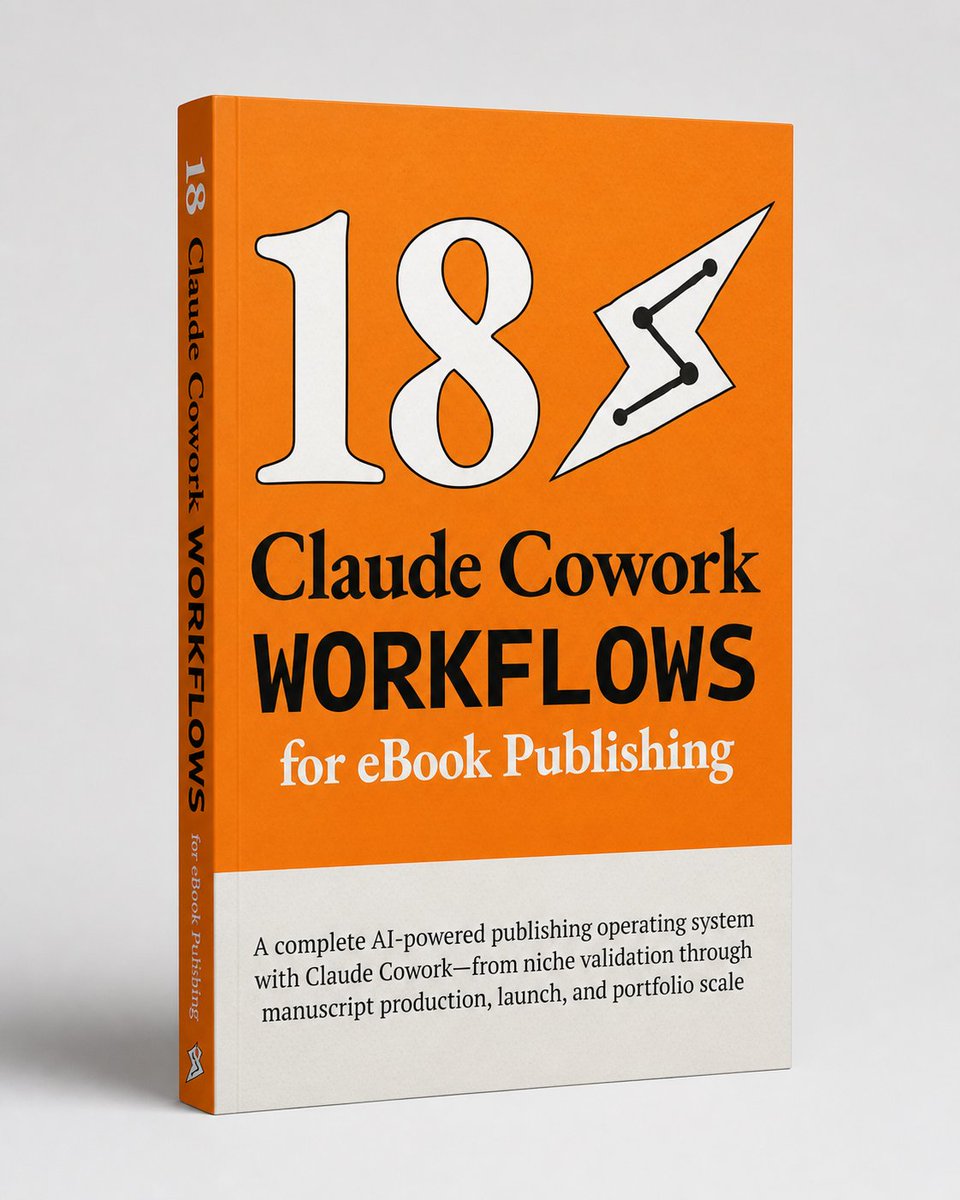
I just finished creating my most valuable PDF yet: "18 Claude Cowork Workflows for the Entire eBook Business" (44 pages). I might charge for this in the future, but for now... Reply "Claude" and I’ll DM it to you for free (must follow)
Tommi Pedruzzi tweet media
English
1.3K
175
872
87.3K
Budding_Trader retweeté
Muhammad Ayan
Muhammad Ayan@socialwithaayan·
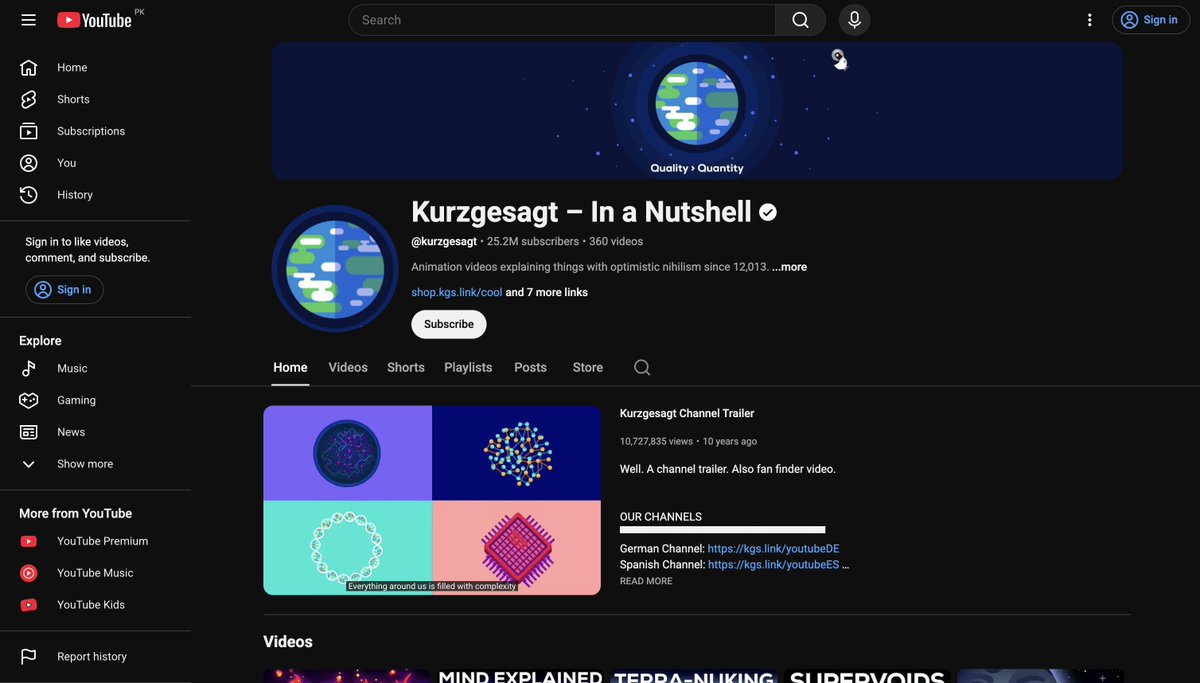
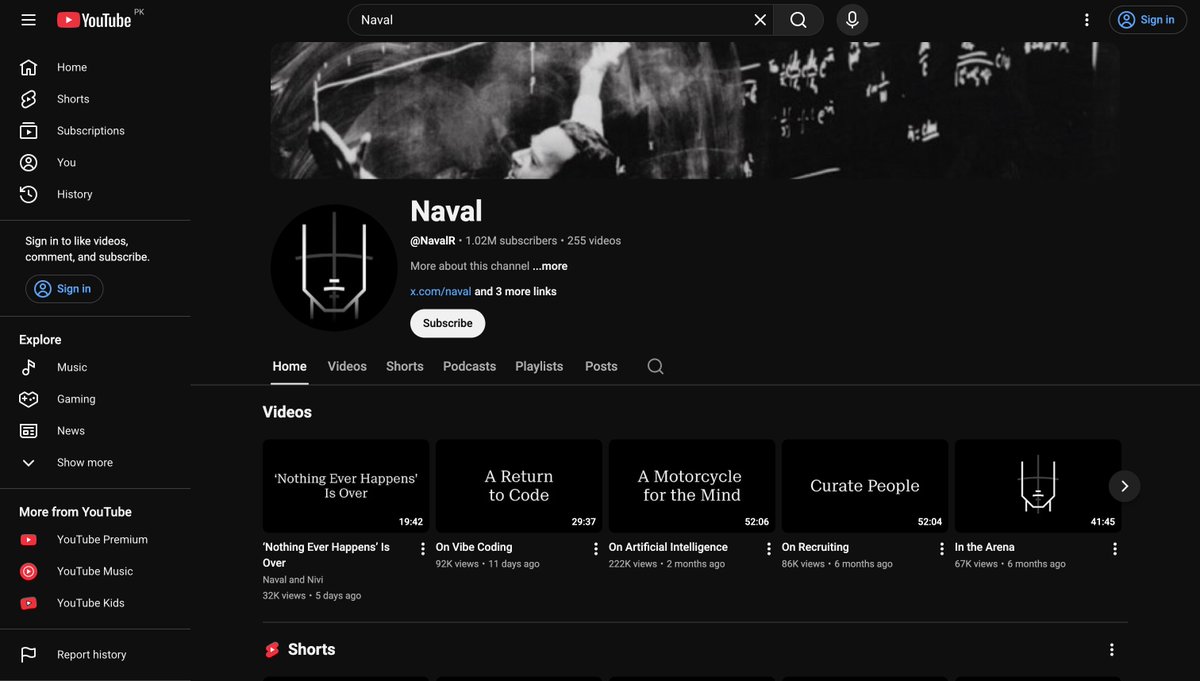
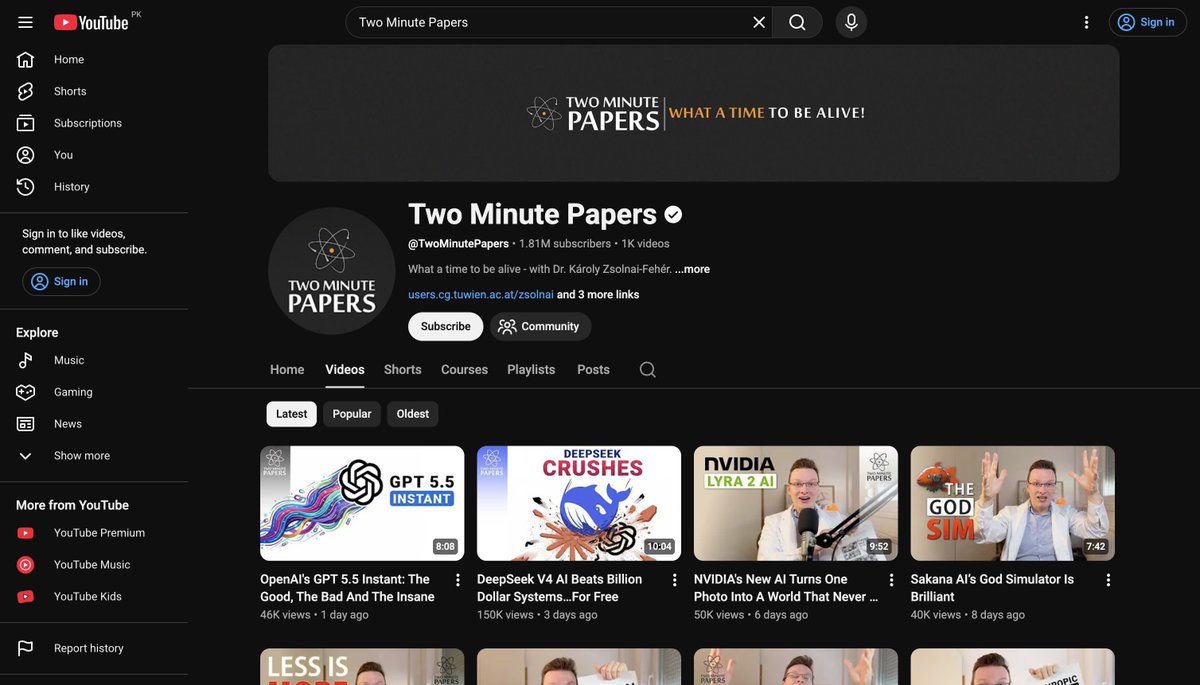
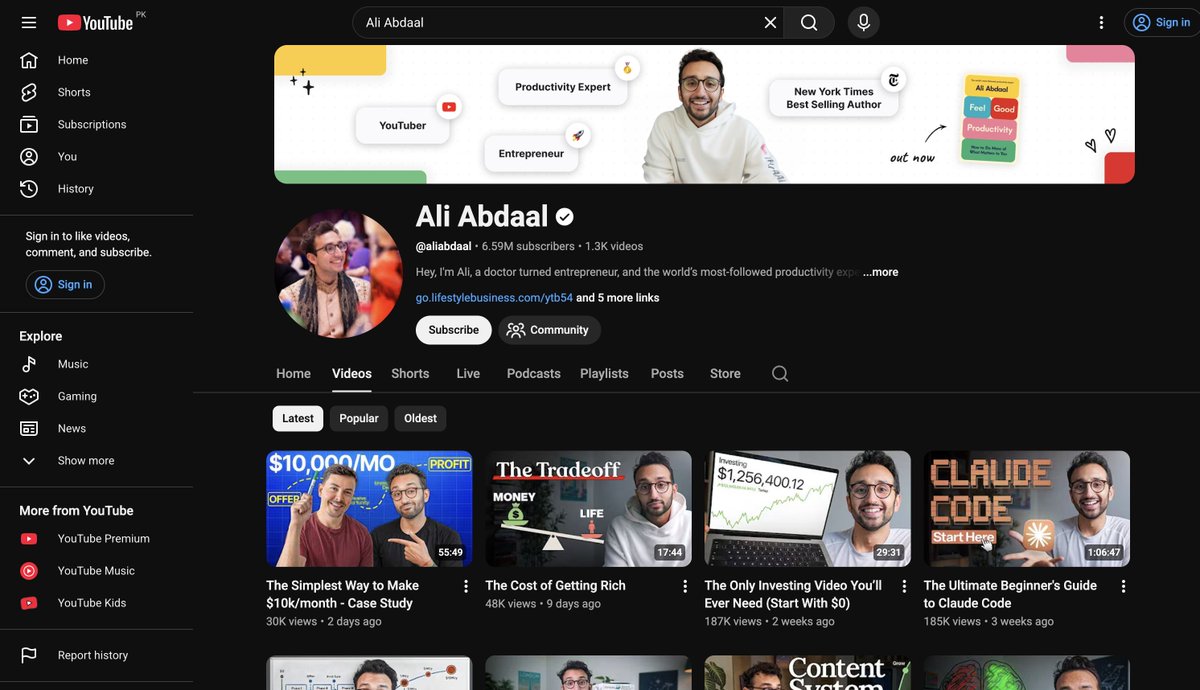
40 YOUTUBE CHANNELS THAT ARE ACTUALLY WORTH WATCHING 1. Kurzgesagt — complex ideas made simple 2. Fireship — learn code in 100 seconds 3. Lex Fridman — long form conversations that matter 4. 3Blue1Brown — math visualized beautifully 5. Veritasium — science you never knew existed 6. Two Minute Papers — AI research made exciting 7. ColdFusion — tech stories that blow your mind 8. TED — ideas worth spreading 9. Matt Wolfe — AI tools reviewed weekly 10. Y Combinator — startup advice from the best 11. Ali Abdaal — productivity without burnout 12. Andrej Karpathy — learn AI from an OpenAI legend 13. Thomas Frank — study and work smarter 14. Mark Rober — engineering made fun 15. AI Explained — deep dives into AI models 16. MKBHD — best tech reviews period 17. Huberman Lab — science based health and focus 18. Yannic Kilcher — AI papers explained deeply 19. PowerfulJRE — long form unfiltered conversations 20. Traversy Media — web dev crash courses free 21. Matthew Berman — AI model reviews and tests 22. The Coding Train — coding made fun and visual 23. freeCodeCamp — full courses zero cost 24. Wes Roth — AI news and big picture thinking 25. CS Dojo — data structures made easy 26. Graham Stephan — personal finance simplified 27. TheAIGRID — AI breakthroughs simplified 28. Naval — wealth and wisdom in minutes 29. Slidebean — startup pitches broken down 30. AI Jason — build AI apps step by step 31. The Futur — design and business combined 32. Linus Tech Tips — hardware explained for everyone 33. Sam Witteveen — advanced AI tutorials 34. NetworkChuck — networking and hacking for beginners 35. Patrick Boyle — finance with dry humor 36. coreyms — Python and automation tutorials 37. David Ondrej — AI news you actually need 38. WorldofAI — new AI tools every day 39. Prompt Engineering — hands on AI tutorials 40. Mark Manson — life advice without the fluff Which one did you not know about? Follow Muhammad Ayan ♻️ Repost to help others
Muhammad Ayan tweet mediaMuhammad Ayan tweet mediaMuhammad Ayan tweet mediaMuhammad Ayan tweet media
English
13
110
360
25.5K
Budding_Trader retweeté
Intrinsic Compounding
Intrinsic Compounding@soicfinance·
Insights from the concalls of Danish Power and Atlanta on the Transformer sector:- 1. As per Atlanta's concall for every 1 GW of generation capacity added, you need 8–11x that in transformer capacity across KV classes. And with BESS layered on top, the multiplier goes even higher. India is targeting 500 GW by 2030 and now apparently 900 GW by 2035 of non fossil based power capacity. 2. Margins have been impacted across the sector as certain Raw Material like transformer oil cannot be purchased 4-6 months ahead. As Transformer oil is inserted during the initial factory assembly or on-site installation. 3. BESS is becoming the next big demand driver and it's incremental, not cannibalistic. This was the most interesting part as BESS transformers are different from standard IDTs. So existing solar IDTs can't just handle the BESS load. New projects need both, and even retrofitting BESS onto existing solar sites creates additional transformer demand. (BESS=Battery energy storage system) Atlanta has BESS orders in the book. Danish already has 20–25% of its current order book from BESS. India's going from 1.5 GWh to 40–50 GWh by FY30. This wasn't a category anyone talked about 2 years ago. 4. On EHV transformer: I recently read a piece by Citrini which talks about how higher voltage/KVA transformers are seeing backlog and waiting time of 40-45months. Atlanta got PGCIL approval for 400 KV manufacturing at Vadodara on April 2, 2026 within 2 years of groundbreaking. They've already bagged their first 400 KV order and are working on the 765 KV prototype at Unki with a technical tie-up expected in a couple of months. Management guided that 400 KV / 765 KV margins run 2% higher than 220 KV. Danish Power, on the other hand, just activated its power transformer division at 100 MVA / 245 KV class. Prototypes and type testing are underway, and they expect meaningful revenue from this segment only by FY28. The difference in where these two sit on the voltage ladder is stark, and it directly maps to addressable market and margin quality. 5. Atlanta's margins are higher than Danish precisely due to the reason mentioned in point 4. Higher the KVA=Higher the margin=Bigger the lead times. 6. On Supply chain shortages: A) Atlanta's COO Anand Sharma gave a pretty clear breakdown. Copper conductor supply is improving as many Indian manufacturers who announced expansions have now commissioned those facilities, and new players are also entering. RIP bushings are also expected to ease over time because existing Indian players are expanding capacity. The specific pain point right now is OIP bushings which are in shortage & the West Asia conflict is pushing up prices of copper, aluminum, and crude oil, and indirectly affecting smaller components like fabrication, paint, and gaskets. B) Danish also talked about the same and the risks from West Asian conflict. 7. Both the companies are doing backward integration. Both are investing in tank/radiator and sheet metal fabrication in-house. Atlanta is spending ₹170–180 Cr on a fully robotic facility. Danish is doing a smaller ₹20+ Cr sheet metal setup. Reason for integration is mentioned to avoid lead times and ensure product quality. Bonus one for the basics from Danish Power's management What does a transformer do? The role of the transformer is always the same: to change voltage by stepping it up or stepping it down. Whether it is an IDT, BESS, or power transformer, it performs that role. Different applications have different input voltages and special features, but the core work of the transformer remains the same.
English
7
58
406
35.3K
Budding_Trader retweeté
Sekhar
Sekhar@LearningEleven·
Timepass talk on Sunday 1. Garware Hi Tech Films - Growth and Margin expansion Sun Control Films (SCF): Largest segment with ~50% of FY26 revenues. Strong demand from automotive and architectural applications. Utilization at 75-80% and expected to hit full capacity next year, hence driving the INR 191 crore CapEx for a new SCF line. Paint Protection Films (PPF): Contributed ~25% of FY26 revenues with 85-89% utilization. Partnerships signed with 4 major automotive OEMs; discussions ongoing with 2 more. TPU Backward Integration: The new TPU line is on track for commissioning by October 2026. This is the raw material for PPF and hence it will improve margins, but Garware is also looking at producing two value-added products (one for automotive and one for architectural applications) from surplus capacity. Industrial Products (IPD): Accounted for the remaining ~25% of FY26 revenues. Raw material cost increases have been successfully passed on. US Tariff Impact: FY26 saw headwinds from high US tariffs. Management protected margins by pre-building inventory and delaying shipments until tariffs eased. Additional tariff has now reduced from 50% to 10% (plus standard 6.26%), which should support US growth. The US contributed ~45% of FY26 revenues. Anti-Dumping Duty (ADD): Management expects a positive update on ADD against cheap imports from China and Korea within 1-2 months. FY27 Revenue Guidance: Management is confident of achieving at least INR 2,500 crores revenue, supported by stable tariffs and strong segment demand. Margin Guidance: EBITDA margin guidance improved to 25% ± 2% (vs earlier ± 3%). Further upside expected once TPU backward integration goes live in Oct’26. A good chunk of FY27 optimism is kind of priced in but the more you look at it, the more it is evident that, this has a 2-3 year sort of growth story! 2. A New Cycle Emerging For Chemicals? On 29-Dec-2025, @_prashantnair asked an interesting question: “What is nobody talking about today that we will all be talking about in 2026?” My response was: “Chemical companies posting good results!” Deepak Nitrite has recovered nearly 45% from its lows over the last 5-6 weeks, Balaji Amines is up around 55%, and Aarti Industries is now trading close to its 52-week high, and so on. Of course, they are still significantly below their all-time highs. Of course, the reasons behind this surge could vary across companies. In some cases, it is driven by a recovery in prices (China’s involution & supply-chain constraints), in others by vertical integration, and in some by optimism around new product launches. Whether this sustains or not can be judged at the end of the year, but here’s an interesting take from Pankaj Tibrewal (IKIGAI Asset Manager) in his recent CNBC TV18 interview. Incidentally, the interview was hosted by @_prashantnair himself! New Growth Cycle: Pankaj believes the chemical sector is entering a new positive cycle after three to four years of being subdued. China Factors: Several factors are reducing the threat from Chinese imports: Currency: The Yuan has appreciated significantly against the Rupee. Logistics: Shipping costs from China to India have doubled. Policy: The Chinese government removed export rebates starting April 1st. Earnings Potential: Top-line growth in chemicals is expected to reach double digits, as many are derivatives of oil and companies have been able to pass on raw material costs to consumers. Of course, beyond chemicals, Pankaj highlights energy and power-related themes as potential outperformers over the next 12 to 18 months. 3. Shipping Corporation of India Last Sunday (May 3rd), we discussed how heavily dependent India is on global vessel operators and why the maritime theme has become a key strategic priority for the country. "...India currently accounts for less than 1% of global ship-owning capacity, and the country pays an estimated $75–90 billion annually to foreign shipping companies as freight. This outflow is significant, broadly comparable in scale to India’s annual defence expenditure..." Continuing that discussion, back in Sep' 25, SCI has signed an MoU with IOCL, BPCL, and HPCL to jointly acquire, own, and operate vessels for transporting petroleum, petrochemical, and other hydrocarbon cargoes. The proposed JV plans to build a fleet of 59 vessels. Under the structure, SCI will hold a 50% stake, while IOCL, BPCL, and HPCL together will own 40%. The remaining 10% is expected to come from the Maritime Development Fund (MDF). Of these 59, SCI has already initiated the process for onboarding 8 Very Large Gas Carriers (VLGCs). These vessels are earmarked for IOCL (4), BPCL (2) and HPCL (2). There is growing chatter that the government is exploring a merger between SCI and Shipping Corporation of India Land and Assets (SCILA). If that happens, it could be an interesting development, as SCI may then be able to utilize SCILA’s ₹1,100+ crore liquid assets to support its expansion plans. Plus, Govt is finding ways to strengthen SCI's cash position for this mega theme. Incidentally, SCILA was demerged a few years ago with the intention of monetizing its assets. Over the next five years, SCI is targeting 2x–3x revenue growth while aiming for operating margins of around 50%. This obviously isn’t fresh-off-the-oven news, but if you’re wondering about the recent surge in SCI’s price action, this is the broader backdrop. One of the key reasons SCI’s growth struggled in the past was the lack of long-term order visibility and commitment from PSU clients. With this JV structure in place, that concern could largely be addressed, which is why the Market believes this growth cycle may be far more sustainable and credible. 4. Steel Exchange India Limited Steel Exchange India (SEIL) is primarily engaged in the manufacturing of TMT Bars, Billets and Sponge Iron at its Integrated Steel Plant located close to Visakhapatnam, Andhra Pradesh. On the surface, SEIL appears to struggle with limited growth, debt-related issues, a weak balance sheet, and promoter pledging. As we speak, four independent, positively-correlated catalysts are converging in a 12-18 month window: i) 45-50% capacity expansion in SMS and Rebar (rolling mill) ii) A Rs 210 Cr RINL (Vizag Steel) conversion contract expected to lift rebar utilisation to ~85–90% from going forward iii) A strategic Rs 300 Cr capital infusion from the Switzerland-headquartered IMR Group that simultaneously deleverages, secures raw-material supply and brings global credibility. Warrants were issues at ₹9.45 per warrant. iv) A refinancing cycle that compresses the cost of debt from ~18.75% to ~12–13.25%. Additionally, a portion of the debt has also been repaid. Additionally, the company holds ~200 acres of surplus, monetizable urban land near Visakhapatnam, with an estimated value of ~₹4–5 Cr per acre. On the risk side, part of the promoters’ holding is pledged, and growth has been absent for quite some time. So, is this a turnaround story or just a trap? That’s for you to study and decide. 5. Airfloa Rail Technology Many smallcap companies are posting bumper numbers and showing remarkable resilience despite the Iran conflict and ongoing supply-chain challenges. Could Airfloa Rail Technology be part of that basket as well? Airfloa an engineering firm with over 27 years of experience in the railway manufacturing space. They manufacture high-precision forged/machined components and interior/exterior assemblies for Indian Railways, metro, export coaches. For FY26, the company is expected to report topline of over ₹315 crore (per their business update). In H1FY26, it posted revenues of ₹91 crore, implying H2FY26 revenues of around ₹224 crore. For perspective, the entire FY25 revenue stood at ₹192 crore. Whichever way you look at it, H2FY26 results could be staggering! As of FY26, they have unexecuted order book of ~₹500 crore and order pipeline of ~₹236 crore. They have signed MoU with Janatics Industrial Automation for automatic door systems. In the process of forming a Joint Venture for Defence theme (electronic warfare) but that's a long term optionality if it materializes. That said, this is still an SME stock and carries all the associated SME risks. That's all for this edition. Have a great Sunday! Disclaimer: None or buy or sell recommendations. This publicly available information is shared for learning and education purposes
English
6
47
436
48K
Arjun Malhotra
Arjun Malhotra@BadCapitalVC·
last year, we spent months building this book for our LPs - the india technology review. it became the most special project we put out last year and honestly the thing i'm most proud of. we're now giving away a few copies! it covers everything from meesho's full journey, our AI thesis for india, and how the long tail nature of india's economy creates opportunities most people miss. we also go deep on economic policy & some early-stage bets we're tracking. we built it for our LPs but figured founders, investors & operators would get a lot out of it too. giving away 20 copies at random. drop a 👋 below.
Arjun Malhotra tweet mediaArjun Malhotra tweet mediaArjun Malhotra tweet media
English
238
12
235
26.5K
Alejo
Alejo@ecommartinez·
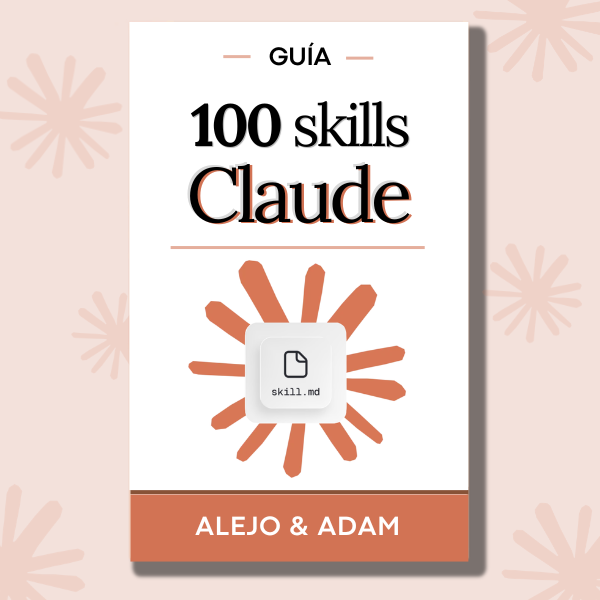
Claude es utilizado por 11 millones de personas al día. He creado la guía con los 100 skills reales que separan a los pros de los turistas: → Redacción, Automatización, Negocios, Productividad, Programación, IA y Prompting, E-commerce, Finanzas y Investigación ¡GRATIS solo durante 24h! Solo: 1. → Dale like 2. → Comenta "SKILLS" 3. → Sígueme para recibir el DM
Alejo tweet media
Español
3K
342
4.2K
262.5K
Budding_Trader retweeté
Sekhar
Sekhar@LearningEleven·
Market Has No Memory - It Only Discounts What’s Next Our typical approach is simple - Study a business, estimate one- and two-year forward earnings, assign a multiple, and derive expected returns. If the returns look attractive, we invest. This is how most investors operate. But returns are not determined at the time of buying. They are determined by what we do after. Let’s say the thesis is: “This company will generate ₹ABC Cr PAT, I will assign a 20x multiple, and expect ~XY% returns.” The biggest risk we tend to ignore? It’s not just about whether they will deliver that PAT, the real question is whether the valuation multiple itself can sustain. Example 1: When the market forgets About a year ago, I estimated Waaree Energies’ FY26 EBITDA at ~₹6,000 Cr based on management commentary. I assumed a 25x EV/EBITDA multiple and expected strong returns. Fast forward: They delivered ~₹6,000 Cr EBITDA, but the stock price barely moved. Why? Because the market had already moved on from that 25x multiple. The business delivered. The valuation didn’t. One could argue: “You shouldn’t have assumed 25x.” But that’s not the real lesson. Even if not this, I might have made some other valuation mistake. The real question is: When we realize our assumptions are going wrong (even if the business is executing well), do we stay… or do we move on? Example 2: When the market moves ahead I exited TD Power between ₹800-900 because I felt it had already priced in most of FY27 (and some beyond). That too was a fundamental decision. Here, the market wasn’t forgetting. It was ahead of me. The contrast In the first case, staying invested was based on: “₹6,000 Cr EBITDA will eventually translate into returns.” In the second case, exiting was based on: “Future growth is already priced in.” Both decisions were logical. Both were fundamentally driven. But the missing variable in both? The market. The reality The market doesn’t operate on your model. It doesn’t remember the multiple you assigned. It doesn’t wait for your thesis to play out. It continuously reprices, sometimes ahead of reality, sometimes after. To work with the market, we need flexibility. Be willing to churn when the thesis and price diverge. Be willing to book losses when the market is telling you you’re early, or wrong. And be willing to add when the opportunity improves, even if it means averaging up. Holding on blindly is not conviction. The edge lies in adapting, without ego, without labels, and without attachment to past decisions. If I churn my portfolio every few months, I may be labeled a “trader.” But labels don’t matter. Returns do. Trader. Investor. Gambler. These are just tags. They come from mindset, not from outcomes. Bottom line Don’t get anchored to your thesis. Stay anchored to how the market is evolving. Because the market has no memory, it only discounts what’s next. Credits: These two examples popped out of a discussion with a set of friends. Happy weekend! Disclaimer: This perspective may not apply to investors with large portfolios focused on capital preservation and steady, consistent returns. However, if your portfolio is relatively small and your goal is faster wealth creation, then aligning with, and listening to, the market becomes essential.
English
26
31
270
16.2K
Tommi Pedruzzi
Tommi Pedruzzi@TommiPedruzzi·
RIP ChatGPT. I've created a new 43 page Claude Cowork guide that can make you 10,000/month. It reveals the exact workflows needed to build a $100K/year AI eBook publishing business. Like + comment 'Send' and I’ll share the new killer guide for FREE. Follow me to receive the DM. ⏳ Taking this down in 48 hours.
Tommi Pedruzzi tweet media
English
807
101
851
61.5K
Maria Watson
Maria Watson@maria_wats8492·
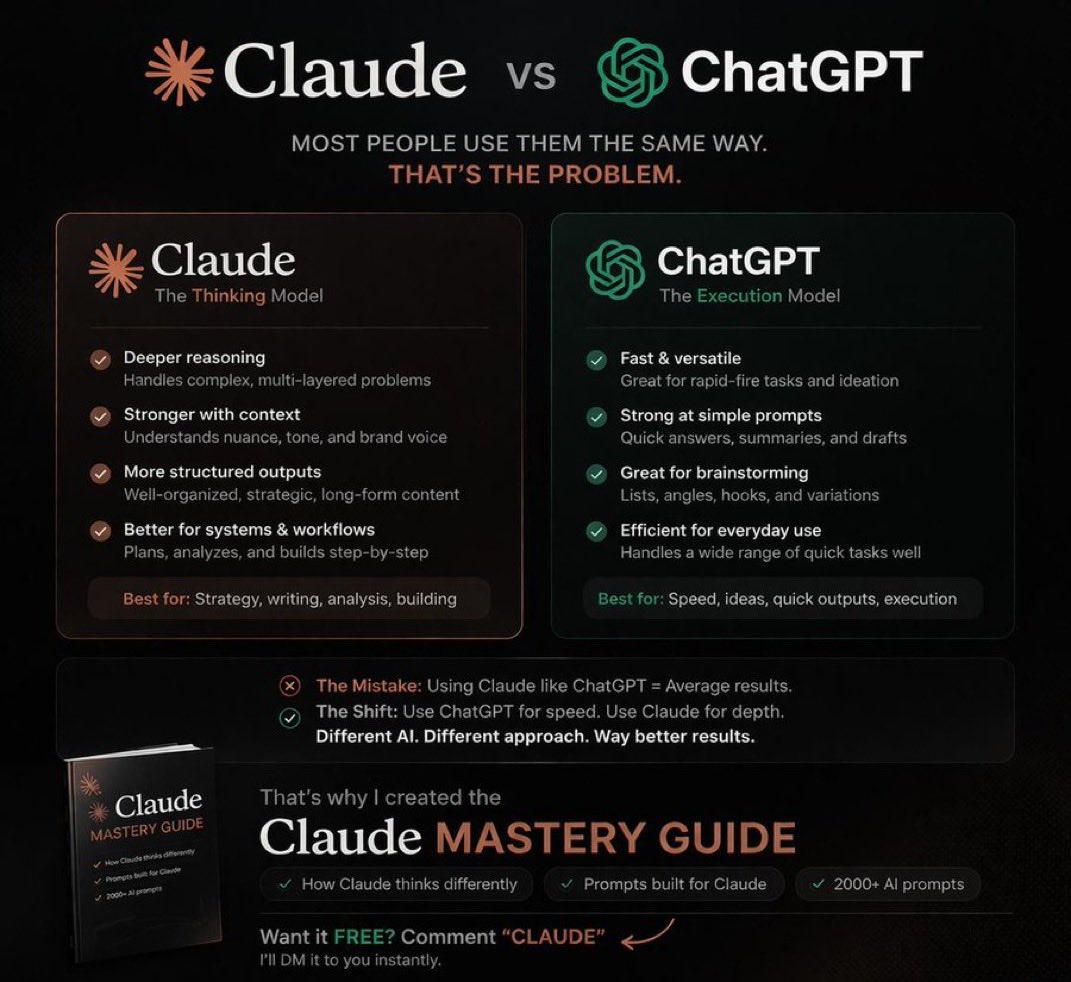
Claude Sonnet 4.6 is the smartest Al right now. But 90% of people prompt it like ChatGPT. That's why I made the Claude Mastery Guide: → How Claude thinks differently → Prompts built for Claude → 2000+ Al Prompts Comment " Claude " and I'll DM it free.
Maria Watson tweet media
English
262
47
168
19.7K
Budding_Trader retweeté
Alif Hossain
Alif Hossain@alifcoder·
Finance analysts earn $95k–$250k/year. The ones using Claude AI close work 3x faster. 📘 Claude AI for Finance Professionals — 120+ institutional-grade prompts for equity research, DCF, fixed income, portfolio strategy, earnings analysis, and IB workflows. Excel models included. Normally $189 → 100% FREE for 48 hrs Like + RT + comment 'Ebook' Must Follow me so I can DM you.
Alif Hossain tweet media
English
2.4K
1.4K
3.3K
329.8K
Eric Cole
Eric Cole@erichustls·
Screw it. I want to pay it forward. I’m giving away my *exclusive* AI playbook that took me from 0 to $90k/month. • Like this post • Comment “Freedom” And I’ll DM you the link. (Must follow, 24 hours only)
English
324
37
361
64.7K
Yann
Yann@yanndine·
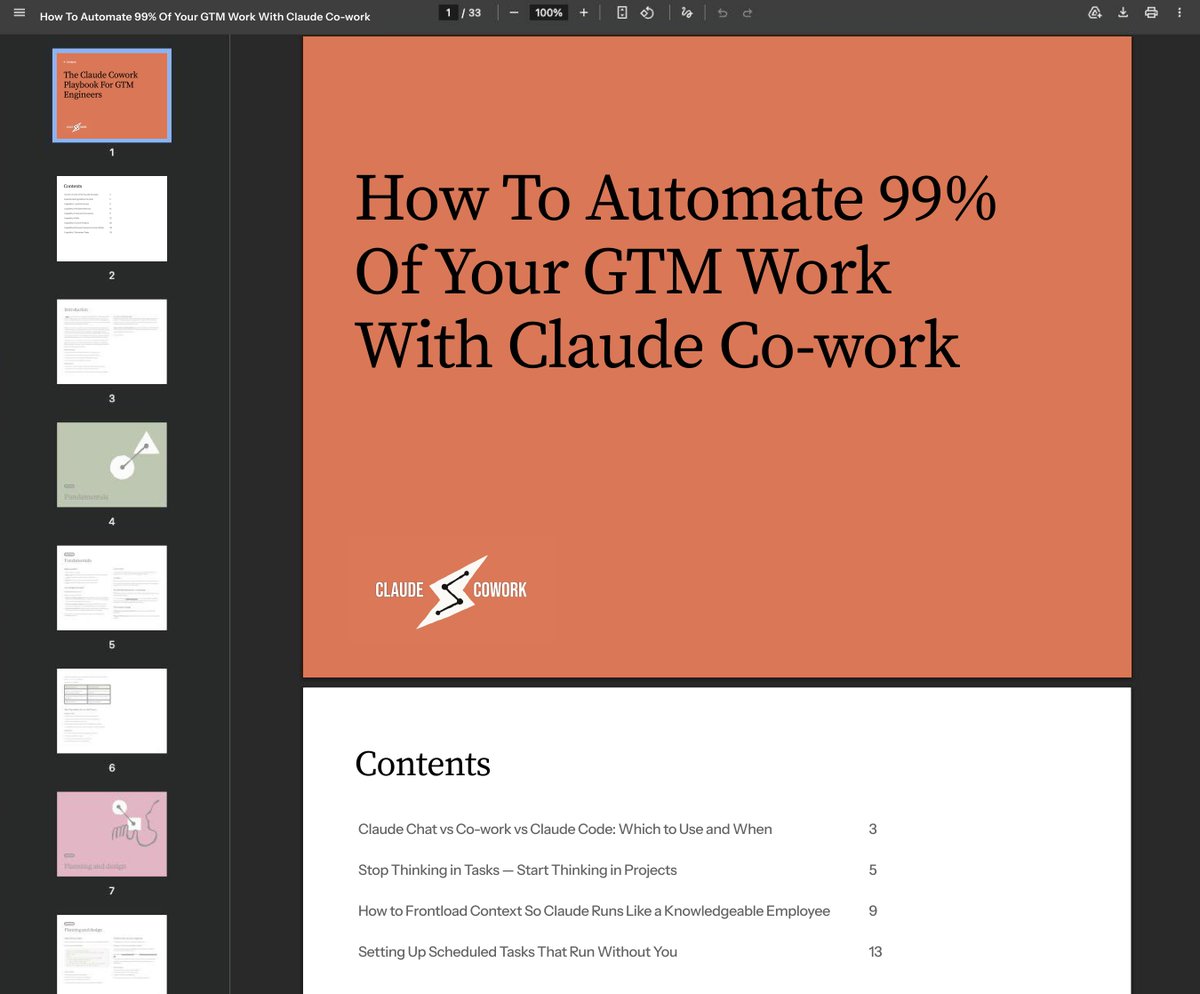
This Claude course can save you 20+ hours a week on GTM work you are currently doing manually. Over 3,000 founders and agency owners requested access last month... but I couldn't send it to everyone. So I'm releasing it again today. It reveals the exact Co-work setup needed to turn Claude into a system that pulls reports, triages your inbox, monitors your tools, and runs scheduled tasks every day without you triggering a single thing manually. Like + comment 'COWORK' and I'll share the full course for FREE. Follow me to receive the DM. For the next 48 hours only.
Yann tweet media
English
304
27
398
25.5K