Dani Quixote a la Planchà

15.8K posts

Dani Quixote a la Planchà banner
Dani Quixote a la Planchà

Dani Quixote a la Planchà

@Daskol2

I study deplorable domestic extremism and dis/mis/malinformation. Dad. #HoldtheLine

Brooklyn, NY Inscrit le Ocak 2021
6.1K Abonnements930 Abonnés
Helen Andrews
Helen Andrews@herandrews·
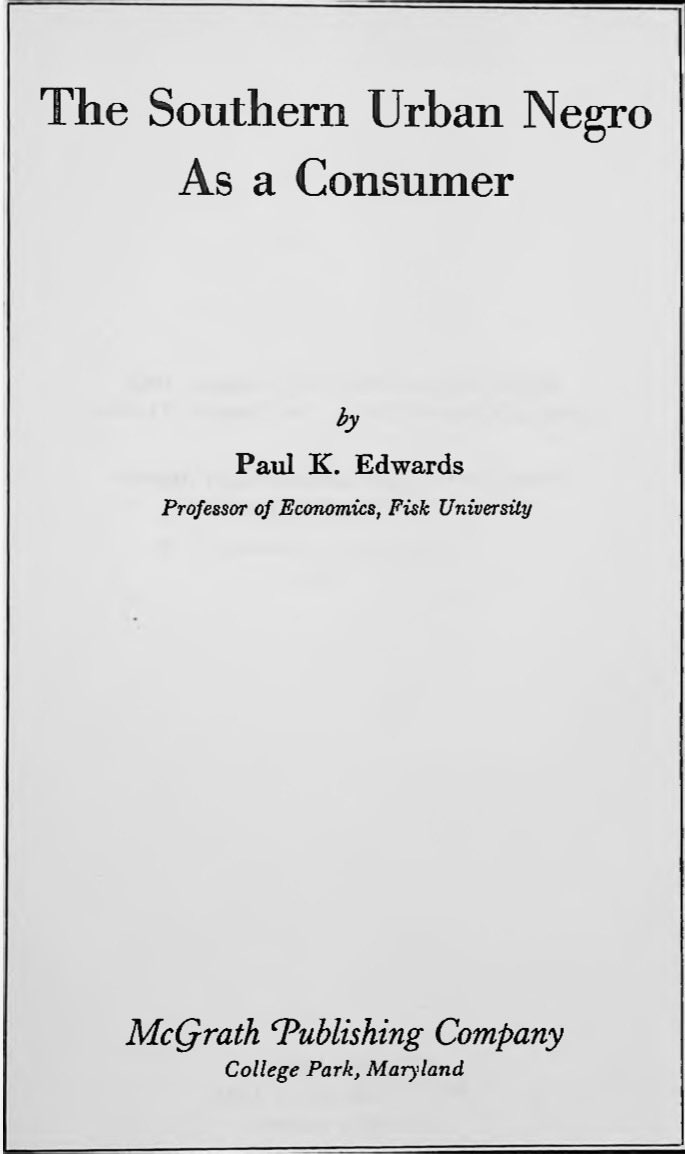
Very cool source. In 1930, the majority of urban black households purchased “high-grade coffee” such as Maxwell House rather than less expensive brands. In Nashville and Birmingham, it was over 90 percent.
Helen Andrews tweet mediaHelen Andrews tweet media
English
15
24
549
84.9K
Dani Quixote a la Planchà retweeté
Paulie
Paulie@PauliePaulf31·
@gehrig38 I loved watching all the Phils starters pitch that year, saw every game, great season!! For me I just remember you putting the towel over your head when Mitch pitched, and as a fan I felt the same, but it was disrespectful to a teammate, shouldn’t have done it
English
1
1
1
1K
Dani Quixote a la Planchà
@nut_history Rose is a remarkable player and a statistical freak but far from the best hitter. Ryan, however, is among the best pitchers ever any way you want to describe it, besides being a freak himself who could still dominate hitters into his mid 40s.
English
0
0
1
251
BaseballHistoryNut
BaseballHistoryNut@nut_history·
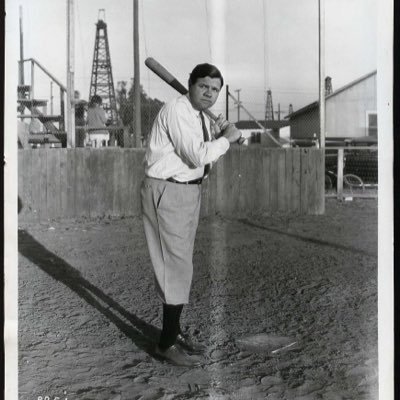
Two incredible players but I would say Nolan Ryan and Pete Rose are two of the most overrated players in MLB history
BaseballHistoryNut tweet media
English
1.6K
34
463
129.4K
Dani Quixote a la Planchà
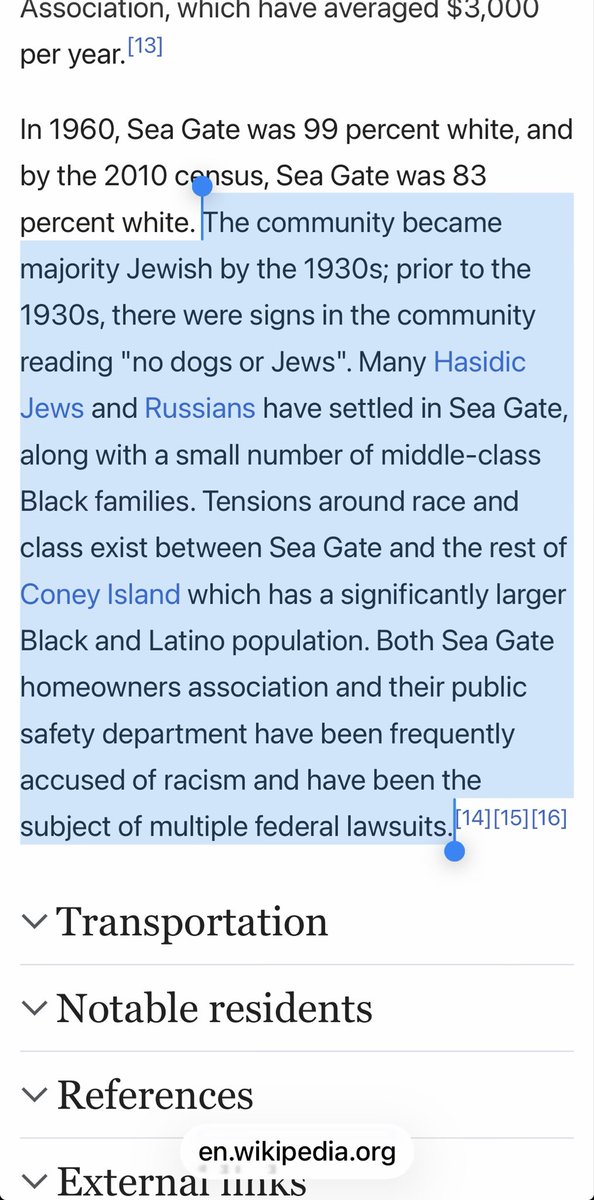
@marindatanow @KlonnyPin_Gosch @sustainbytrain Lansky was a shot caller if not the shot caller during the mafia heyday. Russian/Russian Jewish organized crime is as big as any other ethnic crime clan today in NYC. Affluent Russians predominate the NYC beachfront from Sea Gate to Manhattan Beach to Rockaway.
English
2
0
2
105
ParaPower Mapping
ParaPower Mapping@KlonnyPin_Gosch·
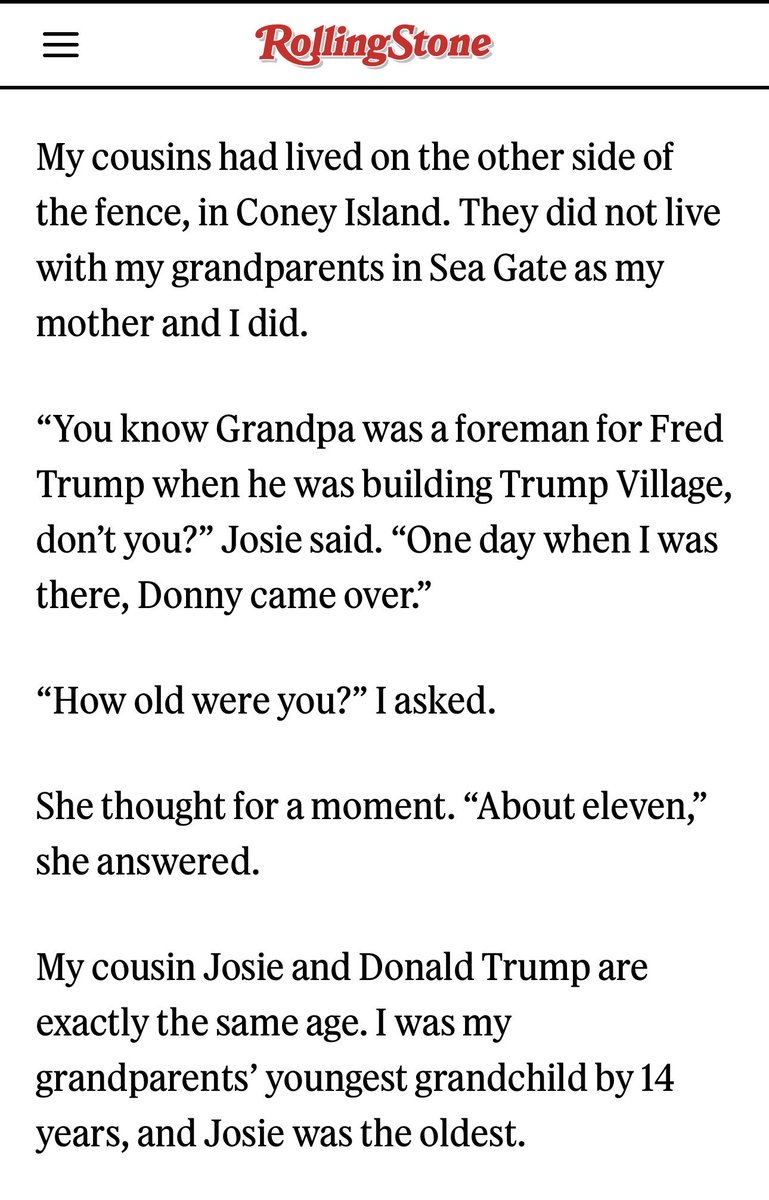
Breaking: Poet Gabrielle Glancy believes her grandpa molested a young Jeffrey Epstein. And guess what? He was a foreman who worked for Fred Trump and the Trump fam apparently visited them in Sea Gate. She insinuates her grandpa may have been a sex trafficker and also describes how it’s a poorly kept secret that the Mafia run Sea Gate 👀
ParaPower Mapping tweet mediaParaPower Mapping tweet mediaParaPower Mapping tweet media
Rolling Stone@RollingStone

“I Grew Up With Jeffrey Epstein. Our Neighborhood Held Dark Secrets” A remembrance of Sea Gate, Brooklyn, in the 1960s, by Gabrielle Glancy ↓ rollingstone.com/culture/cultur…

English
33
569
2.8K
143.8K
Matt Cole
Matt Cole@ColeMacro·
You were early to Bitcoin and contributed meaningfully to the ecosystem. That is respected. But none of that makes your critiques accurate. Pointing to past achievements to validate a current argument is credentialism. Markets reward strong analysis, not credentials. There are individuals with earlier Bitcoin involvement and deeper contributions, like Adam Back, whose credentials are stronger than yours yet support the Bitcoin treasury strategy. But what actually matters is whether an argument itself is accurate, not the credentials of the person making the argument. In this case, your critiques miss the mark. Let’s discuss it live and walk through it directly. I’m open to coordinating a time in the near future.
Simon Dixon@SimonDixonTwitt

OK. So I’ve been here since 2011. Spoke at the first Bitcoin conference in the world. Wrote the first book on Bitcoin. Invested early in over 100 Bitcoin companies from Coinbase to Kraken and everything in between. Created the first bitcoin bond. Launched the first Bitcoin VC fund. Launched the longest standing company in Bitcoin. Been involved in everything Bitcoin from the beginning and apparently I don’t get Bitcoin or investing?

English
21
20
459
38.8K
derrrp
derrrp@cryptoderrp·
@Daskol2 @TFTC21 Yeah I am sympathetic to his criticism of the marketing but welcome to the financial markets. They are clearly risk products and yes if btc fails it fails that's the risk. I would rather just hold btc than touch this but that does not mean its a ponzi and saying so is slander.
English
1
0
0
11
TFTC
TFTC@TFTC21·
Strive's Jeff Walton responds to Coffeezilla calling $STRC a Ponzi scheme: "The difference between a Ponzi scheme and a capital management vehicle is that a Ponzi scheme doesn't have reserves. A capital management vehicle does." "Almost 100% of insurance claims paid out are funded by premiums they collect. Does that make an insurance company a Ponzi scheme?"
English
31
16
430
24.1K
Dani Quixote a la Planchà
@cryptoderrp @TFTC21 He zeroed in the real risk--if BTC doesn't aggressively appreciate, it all comes tumbling down eventually. And he's right, I think, that Jeff (and Saylor) make up words or assign new meanings to existing terms of art in the credit space. But it got frustrating.
English
1
0
0
17
derrrp
derrrp@cryptoderrp·
@Daskol2 @TFTC21 His need to be right was blocking the opportunity.
English
1
0
1
15
Echoes of War
Echoes of War@EchoesofWarYT·
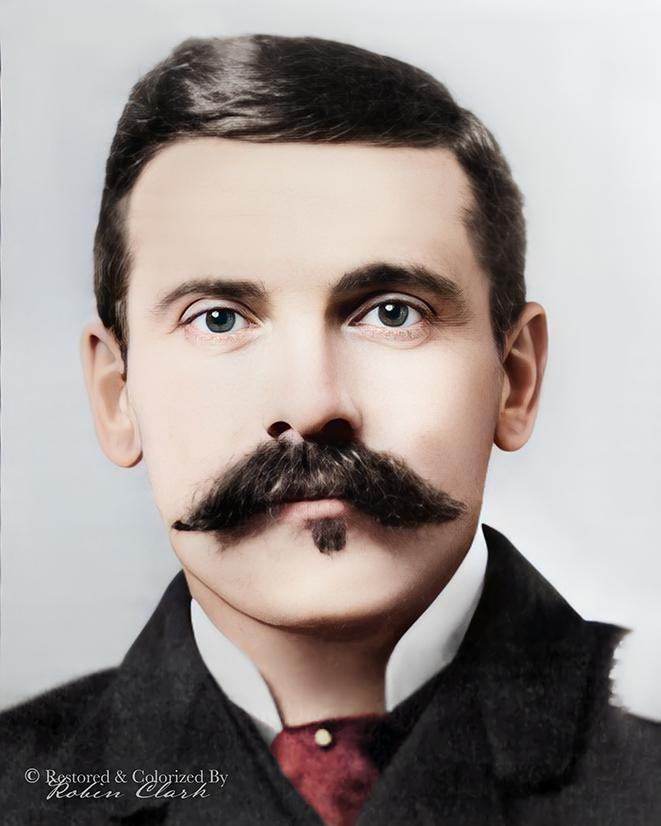
Doc Holliday was a dentist with a classical education in Greek and Latin who killed his first man at 19, coughed blood into a handkerchief for the next 17 years, and died in bed with a glass of whiskey, saying, "This is funny." Funny because he'd spent his entire adult life expecting to die in a gunfight. He never did. John Henry Holliday was born in Griffin, Georgia in 1851. He came into the world with a cleft palate and a partial cleft lip, a deformity that in 1851 was usually a death sentence for an infant. His uncle, a surgeon named John Stiles Holliday, performed the corrective surgery himself when the baby was two months old. His mother Alice spent the next several years patiently teaching the boy to speak clearly. She taught him piano. She taught him manners. She taught him how to bow to a woman and how to address a gentleman. By the time he was a teenager, John Henry could quote Virgil in the original Latin, play Chopin from memory, and dance a quadrille. Then she died of tuberculosis when he was 15, and so did the small, soft world she'd built for him. He was sent to Philadelphia to study dentistry. He graduated from the Pennsylvania College of Dental Surgery in 1872 at the age of 20, one of the youngest in his class, and his entry "Diseases of the Teeth" was considered exceptional. He won an award at a dental fair for "Best Set of Artificial Teeth in Gold." His diploma still exists. You can look at it. He moved back south, set up a practice, and started coughing. By 1873 the diagnosis was unmistakable. Pulmonary tuberculosis. The same disease that killed his mother. Doctors gave him a few months, maybe a year. They told him his only chance was to move west, where the dry air might slow the lungs from drowning. He kissed his cousin Mattie goodbye. He had been in love with her for years. She would later become a Catholic nun, Sister Mary Melanie, and she was the woman Margaret Mitchell would model Melanie Hamilton on in Gone With the Wind. They wrote each other letters until the day he died. Nobody has ever found those letters. The family burned them. He went to Dallas. He set up a dental office. And his patients, watching this thin polite young man cough blood into a handkerchief between extractions, stopped coming. So he turned to cards. Faro, mostly. Poker when he could find it. He had a gambler's gift and a dying man's nerve, and within two years he was making more in a week at the tables than he'd made in a year pulling teeth. He moved through Texas and into the Colorado mining camps, then New Mexico, then Arizona. He drank an estimated two to three quarts of whiskey a day, partly because it numbed the lungs and partly because nothing else did. Here is what made him terrifying. Most gunfighters in the Old West were cowards in expensive boots. They picked fights they could win and avoided fights they couldn't. Doc Holliday already knew he was dying. There was nothing you could threaten him with. There was no future you could take from him. He would walk into a room of armed men with that thin slow smile and a Colt and a knife and sometimes a sawed off shotgun under his long grey coat, and the math running behind his pale blue eyes was simple. Every day he was alive was already stolen. The men across the table had something to lose. He had nothing. He weighed about 135 pounds. He was five foot ten. He was usually drunk. And by the time he reached Tombstone, men crossed streets to avoid him. His common law wife was a Hungarian woman named Mary Katharine Horony, better known as Big Nose Kate. She had been born to nobility in Budapest, run away as a teenager after her parents died, worked as a prostitute in Iowa, and ended up on the frontier with a temper that matched his. He once got her out of jail by bribing a guard. She once got him out of jail by setting fire to the hotel next door as a distraction, then walking him out at gunpoint. They fought constantly. They loved each other in the way two people love each other when they both know one of them is going to die soon. He met Wyatt Earp in Fort Griffin, Texas, in 1877. The friendship that followed would shape both their lives. The legend goes that Doc saved Wyatt's life in Dodge City, walking out of the Long Branch Saloon to find Wyatt surrounded by cowboys with guns drawn, and putting his pistol to the leader's temple before anyone saw him move. Wyatt later said he owed Doc his life. He said Doc was "the most skillful gambler, and the nerviest, fastest, deadliest man with a six gun I ever knew." Wyatt Earp said that. About a tubercular dentist who could quote Cicero. At the OK Corral on October 26, 1881, the fight lasted thirty seconds. Doc was carrying a 10 gauge coach gun under his coat. He killed Tom McLaury with both barrels. When Morgan Earp was assassinated months later in retaliation, Doc rode with Wyatt on what history would later call the Vendetta Ride, a three week killing spree across Arizona that left every man they believed responsible dead in the dirt. They were never caught. They were never tried. They simply rode out of the territory and disappeared. By 1887 the disease had finally caught up with him. He was 36 years old. He weighed less than 120 pounds. He had outlived nearly every man who had ever tried to kill him, and most of the ones who had only thought about it. He checked into the Hotel Glenwood in Glenwood Springs, Colorado, where the sulfur springs were said to ease the lungs. They didn't. On the morning of November 8th, the nurse brought him a glass of whiskey. He had always sworn he would die with his boots on, the way a gunfighter was supposed to die. He looked down at his bare feet under the white hospital sheet. He looked at the whiskey. He started to laugh. "This is funny." Then he drank it. And he died.
Echoes of War tweet media
English
270
2K
13.1K
710.3K
Stephen L. Miller
Stephen L. Miller@redsteeze·
The most relevant poll in Film Twitter history.
English
6
3
23
7.8K
Stephen L. Miller
Stephen L. Miller@redsteeze·
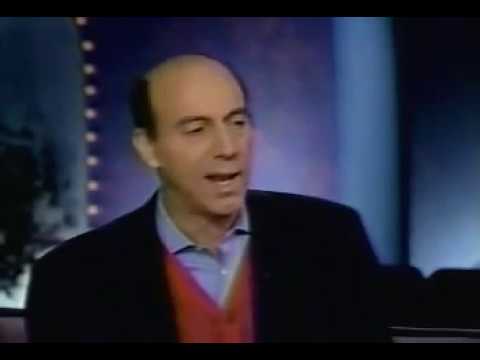
A fun reminder that the first film the Coen brothers made after winning Best Oscars for Fargo was The Big Lebowski which Siskel on Siskel and Ebert hated on such a level that I question if he even understood the plot. youtube.com/watch?v=NNTL64…
YouTube video
YouTube
English
44
4
174
42.6K
Chris Arnade 🐢🐱🚌
Chris Arnade 🐢🐱🚌@Chris_arnade·
I've written for the last decade about the educational divide in the US, but culturally there is now a large divide between generations — specifically those over sixty versus basically everyone else. The sixty-plus cohort (Boomers which I'm at the very tail end of) have a lot more certainty that they've discovered the Truth — or the high point, and often end point, of many things. From music (rock will always be here), to fashion (why would anyone wear anything but blue jeans), to politics (liberal democracy with emancipation from all forms of obligation as a human Telos). Younger people are much more uncertain and relativistic. They don't accept the claim that it's been solved, and the Boomers' rigidity and religious-like certainty seems to them either laughably naive or arrogantly condescending. The Boomers see everyone else as having fallen away from the path to historical perfection they paved, and are uniformly angry about that. What most of the Boomers miss is that the younger generation is living in the world they built — of hyper-individuality, of smashing of prior norms, and of moral relativism. This post-truth, post-gatekeeping, hyper-partisan world is an endpoint of their worldview, and yet they are angry about it.
English
123
143
1.5K
300.7K
ParaPower Mapping
ParaPower Mapping@KlonnyPin_Gosch·
@XiWellWisher I don’t think it’s quite that tier, but one of my great shames is not clocking how evil it was at first viewing. I hang my head over the lag.
English
11
0
118
13.8K
Ancient History Hub
Ancient History Hub@AncientHistorry·
205 years ago today, Napoleon Bonaparte died on a tiny British prison island in the middle of the South Atlantic. He was 51. He had ruled most of Europe. And he changed the world so thoroughly that you are still living inside the systems he built. Start with the obvious one. The Napoleonic Code. He commissioned it in 1800, sat in on the drafting sessions personally, argued with the lawyers, and pushed it through in four years. Equality before the law. Property rights. Religious freedom. The end of feudal privilege. It is still the basis of civil law in France, Belgium, the Netherlands, Italy, Spain, Portugal, most of Latin America, Quebec, Louisiana, and chunks of the Middle East and Africa. About a third of the planet writes contracts using rules a Corsican artillery officer wrote between battles. He sold Louisiana to Thomas Jefferson in 1803 for 15 million dollars. Roughly four cents an acre. It doubled the size of the United States overnight. Without that deal there is no St. Louis, no New Orleans as an American city, no Lewis and Clark, no Manifest Destiny. The American century starts with Napoleon needing cash for a war. He invaded Egypt in 1798 with an army and, weirdly, 167 scientists, mathematicians, and artists. They found the Rosetta Stone. That single slab is the reason we can read hieroglyphs at all. Egyptology as a field exists because Napoleon brought scholars to a war. He built the Bank of France, which still runs French monetary policy. He created the lycée system that still educates French teenagers. He shoved the metric system across Europe at sword-point until it stuck. He emancipated the Jews of every territory he conquered, tearing down ghetto walls in Rome, Venice, Frankfurt. He abolished serfdom in Poland. He standardized road networks, civil registries, and tax codes that European governments still operate from. And then there's the soldiering. He fought around 60 major battles and won most of them. Austerlitz, in 1805, against the combined Russian and Austrian empires, is still taught at West Point as one of the closest things to a tactically perfect battle ever fought. He was outnumbered, baited the enemy onto ground he had pre-selected, and broke them in a single afternoon. Three emperors took the field that morning. Only one walked off it on his own terms. He slept four hours a night. He read constantly, dictated letters to four secretaries at the same time, and personally signed off on everything from cavalry boot specs to the seating chart at the Comédie-Française. Wellington, the man who finally beat him at Waterloo, was asked decades later who the greatest general in history was. He answered without hesitating. "In this age, in past ages, in any age, Napoleon." He lost, in the end, because he could not stop. Russia in 1812 swallowed his army whole. Six hundred thousand men marched in. Maybe a tenth came back. He abdicated in 1814, escaped from Elba, ruled France again for 100 days, and lost it all for good in a wheat field in Belgium in June 1815. The British shipped him to St. Helena, a volcanic dot 1,200 miles off the African coast, and waited. He spent six years there dictating his memoirs, gardening, complaining about the dampness, and quietly rewriting his own legend so effectively that Europe spent the next century arguing about him. He died on May 5, 1821, during a storm so violent it ripped up the willow tree he liked to read under. His last words trailed off into fever. France. The army. Joséphine. Nineteen years later France brought him home. Two million people stood in the snow to watch the coffin go by. He was a tyrant. He was a reformer. He started wars that killed somewhere between three and six million people. He also wrote the rulebook that a third of humanity still lives under. Most people who try to conquer the world are forgotten inside a generation. Napoleon has been dead for 205 years and we are still arguing about him because we are still using his furniture.
Ancient History Hub tweet media
English
289
2.3K
9.4K
635.1K
Robert W Malone, MD
Robert W Malone, MD@RWMaloneMD·
Getting intel from multiple sources that I have been blacklisted by the White House consequent to my departure from ACIP and interview with Del Bigtree. Have heard similar from others about their own recent experiences. Good to know. Not a good look for official WH "MAHA" initiatives.
English
410
1.1K
4.7K
166.3K
Jonathan Turley
Jonathan Turley@JonathanTurley·
Justice Jackson recently said that “I have a wonderful opportunity to tell people in my opinions how I feel about the issues, and that’s what I try to do.” For some of her colleagues, that cathartic benefit is coming at too high a cost for the Court. jonathanturley.org/2026/05/05/bas…
English
1.3K
3.2K
14.7K
297.4K
MJ Murphy
MJ Murphy@hothingsgirlsay·
One of the most hypnotic speeches Ive ever broken down
English
66
182
1K
52.9K
Surprised Jarvis
Surprised Jarvis@CatsandCanes·
@Daskol2 @WillSommers2 Not sure what "i5cis" is supposed to be but you sound pretty dumb so I dont really care. Throw a better fucking pitch or live with the result
English
2
0
99
2.1K
Will Sommers
Will Sommers@WillSommers2·
Garret Cole is such a loser lol Hitting a 20-year-old in High A because he got barreled. Cool man.
English
304
322
16.4K
3M