Yuval Itan

1.6K posts

Yuval Itan

Yuval Itan

@ItanLab

Human disease genomics, precision medicine and machine learning. Associate Professor at @IcahnMountSinai

New York, USA Inscrit le Mart 2018
1.2K Abonnements939 Abonnés
Yuval Itan retweeté
Casanova Lab
Casanova Lab@casanova_lab·
1/ We are thrilled to announce that our American branch of the Laboratory of Human Genetics of Infectious Diseases (HGID) will relocate to @UTSWMedCenter in Dallas, Texas, effective July 1, 2026 J
Casanova Lab tweet media
English
15
18
150
17K
Yuval Itan retweeté
Pushmeet Kohli
Pushmeet Kohli@pushmeet·
At @GoogleDeepMind, we believe AI is the ultimate catalyst for science. 🧬 The best example of this has been the AlphaFold database (AFDB) of protein structure predictions which has been used free of cost by more than 3.3 millions researchers across the world! Today, in collaboration with @emblebi, @Nvidia and @SeoulNatlUni, we are expanding the database by adding millions of AI-predicted protein complex structures to the AlphaFold Database. To maximise global health impact, we’ve prioritised proteins that are important for understanding human health and disease, including homodimers from 20 of the most studied organisms, including humans, as well as the @WHO’S bacterial priority pathogens list. Read more here: embl.org/news/science-t…
English

82
391
2.5K
150.2K
Yuval Itan retweeté
UCSC Genome Browser
UCSC Genome Browser@GenomeBrowser·
We are excited to announce the release of the Human Methylation Atlas Summary and Signals tracks for hg38 and hg19. The tracks display genome-wide DNA methylation profiles across 39 primary human cell types from 205 healthy tissue samples. Learn more at bit.ly/humanMethylati…
UCSC Genome Browser tweet media
English
2
90
349
22.1K
Yuval Itan retweeté
Jorge Bravo Abad
Jorge Bravo Abad@bravo_abad·
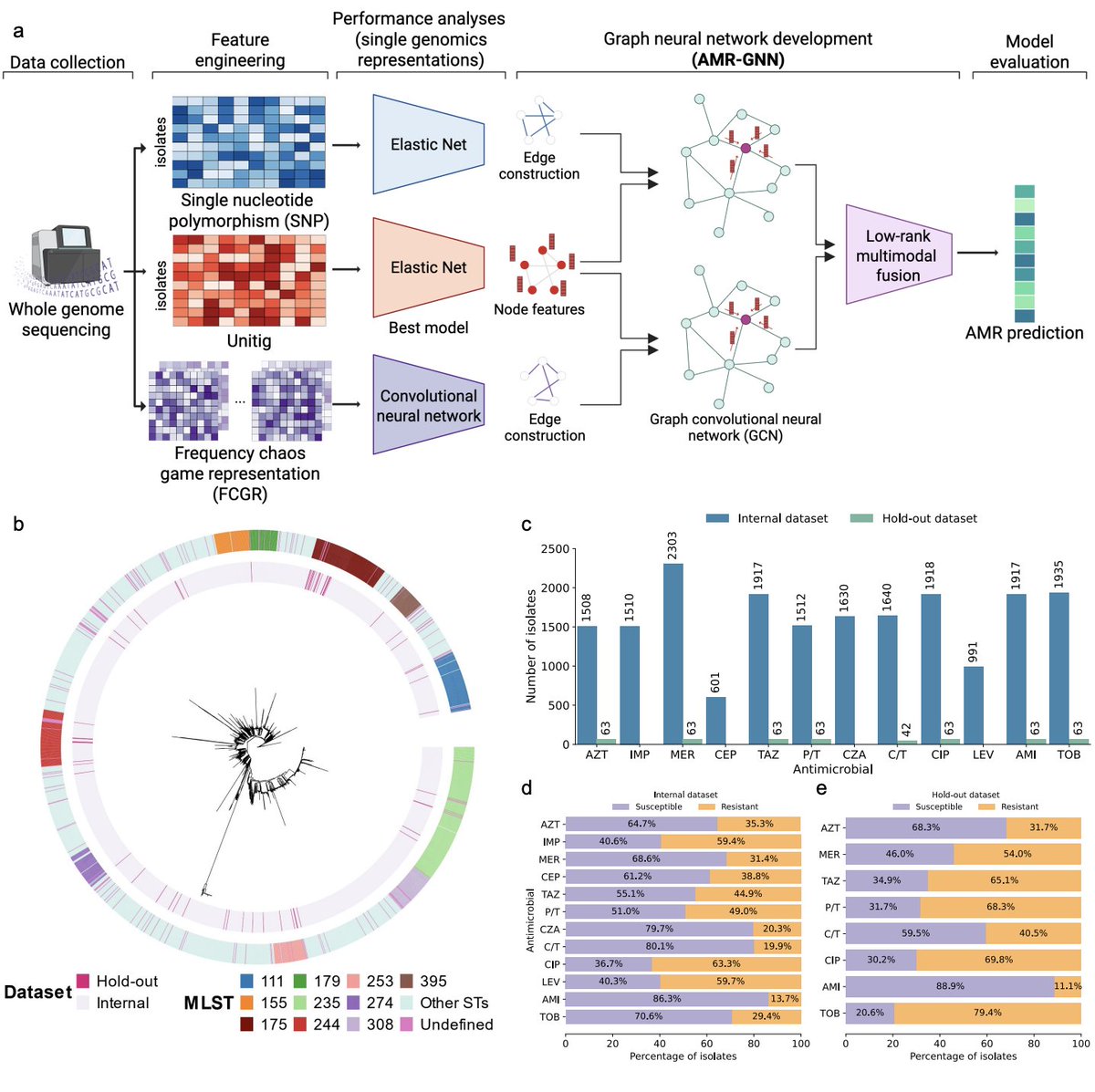
Graph neural networks that read bacterial genomes to predict antibiotic resistance Antimicrobial resistance kills over a million people every year. When a patient arrives with a severe bacterial infection, clinicians need to know which antibiotics will work—fast. Culture-based susceptibility testing takes 2 to 5 days. Whole-genome sequencing offers a shortcut, but translating raw bacterial DNA into reliable resistance predictions is far from trivial. Bacterial genomes can be represented in many ways—SNPs, reference-free unitigs, image-like frequency chaos game representations (FCGR)—and there is no consensus on which works best. Worse, bacteria reproduce clonally, so standard ML models often learn to recognise high-risk lineages rather than the actual resistance mechanisms. Nguyen and coauthors tackle both problems with AMR-GNN, a graph neural network that integrates multiple genomic representations simultaneously. Unitig features serve as node features; SNP- and FCGR-derived pairwise distances define the graph edges. Two parallel GCN modules learn from the same nodes but different connectivity structures, and their embeddings are fused before a final resistance/susceptibility classification. Tested on 2,515 Pseudomonas aeruginosa isolates across 12 antibiotics, AMR-GNN significantly outperforms single-representation models in 11/12 drugs—with AUROC gains of 28.8% for cefepime and 18.9% for aztreonam, precisely where prediction is hardest. A structural fix for clonal confounding—removing edges between isolates of the same sequence type, forcing the model to learn from genetically distinct neighbours—improves performance further across all tested antibiotics. Validated on 23,000+ genomes spanning E. coli, K. pneumoniae, S. aureus, and E. faecium, mean AUROCs exceed 0.90 in nearly every species-drug combination. The model also recovers known resistance genes (gyrA, gyrB, parC for levofloxacin; fusA1 for tobramycin) through integrated gradient analysis—without any prior AMR knowledge encoded in the architecture. Multi-representation learning, graph-based relational structure, and built-in interpretability. Three historically separate challenges, addressed in a single unified framework. Paper: nature.com/articles/s4146…
Jorge Bravo Abad tweet media
English
1
53
197
10.9K
Yuval Itan retweeté
Garyk Brixi
Garyk Brixi@garykbrixi·
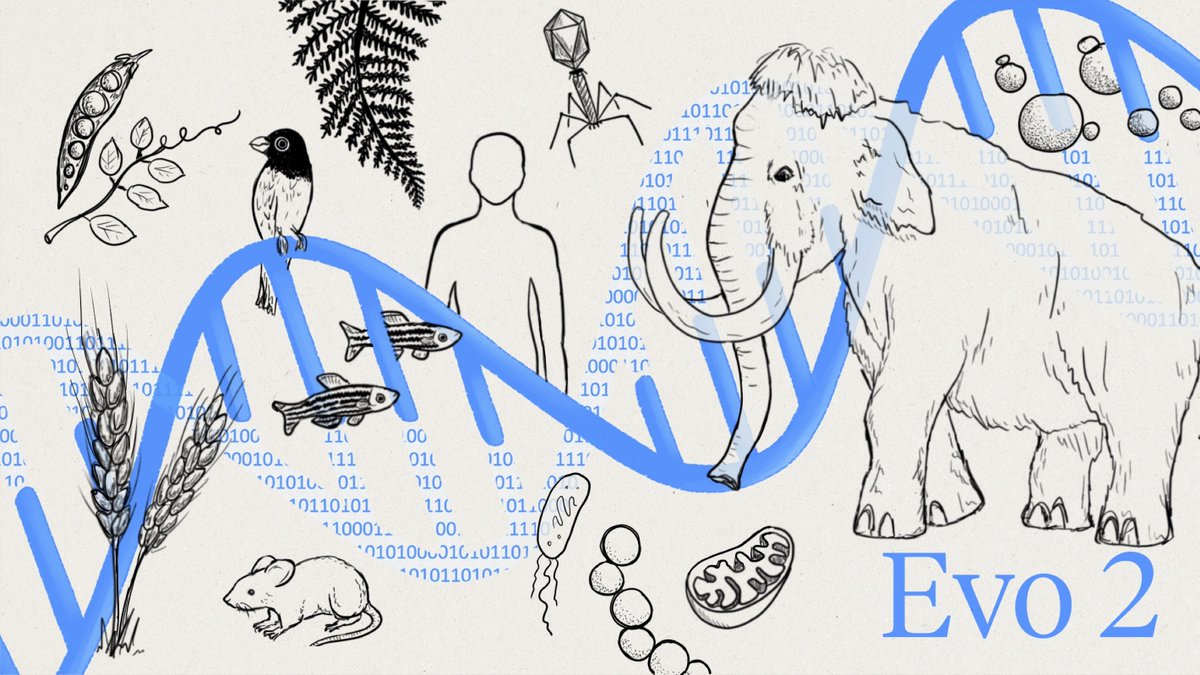
Evo 2 is out in Nature today, showing that genome language models can predict and design across the full complexity of life, from phages to eukaryotes. A few surprises from the project, including how ignoring trillions of nucleotides was key to getting a good model. 🧵
Garyk Brixi tweet media
English
13
208
1K
97.4K
Yuval Itan
Yuval Itan@ItanLab·
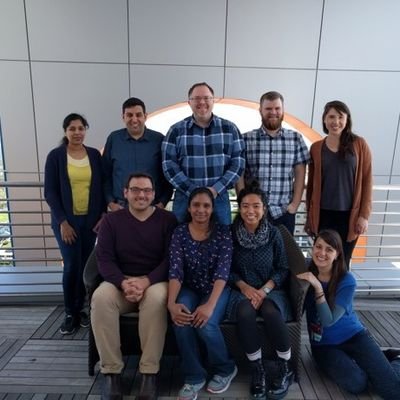
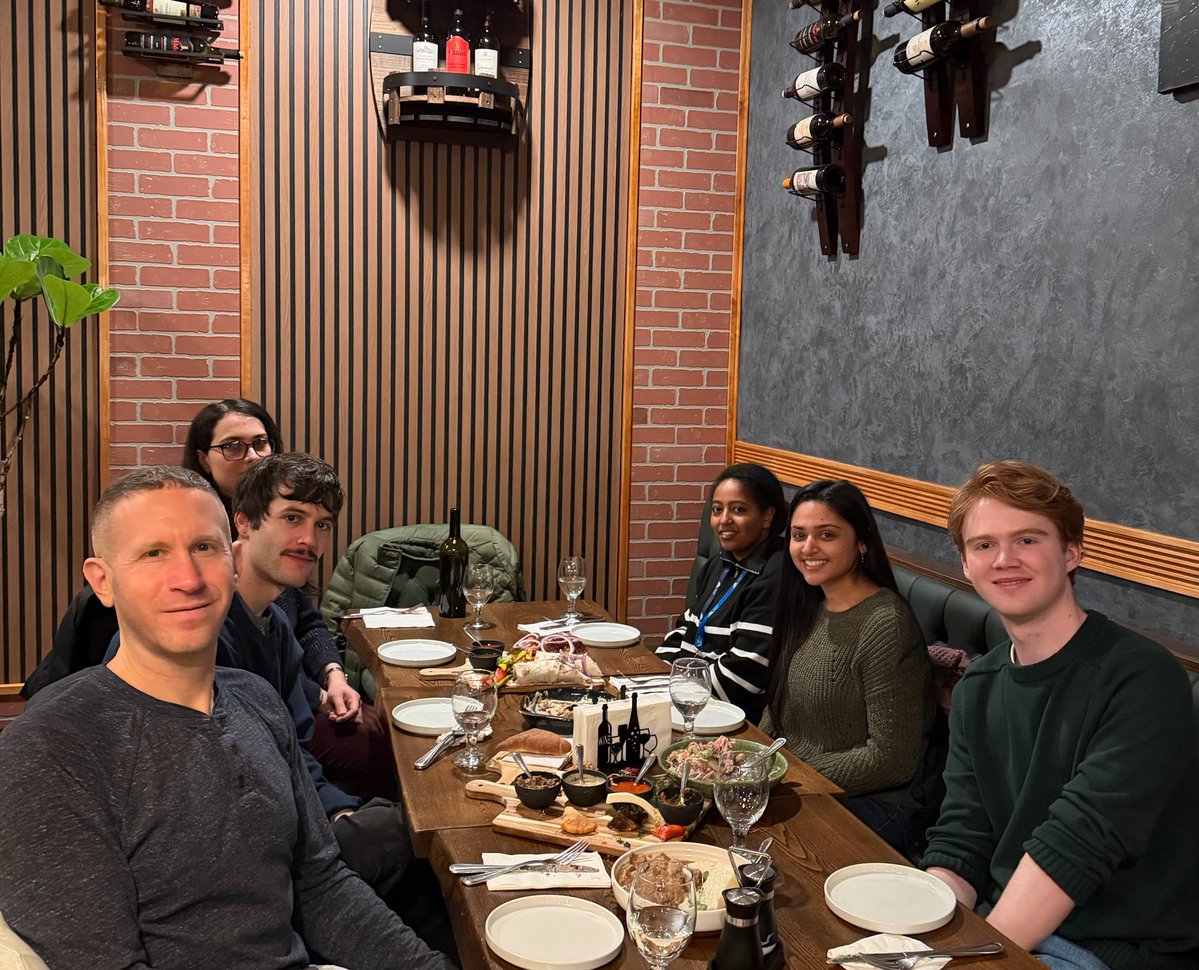
Great dinner with the lab, celebrating recent achievements and welcoming our new postdoc @abe_hanna to the group and to NYC
Yuval Itan tweet media
English
0
0
7
321
Yuval Itan retweeté
eLife - the journal
eLife - the journal@eLife·
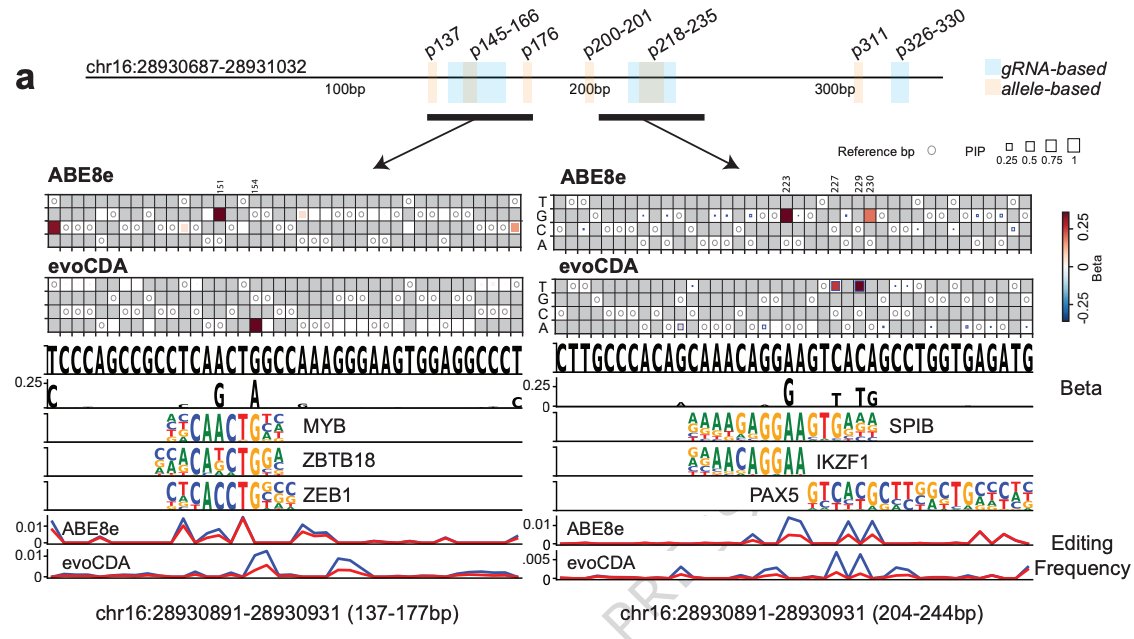
🧬 A major data reanalysis in December's most-read Genetics paper uncovers thousands of previously hidden protein-coding regions in human and mouse genomes: elifesciences.org/reviewed-prepr…
eLife - the journal tweet media
English
2
34
138
10.4K
Yuval Itan retweeté
antisense.
antisense.@razoralign·
Negative global-scale association between genetic diversity and speciation rates in mammals nature.com/articles/s4146…
antisense. tweet media
English
3
16
67
4.4K
Yuval Itan retweeté
Science Magazine
Science Magazine@ScienceMagazine·
A new genome-wide functional genomic study in @ScienceAdvances describes how a variant in a DNA locus already linked to schizophrenia risk can disrupt RNA splicing—with potential effects on synaptic function. scim.ag/49GZaRP
Science Magazine tweet media
English
3
25
137
19K
Yuval Itan retweeté
DailyPapers
DailyPapers@HuggingPapers·
Microsoft just released Dayhoff on Hugging Face A 3B-parameter protein language model that designs novel proteins from scratch Trained on 3.34B protein sequences with hybrid Mamba-Transformer-MoE architecture
DailyPapers tweet media
English
2
41
249
22.4K
Yuval Itan retweeté
Science Magazine
Science Magazine@ScienceMagazine·
In a 2025 Science study, researchers presented CASTER, a tool that uses arrangements in DNA sequences known as site patterns to infer “species trees,” which are diagrams that depict the evolutionary relationships among species. The tool offers transformative potential for evolutionary research. scim.ag/4r9L7eo #ScienceMagArchives
Science Magazine tweet media
English
5
44
170
24.5K
Yuval Itan retweeté
Harrison Steel
Harrison Steel@Harrison_Steel·
Engineering Quantum Effects in Biology: Our paper is out today, and we think this will be the start of a new challenge in Bioengineering. If you want to start working in this area, get in touch! nature.com/articles/s4158…
English
15
46
191
16K
Yuval Itan retweeté
NVIDIA Healthcare
NVIDIA Healthcare@NVIDIAHealth·
🧬 The frontier of RNA structure prediction is advancing 🆕 RNAPro A breakthrough model for RNA 3D structure prediction. Synthesized from the top strategies in a Kaggle competition with 1,700+ teams, this model marks the first time an AI-based automated method has been competitive with human experts using physics-based approaches. Trained on NVIDIA Blackwell GPUs, the RNAPro model integrates deep learning with an innovative template-based modeling pipeline, outperforming baselines such as AlphaFold3. Details 🧵
NVIDIA Healthcare tweet media
English
11
160
699
32.5K