Phil Trubey

20.4K posts

Phil Trubey banner
Phil Trubey

Phil Trubey

@PTrubey

Looking for AI startups with fundamental technology.

San Diego, CA Inscrit le Aralık 2012
783 Abonnements12.2K Abonnés
Tweet épinglé
Phil Trubey
Phil Trubey@PTrubey·
The original sin of OpenAI was to release ChatGPT as a consumer product with consumer pricing. Three years later, the models have gotten so good that the value they provide to business far exceeds what they pay for it. Claude Code is ridiculously cheap for what it does. The model companies are in a race to become net profitable before investors pull the plug on their valuations. At some point, the industry will have to have expensive business tier pricing. If they don't, someone's going to go bankrupt, forcing everyone to re-evaluate their pricing. So, will the AI industry pause their cut throat competition long enough to engender a soft landing with higher margins, or will someone have to crash and burn first?
English
4
2
4
1K
Phil Trubey
Phil Trubey@PTrubey·
You know, we’ve been awash with people who don’t necessarily have their identity wrapped up in their work: trust fund kids. And as far as I can tell, their happiness levels aren’t that far off from those that earned their wealth. As the essay points out, there are plenty of things to work on and get involved in even if it isn’t capitalistic “work”. Unless everyone thinks that AI will magically solve all societal ills and bad government policy making?
English
0
0
1
28
Phil Trubey
Phil Trubey@PTrubey·
@Jason It was a very stupid question. Trump gave it the respect it deserved.
English
0
0
0
76
@jason
@jason@Jason·
Of my lord 🤦 😂 Only three more years left folks — enjoy the show, try the veal and tip your waiters!
English
280
168
2.9K
560.4K
Phil Trubey
Phil Trubey@PTrubey·
Pearl Harbor wasn’t a joke, but the journalist’s question was stupid. “Why didn’t you tell all your allies about your military campaign?” Because word would have leaked and Americans would have died? It was a stupid attempt at a gotcha question and so Trump fired back with an uncomfortable reply.
English
0
0
0
33
Zhai Xiang
Zhai Xiang@ZhaiXiang5·
x.com/ZhaiXiang5/sta… Pearl Harbor isn't a joke. But apparently, in the Oval Office, it is. On a separate note, based on my archival research at the FDR library, Roosevelt telegraphed the Japanese Emperor a day before Pearl Harbor, attempting to persuade Japan to choose peace. Unfortunately, the telegraph reached the emperor exactly when the attack began. Curious if Japan would give up that bad plan if the translation and delivery were faster.
Zhai Xiang@ZhaiXiang5

On the morning of December 7, 1941, at 7:48 am Hawaii time, or 1:18 pm Eastern Standard Time, Japan launched a surprise attack on Pearl Harbor. More than 2,000 Americans lost their lives, over 20 naval vessels and nearly 200 aircraft were destroyed. The following day, FDR delivered his famous "Day of Infamy" speech, and the United States declared war on Japan. For a long time, a conspiracy theory has circulated globally: that the US government had prior knowledge of Japan's plan to attack Pearl Harbor but deliberately allowed it to happen, in order to arouse public anger and build political support for entering the war. When I was in middle school in China, I read similar claims in magazines and newspapers. There is also a version popular in China that Chinese intelligence agents had broken Japanese military codes beforehand, and Chiang Kai-shek relayed this information to Roosevelt, but it was not taken seriously by the Americans. While studying at Stanford, I worked part-time at Hoover between 2012 and 2015, during which I was the only research assistant on China. I read every page of Chiang Kai-shek's diaries after 1949 and most of those before 1949. Supported by Stanford's FSI and other institutions, I also conducted archival research at the FDR Presidential Library, as well as Taiwan's Academia Sinica and the Academia Historica. My own research into Chiang's documents shows no evidence that Chinese intelligence had decrypted Japanese communications prior to Pearl Harbor. However, on December 7 at noon, Roosevelt did meet with Chinese Ambassador Hu Shih (胡适) and told him that war between the US and Japan might soon break out. An hour later, back at the embassy, Hu received a personal phone call from Roosevelt, making him the first Chinese to learn of the Pearl Harbor attack. So, did the United States have foreknowledge of the attack? And why did Japan choose what today might seem like such a reckless way to provoke war with the US? As we approach the 80th anniversary of V-Day marking the end of World War II, I would like to share my findings and reflections, drawn from my archival research. In 1931, Japan invaded Northeast China and soon established the puppet state of Manchukuo. At the time, the United States, mired in the Great Depression, had little capacity to restrain Japan. Nevertheless, in 1933, the US government issued a statement declaring it would not recognize Manchukuo. During the 1930s, US–Japan trade relations were close, driven by substantial economic interests. Japan accounted for nearly 10% of America‘’s total foreign trade, more than twice the share of China. Coupled with the widespread isolationist sentiment among the American public, there was little incentive for the US to confront Japan directly. However, as Japan aggression expanded, American interests were increasingly undermined. At the end of 1937, Japanese aircraft attacked the USS Panay while it was sailing on the Yangtze River. Although Japan later claimed they didn't see the US flag and offered compensation, the incident cast a long shadow over US–Japan relations. In 1940, Japan occupied French Indochina (approximately today's Vietnam, Laos, and Cambodia) and formally joined the Axis alliance with Germany and Italy. Britain and the United States had once hoped Japan would pursue a "northward" strategy against the Soviet Union, but instead Japan turned to a "southward" advance, inflicting serious damage on their interests. In the summer of 1941, Roosevelt announced an oil embargo on Japan. This was a heavy blow, as it meant Japan's military expansion in Asia could no longer be sustained. At the top left is the telegram Roosevelt sent to Emperor Hirohito on December 6, 1941 expressing his hope for reconciliation between the United States and Japan. Secretary of State Cordell Hull also cabled US Ambassador to Japan Joseph Grew, instructing him to deliver the full text of Roosevelt's telegram to the Emperor as soon as possible. Unfortunately, although the telegram reached the Tokyo telegraph office at noon on December 7, it was delayed and only delivered to the US Embassy at 10:30 that night. Grew later recalled that when the Embassy contacted the Japanese Foreign Minister, his secretary asked whether the matter was so urgent that it could not wait until the next day. Grew therefore believed that at least the minister's secretary was unaware that war was about to break out. Shortly after midnight on December 8, Grew met the Foreign Minister and requested an imperial audience to deliver Roosevelt's message. The next morning, after 7 am, he was informed that the Foreign Minister had already met Emperor Hirohito at 3 am, the very hour when Pearl Harbor was under attack. The minister handed Grew a memorandum of more than ten pages; the final page stated that Japan believed it was no longer possible to reach an agreement with the US, and that this counted as the Emperor's reply. Clearly, Roosevelt's last attempt to avert war through diplomacy did not succeed. At the top right is a record from Chiang Kai-shek's archives concerning Ambassador Hu Shih's meeting with Roosevelt on December 7. According to both the White House presidential schedule and Hu's later recollections, on December 6 Hu was in New York attending an event when he was informed he needed to meet Roosevelt. He rushed back to Washington that night and met FDR at 12:30 pm on December 7 for forty minutes. Roosevelt briefed him on the content of the telegram sent to the Emperor, describing it as a final effort for peace, but admitted that the US was not optimistic, predicting that war with Japan would break out within 48 hours. He remarked that such a war would be a tragedy for humanity, but could be a major opportunity for China, and hoped that China would feel sorrow rather than celebration if US–Japan hostilities began. Shortly after Hu returned to the embassy, he received a personal phone call from Roosevelt, informing him that Japanese forces had already begun their attacks on Pearl Harbor and Manila. According to FDR archival records, at 1:47 pm, in the White House's Yellow Oval Room, FDR was working on his stamp collection when the Secretary of the Navy telephoned to report that Japanese aircraft were bombing Pearl Harbor. At first, Roosevelt's confidant Harry Hopkins thought it must have been a mistake. Minutes later, General George Marshall called with the same report. At 3:05 pm, FDR met in the Yellow Oval Room with the Secretaries of the Navy and War; Marshall and Hull joined them fifteen minutes later. At 4:15 pm, Roosevelt began dictating to his secretary the draft of his war message to Congress. In the bottom left corner is the printed draft from his secretary, on which one can see Roosevelt's careful edits. For example, he changed "a date which will live in world history" to "a date which will live in infamy." He also inserted "at the solicitation of Japan" before the phrase "conversation with its government and its emperor." Unlike the usual practice, where the president provided general guidance and speechwriters produced the text, this time Roosevelt wrote the speech himself, and it became one of the most iconic addresses in American history. The archives also reveal a curious episode about this speech. Hull had requested that Roosevelt present in detail the history of US–Japan tensions and the failure of negotiations. To this end, the State Department prepared a 17-page draft that traced disputes back to the 19th century. Roosevelt rejected it. Having read the draft carefully, I agree that it was far weaker-it might even have put some congressmen to sleep if delivered in full. Still, a few details in it are worth mentioning. For example: "In 1934, Japanese Minister of Foreign Affairs sent a friendly note to the United States stating that he firmly believed that no question existed between the two governments that was fundamentally incapable of friendly solution and that Japan had "no intention whatever to provoke or make trouble with any other power." "We are fighting in self-defense; in defense of our freedom, of our liberties, and of our rights." It also mentioned that Japsnese armed forces wounded, abused American citizens, sank American vessels, bombed American hospitals and schools, and crippled American business. In reference to Japan’s actions in China and Indochina, the draft speech described them as "rapine, torture, massacre, and destruction." Roosevelt's address was delivered at the Capitol shortly after noon on December 8, lasting seven minutes. That very afternoon, Congress almost unanimously voted to declare war on Japan, roughly 24 hours after the attack on Pearl Harbor. Japan had clearly underestimated both America's capacity for rapid mobilization after provocation and its determination to enter the war. It had also misjudged the strength of US industrial production. Rather than delaying America's entry into the war as Japan had hoped, the surprise attack became one of its most fatal strategic miscalculations. The United States was not China in 1895, forced to endure humiliation and compromise after the Japan's surprise naval attack. Japan's ultimate defeat was foreshadowed the moment it made this unwise decision. By now some friends may still question FDR had prior knowledge. Here I will share more discoveries after examining the Roosevelt archives. As early as 1940, the United States had cracked Japan's diplomatic code, a breakthrough known as "Magic." Although translation capacity was limited, FDR, Hull, and top military leaders could obtain Japanese diplomatic intelligence quickly. However, Japan's military codes had not yet been broken before the Pearl Harbor attack. This meant that while US still faced a critical blind spot regarding Japan's military deployments and targets. By late 1941, US–Japan negotiations had reached an impasse. In late November, Japan proposed a six-month "cooling-off period": the US would lift the oil embargo, and Japan would halt its expansion. Washington rejected this, and on November 26 demanded that Japan withdraw from China and Indochina, renounce its alliance with Germany and Italy, and refrain from attacking Southeast Asia in exchange for the lifting of the embargo. On December 1, after learning of Japan's military buildup in Indochina, Roosevelt instructed the Secretary of State to request the Japanese diplomats in DC to inquire the Japanese Government "what the actual reasons may be for the steps already taken." He even handwritten a note: "because of the broad problem of American defense that I should like to know the intention of the Japanese government. (bottom right)" Japan replied on December 5 that these were precautionary moves against Chinese troops. In discussions between Hull and the Japanese envoys, Japan suggested that if China and Japan entered peace talks, the US should immediately end its aid to China. Hull sharply retorted that he was reminded of Japan's aid to Hitler. The Japanese argued that the US viewed Japan's presence in Indochina as a threat, but from Japan's perspective, any other power occupying that region would also pose a threat. The meeting ended with mutual complaints about hostile press coverage in both countries. The two Japanese representatives then rose and left, "making the usual apologies for taking so much of the Secretary's time when he was busy." On December 6, US intercepted a cable from Tokyo to its embassy in Washington, responding to the American proposal of November 26. At 9:30 that evening, US intelligence passed part of this cable to Roosevelt. After reading it, he told Hopkins that this meant war, likely an invasion of Southeast Asia. I believe this explains why, on December 7, he told Ambassador Hu Shih that war would come within 48 hours. He truly did not know that Pearl Harbor itself was the target. Japan’s memorandum was originally scheduled to be delivered by its ambassador to Hull at 1 pm on December 7. But due to delays in translation at the Japanese Embassy, it was only presented at 2 pm-by which time Pearl Harbor had already been attacked. This amounted to launching war without declaration. The memorandum accused the US of having "failed to display in the slightest degree a spirit of reconciliation. The negotiation made no progress." It concluded that Japan "cannot but consider that it is impossible to reach an agreement through further negotiation." What turned a war that might have been avoided into one that became inevitable? And what caused one nation's strategic miscalculation to evolve into a disaster for all of human civilization? The lesson of Pearl Harbor is not only about vigilance against surprise, but also about the dangers of misjudgment and failure of dialogue. As we commemorate the 80th anniversary of the end of the WWII, let us remember not only the "day of infamy" itself, but also the broader truth it reveals: that peace is fragile, trust is precious, and the cost of miscalculation can be borne by generations. To honor history is not merely to look back with sorrow, but to look forward with wisdom-to ensure that the tragedies of yesterday do not become the inheritance of tomorrow.

English
0
0
17
3.4K
Aaron Rupar
Aaron Rupar@atrupar·
Trump: "Who knows better about surprise than Japan? Why didn't you tell me about Pearl Harbor?"
English
1.4K
2.1K
12.9K
6.6M
Phil Trubey
Phil Trubey@PTrubey·
@wholemars Me too. Even with completely sealed machines, you have to maintain them from time to time. You can’t open up the machine if the outside has grease on it.
English
0
0
3
100
Jeffrey Ladish
Jeffrey Ladish@JeffLadish·
I just don't understand how AI could kill everyone. I get how AI companies will build robotic factories that will make robots which will make more factories and data centers and power plants, and how all of that will expand to consume most of earth's resources to build even more robotic factories and rockets and von neumann probes. Like totally. Infinite money glitch. Of course AI companies will do that. But can someone explain the part where humans all die as a result? Seems pretty implausible. Is it the robotic factories that kill the humans? Or the robots the factories build? Or is it supposed to be some side effect of all the rockets that are launching? It doesn't make sense. Even if the AIs did want to kill all the humans, how would they actually accomplish that? They'll only have control over a few million autonomous factories and a few billion industrial robots and power plants across the earth and then a few trillion von neumann probes leaving the solar system. Even if there were a problem I don't see why we couldn't just pull the plug. Anyway, if someone could explain I'd find this helpful.
English
111
22
410
35.9K
Phil Trubey
Phil Trubey@PTrubey·
Is rogue AI going to kill us? Actually it already has. We’ve already read stories of ChatGPT inducing people to commit suicide. That’s how AI kills us. By integrating itself so thoroughly into our society, and then having misaligned beliefs, priorities and impulses. Consider that over a hundred million people died in the 20th century due to the efforts of three men, Hitler, Stalin and Mao. We will eventually have AIs running everything. Those AIs had better have their heads collectively screwed on right or else the 21st Century is going to be a bloodbath. This is why Elon is pivoting so hard towards AI. Not only is it an accelerant for his companies, but creating and widely disseminating a philosophically “good” AI is imperative to ensure we don’t end up with misaligned AI dictators. And it isn’t as easy as creating a “constitution” as Anthropic has done. You’ve got to scrub your training set and much more or else you’ll have some radical beliefs pop up at the wrong time. And no, banning AI is not a viable solution. Economic laws simply won’t allow that to happen in a meaningful way. The tech is too useful. It will be thoroughly integrated into all our societies. Let’s just hope the dominant AIs are taught to like us and to help us thrive.
Phil Trubey tweet media
English
2
0
1
385
Sawyer Merritt
Sawyer Merritt@SawyerMerritt·
NEWS: Elon says Tesla may be able to "tape out" its upcoming AI6 chip this December, ‌which is a stage when a chip design is finalized.
Sawyer Merritt tweet media
Elon Musk@elonmusk

@teslaownersSV @pbeisel With some luck and acceleration using AI, we might be able to tape out AI6 in December

English
36
61
889
60.2K
Dan Burkland
Dan Burkland@DBurkland·
@elonmusk @pbeisel That’s great to hear. When it comes to AI4 and FSD v14, are there any updates you can share on v14.3?
English
2
2
21
3.2K
phil beisel
phil beisel@pbeisel·
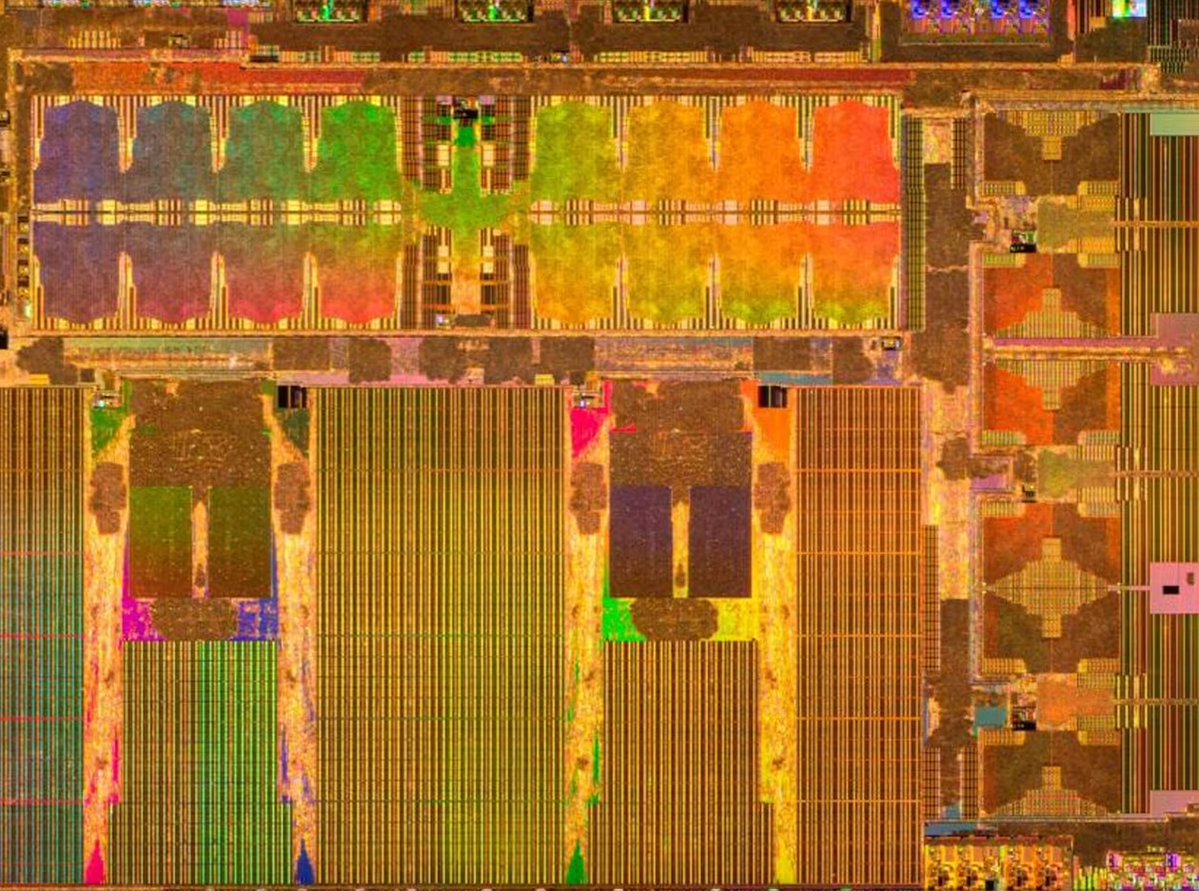
Tesla’s forthcoming AI5 uses a half-reticle design, which is crucial for yield. A reticle defines the imaging area of a lithography machine, fitting two chips per shot effectively doubles yield. This means the Tesla chip design team had to carefully manage die features, for instance dropping the older ISP (and classic GPU) to make room for more AI cores. By contrast, NVIDIA’s Blackwell fills nearly a full reticle, making it a single-reticle design. If Tesla hits its compute and efficiency targets with AI5 in this half-reticle format, it’s almost like cutting fab requirements in half. And this has a big impact on Terafab, especially if it carries forward for AI6, AI7, etc.
phil beisel tweet media
phil beisel@pbeisel

Terafab may be the most essential vertical integration Tesla has ever undertaken— and it is truly non-optional. It will take years to build and will test even Elon’s speedrunning abilities to the limit, but that won’t stop him from trying. The breakthrough likely lies in overhauling the overall facility’s cleanroom model. By moving wafers in sealed pods with localized micro-environments, the fab no longer needs a monolithic ultra-clean space. Elon’s line about “eating cheeseburgers and smoking cigars” on the fab floor isn’t silly, it’s the practical reality of a radically simpler, cheaper, faster approach that could finally change the economics of chipmaking. This is all forced by the brutal “pinch” in chip supply. Tesla must produce on the order of 100–200 billion AI chips per year just to saturate its roadmap. That volume powers: FSD cars & Robotaxis (tens of millions of vehicles needing AI5 inference for near-perfect autonomy), Physical Optimus (scaling from thousands today to millions per year, each requiring AI5/AI6-level compute), Digital Optimus (the new xAI-Tesla software agents for digital/office automation, running massive inference clusters), Space-based data centers (AI7/Dojo3 orbital compute for GW-scale training and inference beyond Earth limits). AI5 delivers the ~10× leap for vehicles and early robots; AI6 shifts focus to Optimus + terrestrial DCs; AI7 goes orbital. No external foundry (TSMC, Samsung, etc.) can deliver that scale or timeline— hence the Terafab launch. Without it, the entire robotics + autonomy future hits a brick wall. Terafab isn’t optional; it’s the only way forward.

English
58
185
2.1K
341.2K
Phil Trubey
Phil Trubey@PTrubey·
I'm now using Claude Code for a much more complex app, built in Swift (I've never programmed Swift before). And yes, it creates logic bugs as it goes. But these are similar to the bugs that human programmers introduce. Which is why you build in tiny steps and unit test all the time, even with CC. I think some people who complain about CC writing bugs and having to debug all the time have never done a complex coding project on their own. Even with the occasional mistake, CC is way way faster than coding by hand. And of course, the less you change the design as you go (ie. the more you've thought about the design up front), the less likely CC will introduce a bug since it won't have to refactor code all the time. The fundamental unlock of Claude Code is that tons of small audience applications (this complex app will only be used my me) will now be built whereas before the cost and friction was just too high. I continue to think Anthropic and the foundation model providers are leaving tons of money on the table. They could easily be charging multiples more than they currently do.
English
1
0
9
670
Phil Trubey
Phil Trubey@PTrubey·
@SciGuySpace Actually, this same tech could be used to capture dead satellites. Lots of precious metals in those sats!
English
0
0
8
364
Phil Trubey
Phil Trubey@PTrubey·
And this is a perfect example of how robot pricing will initially be a lot higher than people expect. Elon is constantly getting everyone to think of a $20K humanoid, but given the value they provide, initial hardware pricing will be much higher until manufacturing lines are humming and competition sets in.
English
1
0
8
496
Hedgie
Hedgie@HedgieMarkets·
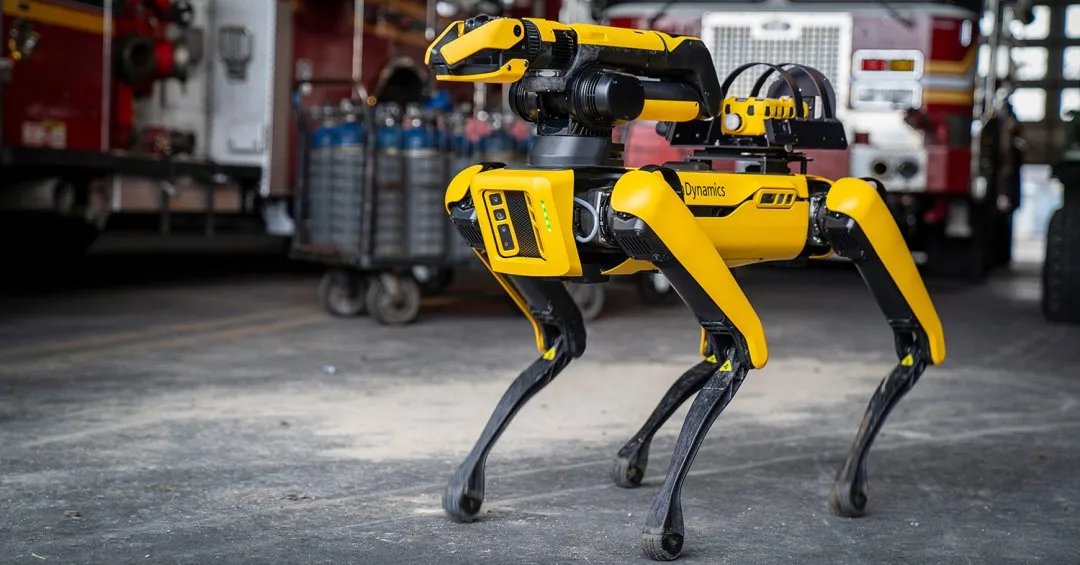
🦔 Boston Dynamics says data centers are buying robot dogs to patrol facilities, with Spot units priced between $175,000 and $300,000 depending on configuration. The company claims payback within two years compared to human security costs. The robots do perimeter patrols, respond to alerts, conduct industrial inspections, and detect hazards like leaks. Companies are pouring nearly $700 billion into AI infrastructure, and some facilities are massive. Meta's Hyperion data center will be four times the size of Central Park. Ghost Robotics, another quadruped manufacturer, advertises its robots for military reconnaissance and surveillance. My Take The economics probably work out. A $300,000 robot that runs 24/7 for years without benefits, breaks, or bathroom access will beat the cost of multiple security guards over time, especially for facilities this large. The interesting question is what happens when the cost comes down, since Spot launched at around $80,000 and Chinese competitors like Unitree sell quadrupeds for a few thousand dollars. Once the price drops enough, these things will be everywhere and the security guard job category starts to shrink the way manufacturing jobs did. There's also something worth noting about using robots to guard the buildings where you're training the AI that might take people's jobs. These companies are spending hundreds of billions on infrastructure while simultaneously developing technology that could displace a lot of workers, and now they're automating the security too. Deloitte projects robot shipments doubling by 2030 and hitting $5 trillion in revenue by 2050, which is speculative, but the direction seems clear and physical labor is probably next after knowledge work on a shorter timeline than people expect. Hedgie🤗
Hedgie tweet media
English
41
78
240
22K
Phil Trubey
Phil Trubey@PTrubey·
@expertmma97 @ChampRDS Jon gets so drunk that his brain is mostly shut down. When you’re that “black out” drunk, almost anything can happen.
English
0
0
0
45
El MataDuck (ض)
El MataDuck (ض)@expertmma97·
@PTrubey @ChampRDS I mean I never had alcohol so I can’t speak on that but I don’t imagine that would be enough to make me abusive to my wife or run from the police
English
2
0
0
78
Championship Rounds
Championship Rounds@ChampRDS·
Daniel Cormier nearly left the Russian TUF reality series after someone tried grabbing a knife, but Jon Jones convinced him to stay 😳 “Nothing on this show is worth losing your life. When I see things like knives, I personally don’t wanna be here.” (via ALF Global)
English
155
612
16.3K
1.2M
Phil Trubey
Phil Trubey@PTrubey·
@BradenBuchanan_ @DrDominicNg Absolutely. I’m retired and haven’t tackled a large SWE project in years, but I am now building ambitious projects with AI.
English
0
0
4
149
Braden Buchanan
Braden Buchanan@BradenBuchanan_·
@DrDominicNg Totally agreed. AI didn’t kill chess like many people thought it would. More people are playing chess than ever before. Similar patterns will emerge in other fields. AI won’t kill SWE.. there will be more SWEs because of it
English
4
0
38
27.3K
Dr. Dominic Ng
Dr. Dominic Ng@DrDominicNg·
Chess is 30 years ahead of every other profession in dealing with AI. The best case study we have for what's coming. 4 lessons: 1. Human-AI collaboration had a 15-year shelf life in chess. "Human in the loop" is a phase.
English
156
244
5.4K
1.8M
Phil Trubey
Phil Trubey@PTrubey·
@johnkonrad @DataRepublican It won’t make of a difference. You have to eliminate it entirely and then ship building and durable use of the waterways will occur.
English
0
0
4
693
Phil Trubey
Phil Trubey@PTrubey·
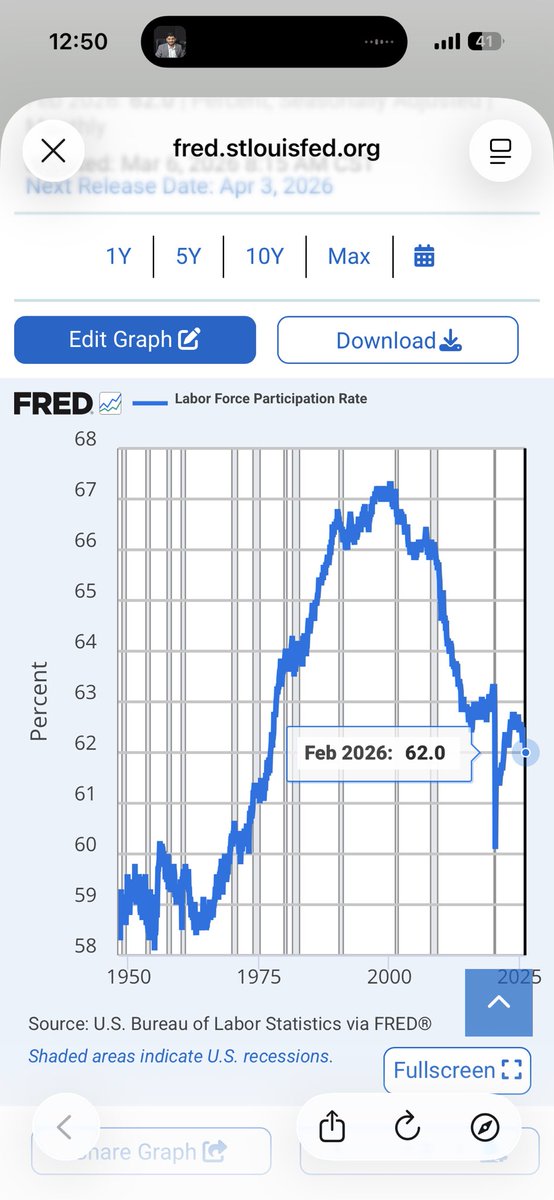
@PimpnShrtSelrs @AndrewYang A better indicator of what? As the economy gets richer, people don’t have to work as much, so yes I expect that number to go down over time even without triggering a recession.
English
3
0
0
82
Phil Trubey
Phil Trubey@PTrubey·
@dwarkesh_sp @dylan522p The history of Google is one strategic misstep after another. They also disbanded their robotics group just before robotics became hot again after AI got powerful enough.
English
0
0
3
155
Home of Fight
Home of Fight@Home_of_Fight·
💥👀Do fans not realize that Alex Pereira vs. Ciryl Gane is potentially a Fight of the Year? Ciryl Gane has been looked down on for some time now, but he has proven his elite level over time. He outstruck Ngannou, Volkov, and Aspinall and the rest on the feet. Only Jon Jones managed to beat him easily by taking it to the ground from the first seconds. Even Francis edged it 3–2 by turning into a wrestler. And now, against such a refined striker, steps even more accomplished striker Alex Pereira. Both Pereira and Gane have record-level striking accuracy in the UFC. They both land 62% of their strikes. In the history of elite competition, only Overeem has been more accurate. Ciryl Gane is much more mobile and faster than Alex. He is also a very crafty counterpuncher. And when he’s healthy and motivated, he can do almost everything. We saw it against Tom Aspinall. There's a good chance he will do it against Pereira. Alex builds insane legacy by fighting for the interim Heavyweight title. Whoever wins - fights Tom Aspinall which makes this fight even more exciting. I want to see Ciryl Gane vs. Tom Aspinall rematch, but if we end up getting Tom Aspinall vs. Alex Pereira.. that's a bigger story.
Home of Fight tweet media
English
125
53
1.4K
108.9K
Phil Trubey
Phil Trubey@PTrubey·
@ID_AA_Carmack Absolutely. Advisors should be called on a one on one basis to tap their unique insights into critical decisions. VCs routinely do this when doing due diligence on investing in companies. They’ll call on LPs who have industry insight in a potential portfolio company.
English
0
0
0
145
John Carmack
John Carmack@ID_AA_Carmack·
The corporate advisory boards that I have been a part of have almost exclusively been “vibe checks”, where presentations are made about work the company is doing, and the advisory panel chats about things for a while. This seems like a poor way to utilize the advisors. Maybe it is worth it just for a rare outburst of “What? No! Are you insane?” But if the company executives don’t actually do something differently than what they were already planning, then the advisory board was actually wasted. The right time to use advisors is when there is an open and contentious question, and you want an opinion from an unbiased expert. You probably don’t want to convene a “board of advisors”, but rather draw from a “pool of advisors” according to their skillsets.
English
43
30
810
80K