Joanna Slusky 🫖

2.8K posts

Joanna Slusky 🫖 banner
Joanna Slusky 🫖

Joanna Slusky 🫖

@SluskyLab

NIH new innovator, Moore inventor fellow, Professor @KU, PLoS CompBio editor, Protein Society executive council, protein design & evolution of OMPs & enzymes

Lawrence, KS she/her Inscrit le Şubat 2016
967 Abonnements1.7K Abonnés
Tweet épinglé
Joanna Slusky 🫖
Joanna Slusky 🫖@SluskyLab·
🚨Exciting paper🚨We made a data set of 1.9 million outer membrane proteins (OMPs) and used it to figure out general features of this protein class— 11 lineages! New sequence motifs! Evolutionary variations on the beta signal! pnas.org/eprint/S3URQU2… 🧵
English
4
37
174
25.5K
Noelia Ferruz
Noelia Ferruz@ferruz_noelia·
We have the honor to have Joanna @SluskyLab in town! If you’re in Barcelona and like protein design, don’t miss her talk - Joanna always delivers the most engaging talks!
Noelia Ferruz tweet media
English
1
1
12
723
Joanna Slusky 🫖
Joanna Slusky 🫖@SluskyLab·
These laureates are VERY deserving. But an important addendum—no model could be trained without 40 years of Helen Berman and others’ work at the PDB, and we would not be certain of AF’s success without 30 years of John Moult and others’ work on CASP. Hats off to them as well 🥂
The Nobel Prize@NobelPrize

BREAKING NEWS The Royal Swedish Academy of Sciences has decided to award the 2024 #NobelPrize in Chemistry with one half to David Baker “for computational protein design” and the other half jointly to Demis Hassabis and John M. Jumper “for protein structure prediction.”

English
19
184
1.1K
85.2K
Joanna Slusky 🫖 retweeté
Lina Quesada at The IR-4 Project
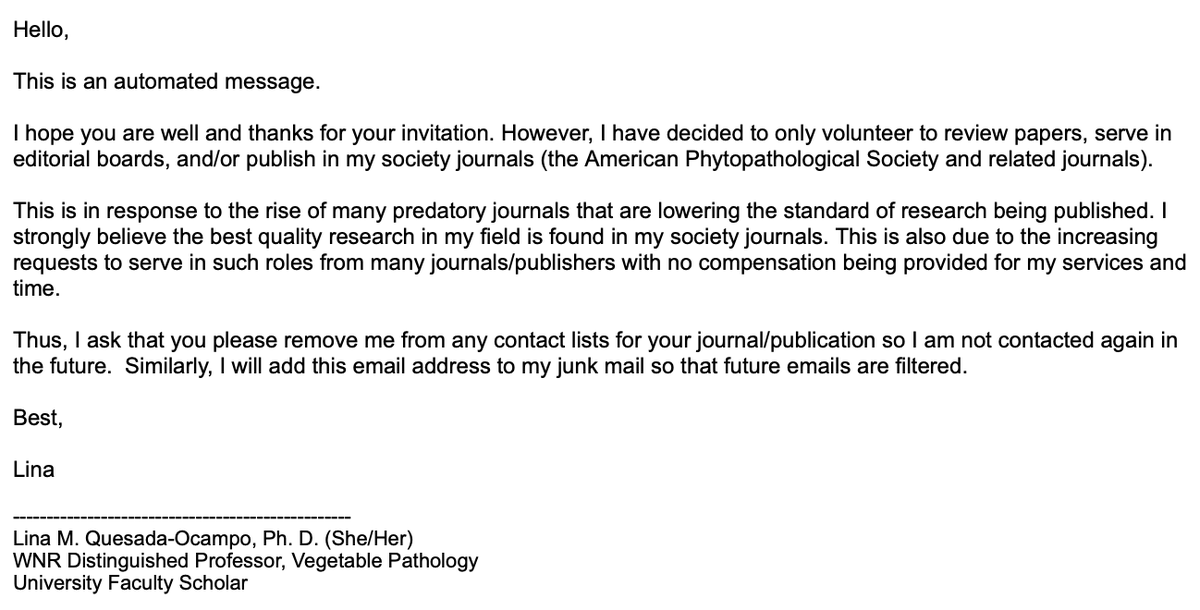
Years ago I decided to only publish and serve on @plantdisease journals. I have an automated response I use for requests from other journals. Recently, several colleagues have asked me for it, so decided to share here in case it is helpful 😁 #AcademicChatter
Lina Quesada at The IR-4 Project tweet media
English
8
16
118
13.7K
Joanna Slusky 🫖 retweeté
Paul T Kim
Paul T Kim@paultkim_ipd·
With David and the Baker Lab in the spotlight today, I wanted to share some insights into the @UWproteindesign and how it operates, a glimpse behind the curtain. I had planned to write this post-graduation, but now seems as good a time as any. (Got twitter blue free trial so this could all fit in less tweets!) First, the lab is enormous. ~60 grad students, ~60 postdocs, a handful of visitors, undergrads, and a surrounding institution of another 150 or so. Collaboration is strongly encouraged (even mandated) by David, who sets up pro-collaboration incentives. Notably, he's fine with grad students graduating without a sole first-author paper—it's acceptable to "only" have worked as a co-first author. This is a key ingredient in the secret sauce: the tight collaboration between wet lab and dry lab. It ensures that all our work is ultimately grounded in strong wet-lab validation—our "oracle" is the real world, not another computational model. While we have regular meetings for different subgroups and the entire group, much information travels through the lab via informal one-on-one interactions. In some ways, it reminds me of a classic "tribe of humans in the state of nature"—100-200 people with no clear hierarchy, passing information via "gossip". It’s maybe not the most complete way of ensuring everyone is on the same page, but saves time as we aren’t drowning in endless meetings. Does David stay in touch with all these grad students and post-docs? Remarkably, yes. Unlike some very large labs known for being run entirely by post-docs, he knows exactly what everyone is working on and the stage of their projects. Each member has monthly one-on-ones with him, and monthly subgroup meetings that David attends. If he suggests you try something at your previous one-on-one, you'd better have it done by the next. Does he actually contribute research ideas, or is he more of a detached big-picture project manager? Definitely the former. He understands the intricacies of a shocking range of topics. I'll be discussing some arcane deep learning concept with him, and then he'll turn around and talk to someone about the details of a catalytic mechanism. He's actually the most hands-on PI I've ever had—if anything, he verges on over-managing rather than being too detached. How does he keep track of everything? Partly, he's just a brilliant person with exceptional recall. But he has also built infrastructure above and below him in the lab to handle many of the details, bureaucracy, big picture, and management tasks. This allows him to spend most of his day doing what he's most passionate about and skilled at: walking around talking to people about science. He also lives very much in the moment and in his own words, “never thinks very far ahead". To keep up with tools, methods, and wet lab techniques, he does the occasional project and design campaign himself on the side when time allows. It's still a tremendous cognitive load to keep all this in his head, but as much as possible, he has offloaded non-scientific cognitive burdens. It helps that he’s in the lab in person most days of the year, rarely traveling for conferences or talks, instead doing them over Zoom or not attending. (1/2).
The Nobel Prize@NobelPrize

BREAKING NEWS The Royal Swedish Academy of Sciences has decided to award the 2024 #NobelPrize in Chemistry with one half to David Baker “for computational protein design” and the other half jointly to Demis Hassabis and John M. Jumper “for protein structure prediction.”

English
14
234
1.5K
370.2K
Sebastian S. Cocioba🪄🌷
Sebastian S. Cocioba🪄🌷@ATinyGreenCell·
Can someone please start a thread of women in protein design? It's not my field so I can't immediately tag accounts but it would be a nice way to bring attention, especially in light of the currently all-male Nobel run this year. Happy to amplify for reach. TYIA!
English
30
31
187
50.6K
Joanna Slusky 🫖 retweeté
ASBMB
ASBMB@ASBMB·
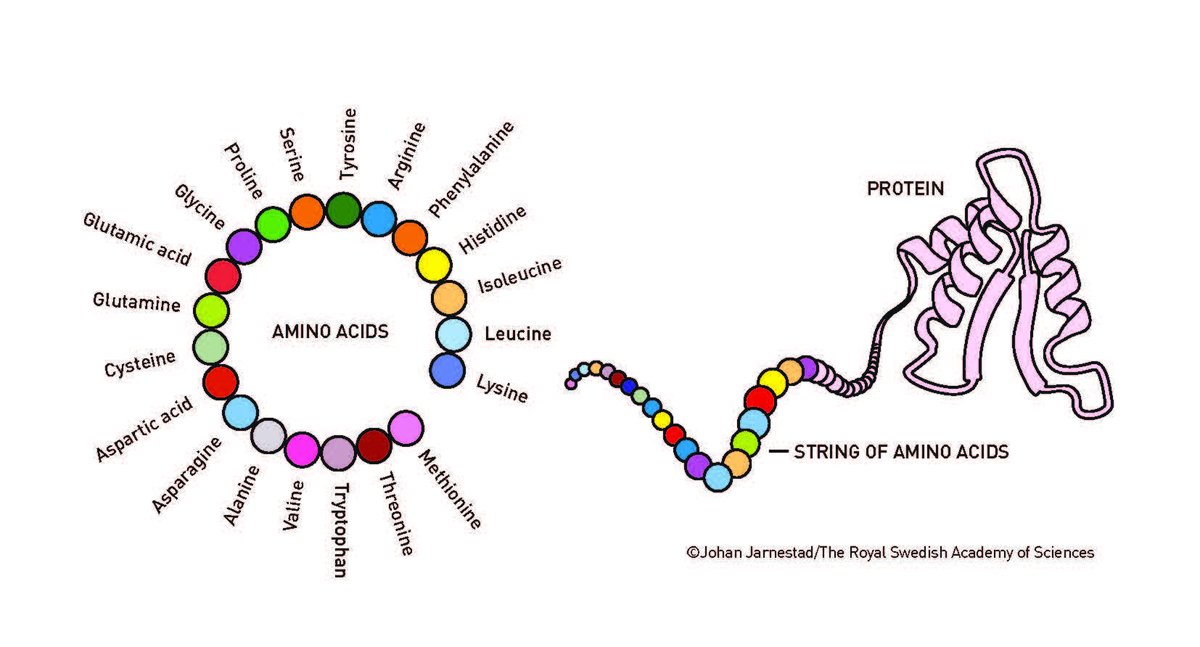
This year's chemistry #NobelPrize is all about proteins! Baker, Jumper and Hassabis' contributions will allow scientists to tackle challenges like antibiotic resistance and plastic degradation. ow.ly/ViNb50THRRu ©Johan Jarnestad Royal Swedish Academy of Sciences
ASBMB tweet media
English
1
6
13
1K
May Khanna
May Khanna@may_khanna·
@SluskyLab But the west coast is not awake yet. A lot more is coming 😂😂
English
1
0
1
81
Joanna Slusky 🫖
Joanna Slusky 🫖@SluskyLab·
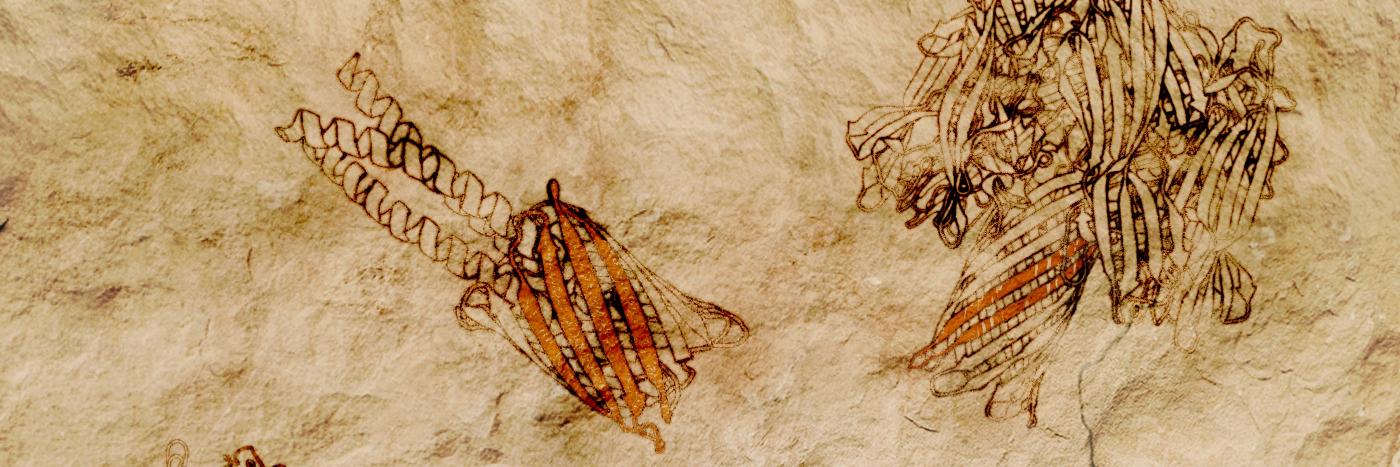
In honor of today’s Nobel prize
Joanna Slusky 🫖 tweet media
English
0
15
98
13.5K
Joanna Slusky 🫖
Joanna Slusky 🫖@SluskyLab·
@eriklindahl @WillPPK Same! I was going to give a lecture on this prize (whatever it would be) but I’ve already given 3 lectures on these topics. Guess we’ll just eat cake. 😉
English
0
0
2
212
Joanna Slusky 🫖
Joanna Slusky 🫖@SluskyLab·
You know how at Jewish life cycle events everyone is wishing mazal tov to everyone even though you’re just guests talking to other guests? That’s the vibe when your field wins the Nobel prize. Mazal tov to David Baker most of all, and mazal tov to all protein designers!
The Nobel Prize@NobelPrize

2024 #NobelPrize laureate in chemistry David Baker has succeeded with the almost impossible feat of building entirely new kinds of proteins. In recent years, one incredible protein creation after the other has emerged from Baker’s laboratory. They range from new nanomaterials where up to 120 proteins spontaneously link together… Animation: ©Terezia Kovalova/The Royal Swedish Academy of Sciences #NobelPrize

English
1
2
40
2.8K
Joanna Slusky 🫖
Joanna Slusky 🫖@SluskyLab·
Huge day for protein design and structure prediction 🎉🎉🎉 the tools these men and their teams have developed will lead to scientific discoveries for many years (decades?) to come!
The Nobel Prize@NobelPrize

BREAKING NEWS The Royal Swedish Academy of Sciences has decided to award the 2024 #NobelPrize in Chemistry with one half to David Baker “for computational protein design” and the other half jointly to Demis Hassabis and John M. Jumper “for protein structure prediction.”

English
0
2
40
1.6K