

Timothy Moraghan
3.8K posts
Timothy Moraghan
@TimMoraghan
Lover of KAM, The Doors, The New York Rangers and the low country.
Hilton Head Island, SC Inscrit le Nisan 2010
1.2K Abonnements2.1K Abonnés

Timothy Moraghan retweeté

Good morning to all of my MAGA friends on X who's boycotting the halftime show
👉 F'vck Bad Bunny 🖕
👉 F'vck Roger Goodell 🖕
👉 F'vck the Olympics 🖕
👉 F'vck the woke skiers 🖕
I'm watching the Kid Rock Halftime show 🇺🇸
Leave a thumbs 👍 up if you're with me 🚨

English
Timothy Moraghan retweeté

It was brilliant! Now all the leaders and military sites are targeted.
You'll need a lot of luck if you're trying to outsmart Trump, Hegseth, and the rest of the team.
English
Timothy Moraghan retweeté

A Message from Chris Drury to the #NYR fans

New York Rangers@NYRangers
A Message from Chris Drury to Our Fans
English
Timothy Moraghan retweeté

English
Timothy Moraghan retweeté

Happy 80th birthday to legendary The Doors guitarist Robby Krieger!
Here’s Robby playing in a pub one of the most mythical riffs in Rock History.
English
Timothy Moraghan retweeté

Timothy Moraghan retweeté

Timothy Moraghan retweeté


Big Moe was out pretending to be a loose impediment under the Rules of Golf today. More of a dangerous situation IYAM! We quietly played through. 🏌🏼♂️@HNW to everyone! 🍸

English
Timothy Moraghan retweeté


Making “Sandmen” on Christmas morning in the low country! Merry Christmas to all of you! 👍🎄🎅

English
Timothy Moraghan retweeté

Timothy Moraghan retweeté


English

Although we had a dusting three weeks ago, this is how you start meteorological winter! #kywx ⛄️

English
Timothy Moraghan retweeté

June 8, 1968.
When Kate O’Hare-Palmer stepped off the plane in Vietnam, the first thing that hit her wasn’t gunfire. It was the heat—heavy, choking—and the smell of war. She was just 22 years old, wearing a neat summer Army Nurse Corps dress uniform that made her look impossibly young. Nearby, soldiers waiting to board the plane home lay silently on the ground with their duffel bags as pillows, eyes empty and far away.
Later, she’d learn they called that look the thousand-yard stare.
It wouldn’t be long before she had it herself.
Within hours of arrival, Kate was thrown into chaos. A Vietnamese woman was rushed into surgery with a ruptured aorta. Kate didn’t even have time to put on gloves. They fought to save her. They couldn’t.
It was the first death she saw in Vietnam. It would not be her last.
Kate came from a military family. Service was in her blood. She believed she was ready.
She wasn’t.
She was assigned to the 2nd Surgical Hospital, first at Lai Khe and later at Chu Lai—field hospitals where helicopters landed just feet away, carrying soldiers no older than boys. Head wounds. Chest wounds. Limbs gone. Some could be saved. Some could not.
And Kate was one of the nurses who had to make that call.
Triage:
Live.
Die.
Try.
Doctors said field nurses had some of the highest PTSD rates of the entire war—not because they were in combat, but because they had to play God every single day.
She worked 12-hour shifts, six days a week. When helicopters came in heavy, they worked straight through their seventh.
Then came the day they brought in a soldier with live ammunition still lodged in his body. One wrong move, and the operating room would explode.
The room cleared.
Kate stayed.
22 years old, hands steady as stone, helping the surgeon and a bomb expert remove the round piece by piece.
“I didn’t start shaking until it was over,” she said. “Then I couldn’t stop.”
But the soldier lived.
Not everything was blood and horror. Kate also went on medical missions to villages, treating children caught in the crossfire. Those moments reminded her of why she came—to heal. To help. To try.
But by week three, her faith had cracked.
“I was pretty religious,” she said. “And I just… got angry at God.”
She served 14 months.
And when she came home, her war wasn’t over.
For years, she carried the trauma alone.
Women veterans were hardly acknowledged.
Their sacrifices went unspoken, unrecognized, unseen.
In 1993, she attended the dedication of the Vietnam Women’s Memorial. Hundreds of nurses gathered—crying, laughing, realizing they had all been carrying the same invisible wounds. That moment changed her life.
Kate began to fight again—not in triage rooms, but in meeting rooms and congressional hearings.
She became an advocate for:
• Women veterans’ mental health
• Recognition of women’s combat service
• VA support and medical benefits
• Representation in memorials and history
At 79 years old, Kate O’Hare-Palmer still fights. She chairs the Vietnam Veterans of America National Women Veterans Committee. She speaks in schools and veteran halls. She makes sure the stories of the nurses of Vietnam are never forgotten.
She saved lives in operating rooms under enemy fire.
Now she saves veterans who are still fighting wars inside themselves.
She was 22 when she learned to face death and save the living.
She is 79 now, and she is still serving.
Thank you, Kate O’Hare-Palmer.
Not just for what you did then—
but for what you never stopped doing.
🫡

English
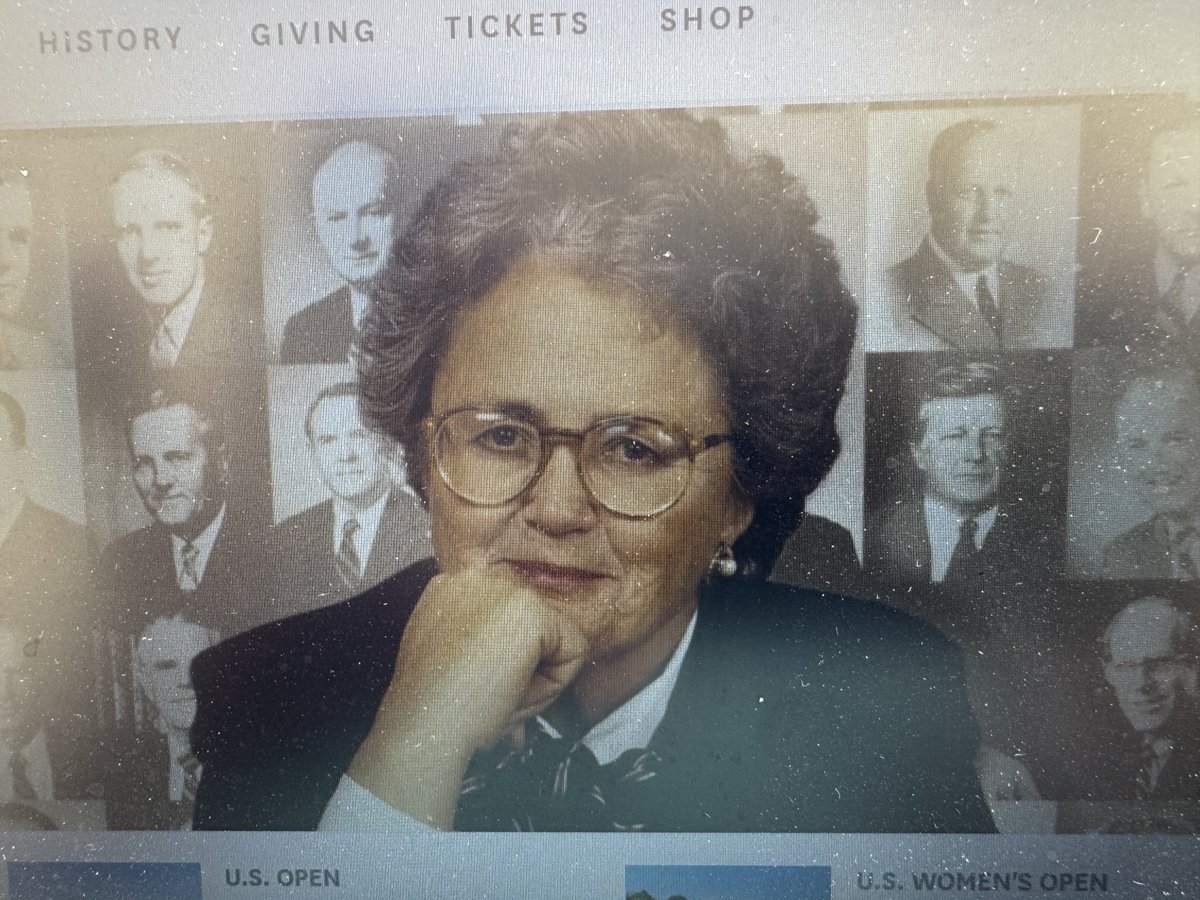
Sad today at the loss of a dear friend. She taught me so much. The Judy Bell smirk in front of those “guys” as the first “girl” USGA President. 😊Keep smirking JB. 🙏🙏🥃
English
Timothy Moraghan retweeté
If you want to know what the point of the Communist Democrats might be, let Tyrus give his explanation. Well worth considering.
English