Will Seccombe

13.3K posts

Will Seccombe banner
Will Seccombe

Will Seccombe

@TroutLine

Strategic Marketing Executive - #Strategy #Digital #Travel #Tourism #Sports #Entertainment #AI #Author

Florida Inscrit le Mayıs 2009
12.1K Abonnements11.1K Abonnés
Tweet épinglé
Will Seccombe
Will Seccombe@TroutLine·
“History does not crawl. It leaps.” — Elon Musk The Leap tells the story of the first mission to Mars—grounded in real science, real technology, and the reality of what it will take to get there. No rescue. No backup plan. No turning back. If we make it… we stay. Start reading now. a.co/d/0fkCHssE
Florida, USA 🇺🇸 English
0
1
2
101
Will Seccombe
Will Seccombe@TroutLine·
History doesn’t ask permission. It moves forward—with or without us. Mars is no longer a question. It’s a decision. The Leap follows the first crew sent not just to reach Mars—but to survive it. Every system matters. Every decision counts. Every mistake is permanent. They are not explorers. They are the first to bet everything on staying. Read The Leap. a.co/d/02dDi3lz
English
0
0
0
16
Will Seccombe retweeté
Dr. Lemma
Dr. Lemma@DoctorLemma·
Sixteen years ago, one man stood alone on a grassy hill at a music festival in Washington State, USA, and started dancing by himself. People glanced over and looked away. Some laughed. His roommate leaned in and warned him people were filming him. He did not stop. Then one stranger got up and joined him. Then another. Then the hillside tipped. Within minutes, hundreds of people were sprinting from across the field to be part of something that, thirty seconds earlier, had been one man being laughed at in a field. Someone filming from higher up the hill said quietly: "See what one man can do. One man can change the world." The clip spread across the internet in 2009. Entrepreneur Derek Sivers played it at a TED conference to explain how movements actually begin. Not with the first person brave enough to start, he argued, but with the first person willing to join them. Collin Wynter, the man dancing alone, later said he had no idea he had done anything special. He was just tired of watching everyone sit still.
English
2K
14.2K
101.1K
9.7M
Laila🦋
Laila🦋@laila_22100·
Only high IQ people will spot the pattern. What is the next number ?
Laila🦋 tweet media
English
2.5K
108
385
132.4K
Will Seccombe
Will Seccombe@TroutLine·
“History does not crawl. It leaps.” — Elon Musk The Leap tells the story of the first mission to Mars—grounded in real science, real technology, and the reality of what it will take to get there. No rescue. No backup plan. No turning back. If we make it… we stay. a.co/d/065tB3zg
Florida, USA 🇺🇸 English
0
2
5
53
Will Seccombe
Will Seccombe@TroutLine·
The railroad is coming to Colorado Territory. And nothing will ever be the same. Cattle drives. Brewing empires. Frontier towns fighting for their future. The Silver Spike — Book 3 of the Forged in the West saga a.co/d/04ka0lwL
Colorado, USA 🇺🇸 English
0
1
0
105
Will Seccombe
Will Seccombe@TroutLine·
“History does not crawl. It leaps.” — @elonmusk The Leap tells the story of the first mission to Mars—grounded in real science, real technology, and the reality of what it will take to get there. No rescue. No backup plan. No turning back. If we make it… we stay. a.co/d/0b9yzk9i
English
0
0
0
29
Will Seccombe retweeté
David
David@David_wthebeard·
David tweet media
ZXX
21
414
1.9K
17.8K
Will Seccombe retweeté
Will Seccombe
Will Seccombe@TroutLine·
Forged in the West — a frontier series built on real history and hard decisions, where families stand at the edge of change and the railroad redraws the future of the West. Legacy Takes Root - a.co/d/hRQOwzk Fork in the Road - a.co/d/fyYx25w The Silver Spike - a.co/d/duJufNf
Colorado, USA 🇺🇸 English
0
1
0
182
Will Seccombe
Will Seccombe@TroutLine·
Fascinating.
I am Ken@Ikennect

Mother's Milk⭐️ I found this fascinating. It's long but worth it. A scientist analyzed 700 samples of mother's milk—and discovered it wasn't food at all. It was a conversation. California, 2008. Dr. Katie Hinde sits in her lab, surrounded by data that refuses to make sense. She's studying breast milk from rhesus macaque mothers. Hundreds of samples. Thousands of measurements. The kind of straightforward nutritional analysis that should produce straightforward results. Instead, she keeps finding patterns that contradict everything in the textbooks. The milk isn't consistent. It's changing. Adapting. Responding to variables she hasn't even measured yet. She runs the analysis again. Checks her instruments. Reviews her methodology. The patterns hold. Some mothers are producing milk concentrated with fat and energy. Others are producing higher volumes with completely different nutrient profiles. It's not random variation—it's systematic. Purposeful. Katie presents her findings to colleagues. The responses come immediately: "Measurement error." "Statistical artifact." "Probably nothing." Because if milk composition actually changes based on individual babies and their specific needs, that would mean something medical science had never seriously considered: Milk isn't nutrition being delivered. Milk is information being exchanged. For generations, we treated breast milk like biological fuel. Calories in, baby grows. A natural formula. Simple. Case closed. But Katie trusted what the data was showing her. She kept digging. Across hundreds of mothers and thousands of samples, a revolutionary picture emerged. Milk composition changes throughout a single day. Morning milk contains compounds that promote alertness—natural wake-up chemistry. Evening milk includes precursors that help babies sleep. The first milk in a feeding (foremilk) differs from the last (hindmilk). Early milk hydrates. Final milk delivers concentrated calories, naturally teaching infants to feed completely. Then Katie discovered something that rewrote biology textbooks. Human milk contains over 200 complex sugars called oligosaccharides that babies cannot even digest. They pass through the infant's system completely unchanged. Why would evolution include indigestible compounds in the primary food source for human infants? Because they're not food for the baby. They're food for beneficial bacteria in the infant's gut. Milk simultaneously nourishes the child and cultivates their microbiome—building the bacterial ecosystem that will protect them for life. But the most astonishing discovery was still ahead. When babies nurse, microscopic amounts of saliva make contact with breast tissue. That saliva carries chemical signals about the infant's immune system—information about pathogens encountered, threats developing, infections beginning. The mother's body reads those signals. And the milk transforms. Within hours, white blood cell counts can surge. Antibodies appear—targeted to whatever the baby's chemistry revealed. When the infant recovers, the milk composition returns to baseline. The breast isn't just producing nutrition. It's responding in real-time to biological intelligence from the baby. A dialogue. A conversation refined across 200 million years of mammalian evolution. Mother and infant exchanging chemical information with every feeding. The mother's immune system educating the baby's defenses before symptoms even emerge. And medical science had barely studied it. Katie began investigating the research landscape. What she found was stunning: Breast milk—the first food every human being consumes, the biological system that sustained every one of our ancestors—had been dramatically under-researched compared to other aspects of human biology. Women's health, particularly the science of motherhood, had been systematically deprioritized. Katie decided that needed to change. In 2011, she launched "Mammals Suck...Milk!"—a blog that made lactation science accessible. Within a year, over a million readers were discovering answers to questions science had never properly asked. The research accelerated. Every mother's milk is biologically unique—customized not just to our species, not just to her individual baby, but to the specific moment in that baby's development, the environment they're in, the immune challenges they're facing right now. In 2017, Katie brought this research to the TED stage. Over 1.5 million people watched. In 2020, her work reached millions more through the Netflix documentary "Babies." Today, at Arizona State University's Comparative Lactation Lab, Dr. Katie Hinde continues transforming how we understand infant development and maternal biology. The implications reach everywhere. Preterm infants in NICUs receive fundamentally different care now. Formula manufacturers are redesigning products with new understanding. Lactation support has improved because we finally comprehend what milk actually accomplishes. But here's what matters most: Katie Hinde didn't just discover new facts about milk. She exposed how half the human experience—the biology of mothers and infants—had been under-studied because it was considered less important than other research priorities. She proved that nourishment is intelligence. That the first relationship every human has isn't passive delivery but active conversation. An information transfer. An education in immunity, behavior, and survival encoded in chemistry. Today, comparative lactation is a growing field. New researchers. New questions. New discoveries emerging constantly. All because one scientist looked at data that contradicted accepted models and asked: "What if the data is correct and the model is wrong?" Sometimes the most significant revolutions don't require new technology or massive funding. They come from someone paying attention to what everyone else overlooked. Katie Hinde thought she was analyzing milk composition. What she uncovered was a conversation 200 million years in the making—sophisticated, adaptive, intelligent—hidden in plain sight because no one had thought to truly listen. Now we're listening. And what we're hearing changes everything we thought we knew about how mothers and babies communicate, how immunity develops, and how the most fundamental act of nurture is also the most sophisticated transfer of biological wisdom ever evolved.


English
0
0
0
30
Will Seccombe
Will Seccombe@TroutLine·
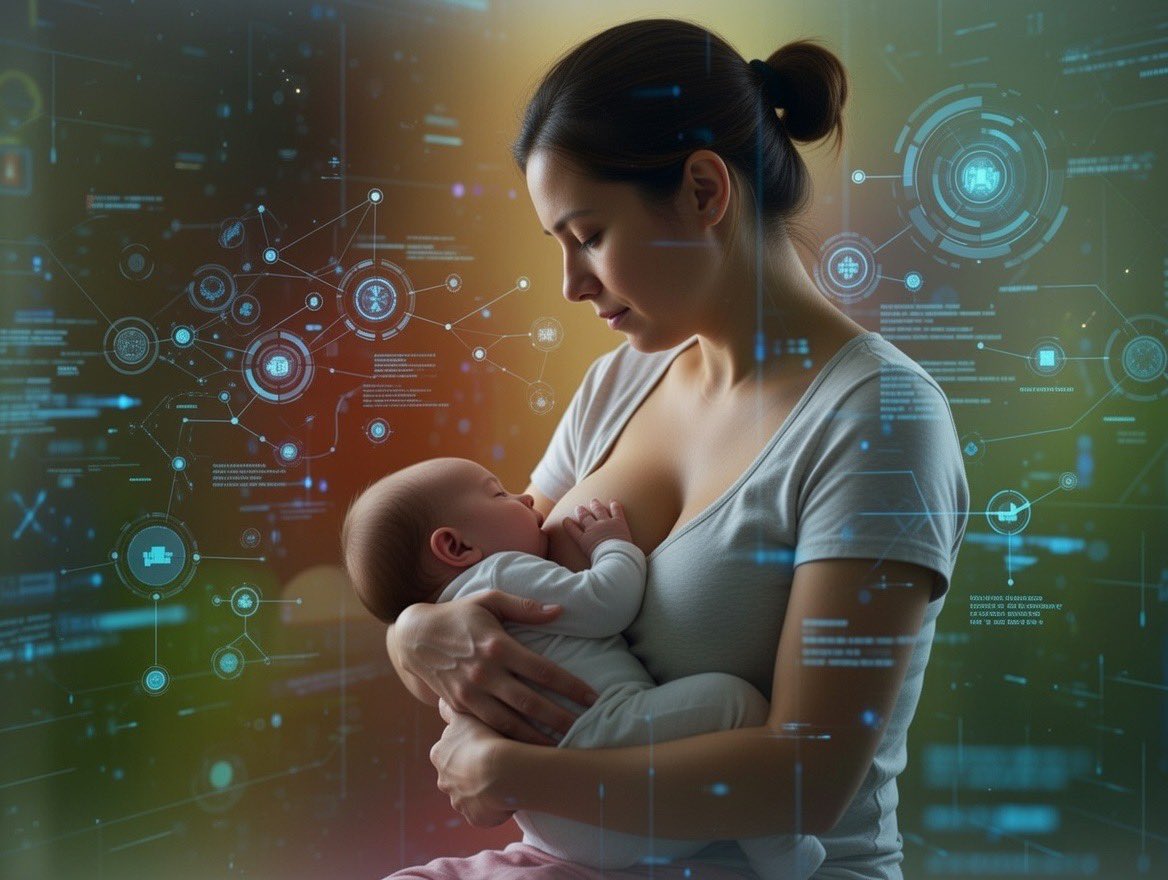
Mind-blowing fact confirmed by @grok : Breast milk adapts to baby's sex and gets real-time cues from saliva backwash! Studies show milk composition often varies by infant sex—higher energy/fat/protein for boys, more minerals/carbs for girls. Even wilder: Baby's saliva flows back into the nipple during nursing → mom's body detects pathogens/illness → ramps up targeted antibodies & immune factors in milk. 🤯 #Breastfeeding #ScienceFacts #MindBlown
Will Seccombe tweet media
English
3
0
0
92
Will Seccombe
Will Seccombe@TroutLine·
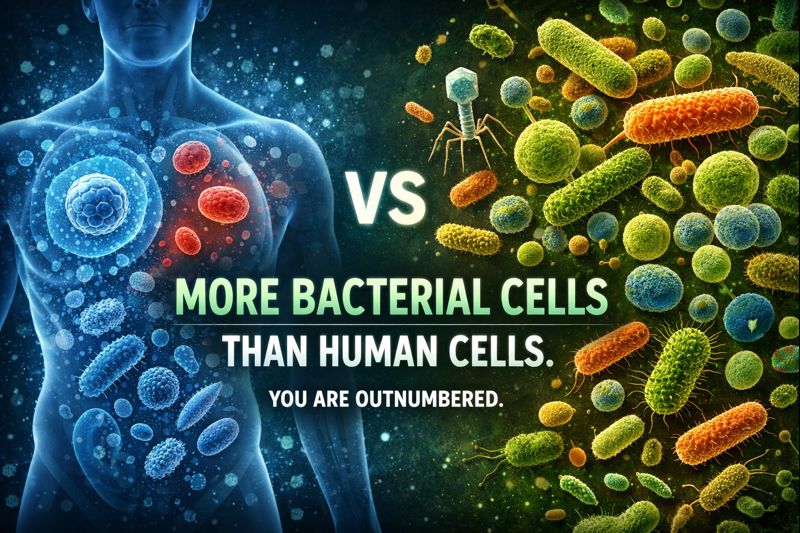
Fun fact: Your body contains more bacterial cells than human cells. You’re basically a walking ecosystem. 🧬😮 #ScienceFacts #DidYouKnow
Will Seccombe tweet media
Florida, USA 🇺🇸 English
2
0
3
357
Will Seccombe
Will Seccombe@TroutLine·
This is the miraculous and true story of Teddy, my mother’s 10 year old doodle. Last month we were watching the @Macys Thanksgiving Parade when we got a call from a nice woman who had found Teddy walking down the street …
Will Seccombe tweet media
English
1
2
3
315
Onyx
Onyx@OnyxOdds·
You can only watch ONE group for the rest of your life ... Which one are you choosing?
Onyx tweet media
English
2.4K
84
3.7K
17.4M
Will Seccombe
Will Seccombe@TroutLine·
Good reminder!
🧬Maxpein🧬@maximumpain333

The greatest marketing trick of the last 50 years was convincing the world that Starbucks sells coffee. They do not sell coffee. If they sold coffee, they would have gone out of business decades ago. Their product is consistently mediocre, often burnt, and overpriced by 400%. Yet they are an empire. Why? Because Howard Schultz understood something that every business school on Earth gets wrong: Humans do not buy products. Humans buy better versions of themselves. When Schultz visited Italy in the 80s, he didn’t just see people drinking espresso. He saw theater. He saw a barista who knew every name. He heard the hiss of the machine before he opened the door. He watched an old man read a newspaper for three hours on a single espresso and nobody rushed him out. He realized people weren’t paying for the caffeine. They were paying for 15 minutes of feeling European, sophisticated, and unhurried. He didn’t bring back the beans. He brought back the stage. He invented the “Third Place.” Not home, not work, but an escape where you rent a feeling of status for $7. If you are selling a commodity, you are in a race to the bottom. If you are selling an identity, there is no price ceiling. Stop obsessing over making your product 10% better. Start obsessing over who your customer becomes when they use it. People don’t want what you make. They want how it makes them feel about themselves. ~ Andre Gonsalves ✨🙌🏾💫

English
0
0
0
66