

Charlie Brewer
10.5K posts

Charlie Brewer
@charbrew
AI Transformation Leader | Certified MindStudio AI Agent Developer | Director of Product Design | Product Manager | AdTech CreatorTech Streaming PropTech EdTech
SF Bay Area Inscrit le Şubat 2009
2.5K Abonnements853 Abonnés

Claude DESTROYS ChatGPT for marketing on LinkedIn.
I put together the Claude LinkedIn Marketing Funnel (below)
Claude is by FAR the best at building building marketing funnels.
I use my info combined with my prompts to build out marketing strategies, assets, and funnels.
My prompts are INSANE and replace entire marketing teams.
I compiled ALL my Claude prompts into one doc:
• Lead Magnet Generator Prompt
• Lead Magnet Asset Prompt
• Lead Magnet Funnel Build Out Prompt
• Claude Landing Page Prompt
• Personal Content Database Prompt
• The Premium LinkedIn Profile Prompt
• Competitor Analysis Prompt
• ICP Analysis Prompt
• Tech Stack
Want access to the doc?
→ COMMENT "Claude"
→ FOLLOW me and I'll DM the doc!

English
Stop making roadmaps!
T (roadmap) > T (model release) = 0.99^365 = 0.0255
T (roadmap) < T (model release) = 1.01^365 = 37.783
T = Time
In plain words:
If your roadmap is longer than the AI model release cycles, you’re using older AI models. And that begins to shrink your capabilities and results in a relative sense. You will get out-competed.
If your roadmap is shorter than the AI model release cycles, you will find more newly enabled, better opportunities faster. You will also use the newest models immediately.
If you’re willing to throw out yesterday’s priorities today based on today’s new AI capability, you’ll capture the opportunities.
This is because new model capability enables new value (if the PM is on the ball). The market responds with demand.
New models create new demand. If you are fast, you can capture that demand.
If you have a big locked roadmap, you will not be free to respond. And you can’t sell what you don’t make.
Ditch the roadmap!
Certitude is platitude.
So now what?
2 things:
First, drop the roadmap.
Switch to The Barbell Framework:
1. Hold a vision of your North Star: A timeless goal for your product and company. Don’t think 3-5 years out. There is no point as we enter the AI Singularity. Envision, advocate & educate for the vision every day. It is your only glue, your only rallying cry, your only strategy.
2. Switch to short term focus and the Best Next Step (more below). In fancy terms, work in the Now…which is always changing. So no sunk costs, no feature-launch date commitments, Prioritize, execute, and reprioritize dynamically, repeatedly in a direct way. Do product where your feet are.
Second, practice Best Next Step. How do you do that?
The Brewer AI Prioritization: “What can we do right now with AI that creates the most compounding advantage?”
Act like an operator: Merge and flatten your priorities stacks. Customer & product priorities mix together with internal & operational priorities.
“For the sake of the company and its ability to serve customers, what is the thing we can do right now with AI that gives us the most compounding advantage going forward?”
The answer is the Best Next Step. Do it. Then do another one. And so on. This is a strategy for surviving—maybe even thriving—in the AI Transformation.
The Best Next Step could be a product feature. It could be an internal project. It doesn’t matter. What matters is accumulating AI leverage. People think of this in terms of efficiency. But it’s really a form of capital investment for a kind of capital appreciation. It is AI capital appreciation. It could be a new AI powered product or feature. It could be a new AI powered internal
Standard Operating Procedure. It’s all AI leverage which drives enterprise value.
We’re entering a business cycle where AI may be the only functioning driver of enterprise value.
A final point: Workers will face the greatest challenges to their identity, financial security, and self- esteem.
The only solution is simple but not easy. Cultivate psychological resilience. You must be able to bear high degrees of uncertainty and variability in your work and career. You must be able to practice rigorous analysis and decision-making with partial information in changing situations. And then re-do it all the next day based on what the latest AI model or harness can do. There is a deep bias against this kind of uncertainty in people and business. You will have to persuade others that frequently re-evaluating priorities is how the highest value priorities are identified and achieved.
This may be the hardest requirement of all for surviving as an AI PM in the AI Transformation.
Aakash Gupta@aakashgupta
The PM job used to be "figure out what's possible, then plan around it for 6 months." That assumption worked when the technology underneath your product moved slowly. Cat Wu runs product for Claude Code at Anthropic. She tested every new model by asking it to add a table tool to Excalidraw. Sonnet 3.5 failed. Opus 4 occasionally succeeded. Opus 4.6 does it reliably enough to demo live in front of thousands of developers. That progression happened in 16 months. METR measures this with time horizons: how long would a task take a human expert that AI can now complete half the time? Sonnet 3.5 (new) in October 2024: 21 minutes. Opus 4.6 in February 2026: roughly 14.5 hours. A 41x jump. If your roadmap is longer than the gap between model releases, you're planning around constraints that may not exist by the time you ship. Her team's response is worth studying. They replaced long-term roadmaps with "side quests," short self-directed experiments anyone on the team can run. Claude Code on Desktop, the AskUserQuestion tool, and todo lists all started this way. Someone prototyped it, internal users liked it, they shipped it. The most telling detail: when they first launched todo lists, the model couldn't reliably check off completed items. They added system prompt hacks to nudge it. Next model generation, the behavior came for free. They deleted the hacks. Their system prompt shrank 20% with Opus 4.6 alone. This is the part most PMs miss. Every workaround you build to compensate for a model limitation becomes dead weight the moment the next model drops. The simpler your implementation, the faster you absorb the next capability jump. The Venn diagram in the image tells the structural story. Before AI: Product hands to Design hands to Eng, sequential. With AI: all three overlap. Designers ship code. Engineers make product calls. PMs build prototypes. The handoff chain collapses because the cost of building a working demo dropped to an afternoon. Any PM still writing 30-page PRDs before touching a prototype is optimizing for a world where building is expensive. That world ended about 12 months ago.
English
@aakashgupta Thank you for this explanation. I thought Karpathy's autoresearch was for running evals on the models. themselves. If it can be used to improve things in the PMs life--any algorithm, any prompt, any eval--then this is a huge jump.
English

The PM job is splitting again. This time the dividing line is who writes evals and who hand-tunes.
Hand-tuning a prompt: you run 5 test cases, read the outputs, adjust based on gut feel, run 5 more. A productive week gets you through maybe 30 iterations. The prompt gets to "good enough" and you ship it.
Writing an eval: you define 3-6 binary questions that score the output automatically. "Does the headline include a specific number?" "Is the response under 80 words?" "Does it avoid making up information not in the context?" Then you point an agent at the loop and it runs 100 iterations overnight. Every change tested, every regression caught, every improvement stacked.
Someone applied this to a voice scheduling agent. 20 automated iterations brought success rate from 25% to 100%. The final prompt was shorter than the starting one, because the agent figured out that half the original instructions were creating confusion.
The PMs shipping the most reliable AI features right now aren't better at writing prompts. They're better at defining what "good" means in a way a machine can score. That's the skill gap. And it compounds: the PM who ran 100 experiments last month has 100 data points about what works. The PM who hand-tuned has 5.
Aakash Gupta@aakashgupta
Karpathy's autoresearch repo has 42K stars. Most PMs closed the tab thinking it wasn't for them. I pointed it at a Claude Code skill. 41% to 92% in 4 rounds while I slept. 6 use cases, 10 eval templates, and a downloadable toolkit. 🔗 news.aakashg.com/p/autoresearch…
English
@alexgroberman @growthhub_ LinkedIn Growth Guide
I think I’m finally getting it…this is a great system.
English
Charlie Brewer retweeté

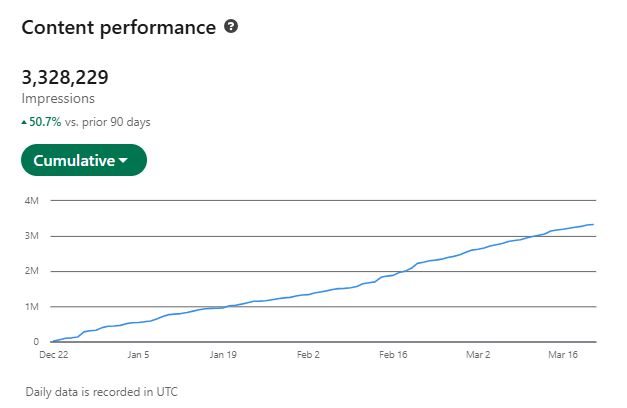
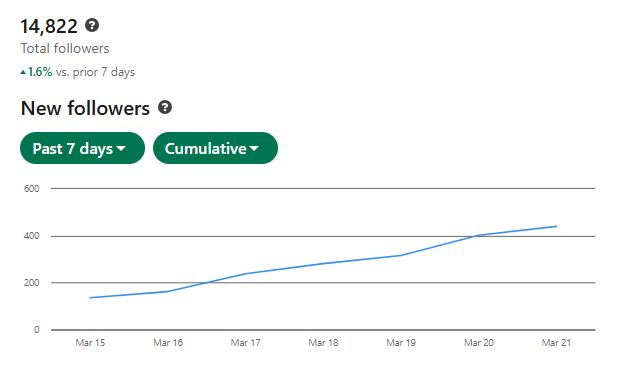
I created my LinkedIn account ~66 weeks ago.
Since then I’ve added $350,000+ in direct revenue from LinkedIn and 14,800 followers.
Easiest algo to crack by a country mile.
And the absolute best social media for signing enterprise clients.
Here is the exact system I’m using right now...
Oh, and if you want my full unfiltered cheat sheet with engagement group templates, carousel structures, DM workflows, and my posting system, follow me, repost this, and reply “LinkedIn Growth Guide.”
You must do all 3 to receive the DM.
Let me start with what stays true after 66 weeks of daily testing:
Proof-based content still outperforms everything else.
By proof-based I mean posts that literally show a real metric, revenue, traffic, pipeline, booked calls, etc. and then add context with a clear business takeaway.
Use real numbers whenever possible.
Dwell time still plays a major role too.
If people read the entire post, swipe through multiple carousel slides, or pause on video, the post continues circulating longer.
First-hour replies from people outside your immediate network are still one of the strongest distribution signals you can influence.
On-platform formats beat outbound links in almost every case.
Text posts, carousels and native short video outperform link posts on average.
Link posts without setup consistently stall.
That said, a lower-reach link post with strong intent can still outperform in revenue.
Distribution and conversion are different games.
If you include a link, deliver value first and either modify the preview image or drop the link in the comments.
Topic consistency builds on itself over time.
Posting repeatedly around the same core theme strengthens how LinkedIn categorizes your profile.
Your content then gets shown to people already engaging with that topic.
That improves early engagement quality and comment depth.
Cross-niche engagement still expands reach.
Engaging consistently in two to three adjacent industries pushes your profile into overlapping networks.
Generic likes do almost nothing.
Thoughtful comments that add insight create second-level engagement and extend reach.
Reposting with a new hook still works extremely well.
Most of your followers never saw the original post.
Repost after one to three weeks with a sharper angle, updated numbers, or a clearer outcome.
Posts with replies to replies stay alive longer.
Multi-layer comment threads can extend post lifespan by days compared to shallow discussions.
My posting schedule has not changed.
I post three times per day, every day.
Morning is proof-driven or a strong point of view.
Afternoon is a carousel, teardown, or case study.
Evening is a lesson, system breakdown, or actionable walkthrough.
Skipping even one day reduces momentum for the next 24 hours.
Formats performing best right now:
Carousels with a bold first slide tied to a specific outcome or pain point.
Three to six concise slides with steps, visuals, or proof.
A final slide with a clear next step.
Short native videos under 60 seconds with subtitles.
The hook must land in the first two to four seconds.
Walkthrough and behind-the-scenes videos continue outperforming polished talking-head content when the information is concrete and tactical.
What is underperforming:
Link posts with no setup.
Metrics with no narrative.
Large, dense text blocks.
Generic advice that applies to everyone.
Posts where the author disappears after publishing and does not reply in the first hour.
My engagement strategy:
Comment on 20 to 30 posts per day with insight tied directly to the post.
Like 50 or more posts per day.
Reply to every comment on your own posts within the first hour.
DM five to ten people per day with context-first value tied to something they posted.
Ask follow-up questions inside comment threads to deepen discussion.
Repeated engagement from the same people increases future distribution.
Hooks performing best right now:
“I started this account 66 weeks ago. Here is what $350,000 in LinkedIn revenue actually looks like.”
“This 4-slide carousel booked 5 calls in 24 hours.”
“If I had to rebuild my LinkedIn from zero today, this is the exact system I would use.”
“My 3-post-per-day routine for consistent inbound.”
“I made X this month from LinkedIn. Here is the breakdown.”
Every hook must be backed by proof.
Without proof, credibility drops fast.
Here is a 30-day plan that still works:
Post three times per day with at least one proof-based post.
Comment on 20 to 30 posts daily with substance.
Like 50 or more posts per day.
Reply to every comment within the first hour.
Repost one winner each week with a new angle.
DM five to ten people per day with context-first value.
Track impressions, comment depth, leads, and repeating commenters weekly.
Test hooks, formats, and timing every week.
Run this system for 30 days.
Screenshot your Day 31 results.
Tag me when inbound starts.
If you want the full cheat sheet, follow me, repost this, and reply “LinkedIn Growth Guide.”
You must do all 3 to receive the DM.


English

Cold DMs don’t win Dream 100 clients.
Thinking does.
Send a 1-page doc with:
• one sharp insight
• one missed opportunity
• one idea to test
I’m dropping a private Sunday training on Dream 100 + Loom + doc systems.
Like + comment LINK and I’ll send it.
English

I built 31 automations for clients last year.
Every single business - from solo founders to 50-person teams - needed some version of the same workflows.
So I documented all of them. Every workflow. Every department. And the exact plain-English prompt that builds each one in minutes.
Sales & CRM: lead capture, follow-up sequences, deal tracking, proposal generation, pipeline alerts
Marketing: social scheduling, email sequences, content repurposing, UTM tracking, review requests
Operations: invoice generation, payment reminders, inventory alerts, automated reporting
Customer Success: onboarding emails, NPS surveys, churn detection, support routing
Admin: meeting scheduling, expense tracking, document generation, approval workflows
Each one includes the specific prompt I use to build it - not vague instructions, the actual sentence I type.
Plus which 3 to start with if you want to save 10+ hours/week immediately.
Comment "PLAYBOOK" and I'll DM you the full PDF for free.
English
Charlie Brewer retweeté

One of the most overlooked AI publishing systems right now?
Claude AI.
When paired with the right design tools, it becomes a seamless workflow for creating, formatting, and publishing premium eBooks on Amazon KDP.
The real advantage is scalability.
Using this exact system, our portfolio crossed $72,000 in royalties last month.
With just 4–6 high-quality books, the results can snowball faster than most creators expect.
𝐈 𝐨𝐫𝐢𝐠𝐢𝐧𝐚𝐥𝐥𝐲 𝐩𝐥𝐚𝐧𝐧𝐞𝐝 𝐭𝐨 𝐩𝐚𝐜𝐤𝐚𝐠𝐞 𝐭𝐡𝐢𝐬 𝐰𝐨𝐫𝐤𝐟𝐥𝐨𝐰 𝐚𝐬 𝐚 $249 𝐭𝐫𝐚𝐢𝐧𝐢𝐧𝐠.
𝐁𝐮𝐭 𝐟𝐨𝐫 𝐭𝐡𝐞 𝐧𝐞𝐱𝐭 48 𝐡𝐨𝐮𝐫𝐬, 𝐈’𝐦 𝐬𝐡𝐚𝐫𝐢𝐧𝐠 𝐢𝐭 𝐟𝐨𝐫 𝐟𝐫𝐞𝐞.
Get it:
• Follow Me: @Tech_Marsha [𝐍𝐨 𝐅𝐨𝐥𝐥𝐨𝐰 = 𝐍𝐨 𝐃𝐌]
• Like & RT (This post)
• Comment “ ON ” [MusT]
•
I’ll send you the full training and the AI publishing workflow.
(𝐅𝐨𝐥𝐥𝐨𝐰 @Tech_Marsha 𝐬𝐨 𝐈 𝐜𝐚𝐧 𝐃𝐌 𝐲𝐨𝐮 𝐭𝐡𝐞 𝐥𝐢𝐧𝐤)

English
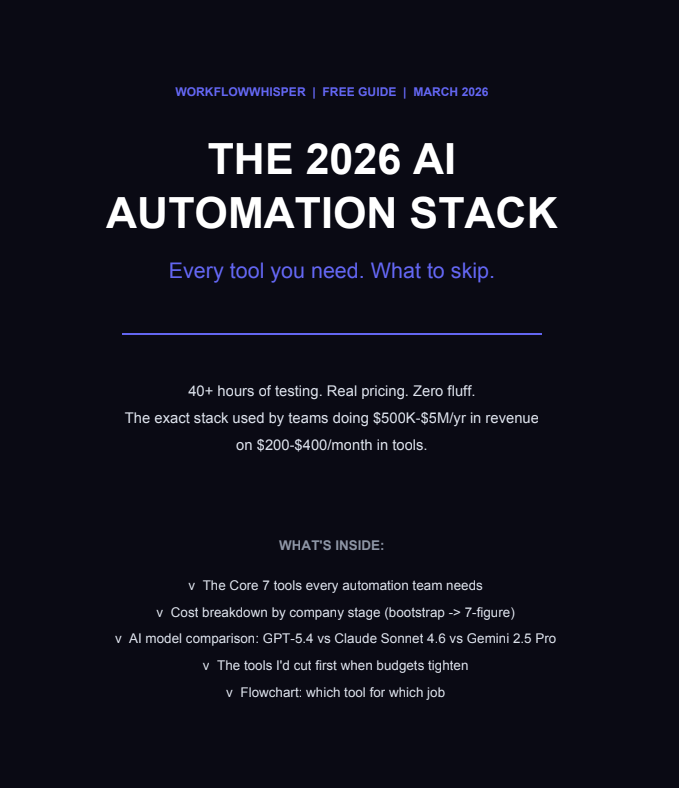
I spent 40+ hours testing every AI automation tool in 2026.
Put everything into a free guide:
> The exact stack running 6-figure businesses
> Cost breakdown (most spend 10x too much)
> What to use when - flowchart included
> The 3 tools I'd never give up
Comment "STACK" and I'll DM it to you.
English
The financial economy is a danger to the real economy at this point. If it falls apart, how will they clear the books? Ordinary people will lose money. In 2000, my supposedly “safe as cash” money market account lost value. Something much bigger could happen. The government could be forced to take epochal actions: Debt jubilee, a new currency, cash accounts at Treasury for every citizen.
English

TLDR: I am a recovering alcoholic with no fund, no credentials, and no lobbyist. I rebuilt myself from nothing. Then I broke into finance with no degree, no pedigree, and no permission.
I parsed SEC filings for a $31.5 billion private credit fund called Cliffwater. Not because anyone asked me to. Because nobody else would. The filings are public, but they are buried in footnotes that are not indexed, not searchable, and not structured for analysis. I have been told by fund managers that nobody even attempts this.
Billions of dollars in pension capital, and the people who manage money for a living do not bother to read the filings.
So I read them. Every loan. Every amendment. Every semi-annual PIK disclosure. 2,330 positions. I hand-researched fifty.
I found 189 loans where borrowers are paying interest with more debt instead of cash. I found over 50 loans that are not generating enough cash to service their debt at all — carried at par on the books of a fund that has never reported a losing month in 41 months.
The fund's Sharpe ratio is 3.75. Bernie Madoff — who was fabricating returns and could pick any number he wanted — ran a 3.5. He got caught because the numbers were too smooth by Markopolos. The greatest quant fund in history, Renaissance Technologies, runs a five or six.
Cliffwater is claiming risk-adjusted returns that would be impossible even if you insider-traded with perfect information every single time, because the volatility of the underlying markets would still prevent it.
Nobody asked questions.
Bloomberg confirmed 14% redemptions 48 hours after I published. S&P cut the fund's outlook to negative this week. Cash on hand fell 76% in six months.
This is not an isolated fund. This is the structure. $9.4 trillion in private equity. $3.5 trillion in private credit. They all pay their own valuation agents. The valuation agents decide what the funds are worth. No valuation agent has ever been fired for saying the number was too high.
The marks produce the NAV. The NAV produces the fees. The fees come from pensions. The pensions come from firefighters and teachers and nurses in Oregon and California and Illinois who will never read a private placement memorandum in their lives.
Wall Street ran out of rich people. The endowments were full. The sovereign wealth funds were tapped. So they went downstream — to 401(k)s, to retirement accounts, to interval funds sold to people who have no idea what they own.
1. Direct the SEC and FSOC to examine Level 3 fair value practices across interval funds and BDCs.
2. Require that valuation agents be independent of the funds they mark.
3. State publicly that the current self-marking regime creates systemic risk.
4. Mandate position-level mark disclosure for every fund that accepts pension capital.
There are two ways this ends. It breaks all at once like 2008 and we fix it. Or it rots slowly like Japan: one fund blows up, six weeks of quiet, another one, and nobody connects it for a decade while a generation of retirees gets destroyed.
I am not asking anyone to take my word for it. I am asking them to read the filings.
If you know someone in the administration, a regulator, or anyone on a legislative committee, please send this to them. One person learned this from a one-bedroom apartment. Your government can too.
The will is what is missing.
Nick Nemeth (Mispriced Assets)@NickNemo17
English
The massive productivity boost hiding in plain sight is an AI agent for your Google Docs. Hundreds of millions of users, trillions of emails, files, contacts—just start organizing and prioritizing. Auto-drafting everything. A daily agenda by default. Nothing fancy. It doesn’t even have to be Agentic. Whatever can be done by the tiniest quantized model. Maybe I’m late to party but I don’t see it yet.
English
Dream 100 clients don’t reply to pitches.
They reply to insight.
Send a 1-page doc showing:
• a gap you spotted
• a quick win
• how you’d approach it
I’m dropping a private Sunday training on Dream 100 + Loom + docs.
Like + comment LINK and I’ll send it.
English
GENIUS. This is absolute genius. These people are builders, crafters, fixers already. They already have the insights. Also: There is a huge population that holds invisible knowledge and does invisible work: women. This can be made visible like never before. A marketplace where one barely exists now.
English

A Fortune 500 exec who runs one of the biggest blue collar companies in the country DM'd me yesterday.
Gave me an idea that I'm starting to get really excited about.
Build a version of YC for blue collar builders who use Claude Code.
Essentially an accelerator for blue collar founders building for trades, construction, fleet, field services, etc. Whatever their domain expertise is.
They offered to help fund the first batch, and we started to put together a list of incredible mentors.
It's crazy how fast the power dynamic in software has shifted.
But this could be very big.
English

SHOCKING: 99% of GTM engineers using Claude are barely scratching the surface.
Right now, the entire internet is screaming "Claude, Claude, Claude"... But here's the truth: just prompting it won't build GTM infrastructure.
To unlock its real power, you need to master:
- Claude Code deployment with the WAT framework and CLAUDE. md self-improvement loop
- MCP connections, sub-agents, and automations running 24/7 without you
- Pre-built prompt systems covering every GTM function you actually run
I spent 100+ hours building and documenting the most complete Claude GTM Engineering Bible and compiled every prompt, workflow, build sequence, and deployment guide into one resource.
I'll give it to only 500 people.
To get it:
1. Follow me MUST (so I can DM)
2. Comment "CLAUDE"
3. I'll DM you the bible
If you don't follow or comment, you won't receive it.

English

Just made another banger doc...
There is a simple repositioning move that lets you charge 3x more without changing the actual work.
It covers:
- how agencies charging $20K/month are selling the exact same service as you
- the shift that makes prospects stop comparing you on price
- the expansion model that multiplies what a single client pays you over 90 days
RT + follow & comment "SHIFT" and I'll send it

English