dlorier
711 posts

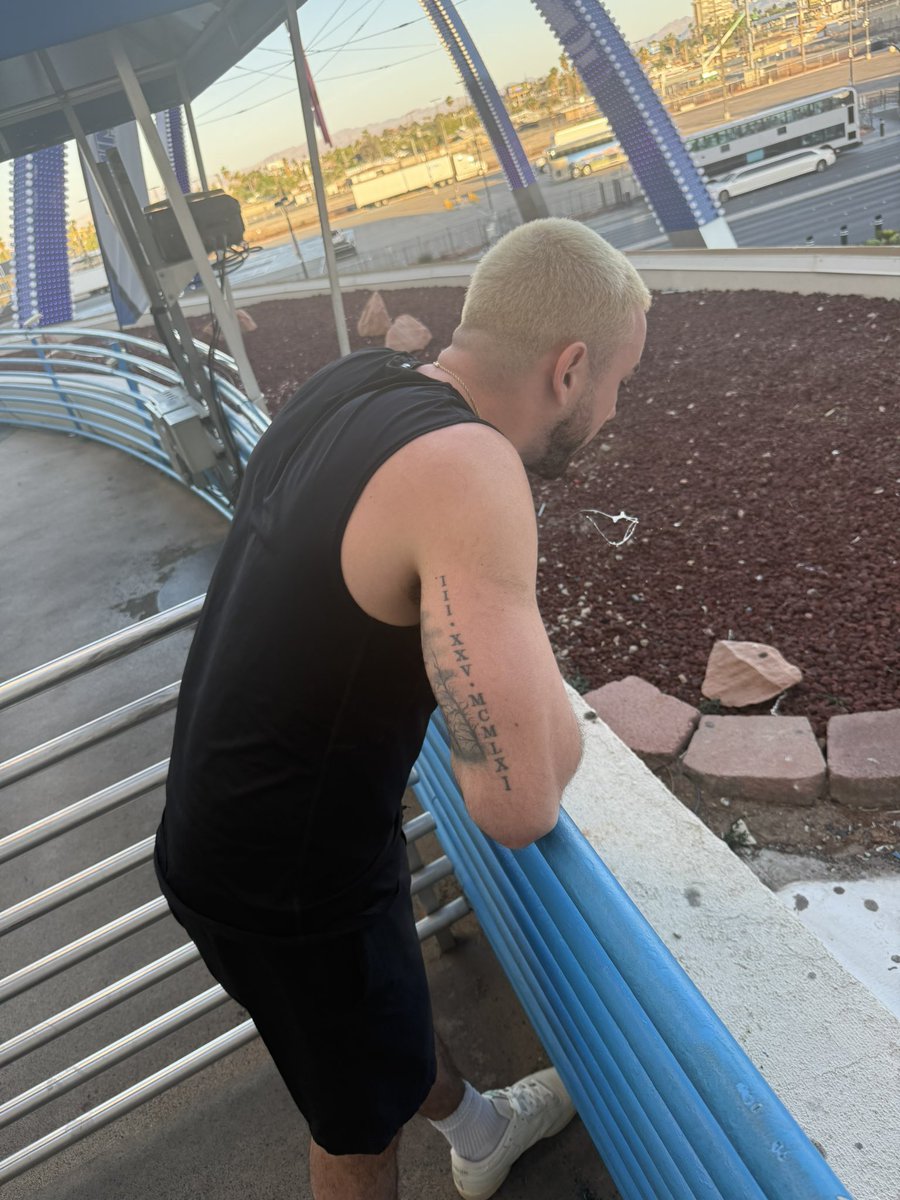
Despite previous reports that Nikki will be jumping, there are serious doubts inside the organization that Nikki will be jumping. The expectation is that his nerves on ground zero will rise when he gets to 1149 feet up (the highest tower in the United States)
John Solomon Just Blew My Mind with His Prediction About Deep State Accountability Solomon says President Trump is about to begin declassifying documents at lightning speed in an operation he is calling “Hypersonic Clarity." He believes this massive document dump could pave the way for a grand conspiracy case against the intel agency spooks that have weaponized the government against Trump and millions of Americans for over a decade. "We’re gonna get a level of transparency in a release and declassification of documents unparalleled in American history. The president's setting up something that I think will be unbelievable." "I do think there will be some accountability. It’ll never be enough for what we went through the last 12 years... I think there’ll be a speed of disclosure and a speed of prosecution that we didn’t see in past years." Solomon says prosecutors only need to flip one top deep state actor to make the whole conspiracy case stick — just like taking down a mob boss. This is what we’ve all been waiting for.


🇺🇸🕵️♂️🚨 The Silence Around the Shots: Joe Kent, Charlie Kirk, and the Foreign Shadow the FBI Wouldn’t Chase It's amazing how many so-called MAGA/America First 'patriots' that demanded transparency and pushed back on the censoring or throttling of any other narratives or pushback in the past, yet for the Charlie Kirk ass@ss1nation, they happily accept the legacy media and the FBI's explanation. "Just leave it alone." "Don't go there." "That's going to divide MAGA!", "It's just too hot right now." "Let it play out, bro." I knew Charlie. FACTS: Charlie was 💯 growing leery of Benjamin Netanyahu and Jewish donors, who he felt were pressuring him and Turning Point, even micromanaging his guests. There are even audio recordings of the threats from Turning Point's top donor. The media and even Turning Point misrepresented Charlie's friendship with Candice Owens. Why? Charlie Kirk and President Trump discussed Iran. Charlie was against starting a war with Iran. Charlie feared for his life. Charlie felt the radical transgender community was a serious threat to his safety. When conservative activist Charlie Kirk was gunned down on September 10th, 2025, during a campus event at Utah Valley University, the storyline appeared straightforward. A lone shooter, Tyler Robinson, was arrested, charged with aggravated murder, and quickly confessed in a note and text to his trans-identified partner. The media and federal authorities described the crime as tragic yet banal — another isolated act of gun violence in a polarized nation. But behind the scenes, a very different picture was forming, one that reached into Washington’s foreign policy struggles, the FBI’s control of intelligence, and the deep fractures inside the Trump administration. The first cracks in the official narrative came from Joe Kent, then the Director of the National Counterterrorism Center (NCTC) — one of the most senior counterintelligence positions in the U.S. government. Kent claimed that soon after Robinson’s arrest, his agency uncovered leads suggesting a possible foreign nexus to the shooting. His analysts wanted to determine whether Kirk’s outspoken opposition to escalation in Iran — and his criticism of Israeli pressure on U.S. foreign policy — might have made him a target of foreign-linked actors. But according to Kent, the investigation never got that far. Kent says the FBI abruptly instructed the NCTC to halt all foreign-trace inquiries, seized the file, and transferred full control of the case to Utah state authorities — effectively sealing off national intelligence participation. His analysts were not only denied access to the crime scene but also blocked from obtaining data requests and inter-agency files. Whenever Kent’s team tried to reopen lines of inquiry, their requests “died on the vine.” That is the bureaucratic term for suffocation by silence. This was not a low-level misunderstanding. Kent says there were White House and DOJ meetings about his persistence. Senior officials — including national security advisor Kash Patel, Vice President J.D. Vance, and DNI Tulsi Gabbard — allegedly discussed his behavior, warning that continuing such a probe could politically damage the administration and complicate the prosecution of Tyler Robinson. Kent, a decorated combat veteran and no stranger to power games, saw this as a defining moment: the point where justice and statecraft diverged. The timing couldn’t have been worse. President Donald Trump’s renewed conflict with Iran had triggered the largest factional rift inside his movement since 2016. Figures such as Tucker Carlson, Alex Jones, and Joe Kent opposed military intervention, warning that Israel’s influence on U.S. foreign policy had gone unchecked. Kirk — a personal friend of Trump who reportedly told Kent, “Keep us out of war with Iran” just months before his death — had become perhaps the loudest anti-war voice within Trump’s inner circle. To men like Kent, the possibility that his killing might be more than random was worth spending a few weeks investigating. To others, that line of inquiry was radioactive. After resisting internal pressure, Joe Kent resigned from his position in early 2026, citing moral opposition to the Iran war and institutional obstruction of truth. He did not stay silent for long. Within days, he sat down for lengthy interviews with Tucker Carlson and Megyn Kelly, publicly alleging that the FBI “blocked” his investigation into possible foreign involvement. His revelation ignited a political firestorm. In successive interviews and reports from outlets like Newsweek, The New American, and The New York Sun, Kent repeated the same refrain: there were leads worth pursuing, and we were prevented from following them. He tread carefully — not directly accusing Israel or any foreign government — but he made it clear where his suspicions leaned. According to Kent, Kirk had been “under pressure from numerous pro-Israel donors” before his death and had been advocating a noninterventionist approach. He stopped short of alleging a conspiracy, but the line between suspicion and implication was almost nonexistent. Meanwhile, inside official Washington, Kent’s candor earned him an FBI leak investigation of his own. He knew it would, and said publicly, “If it gets us to the truth, so be it.” Journalist Michael Shellenberger, writing for Public, exposed details that added gravity to Kent’s statements. Shellenberger confirmed that Kent had warned internally he might be called as a witness, knew that speaking out might assist Robinson’s defense, and did it anyway. For Kent, the matter was clear: the truth about Kirk’s death — whatever it was — outweighed the optics of aiding the accused. “If it gets us to the truth,” he said, “that’s the risk I’m taking.” No one inside the FBI or DOJ has publicly refuted the essence of his claims; they’ve simply refused comment. The core accusation is not that Tyler Robinson didn’t shoot Charlie Kirk, but that he may not have acted alone — or worse, that someone else wanted the story contained before uncomfortable connections surfaced. Kent and other insiders pointed to early social media posts predicting Kirk’s murder before it occurred, a telltale sign of coordination or foreknowledge. Why would the bureau shut down precisely the kind of cross-agency coordination it was built to handle? In the aftermath, the divide in public perception has sharpened. Supporters of Kent argue he became a scapegoat for trying to enforce transparency in a system allergic to it. Establishment voices, from The New York Times to administration spokespeople, claim he overstepped his bounds and “risked politicizing a murder trial.” Yet both narratives confirm the same underlying fact — the probe was blocked. The difference is in whether you think that was good policing or conscious suppression. Kent’s case symbolizes a broader pathology in American governance: the vertical integration of secrecy. When information threatens institutional interests or allied nations, it migrates from “open investigation” to “classified matter” faster than any investigator can blink. From the Kennedy assassination to the modern "Russiagate" fiasco, this recurring choreography — suppress, compartmentalize, deny — creates permanent suspicion. Whether or not those suspicions are justified becomes secondary; the mere act of suppression breeds public distrust. Charlie Kirk’s death thus hangs suspended between two competing realities. In one, the official story: a deranged gunman acted alone, justice will run its course, and there is no greater mystery. In the other, the shadow narrative: a political insider silenced just as his anti-war influence reached the White House, buried under layers of bureaucratic obstruction justified as “procedure.” Either way, the consequences are the same — another wound to America’s confidence that truth and power ever coincide. Joe Kent, for his part, continues to insist that his purpose isn’t to assign blame but to force open a door that should never have been locked. In the end, his role — soldier turned intelligence chief turned whistleblower — resembles the archetype of every truth-seeker who learns the price of integrity in an empire that worships secrecy. "We were prevented from investigating further," he said. That statement alone, accurate or not, indicts the entire system. And that’s the heart of the story: the murder may be solved — but the truth remains redacted.


Watch now — The All-American Halftime Show 🇺🇸





Can I beat Bob with only a 7 iron? (Same tees)