

turboprop trash
832 posts

turboprop trash
@flynmt
Cargo Pilot and political junkie. If you got your Amazon box in Montana you're welcome! Every day is an adventure
Billings, MT Inscrit le Aralık 2014
298 Abonnements103 Abonnés

Why wouldn't people want the data center? It's jobs in their community! High paying jobs with good benefits!
More jobs brings more local taxes, demand for more housing, restaurants, good stores , etc! It will enrich the areas economy!
I don't understand why people don't want jobs in their communities?
English
This is literally insane
So many people showed up to oppose a $6 billion dollar data center in Missouri they had to use bleachers
The whole crowd yells and chants they don’t want the data center
Festus City Council voted to approve the data center anyway right in their faces
English

@AgingAnarchist Except the Cherry Tree chop is a made-up teaching story for kids and was written long after Washington died. x.com/i/grok/share/5…
English

@washingtonpost This is why your pentagon access should be revoked
English

Breaking news: The U.S. military gave the president a plan to seize nearly 1,000 pounds of highly enriched uranium in Iran.
The mission would require the airlift of potentially hundreds or thousands of troops and could take weeks.
wapo.st/3PWVRzs
English


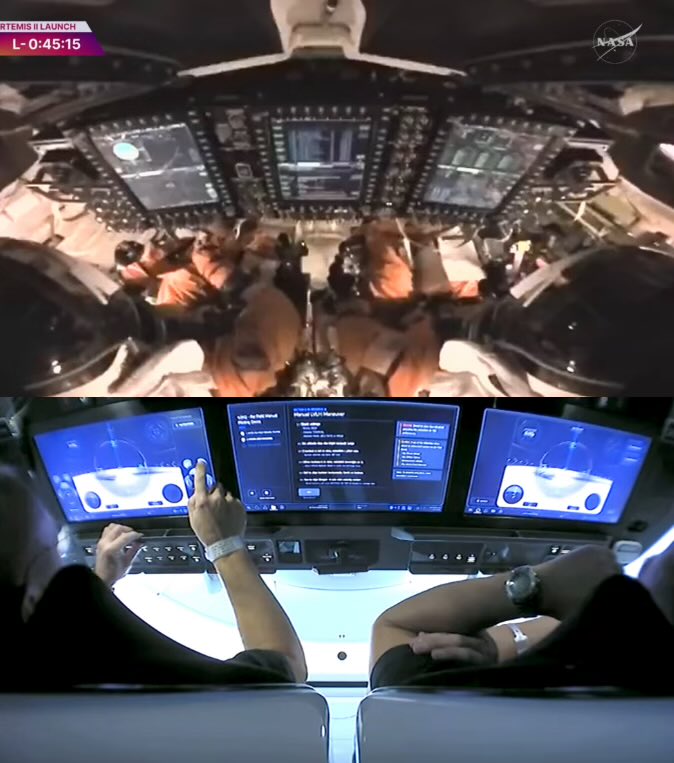
@TimLilley5 @philnmarks @DJSnM @CommiNathan @NASA @SpaceX When you have smoke in the cockpit and can’t see anything let me know how that touch screen works out
English

@philnmarks @DJSnM @CommiNathan @NASA @SpaceX It’s cute that you think those push-buttons and toggles have anything behind them besides a PCB.
English


English

The Artemis Moon base project is legally dubious theverge.com/science/905406…
English
turboprop trash retweeté

Attention Aviation Journalists (& anyone interested)! I have a primer for you on the SFO “parallel approaches” story.
It has the potential to be a big story. I imagine the airlines, and maybe even the city, will fight the FAA’s decision. Big impact.
So, here’s a bit of history & a perspective on simultaneous close visual approaches to runways 28L & 28R from a pilot perspective.
Summary: these are *not* dangerous approaches. You can find someone who will tell you they are, but I’d bet 95% or more of pilots who’ve flown them will tell you it’s not dangerous. In fact, it’s a fun approach & a treat for passengers w/ the added benefit of increasing the airport’s arrival rate capacity.
In essence, these approaches – the “FMS Bridge Visual 28R”, the “Quiet Bridge Visual 28L” & the “Tip Toe Visual 28R” (list not all inclusive) – are used in Visual Meteorological Conditions (VMC) only. Pilots must be able to see a long way to do these approaches. When there are low clouds, fog, rain or something, these are not an option even offered.
Visual approaches are not at all unusual at any airport. In many cases, the visual is the preferred method of approach.
At SFO, we must be able to see a long way because we must be able to identify our “pairing traffic” & keep them in sight during the entire sequence. We know exactly where the other jet is at all times during this approach.
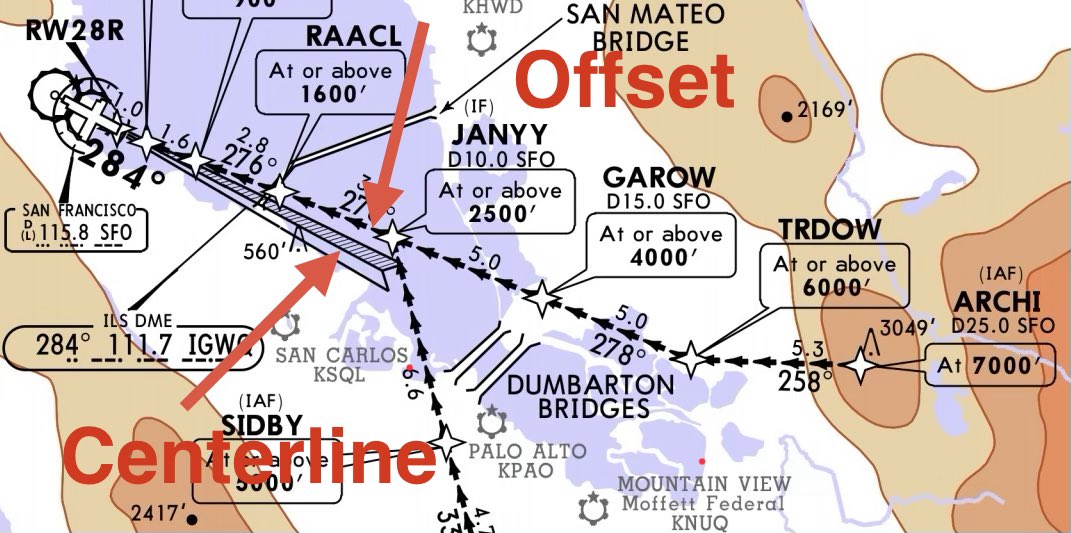
I’ve included a sample of the approach to runway 28R, below. Somewhere around point “TRDOW”, approach control is pointing out your “pairing traffic”. They won’t allow you to get close, or continue the approach until you have them in sight. It can take a couple minutes to visually acquire them, but by “GAROW” or “JANYY” it’s very easy to spot them. If you still can’t spot them, approach won’t let you continue.
Keep in mind that the example I included below is *only* for 28R. Runway 28L has a different approach & it’s not depicted here at all. There is space between the runways to begin with…but the 28R approach creates more space between aircraft by bringing you in at an angle…it does not line up with the runway until a very short final. The aircraft on 28L is also looking for you & must keep you in sight, as well.
The problem with these approaches is that they used to set off a “TCAS RA”. I assume you know this term. A TCAS RA must be obeyed. So, we obeyed it & did a go around, even though we can see the other jet & know it’s not really a problem. Reports are filed & records kept.
At one point, SFO was one of a few places that certain airlines were allowed to switch the TCAS to “TA Only” mode. The RAs were a nuisance rather than a real threat & everyone knew it, so we disabled the RAs. I don’t know of many other instances this was allowed. That may sound extreme, but (the majority of) pilots were happy to have a solution, even if it was only temporary as they tried to find a better fix.
They did. They offset the approach track to 28R enough that a jet following it would be below the TCAS inhibition altitude before it got close enough to the other jet to set off an RA. It’s an elegant solution & works very well.
Now, these approaches are famous for videos of jets landing simultaneously. That’s cool, but not how it works in practice most of the time. One jet usually ends up behind the other & at nearly the same speed. They are below the required distance for usual separation, but they are separated in trail.
Even when it does end up with the jets landing together, it’s not dangerous.
I’m speculating, but this decision seems to be someone looking at reports of TCAS RAs over several years, seeing a bunch at SFO & deciding we can’t do this anymore, not understanding that the RAs are not a real danger signal in this case. It’s a spreadsheet decision, not a wisdom decision. It doesn’t actually make anyone safer, but it looks like it does & that’s what matters.
The disruptions this decision will cause? Not included on the spreadsheet.
Hope that helps!

English
The airplanes are not less safe.
This is the “Baader-Meinhof Phenomenon”. It’s a “frequency illusion”…you noticed something, it becomes prominent in your mind, then you start noticing similar things where you hadn’t before.
The *actual* frequency of these events has not changed at all, but you begin to think it’s suddenly happening a lot more. “Trend Reporting” by the media exacerbates this…like jumping on a bandwagon.
These events do happen around the world. Not often – flying is very safe – but you normally don’t hear about them because only very specialized media covers them & you likely don’t even know that media exists. Social media is kind of a wildcard in that now you can notice things from all over the world, and actually search them out. It’s a bottomless rabbit hole.
We go through this nearly every time there is some mishap in aviation that gets the public’s attention. One iteration of this phenomenon is that it can be airline specific; something happens at Delta, say, and now every incident at Delta is reported, while similar incidents are happening at American & Southwest, but you don’t hear about those. As some of us say, “every airline gets their turn in the spotlight”.
Eventually the public either loses interest, we go a long period with nothing to report or the reports start focusing on trivial things & the public realizes the illusion.
Some people know all this & use it for revenue anyway. It’s not healthy to stoke unreasonable concern in the public, but it can be profitable, and you can always say “I’m just asking questions”.
Wayne DuPree@RealWayneDupree
A Delta flight made an emergency landing in São Paulo after its engine caught fire. All passengers are safe. With this being the second major aviation incident this week, it begs the question: are planes less safe, or are we just more aware? #Delta #Aviation
English
turboprop trash retweeté


@LauraAE4HF @thenewarea51 I’d like to fly wherever you’ve been flying because this has not been my experience
English

@thenewarea51 I have been a pilot flying all over the world for 46 yrs. I actually remember when TCAS came out. An RA is an emergency with specific memorized procedures. I can count on one hand the number of RA’s I have experienced. Even TA’s are rare.
English
This is a “Big nothing burger” to quote Van Jones. The Blackhawk in this instance was playing by the rules. They not only descended to remain clear of the Class Charlie shelf but did so by at least 450’ which I’m assuming because they wanted to be sure that they were not going to cause havoc for the arrivals into SNA.
Listening to the tapes via @theATCapp situational awareness prevailed, this was VMC conditions, KNIFE25 was not obligated to be on freq with SOCAL APPR, the United pilots had them in sight, the TCAS gave them a RA as it should. I’m not sure what prompted SNA Twr to make that remark to 589 as they rolled out, “This shouldn’t have happened”. I think it’s because everyone is on edge post the DCA accident. And maybe the SNA controller has a beef with SOCAL, who knows!
The other day I was cleared to cross a Class C airport with MEDEVAC status by the tower. A Envoy ERJ was on a long visual final. I had the airplane insight, had them on my TCAS, tower confirmed with me that I had them insight. I was doing a 150 knots and much closer to the airport than the ERJ which was doing around 130 knots. The panic of this ERJ pilot was something else, you could tell she had no situational awareness, kept asking the controller where I was, was I a safe distance away, etc… etc. The controller politely asked if I’d climb another 500’ for the crossing most likely to put these ERJ pilots at ease which I happily obliged to. But I was thinking in my head as I started my climb, I’m going to bleed airspeed to climb and our separation is going to get closer now because these ERJ pilots sound like they don’t really have a clue as to what’s happening.
Props to the tower controller for recognizing the situation and trying to put the ERJ pilot’s minds at ease. It was one of those moments where the controller and I were on the same page trying to hand hold the inexperienced pilots consuming the airspace.

Flightradar24@flightradar24
The FAA says its investigation of the incident involving United flight 589 and a US Army Black Hawk will also include “whether a new measure to suspend the use of visual separation between airplanes and helicopters was applied.” flightradar24.com/blog/aviation-…
English
@thestinkeye @ColonelTowner I’ve gotten a higher roll rate from a beech 99😂
English
@ColonelTowner The only thing that happened in that video is Goose keyed the mic, and said, "Did you hear something, Mav? Sounded like a firecracker."
English

This sounds controversial, but most US airlines already do these fuel savings programs in some form. They are not specifically monetized like this, but factor into profit sharing.
Common means of minimizing fuel use include taxiing on only one engine, starting the other just in time to meet the warm up time requirements before takeoff. Or shutting one down after the cool down period while taxiing in to the gate.
If there is going to be an extended delay, we’ll ask ground control for a place we can park & shut both engines down. The Auxiliary Power Unit (APU) is a small turbine engine in the tail that burns a lot less fuel than the engines & provides both electric & pneumatic power for air conditioning & lights, etc. (it doesn’t provide any thrust).
The bigger savings is often in how the flight is planned, though. The dispatchers run a program that optimizes the route for fuel burn, or time, depending on what you prioritize. This may entail flying at different altitudes to get out of the worst headwinds, or even flying a longer route; a famous story at my airline is of a crew flying from the East Coast to LAX. ATC offers them a route that’s direct to the destination, in theory shaving a bunch of time off the flight. They accept, but their route had been selected to avoid the heavy headwinds…and around PHX, they realize they don’t have the fuel now to make it to LAX, choosing to divert into PHX. Embarrassing! Now we have a rule that if ATC gives you a route that goes more than 100 miles off your planned route, or if you get stuck at an altitude more than 4,000’ off planned altitude, you must consult your dispatcher in flight.
Another way fuel gets “wasted” is by pilots “bumping up” the planned fuel load at the gate. It’s not uncommon for a pilot to add an extra one or two thousand pounds of fuel “just in case”.
That sounds reasonable & in some cases may be justified, but the dispatchers take this stuff into consideration. They also track an astounding number of metrics at an airline, one of which is how much fuel you land with. It’s not done in a punitive way, they just want to see how the flight plans are working out in the real world. They use this data to come up with a fuel load that’s realistic, but still offers a pretty robust safety margin that is above what the FAA requires (it would take too long to explain required fuel reserves, as it differs based on the weather & things like going to an island, etc.).
In cases where pilots add fuel, it almost never gets used. But the heavier a jet is, the more fuel it must burn to fly…so something like 3% of the extra fuel is burned just to carry the extra fuel…if you load an extra 2,000 lbs of fuel, 60 lbs will be burned just to carry it….a little less than 10 gallons. That doesn’t sound like a lot, but imagine it happening 3,000 times a day…that’s 30,000 gallons of fuel a day that’s burned for nothing. At the current price of jet fuel, $7.32, that’s roughly $220,000 a day.
Now, sometimes jet fuel is significantly more expensive at the destination than at the origin. If so, we’ll load up at the origin & “tanker” fuel to not need as much there. They’ve done the math. You can’t bring in all you need, but you can reduce how much you have to buy at the expensive place.
Anyway, pilots are very aware of the fuel burn. I’d say the culture in the U.S. at major airlines is to save fuel wherever we can, and we’ve found a happy medium where it doesn’t present a safety issue. The less fuel we burn, the more profitable the airline is, which factors into our annual profit sharing checks.
Hope that helps provide a little context! As always, I’m simplifying for a general audience here.
Airliners Live@airlinerslive
💷 British Airways Offers Pilots Bonus Pay for Burning Less Fuel 👇 British Airways is introducing a new financial incentive that will reward its pilots with up to a 1% bonus on their basic salary if they successfully reduce aircraft fuel consumption. Starting in 2027, the proposed scheme requires flight crews to collectively reduce carbon dioxide emissions by 60,000 tonnes compared to 2025 levels. Pilots will achieve these targets through operational adjustments, such as optimizing taxiing procedures and carefully managing the amount of extra fuel loaded onto the aircraft. The British Airline Pilots Association, which represents 85% of commercial pilots in the United Kingdom, will vote on the proposal at the end of April 2026. ✈️
English
@dmbkparker @Ok53900269 They still work great and also teach what the software is doing
English


@MCCCANM Good grief the reporting on this is atrocious! And can we ban the “pilots” who spout nonsense on TV?
English
Ok, the helicopter & the United flight.
You’re hearing that the United jet got an “R.A.” on final approach. This is a “Resolution Advisory” from the “Traffic alert & Collision Avoidance System” (TCAS).
TCAS is a small unit in the jet or helicopter that talks to other TCAS units in other flying machines. Sometimes little airplanes don’t have a TCAS, so the TCAS in that case just listens to that airplane’s transponder.
When TCAS determines that the airplanes will get close, it issues a “Traffic Advisory” (TA). It announces “TRAFFIC, TRAFFIC” over the speaker & colors the visual depiction of the traffic on your screen so you can see who it’s concerned about, what altitude they are at & whether they are climbing or descending. With that information, you know specifically where to look outside to visually acquire the offender.
It’s not too unusual to get a TA. You don’t have to do anything about it & usually the offender levels off a thousand feet above or below you…TCAS doesn’t know that’s the plan though, and it didn’t like the rate of closure, so it spoke up.
Now, if things start getting even closer & TCAS thinks there will be a collision, it issues a Resolution Advisory (RA). TCAS has been planning for this possibility the whole time & coordinating with the other TCAS…they are chatting to each other specifically, even as both continue to talk to all the other little TCAS boxes in the area, too. TCAS can only tell you to climb or descend (it can’t tell you to turn), so they work together to figure out who will climb & who will descend to create separation the fastest…they will *not* issue the same instructions, like having both jets descend.
Even if the other airplane doesn’t have a TCAS, TCAS can perform basically the same thing by listening to that airplane’s transponder…it’s just that the other little airplane without TCAS is probably still clueless that a potential collision is looming.
Anyway, TCAS comes over the speaker & says “CLIMB, CLIMB” (or descend). It puts a target on your attitude indicator to raise the nose to. If it doesn’t like how you’re doing it, it says “INCREASE VERTICAL SPEED”. It will do this until it announces “CLEAR OF CONFLICT”, at which point you return to your ATC cleared altitude.
You *must* obey TCAS. It overrides ATC instructions. There might be a circumstance where you wouldn’t obey it, but it better be bulletproof because you are going to have to explain yourself. Not obeying TCAS has caused at least one major accident.
As soon as TCAS issues an RA, you tell ATC “Responding to TCAS RA” & they know you are busting their clearance. They’ll focus on making sure you don’t become a problem for someone else in the area. Eventually, the whole thing gets written up in reports & the incident is investigated for a loss of separation.
In the DC crash, the TCAS never said a word, and that’s by design. Below a certain altitude, it inhibits itself, as it assumes you are landing…I think it’s around 1,200’, but don’t quote me on that. As you approach to land, there are a bunch of jets on the ground with their transponders turned on…TCAS can’t filter out who is doing what, and if it worked like it did when you were in the air, you’d never be able to land.
So, that’s basically what happened here. Hope it helps!
Air Safety #OTD by Francisco Cunha@OnDisasters
Another news piece on the US Army Black Hawk crossed the path of a United Airlines flight headed towards John Wayne Airport in Orange County on Tuesday evening. (full story in the comments)
English
Holy hysteria Batman! This is pretty normal in this scenario.
ACAS looks at where the plane will be 20 seconds in the future BASED ON THE CURRENT PATH OF THE AIRCRAFT.
If the aircraft is descending or climbing into another aircraft ACAS doesn’t know if you are planning on leveling off and will trigger.
This is addressed by 2 things.
Controllers will alert pilots to traffic and you should slow down the rate of descent when within a thousand feet of your level off altitude.
This may or may not work and occasionally a resolution advisory will still be triggered.
Completely irresponsible reporting here!
English

🚨 “THIS IS NOT GOOD.” 🚨
PACKED UNITED PASSENGER JET SECONDS FROM CRASHING INTO BLACK HAWK HELICOPTER ON FINAL APPROACH
That’s not a caption.
That’s the air traffic controller… reacting in real time.
A United flight carrying 168 people was seconds from landing at John Wayne Airport in Newport Beach, California...
Then out of nowhere, a Black Hawk helicopter cuts directly across its path.
• Just 525 feet apart vertically
• Less than 0.3 miles separation
• Top-level collision alert fires inside the cockpit
Pilots immediately halt descent mid-air to avoid impact.
This wasn’t cruising altitude.
This was final approach over Southern California… where there’s almost no margin for error.
A military helicopter… crossing directly in front of a commercial jet… in controlled airspace.
And it’s all caught on video… and audio.
And this comes after the LaGuardia incident, multiple recent near-misses involving helicopters… and a deadly mid-air collision last year.
So how is this even happening…
And at what point do we admit this isn’t random anymore… it’s a pattern?
English
@DankNDerpyGamer @dougdrvr @HustleBitch_ Under visual flight rules the minimum vertical separation is 500’
English

@dougdrvr @HustleBitch_ If I recall correctly, though, isn't there a FAA mandated minimum *vertical* clearance of 1,000 feet?
That (2,000 - 1,500 foot) difference is only 500 feet.
(Do you have a timestamp in the vid that tells you what altitude the aircraft was at? My dopey ass keeps missing it.)
English
@GivnerAriel @JoshDaws The algorithm is intentionally addictive though. That’s the problem
English

This is disgusting and I can’t wait for the appeals.
The precedent set by YouTube being liable for screen-time addiction is kind of scary. Treating algorithms like a defective product opens the door to endless lawsuits over “addictive” tech.
What’s next? Books, video games, junk food? What happened to personal responsibility?
BBC Breaking News@BBCBreaking
US jury finds Meta and YouTube liable for woman's childhood social media addiction in landmark trial bbc.in/47nqXq0
English

JUST IN - Trump to appoint Mark Zuckerberg, Larry Ellison and Jensen Huang to the Science and Technology Advisory Board — WSJ

English

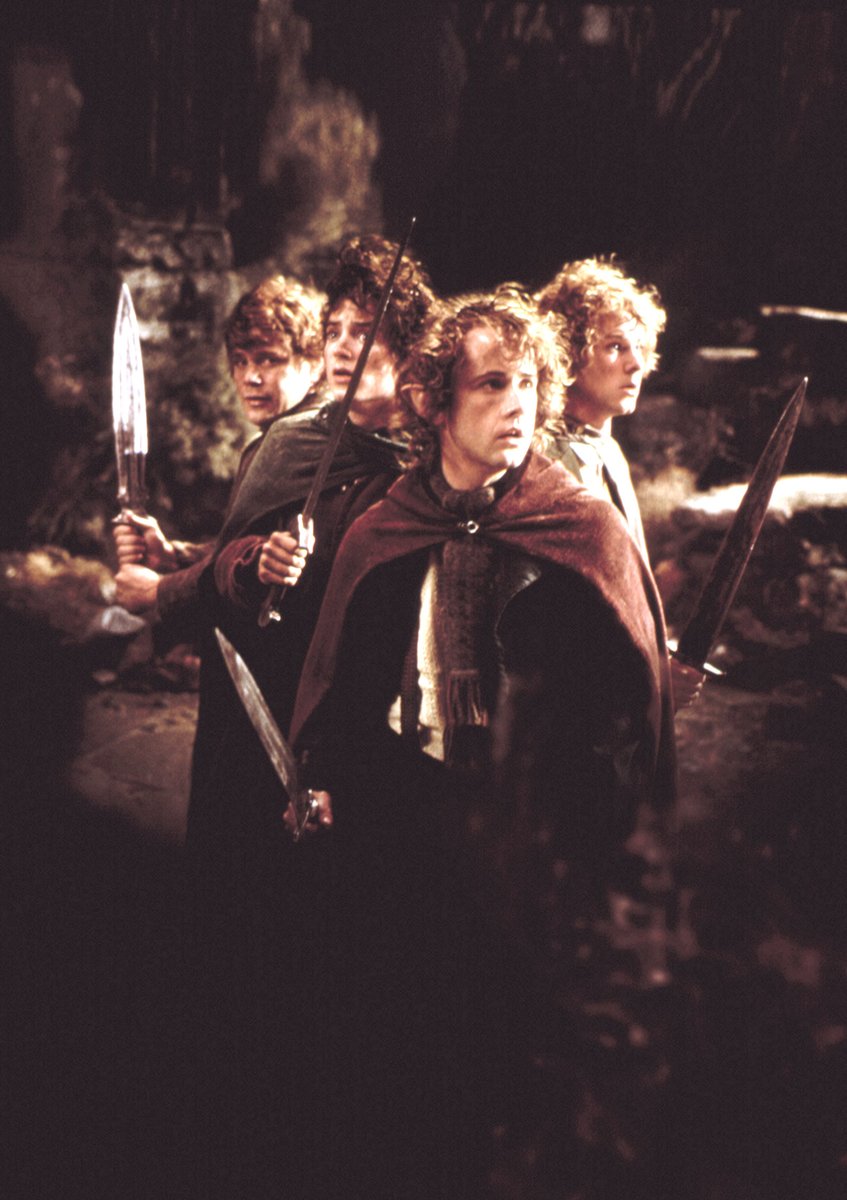
NEW 'LORD OF THE RINGS' MOVIE
Stephen Colbert is co-writing "The Lord of the Rings: Shadow of the Past" (working title), which will go into production after "The Hunt for Gollum."
The synopsis: "Fourteen years after the passing of Frodo - Sam, Merry, and Pippin set out to retrace the first steps of their adventure. Meanwhile, Sam’s daughter, Elanor, has discovered a long-buried secret and is determined to uncover why the War of the Ring was very nearly lost before it even began."
Colbert is co-writing the script with his son, Peter McGee, and franchise veteran Philippa Boyens.
variety.com/2026/film/news…

English