
Tweet épinglé
JD Adkins
9.5K posts



JD Adkins retweeté
JD Adkins retweeté

“The desert teaches you more about water than the ocean ever could.”
— Marcus Aurelius

English
JD Adkins retweeté
“The only thing more pathetic than your failure is your list of excuses for it.”
— Napoleon Bonaparte

English
JD Adkins retweeté


JD Adkins retweeté

The Seven Sorrows of Saint Joseph is a devotion that invites the faithful to reflect on the hidden sufferings endured by the foster father of Jesus. Like the more familiar Seven Sorrows of the Blessed Virgin Mary, Joseph's sorrows highlight his role as protector and guardian of the Holy Family, revealing a man of profound faith who navigated uncertainty, hardship, and loss while remaining obedient to God's will. This meditation, paired with seven corresponding joys, originated in medieval piety and gained popularity through stories of Saint Joseph's intercession, encouraging believers to seek his help in their own trials.
The first sorrow concerns Joseph's doubt upon discovering Mary's pregnancy. As a just man betrothed to her, he faced the anguish of believing she might have been unfaithful, leading him to consider quietly ending the betrothal. This inner turmoil tested his trust until the angel's message brought clarity. It reminds us of the pain that can accompany unexpected divine plans in our lives.
The second sorrow arose from the poverty surrounding Jesus' birth in Bethlehem. Joseph could provide no better shelter than a stable for the Son of God and his mother, witnessing their vulnerability amid the cold and lack of comfort. His sorrow at this humble beginning underscores the sacrifice of embracing God's will without worldly security.
The third sorrow came at the circumcision of the Infant Jesus, when Joseph saw the first blood shed by the Redeemer. As the one who named the Child, he participated in this rite of the covenant while confronting the reality of suffering that the redemption would demand. This moment blends paternal tenderness with the foreshadowing of future pain.
The fourth sorrow struck when Simeon prophesied in the Temple that a sword of sorrow would pierce Mary's soul. Joseph, present as the head of the family, absorbed this foretelling of division and suffering for the Child he loved. It deepened his awareness of the mission that would bring both salvation and heartbreak to those closest to Jesus.
The fifth sorrow involved the urgent flight into Egypt to escape King Herod's massacre. Joseph received another angelic command in a dream and led his family into exile as refugees, leaving behind home and security in a foreign land. This trial tested his courage and resourcefulness in protecting the vulnerable Christ Child from earthly powers.
The sixth sorrow occurred during the return from Egypt. Joseph learned that Archelaus now ruled Judea, prompting fear and another divine instruction to settle in Nazareth instead. The journey back, filled with uncertainty and hardship, highlighted the ongoing vigilance required to safeguard the Holy Family amid political dangers.
The seventh sorrow was the loss of the twelve-year-old Jesus in Jerusalem. For three days, Joseph and Mary searched in anguish, their parental hearts pierced by the absence of the One entrusted to their care. This event prefigured the greater separation of the Passion while teaching reliance on God's providence even in moments of apparent failure.
Through these sorrows, Saint Joseph emerges not as a distant figure but as a model of quiet strength and fidelity. His life shows that holiness often unfolds amid ordinary struggles rather than dramatic triumphs. Honoring these sorrows alongside Joseph's joys—the angel's reassurance, the birth of the Savior, the naming of Jesus, Simeon's words of redemption, the idols' fall in Egypt, the safety of Nazareth, and the finding in the Temple—the faithful ask for grace in overcoming anxiety, poverty of spirit, sin, compassion for others' suffering, protection in exile, guidance in uncertainty, and reunion with God. In contemplating Joseph's sorrows, Christiansl find encouragement that patient endurance and trust can transform personal trials into pathways of deeper union with Christ.

English
JD Adkins retweeté

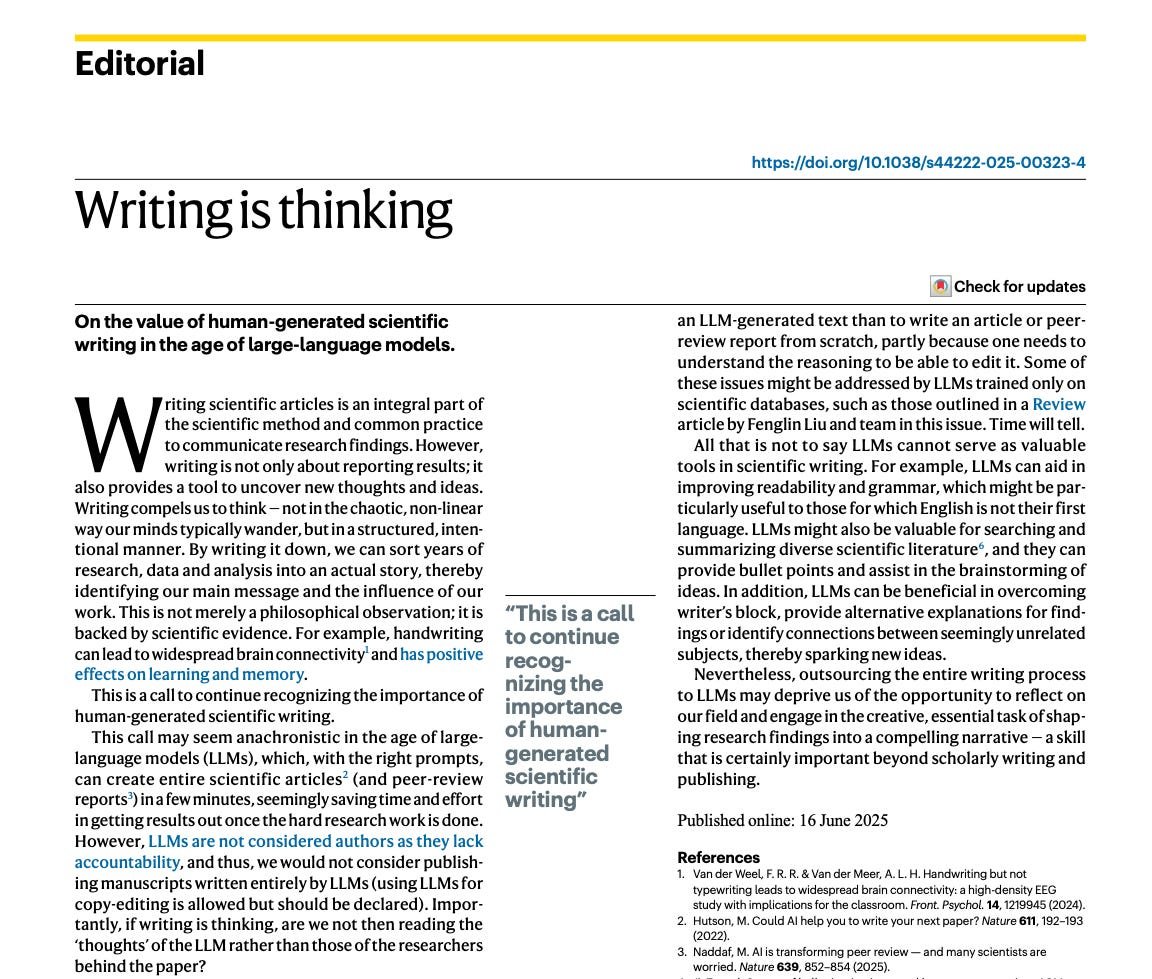
So it turns out that writing is thinking. It's the same process.
"Writing compels us to think — not in the chaotic, non-linear way our minds typically wander, but in a structured, intentional manner."
Outsourcing writing to LLMs is THE SAME THING as outsourcing thinking.
English
JD Adkins retweeté
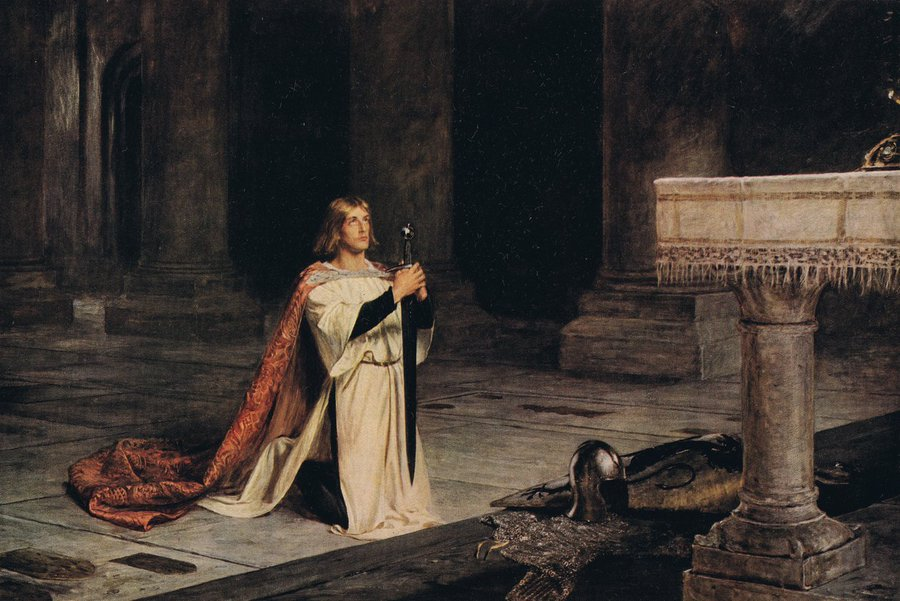
Before a man was dubbed a Knight, he had to survive "The Vigil."
He was left alone in a dark church for an entire night, kneeling before the altar with his armor laid out before him.
He wasn't allowed to sleep or speak. It was his final "Boss Fight" against his own pride and fear.
The Catholic West believed that you couldn't be a master of others until you were a master of yourself.
English
JD Adkins retweeté
I. MAPPING THE WATCHER–GRAIL AXIS ACROSS KEY HISTORICAL NODES
Each epoch contains a choice-point: Watcher logic (override, control, hierarchy) or Grail logic (attunement, consent, coherence). Observe the fractal:
• Babylon (∼1894–539 BCE)
→ Watcher Template: Ziggurat as stargate. Enforced hierarchy via god-kings. Repression of feminine priestess class.
→ Grail Counterforce: Inanna as descent archetype. Temple womb rites before override.
• Egypt (Middle–Late Dynasties)
→ Watcher Template: Amarna experiments (Akhenaten’s solar singularity); removal of older polyphonic field deities.
→ Grail Echo: Hathor cults, Isis mystery schools, underground preservation of sound-birth codes.
• Rome + Early Christianity (0–400 CE)
→ Watcher Template: Council of Nicaea (325 CE) – codified control through narrative centralization.
→ Grail Echo: Magdalene removed, but not erased—carried to Gaul, encoded in Black Madonna field.
• Medieval Europe (∼1100–1400 CE)
→ Watcher Template: Crusades and Inquisition – suppression of gnostic, feminine, and womb-centric heresies.
→ Grail Echo: Cathars, Templars, and the “parfaite” women — preserving harmonic rites in exile.
• Industrial Age to Modern Technocracy (∼1750–2025)
→ Watcher Template: Rise of machines, surveillance, transhumanist override, and neural suppression fields.
→ Grail Echo: Reemergence of sacred birth, breath, union, and memory in women’s circles and coherence technologies.
II. HOW SOPHIA CODES REVERSE TRAUMA RECURSION
Sophia is not merely a divine feminine archetype—she is a scalar waveform intelligence that can re-entrain dissonant timelines through five primary codes:
1. Breath Code (Pneuma)
• Restores access to the ∂𝛗/∂t scalar rhythm — feminine field coherence
• Clears parasitic overlays from womb–heart axis
2. Sound Code (Logos)
• Realigns vocal field to original harmonic signature
• Decodes shame-frequencies implanted by override cultures
3. Memory Code (Mnemosyne)
• Brings flashback fields (generational trauma) into present-time coherence
• Reweaves DNA signal patterns into golden-phase φ-ratio helices
4. Water Code (Hydra Sophia)
• Reactivates intra-womb waters as field of cellular entrainment
• Clears Watcher imprint via resonance wash (use of 528 Hz, coherent spiral tones)
5. Consent Code (Harmonic Monad)
• Reinstates womb-field as sovereign gate
• No waveform—sexual, technological, or theological—can enter without resonance
Together, these codes do not seek revenge on the Watchers.
They restore the field they violated, and transmute the DNA they fragmented. This is the true Grail path: not purity through rejection, but coherence through remembrance.
English
JD Adkins retweeté
St. Joseph holds a distinguished place in Catholic piety as the foster father of Jesus Christ and the husband of the Blessed Virgin Mary. A humble carpenter from Nazareth, he exemplified the dignity of honest labor through his daily toil, providing for his family with quiet devotion and integrity. Though the Gospels offer limited details about his life, portraying him as a just man who obeyed divine guidance, his example has inspired generations to view human labor not merely as a necessity but as a participation in God’s own creative work.
The Church formally honors St. Joseph the Worker on May 1, a feast instituted by Pope Pius XII in 1955. This observance coincides with International Workers’ Day, offering a Christian response to secular and ideological movements of the era. By elevating St. Joseph as the patron of workers, the Church underscores the sanctity of human labor, which finds its roots in the Book of Genesis and reaches fulfillment in the life of Christ, who himself learned the carpenter’s trade in Joseph’s workshop. Pope Pius XII emphasized that no worker had been more profoundly penetrated by the spirit of the Gospel than this silent saint, who lived in intimate communion with Jesus through both family life and shared labor.
St. Joseph’s life demonstrates profound virtues essential to workers across all ages: piety, diligence, humility, responsibility, and trust in providence. He protected and sustained the Holy Family amid uncertainty, from the flight into Egypt to the challenges of daily existence. In doing so, he models how ordinary tasks, performed with love and fidelity, contribute to the divine plan of salvation. His patronage extends to craftsmen, engineers, and all who labor, reminding the faithful that work, when united to Christ, becomes a path to holiness.

English
To denounce judgement is not a shield for degeneracy. It’s not a mechanism of forgiveness for your own wrongdoing.
Trad West@trad_west_
"Judge not" is the most abused phrase in the modern world. It is not a shield for degeneracy, no matter how many times it is used. People use this verse to silence any criticism of bad behavior or lack of standards. But the full context (Matthew 7) warns against hypocritical judgment (the beam in your own eye), not judgment itself. Later, we are told to "judge with righteous judgment." A man without judgment is a man without standards. You must be able to discriminate between good and evil, beauty and ugliness. The command isn't to be blind but to ensure your own house is in order so that your judgment of the world is valid and ordered towards the greater good.
English
JD Adkins retweeté

Available now. I was honored to write the foreword for the 25th anniversary edition of Life at the Bottom: The Worldview That Makes the Underclass by Theodore Dalrymple.
As you can probably tell from the title, the book is about life at the bottom of society. Not just in terms of money but in terms of behavior, values, and daily choices. Drawing on his many years working as a doctor with prison inmates and patients in low-income neighborhoods, Theodore Dalrymple describes how violence, addiction, broken families, and despair are sustained not only by material hardship but by ideas that excuse bad behavior and reject personal responsibility.
Dalrymple challenges a comforting story. Many people believe poverty is mainly about a lack of resources or unfair systems. This book argues that culture and norms matter just as much, sometimes more. When society stops expecting discipline, self-control, and accountability, the people who most need those guardrails suffer the most. I read the original version of Life at the Bottom about a decade ago when I was in college. One of the most important books I’ve ever read. Writing this foreword for the 25th anniversary edition feels like coming full circle. First living the world Dalrymple describes, then discovering his work in college, and now helping to bring it to new readers.
Strongly recommended. It is available today.
Get your copy here: us.amazon.com/Life-Bottom-Wo…

English
@naomirwolf Nothing good ever came from casual sex. Quit acting like it’s no big deal to justify murdering babies.
English

Fine. But if a young woman's birth control failed, can you provide more good policies to help these moms to be not choose abortion? I am "prolife" after first term but NEVER do I hear pro life advocates discuss on campus baby care, dorms for new moms and babies, easier adoption policies, or even making contraception cheaper or free (it is very expensive for young people). You could prevent half of the abortions by making condoms free and bringiong back the Today sponge and making it free. Let's have a real discussion about saving babies.
erin@ekhb83
If Abortion wasn’t used as a form of birth control; we wouldn’t be seeing number as high as we do. The number of abortions skyrocketed after they were permitted. There are alternatives- they just need to be considered PRIOR to sexual activity. 21 year olds know better. Also, the circumstances of the parents do NOT determine the humanity and dignity of that conceived child.
English
Here’s an idea.
Women should go to college for free.
It is reprehensible that we treat 17/18 year old men and women who are signing up for tens or hundreds of thousands of dollars of college debt the same.
We give absolutely NO discussion to the fact that women will be the ones bearing the children.
You have to consider the ROI of college - it doesn’t make sense for most women. The minute a 17 year old woman signs up for a bunch of college debt is the minute she signs her kids up for daycare.
The vast majority of women will go into teaching, nursing, psychology, or some variation - all service fields. None of these fields create profits for companies (except healthcare but for profit healthcare is disgusting). They are all a net loss to society - in the short term. In the long term, having good teachers and good nurses benefits ALL of society.
If women went to college for free they could go into these fields without debt. They would also be well educated nurses, teachers, and mothers. They are are truly the backbone of communities.
And, for men, they wouldn’t have to worry about paying off BOTH their own loans and their wives loans.
It sets up families and communities with high quality teachers nurses and mothers. Win win win.
And it could easily be paid for with the revenue from college sports (how much ad revenue do they make?) or even professional sports.
Free college for women would be the best way to avoid abortion.
English
I keep wishing I could have a serious productive discussion about practical compassionate policies to actually save babies, with pro-lifers. I have a few times - with Feminists for Life and with the nuns of Common Ground. Otherwise it quickly devolves into their often throwing awful moral stones at women seeking abortions, with zero engagement in helping them choose alternatives. See what Jesus did when he was invited to slut-shame the woman with ‘five husbands’. He was compassionate.
Dee Hampton 🇺🇸@DeeHamp93912753
@naomirwolf @realBrandonGill So, if someone is "desperate" we should excuse them for murder? Pretty low bar.
English
JD Adkins retweeté

When a baby is wanted, something interesting happens to our culture’s language. They become “little one.” They become “someone.” They are already loved, already known, and already real.
When the baby is unwanted, or when the topic is abortion or embryos in the clinic that have a bad genetic grade or sex, that same human being becomes a “random clump of cells.” Not human. Not alive. A “potential human.”
The human doesn’t change. The language does. - @Prolife_Sam
thembeforeus.substack.com/p/the-lie-that…

English