Rav Shlomo Katz@shlomokatz
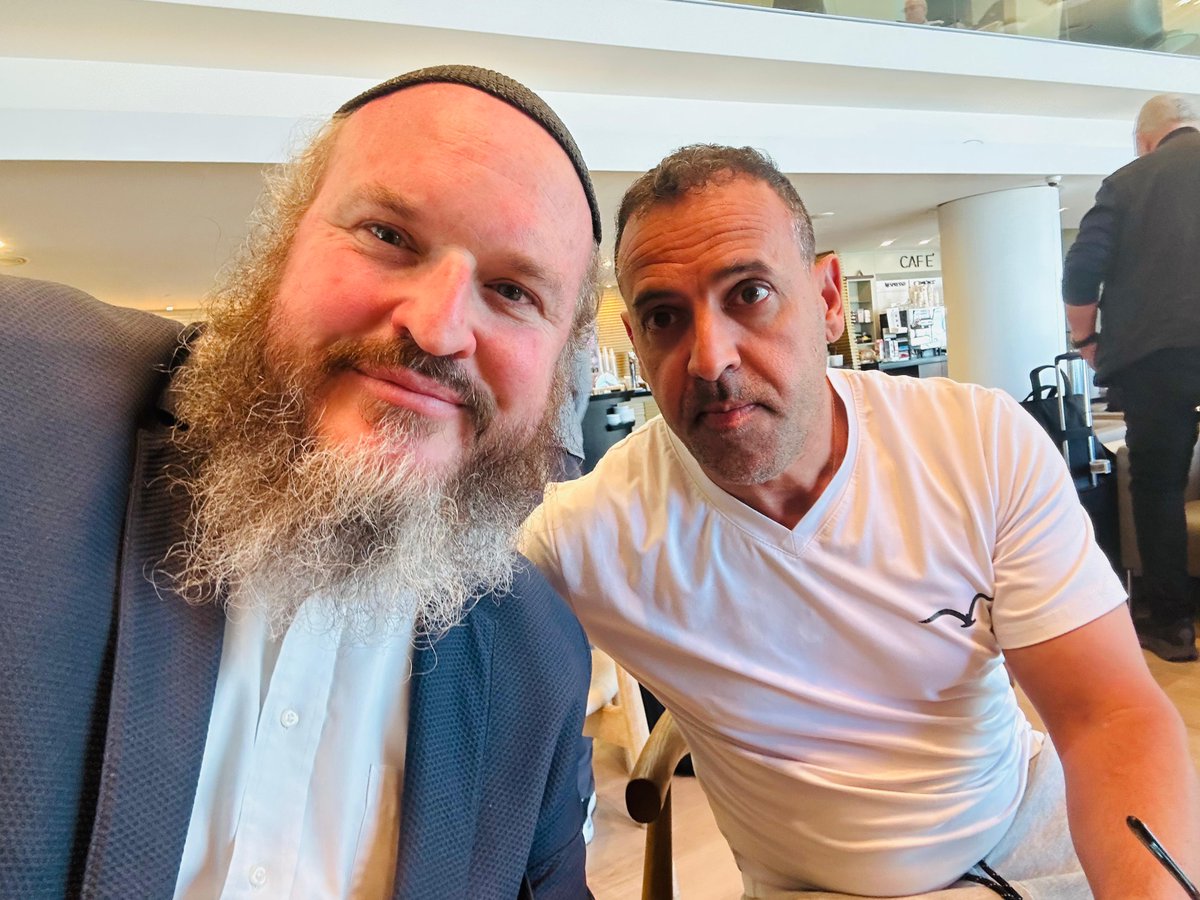
This morning, I had a few minutes to eat something before my flight.
I sat down, and I heard a voice next to me that felt familiar.
You know that feeling—like your neshama recognizes someone before your mind catches up.
He turned his head.
It was Eli Sharabi.
For a second, I didn’t know what to do.
This is a person we’ve all been davening for.
A person who was in the tunnels… while we were here saying Tehillim, trying to hold on to something.
His wife, his daughters, and his brother all murdered… I didn’t want to bother him. I really didn’t.
But then he looked at me, and something in me just couldn’t stay quiet.
I told him—I don’t even know if I said it right—that while he was down there, I found myself standing outside his home in Be’eri trying to understand something that can’t be understood.
And I told him the truth:
"I never thought I’d sit next to you.
I still don’t understand how you’re here."
He listened.
And then, very simply, he said:
“We have the most beautiful nation.”
We’re about to read a double parsha this Shabbos - Acharei Mot followed by Kedoshim.
“After death”, followed by “kedusha”.
I keep thinking about that.
Because if you had told us, even a few months ago, what some of our brothers and sisters went through…what Eli went through…what the hostages are coming back from - there’s no language for it.
They went into places that no human being should ever have to see. Mamash, into the valley of death.
And then they come back…and you hear what they’re saying.
You hear how they’re looking at Am Yisrael. You hear the love. You hear the emunah.
Eli looks at everything and he says, “We have the most beautiful nation.”
I don’t know…it does something to you.
It’s as if, from within the darkness itself, something pure is coming out.
Maybe that’s what Acharei Mot really means.
Not just “after death”, but what directly comes out of it.
Kedoshim.
And it’s not because everything was okay or made sense in the end.
But because somehow, out of the darkest places, a Yid is still able to see קדושה.
And when you hear that, you realize, this isn’t just his story.
It’s ours.
Have a beautiful Shabbos.
הבוקר, היו לי כמה דקות לאכול משהו לפני הטיסה.
התיישבתי, ושמעתי קול לידי שהרגיש לי מוכר.
אתם מכירים את ההרגשה הזאת - כאילו הנשמה שלכם מזהה מישהו לפני שהמחשבות שלכם משיגות אותו.
הוא סובב את ראשו.
זה היה אלי שרעבי.
לרגע, לא ידעתי מה לעשות.
זה אדם שכולנו התפללנו עליו.
אדם שהיה במנהרות... בזמן שהיינו כאן והתפללנו עבורו מעומק נשמתנו.
אשתו, בנותיו ואחיו נרצחו... לא רציתי להטריד אותו. באמת שלא.
אבל אז הוא הסתכל עליי, והרגשתי חובה לומר לו כמה מילים.
אמרתי לו - אני אפילו לא יודע אם אמרתי את זה נכון - שבזמן שהוא היה שם למטה, מצאתי את עצמי עומד מחוץ לביתו בבארי ומנסה להבין משהו שאי אפשר להבין.
ואמרתי לו את האמת:
"מעולם לא חשבתי שאשב לידך.
אני עדיין לא מבין איך אתה כאן."
הוא הקשיב.
ואז הוא אמר לי:
"יש לנו את העם הכי יפה."
השבת אנו קוראים פרשה כפולה - אחרי מות ואחריה קדושים. אחרי המוות יש קדושה.
אין מילים לתאר את מה שעברו אחינו ואחיותינו החטופים. אין לזה שום שפה. הם הלכו למקומות שאף בן אדם לא אמור לראות לעולם. ממש, בגיא צלמוות.
ואז הם חוזרים... וכולנו שומעים מה הם אומרים. איך הם מסתכלים על עם ישראל. את האהבה. את האמונה.
אלי מסתכל על הכול ואומר, "יש לנו את העם הכי יפה".
לשמוע דבר כזה עושה לך משהו, משהו עמוק.
זה כאילו שמתוך החושך עצמו יוצא משהו טהור.
ואולי זו הכוונה העמוקה יותר של "אחרי מות".
לא רק מה שבא אחרי המוות, אלא מה שיכול לצאת מתוכו.
קדושים.
וזה לא בגלל שבסוף גילינו שהכול היה בסדר.
אלא בגלל שבסופו של דבר, מתוך המקומות החשוכים ביותר, הלב היהודי מסוגל לראות קדושה.
וכשאתה שומע את זה, אתה מבין שזה לא רק הסיפור הפרטי של אלי.
זה הסיפור שלנו.
שבת שלום ומבורך.