When you open source data good things happen!!!
We only dropped the HyperFRAME Research Lens AI stack data yesterday and already it is being picked up by the community.
Check out my dear friend @thectoadvisor@CTOAdvisor recent blog 👇
thectoadvisor.com/blog/2026/03/0…
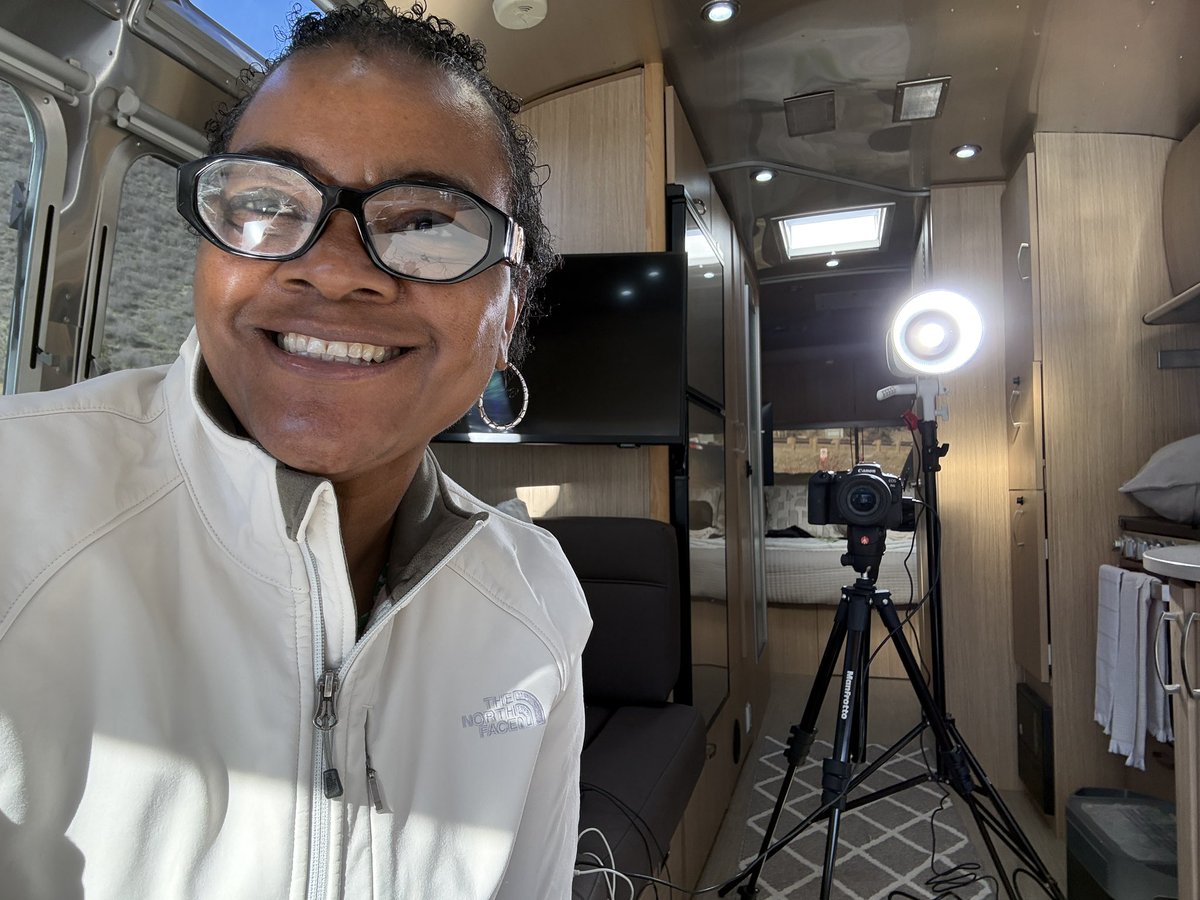
One of the things people don’t always realize about the CTO Advisor Flying Cloud is that it isn’t just a mobile studio.
It’s our home.
Yes, it’s where we record interviews.
Yes, it’s where we produce sponsored content.
Yes, it’s where I work while driving across the country.
But when companies or customers step inside the Airstream to do an interview, they’re not walking into a production set.
They’re stepping into our living room.
That changes the tone of the conversation.
The interviews feel different.
More relaxed.
More honest.
More like two practitioners talking through what’s actually happening in the field.
Melissa plays a big role in that atmosphere.
If you’ve ever been around The CTO Advisor at events, you know people ask two questions:
“Where’s the Airstream?”
and
“Is Melissa here?”
The Flying Cloud works because it’s personal.
It isn’t a corporate studio.
It’s our home on the road.
And when vendors and customers sit down with us inside it, the conversation reflects that.
#CTOARoadTrip@MrsCTO
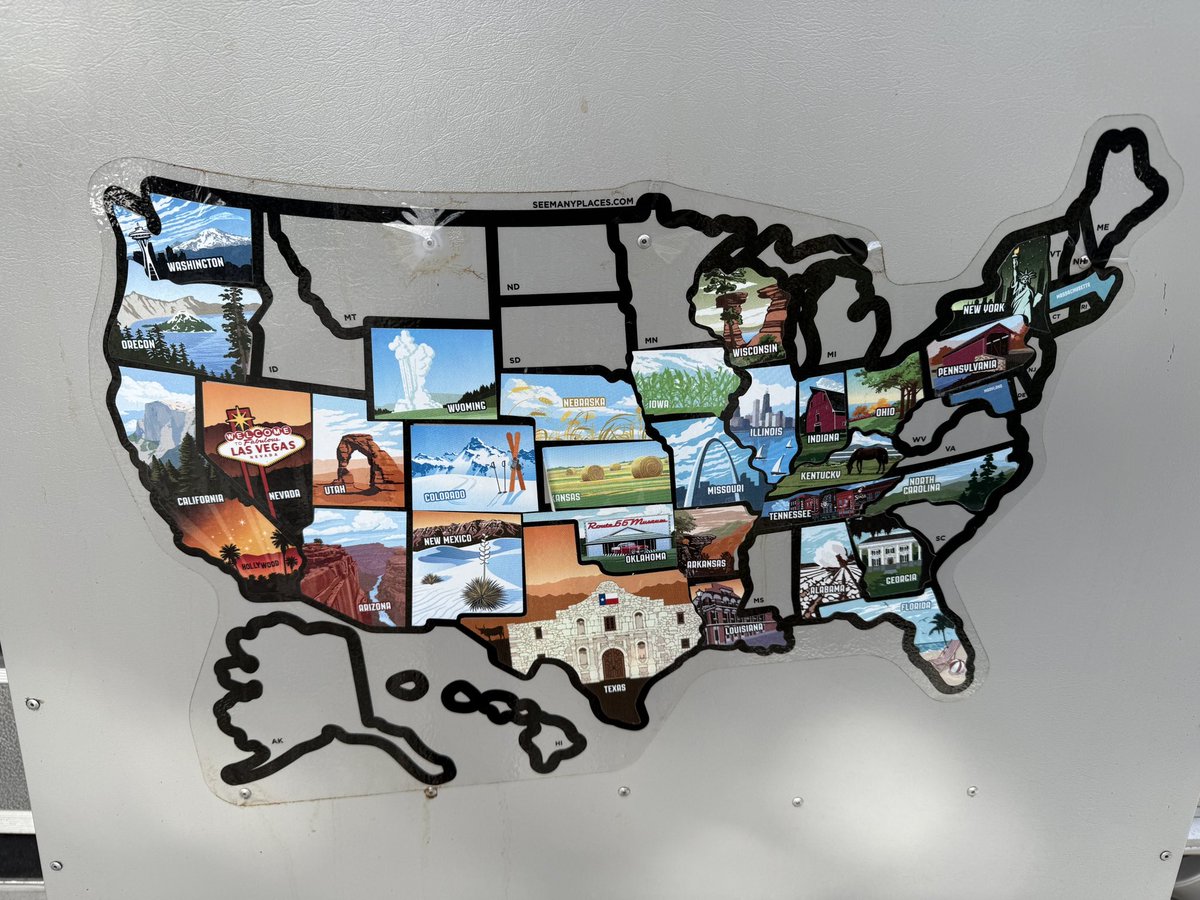
The CTO Advisor Road Trip isn’t a vacation.
It’s 1,300 miles down.
And we’re only halfway to California.
That means:
• Client deliverables from truck stops
• Strategy calls somewhere between state lines
• Editing decks in the passenger seat
• Planning interview shoots inside an Airstream
Tomorrow?
Dry runs for recording interviews.
Testing audio in a rolling aluminum echo chamber.
And washing 1,300 miles of road grime off the rig — before we drive another 1,300.
This is the part people don’t see about “location freedom.”
It’s not less work.
It’s compressed work.
Stacked work.
Chosen work.
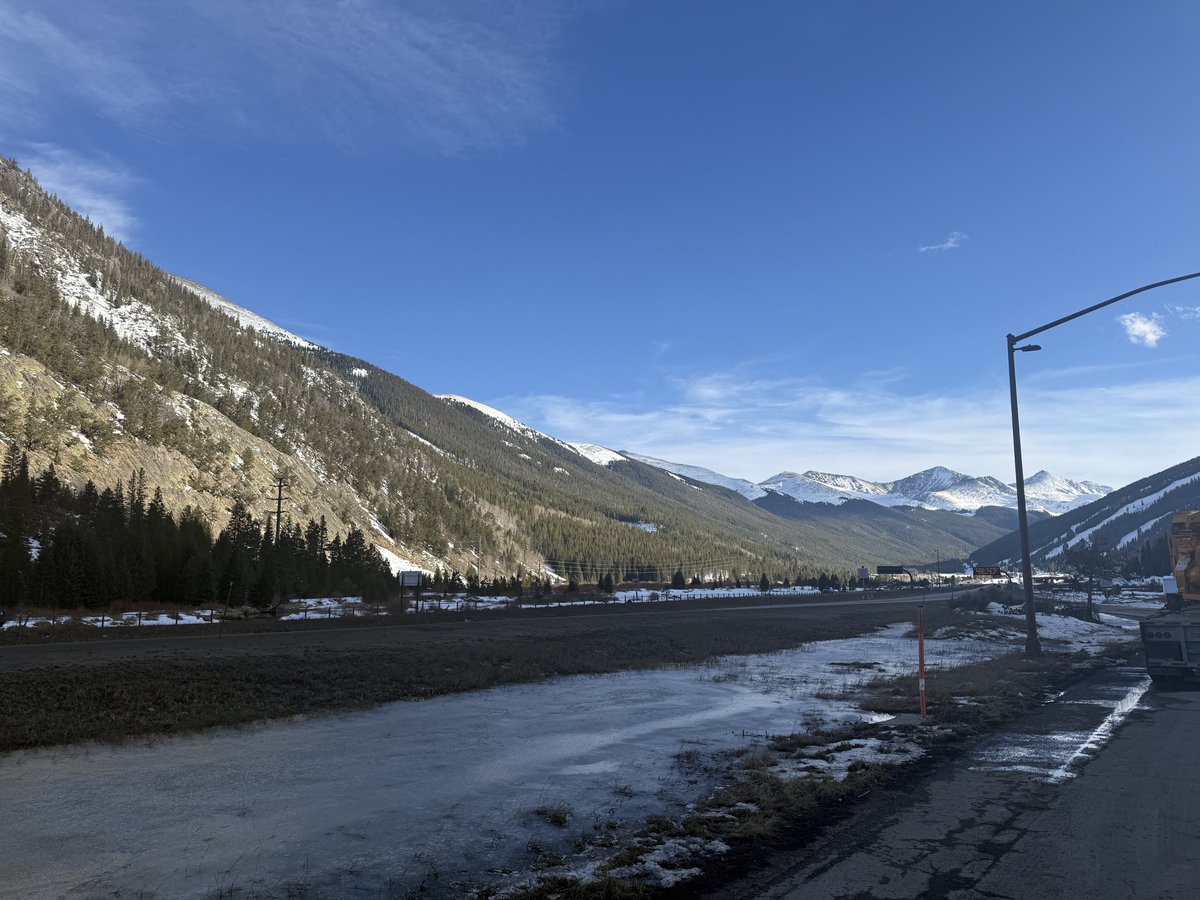
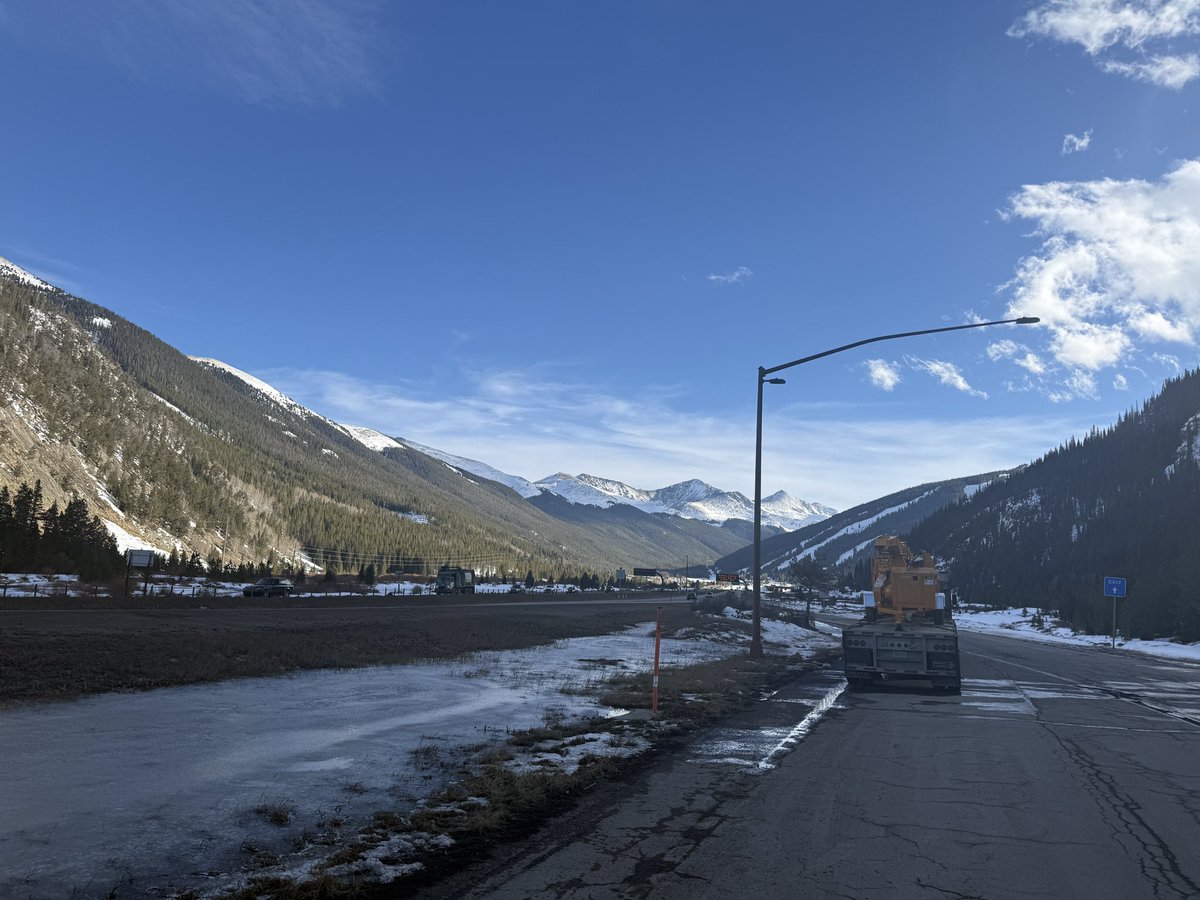
We’re parked in one of the most beautiful parts of the country — the kind of view people take PTO to see.
And I’m here… building.
Shipping client outcomes.
Creating content.
Designing conversations that matter.
Entrepreneurship isn’t about escaping responsibility.
It’s about deciding which hard you’re willing to carry.
1,300 miles in.
1,300 to go.
Wouldn’t trade it.
I love my job. @MrsCto
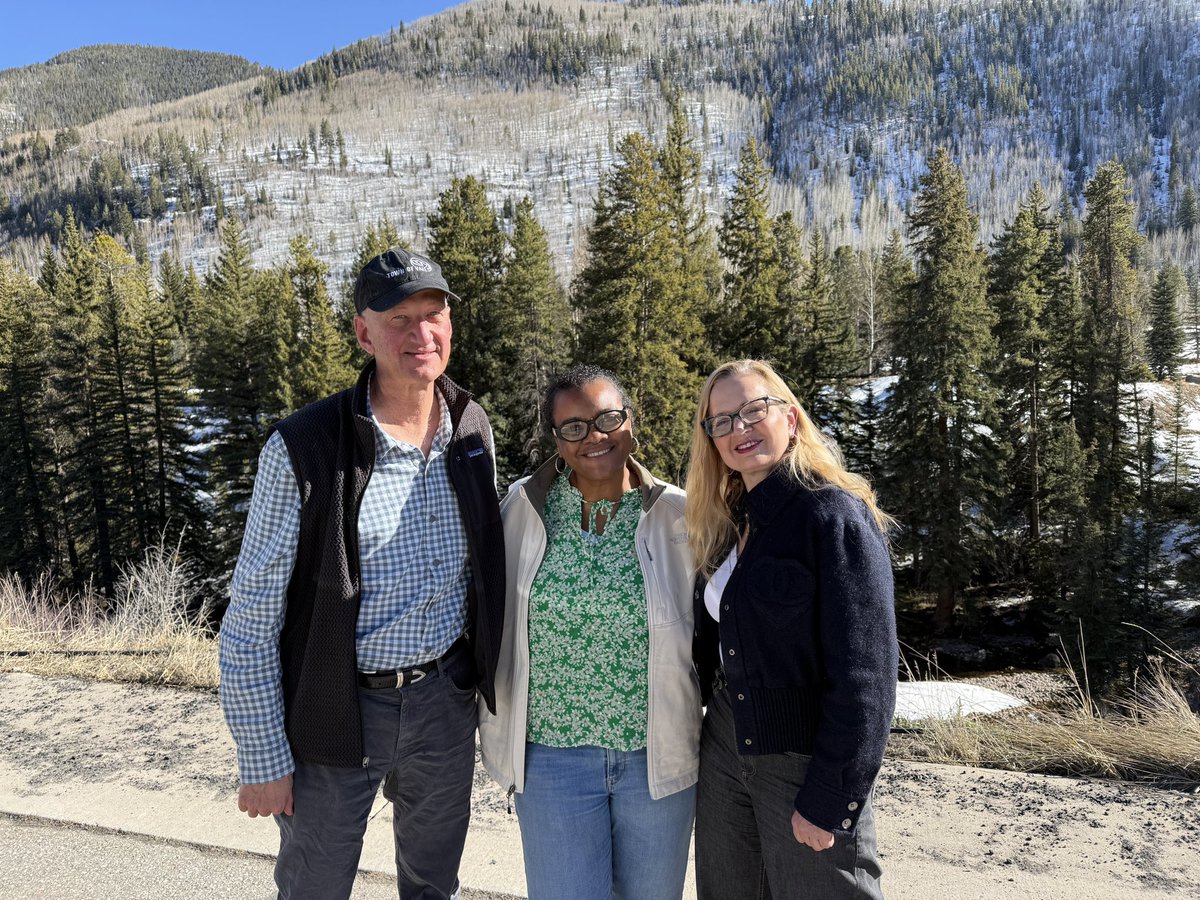
The first content stop for #CTOARoadTrip is along the Vail Pass in Colorado. We’ll sit down with @KamiwazaAI@HPE to talk about their smart cities AI project with the Town of Vail.
Day 5 — Road Trip
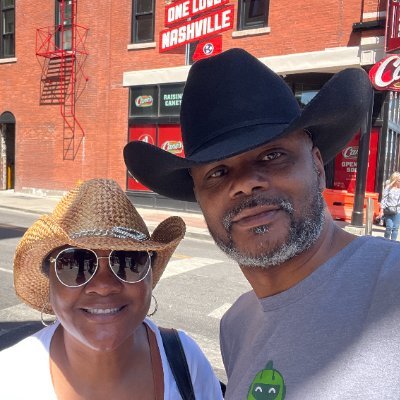
Today was a beautiful day, with the sun beaming down on my face. Keith is doing such a great job driving, making the journey smooth and peaceful. It was one of those days that turns into a great memory — simple, sweet, and filled with gratitude. @CTOAdvisor
Black History Month — Tech Edition | Legacy Day
This month, I’ve been on the road.
Literally.
Driving across the country for the CTO Advisor Road Trip — meeting founders, executives, platform teams, and enterprise leaders shaping the future of technology.
And as I’ve been driving, I’ve been thinking about something.
A kid from Englewood, Chicago doesn’t end up in enterprise boardrooms, cloud strategy sessions, and AI infrastructure debates by accident.
That path was paved.
Paved by:
Engineers who proved they belonged in rooms where they weren’t expected.
Mathematicians who made mission-critical systems possible.
Executives who cracked boardroom ceilings in the 70s and 80s.
Founders who built platforms instead of waiting for invitations.
Community builders who refused to pull the ladder up behind them.
Every name we highlighted this month did more than achieve.
They widened the road.
When Ken Coleman entered executive leadership in eras where representation was rare, he widened the road.
When John Thompson operated at the governance layer of Microsoft, he widened the road.
When Kelsey Hightower demystified Kubernetes for operators, he widened the road.
When Kimberly Bryant built pipeline infrastructure for young Black technologists, she widened the road.
When Morgan DeBaun built distribution rails instead of waiting for legacy media access, she widened the road.
None of them just climbed.
They left lanes open.
This road trip I’m on — professionally and literally — exists because others laid asphalt in places where there wasn’t pavement.
Black history in technology isn’t a side story.
It’s a structural story.
It’s hardware.
It’s math.
It’s governance.
It’s capital.
It’s community.
It’s leadership.
And for a kid from Englewood to navigate enterprise infrastructure at scale — that’s not individual achievement.
That’s generational contribution.
The road is wider than it used to be.
And the responsibility now is simple:
Don’t narrow it.
Keep building lanes.
@MrsCto
I’m told I missed posting this to X yesterday.
Black History Month — Tech Edition | Day 26
Today we highlight Fred Swaniker.
Fred Swaniker is the founder of African Leadership University and African Leadership Group, institutions designed to develop the next generation of African leaders.
This isn’t just an education story.
It’s infrastructure.
Swaniker’s thesis is bold:
If you want to transform a continent’s economic future, you don’t start with capital.
You start with leadership density.
Enterprise IT professionals understand this intuitively.
Technology doesn’t scale without:
•Capable operators
•Strategic thinkers
•Ethical decision-makers
•Long-term institutional builders
You can import hardware.
You can license software.
You can attract capital.
But leadership must be cultivated.
Swaniker built institutions around that idea — not short programs, not bootcamps, but ecosystems designed to compound over decades.
In technology, we talk about platform effects.
Education is the ultimate platform.
The lesson for today’s generation:
Infrastructure is not just compute, capital, or code.
It’s people prepared to lead at scale.
Fred Swaniker isn’t just educating students.
He’s architecting future governance, entrepreneurship, and innovation capacity.
That’s long-horizon systems thinking.
More tomorrow.
Black History Month — Tech Edition | Day 27
Today we highlight John W. Thompson.
John Thompson served as CEO of Symantec and later became Chairman of the Board at Microsoft.
That trajectory matters.
He didn’t just build technology.
He governed it.
Thompson operated at the level where:
•Cybersecurity becomes corporate strategy
•Risk becomes board oversight
•Leadership succession shapes company direction
•Capital allocation determines platform futures
When Satya Nadella became CEO of Microsoft, Thompson was Chairman. That means he wasn’t reacting to transformation — he was helping guide it.
Enterprise IT professionals often focus on:
•Architecture decisions
•Vendor strategy
•Cloud adoption
•AI integration
But there’s another layer above all of that:
Governance.
Boards don’t debate container runtimes.
They debate:
•Risk tolerance
•Competitive positioning
•Long-term investment bets
•Ethical responsibility
Thompson represents something rare:
Deep technical roots translated into institutional authority at the highest levels of the industry.
And historically, Black representation at that level in major tech companies has been extraordinarily limited.
The lesson for today’s enterprise technologists:
Technical excellence opens doors.
Strategic leadership keeps them open.
John Thompson didn’t just participate in the technology industry.
He helped steer it.
Tomorrow, we close the series.
Black History Month — Tech Edition | Day 25
Today we highlight Morgan DeBaun.
Morgan DeBaun founded Blavity, a media and technology platform built to serve Black millennials and Gen Z audiences at scale.
At first glance, this may look like media entrepreneurship.
It’s bigger than that.
Blavity isn’t just content.
It’s distribution infrastructure.
In technology, we often focus on:
•Cloud platforms
•AI systems
•Identity layers
•Capital flows
But there’s another layer that determines influence:
Narrative infrastructure.
Who gets visibility?
Who controls amplification?
Whose stories scale?
Enterprise IT professionals understand this implicitly.
Platform power isn’t just about compute.
It’s about reach.
DeBaun built:
•A content ecosystem
•A talent pipeline
•A brand distribution engine
•A revenue-generating media platform
Without waiting for legacy media institutions to open doors.
That’s systems thinking.
Instead of asking for access, she built the rails.
The lesson for today’s technologists:
Control over distribution is a form of infrastructure power.
Morgan DeBaun didn’t just build a media company.
She built an ecosystem that shapes visibility at scale.
More tomorrow.
Black History Month — Tech Edition | Day 24
Today we highlight Sheena Allen.
Sheena Allen founded CapWay to address a structural problem in the financial system:
Access.
Millions of Americans are underbanked or unbanked — not because they lack money, but because they lack access to traditional financial infrastructure.
Allen built technology designed to close that gap.
This isn’t just a fintech story.
It’s an infrastructure story.
Enterprise IT professionals understand this pattern:
When access is constrained:
•Opportunity narrows
•Risk increases
•Cost of participation rises
•Informal systems replace formal ones
CapWay attempted to plug underserved communities into the formal financial system using mobile-first infrastructure.
That required:
•Regulatory navigation
•Banking partnerships
•Risk modeling
•Trust building
Fintech is one of the most heavily regulated spaces in technology.
Building there requires more than code.
It requires resilience.
The lesson for today’s enterprise technologists:
Innovation that expands access is harder than innovation that optimizes convenience.
Sheena Allen chose the harder path — building financial inclusion into the digital stack.
More tomorrow.
Black History Month — Tech Edition | Day 23
Today we highlight Tope Awotona.
Tope Awotona founded Calendly — a product so simple it’s easy to underestimate.
But Calendly didn’t just solve scheduling.
It turned time into infrastructure.
Before tools like Calendly, scheduling was friction:
•Email back-and-forth
•Time zone confusion
•Missed context
•Manual coordination
Calendly abstracted that friction into a workflow layer.
And that’s the enterprise lesson.
Infrastructure isn’t always:
•Data centers
•Networks
•GPUs
•Kubernetes clusters
Sometimes infrastructure is the invisible workflow that removes coordination cost.
Enterprise IT professionals understand this deeply:
Scale breaks at coordination points.
Calendly scaled because it:
•Embedded into existing systems
•Required minimal behavior change
•Solved a universal bottleneck
•Monetized predictability
And here’s what stands out most:
Awotona bootstrapped the company for years before raising institutional capital.
That’s rare discipline in a market addicted to early funding.
The takeaway for today’s enterprise technologists:
Not all platform innovation is complex.
Some of the most durable infrastructure reduces friction, not adds features.
Tope Awotona built workflow infrastructure the world didn’t realize it needed — until it couldn’t operate without it.
More tomorrow.
Black History Month — Tech Edition | Day 21
Today, I want to highlight someone still actively doing the work.
@ballen_clt
Bobby is a technologist.
But more than that, he’s a door opener.
He’s championed his employer, Google, to host on-campus recruiting and community events at his alma mater, the University of Michigan.
That matters.
Because access isn’t automatic.
Someone has to advocate for it.
Someone has to:
•Make the introduction
•Push for the event
•Sponsor the initiative
•Connect students to opportunity
That’s leadership.
And what stands out about Bobby isn’t just the professional impact.
He is unapologetic about his Christian faith.
He shares his family life.
He operates with clarity about who he is.
In an industry that often pressures people to compartmentalize identity, that kind of consistency is rare.
Enterprise technology doesn’t just need great systems.
It needs great stewards.
People who:
•Create access
•Build community
•Represent well in rooms where others may not yet be present
Black history isn’t only about pioneers of the past.
It’s also about those actively widening the path today.
Bobby is doing that work.
More tomorrow.