

· The Raisina Dialoguewrapped up its 2026 edition in New Delhi this week. Often called India’s Davos of geopolitics, the forum brings together ministers, strategists and security officials from across the world. But one theme stood out this year: the future of the Indian Ocean.
· The Indian Ocean is rapidly becoming one of the most strategic regions on Earth. It’s because it connects the world’s most critical trade corridors: Middle East energy exports, Asian manufacturing supply chains and European and African markets. In fact, nearly 80% of global seaborne oil trade passes through this ocean.
· For India, the stakes are existential. About 90% of India’s trade by volume moves by sea. Control and stability in the Indian Ocean are therefore central to India’s security, economy, and geopolitical strategy.
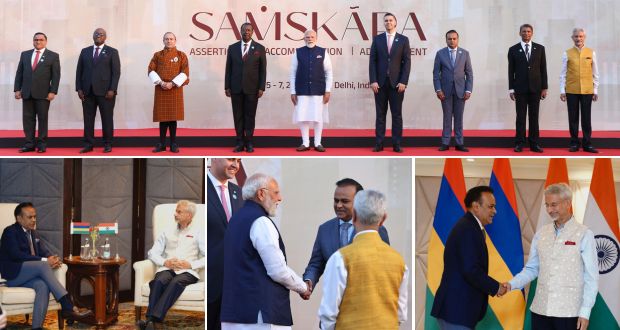
· At Raisina 2026, leaders from India, Australia, Sri Lanka, Mauritius and Seychelles discussed a central question: Can the Indian Ocean remain open, rules-based, and stable in an era of intensifying great power competition? The answer is far from certain.
· Over the past decade, the region has seen a steady militarization. Major powers are expanding their presence: the US maintains bases such as Diego Garcia, China is expanding port access and naval reach and India is increasing maritime surveillance and partnerships.
· Much of the debate focused on international maritime law, particularly the United Nations Convention on the Law of the Sea. UNCLOS remains the legal backbone governing navigation, maritime boundaries and resource rights. Smaller states see it as their primary protection against great power coercion.
· Another major theme was the “Blue Economy.” Countries in the region want to develop sustainable fisheries, marine energy, seabed resources and maritime tourism. But doing so requires stable sea lanes and cooperative governance.
· That is why regional frameworks were repeatedly highlighted: the Indian Ocean Rim Association (IORA), the Bay of Bengal Initiative for Multi‑Sectoral Technical and Economic Cooperation (BIMSTEC) and the Colombo Security Conclave. These mechanisms aim to coordinate security, trade, and maritime governance.
· But the deeper strategic question remains: Will the Indian Ocean become a zone of cooperation or another arena of great power rivalry? The region sits directly between two major geopolitical theaters: the Middle East and the Indo-Pacific.
· China’s growing maritime footprint is one of the central concerns. Through its “string of pearls” network of ports and logistics hubs, Beijing is steadily increasing its presence across the Indian Ocean. For India, this is both an economic and strategic challenge.
· At the same time, the Indian Ocean is increasingly exposed to global shocks: disruptions in the Red Sea, tensions around the Strait of Hormuz, piracy and maritime security threats and climate risks affecting coastal economies. These pressures make regional cooperation more urgent.
· One positive signal discussed at Raisina: connectivity recovery and trade resilience after years of pandemic and supply chain disruptions. Many regional states are diversifying trade routes and strengthening port infrastructure. The goal: make supply chains harder to disrupt.
· For smaller island states like Mauritiusand Seychelles, the stakes are particularly high. Their economies depend on: maritime trade, fisheries, tourism, stable sea lanes. They are also increasingly active diplomatic players in regional security debates.
· The bigger takeaway from Raisina Dialogue 2026: The Indian Ocean is no longer a quiet strategic backwater. It is becoming one of the central arenas of 21st-century geopolitics. Energy routes, naval power, trade flows and international law all converge here.
· If the 20th century was shaped by the Atlantic and and the early 21st century by the Pacific, the next geopolitical frontier may well be the Indian Ocean. And the debates at Raisina suggest the competition for its future has already begun.
English