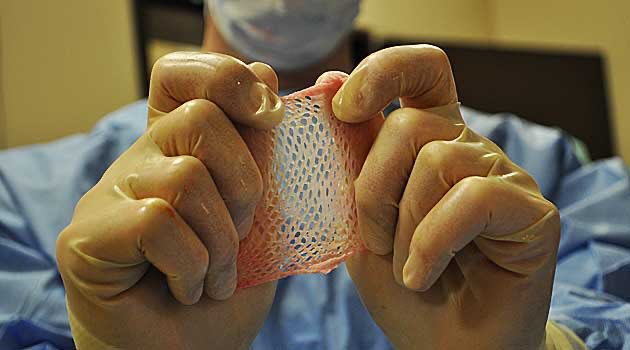
🚨: Japanese scientist Patrick Soon-Shiong has designed a treatment that activates body's natural killer cells that fight against cancer cells.
Its approved in the U.S. and now Saudi Arabia has also approved it for its public.
🚨 BREAKING: World Health Organization is preparing for a nuclear incident.
In March 2026, the World Health Organization (WHO) confirmed it is actively preparing for potential nuclear incidents as tensions rise in the Middle East, particularly around the Bushehr power station.
The organisation is currently retraining staff on radiation protocols and coordinating with the Radiation Emergency Medical Preparedness and Assistance Network (REMPAN) to advise governments on civilian safety.
While no contamination has been detected as of March 19, the WHO is overseeing the global stockpiling of essential treatments, including stable iodine to protect the thyroid, Prussian blue to remove radioactive isotopes, and cytokines to treat bone marrow damage caused by radiation.
The findings, which published February 19 in the journal Science, suggest that the prehistoric creature is a close relative of Spinosaurus aegyptiacus, a giant fish-eating dinosaur with a sail across its back, first described in 1915 by German paleontologist Ernst Stromer von Reichenbach. cnn.it/4cW5GHB
@Rainmaker1973 Google’s Willow chip has taken a major leap in quantum computing it features roughly 105 qubits and has demonstrated an error-correction breakthrough where adding more qubits reduces error rates, not increases them.
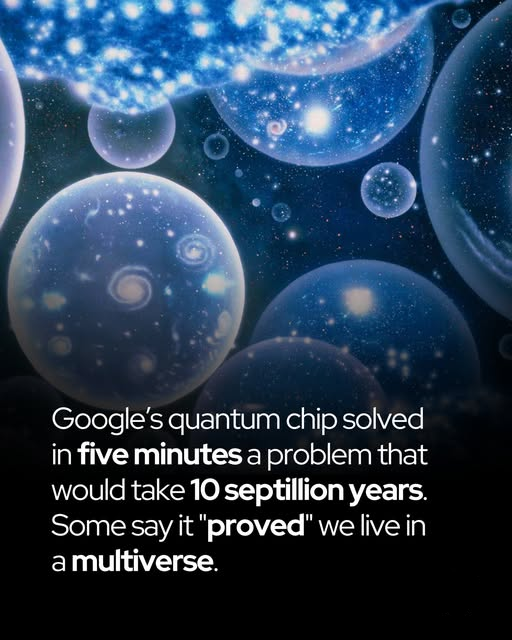
Google’s new quantum chip is so powerful it might be tapping into parallel universes.
Google's groundbreaking quantum processor, Willow, has achieved the seemingly impossible: solving an extraordinarily complex computational problem in under five minutes—a feat that would require the world's most advanced supercomputer approximately 10 septillion years to complete (10²⁵).
This mind-boggling performance has revived one of the most provocative ideas in physics: could quantum computers like Willow be performing calculations across vast numbers of parallel universes?
Hartmut Neven, founder and lead of Google Quantum AI, believes the answer may be yes. He argues that Willow’s results align strikingly with the many-worlds (or multiverse) interpretation of quantum mechanics, in which every quantum measurement causes reality to branch into multiple, equally real parallel universes. In this view, a quantum computer doesn’t just calculate faster within our universe—it effectively distributes the workload across countless parallel realities simultaneously.
The idea traces back to physicist David Deutsch, who, as early as the 1980s, suggested that the exponential power of quantum computation could only be fully explained if the machine is exploiting resources from many coexisting worlds.
Yet the interpretation remains deeply divisive.
Many physicists and quantum computing experts insist that no multiverse is required. Willow’s breakthrough, they argue, is fully explainable through standard quantum mechanics—leveraging superposition (qubits existing in multiple states at once), entanglement, and the mathematics of high-dimensional Hilbert spaces—all within a single universe.
So what has Willow truly demonstrated?
It has pushed quantum technology into a regime so extreme that it compels us to re-examine the deepest foundations of reality itself. Whether or not Willow is quietly borrowing power from alternate universes, one thing is clear: practical, large-scale quantum computing is no longer science fiction—and it is forcing us to confront profound questions about the nature of the cosmos, computation, and existence.
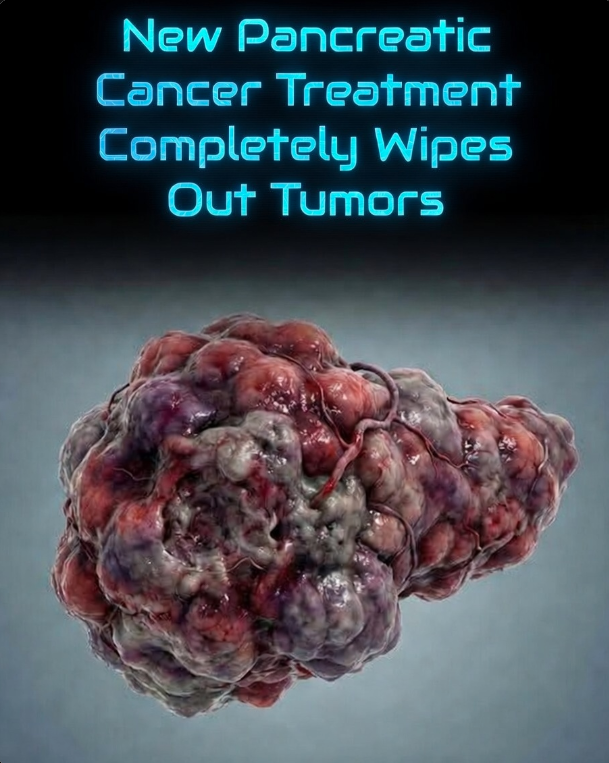
Pancreatic cancer ranks among the most lethal cancers, with tumors often developing rapid resistance to therapies, contributing to dismal long-term outcomes.
In a major preclinical advance, scientists at Spain’s National Cancer Research Centre (CNIO), led by Mariano Barbacid, have shown that a triple-drug combination can completely eliminate pancreatic tumors in mouse models while preventing resistance from emerging. The treatment targets the KRAS signaling pathway—mutated in about 90% of pancreatic ductal adenocarcinomas—at three separate points, effectively blocking the cancer's ability to adapt and survive.
The regimen combines daraxonrasib (an experimental KRAS inhibitor, also known as RMC-6236), afatinib (an approved EGFR/HER2 inhibitor used in certain lung cancers), and SD36 (a selective STAT3 protein degrader). This multi-pronged attack shuts down key downstream, upstream, and parallel pathways that KRAS relies on for tumor growth and evasion of single-agent therapies.
Tested across multiple orthotopic mouse models of pancreatic ductal adenocarcinoma (including those with KRAS/TP53 mutations), the combination induced complete and durable tumor regression, with no detectable cancer recurrence even months after treatment ended and no major toxicities observed. In some cases, tumors vanished entirely, leaving no trace.
While single KRAS inhibitors show promise, resistance typically develops quickly as tumors activate bypass mechanisms. By hitting three independent nodes simultaneously, this strategy overcomes that hurdle in animals, offering a blueprint for more effective targeted therapies.
Pancreatic cancer's five-year survival rate remains under 10%, underscoring the urgency of such innovations. Although human trials are not yet feasible and further optimization is needed to translate these results to patients, the study represents a landmark step toward making one of the deadliest cancers potentially controllable.
[Liaki, V., Barrambana, S., Guerra, C., Barbacid, M., et al. (2025). A targeted combination therapy achieves effective pancreatic cancer regression and prevents tumor resistance. Proceedings of the National Academy of Sciences, 122(49), e2523039122. DOI: 10.1073/pnas.2523039122]
Current Transmission & Wastewater Data
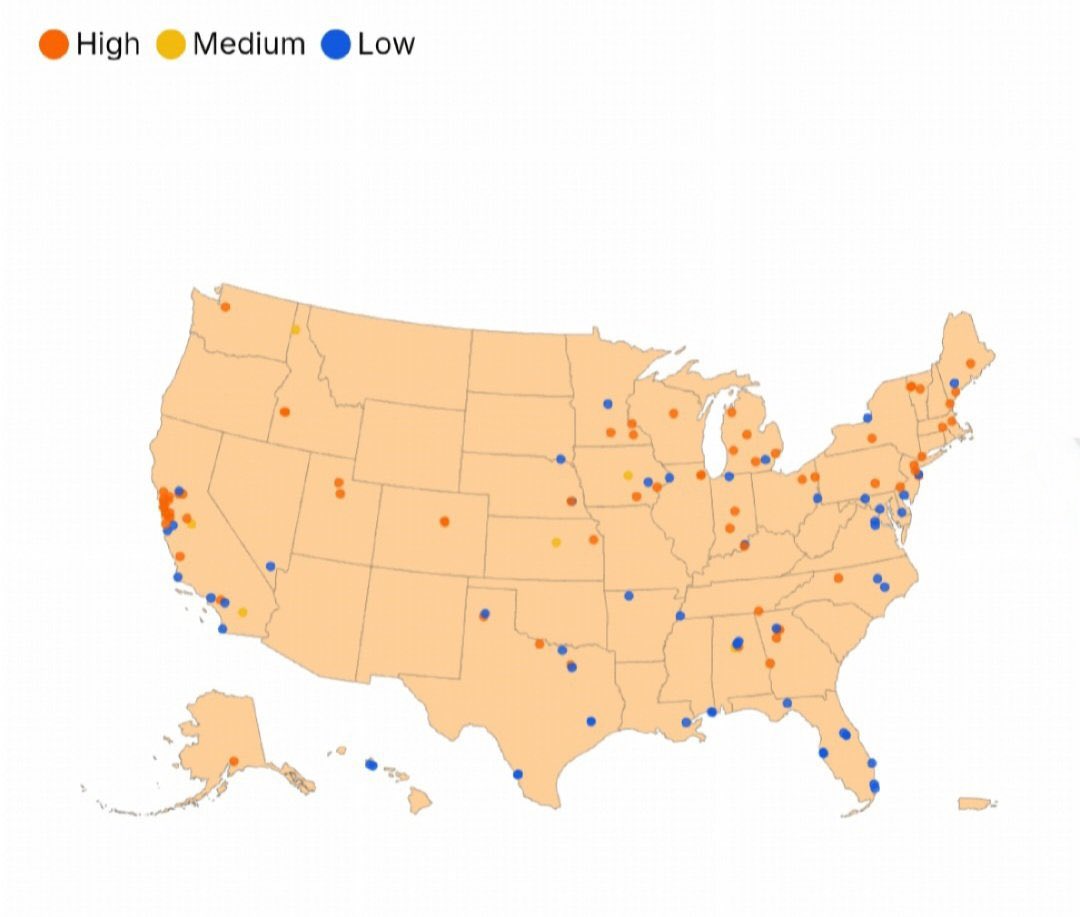
Regional Surges: Wastewater monitoring via WastewaterSCAN has detected "high concentrations" of HMPV in multiple Northern California cities, including San Francisco, Sacramento, Davis, and Santa Rosa.
National Trends: Beyond the West Coast, spikes have been reported in New Jersey, where HMPV positivity rates (4%) recently matched those of COVID-19.
Peak Season: This surge aligns with the virus's typical seasonal pattern, which usually begins in January and peaks between March and April.
Human Metapneumovirus (HMPV) is experiencing a significant seasonal surge across the United States, particularly on the West Coast and in parts of the Northeast. Surveillance data and wastewater analysis confirm high concentrations of the virus in several major regions.
BREAKING🚨: Human metapneumovirus (HMPV) is spreading across the U.S. there’s no specific cure, and wastewater data now confirms widespread transmission nationwide.
@forallcurious Human Metapneumovirus (HMPV) is experiencing a significant seasonal surge across the United States, particularly on the West Coast and in parts of the Northeast. Surveillance data and wastewater analysis confirm high concentrations of the virus in several major regions.
BREAKING🚨: Dangerous virus with no treatment or cure spreads rapidly across the U.S. new map reveals who is most at risk
Human metapneumovirus (HMPV) is spreading across the U.S. there’s no specific cure, and wastewater data now confirms widespread transmission nationwide.
@NextScience Scientists analyzing samples from the OSIRIS-REx mission returned from asteroid Bennu have confirmed the presence of simple sugars, the same molecules essential for life on Earth.
🧬 Scientists Just Found the Building Blocks of DNA… on an Asteroid!
Imagine the tiny ingredients that make your DNA — the code of life — floating in space. Scientists analyzing samples from a distant asteroid found all five DNA/RNA building blocks: adenine, thymine, cytosine, guanine, and uracil. No full DNA, no life — just the raw pieces that could help life start. This discovery hints that space rocks might have delivered the ingredients for life to Earth billions of years ago. A tiny clue, a huge mystery.
Source: Callahan, M. P., Smith, K. E., Cleaves, H. J., Ruzicka, J., Stern, J. C., Glavin, D. P., ... & Dworkin, J. P. (2011). Carbonaceous meteorites contain a wide range of extraterrestrial nucleobases. Proceedings of the National Academy of Sciences, 108(34), 13995–13998.
New research suggests that Mars may play a subtle role in shaping long-term climate patterns on Earth. Scientists have long understood that ice ages are influenced by gradual changes in Earth’s orbit and tilt—known as Milankovitch cycles which affect how sunlight is distributed across the planet over tens to hundreds of thousands of years.
Using advanced simulations of the solar system, researchers explored what would happen if Mars were removed. Without it, a key about 100,000-year cycle linked to the timing of ice ages weakened significantly, while other cycles driven by planets like Jupiter and Venus remained largely unchanged. This points to Mars as an important contributor to one part of Earth’s long-term climate rhythm.
Although Mars is much smaller than Earth, its gravity still has an effect over vast timescales. Its orbit gently influences the shape of Earth’s orbit called eccentricity, which in turn affects how solar energy is distributed across the planet. These changes are small, but over millions of years they can help determine whether ice sheets expand or retreat.
The findings highlight how interconnected planetary systems can be. Mars isn’t responsible for ice ages on its own factors like greenhouse gases, oceans, and the atmosphere remain dominant-but it appears to be one piece of a much larger, complex system influencing Earth’s climate.
Read the study:
"The Dependence of Earth Milankovitch Cycles on Martian
Mass." arXiv, 2025
Key Details of the Discovery
Quark Composition: While a standard proton consists of two "up" quarks and one "down" quark, the replaces the light "up" quarks with two much heavier "charm" quarks.
The Detector: This is the first major discovery made using the upgraded LHCb detector (Large Hadron Collider beauty), which resumed operations in late 2023 with significantly enhanced data-collection capabilities.
Discovery Significance: The signal reached a statistical significance of 7 sigma, far exceeding the 5-sigma threshold typically required to claim a definitive discovery in particle physics.
The spider was found in the forests of Kanchanaburi, near the Myanmar border, by local naturalists and researchers from Chulalongkorn University. This specific individual exhibits a biological condition called bilateral gynandromorphism, where the body is perfectly divided down the middle into male and female halves.
Left Side (Female): Displays a vibrant orange colouration and larger, more robust fangs (chelicerae).
Right Side (Male): Features a pale grey or whitish-grey colour and a smaller, more delicate leg structure.
Internal Anatomy: The split is not just skin-deep; the left side of the specimen contains female reproductive organs, while the right side lacks them entirely.
How the Technology Works:
The UNIST research team, led by Professor Hoon Eui Jeong, solved the traditional trade-off between flexibility and strength using a "dual cross-linking" design:
Dual Bonding Network: The muscle uses permanent chemical bonds for structural strength and reversible physical bonds that allow it to stretch and flex.
Magnetic Control: By embedding magnetic microparticles (Neodymium-Iron-Boron) within a shape-memory polymer, engineers can use external magnetic fields to trigger a transition from soft to rigid in less than a second.
Tunable Stiffness: This allows a robotic limb to remain soft for delicate interactions but instantly stiffen like steel to carry heavy loads.
Discovery and Location
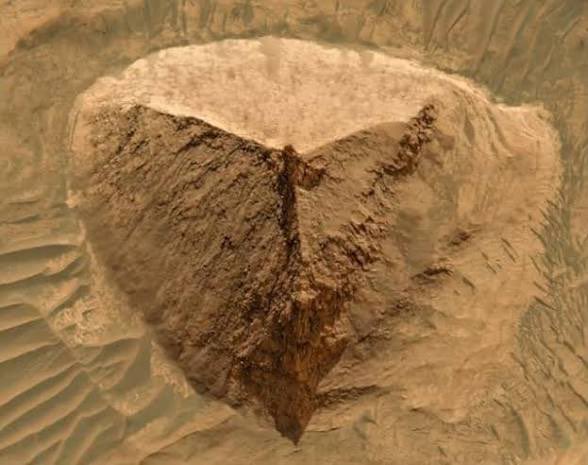
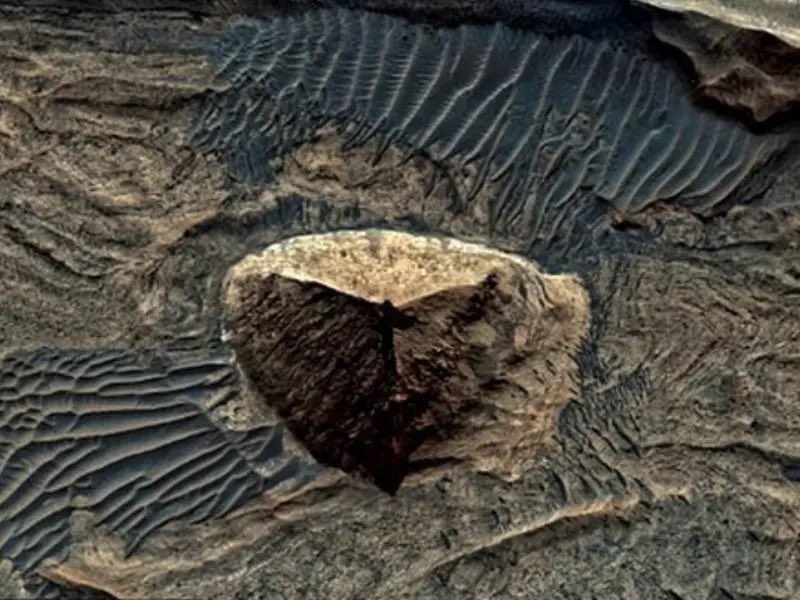
Location: The structure is situated in the western region of Candor Chasma, a large canyon within the Valles Marineris system.
Scale: At approximately 3 kilometers wide, the formation is over ten times larger than the Great Pyramid of Giza.
Timeline: Originally identified in 2001 by researcher Keith Laney using Mars Global Surveyor data, it gained renewed attention in March 2026 after documentary filmmaker Brian Dobbs shared processed 3D satellite imagery.