Andreas De Block

2.9K posts

Andreas De Block banner
Andreas De Block

Andreas De Block

@DeblockBlock

Philosopher. "When I became a man I put away childish things, including the fear of childishness and the desire to be very grown up."

Leuven, Belgium शामिल हुए Aralık 2013
692 फ़ॉलोइंग2.2K फ़ॉलोवर्स
पिन किया गया ट्वीट
Andreas De Block
Andreas De Block@DeblockBlock·
Stop funding research (the way you do) Because it is wasteful, unethical and unscientific A thread (1/16)
English
163
3.1K
9.1K
0
Andreas De Block
Andreas De Block@DeblockBlock·
@jdceulaer ik blokkeer eigenlijk bijna niemand, maar voor deze man maakte ik graag een uitzondering. De combinatie van hautaine domheid en laaghartige sneren vond ik niet te harden.
Nederlands
2
0
1
138
Joël De Ceulaer
Joël De Ceulaer@jdceulaer·
Niet meer in mijn tijdlijn.
Joël De Ceulaer tweet media
Nederlands
29
0
41
6.4K
Andreas De Block रीट्वीट किया
Philippe Lemoine
Imagine if you had told the people who supported this stupidity 3 weeks ago that by now the Trump administration would ask Congress for a $200 billion supplemental, that it would be seriously considering using ground troops to hold Iranian territory and preparing for a weeks-long campaign, not to mention the fact that we're in for a large energy shock persisting for months even in the best case scenario. Anyone who is intellectually honest and not disconnected from reality knows they would have replied that it was complete nonsense, that you were just a panican, etc. But that's where we are and they're still pretending, not just that everything is going according to plan (as if there was a plan in the first place), but that it's actually going even better than they thought it would. It's just pure cult-like behavior at this point.
Disclose.tv@disclosetv

NOW - Hegseth confirms the Pentagon is seeking about $200,000,000,000 billion for the Iran War: "It takes money to kill bad guys."

English
39
249
2.6K
188.3K
Andreas De Block
Andreas De Block@DeblockBlock·
@LodeCossaer "The term “fascist” is used as a generic insult, but Trumpism has essentially become 1920s-style fascism."
English
1
0
1
170
Lode Cossaer
Lode Cossaer@LodeCossaer·
Ik zou Cofnas als academicus serieus nemen als hem niet ook zo evident een Trumpist en ‘antiwoker’ en al die zeven is. (Hetzelfde is waar voor al die - en veel groter in aantal - linkse academici die gewoon PVDA troep verkopen, ntrlk.)
Nederlands
1
0
12
2K
Robin McKenna
Robin McKenna@rbnmckenna86·
I have very few red lines, but one of them is that I will never read anything by Scott Alexander and another is that I will never figure out who Tyler Cowen is meant to be.
English
10
0
20
10.1K
Andreas De Block
Andreas De Block@DeblockBlock·
het aantal artikelen lag in 2022 ongeveer 47% hoger dan in 2016, terwijl het aantal actieve wetenschappers in diezelfde periode nauwelijks toenam. Goed voor de uitgevers, goed voor de carrières van de academici die MDPI-pagina's vullen, slecht voor de wetenschap.
Ive Marx@IveMarx

Ik vrees dat dit waar is. Er wordt gewoon prietpraat gepubliceerd in internationale wetenschappelijke tijdschriften met peer-review, impactfactoren en wat weet ik allemaal. De druk om vooral veel te publiceren en veel doctoraten af te leveren speelt hier een grote rol.
Nederlands
0
0
14
627
Andreas De Block
Andreas De Block@DeblockBlock·
@TijlDeBie @wduyck @JanVerbeeren @IveMarx @rvdwalle helemaal eens met Tijl. Mogelijk zijn er wel belangrijke arbeidsrechtelijke verschillen tussen beide zaken, wat in deze relevant zou kunnen zijn. Wat Pettit zei, was zeker vaak erg smaakloos en immoreel, maar leek me niet illegaal. Wat denk jij, @JogchumV ?
Nederlands
3
0
7
388
Ive Marx
Ive Marx@IveMarx·
"De Standaard vond vorige week geen Vlaamse academici die het openlijk voor Cofnas wilden opnemen" Echt? Er waren hier genoeg collega's die vonden dat de aanstellingsprocedure mocht worden gerespecteerd. standaard.be/natuur-en-wete…
Nederlands
12
6
102
4.9K
Andreas De Block
Andreas De Block@DeblockBlock·
@gracevdbrink @mboudry @ugent @nathancofnas ik denk dat Pettits uitlatingen onder academische vrijheid vielen en vooral ook onder VVMU. Dat geldt ook voor de uitlatingen en opvattingen van Cofnas. Het is duidelijk dat de academische vrijheid langs twee kanten onder druk staat: intern (zie Cofnas) en extern (Pettit).
Nederlands
0
0
4
129
Grace van den Brink
Grace van den Brink@gracevdbrink·
@mboudry @ugent @nathancofnas Ik heb een oprechte vraag: waarin verschilt deze zaak met die van de aanstelling van Harry Pettit aan de VUB? Het gaat toch in beide gevallen om VVMU en academische vrijheid? Toch was u uitdrukkelijk tegen Pettits aanstelling (wat ik begrijp) en bent u in deze uitdrukkelijk voor.
Nederlands
6
0
10
976
Maarten Boudry
Maarten Boudry@mboudry·
Als de @ugent zwicht voor de druk om @nathancofnas te ontslaan, krimpt opnieuw een stuk academische vrijheid. Pseudowetenschap mocht jarenlang bloeien aan onze vakgroep (hallo Jacques Lacan), maar één verboden hypothese en plots wil men koppen zien rollen. Bovendien blijkt uit anonieme peilingen dat véél meer intelligentie-onderzoekers het met de hypothese van Cofnas eens zijn (ongeveer de helft). Moet je verbaasd zijn dat er zoveel zelfcensuur heerst, met dit soort collectieve pogingen tot broodroof? Universiteiten die “gevaarlijke ideeën” verbieden, verraden hun kernopdracht. Ik verdedig niet wat Nathan Cofnas zegt — wel zijn recht om het te onderzoeken en ongeremd zijn meningen daarover te uiten. demorgen.be/meningen/als-d…
Nederlands
32
108
631
16.3K
Andreas De Block रीट्वीट किया
Bryan Caplan
Bryan Caplan@bryan_caplan·
I'm not going to celebrate Paul Ehrlich's death. I just wish he lived long enough to admit that the world is getting much better, population growth is good, and his intellectual methods were deeply corrupt. A belated apology to Julian Simon would also be warranted.
English
50
72
814
43.7K
Andreas De Block
Andreas De Block@DeblockBlock·
This
Jesús Fernández-Villaverde@JesusFerna7026

I must admit that, among all the thinkers I admired when I was 20, none has fallen further in my estimation than Karl Popper. I will leave aside his contributions to the philosophy of science and speak only about The Open Society and Its Enemies. My admiration for that book was pure ideological alignment. I agreed with the conclusions and did not look too carefully at how they were reached. As I grew older and learned more, the flaws became harder to ignore. The treatment of Plato is a caricature. The treatment of Hegel is worse. The treatment of Marx is the most readable section, but only because Popper happened to know more about economics than about Greek philosophy. Eric Voegelin, in a letter to Leo Strauss, put it better than I could: “Popper is philosophically so uncultured, so fully a primitive ideological brawler that he is not able even approximately to reproduce correctly the contents of one page of Plato. Reading is of no use to him; he is too lacking in knowledge to understand what the authors say. Briefly and in sum: Popper’s book is a scandal without extenuating circumstances; in its intellectual attitude it is the typical product of a failed intellectual; spiritually one would have to use expressions like rascally, impertinent, loutish; in terms of technical competence, as a piece in the history of thought, it is dilettantish, and, as a result, is worthless.” europeanconservative.com/articles/essay… Voegelin’s language is severe. But read Popper’s chapter on Plato and then read the Republic, and you will find it hard to disagree. The recently circulated letter in which Popper denounces Adorno and Habermas to Prof. Aron, calling Habermas “untalented,” only confirms the picture. You do not have to agree with Habermas or Adorno to see that they were serious thinkers who tackled important issues. Habermas spent decades exploring how public discourse can support legitimate institutions. Adorno, regardless of his politics, recognized something about the link between mass culture and individual judgment that has only become more relevant since he wrote. I disagree with much of what both of them concluded, but debating serious thinkers is always productive. Dismissing them, as Popper did, is not acceptable. Popper disliked that Adorno and Habermas leaned to the left, so he denounced them. That is not philosophy. That is the behavior Voegelin described.

English
0
0
1
351
Andreas De Block रीट्वीट किया
Aakash Gupta
Aakash Gupta@aakashgupta·
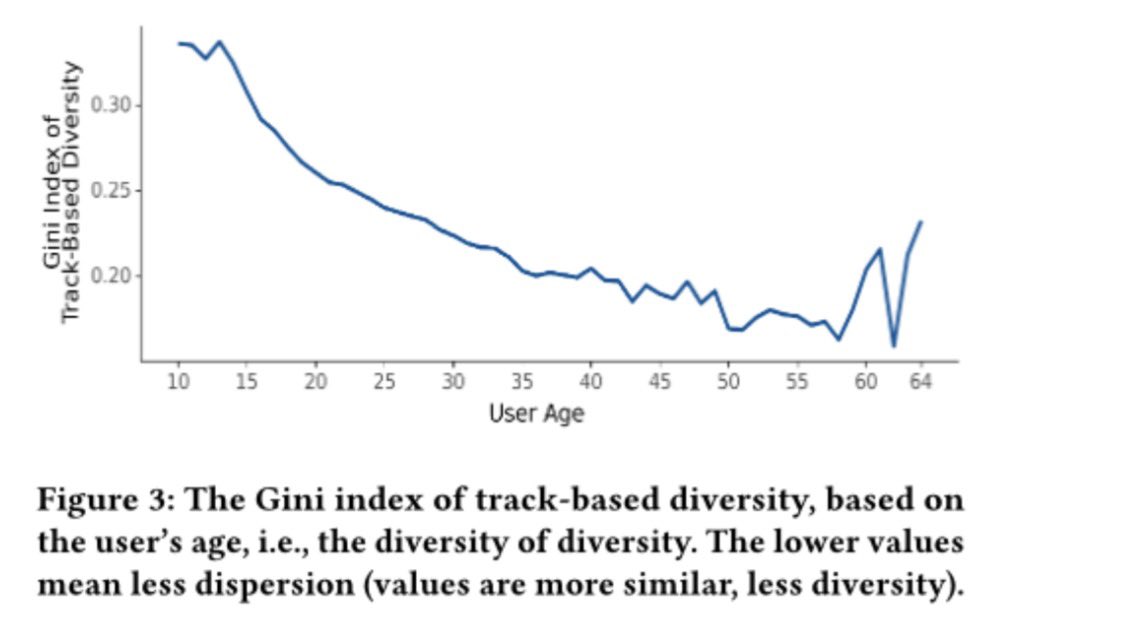
Your brain peaked musically somewhere around age 16. Everything since then has been a dopamine echo. Between the ages of 12 and 22, the mesolimbic dopamine pathway, the same circuit that processes cocaine and sex, fires at levels in response to sound that it will never reach again for the rest of your life. A 2011 McGill study used PET scans and fMRI simultaneously and found that music triggers dopamine release in the striatum at peak emotional arousal. The caudate nucleus lights up during anticipation of the good part. The nucleus accumbens lights up when it hits. Your brain is treating a guitar riff with the same reward architecture it uses for food-seeking and pair bonding. During adolescence, that response is dramatically amplified. Pubertal hormones are flooding the system. The prefrontal cortex is still wiring itself. Memories formed during this window get encoded with a density of emotional tagging that nothing in your 30s or 40s can replicate. Researchers at the University of Leeds identified this as the “reminiscence bump”: the period when your sense of self is forming, and the music playing during that formation becomes structurally integrated into your identity. A 2025 longitudinal study from the University of Gothenburg analyzed 40,000 users’ streaming data across 15 years. Younger listeners explored broadly across genres. Older listeners collapsed into increasingly narrow loops, almost entirely anchored to music from their teens and early twenties. Your brain stopped losing interest in new music years ago. It’s running a cost-benefit analysis. Familiar songs deliver guaranteed dopamine with zero processing cost. New songs require pattern recognition, expectation-building, and repeated exposure before the reward circuit kicks in. Past 25, most people stop paying that tax. The one variable that predicts whether someone keeps exploring: the personality trait “openness to experience.” Score high, you keep seeking. Score average, you default to the familiar forever. The fix, if you want one: deliberate exposure. Three listens minimum before your auditory cortex builds enough predictive models to generate a reward response. One passive listen on a playlist will never get there. Your brain needs repetition to find the pattern, and it needs the pattern to release dopamine.
Aakash Gupta tweet media
𐌁𐌉Ᏽ 𐌕𐌉𐌌𐌉@OrevaZSN

Unfortunately, as you get older, you gradually become less interested in new music and keep going back to the old favorite songs you once loved.


English
357
807
5.4K
773.7K
Andreas De Block रीट्वीट किया
Kevin A. Bryan
Kevin A. Bryan@Afinetheorem·
@akoustov Academics where I can predict their view on a research question from knowing their personal politics and personality: it is a fatal flaw. Literally not research. *That* is what I think should make it hard to get tenure!
English
4
5
66
6.9K
Andreas De Block
Andreas De Block@DeblockBlock·
But if all we’re doing is engaging in self-expression and self-actualization - and I believe that this is what most of us are doing in our research - then why should we be publicly funded? #defundthehumanities
Brad Chattergoon@bradchattergoon

"Self-actualization" in these fields is about expressing one's ideas, research output is a kind of self-expression. AI, of course, cannot replace self-expression by definition while it naturally finds a home in making suggestions that can then be verified as true or false. 3/

English
1
1
3
471