Ken Sims

34K posts

Ken Sims banner
Ken Sims

Ken Sims

@Flyspinner

Been fishing all my life. Learnt what I know, what I feel and what I love on rivers, beaches, forests, mountains and oceans.

New Zealand शामिल हुए Ocak 2011
449 फ़ॉलोइंग381 फ़ॉलोवर्स
Ken Sims रीट्वीट किया
Mountain_Tui
Mountain_Tui@Mountain_Tui·
A decision not to fund a prostate cancer screening pilot will cause more men to die. The foundation asked for $6.4 million over 4 years National refused - but it's funding David Seymour's private school & Regulation Ministry slush fund to the tune of $200 million
Mountain_Tui tweet media
English
18
113
274
3.8K
Ken Sims रीट्वीट किया
Scott Squires @scottsquires.bsky.social
@fawfulfan The VAX does NOT prevent COVID or LONG COVID. it reduces risk of hospitalization and death which is good but respirator masks are required to actually prevent COVID. COVID expected to kill over 150,000 this year. Long COVID is number 1 chronic illness. 5.8 million children.
English
4
73
331
2.6K
Ken Sims रीट्वीट किया
Geoffrey Lean
Geoffrey Lean@GeoffreyLean·
Disturbing news. Loss of Arctic sea ice has caused an “irreversible” shift in the chemistry of the ocean that is disrupting the foundations of chain of life, a two-decade-long study has concluded. Tipping points are already here… oceanographicmagazine.com/news/arctic-oc…
English
202
1.1K
2K
57.1K
Ken Sims रीट्वीट किया
Harry Spoelstra
Harry Spoelstra@HarrySpoelstra·
Unraveling the cardiovascular burden of long COVID: symptom profiles, underlying mechanisms, and clinical management insights 🚨A peer-reviewed cardiac bombshell just AGAIN exposed the brutal reality of Long COVID HEART DAMAGE! ➡️This Chinees review synthesizes current evidence on the symptom profiles, underlying mechanisms, and clinical management of Long COVID-related cardiovascular complications. ➡️Symptom profile: - Long COVID cardiovascular sequelae affect 10–20% of survivors, with persistent symptoms (≥2 months post-3-month mark) including palpitations (68%), chest pain (53%), fatigue (63%), and dyspnoea, - POTS occurs in ~31% of cases, - Functional deficits persist up to at least 12 months: 20% drop in 6-minute walk test distance, reduced cardiac index, stroke volume, and ejection fraction (18–29%). ➡️Structural findings: - Cardiac MRI shows involvement in 78% and myocardial inflammation in 60%, - Autopsies reveal myocarditis (14%) and macrophage infiltration (86%). ➡️Mechanisms: →Multifactorial and overlapping: - Viral persistence (spike protein detectable in 60% at 12 months), - Chronic immune dysregulation (elevated IL-1/IL-6/IFN-γ/TNF-α), - Endothelial dysfunction, - Microvascular injury with microthrombi (80% in some autopsies), - Hypercoagulability, and - Autonomic dysregulation. ➡️Blood markers / biomarkers: - Persistent spike protein is detectable in blood plasma (and tissues) in ~60% of Long COVID patients at 12 months, but absent in recovered controls. This further dismantles any vaccine-causation narrative, - Inflammatory cytokines are elevated (IL-1, IL-16, IL-17, IL-22, IFN-γ, TNF-α), linked to endothelial dysfunction, platelet activation, hypercoagulability, and myocardial injury, - Cardiac troponin is often elevated as a marker of ongoing ischemia/injury. ➡️Risk modifiers: - Severe acute infection drives more structural damage, - mild cases more autonomic/functional, - Vaccination may cut risk: 30–50%, - Delta-era cases worse than Omicron. ➡️Management: →Currently symptom-driven: - Graded rehabilitation, - Lifestyle measures, - Beta-blockers, - Targeted anticoagulation, →Multidisciplinary phenotyping recommended, →No approved mechanism-specific therapies exist. ➡️Conclusions: “Based on these findings, the following clinical recommendations are proposed: (1) cardiovascular evaluation should be considered in patients with persistent post-COVID-19 symptoms, including autonomic function testing and imaging where indicated, (2) management should be phenotype-driven and multidisciplinary, incorporating tailored exercise rehabilitation, pharmacological control of heart rate and symptoms, and anticoagulation only when thromboembolic disease is confirmed, (3) vaccination should be encouraged as a preventive measure to reduce Long COVID risk; and (4) future research should prioritize mechanism-based subtyping and randomized trials of targeted interventions.” ‼️So, AGAIN, Cardiovascular Long COVID is a real, heterogeneous, and enduring burden fuelled by unresolved viral–immune–vascular damage that current symptomatic care cannot fix. Without urgent, mechanism/phenotype-targeted treatments, millions will face chronic heart impairment for years to come! PREVENTION NEEDS PRIORITY ! #AvoidSars2 #AvoidReinfections #CleanAir frontiersin.org/journals/cardi…
Harry Spoelstra tweet media
English
1
66
147
4.7K
Ken Sims रीट्वीट किया
Dr Elisa Perego
Dr Elisa Perego@elisaperego78·
"Many patients with long COVID are already receiving care but are not being recognized as having the condition. These patients are not absent from clinical care; they are absent from the diagnostic code that would identify them as long COVID patients" cidrap.umn.edu/covid-19/long-…
English
11
190
531
9.3K
Ken Sims रीट्वीट किया
Zdenek Vrozina
Zdenek Vrozina@ZdenekVrozina·
The study highlights that pediatric long COVID can be significantly disabling, even when the child does not outwardly appear seriously ill. As a result, children often face misunderstanding from schools, parents, healthcare professionals. The authors also show that the measured symptom burden in these patients was, in some domains, worse than that reported in other pediatric chronic conditions, including chronic pain, active cancer treatment, type 1 diabetes, sickle cell disease, asthma, and autism. Millions of children globally. Unnecessarily. A public health disgrace. @vlvalek @adamvojtech86 @strakovka
🎒Joanna Teglund✊😷🍉Human life is sacred@JoannaTeglund

🧵 New study: Children, adolescents and young adults aged 4–25 years with Long COVID report high symptom burden. Reported scores were more severe compared with other pediatric chronic disease cohorts (eg, chronic pain, cancer, sickle cell disease, autism). academic.oup.com/ofid/article/1…

English
5
225
519
16.1K
Ken Sims रीट्वीट किया
Dr. Sean Mullen
Dr. Sean Mullen@drseanmullen·
This is where I’m at psychologically: I speak up every day because if I stayed silent, I honestly couldn’t live with myself. At the same time, I’m painfully aware that most of it barely moves the needle. People with Long Covid have largely been left behind. Governments, institutions, media ecosystems, and powerful financial interests have effectively separated the reality of Long Covid from the ongoing risks of infection itself. Now another airborne virus is emerging into a population that is exhausted, misinformed, cognitively overloaded, and psychologically conditioned to normalize illness. A huge percentage of people genuinely believe COVID is “over,” that masking is pointless, and that repeated infections are basically just colds you can power through with supplements, exercise, and positive thinking. Meanwhile, the information environment is flooded with influencers, wellness grifters, disinformation, outrage algorithms, and people monetizing confusion. I don’t know what else to say other than this: Be honest with yourself. Protect your health. Protect the people you love. And don’t let the world gaslight you out of your own ability to observe reality. And everyone once in awhile, you're allowed to tell the asshole minimizing deadline biohazards to go fuck himself.
PACO@PacoOnPause

This is the first time in a month that I feel good enough to record a video but I know that I probably shouldn't. The only reason I'm wrestling with the idea, is because doing nothing is intolerable.

English
21
143
649
9.1K
Ken Sims रीट्वीट किया
tern
tern@1goodtern·
You ever wonder how Covid enters cells? This animation shows you. Some amazing science in the thread it came from. Link in next tweet.
English
13
222
665
21.4K
Ken Sims रीट्वीट किया
Zdenek Vrozina
Zdenek Vrozina@ZdenekVrozina·
A heart attack after COVID may not look like the classic heart attack we usually imagine. A new core-lab study of patients with NSTEMI + COVID-19 suggests something more diffuse. Not just one blocked artery, but a blood-clotting and vessel inflammation problem🧵
Harry Spoelstra@HarrySpoelstra

Angiographic and Electrocardiographic Characteristics of Patients With Non–ST-Segment Elevation Myocardial Infarction and COVID-19 🚨STEMI + COVID-19 is even WORSE than NSTEMI + COVID-19, but this new core-lab study shows NSTEMI + Covid-19 alone is already catastrophic! ➡️Sit down and avoid a MI while reading this: ➡️Remember and roughly put: NSTEMI: Subendocardial( inner heart layer) MI STEMI: A transmural( full thickness) MI ➡️ This Canadian retrospective core laboratory-adjudicated analysis of 155 patients with laboratory-confirmed COVID-19 and non–ST-segment elevation myocardial infarction (NSTEMI) (April 2020 until December 2023, 29.7% women, median age 67 years), ➡️Participant Vaccination Status: - 82.6% (128/155) had received a COVID-19 vaccine. - No data on timing relative to hospitalization, booster doses, prior infections, or reinfections were reported, ➡️Key Angiographic Findings: - High thrombus burden (grade 3–5) in 43.3% of cases, - 25% stent thrombosis among patients with prior stents, - Percutaneous coronary intervention (PCI) performed in 67 patients but unsuccessful in 22.3%, ➡️Key Electrocardiographic & Functional Findings: - Diffuse, nonlocalizing ST-segment changes, - ST elevation in aVR in 33%, - Conduction abnormalities in 19.4%, - Q waves in 16.9%, - Global systolic dysfunction in 32.3%, ➡️Clinical Outcomes: - In-hospital mortality: 8.4% (13 patients; 95% CI 4.5–13.9), - No in-hospital reinfarction or stroke, ➡️Direct Comparison to STEMI + COVID-19: The study explicitly states this NSTEMI mortality (8.4%) is lower than the NACMI registry’s 33% in-hospital mortality for STEMI + COVID-19, yet still markedly elevated versus pre-pandemic NSTEMI (3.5% in SWEDEHEART), confirming STEMI + COVID-19 outcomes were even worse, ➡️Interpretation: COVID-19 drives a shared prothrombotic/inflammatory phenotype across both NSTEMI and STEMI, but even NSTEMI still shows catastrophic angiographic and procedural failure rates. ‼️Compared with historical pre-pandemic NSTEMI cohorts, this population shows markedly higher mortality and lower PCI success rates. This is the first core-laboratory description of angiographic and ECG characteristics in NSTEMI patients with concurrent COVID-19, ‼️This core-lab study proves that even with 82.6% COVID-19 vaccination and zero reported reinfection data, concurrent infection turns NSTEMI into a diffuse thrombotic catastrophe with 8.4% mortality (more than double historical, 2× the 3.5% SWEDEHEART pre-pandemic rate) and 22.3% PCI failure (7× the pre-pandemic 3.2% rate). STEMI + COVID-19 results were even worse (33% mortality in NACMI), ‼️Sadly, the study does not mention or recommend any treatment options, anticoagulation strategies, antiplatelet intensification, PCI timing adjustments, or other interventions to reduce thrombus burden, PCI failure, or mortality. Why, because it remains the topic of heightened discussions as science remains unsettled! Meanwhile: #AvoidSars2 #AvoidReinfections sciencedirect.com/science/articl…

English
17
240
578
19.4K
Ken Sims रीट्वीट किया
Samuel Hudson
Samuel Hudson@foundersam·
Steady under pressure, firm on principle: what Dame Jacinda Ardern’s leadership showed, and what’s at stake now The contrasts in this clip from Prime Minister show a telling story of leadership that becomes tested under pressure, in front of the world, when every word carries weight. In the opening shot, Dame Jacinda Ardern holds her composure as emotion rises to the surface. Her eyes are glassy, her expression tight, but controlled showing restraint. A leader absorbing the moment, carrying the burden, and choosing not to let anything spill over. That composure carries into a visit to New York in 2018. Inside the United Nations General Assembly, Donald Trump delivers his address. Ardern listens without reaction but she does not mirror the tone in the room. Studying the moment. She was dressed in black attire, seated among delegates, hand resting against her chin, eyes fixed forward. She is fully engaged, analysing, weighing New Zealand’s place in a rapidly shifting global landscape. It is a picture of deliberate leadership. Not reactive, not performative, but anchored in thought and purpose. When she went out of her way to face the media, that clarity of her strengthen as a leader on the world stage sharpened. She refused to engage in personality politics. She redirected every question back to one point. She was there to represent New Zealand. Nothing more, nothing less. Her approach defined her government. Under Ardern, New Zealand maintained a strong, independent foreign policy. It was willing to differ from major powers, to speak to its own values, and to take positions that reflected national interest rather than global pressure. That independence allowed New Zealand to contribute meaningfully on the world stage, from diplomacy to climate and security, without being seen as an extension of any larger power. Now, that footing is being questioned. The coalition government of New Zealand National Party, ACT New Zealand, and New Zealand First faces growing criticism over the direction of foreign policy and resource decisions. It is argued that Winston Peters is drawing New Zealand closer to the United States, while Shane Jones is advancing policies that open the country’s natural resources to greater overseas extraction. One era projected a confident, independent voice, willing to stand apart when needed. The current trajectory risks narrowing that independence in favour of alignment and economic trade-offs. Those images of Ardern, steady, focused, and unmoved by external pressure, now land with added weight. This clip is just a reminder of what independent leadership looked like, and a benchmark against which today’s decisions are increasingly being judged. *Courtesy of Magnolia Pictures, CNN Films, HBO Documentary Films *This footage has been republished for the purposes of educational news reporting and public interest, in accordance with New Zealand’s fair dealing provisions under the Copyright Act 1994. #nzpol
English
31
72
277
24.4K
Ken Sims रीट्वीट किया
Hiroshi Yasuda (保田浩志)
Hiroshi Yasuda (保田浩志)@Yash25571056·
As you may know well, "analysis of biofluids and neuroimaging from PASC (post-acute sequelae of COVID-19 or long COVID) patients underline long-term changes in the proteome and CNS (central nervous system) response following the infection.. Potential disease mechanisms underlying neurological symptoms observed in severe COVID-19 are vascular and fluid-brain barrier abnormalities, chronic neuroinflammation, persistent axonal damage and protein aggregation. In PASC patients, an altered biofluid proteome with increased neuronal proteins and pro-inflammatory cytokines was observed. The pathological burden in affected brain regions may contribute to manifestations such as anosmia, memory deficits, and cerebellar ataxia." I wonder how many people remember that COVID-19 causes memory loss. 'Human brain matters: Navigating the neuropathology of COVID-19' onlinelibrary.wiley.com/doi/full/10.11…
English
4
63
171
3.7K
Ken Sims रीट्वीट किया
tern
tern@1goodtern·
Kind of seems like something.
tern tweet media
English
3
25
127
2.2K
Ken Sims रीट्वीट किया
tern
tern@1goodtern·
Honestly, you've got to have balls of steel to publish this graph and say without evidence that Covid has nothing to do with this fall. Especially since the press release the article is based on *doesn't even say that*.
tern tweet media
English
39
494
1.6K
27.3K
Ken Sims रीट्वीट किया
Massimo
Massimo@Rainmaker1973·
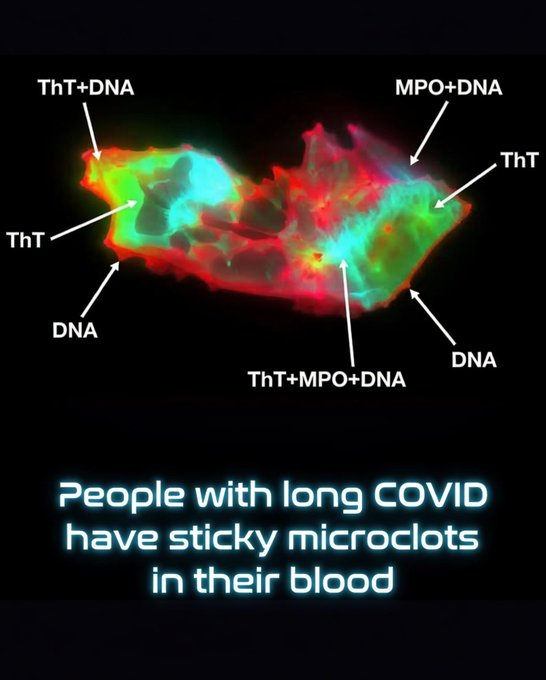
A groundbreaking study has pinpointed a microscopic culprit behind the debilitating fatigue, brain fog, and other persistent symptoms of long COVID: abnormal, sticky microclots embedded with neutrophil extracellular traps (NETs) in patients' blood. These microclots—tiny aggregates of clotting proteins—are small enough to obstruct the body's tiniest blood vessels (capillaries), restricting oxygen delivery to tissues and organs without triggering obvious large-scale clotting events. In long COVID patients, researchers observed a dramatic ~20-fold increase (median 19.7 times higher) in the number of these microclots compared to healthy controls, with the clots also tending to be larger. What sets this finding apart is the discovery that these microclots are structurally intertwined with NETs—web-like structures of DNA, enzymes (such as myeloperoxidase and neutrophil elastase), and proteins released by neutrophils (a type of white blood cell) to ensnare pathogens. Normally, NETs form temporarily and then dissolve, but in long COVID, they persist and become physically embedded within the microclots, creating highly resistant, "gummy" structures that evade the body's natural clot-breaking processes (fibrinolysis). This creates a chronic thromboinflammatory state, where blocked microcirculation and ongoing low-grade inflammation may sustain symptoms like exhaustion and cognitive impairment. The differences were so pronounced that machine learning models analyzing anonymized blood samples (via fluorescence microscopy for markers like ThT for amyloid-like structures, DNA stains, and MPO for NETs) could distinguish long COVID patients from healthy individuals with 91% accuracy—offering a potential objective biomarker for a condition that has long evaded reliable diagnosis through standard tests (e.g., normal D-dimer, PT/INR, or aPTT levels despite significant microclot burden). This work, led by teams including Prof. Etheresia Pretorius (Stellenbosch University) and Dr. Alain Thierry (Montpellier University), reframes long COVID as a tangible, blood-based disorder driven by dysregulated coagulation and innate immunity rather than vague "post-viral malaise." Targeting NETs or microclots—perhaps with therapies to degrade NETs or prevent their stabilization—could open doors to treating root causes instead of merely alleviating symptoms. [Thierry, A. R., Usher, T., Sanchez, C., Turner, S., Venter, C., Pastor, B., Waters, M., Thompson, A., Mirandola, A., Pisareva, E., Prevostel, C., Laubscher, G. J., Kell, D. B., & Pretorius, E. (2025). Circulating Microclots Are Structurally Associated With Neutrophil Extracellular Traps and Their Amounts Are Elevated in Long COVID Patients. Journal of Medical Virology, 97(10), e70613. DOI: 10.1002/jmv.70613]
Massimo tweet media
English
57
525
1.6K
98.6K
Ken Sims रीट्वीट किया
Denis - The COVID info guy -
Denis - The COVID info guy -@BigBadDenis·
A January study of essential workers (with blood samples before and after COVID infection) found those with long-term neurological symptoms had higher phosphorylated tau—a protein linked to early brain degeneration. uniladtech.com/science/resear…
English
1
97
211
3.3K
Ken Sims रीट्वीट किया
Outbreak Updates
Outbreak Updates@outbreakupdates·
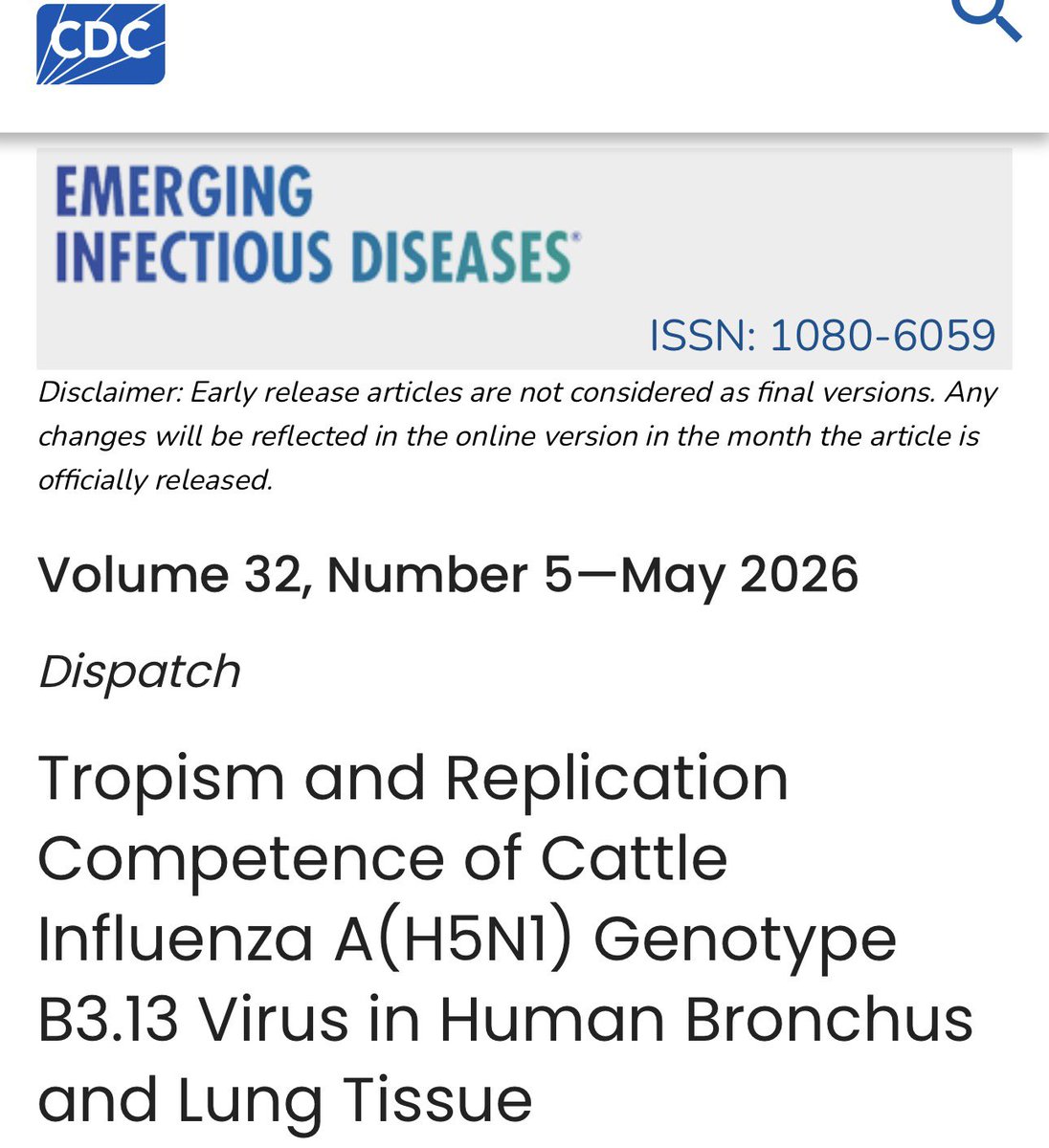
Cattle H5N1 now replicates in human lung tissue. Not hypothetical. Not simulated. Direct infection of human respiratory cells confirmed. Bird flu found a mammalian amplifier. Cows are evolution engines.
Outbreak Updates tweet media
English
31
506
1.2K
256.7K
Ken Sims रीट्वीट किया
Kate Dupuis
Kate Dupuis@DrKateTO·
In the past six years we have let children, in some cases repeatedly, be infected with a disease that research shows can negatively impact the immune system. Our friends’ kids are getting pneumonia, scarlet fever, strep, whooping cough etc at rates simply not seen pre-pandemic.
alan drummond@alandrummond2

The emergency room at Michael Garron Hospital is treating double its patient capacity The hospital’s pediatric patients alone have increased by nearly 70 per cent over the last five years torontolife.com/city/the-emerg…

English
20
289
946
23.3K