richard bacon retweetledi
richard bacon
41.7K posts


richard bacon
@richardpbacon
Views expressed here are the BBC's. Not my own. Instagram@Richardpbacon
iPhone: 0.000000,0.000000 Katılım Ocak 2009
2.3K Takip Edilen1.1M Takipçiler

richard bacon retweetledi

Breaking News: The Pentagon asked the White House for $200 billion to fund the war in Iran, according to two officials with knowledge of the matter. The sum is nearly a quarter of the entire U.S. annual defense budget. nyti.ms/4tfRhuP
English
richard bacon retweetledi

🚨 Let me tell you why this Goldman Sachs headline is the most dangerous one you'll read today..
Companies spent $450 billion on AI last year.. fired tens of thousands of people to "restructure around AI".. replaced entire departments with chatbots..
And Goldman Sachs just said it contributed basically zero to economic growth..
so where did the money go?
> It went to Nvidia.. $130 billion in GPU sales.. Jensen is the only man on earth who got rich from AI that hasn't produced anything yet..
> It went to stock buybacks.. companies fired people, cut costs, reported "record profits" and bought back their own shares.. the money went UP not OUT.. Jesus!
> It went to a bubble.. the same way crypto money went to Lamborghinis and not infrastructure.. AI money is going to valuations and not productivity..
here's the part that should terrify you..
They already fired the people.. Atlassian 1,600.. Meta 21,000.. Block 40%.. Amazon warehouses.. the jobs are already gone..
But the growth didn't come.. the productivity didn't come.. the revenue didn't come..
they burned the village to build a city that doesn't exist yet..
and Goldman Sachs just looked at the empty lot and said "there's nothing here"
unusual_whales@unusual_whales
"Massive investment in AI contributed basically zero to US economic growth last year," per Goldman Sachs
English
richard bacon retweetledi

"Massive investment in AI contributed basically zero to US economic growth last year," per Goldman Sachs
English
richard bacon retweetledi

Absolutely morbid black comedy that the U.S. government is removing sanctions on Russian and Iranian oil in 2026 not as part of any celebrated peace deal or diplomatic normalization but as a last-ditch effort to soften the blow of a historic energy crisis caused by a U.S. war.
English
Tony Blair wanted us to immediately join this war.
James Melville 🚜@JamesMelville
All those who contributed to this shitshow should hang their heads in shame.
English
richard bacon retweetledi

I agree with Hegseth, it's terrible when a government driven by a radical ideology invests in weapons instead of its people.
Acyn@Acyn
Hegseth: Iran is an energy rich country. instead, like so many other places, driven by a radical ideology, instead of investing in their people… they invested in missiles, and they invested in launchers and UAVS.
English
richard bacon retweetledi

This is what Smallpox looked like in a world without vaccines.
You've never seen such a thing.
Know why?
Because vaccines work...
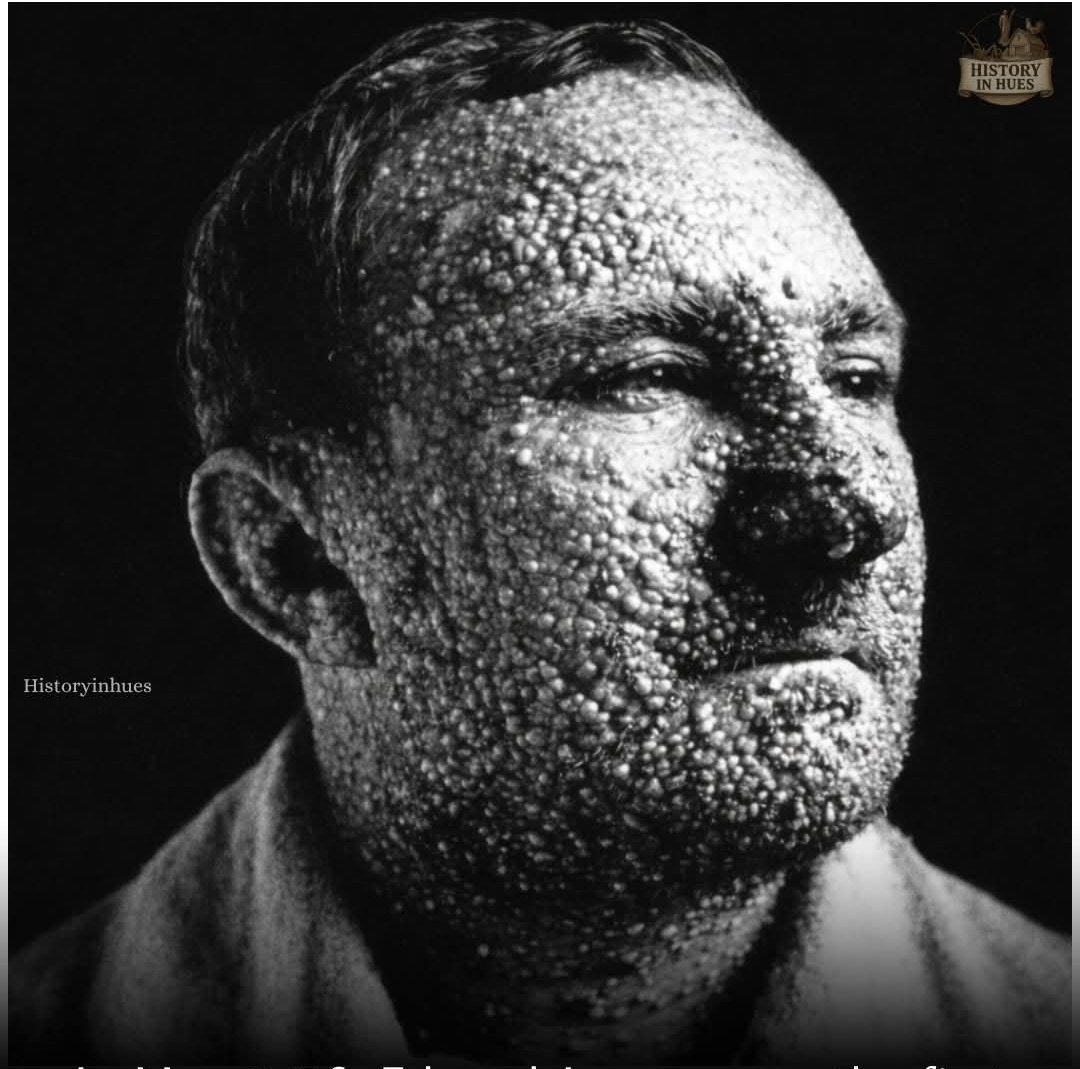
English
richard bacon retweetledi

He died alone in a hotel room with 33 cents to his name—the man who had once lit up the entire world.
January 7, 1943. Room 3327, the New Yorker Hotel, Manhattan.
A maid knocked on the door for the third day in a row. No answer. She used her key and stepped inside. There, on the bed, lay Nikola Tesla—86 years old, alone, and gone.
The man who had harnessed the power of Niagara Falls. The inventor whose alternating current system powers our homes to this day. The visionary who imagined wireless communication, remote control, and technologies that seemed like magic to his contemporaries.
But Tesla died with almost nothing. No family. No fortune. Just a room full of papers, pigeons he fed from the window, and memories of a life spent chasing dreams that the world wasn’t ready for.
The official cause of death was coronary thrombosis. But perhaps it was also a broken heart. For the last decade of his life, Tesla watched as others took credit for his discoveries. The world celebrated the work of others, while his own contributions were forgotten or stolen.
Tesla arrived in America in 1884 with four cents in his pocket, a book of poetry, and ideas that would change the world. Within years, he revolutionized electrical engineering, defeating Thomas Edison’s direct current with his polyphase alternating current system, bringing electricity to millions.
He invented the Tesla coil, pioneered radio technology, and dreamed of wireless energy for all. Yet, his ideas were often too advanced for his time. Backers abandoned him. JP Morgan pulled funding from his Wardenclyffe Tower project, which was supposed to transmit wireless energy across the world.
By the 1920s, Tesla had become a curiosity. An eccentric old man living in hotels he couldn’t afford. The New Yorker Hotel became his home for his final decade, his rent paid by Westinghouse Electric out of respect for his genius. Tesla spent his days feeding pigeons, particularly one white dove he called his "love." He worked on papers about cosmic rays and death rays, inventions that could end all wars, but no one was listening anymore.
In his final photograph, you can still see the brilliance in his eyes. The sharp gaze that once saw the future, the dignified bearing of a man who knew his worth, despite the world’s indifference.
When Tesla died, the world remembered.
On January 12, 1943, over 2,000 people gathered at the Cathedral of Saint John the Divine to honor the inventor. Scientists, engineers, and ordinary citizens filled the massive cathedral to celebrate his life and legacy.
Tesla’s genius was finally recognized, though too late for him to see it. His inventions—AC motors, the Tesla coil, wireless communication—had changed the world, even if no one truly understood their value while he was alive.
Tesla died with almost nothing, but he left everything behind. Every time you flip a light switch or charge your phone, you're touching his legacy. The man who died alone in a hotel room had connected the world.
Today, his name lives on. But the truth remains: Genius isn't always recognized in its own time. Sometimes, the dreamers die before their visions come true.
Yet their work endures.
On January 7, 1943, Nikola Tesla took his final breath. But the current he set in motion flows through everything, forever.
Thank you, Mr. Tesla. The world finally understands.

English
richard bacon retweetledi

Joe Rogan: “What they've done to Gaza is f*cking insane. And if you can't see that, if you can't say that, and your response is, Israel has the right to defend itself. Like, What are you talking about? Against what, children?..”
English
richard bacon retweetledi

Not for nothing, but on this day in 2003, the US invaded Iraq with strong public support and congressional approval.
5 Weeks later, Bush 43 declared victory.
8 YEARS later, the US left Iraq with 4,492 troops killed and 32,000 injured.
At least 200,000 Iraqi civilians died.
English
richard bacon retweetledi

Denmark prepared for a possible U.S. attack: Flew blood supplies to Greenland and planned to blow up runways
Key sources in Denmark and Europe are now revealing for the first time what happened during the most critical days, when Donald Trump threatened to take Greenland “the hard way.”
When Danish soldiers were rapidly deployed to Greenland in January this year, they brought explosives with them. The plan was to destroy runways in Nuuk and Kangerlussuaq to prevent American military aircraft from landing troops on the island, should the U.S. president ultimately decide to seize Greenland by force.
They also transported blood supplies from Danish blood banks so wounded personnel could be treated in case of combat.
This is reported by DR, which over the past year has spoken with central sources in the Danish government, top military officers, and high-ranking officials and intelligence sources in Denmark, France, and Germany.
All sources have played—and continue to play—key roles in the international crisis triggered by the United States’ demand for control over Greenland.
Together, the sources describe an unprecedented year marked by sleepless nights. None of them had concrete intelligence of specific American attack plans against Greenland. Still, many feared in January that the historically important ally, the United States, could attack at any moment.
At the same time, Denmark reached out to its European allies, leading to closer cooperation.
“With the Greenland crisis, Europe realized once and for all that we must be able to handle our own security,” said a French senior official involved in the intense period.
A rapid-response force consisting of Danish, French, German, Norwegian, and Swedish soldiers was first deployed to Nuuk and Kangerlussuaq.
Shortly after, a main force followed, including:
-Soldiers from the Danish Dragoon Regiment in Holstebro
-Elite troops from the Jaeger Corps
-French alpine troops trained for cold and mountainous warfare
At the same time, Danish fighter jets and a French naval vessel were sent to the North Atlantic.
According to several sources, the goal of having multinational troops on the ground was to ensure that any U.S. attempt to take Greenland would require a large-scale hostile action—thereby deterring such an attempt.
“We have not been in such a situation since April 1940,” said a Danish defense source, referring to the days before Denmark’s occupation during World War II.
Unlike in 1940, when Denmark chose not to resist militarily, the government and defense leadership this time decided—after extensive confidential discussions—to take the opposite approach:
If the U.S. attempted an attack, Danish forces would be armed and ready to fight. Danish F-35 fighter jets deployed north were also fully armed.
All this despite the understanding that Denmark could not realistically withstand a U.S. military attack.
“The cost for the U.S. had to be raised. The U.S. would have to carry out a hostile act to take Greenland,” said a senior Danish defense source.
Source: DR
English
richard bacon retweetledi

The 0% military capabilities that Hegseth said last week that Iran had left is causing havoc with the global economy.

English
richard bacon retweetledi

WSJ: Arab governments were furious about Israel’s attack and the U.S. failure to head it off, officials said. They had aggressively lobbied the Trump administration to stop U.S. and Israeli strikes on Iranian energy infrastructure and now feel a target has been put on their backs, they said… America’s Arab allies are now fuming that they don’t seem to have any influence with the Trump administration despite heavy investments of time and money.
English
richard bacon retweetledi

I don’t get it. If Hezbollah had flats in this block (unlikely in central Beirut but not impossible) why did the Israelis give everyone inside an hour to get out — including those they wanted to kill? And if there weren’t any Hezbollah people there, why destroy a building with dozens of civilians in it?
The Associated Press@AP
An Israeli airstrike struck an apartment building in central Beirut, on Wednesday. The Israeli army had warned residents to evacuate about an hour before completely flattening it as day broke.
English
richard bacon retweetledi


richard bacon retweetledi