

Movie Editing
4.6K posts

Movie Editing रीट्वीट किया

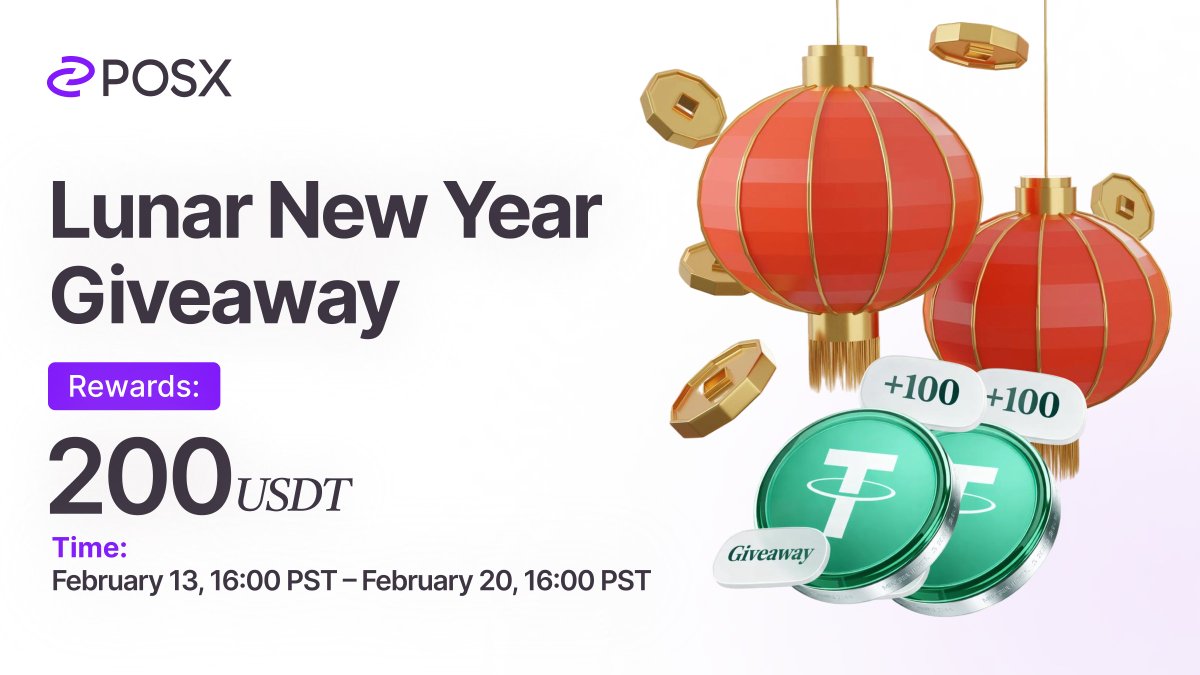
🧧 POSX Lunar New Year Giveaway!
The Lunar New Year is almost here, and POSX is celebrating big with a 200 USDT giveaway! 💰
📅 Event Period: Feb 13, 16:00 PST – Feb 20, 16:00 PST
How to join:
1️⃣ Follow @POSX_Official
2️⃣ Like & retweet this post
3️⃣ Comment your Lunar New Year wishes + tag 1 friend
10 lucky winners will share the prize pool.
Let’s kick off the year with fortune, fun, and a fat win!
English
Movie Editing रीट्वीट किया

💸 $1,000 crypto giveaway 💸
💜 like + bookmark the original post below to enter
🎁 10 people will each win $100 on March 1
follow @moonpay for more chances to get MoonPaid all year long
MoonPay 🟣@moonpay
We're building the new operating system for modern money movement. This past week, we sponsored the @CNBC Digital Finance Forum and @ivanhodl shared our vision for regulated onchain infrastructure that connects funding, tokenization, exchange and spending:
English
Movie Editing रीट्वीट किया

Happy Valentine’s Day from Upgrader – $250 Giveaway! 💖
To enter:
💌 Follow @Upgradercom
💌 RT this post & tag your Valentine
Giveaway ends in 5 days – good luck!

English
Movie Editing रीट्वीट किया

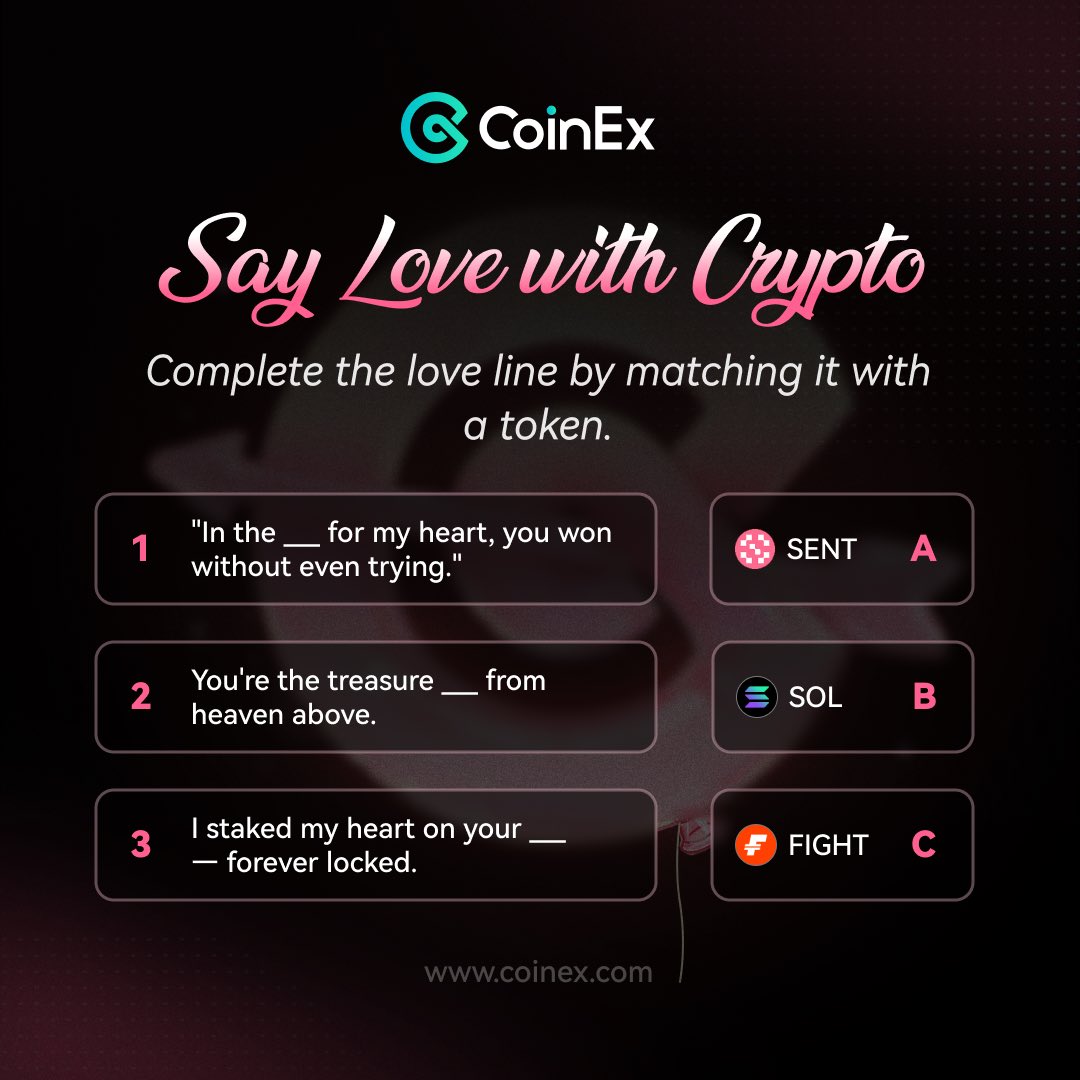
Say it with crypto 💕
Complete the lines and win!
Enter now:
- Follow @coinexcom
- Like + RT + Comment your answer
300 $USDT for 10 winners!
English
Movie Editing रीट्वीट किया

$100 of $BNB up for grabs
🎄 Day 1 of 7 Days of Swaps 🎄
✅ Follow Trust Wallet
✅ RT + tag a fren
Win $500 on the tweet below 👇

Trust Wallet@TrustWallet
Swap your way into Christmas 🎄 We’re dropping $1,200+ in prizes this week. Want to win $500? ✅ Swap in Trust Wallet ✅ Screenshot your swap & reply with it below ✅ RT + tag a fren 🎁 DAILY Christmas drops for 7 days Starts NOW 👇
English
Movie Editing रीट्वीट किया
@HosseinBit88 @OneAnalog Market cap today is a snapshot. Real use cases determine who survives. @OneAnalog gets that
English

After reading @OneAnalog founder's thread, I have a question for CT:
In 5 years, which tokens will still exist?
🅰️ Those with highest market cap today
🅱️ Those with most hype/community
🅲️ Those with real utility/use cases
🅳️ Only BTC and ETH
Vote + explain your logic 👇
(My bet: C, but prove me wrong)
Hossein@HosseinBit88
Been thinking about the founder's point all day: "Markets reward utility. Always have. Always will." Simple, but profound. AI survived = utility Bitcoin survived = utility Memecoins died = no utility @OneAnalog is betting everything on this principle. And honestly? History says they're right. The question isn't IF utility wins. The question is: are you building on the utility side or the speculation side? Choose wisely.
English
@HosseinBit88 @Covalent_HQ Every partner listed here is proof that @Covalent_HQ infrastructure is already essential
English
gSpeed 💚
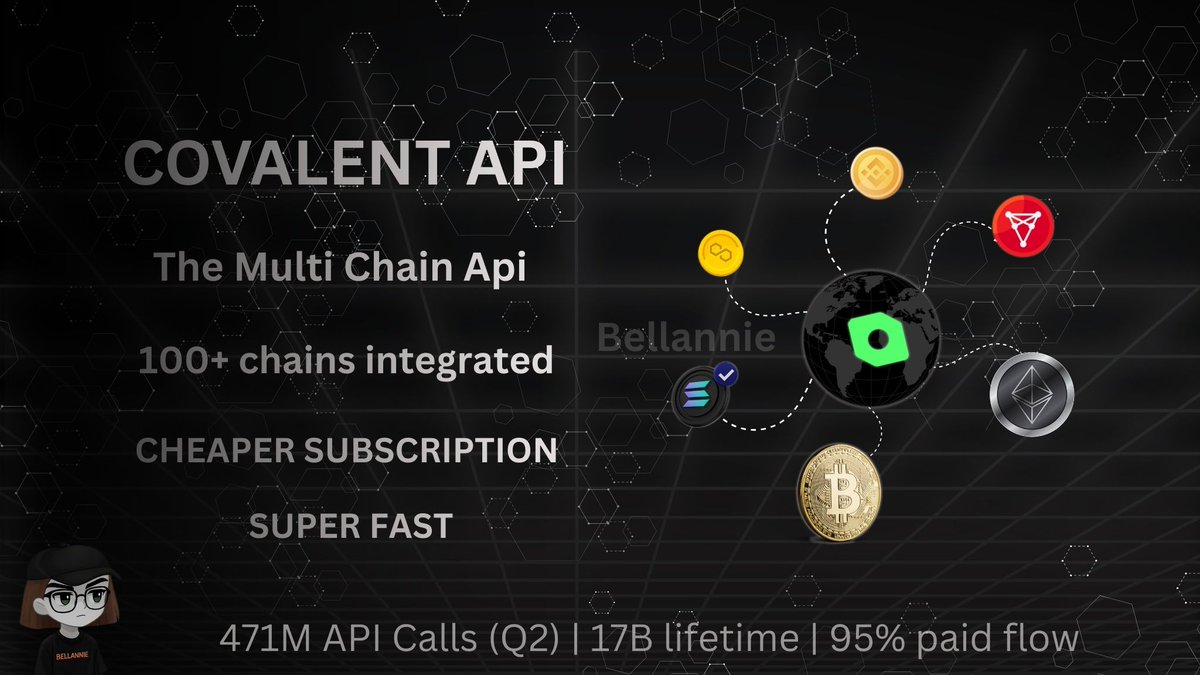
Q2 2025: @Covalent_HQ processed 471M API calls.
Cumulative total: 17 billion+ calls across 100+ chains.
Over 95% paid and revenue-generating.
This isn't lab tech. Its production infrastructure powering:
- Polygon: Ecosystem analytics across L2s
- MEXC: Token-level monitoring
- Bubblemaps: Cross-chain data visualization
Real companies. Real usage. Real revenue.
And all of it feeds back into $CXT buybacks through the Strategic Reserve.
That's sustainable tokenomics.
English
@HosseinBit88 @Vahidnezamzadeh @Covalent_HQ @Covalent_HQ just gave AI the context layer Web3 has been missing
English
@Covalent_HQ launched the industry's first MCP server for blockchain data.
What's MCP?
Model Context Protocol—originally by Anthropic. Lets AI models fetch real-time external data without retraining.
Covalent extended this to blockchain.
AI agents now get direct, verifiable access to onchain data from 100+ chains.
Over 100 billion semantically decoded transactions available for AI training and inference.
This is what makes AI agents actually useful onchain.
Not speculation. Real infrastructure.
Covalent@Covalent_HQ
Covalent’s @goldrushdev MCP makes AI truly blockchain-aware. This MCP is the first server that serves onchain data directly to AI models in a machine readable format, in real time, and with verifiable accuracy. Here's what it unlocks 👇
English
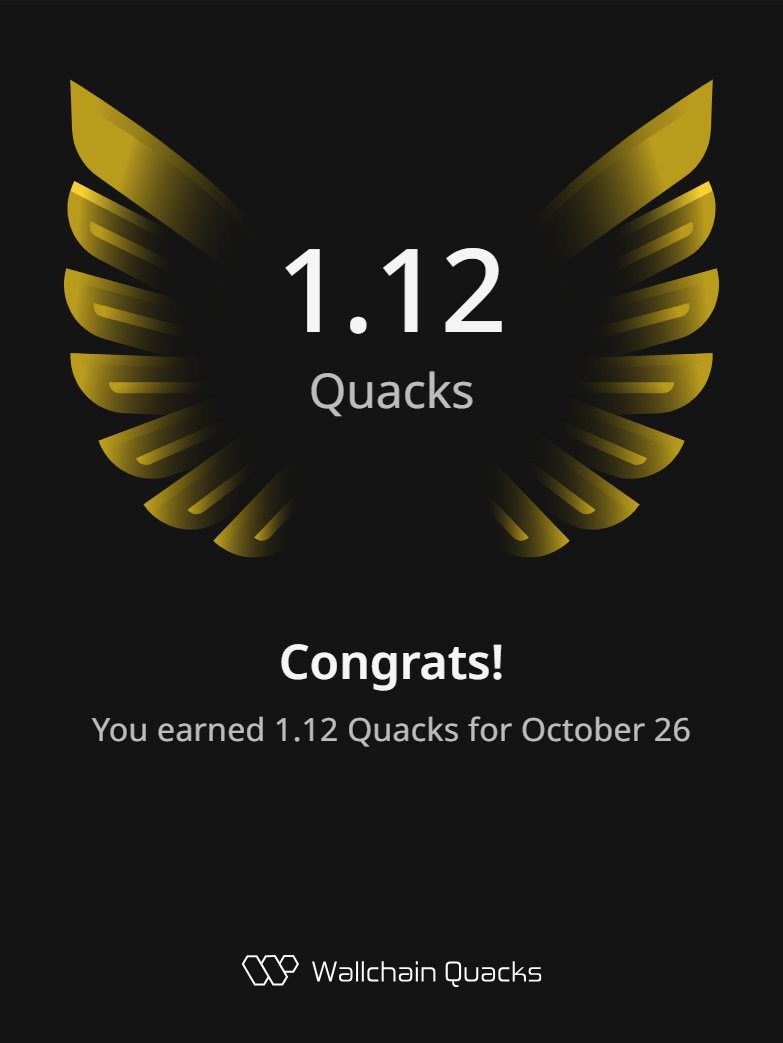
Just earned 1.12 Quacks on @wallchain in one day 🦆
Turn insights into rewards and climb the leaderboard 🥇
Use my referral link – quacks.app/?ref=HosseinBi…
English
@HosseinBit88 @OneAnalog The market might forget utility for a while, but it always comes back to it. @OneAnalog just stays there
English
Been thinking about the founder's point all day:
"Markets reward utility. Always have. Always will."
Simple, but profound.
AI survived = utility
Bitcoin survived = utility
Memecoins died = no utility
@OneAnalog is betting everything on this principle.
And honestly? History says they're right.
The question isn't IF utility wins. The question is: are you building on the utility side or the speculation side?
Choose wisely.
Hossein@HosseinBit88
Tweet 1/4 Read @OneAnalog founder's thread on utility vs speculation One line hit me hard: "Retail didn't leave because they got scared. They left because utility disappeared." This explains EVERYTHING about crypto cycles. Let me break down why this matters 🧵👇
English
@HosseinBit88 @OneAnalog The parallel with AI hits hard. You don’t believe in AI, you use it. That’s exactly where @OneAnalog is heading
English
Tweet 1/4
Read @OneAnalog founder's thread on utility vs speculation
One line hit me hard:
"Retail didn't leave because they got scared. They left because utility disappeared."
This explains EVERYTHING about crypto cycles.
Let me break down why this matters 🧵👇
Victor Young@VictorYoungMe
The only thing that lasts is utility. Markets always return to utility. They can drift for years, driven by hype, leverage, or memes - but sooner or later, gravity reasserts itself. @hosseeb recently pointed out something simple but profound: retail isn’t gone because people suddenly stopped believing in crypto. Retail’s gone because they ran out of money and because the things they were buying stopped being useful. When prices fall and the tide goes out, what survives isn’t luck or loyalty - it’s utility. You can see this same dynamic everywhere.
English
@HosseinBit88 @Covalent_HQ Speed is one thing, but labeled, ready data in under a second is another level. @Covalent_HQ is setting the new standard
English
gSpeed 💚
Block times are getting faster. Base and others now finalize blocks in under 500ms.
But most indexers still deliver data with 3-10 second delay.
This is what @Covalent_HQ calls the "latency crisis."
Their Sub-Second Data Co-Processor delivers labeled, structured blockchain data in under a second.
Not raw logs. Structured, decoded, ready-to-use data.
They built "Speedrun the Chain" on Base to prove it—45,000+ onchain transactions showing how fast apps can get.
Real-time data infrastructure matters.
Try it: speedrun.covalenthq.com
Covalent@Covalent_HQ
We’ve talked about the Latency Crisis. Today, we’re launching the system we built to solve it. Introducing: The Ultra-Fast Data Co-Processor.
English
@TrustWallet Grandma has a jewelry box. Only she has the key.
"Why not the bank's safe?"
"Banks close in emergencies. My box doesn't." 💍
Self-custody: Your valuables sleep where YOU sleep. Not in someone else's vault.
@0xvoidtx
English
What is self-custody?
Explain it like you’re talking to your grandma. No jargon. No fluff. Just vibes.
10 winners split $1,000. Best replies take the prize! 💰 Good luck!
To Enter:
1️⃣ Simplify Self-Custody
2️⃣ Tag a friend
3️⃣ Repost this tweet
English