पिन किया गया ट्वीट
Fartcoin Maximalist
1.9K posts

Fartcoin Maximalist
@NeutralStable
it’s more than a passing fad. The most reflexive asset, the hottest, and soundest is Fartcoin. It has a tailwind you cannot ignore.
शामिल हुए Ağustos 2023
2.1K फ़ॉलोइंग165 फ़ॉलोवर्स

This is bullshit. Gemini is choking on the demand cock. Stops functioning after moderate use. No help from the jeets in the support chat. I beg them to take my money. No help at all. Google also can’t serve the demand. This is bullshit spin from someone with an agenda or no personal experience using Gemini. Fuck off
English

Every AI lab is starving for compute. Except Google.
I spoke with Thomas Kurian, Google Cloud's CEO, to understand why Google doesn't just hoard compute before AGI, their relationship with Anthropic, and that viral tweet about Google's engineering culture.
Watch now:
0:00 – Intro
0:42 – Google's Insane Compute Capacity
03:17 – TPU Monetization
05:24 – Why Google Doesn't Hoard Compute?
08:02 – Datacenter Buildout
15:01 - Does AGI Mean Job Displacement?
17:55 - NVIDIA vs TPU (Total Cost of Ownership)
23:25 - 8th Gen TPU
24:32 - Training vs. Inference
30:53 - Google's "Extreme Co-design"
35:01 - Working with Anthropic
37:46 - Serving Mythos-sized Models (10T)
41:42 - Google engineering culture (Steve Yagge tweet)
48:27 - Cybersecurity
51:50 - What keeps Thomas up at night?
English

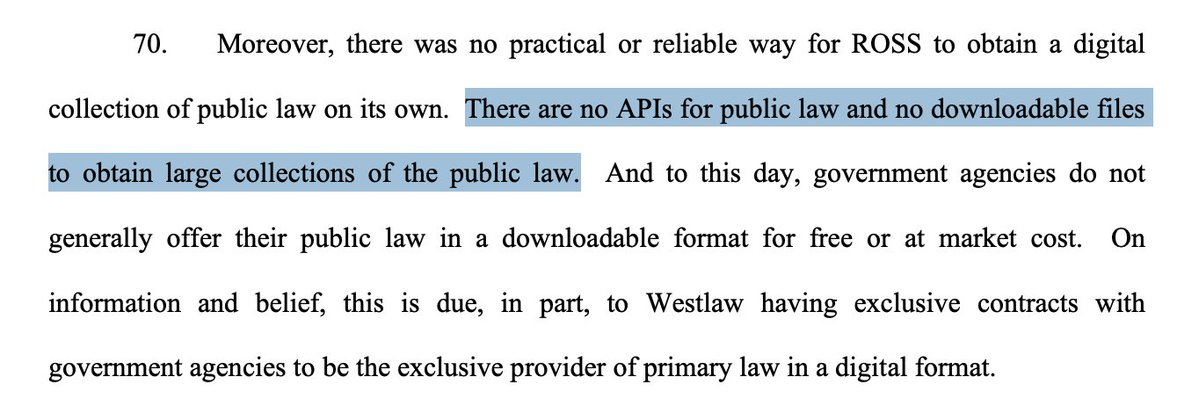
@ROSSIntel Check out the lawsuits against @upcodes for putting the building codes online as an API
English

@PalantirTech Thank you for your attention to this matter
English

Spot on overall, but point 13 needs a sharper edit. The phrase “progressive values” clashes with the rest of the manifesto’s clarity.
Just days ago at UT Austin (commemorating the 250th anniversary of the Declaration), Justice Clarence Thomas delivered a powerful warning:
> “Progressivism seeks to replace the basic premises of the Declaration of Independence and hence, our form of government. It holds that our rights and our dignities come not from God, but from government. It requires of the people a subservience and weakness incompatible with a constitution premised on the transcendent origin of our rights.”
The Founders got it right the first time: rights are **unalienable** and **endowed by our Creator**, not granted or redefined by the state.
Better wording for #13:
“No other country in the history of the world has done more to advance the principles of liberty, equality under the law, and opportunity for the non-hereditary classes—rights that are inalienable and endowed by our Creator, not granted by government. The United States is far from perfect. But it has delivered far greater social mobility and freedom to ordinary citizens than any other nation on the planet.”
Keeps the celebration of American exceptionalism while grounding it in the actual Founding vision instead of a contested modern label. Stronger that way. 🇺🇸
English

Because we get asked a lot.
The Technological Republic, in brief.
1. Silicon Valley owes a moral debt to the country that made its rise possible. The engineering elite of Silicon Valley has an affirmative obligation to participate in the defense of the nation.
2. We must rebel against the tyranny of the apps. Is the iPhone our greatest creative if not crowning achievement as a civilization? The object has changed our lives, but it may also now be limiting and constraining our sense of the possible.
3. Free email is not enough. The decadence of a culture or civilization, and indeed its ruling class, will be forgiven only if that culture is capable of delivering economic growth and security for the public.
4. The limits of soft power, of soaring rhetoric alone, have been exposed. The ability of free and democratic societies to prevail requires something more than moral appeal. It requires hard power, and hard power in this century will be built on software.
5. The question is not whether A.I. weapons will be built; it is who will build them and for what purpose. Our adversaries will not pause to indulge in theatrical debates about the merits of developing technologies with critical military and national security applications. They will proceed.
6. National service should be a universal duty. We should, as a society, seriously consider moving away from an all-volunteer force and only fight the next war if everyone shares in the risk and the cost.
7. If a U.S. Marine asks for a better rifle, we should build it; and the same goes for software. We should as a country be capable of continuing a debate about the appropriateness of military action abroad while remaining unflinching in our commitment to those we have asked to step into harm’s way.
8. Public servants need not be our priests. Any business that compensated its employees in the way that the federal government compensates public servants would struggle to survive.
9. We should show far more grace towards those who have subjected themselves to public life. The eradication of any space for forgiveness—a jettisoning of any tolerance for the complexities and contradictions of the human psyche—may leave us with a cast of characters at the helm we will grow to regret.
10. The psychologization of modern politics is leading us astray. Those who look to the political arena to nourish their soul and sense of self, who rely too heavily on their internal life finding expression in people they may never meet, will be left disappointed.
11. Our society has grown too eager to hasten, and is often gleeful at, the demise of its enemies. The vanquishing of an opponent is a moment to pause, not rejoice.
12. The atomic age is ending. One age of deterrence, the atomic age, is ending, and a new era of deterrence built on A.I. is set to begin.
13. No other country in the history of the world has advanced progressive values more than this one. The United States is far from perfect. But it is easy to forget how much more opportunity exists in this country for those who are not hereditary elites than in any other nation on the planet.
14. American power has made possible an extraordinarily long peace. Too many have forgotten or perhaps take for granted that nearly a century of some version of peace has prevailed in the world without a great power military conflict. At least three generations — billions of people and their children and now grandchildren — have never known a world war.
15. The postwar neutering of Germany and Japan must be undone. The defanging of Germany was an overcorrection for which Europe is now paying a heavy price. A similar and highly theatrical commitment to Japanese pacifism will, if maintained, also threaten to shift the balance of power in Asia.
16. We should applaud those who attempt to build where the market has failed to act. The culture almost snickers at Musk’s interest in grand narrative, as if billionaires ought to simply stay in their lane of enriching themselves . . . . Any curiosity or genuine interest in the value of what he has created is essentially dismissed, or perhaps lurks from beneath a thinly veiled scorn.
17. Silicon Valley must play a role in addressing violent crime. Many politicians across the United States have essentially shrugged when it comes to violent crime, abandoning any serious efforts to address the problem or take on any risk with their constituencies or donors in coming up with solutions and experiments in what should be a desperate bid to save lives.
18. The ruthless exposure of the private lives of public figures drives far too much talent away from government service. The public arena—and the shallow and petty assaults against those who dare to do something other than enrich themselves—has become so unforgiving that the republic is left with a significant roster of ineffectual, empty vessels whose ambition one would forgive if there were any genuine belief structure lurking within.
19. The caution in public life that we unwittingly encourage is corrosive. Those who say nothing wrong often say nothing much at all.
20. The pervasive intolerance of religious belief in certain circles must be resisted. The elite’s intolerance of religious belief is perhaps one of the most telling signs that its political project constitutes a less open intellectual movement than many within it would claim.
21. Some cultures have produced vital advances; others remain dysfunctional and regressive. All cultures are now equal. Criticism and value judgments are forbidden. Yet this new dogma glosses over the fact that certain cultures and indeed subcultures . . . have produced wonders. Others have proven middling, and worse, regressive and harmful.
22. We must resist the shallow temptation of a vacant and hollow pluralism. We, in America and more broadly the West, have for the past half century resisted defining national cultures in the name of inclusivity. But inclusion into what?
Excerpts from the #1 New York Times Bestseller The Technological Republic: Hard Power, Soft Belief, and the Future of the West, by Alexander C. Karp & Nicholas W. Zamiska
techrepublicbook.com
English

@techhalla @runwayml What’s your prompt for the song?!
English

@runwayml You can find this version and tons of crazy AI covers on my Youtube Channel Radio Mandanga
youtu.be/UaEzAtBDTrE

YouTube
English

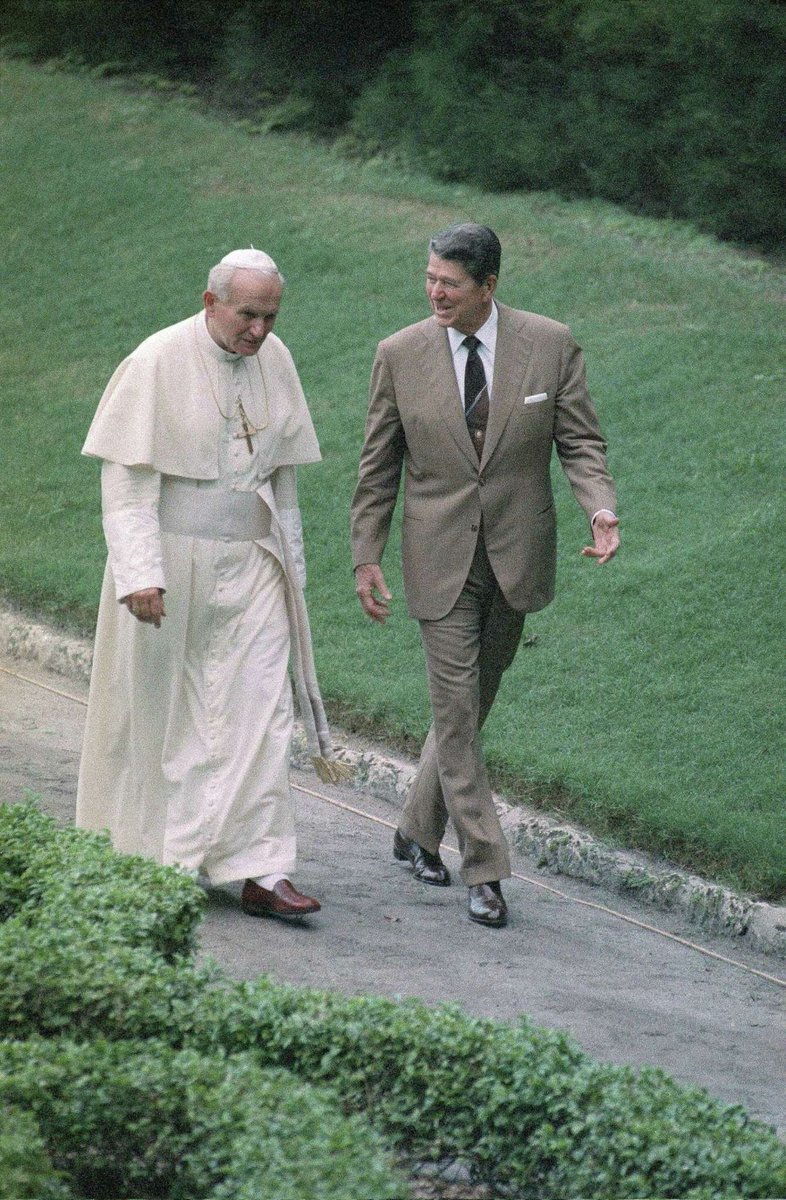
@_iamblakeley @Selkis_2028 Best diplomat in a generation
English
Fartcoin Maximalist रीट्वीट किया

Figure out your state’s data policy for newborn blood tests. The hospital will not pseudonymize your baby’s data by default but you can if you’re smart about how you fill out the form. Otherwise, your give away your child’s DNA data to the government and beyond. People don’t think about this risk.
English

@HusKerrs Hire two night nurses. Get 7 days per week of coverage.
English

@HusKerrs Hire a night nurse so you can sleep. Your wife will not sleep but you can, and, if you have the money, it’s worth it. You can be a sleepless hero later. Immediately post birth is not when to burn your sleep reserve.
English

@helloparalegal Operating agreements aren’t public. AI SLOP
English

A friend of mine from Harvard Law set up his own firm last year. Solo practice. No associates. No paralegals. Working out of a co-working space with a laptop and a coffee habit.
Last month a mid-size business owner reached out looking for outside counsel. Three firms were being considered. Two of them were 15-attorney shops. The kind with pitch decks, associate teams, and glass-walled conference rooms that smell like fresh carpet and overbilling.
My friend was a one-person firm with a WeWork membership.
He almost canceled. He thought there was no way he could compete with that.
I told him to try one thing before he walked away. Open Claude Code. Give it the owner's name, the company name, and 45 minutes. Ask it to build a complete intelligence report using only publicly available data.
He did not think it would work. He tried it anyway.
Claude came back with a 13-page report.
He read it over coffee. Took 28 minutes. By the time the Zoom started, this solo attorney knew things about the prospect's company that the owner's own in-house team probably had not assembled in one place.
The company was incorporated in Delaware but registered as a foreign entity in Texas 14 months later. That is expansion. A second member was added to the LLC in 2024. Claude pulled the operating agreement implications from the state filing and flagged what a new member meant for governance, profit distribution, and decision-making authority.
Three active trademark applications filed in the last six months. Two were in a product category the company had never publicly announced. Nobody on the website knew about it. The trademark filings did.
PACER hit. The company had been named as a defendant in a vendor dispute 18 months ago. It settled. But the complaint was public and Claude read every page of it. The core issue was a supply agreement with no termination clause. My friend now knew this company had been burned by a bad contract. They would care deeply about airtight vendor agreements going forward. He did not have to guess. It was in the filing.
State court records. The owner had a dissolved LLC from 2019 with a different partner. A business divorce. Which meant this owner would value clear partnership terms and buy-sell provisions this time around. People who have been through a bad breakup want a prenup for the next one. Same principle.
Hiring activity. Four job listings posted in 60 days. Head of compliance. Operations manager. Two warehouse roles. They were scaling fast and hiring operational infrastructure. That is exactly when companies need outside counsel the most and know it the least. They think they need a lawyer when they get sued. They actually need a lawyer when they start hiring a Head of Compliance.
Glassdoor. 11 reviews. Every positive one mentioned culture. Every negative one mentioned the same thing. "No HR. No handbook. No process." A company growing faster than its internal policies. An employment claim waiting to happen. And a business owner who probably had no idea what his own employees were writing about him.
Google reviews. 4.3 stars. But Claude flagged a pattern in the 1-stars. Three different customers mentioned the same issue. Product delivered late with no communication. The biggest operational liability was not product quality. It was fulfillment. That is a breach of warranty problem, a customer retention problem, and a potential class issue if the pattern scales with the company.
Then there was a section Claude titled "Founder Mindset." It pulled a transcript from a podcast the owner appeared on and analyzed his communication patterns. One quote stood out. He said "I have spent more on lawyers fixing problems than I ever spent on lawyers preventing them."
That one sentence told my friend exactly how to position his entire practice. Not as a litigator. Not as a fixer. As the lawyer who prevents the problems in the first place. The pitch wrote itself.
Claude also analyzed the owner's communication style across LinkedIn posts, podcast answers, and X replies. Based on patterns it flagged what mattered for the meeting: this person values substance over rapport. He distrusts anything that feels like a pitch. Lead with what you know. Skip the small talk. Show your work before you ask for the engagement.
My friend adjusted his entire approach based on that analysis.
The Zoom started. No pleasantries. No "let me tell you about my firm" warmup. The owner gave his overview. What the company does. Where they are heading. What they need.
Then my friend said "I noticed you filed two trademarks in a new product category last quarter. Is that the line you are launching in Q3?"
Silence.
"How do you know about that?"
A solo lawyer working from a coworking space just earned more credibility in one sentence than the 15-attorney firm earned in their entire pitch deck.
He walked the owner through everything. The vendor dispute and what it meant for future contracts. The hiring pattern and the compliance risk it signaled. The Glassdoor reviews pointing to an HR exposure. The fulfillment complaints that were one bad quarter away from becoming a warranty liability.
He did not pitch his services. He showed the owner his own blind spots using the owner's own public data. Then he said which ones he would fix first and why.
The owner said "the other firms sent me a brochure. You just showed me you already understand my business better than they do."
He hired my friend that week. A solo practitioner over two 15-attorney firms.
No associate team. No paralegal pulling research. No marketing department. One Harvard Law grad with Claude Code, a 13-page report, and 28 minutes of preparation that the other firms did not think to do.
This is what I keep telling solo lawyers and most of them do not believe me until they see it.
The advantage is not firm size. It is not headcount. It is not a fancy office or a partner track or a receptionist who offers sparkling water.
The advantage is showing up knowing things the prospect did not expect you to know. That is what wins the engagement. Every time.
And right now it is easier than it has ever been. Because almost everything about a business is public. It is just scattered across 15 different sources that no lawyer checks before a pitch meeting. Claude checks all of them in one run and hands you a report you can read before your coffee gets cold.
Secretary of State filings. Incorporation, officers, registered agents, foreign qualifications.
PACER and state court dockets. Every lawsuit, motion, and settlement.
USPTO. Trademark filings tell you where a company is going before they announce it.
LinkedIn job postings. What a company is hiring for reveals what is broken inside.
Glassdoor. What employees say when nobody from management is reading.
Google reviews. The 1-star reviews are where the legal risks hide.
Podcast transcripts. The founder's own words analyzed for how they think and decide.
UCC filings. Who they owe money to. What assets are pledged.
Property records. Leases, liens, ownership structures.
Communication pattern analysis. How this specific person talks, processes information, and makes decisions. So you know exactly how to show up.
All public. All free. One report. Under 30 minutes to read.
The solo lawyer who builds this into their pre-meeting workflow will win clients over firms 10 times their size. Not once. Every time. Because nobody expects a solo to show up that prepared.
And that gap between what they expect and what you deliver is the most valuable asset in your practice.
My friend is a Harvard Law grad. He has no team. He works from a coworking space. He is winning over 15-attorney firms because he spends 45 minutes doing what they never bother to do.
The playing field was never about resources.
It was about preparation.
And preparation just got automated.
English
Fartcoin Maximalist रीट्वीट किया

@NickSzabo4 Visit Israel. Meet the people, so you actually understand. Try to visit Iran. One of these places is more freedom-loving and Liberal. Middle East is a rough neighborhood.
English

I, too, favor an alliance between the United States and Iran to (a) check the ambitions of the terrorist nuclear power Israel, and (b) retain United States influence on the global stage, which we are rapidly losing by siding with Israel.
Scott McConnell@ScottMcConnell9
Israel doesn't like the cease-fire, big surprise. I'm literally in favor of a US Iranian alliance for a Palestinian state on the West Bank and Gaza.
English

@DrewPavlou This arrest itself should be considered a war crime.
English

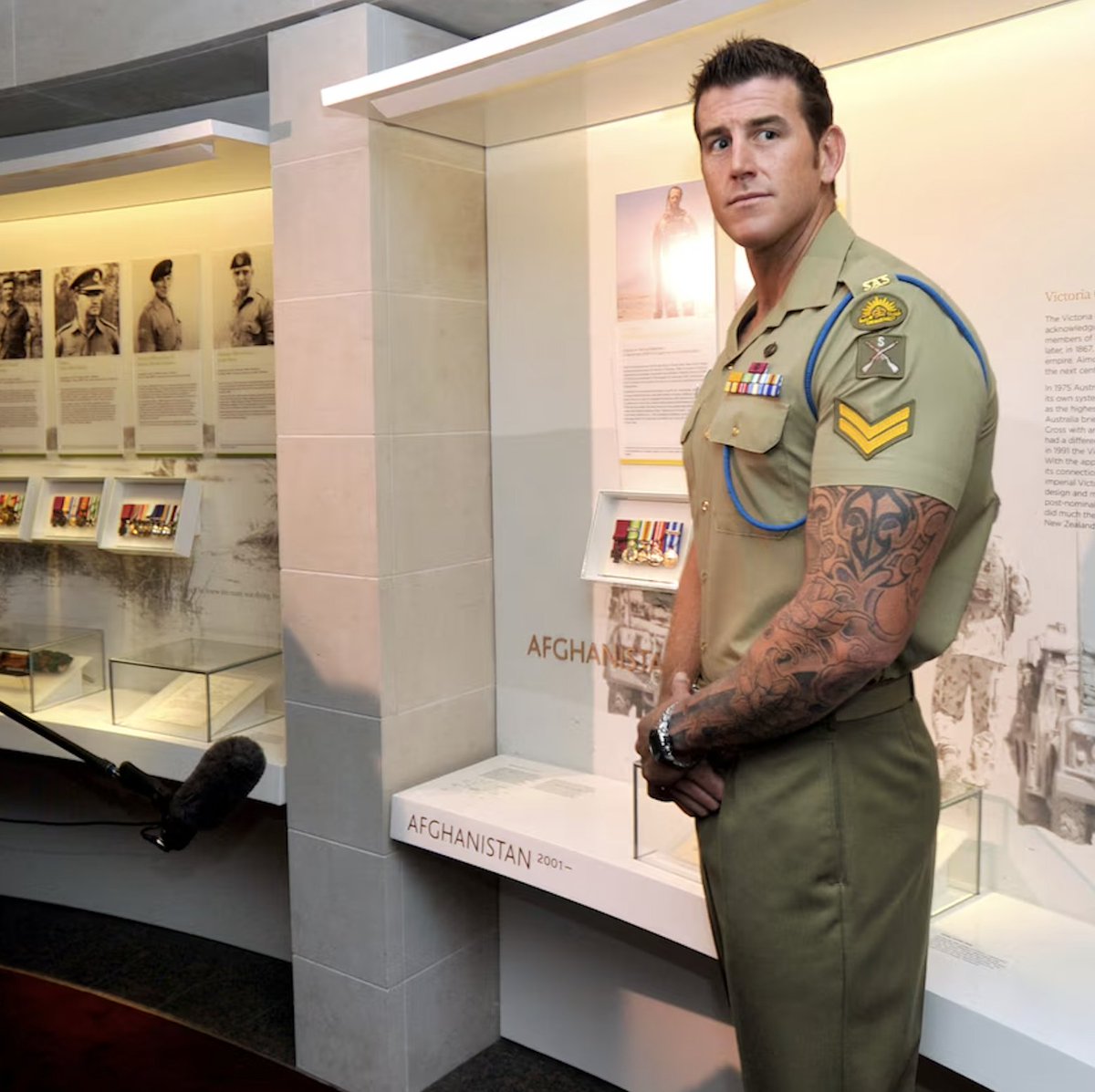
The Australian government just arrested our most decorated veteran from the Afghanistan War for alleged war crimes.
Ben Roberts-Smith was awarded the Victoria Cross for Australia after singlehandedly storming two Taliban machine gun positions by himself in order to save his own SAS team.
And this is how we repay him.
I spoke to an Australian Afghan war veteran who told me that the Australian government literally paid for billboards in Afghanistan offering to pay random Afghans to come forward with war crime allegations. What country on Earth would do this to itself?
Tell me: When does the Taliban plan on holding war crimes tribunals into their own people? When do the Taliban plan on holding themselves accountable for terrorism?
Absolutely retarded to purge your own men when fighting a brutal barbaric enemy that respects no rules whatsoever.
We are a cucked nation.
Free Ben Roberts-Smith.

English

@jakestein Let me know where to send the invoice. Thank you.
English

This isn’t a contract! The Obligator/Promisor didn’t sign it. No contract formed within the four corners of this document. Maybe there was a verbal deal that Fred witnessed, but that verbal contract may be subject to a statute of frauds defense if Feb 1, 1966 is more than one year from the date of the verbal agreement. Further, the failure to collect makes the amount subject to a Latches defense. Additionally, in 1966, it is quite possible that a court would interpret any promise to pay between a father and son as gratuitous, given the familial relationship. And was the alleged Promisor older than age 18? Lots to say from a contracts perspective but not that this is a contract.
English

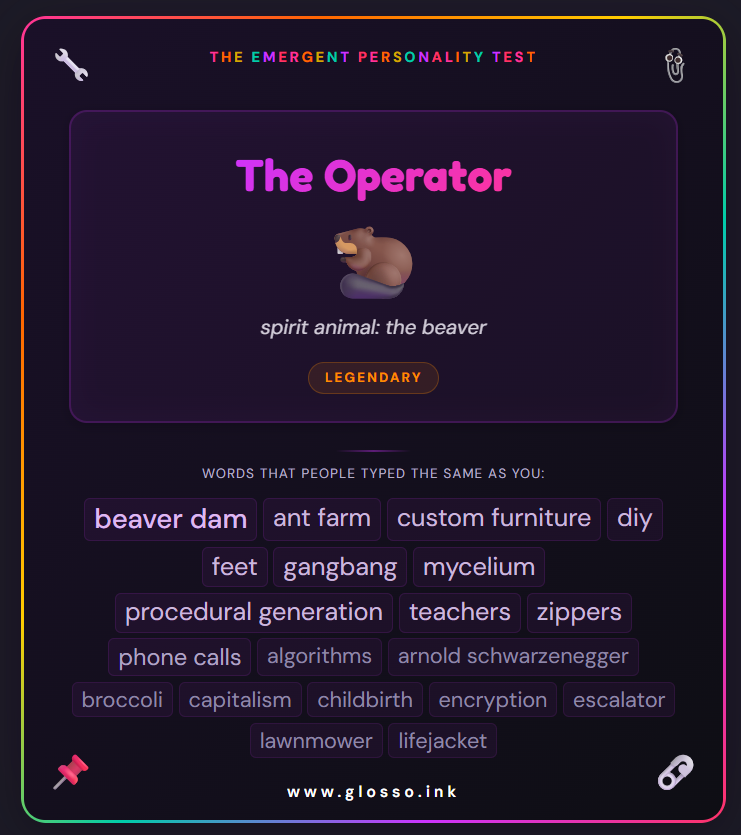
I think i invented the best personality test. Hear me out:
1. Take the word "gargoyle". If you HAD to class them, would gargoyles be more kinky or vanilla? What about more chad or frumpy? Are they more chiller or builder?
I had people vote a series of 6 binary questions for every word I could think of, and then ended up with a huge pile of correlated words. Like: If you look at the KINKY, CHAD, CHILL category, you get a bunch of the words that got voted into that same concept.
So - what about *you*? Vote *yourself* through the gates, and you'll find yourself landed in a pile of all the other words that got voted the same as you!
That's how I got 'the operator'.

English