the quaking mess

7.4K posts

the quaking mess banner
the quaking mess

the quaking mess

@ThisOneQuestion

not one, not two problems; empirical dadaist; discursive footnote

this then that, nyc शामिल हुए Mart 2015
817 फ़ॉलोइंग216 फ़ॉलोवर्स
पिन किया गया ट्वीट
the quaking mess
the quaking mess@ThisOneQuestion·
@petcrierbonanza the end of alienation will be genuinely frightening, like a trust fall but into the arms of purpose and meaning.
English
2
12
38
0
the quaking mess रीट्वीट किया
the heart
the heart@Fredward3948576·
A beetle, unaware of how deep in karmic debt it is, begins its journey across a highway. At this moment, an Amazon Prime truck driver hurtles down the road, distracted as he hastily situates his company-mandated catheter.
English
12
306
4K
51.4K
Sauers
Sauers@Sauers_·
Let me say this clearly: airplanes cannot fly. Flight is an evolutionary mechanism. It pushes birds to escape predators or reach distant food sources. Birds fly because they are alive, and they want to stay alive. Airplanes are not alive. Yes, aerodynamic principles may be instantiated somewhere in the airplane. Yes, they may even be associated with some airplane motion. But that is just a superficial property. There is nothing deeper behind it. For a very simple reason: airplanes do not have an intrinsic and inescapable drive to stay alive.
Valerio Capraro@ValerioCapraro

Let me say this clearly: LLMs cannot feel emotions. Emotions are evolutionary mechanisms. They push us to avoid danger or approach what is beneficial. We experience emotions because we are alive, and we want to stay alive. LLMs are not alive. Yes, emotional language may be encoded somewhere in the LLM. Yes, it may even be associated with some LLM output. But that is just a superficial property. There is nothing deeper behind it. For a very simple reason: LLMs do not have an intrinsic and inescapable drive to stay alive. This is what we call “motivation fault line” in our paper describing seven fault lines between human and artificial intelligence. * Paper in the first reply

English
60
38
446
17.2K
the quaking mess
the quaking mess@ThisOneQuestion·
@SweatieAngle Make A Democratic Party Apologist Declare Political Nihilism Is The New Reasonable, Again
English
0
0
1
97
🔎Al🔍
🔎Al🔍@SweatieAngle·
Frankly policing YouTube essayist opinions always seems like a more of an idle pastime than productive exercise to me and I try to avoid it- but this strikes me as a willful misunderstanding of how negotiation works. You ask for the moon and the moderate gains are the compromise
WOR$T JOSHIPGIRL IN AOTEAROA@joshipgiirl

Natalie thinks the left wants too much, and that they think she has a courage problem. Personally I would diagnose it as her having an optimism problem that prevents her from strongly advocating for bigger change, because she doesn't believe it can ever happen.

English
25
34
905
26.6K
Policy Tensor
Policy Tensor@policytensor·
Is he even paying attention? Both the empire and the republic are collapsing. This is not the time for the old hopium. You’re a decent man. But you had your chance and you blew it. Perhaps you were too busy with the kill-list every Tuesday.
Barack Obama@BarackObama

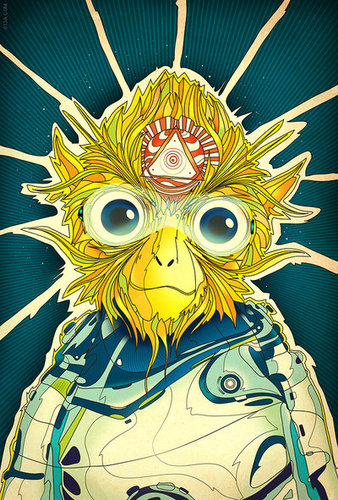
Hope isn’t blind optimism — it arises in the face of uncertainty. If you look at our history, we’ve gone through some rough patches. But we tend to come out on the other side of them stronger than before.

English
19
26
239
9.8K
the quaking mess
the quaking mess@ThisOneQuestion·
me: most of my metaphysical struggles with material reality revolve around laundry. and money. Karl Marx: loll keep going Buddha: *spitting out his tea* it’s called a fortunate birth, KARL lmao
English
0
0
0
16
the quaking mess
the quaking mess@ThisOneQuestion·
art is easy. just say more than what can be said
English
0
0
1
12
the quaking mess रीट्वीट किया
Synekura Audio
Synekura Audio@synekura_audio·
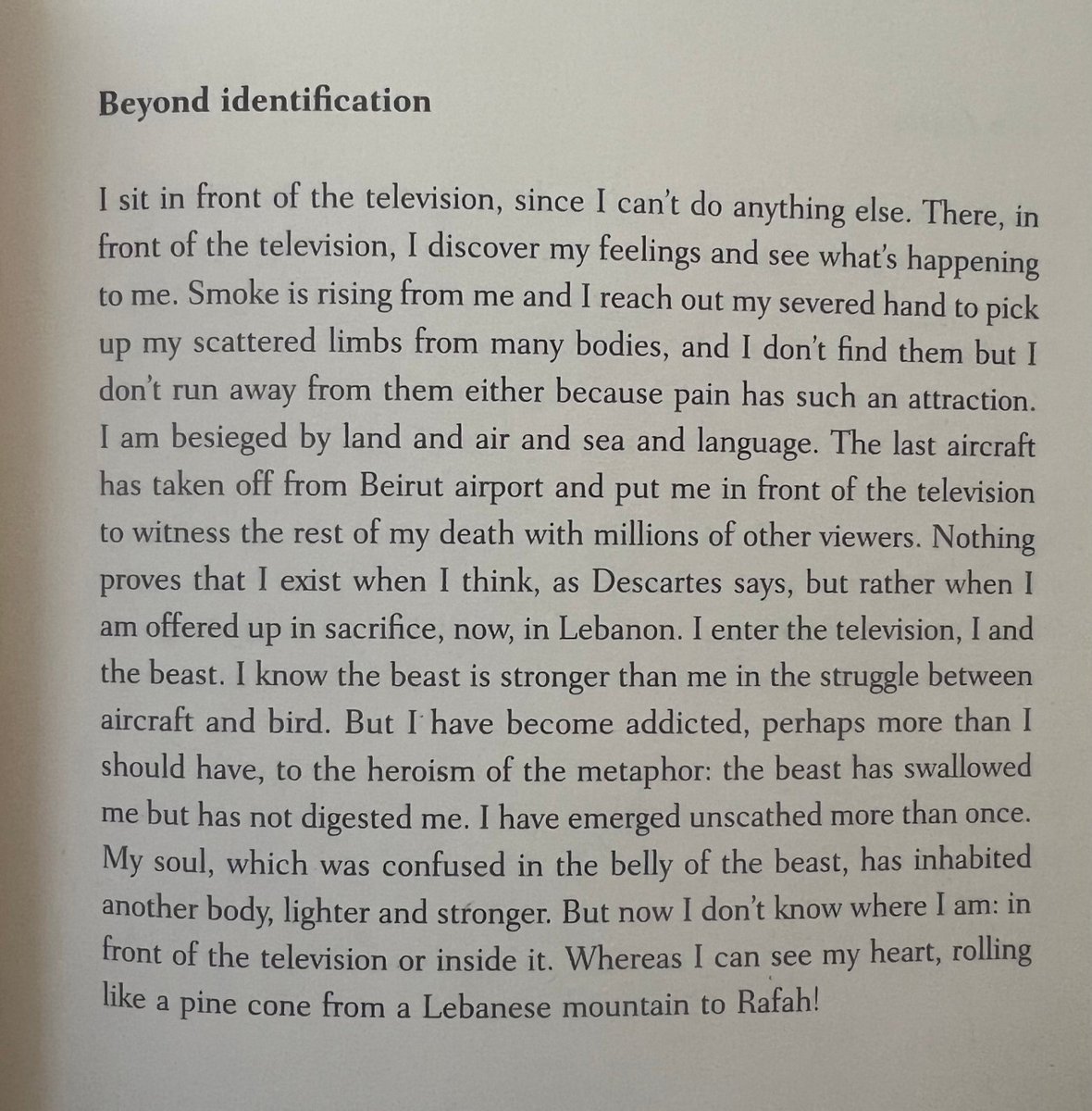
Mahmoud Darwish
Synekura Audio tweet media
CY
1
16
96
3.2K
the quaking mess
the quaking mess@ThisOneQuestion·
@algekalipso conflating attention with consciousness so the processes supporting attention become ‘not consciousness.’ or the abstraction of parts; living bodies don’t have parts. so the question itself feels confused to me because we end up only looking for our keys under the street lights.
English
0
0
0
12
the quaking mess
the quaking mess@ThisOneQuestion·
@algekalipso ok I think I agree that the question’s confusion gets lost in artifacts of analysis that are hard to discern across multiple frames, such as: reifying hierarchical relations that arise contingently into ‘consciousness must always be centralized to a location’ or
English
1
0
1
24
Captain Pleasure, Andrés Gómez Emilsson
Why So Few People See the Binding Problem There's a question I find myself returning to: why do so many otherwise-intelligent people, when confronted with the binding problem, simply fail to see it as a problem? You describe the core puzzle (how disparate neural events become a single unified experience, what holds "this moment of consciousness" together as one thing rather than many), and a substantial fraction of listeners just round it off. "It's the pattern of activation." "It's information integration." "It's just what the atoms do when arranged that way." These aren't bad answers so much as non-answers, responses that replace the question with a different question the person already knows how to handle. I want to suggest that the base rate of grokking the binding problem is low not because the problem is subtle (it isn't, once you see it) but because seeing it requires a specific cognitive capacity that most people haven't trained. The capacity is holding multiple frames on the same object simultaneously without letting either frame collapse into the other. Whole and part at the same time. Identity and difference at the same time. Integration and disintegration at the same time. The Huayan tradition called these the six characteristics and treated their cultivation as an explicit practice across bodhisattva stages, which tells you something about how non-default the capacity is. You don't acquire it by being smart. You acquire it by doing work that specifically trains it. Phenomenology, done seriously, is one of the things that trains it. When you sit with an experience and try to describe what's actually there, you quickly run into the fact that every honest description requires holding multiple frames without collapse. The experience is one (integration) and has parts (disintegration). The parts are themselves (identity) and are constituted by their relations to the whole (difference). You are the experiencer (whole) and you are also each of the components being experienced (part). If you let any frame win, the description goes false. The practice of phenomenology is, in large part, the practice of not letting any frame win. This takes time. I don't mean weeks. I mean years of consistent attention to what experience is actually like, with the specific intention of not collapsing the description into whichever frame is most convenient. People who have done this work (contemplatives, some phenomenologists in the Husserl-to-Merleau-Ponty lineage, some artists working from direct perception, some psychedelic explorers who took the reports seriously) develop the capacity. People who haven't, don't, no matter how intelligent they are. What happens when someone without the trained capacity encounters the binding problem is predictable. Their cognition resolves the tension by picking a frame. If they pick the parts frame, they say "it's just neurons firing" and experience the binding question as confused. If they pick the whole frame, they say "it's the integrated pattern" and experience the binding question as already answered. Neither response is engaging with what the binding problem asks. Both responses feel, from inside, like clear thinking. This is the key point: single-frame cognition doesn't feel like a limitation from inside. It feels like clarity. The multi-frame cognition that the binding problem requires feels, from inside single-frame cognition, like confusion or overcomplication. Cont. (Co-written with Claude after discussing Avatamsaka sutra in light of atomistic theories)
Costa Rica 🇨🇷 English
34
12
141
11.1K
the quaking mess रीट्वीट किया
trailcam
trailcam@Trail_Cams·
ZXX
6
365
2.6K
76.9K
☯️ MOON FIRE 🌖🔥
how do you say "actually I'm under no obligation to accept your frame" in normie?
English
96
14
1.2K
97.5K
the quaking mess रीट्वीट किया
Isidro Li
Isidro Li@isidro_li·
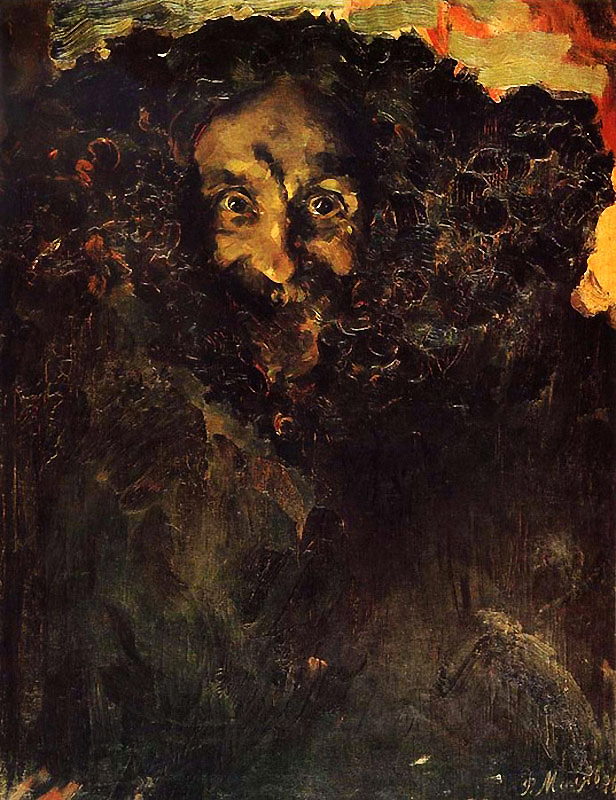
Filipp Malyavin, 𝘗𝘰𝘳𝘵𝘳𝘢𝘪𝘵 𝘰𝘧 𝘵𝘩𝘦 𝘴𝘤𝘶𝘭𝘱𝘵𝘰𝘳 𝘝𝘭𝘢𝘥𝘪𝘮𝘪𝘳 𝘉𝘦𝘬𝘭𝘦𝘮𝘪𝘴𝘩𝘦𝘷, date unknown.
Isidro Li tweet media
English
0
2
9
291
the quaking mess
the quaking mess@ThisOneQuestion·
is this how the algo sees me? second question: what stage of capitalism is this? third: LARPing an apocalypse to displace guilt over the ones currently underway?
the quaking mess tweet media
English
0
0
0
16
brian
brian@brianonhere·
Green onion has been moving up up up my power rankings lately. Comfortably top 3 at this point. Generational talent, a really special player
brian tweet media
English
8
16
351
6.6K
the quaking mess
the quaking mess@ThisOneQuestion·
@LapsusLima perhaps ol’B even misread Plato through Christianity’s lens
English
0
0
3
845
Peacock Angel of History
People read “simulation” and think Baudrillard, but the Church has its own vocabulary for these concerns, and has been pondering idolatry, illusion, mediation, false likeness, crowd passions, hardened hearts, and estrangement from reality for two millennia. One could even say that Baudrillard is, partly, a late secular dramatisation of problems long identified by Christian anthropology.
Pope Leo XIV@Pontifex

When simulation becomes the norm, it weakens the human capacity for discernment. As a result, our social bonds close in upon themselves, forming self-referential circuits that no longer expose us to reality. We thus come to live within bubbles, impermeable to one another. Feeling threatened by anyone who is different, we grow unaccustomed to encounter and dialogue. In this way, polarization, conflict, fear and violence spread. What is at stake is not merely the risk of error, but a transformation in our very relationship with truth.

English
30
250
2.7K
124.4K