

Arch+Morality
4.5K posts
Arch+Morality
@archmorality
Architect living in Texas
Dallas, Texas शामिल हुए Aralık 2008
406 फ़ॉलोइंग254 फ़ॉलोवर्स


English

The Dallas City Hall may be torn down and replaced with a sports arena and entertainment district.
Good. I used to work in this building. The brutalist architecture and horrific, anti-human urban design surrounding it sucks the life out of a huge swath of downtown.
I don't care what famous architect designed it. It's a bad building set within a bad plaza. Tear it down for something that actually contributes to the City.

English
English



@archmorality @CompletedStreet @PaulSkallas better, tho still way too much concrete, lack of shade trees, and meaningful vegetation. Sooooo hot. #radiantHeat
English


@CompletedStreet @PaulSkallas If you design a building that garners no affection from the everyday public, you will ensure its eventual destruction.
English
@MichaelAArouet If that’s the case we can expect an invasion of wealthy American retirees buying cheap European real estate.
English

German population pyramid: There are twice as many people in their 60s as children born today. Grandparents won’t have enough grandchildren to inherit and use their properties.
One must be crazy to invest in residential property in Germany. The same in Spain, Italy and Poland.

English

Why the hell would you still travel to Europe when it’s no longer even European?
Just look at these foreign-born population percentages:
London: Over 40%
Paris: ~35-40%
Barcelona: 35.4% born abroad
Berlin: ~25% foreigners + over 40% with migrant background
These are no longer “European cities.
They’ve become third-world colonies.
English
@BRyvkin While he did a pretty good job, it felt like he was keeping the seat warm for Pierce Brosnan.
English

He should have reprised the role in a couple of more films. He was a couple of decades ahead of his time in what he wanted to do with the character. The studio and producers weren’t ready. Screen audiences weren’t ready.
SpyHards - A Spy Movie Podcast@SpyHards
On this day in 1994, Timothy Dalton announced he would be stepping down from the role of James Bond. A brief time as 007, but an undeniable impact 🍸
English
@SydSteyerhart Eurosocialism that doesn’t believe in ethnic nationalism will always conclude to this end state.
English

Is France any different? Is Spain any different? Is the UK any different? The civilizations built by our ancestors have been overrun. We are denied a history, a homeland, and we have nowhere we can escape to.
Radical Living@RadicalFalk
I'm leaving Germany | Brutally Honest Review
English
@BenRothenberg @BastienFachan Is the roller coaster Cincinnati? Makes sense since there’s an amusement park next door.
English

🥕🇮🇹Jannik Sinner career Slams, Masters, WTFs🇮🇹🥕
🐨—🏆 🏆
🌴—🏆
🐬—🏆 🏆
🎲—🏆
🐂—…
🍝—…
🐌—…
🍓—🏆
🍁—🏆
🎢—🏆
🗽—🏆
🍜—🏆
🎪—🏆
🎱—🏆 🏆
Nederlands
@BastienFachan It’s an incredible achievement! Now if there were a Masters 1000 on grass…
English

JANNIK SINNER: FOUR MASTERS 1000 IN A ROW!
🏆 PARIS
🏆 INDIAN WELLS
🏆 MIAMI
🏆 MONTE-CARLO
He ties Djokovic and Nadal and will go for the outright record of FIVE in Madrid!
English
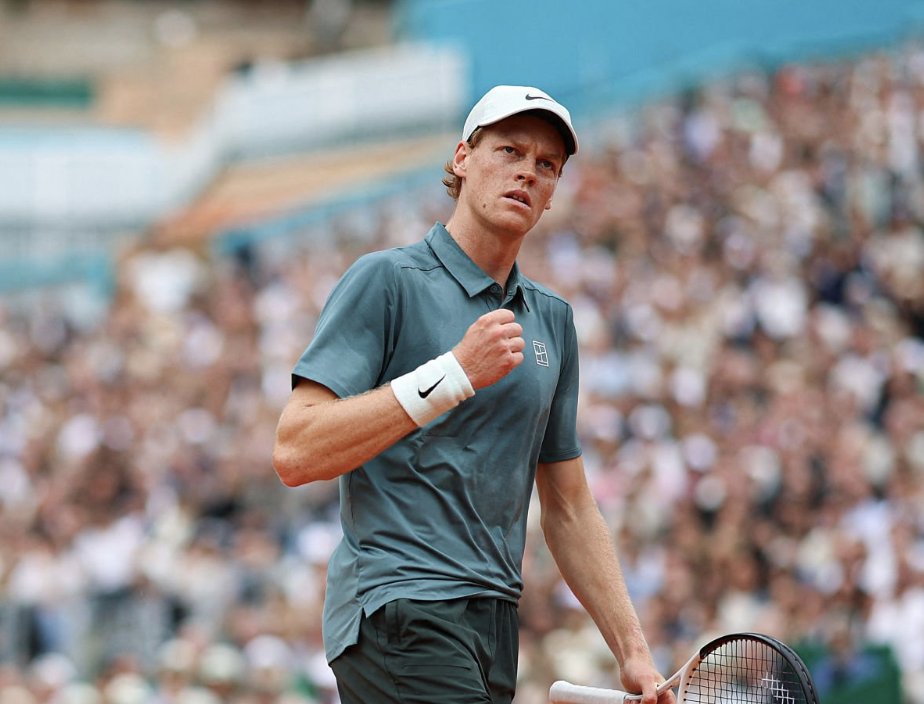
@josemorgado Sinner continues to upgrade his game like no other player on tour. Who else has learned to dominate on all surfaces in such a systematic way?
English

Pretty good summary of all the challenges facing conscientious and industrious people in Germany. His experience could apply to all other countries with generous welfare states and pro-migrant policies.
Radical Living@RadicalFalk
I'm leaving Germany | Brutally Honest Review
English
The thing I struggle with regarding the European far-right is their lack of a sustainable economic strategy. They focus a lot on immigration and give little reason to why their country is worth investing in.
Erick Erickson@EWErickson
It would be a good thing for Western conservatism is Orban loses in Hungary.
English
@rawmilkhoney That’s what I learned after my marriage owning and managing my own home. Tasks such as cooking, cleaning and taking care of the kids turned out to be relatively easy and less stressful compared to my office job.
English

This. Men don’t understand a woman’s faux mental load because when they have a task to do they JUST DO IT. It’s so simple yet for women you’d think they’re fighting in war
Suviya@Suviyafawn
"Mental Load" is imaginary. Men don't "get it," because when they have a task to do, they just do it... They don't start contemplating it weeks in advance and divide it into as many tiny details as possible, making it more 1000x's more complicated than it needs to be...
English

"When the boomers die off" will soon become "when the Gen Xers die off"
And then when that finally happens, the year is 2060. America is 37% White, and we don't have a single generation that votes right-wing. Presidents Newsom, AOC, and some random troon have all come and gone.
Congratulations, you played yourself.
Truth is, these people are simply out of touch and don't understand politics. There is a reason why the likes of Mark Levin and Lindsay Graham have stayed in Trump's good graces, while people like Tucker and MTG have not.
They did the work, they put in the hours--sure, they're neocons who don't have very many fans under the age of 45, but they didn't lose the plot completely with insane schizophrenia and TDS/IDS to the point where Trump is repulsed by them. Focus on what matters, this is a serious business!
Shawn@ShawnOnTheRight
I give up. I will come back to help solve this problem when the boomers die off. I fear nothing. Christ is King.
English