Sabitlenmiş Tweet
Mark R. Brown, AICP, CNU
5.6K posts

Mark R. Brown, AICP, CNU
@CompletedStreet
City Planner. Complete Streets Designer. Multimodal commuter. My book, Human Speed, now available on Amazon. https://t.co/5StkUBNS7R

Miami Katılım Ekim 2010
2.1K Takip Edilen13.6K Takipçiler

A mathematician at Bell Labs noticed that the scientists who won Nobel Prizes and the ones who never amounted to anything were equally smart, equally hardworking, and equally credentialed, and the only thing that separated them was a single question almost nobody is brave enough to ask themselves before they die.
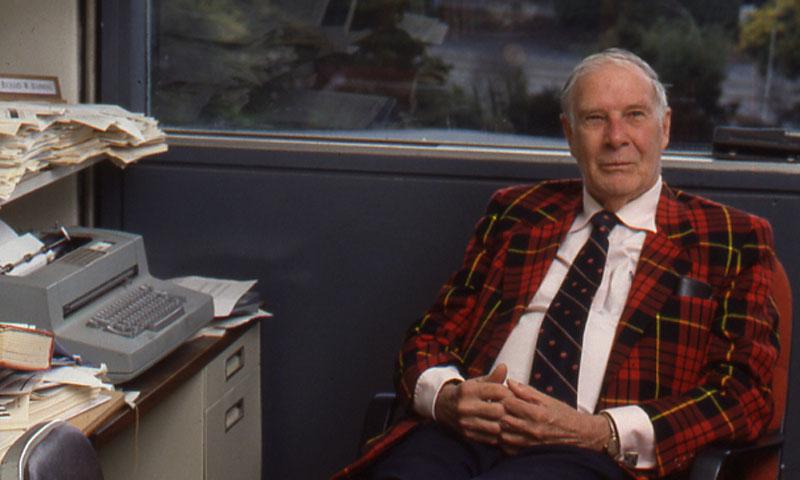
His name was Richard Hamming.
He spent 30 years at Bell Labs, in the same building as John Tukey, Walter Brattain, and a long list of physicists who took home Nobel prizes for work they did down the hall from his office, including the legendary Claude Shannon.
His invention of error-correcting codes made modern computing possible. He has won the Turing Award. And all the while he was creating his own legacy he was secretly doing a study on the people around him.
The study was straightforward. 2 Teams. The legends and the lost. Same I.Q.s. Degrees same. Same desk hours. Same access to the world’s best resources.
And yet, at the end of 40 years in their careers, one group had changed entire fields, and the other group could not be remembered by their own colleagues five years after retirement. He wanted to discover what the actual difference was.
In March 1986, he stood before 200 researchers in a Bellcore auditorium and told them what he had seen.
He said it all came down to one question. And hardly anyone he ever met was willing to ask it directly.
He called it the Friday-afternoon ritual. He spent years blocking out his Friday afternoons and not doing anything productive with them every week. No experiments. No meetings. No deliverables.
He called it Great Thoughts Time. He sat down with a notebook and asked himself a couple of questions in order. What are the most relevant problems in my discipline? And why I am not working on either of them.”
Most weeks, the answer was the same, he said. For a week now he had marched confidently in a direction he did not think was the most important direction. He was a goer. He worked a bit. He was getting clean results that would publish in respected journals. (
And for five days straight he'd been lying to himself about whether any of it mattered.
The reason almost nobody does this ritual is because the honest answer is unbearable. The thing is that if you sit down on a Friday afternoon and say out loud that you are not working on the most important problem in your field, now you have to do something about it.
You have an immediate change in direction, or you have to keep lying to yourself every week from that point on. Most people choose the lie.
In the short term it’s cheaper, but over a career it’s more expensive.
Hamming took the ritual a step further in the Bell Labs cafeteria. He began approaching scientists he barely knew, asking them what they thought the most important problems in their field were.
A week later he would ask them why they had not worked on these problems. Eventually people wouldn't have lunch with him. “I had to keep finding new tables,” he said.
Nobody had a good answer for that, and being around someone who kept asking it made every meal feel like a performance review.
The line that broke me is the line that most people skim over in the transcript. His words: If you do not work on an important problem you are unlikely to do important work.
That’s not motivational line. It is a rational one. You cannot make a great result from a problem that does not matter. Input restricts the output. The choice of the problem is the ceiling of the career.
The transcript has been freely available on the internet for almost 40 years. Stripe Press published the complete lectures as a book. Naval Ravikant quotes it all the time. It’s still given out to new hires at every serious engineering lab in Silicon Valley.
Most people will not run the ritual this Friday. They will be busy. They always are.

English

@CompletedStreet What if I told you that my local grocery store also has a produce section with produce in it?
English

@AdamSinger Do research on American food regulations vs. Europe.
English

@CompletedStreet EU farmers use them too, anyway you're way shifting the goalposts from the first tweet here
English

@AdamSinger Organic is not "pesticide-free". It uses approved pesticides when needed.
English

@AdamSinger How many pesticides does that American produce have?
English

@CompletedStreet These Tweets are so silly, the produce section is just a few aisles over, and other countries and America both have cities you can walk to a grocery store and places where you have to drive, too

English

Allowing people to live like this in a major U.S. city is appalling.
And the fact that it took a rogue, non-politician running for mayor to draw attention to it is even more appalling.
If people don't like the tone or "MAGA-adjacent" rhetoric of Pratt, they should have tackled the urban crime and homeless problem years ago so it wouldn't have become such a massive campaign issue now.
T Wolf 🌁@Twolfrecovery
The @latimes claims crime is down while failing to consider all the crime that never, ever gets reported amongst the homeless. I broke the law every single day I was living on the street. That's a fact. @spencerpratt @drdrew
English
Mark R. Brown, AICP, CNU retweetledi

@CompletedStreet correct - 15 years ago in England, local grocery stores partnered with gas stations to provide super fresh produce at the small stores. Here in 2026 in the USA, you get a crappy, soft tuna salad sandwich if you are lucky.
English

I am routinely the only woman in Sydney holding an umbrella over me when it's sunny. Even little old Asian grandmas in Burwood don't have parasols. But you know it makes sense, guys!
Jack@Jackkk
Bryan Johnson reveals why he uses an umbrella even when it’s not raining and UV levels are low “90% of physical skin aging is from the sun, so this is a UV umbrella protecting me”

English
Mark R. Brown, AICP, CNU retweetledi

@CompletedStreet Urban renewal and highway-building wiped out huge amounts of taxable land. It's a big issue in a lot of smaller cities including New London, CT.
English
Mark R. Brown, AICP, CNU retweetledi

@davidsenra @RickRubin I liked him when he was a name on album notes.
I dislike him now that he's on podcast rotations.
English

This conversation with @RickRubin is special. Here's a 2 minute preview that I’ve watched 15 times.
The episode will be out tomorrow:
English
Mark R. Brown, AICP, CNU retweetledi

Thanks to everyone who subscribed to my urbanist Substack, Car Free America. I just reached 2,000 subscribers!
If you're interested in city planning, urbanism and multimodal transportation, I hope more of you subscribe. And if you're interested in more in-depth articles and how-to planning guides, consider a paid subscription for just $55/year.
carfreeamerica.substack.com

English