
Michael Bohnert

2.1K posts

Michael Bohnert banner
Michael Bohnert

Michael Bohnert

@mbohnert

Defense Researcher / Engineer @RAND | future tech, drones, air defense, EW & Russia-Ukraine war | Husband, father, skier | Views my own. RT ≠ endorsement.

शामिल हुए Mart 2009
443 फ़ॉलोइंग1.9K फ़ॉलोवर्स
पिन किया गया ट्वीट
Michael Bohnert
Michael Bohnert@mbohnert·
Russian air defenses are showing serious, systemic problems. My analysis of what went wrong during the latest Ukrainian strikes on Moscow — including the widely shared MANPAD failure and what it reveals about training, early warning, and command issues.
Michael Bohnert@mbohnert

Now that the oil and ash have somewhat settled from this week's Ukrainian strikes on Moscow, I want to make a few updates. Earlier I had commented on the quality of Russian air defenses, there is much to unpack. What was surprising was how high some of the Ukrainian drones and missiles flew. Many were flying what appeara to be between 100 and 300 feet. At this altitude radar visibility should have been in the dozens of miles, even in a city with buildings. This leads to my first observation, many of the Russian fire units appear to be unready for the incoming drones. Many of the shots are inly after the drone has passed. Either the operators are untrained (highly likely), the command and control is poor (I have yet to hear radios in the background of fire teams shot videos), or there is next to no early warning. The lack of early warning is of particular interest. Ukraine has spent significant effort targeting Russian air defenses over the past +4 years. Russia may have lost many more radars than we realized or they are intentionally keeping them off to protect them. Very hard to tell at this time, but worth monitoring. The command and control is very hard to accurately assess remotely, but there does seem to be a lack of planning and coordination of air defenses. Numerous videos show Russia air defense teams in odd locations such as low points. Now these are near roads, so it could be a choice for mobile air defense or to make up for a lack of capacity. However, having air defense units at highr elevation would support better early warning by the local air defense if broader early warning is unavailable. It is very hard to separate poor training from poor equipment. The image I attached has become widely viewed. It shows a Russian air defender shoot a man portable air defense (MANPAD). The missile immediately veers off somewhere else. It could be operator error either with poor shot selection or general procedures. It could be faulty systems providing poor feedback. It could be older systems that can't handle saturation well and detected a larger heat source offbore (noted by @TrentTelenko) . The missile that cause the iconic fuel tank discussion was a stray missile where the intended target isn't visible. More images of these failures keep pouring in. Regardless of the reason, there is something fundamentally wrong with Russian air defense. It wasn't just Ukraine's use of overwhelming raids, good route planning, and long term preparations. We may have to wait for the next bug strikes to get more information. We probably won't have to wait long. Image source @Osinttechnical

English
3
2
13
2.6K
Michael Bohnert
Michael Bohnert@mbohnert·
@TheDeadDistrict They have an incentive to leave the bridge degraded but intact. This will enable retreats and covilians to leave.
English
1
0
8
230
Michael Bohnert
Michael Bohnert@mbohnert·
@MarioNawfal Ukraine needs an answer to these. I suspect drones similar to those used on Crimea will soon have rhe range to target airfields. Better defended and further away, they will be harder
English
0
0
0
129
Michael Bohnert
Michael Bohnert@mbohnert·
@randymot4 It is amazing it is just more of the same. Had Russia used 2024 and 2024 to actually build a reserve this would be a very different war. Luckily for Ukraine, Russia hasn't. At this point, I doubt they could spare manpower or material to do that without total mobilization.
English
0
0
1
52
Michael Bohnert
Michael Bohnert@mbohnert·
@wartranslated This footage shows just how vulnerable Russia has become. No air defenses anywhere near these targets. Barely even any small arms.
English
0
0
4
252
Michael Bohnert
Michael Bohnert@mbohnert·
@DavidSteadson Thank you. Great find. I can't do what I do without great contributions from the community.
English
0
0
0
132
Michael Bohnert
Michael Bohnert@mbohnert·
Now that the oil and ash have somewhat settled from this week's Ukrainian strikes on Moscow, I want to make a few updates. Earlier I had commented on the quality of Russian air defenses, there is much to unpack. What was surprising was how high some of the Ukrainian drones and missiles flew. Many were flying what appeara to be between 100 and 300 feet. At this altitude radar visibility should have been in the dozens of miles, even in a city with buildings. This leads to my first observation, many of the Russian fire units appear to be unready for the incoming drones. Many of the shots are inly after the drone has passed. Either the operators are untrained (highly likely), the command and control is poor (I have yet to hear radios in the background of fire teams shot videos), or there is next to no early warning. The lack of early warning is of particular interest. Ukraine has spent significant effort targeting Russian air defenses over the past +4 years. Russia may have lost many more radars than we realized or they are intentionally keeping them off to protect them. Very hard to tell at this time, but worth monitoring. The command and control is very hard to accurately assess remotely, but there does seem to be a lack of planning and coordination of air defenses. Numerous videos show Russia air defense teams in odd locations such as low points. Now these are near roads, so it could be a choice for mobile air defense or to make up for a lack of capacity. However, having air defense units at highr elevation would support better early warning by the local air defense if broader early warning is unavailable. It is very hard to separate poor training from poor equipment. The image I attached has become widely viewed. It shows a Russian air defender shoot a man portable air defense (MANPAD). The missile immediately veers off somewhere else. It could be operator error either with poor shot selection or general procedures. It could be faulty systems providing poor feedback. It could be older systems that can't handle saturation well and detected a larger heat source offbore (noted by @TrentTelenko) . The missile that cause the iconic fuel tank discussion was a stray missile where the intended target isn't visible. More images of these failures keep pouring in. Regardless of the reason, there is something fundamentally wrong with Russian air defense. It wasn't just Ukraine's use of overwhelming raids, good route planning, and long term preparations. We may have to wait for the next bug strikes to get more information. We probably won't have to wait long. Image source @Osinttechnical
Michael Bohnert tweet media
English
31
108
653
73.8K
Michael Bohnert
Michael Bohnert@mbohnert·
@ragnarbjartur I just want to thank you again for maintaining this. The trend is wild. That is such a massive sustained increase in vehicle losses. I realize Russia still has massive inventories of military and civilian unarmored trucks, etc, but still.
English
0
0
2
39
Ragnar Gudmundsson 🇮🇸🇺🇦
⚡️ RUSSIA'S WAR AGAINST UKRAINE — JUN 21, 2026 ■ Engagements and casualties below the 7-day average; no territorial changes confirmed ■ Record-high equipment losses (80% drones); 6th highest losses of unarmored vehicles (incl. fuel trucks) and 9th highest drone losses ■ 🇷🇺 overnight attacks: drones below average; good interception rate ■ 🇷🇺 drone launches and shelling above average; 19 🇺🇦 strikes and 250 drones launched into 🇷🇺; 30-day strike ratio below 10 📈 See dashboard for full data: datastudio.google.com/s/h-yFUHnouR0
Ragnar Gudmundsson 🇮🇸🇺🇦 tweet mediaRagnar Gudmundsson 🇮🇸🇺🇦 tweet media
English
4
19
34
1.1K
Michael Bohnert
Michael Bohnert@mbohnert·
@randymot4 Mutual denial. Almost like the sea denial fleet in being strategies.
English
0
0
0
50
Michael Bohnert
Michael Bohnert@mbohnert·
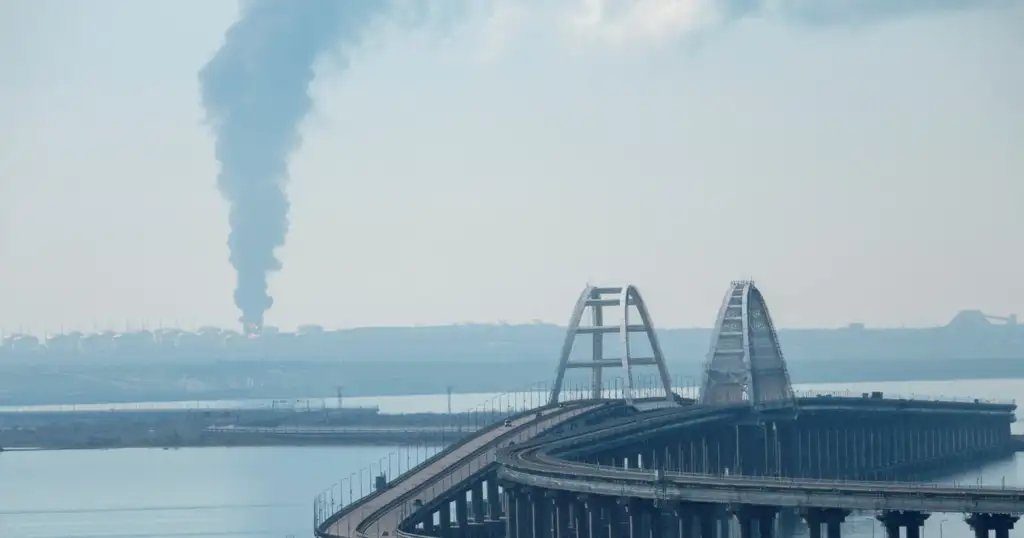
Ukraine is systematically choking Russia’s Kerch Strait lifeline. Last night’s drone strikes hit the ferry, oil terminal, and ports on both sides — forcing Russia to reroute trucks on a long, land corridor full of Ukraine's best drones. Over the past weeks, Ukraine has focused its operational strikes on the logistics route from Rostov-on-Don, Taganrog, Mariupol and Melitopol to Crimea. For days Ukrainian drones have destroyed thousands of trucks and have disabled every bridge leading from the occupied Ukrainian territories to Crimea. This has caused a fuel crisis for Russians in occupied Kherson, occupied Crimea, and parts of Zaporizhzhia. The Panagia ferry and the structurally degraded Kerch Bridge remained as supply lies. After last night's attack disabling the ferry and oil terminals, the Kerch Bridge and its road and rail are the only remaining ways to get supplies to Crimea. This has affected the front forcing Russians to abandon several points in Western Kherson. It has also caused fuel rationing for civilians in Crimea. Early in the war, Crimea was a key logistics hub for Russian air and ground operations. Over the past 4 years, Ukraine has persistently put pressure on Russian basing, air defenses, logistics, and command and control in Crimea. Over the past week, units such as @414magyarbirds have systematically disabled Russian positions and logistics beginning north of Crimea. As of yesterday they were hitting air defenses and other critical hubs on the southern edge of Crimea demonstrating that Magyar and his birds have effectively established air control over the peninsula. This is very different from the June 17 to 19 attacks on Moscow. Those relied on massive waves of Ukrainian drones planned on specific routes in a few attacks. Magyar's battlefield preparations have given them the ability to efficiently strike targets at times of their choosing. In Moscow, the air defenses showed they could be overwhelmed and quality of many positions was poor. Recent footage shows that other than small "Mad Max" inspired air defense artillery escorts for logistics, Crimea is void of air defenses. Magyar and similar Ukrainian units can do this for a long time. The government in occupied Crimea just suspended fuel sales to non-government entities. To be clear, Ukraine has no capability to militarily retake Crimea by force in the near term or medium term. They lack the ground forces and would to cross either the Zaporizhzhia mine fields or the flat plains of Kherson. The former presents a hard bottleneck Ukraine encountered in the 2023 Counteroffensive. The flat plains of Kherson are perfect for the VKS to intercept Ukrainian troops on the ground. However, in modern economies everything requires fuel. Crimea is quickly becoming unlivable. The Ukrainians have left the Kerch Bridge intact. This is intentional with a clear message "This is your path to leave". Image via @mezha_net
Michael Bohnert tweet media
English
2
17
74
3K
Michael Bohnert
Michael Bohnert@mbohnert·
@sudoingX Absolutely great piece. Fully agree. This is a critical point that isn't foot stomped enough
English
0
0
0
74
Sudo su
Sudo su@sudoingX·
i get called out a lot for how long my build is taking, when someone can vibe-code an app in a weekend. anon the honest answer going to sting some of you. i'm not just building. i'm learning to tell good code from bad code. give the same prompt to five frontier models and you get five different answers, and if you can't tell which one is actually good, you're not building software, you're stacking a tower of stuff you don't understand. it runs great right up until it breaks, and then you're standing in a codebase you can't read with no idea what to touch. that's the part the "you don't need to learn to code" crowd never mentions. and notice who's pushing that line, it's the people selling you the thing that replaces learning. follow the incentive, you don't even need a conspiracy. vibe-coding is genuinely great until the day the model can't fix the bug and neither can you. that's the moment you find out you're in the middle of the ocean and you never learned to swim. the fundamentals, the unit tests, knowing WHY the code is shaped the way it is, that's your way back to shore. nobody's swimming out to get you. so here's the real take, this is the best time in history to learn to code, not the excuse to skip it. these models make you faster at what you understand and dangerous at what you don't. learn the fundamentals, write the tests, actually understand the thing. be a better engineer, not a faster button presser. i'll take the slower build i can fix at 3am over the weekend demo that falls apart the first time it touches reality.
English
22
2
66
5.4K
wendellw
wendellw@wndlw8·
@mbohnert Also Ukraine drones can now fly in wet weather, which Moscow has had a lot of. Simple rain can disrupt the signals.
English
1
0
3
920
Michael Bohnert
Michael Bohnert@mbohnert·
@me_too @IlvesToomas Great question. It is surprising so much got through, especially given the crackdown on vpns and Telegram. It could be that the alterstives to Max that Russians are uaing are a little better at getting around the firewalls.
English
0
0
3
475
Michael Bohnert
Michael Bohnert@mbohnert·
@TrentTelenko I think Russia is inflating the overall numbers. Ukraine has no reason to correct them.
English
0
0
6
233
Trent Telenko
Trent Telenko@TrentTelenko·
Saturation of a missile based air defense is simple arithmetic. The number of ready fire missiles is know as is the reload rate. You just send enough more drones and missiles than the calculated interceptor number to destroy your target. In 2026, Ukraine has enough drones to do this.
Michael Bohnert@mbohnert

Hundreds of Ukrainian drones overwhelmed Moscow’s layered air defenses on June 17-18. Russia claims it downed 555+ UAVs that night alone, yet multiple struck the Kapotnya oil refinery for the second time erupting massive fires. This wasn’t luck. It was engineered saturation. The math tells the story. Ukraine launched massive coordinated waves, mixing armed drones with decoys that carry adjustable radar signatures to mimic real threats. Russian systems, optimized for fewer high-value missiles or aircraft, faced dozens arriving simultaneously from different angles. Even a 90%+ interception rate (per some Russian milbloggers) still left enough penetrators to hit the target. This breakthrough built on years of preparation. Ukrainian forces systematically targeted Russian air defense radars, launchers, and electronic warfare modules across multiple sectors. By hitting dispersed sites and forcing Russia to spread its best systems thin, Kyiv created exploitable gaps even around the heavily defended capital region. The provided inage shows how air defense locations are roughly 5 to 10 miles apart. For reference, an air defense can see drones at 100 ft about 5 miles away due to the radar horizon. This leaves at most three overlapping systems over a single target with roughly 4-32 interceptors available for use, easily overwhelmed. Flight paths were meticulously planned — sometimes J-shaped routes that circled defenses before final approach. Advanced Ukrainian drones, including faster jet-powered variants alongside propeller-driven models, complicated tracking. Decoys drew fire while real munitions pressed through. Going back to our map, buildings can be used as cover, although one drone hit a crane while flying low. The result: visible “oil rain,” refinery fires, and all four major Moscow airports grounding flights. Specific damage at Kapotnya included the combined oil refining unit, a secondary processing unit, and tank farm. Moscow Mayor Sergei Sobyanin acknowledged strikes on the refinery and minor damage elsewhere. Russia’s Defense Ministry reported broad intercepts, but geolocated footage and official admissions confirmed real effects deep inside the capital’s defensive bubble. Compare the scale: Ukraine fired over 1,000 drones toward Russia in the broader operation that day. Even partial success against the most protected targets demonstrates a repeatable capability. Low-cost mass + prior attrition of defender systems + adaptive routing = a template that exposes vulnerabilities in legacy air defense doctrine. These aren’t one-off raids. They’re the product of sustained tactical evolution. Ukraine is proving it can impose real costs on Russia’s rear areas despite heavy defenses. Full details and context in the original report. Image via @Telegraph

English
4
30
160
6.5K
Malcontent News
Malcontent News@MalcontentmentT·
I did not have a Spanish company developing a laser-guidance kit for legacy 122mm Grad rockets that improves the CEP to 3 meters, on my BINGO card.
English
9
13
274
9.7K
Michael Bohnert
Michael Bohnert@mbohnert·
@zubapita Well, fancy tech helps, but yes planning and preparation definitely take you very far when planning strikes.
English
0
0
1
64
根岸智幸
根岸智幸@zubapita·
敵の防空ミサイル網をかいくぐるのに必要なのは、映画みたいな気合いと根性と運命の女神じゃなくて、綿密な調査と計画と飽和攻撃なのですね。そりゃそうだ。
Michael Bohnert@mbohnert

Hundreds of Ukrainian drones overwhelmed Moscow’s layered air defenses on June 17-18. Russia claims it downed 555+ UAVs that night alone, yet multiple struck the Kapotnya oil refinery for the second time erupting massive fires. This wasn’t luck. It was engineered saturation. The math tells the story. Ukraine launched massive coordinated waves, mixing armed drones with decoys that carry adjustable radar signatures to mimic real threats. Russian systems, optimized for fewer high-value missiles or aircraft, faced dozens arriving simultaneously from different angles. Even a 90%+ interception rate (per some Russian milbloggers) still left enough penetrators to hit the target. This breakthrough built on years of preparation. Ukrainian forces systematically targeted Russian air defense radars, launchers, and electronic warfare modules across multiple sectors. By hitting dispersed sites and forcing Russia to spread its best systems thin, Kyiv created exploitable gaps even around the heavily defended capital region. The provided inage shows how air defense locations are roughly 5 to 10 miles apart. For reference, an air defense can see drones at 100 ft about 5 miles away due to the radar horizon. This leaves at most three overlapping systems over a single target with roughly 4-32 interceptors available for use, easily overwhelmed. Flight paths were meticulously planned — sometimes J-shaped routes that circled defenses before final approach. Advanced Ukrainian drones, including faster jet-powered variants alongside propeller-driven models, complicated tracking. Decoys drew fire while real munitions pressed through. Going back to our map, buildings can be used as cover, although one drone hit a crane while flying low. The result: visible “oil rain,” refinery fires, and all four major Moscow airports grounding flights. Specific damage at Kapotnya included the combined oil refining unit, a secondary processing unit, and tank farm. Moscow Mayor Sergei Sobyanin acknowledged strikes on the refinery and minor damage elsewhere. Russia’s Defense Ministry reported broad intercepts, but geolocated footage and official admissions confirmed real effects deep inside the capital’s defensive bubble. Compare the scale: Ukraine fired over 1,000 drones toward Russia in the broader operation that day. Even partial success against the most protected targets demonstrates a repeatable capability. Low-cost mass + prior attrition of defender systems + adaptive routing = a template that exposes vulnerabilities in legacy air defense doctrine. These aren’t one-off raids. They’re the product of sustained tactical evolution. Ukraine is proving it can impose real costs on Russia’s rear areas despite heavy defenses. Full details and context in the original report. Image via @Telegraph

Meguro-ku, Tokyo 🇯🇵 日本語
1
0
1
188
Michael Bohnert
Michael Bohnert@mbohnert·
@Arthur_Foxache @Oglokoog Well, given how many missiles use the same launch setup, hard to tell which one. But yes, something is clearly amiss. That being said, Pansirs underperformed in Libya and elsewhere.
English
0
0
1
54
Arthur Foxache 1776 - 2024
Arthur Foxache 1776 - 2024@Arthur_Foxache·
@mbohnert @Oglokoog If so, that makes it even more comical. Aren't the 57E6 radar-guided? Meaning they locked on to the oil tank, or the missile's components are so poor it went completely stupid on launch.
English
2
0
1
51
Michael Bohnert
Michael Bohnert@mbohnert·
@morganlinton @elonmusk @nikitabier I appreciate the freedorm nature. It has definitely been nice using X to interact with new people. Especially helpful to keep share knowledge about rapidly changing AI topics.
English
0
0
1
103
Morgan
Morgan@morganlinton·
For years, I was hesitant to post a lot on X, afraid of what people might think if I was just totally myself, and said what was on my mind. But I have to say, with @elonmusk buying X, and adding @nikitabier to the team, it is the best it has ever been. And I think this has empowered me, and many others, to feel comfortable, just being ourselves, in public, and it feels really good. Thanks to both of you for making X a place where quirky people like me, can find other quirky people like me, that seem to get excited about the same weird stuff. There is no close second to X right now, it is the place to find your people.
English
27
1
116
3.4K