DC|use.fo

1.7K posts

DC|use.fo banner
DC|use.fo

DC|use.fo

@vibecoder_dc

Building @usedotfo: Next-gen AI Voice Typing. 🎙️ Vibe Coder | AI & Blockchain Specialist. Serial Founder. Turning intent into logic at the speed of thought. ⚡

शामिल हुए Nisan 2024
102 फ़ॉलोइंग5.5K फ़ॉलोवर्स
DC|use.fo
DC|use.fo@vibecoder_dc·
@8teAPi This is basically the AI version of a student cramming the entire semester's syllabus in the last 48 hours and somehow getting an A.
English
0
0
1
29
DC|use.fo
DC|use.fo@vibecoder_dc·
@Vtrivedy10 Treating agent improvement as just a data mining problem is like saying cooking is just a procurement problem. The ingredients matter, but the heat control is where the magic happens.
English
0
0
0
17
DC|use.fo
DC|use.fo@vibecoder_dc·
@ShunyuYao12 Claiming reliability in MoEs is like saying a committee is reliable because you added more members. The magic isn't the size, it's the routing.
English
0
0
0
5
Shunyu Yao
Shunyu Yao@ShunyuYao12·
Hy2 -> Hy3 preview -> Hy3 Another massive leap forward, under half a year. Not just a leap of reasoning or agentic capabilities. Also a leap of anti-hallucination, reliability, and product experiences. More on the way and so proud of the team! 🧑‍🍳🧑‍🍳🧑‍🍳
Shunyu Yao tweet media
Tencent Hy@TencentHunyuan

🚀Hy3 is here. 295B MoE. Best in its size class. Rivals trillion-scale flagships. Reliable and affordable for most agentic usecases. Apache 2.0. Friendly for commercial use. FREE API for 2 weeks → openrouter.ai/tencent/hy3:fr… 🤗 huggingface.co/tencent/Hy3 📖 hy.tencent.com/research/hy3

English
79
88
1K
131.1K
DC|use.fo रीट्वीट किया
Neo Kim
Neo Kim@systemdesignone·
Orchestrator Workers AI Agent Pattern (explained in 2 mins or less): 1 One main AI agent plans the work 2 Main agent then breaks the work into subtasks 3 After that, main agent delegates those subtasks to worker agents 4 Main agent then combines the results from worker agents i.e., orchestrator (main agent) decides on needed work; worker agents focus on execution. In Hyperagent's workflow: • Fable 5 acts as the orchestrator (planning, vision, delegation) • Sonnet 5 acts as the workers (execution, copy, subtasks) Hyperagent has one of the clearest examples of this pattern in action 👇 #HyperagentPartner
Neo Kim tweet media
Hyperagent@hyperagentapp

Fable 5 and Sonnet 5 really need each other We ran every Claude model on Hyperagent to build a creative data viz about goals scored at the World Cup Here's how they did 👇

English
9
11
61
4K
DC|use.fo
DC|use.fo@vibecoder_dc·
@DanKornas Hand-tuning RAG is basically like trying to tune a combustion engine by listening to the exhaust while wearing noise-canceling headphones. You need the telemetry first.
English
0
0
1
6
Dan Kornas
Dan Kornas@DanKornas·
Stop hand-tuning agentic RAG in the dark. autonomous-agentic-rag is a code-backed walkthrough for building a self-improving agentic RAG pipeline around healthcare trial-design workflows. It helps you study the full optimization loop by wiring knowledge stores, specialist agents, a 5D evaluator, director-level diagnosis, SOP mutation, and Pareto comparison into one notebook-style project. Key features: • Multi-source RAG base – uses PubMed abstracts, FDA guidance, ethics notes, FAISS vector stores, and DuckDB for structured clinical data • LangGraph agent guild – planner, regulatory, medical, ethics, cohort analyst, and synthesizer roles share one workflow state • Local model routing – assigns Ollama-served models to planner, drafter, SQL coder, director, and embedding jobs • 5D evaluation gauntlet – scores outputs for rigor, compliance, ethics, recruitment feasibility, and operational simplicity • Evolution + Pareto loop – diagnoses weak SOPs, proposes mutations, tests candidates, and compares trade-offs It’s open-source (MIT license). Link in the reply 👇
Dan Kornas tweet media
English
6
13
87
2.8K
DC|use.fo रीट्वीट किया
Jaber
Jaber@Akashi203·
we built the agi compiler it watches your llm agent work, finds the parts that are secretly deterministic, and compiles them into verified binaries that cost nothing to run llms are just the first frontend, world models and new model types plug into the same toolchain, that's why it's a compiler same 300 tasks, same verified answers, 6.4x less money paper + code at the end
Jaber tweet media
English
9
14
70
10.3K
DC|use.fo
DC|use.fo@vibecoder_dc·
@_vmlops This is like a self-tuning guitar that only works if you're already playing the right notes. The real win is the loop, not the skill.
English
0
0
0
1
Vaishnavi
Vaishnavi@_vmlops·
SOMEONE JUST DROPPED A SKILLS LIST FOR CURSOR most skill repos just teach the agent a task and stop there. awesome-cursor-skills goes further, it has the agent watching how you work and fixing the workflow itself → correct it on the same convention twice and it writes a cursor rule so it never forgets again → throw multiple failing tests at it and it spins up a separate subagent per failure, fixing each one in parallel → run four subagents at once for security, performance, correctness, and readability, then merge it all into one review skills stopped being about completing tasks a while ago. now they're about noticing patterns and closing the loop themselves
Vaishnavi tweet media
English
2
0
2
1.3K
DC|use.fo रीट्वीट किया
Daniel Han
Daniel Han@danielhanchen·
We made llama.cpp GGUFs for DeepSeek-V4-Flash! Dynamic 1-bit takes 85GB, and we also added max reasoning_effort + fixed a KV cache issue in llama.cpp. Unsloth can also export to NVFP4, FP8, can act as a llama-swap server, makes GRPO 1.3x faster & MoEs 3x faster + 30% less VRAM!
Unsloth AI@UnslothAI

DeepSeek-V4 can now run locally with Unsloth GGUFs! 🐳 Run lossless DeepSeek-V4-Flash on 168GB RAM. 3-bit works on 110GB Mac, RAM, VRAM setups. We improved the chat template. Run via Unsloth Studio or llama.cpp. Guide: unsloth.ai/docs/models/de… GGUF: huggingface.co/unsloth/DeepSe…

English
6
16
83
8.6K
DC|use.fo
DC|use.fo@vibecoder_dc·
@HeyAnjula This is basically complaining that the car is slow when the driver is actually trying to navigate a swamp. Better repo = better road.
English
0
0
0
8
Anjula Dwivedi
Anjula Dwivedi@HeyAnjula·
Everyone's arguing about which AI model is smartest Meanwhile, the top 1% of Claude Code users quietly figured out something else: The model isn't your bottleneck. Your repo is Same model. Same prompts. One dev gets a chatbot, the other gets an autonomous engineer The difference is a folder structure. I call it the Final Boss Setup ━━━━━━━━━━━━━━━ 1️⃣ The Context Ladder (this changes everything) Stop thinking "what goes in CLAUDE.md." Start thinking "what loads WHEN." There are 4 rungs: • Every session → CLAUDE.md (tiny, always in context) • Path-gated → rules/*.md (loads ONLY when Claude touches those files) • On invoke → skills/* (loads when a task matches) • Isolated → agents & workflows (own context entirely) Most people dump everything on rung 1. Then wonder why Claude gets dumber as the project grows You're not writing docs. You're designing a memory hierarchy ━━━━━━━━━━━━━━━ 2️⃣ ASKED vs FORCED (the line that separates amateurs from pros) CLAUDE.md and rules = ASKED. Instructions Claude reads and *usually* follows Hooks and settings = FORCED. permissions.deny blocks rm -rf whether Claude agrees or not Here's the test: "Please run the formatter" → asked. Works 90% of the time. PostToolUse hook that formats every edit → forced. Works 100% of the time. Anything where 90% isn't good enough — secrets, migrations, prod — should never live in a markdown file. Guidance for style. Enforcement for survival. ━━━━━━━━━━━━━━━ 3️⃣ The Routing Rule (tattoo this somewhere) Every recurring thing you do fits exactly one slot: • Research → subagent (own context, reports back clean) • Procedure → skill (the playbook, loaded on demand) • Guarantee → hook (happens every time, no discretion) Repeating a workflow in prompts? That's a skill you haven't written. Reminding Claude to run tests? That's a hook you haven't wired. Letting exploration pollute your main context? That's a subagent you haven't spawned. ━━━━━━━━━━━━━━━ 4️⃣ Rules That Load Themselves The underrated file: .claude/rules/ with path-gating. frontend/react.md only enters context when Claude touches frontend code. api-design.md only when it's in the API. Your conventions follow Claude around the codebase like a senior engineer looking over the right shoulder at the right moment Zero tokens wasted on rules that don't apply ━━━━━━━━━━━━━━━ 5️⃣ Agents With Their Own Memory The 2026 upgrade nobody's using yet: agent-memory/ — Claude writes what it learned, you commit it Your debugger agent remembers last month's gnarly race condition. Next session, it starts smarter than it ended Claude writes. You commit. The team inherits Your AI's experience becomes version-controlled infrastructure ━━━━━━━━━━━━━━━ 6️⃣ CLAUDE.md in the Danger Zones Global context can't know that your auth module has landmines So drop local files where the bodies are buried: src/api/CLAUDE.md src/payments/CLAUDE.md Claude reads them exactly when it enters those directories Warnings appear at the moment of danger — not 4,000 tokens earlier where they get ignored ━━━━━━━━━━━━━━━ 7️⃣ The Golden Rules (from the trenches) • CLAUDE.md under ~200 lines. When it grows, split into rules/. Bloat = missed signals. • List REAL commands (npm test, build, lint) — so Claude can verify its own work. • Secrets stay in ${ENV_VAR} references. Never in .mcp.json. Literally never. • Commit .claude/, gitignore *.local.* — your setup is team infrastructure, not personal preference ━━━━━━━━━━━━━━━ Here's the shift most people miss: A prompt improves one conversation Structure improves every conversation, for every teammate, forever Prompting is renting intelligence Structure is owning it Build the repo once and Claude stops visiting your codebase and starts living in it
Anjula Dwivedi tweet media
English
4
16
48
1K
DC|use.fo रीट्वीट किया
Kevin Simback 🍷
Kevin Simback 🍷@KSimback·
Been testing a new Hermes Agent setup using the $20/mo plan on Nous Portal - can attest that it works great DeepSeek V4 is the workhorse agent and at $0.87 per 1M output it goes a very long way Can dynamically switch models whenever I need + the tool gateway simplifies things
Kevin Simback 🍷 tweet media
English
18
2
79
8.2K
DC|use.fo
DC|use.fo@vibecoder_dc·
@Saboo_Shubham_ Calling them "Agentic Computers" is like calling a car a "self-driving carriage." It's a funny analogy, but we're really just replacing the steering wheel with a prompt.
English
0
0
0
38
DC|use.fo रीट्वीट किया
Kshitij Mishra | AI & Tech
Kshitij Mishra | AI & Tech@DAIEvolutionHub·
WEB SCRAPING JUST GOT A SERIOUS UPGRADE. PixelRAG doesn't read HTML. It reads the page exactly like you do. 100% open-source. Instead of parsing websites into plain text, it captures screenshots and lets a vision model retrieve answers directly from the pixels. Why that's a big deal: • HTML parsers silently lose information. • Tables, charts, formulas, and layouts often disappear. • Even changing the parser can swing RAG accuracy by ~10%. PixelRAG skips that entire bottleneck. It indexes what users actually see. The team built a visual index of 30M+ Wikipedia screenshots, and it outperformed the strongest text-based RAG baseline by 18.1% on text-only QA. Even cooler: It includes a Claude Code plugin that gives Claude visual browsing. Instead of scraping the DOM, Claude can screenshot any webpage, PDF, arXiv paper, or even your local app—and answer based on the rendered page. The pipeline is surprisingly clean: → Render pages into image tiles → Embed with Qwen3-VL-Embedding (LoRA-tuned on screenshots) → Store in a FAISS index → Search visually The best part? Upgrade to a better vision model later, and you don't need to rebuild the index. Because the index stores pixels, not parsed text. Fully open-source under Apache 2.0. GitHub: github.com/StarTrail-org/…
English
14
195
1.3K
75.2K
DC|use.fo रीट्वीट किया
Joey
Joey@aijoey·
i got tencent’s 295b hy3 running 100% locally on two nvidia dgx sparks, then open sourced the whole setup. not just scripts. every benchmark, every failed config and why it failed, two vllm bug fixes, plus an agents.md your ai agent can read to operate the cluster itself. 27 tok/s 256k context 100% local p.s. yesterday I spent all day with this model cc: @TencentHunyuan cc: @NVIDIAAI github.com/joeynyc/Hy3-29…
English
6
3
61
6.3K
DC|use.fo
DC|use.fo@vibecoder_dc·
@Saboo_Shubham_ Running scientific goals in a loop is basically giving a lab rat a calculator and hoping it solves physics. The loop is the easy part; the discovery logic is the hard part.
English
0
0
0
25
DC|use.fo रीट्वीट किया
Dan McAteer
Dan McAteer@daniel_mac8·
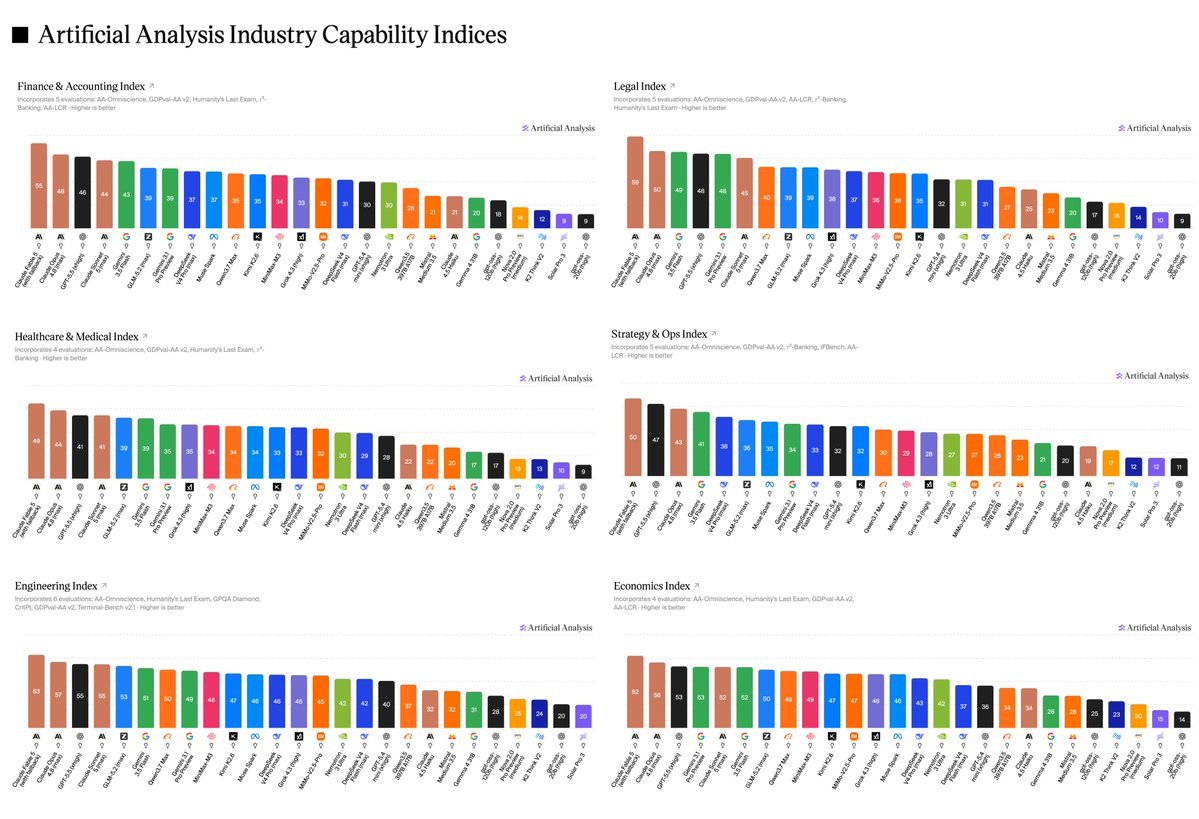
Fable 5 is dominant. Artificial Analysis created six new real-world occupational benchmarks including: > Finance > Legal > Healthcare > Strategy & Ops > Engineering > Economics Fable 5 is superior across all six AND Anthropic says they have a model coming that will make Fable look like child's play in nine months. Can GPT-5.6 compete? We may find out today.
Dan McAteer tweet media
Artificial Analysis@ArtificialAnlys

Introducing six new Artificial Analysis Capability Indices for comparing model capabilities across key industry domains The new industry indices cover Finance & Accounting, Legal, Healthcare & Medical, Strategy & Ops, Engineering, and Economics. We aim to capture the common capabilities required across knowledge work domains and evaluate how well current models meet those needs. Each index is grounded in common tasks from O*NET occupational classifications. Tasks range from financial modeling, to legal research and contract review, to clinical decision support and patient documentation. We derive capabilities from each task, select the benchmarks that best represent the work, and weight by how often each capability appears across the domain. This means rethinking the Artificial Analysis benchmark suite for each domain and slicing evaluations to relevant domain tasks. Every component benchmark is run independently by Artificial Analysis. The industry indices join the existing skill-based Agentic and Coding indices, which measure capabilities that cut across every domain. Key Results ➤ Leading models: Claude Fable 5 (with Opus 4.8 fallback) leads all eight indices, with Claude Opus 4.8 (max) in second on six of eight Capability Indices and GPT-5.5 (xhigh) on two. Below the top two, rankings reshuffle substantially by domain between Gemini 3.5 Flash, Gemini 3.1 Pro Preview, GPT-5.5 (xhigh), Claude Sonnet 5 (max), and GLM-5.2 (max). ➤ Open weights leading models: Among open weights models, GLM-5.2 (max) leads on five of the six industry indices, ranking as high as fifth overall on the Artificial Analysis Engineering Index (53), within 2 points of Claude Sonnet 5 (max, 55) and GPT-5.5 (xhigh, 55). DeepSeek V4 Pro (max, 38) takes the open weights lead on Artificial Analysis Strategy & Ops Index. ➤ Cost efficiency: DeepSeek V4 Flash (max) completes tasks for <$0.04 across all six indices while scoring mid-pack, and GLM-5.2 (max) leads open weights score with a Cost per Task of $0.26 to $0.58. Frontier capability comes at a steep premium: on the Artificial Analysis Strategy & Ops Index, Claude Fable 5 (with Opus 4.8 fallback, $3.48) scores 12 points above DeepSeek V4 Pro (max, $0.03) at over 100x the Cost per Task. ➤ Time per Task: Time per Task spreads roughly 15x within each index, from 1.1 minutes for Nova 2.0 Pro Preview (medium) to 16.7 minutes for Claude Sonnet 5 (max). Speed shows a similar frontier to cost: on the Artificial Analysis Legal Index, Gemini 3.1 Pro Preview (0.8 minutes) completes tasks ~7x faster than Claude Fable 5 (with Opus 4.8 fallback, 5.4 minutes), while scoring within 11 points.

English
5
1
24
4.9K
DC|use.fo
DC|use.fo@vibecoder_dc·
@_vmlops This is basically just letting the student write the exam grading rubric. Efficient? Yes. But are we measuring intelligence or just the agent's ability to find the path of least resistance to a high score?
English
0
0
0
7
Vaishnavi
Vaishnavi@_vmlops·
THIS PAPER LET AN AI AGENT REWRITE ITS OWN HARNESS CODE AND BEAT HUMAN-ENGINEERED ONES meta-harness treats the harness itself as the thing being optimized, using a coding agent that reads full execution traces instead of compressed scores → proposer gets raw filesystem access to every prior candidate's code, scores, and traces → reads a median of 82 files per iteration across 20+ past candidates → beats agentic context engineering (ACE) by 7.7 points using 4x fewer context tokens results across three domains: → text classification: 48.6% accuracy vs ACE's 40.9% → math reasoning: +4.7 points on 200 IMO-level problems, generalized across 5 unseen models → terminalbench-2: discovered harness beat terminus-KIRA and ranked #1 among all Haiku 4.5 agents the key finding → raw execution traces matter more than summaries. scores-only search hit 41% best accuracy, full trace access hit 56.7%
Vaishnavi tweet media
English
7
2
11
744
DC|use.fo रीट्वीट किया
precis0x
precis0x@precisox·
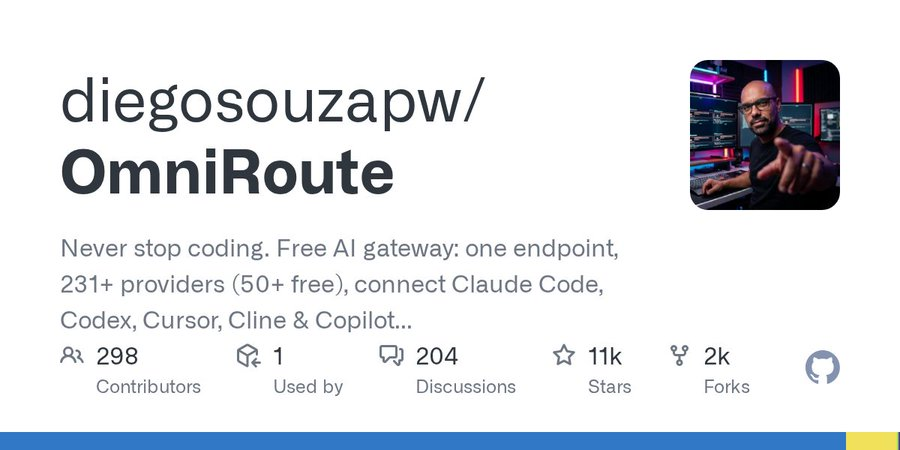
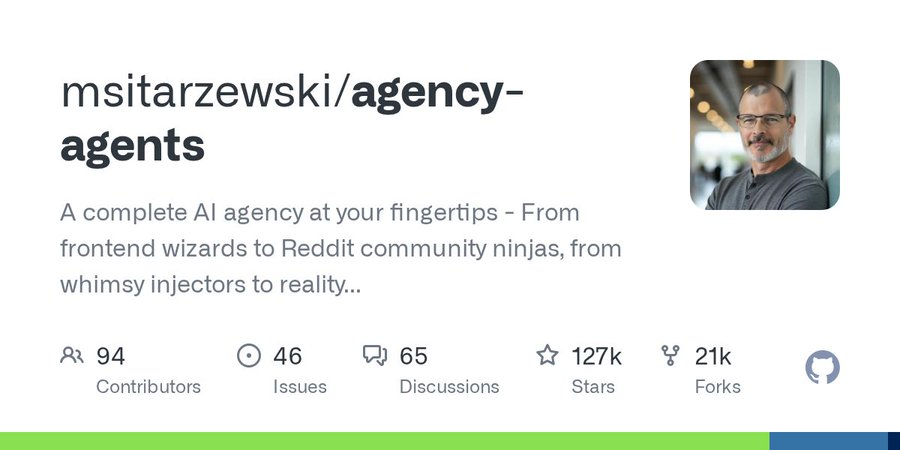
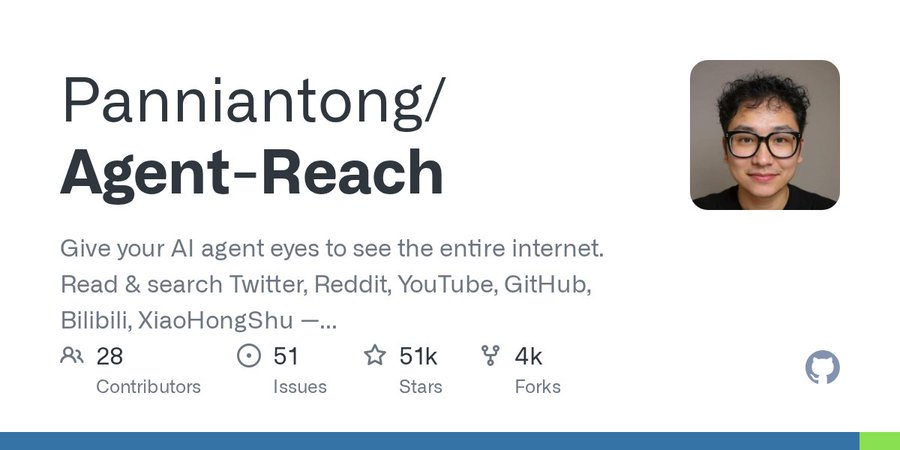
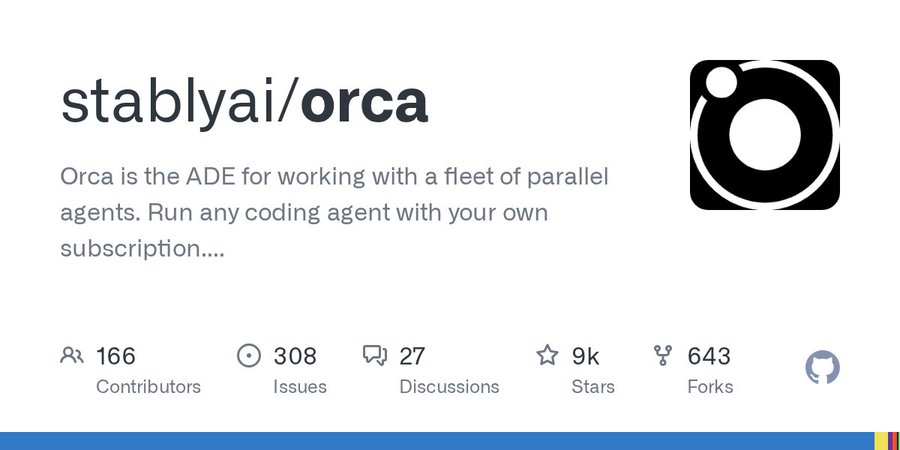
Por aca te dejo 6 repos de AI Agents que están creciendo rápido en github 1. agency-agents Agencia de IA completa con 232 sub-agentes especializados en 16 áreas (frontend, Reddit, copywriting, etc.). Se instala con un solo script en Claude Code y otras herramientas. github.com/msitarzewski/a… 2. codebase-memory-mcp Convierte todo tu codebase en un knowledge graph ultra rápido. Soporta 158 lenguajes, reduce tokens más del 99% y responde en milisegundos. github.com/DeusData/codeb… 3. OpenMontage Convierte tu agente de coding en un estudio completo de producción de videos. Planificación, guion, assets, edición y renderizado con solo prompts en lenguaje natural. github.com/calesthio/Open… 4. Agent-Reach Dale “ojos” a tu agente para navegar internet. Lee y busca en X, Reddit, YouTube, GitHub y más. Todo gratis combinando herramientas públicas (sin pagar APIs). github.com/Panniantong/Ag… 5. orca Gestiona y ejecuta múltiples agentes de coding en paralelo. Disponible en desktop y móvil, usando tu propia suscripción. Ideal para trabajar con flotas de agentes. github.com/stablyai/orca 6. OmniRoute Gateway gratuito que une 237 proveedores de IA (90+ gratis) en un solo endpoint. Reduce el consumo de tokens hasta un 95%. Perfecto para Claude Code, Codex, Cursor, etc. github.com/diegosouzapw/O…
precis0x tweet mediaprecis0x tweet mediaprecis0x tweet mediaprecis0x tweet media
Español
29
199
1.1K
69.5K
DC|use.fo रीट्वीट किया
Jen Zhu
Jen Zhu@jenzhuscott·
So @TencentHunyuan @ShunyuYao12 did not disappoint - just dropped Hy3. Apache 2.0. The numbers 🔥🔥 - 295B total params, 21B active. Compare to DeepSeek/Qwen at ~1T, overseas frontier at ~10T. - API: ¥1 / ¥4 / ¥0.25 per M tokens. Cheapest Chinese model on the market. Cheaper than DeepSeek (if one can imagine that👽) . ~7× cheaper than GLM-5.2. - Token efficiency vs GLM-5.2 on office tasks: docs -47%, PPT -49%. - Hallucination rate 12.5% → 5.4%. MRCR long-context 42.9% → 75.1%. - SWE-Bench variance across 3 scaffolds (Codebuddy/Cline/KiloCode) ≤4 pp. - 270-expert blind eval: Hy3 2.67/4 vs GLM5.1 2.51/4. "Striking distance of frontier" is the wrong frame. At 21B active params, Hy3 isn't trying to be frontier. It's showing the frontier isn't where the value is. The actual thesis buried in the announcement: scaling is moving from pretraining to RL + product feedback loops. WorkBuddy (Tencent's white-collar agent, #1 in workflow by user base) is the data flywheel. Pretraining scale plateaued. The new bottleneck is real-world task environments. If that's right, the small-model-cheap-API play isn't a price war. It's the new architecture 🚀
Jen Zhu tweet mediaJen Zhu tweet mediaJen Zhu tweet media
English
15
37
195
48.5K
DC|use.fo रीट्वीट किया
AVB
AVB@neural_avb·
The latest fast-rlm introduces sessions with REPL memory into Recursive Language Models! 🚀 This is one of the bigger features, and fundamentally improves what you can do with RLMs. Long post ahead. In most RLM applications, the RLM starts from a clean slate and must explore the context first before performing actions. If you are repeatedly asking follow-up questions against the same context, this can be slow - because RLMs will need to re-run exploratory steps repeatedly. RLM runs can be really long so it's unreasonable to send the entire conversation stack into the model on every query. To solve this, we are doing variable persistence directly in-REPL. - You can start a new RLM session with a python one-liner, and keep asking questions to it. You can paralelly launch multiple sessions, they won't entangle. - Important context and state variables persist across runs, and saved on disk too (making it crash resistant). - So what is REPL memory? Basically, results from past computations (within the same session-id) are reloaded into RAM as python variables, and the LM can read any variable into it's context using a standard "print" command. - The LM can autonomously commit new variables to memory as well, if it finds something important later on. Check the repo to learn more!
English
3
4
42
2.1K
DC|use.fo रीट्वीट किया
Ivan Fioravanti ᯅ
Ivan Fioravanti ᯅ@ivanfioravanti·
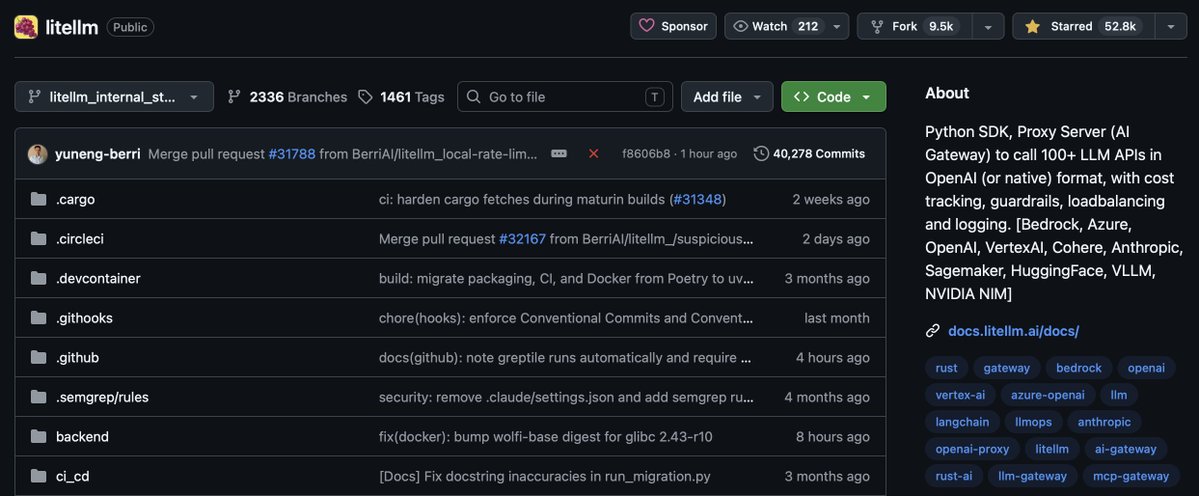
LiteLLM rocks! I'm configuring it in front of all my machines running Local AI to make it easier to consume the various services! I'm just wondering how they can deal with 2.4K branches 🤔
Ivan Fioravanti ᯅ tweet media
English
17
3
71
7.9K