Sooraj

20.1K posts

Sooraj banner
Sooraj

Sooraj

@zipview

B2B Tech Marketer | Ex: @Lenovo, @Infosys, @TCS | Award-Winning Content Creator

Bengaluru, India शामिल हुए Mayıs 2009
506 फ़ॉलोइंग1.1K फ़ॉलोवर्स
Sooraj रीट्वीट किया
Gokul Rajaram
Gokul Rajaram@gokulr·
DESIGN: THE FIRST AI CASUALTY I'm increasingly sure that 2026 signals the end of product design as a full-fledged stand-alone function within companies. If so, it will be the first role / function to be eliminated by AI on a go-forward basis. Instead of hiring FT designers, startups are hiring / will hire design consultants to create a design system that the founder likes (this takes a few weeks max). Once the design system is finalized, PM/Eng feed it into their AI tool of choice to generate prototypes. The design system is refreshed annually by the same consultant. Larger companies will likely not backfill design roles and will do some targeted attrition to reduce the design department to 20% the size it is today. If you're a designer, I think you have two choices: 1. Become an entrepreneur: Start a design agency and become the go-to resource for design systems for startups and even larger companies. This can be a good recurring revenue business. 2. Become a builder: Add PM/Eng responsibilities to become a product builder. Would suggest you embrace this proactively vs waiting for the other shoe to drop. I'm really sorry about this - some of my best friends and the people I admire most and have learnt the most from are designers - but it seems inevitable.
English
283
80
1.1K
729K
Sooraj रीट्वीट किया
Lenny Rachitsky
Lenny Rachitsky@lennysan·
"In the next 12-24 months, we're going to see massive shedding of staff, and then a massive rehiring. You might see a company shed 30,000 and hire 8,000. But the 8,000 people they're gonna hire are going to all be AI-first."
Lenny Rachitsky@lennysan

"The ones who were the best at working in the past, the ones who mastered the old game, will find it the hardest to go through this reinvention stage." Every PM needs to listen to today's episode with @nikhyl. This is the most honest, real-talk conversation I've had about what's actually happening to PM careers right now. We discuss: 🔸 Why the next 2 years will be the most chaotic in PM history 🔸 Why half of today's PMs won't survive the shift 🔸 Why the fancy logos on your resume now matter less than ever 🔸 The 'smiling exhaustion' he's seeing across top PMs 🔸 His prediction: companies shed 30,000, rehire 8,000 — all AI-first Full episode here on X 👇 Also find it on: • YouTube: youtu.be/yUohoaC8_Hs • Spotify: open.spotify.com/episode/6OO2GJ… • Apple: podcasts.apple.com/us/podcast/why… Thank you to our sponsors for supporting the podcast: 🏆 @WorkOS — Modern identity platform for B2B SaaS, free up to 1 million MAUs: workos.com/lenny 🏆 @TrustVanta — automate compliance, manage risk, and accelerate trust with AI: .

English
31
19
209
98.9K
Sooraj रीट्वीट किया
Google AI
Google AI@GoogleAI·
We’re launching a brand new, full-stack vibe coding experience in @GoogleAIStudio, made possible by integrations with the @Antigravity coding agent and @Firebase backends. This unlocks: — Full-stack multiplayer experiences: Create complex, multiplayer apps with fully-featured UIs and backends directly within AI Studio — Connection to real-world services: Build applications that connect to live data sources, databases, or payment processors and the Antigravity agent will securely store your API credentials for you — A smarter agent that works even when you don't: By maintaining a deeper understanding of your project structure and chat history, the agent can execute multi-step code edits from simpler prompts. It also remembers where you left off and completes your tasks while you’re away, so you can seamlessly resume your builds from anywhere — Configuration of database connections and authentication flows: Add Firebase integration to provision Cloud Firestore for databases and Firebase authentication for secure sign-in This demo displays what can be built in the new vibe coding experience in AI Studio. Geoseeker is a full-stack application that manages real-time multiplayer states, compass-based logic, and an external API integration with @GoogleMaps 🕹️
English
493
1.5K
12.2K
4.7M
Sooraj
Sooraj@zipview·
One of life’s newfound joys is getting locked out of Claude because you’ve used up all your credits.
English
0
0
0
12
Sooraj रीट्वीट किया
Tim Soulo 🇺🇦
Tim Soulo 🇺🇦@timsoulo·
A free web mentions API? - Yes, please! @Ahrefs just launched Firehose. And it's kind of a big deal. 👉 firehose.com It captures updates from across the web, filters them using rules you define, and delivers results via API (for bots and agents) or a frontend UI (for humans). Under the hood, it's powered by @Ahrefs' massive crawler infrastructure (one of the largest on the web), so the coverage is legitimately impressive. Now that AI has made coding accessible to everyone, there's no excuse not to spin up a free Firehose account and start experimenting. Track brand mentions, monitor competitors, catch keyword trends — whatever you want. Want more ideas? Just feed the API docs to Claude Code and ask it what to build: 👉 firehose.com/api-docs Happy building! P.S. Firehose is free until further notice.
Tim Soulo 🇺🇦 tweet media
English
70
72
1.1K
218.3K
Sooraj रीट्वीट किया
Perplexity
Perplexity@perplexity_ai·
Introducing Perplexity Computer. Computer unifies every current AI capability into one system. It can research, design, code, deploy, and manage any project end-to-end.
English
1.7K
5.2K
46.6K
38.2M
Sooraj रीट्वीट किया
Claude
Claude@claudeai·
Introducing Claude Code Security, now in limited research preview. It scans codebases for vulnerabilities and suggests targeted software patches for human review, allowing teams to find and fix issues that traditional tools often miss. Learn more: anthropic.com/news/claude-co…
English
1.9K
5.7K
49.5K
26.2M
Sooraj रीट्वीट किया
Claude
Claude@claudeai·
This is Claude Sonnet 4.6: our most capable Sonnet model yet. It’s a full upgrade across coding, computer use, long-context reasoning, agent planning, knowledge work, and design. It also features a 1M token context window in beta.
English
1.1K
2.5K
22.1K
7.6M
Sooraj रीट्वीट किया
Patrick OShaughnessy
Patrick OShaughnessy@patrick_oshag·
Gokul explains why outcome-based software companies like Zendesk are more exposed to AI than systems of record like NetSuite, and why public markets are not distinguishing between the two. He argues that the only way AI-native startups can disrupt systems of record is by spending 1-2 years building migration tools to get data off of incumbent platforms. "The software companies that should be the most worried right now is where they are pricing the product based on utility. Zendesk is a good example. Instead of paying for 50 Zendesk seats, you can pay for 20 and I can have 30 AI agents sitting next to Zendesk. For these companies you need to change your pricing model to be based on outcome. It's going to be hard for them to stay public. The companies that are less exposed are ones based on data that has been collected and captured over a period of time. ERP is a great example. There is no compelling reason for someone to put their career at stake by ripping out NetSuite. NetSuite has more time to build AI agents on top of it because they have the data, they can train the AI agent on top of it and bundle it. I think the public markets do not distinguish between these two types of companies."
Patrick OShaughnessy@patrick_oshag

.@gokulr is one of the most prolific product builders and investors of the last 20 years. He helped build the core ads and product businesses at Google, Facebook, Square, and DoorDash, working directly with many of this generation's best founders and CEOs. He's also invested in more than 700 companies giving him an unusually broad view into how products are built and scaled. Gokul has an incredible ability to give precise and prescriptive advice on how to build products, particularly in AI, and he explains his thinking so clearly that you come away knowing exactly how to apply it. We talk about why judgment is the only thing he believes is truly AI-proof, why Zendesk and Slack are more exposed than Salesforce and NetSuite, and what AI-native startups must do to move customers and their data off legacy systems. We cover everything he's learned from building the most important ads businesses, including the only three ways an ad business can make money, and why ChatGPT may be even more powerful than Google or Facebook for highly targeted ads. He also shares inside stories from Larry and Sergey, Zuck, Jack Dorsey, and Tony Xu, about how each of them approaches product, design, and communication. Enjoy! Timestamps: 0:00 Intro 0:35 The Changing Nature of Product Development 4:09 The Merger of Product and Design 4:54 Managing Non-Deterministic Software 9:06 Judgment: The Future-Proof Human Skill 10:41 Building Durable AI Applications 16:43 The Risk to Legacy Software Companies 21:20 Sources of Stickiness in the Age of AI 23:43 Leadership Lessons from Google 27:41 Learning from Mark Zuckerberg 31:16 Jack Dorsey and the Philosophy of Great Design 35:48 The Product Manager as Editor 40:44 Three Pillars of a Successful Ads Business 49:03 Selecting North Star and Check Metrics 56:04 Hiring Functional Experts for the AI Era 1:00:06 Advice for Managing a Career 1:01:33 Evaluating Founder Authenticity 1:05:20 Best Practices for Board Management 1:11:15 The Kindest Thing

English
66
138
1.3K
393.3K
Sooraj रीट्वीट किया
Shashi Tharoor
Shashi Tharoor@ShashiTharoor·
Indeed! For ten years now I have run a RoundTable on Air Pollution without getting the political traction i had hoped for. Finally i am relieved that the issue has broken through in public consciousness this year and is now also getting global attention. We need a #SwachhVayuAbhiyan with an Air Quality Czar who can whip all concerned departments into focused action. Hope @PMOIndia is thinking seriously about such an approach.
Bharat Tiwari@BharatTiwari

How not-to-settle-a-business-in-India situation it must be for people who really want to be here, Dr @ShashiTharoor sir? Listen to @GitaGopinath - you may put the pollution problem as the 'biggest' that India is facing

English
257
822
4.7K
149.5K
Sooraj रीट्वीट किया
Forrest Knight
Forrest Knight@ForrestPKnight·
Honestly, Ben Affleck actually knowing AI and the landscape caught me off guard, but as a writer, makes sense. Great takes across the board.
English
1.7K
9.4K
109.9K
16.2M
Sooraj रीट्वीट किया
NEXTA
NEXTA@nexta_tv·
🍿 Netflix deliberately dumbs down dialogue — because viewers simply don’t follow the plot Matt Damon talked about this on Joe Rogan’s podcast. According to him, Netflix explicitly asks writers to repeat key plot points multiple times in dialogue, so viewers who are glued to their phones can at least understand what’s happening on screen. Watching while scrolling has become the norm — and content is adjusted to fit that habit. As a result, the structure of films has broken down: everything important and “cool” now has to be crammed into the opening minutes. Otherwise, that’s it — people just won’t finish the movie. No focus, no patience, attention spans measured in seconds. The third problem is visuals. Damon says directors no longer see the point in obsessing over cinematography, because most people watch movies on phones, tablets, and laptops. Cinema made for the big screen is turning into content for small screens — and of matching quality.
English
544
2.1K
12.7K
5M
Sooraj रीट्वीट किया
Claude
Claude@claudeai·
Introducing Cowork: Claude Code for the rest of your work. Cowork lets you complete non-technical tasks much like how developers use Claude Code.
English
2.5K
8.4K
86.5K
49.7M
Sooraj रीट्वीट किया
Marcus Legranda
Marcus Legranda@marclegrande·
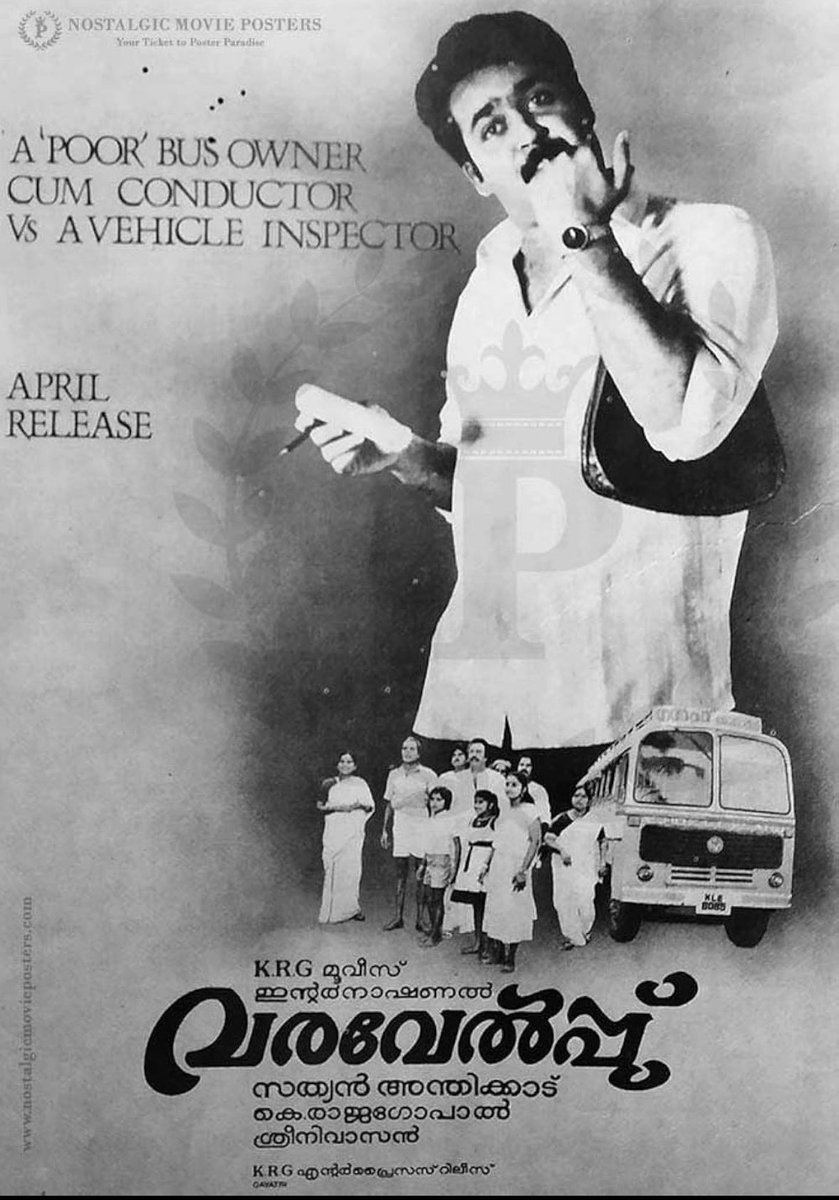
Adv. Jayashankar recently shared a light-hearted yet telling anecdote on how #Varavelppu quietly influenced society and even reflected in his professional life. The film, starring #Mohanlal and written by #Sreenivasan, was not just popular entertainment. Its sharp social commentary and grounded conflicts were so relatable that similar ideas and references reportedly surfaced during real legal discussions and trials.
Marcus Legranda tweet media
English
1
28
151
12.6K
Sooraj रीट्वीट किया
Shashi Tharoor
Shashi Tharoor@ShashiTharoor·
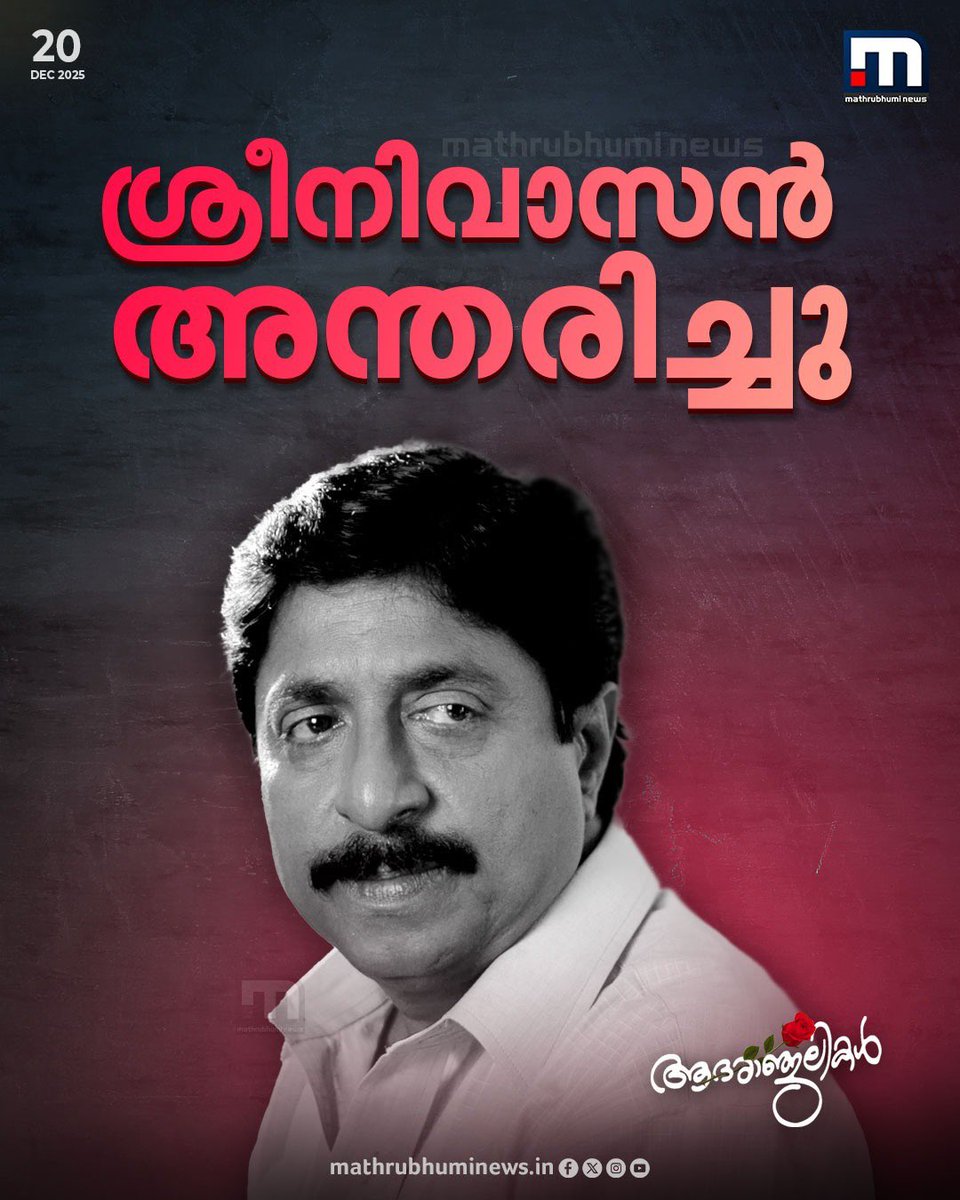
Malayalam cinema won't be the same without the genius of #Sreenivasan. From the satirical bites of “Sandesham”to the raw emotion of “Vadakkunokkiyantram”, he taught us to laugh at ourselves while thinking deeper. A true master of the craft who redefined what it means to be a "hero" on screen, & who was an effective director as well. Beyond the actor was a brilliant writer who captured the pulse of Kerala like no other. Sreenivasan’s scripts are time capsules of social commentary, humor, and unparalleled wit. There will never be another observer of life quite like him. 🕉️ शांति! manoramaonline.com/news/just-in/2…
Shashi Tharoor tweet media
English
63
285
3.1K
78.4K
Sooraj रीट्वीट किया
Lenny Rachitsky
Lenny Rachitsky@lennysan·
My biggest takeaways from @stewart: 1. Product design is about creating understanding, not removing friction. Teams obsess over reducing friction and removing steps, but 70% to 80% of product design challenges are actually about helping people *understand* what your product does and what to do next. Users arrive barely interested and confused about what you offer. If they can’t quickly grasp what they’re looking at, they’ll leave. Making confusing things faster just gets users to the exit quicker. The mantra should be “Don’t make me think,” not “reduce friction.” 2. You’re not selling features—you’re selling outcomes. Nobody wants a saddle; they want to go horseback riding. Nobody wants a hammer; they want something built. People understand cars and beer without explanation, but new software needs an explanation of both what it is and why people should want it. Slack wasn’t selling messaging features—it was selling better team coordination and reduced email chaos. If you can’t articulate the transformation your product creates in people’s lives, you’re just listing features. 3. Organizations naturally fill with fake work that looks exactly like real work, what Stewart calls “hyper-realistic work-like activities.” Meetings to preview deck slides, analysis of tiny feature differences, elaborate processes around insignificant decisions. People aren’t stupid or lazy; they’re responding to having more workers than valuable work to do. Leaders must continuously ensure there’s enough clearly valuable work and explicitly say no to projects that can’t possibly generate meaningful impact. 4. The value of a feature exists on a "utility curve." There’s the initial flat zone where a feature is too weak to matter, then a steep rise where it brings users to the "aha" moment, then the value levels off where improvements don’t matter much anymore. Teams often give up in the first flat zone or waste resources in the third. The key question isn’t whether you have a feature, but whether you’ve invested enough to reach the steep part of the curve where it becomes genuinely valuable. 5. Small conveniences create emotional connections that drive word-of-mouth growth. No one switches products because of a good time-zone picker or smooth password recovery, but these details make users love or hate your product. Slack grew largely because people who used it at one company would join a new company and advocate strongly for adopting it. That advocacy came from accumulated small delights, not major features. 6. The “owner’s delusion” explains why bad experiences persist everywhere. Restaurant owners create terrible websites even though they’ve experienced the frustration of visiting other terrible restaurant websites. Business owners assume visitors care deeply about their product, when in reality people arrive distracted, in a hurry, just above the threshold of caring at all. The solution is to regularly step back, pretend you’re a normal person with limited time and patience, and honestly evaluate if your product makes sense. 7. Only pivot after exhausting all reasonable ideas. The right time to pivot isn’t when things get hard—it’s when you’ve genuinely tried every non-ridiculous approach and can coldly, rationally assess that the expected value has dropped below alternatives. Pivoting is humiliating because you’ve convinced investors, employees, and users of a vision you’re now abandoning. That emotional cost means most people either pivot too quickly or wait until they run out of money. 8. Treating customers and employees with extraordinary generosity creates a competitive advantage. Slack pioneered fair billing (not charging for unused seats), gave free credits during Covid, and automatically refunded customers for downtime without their asking. This wasn’t just ethics—it helped attract better employees, created positive stories, and built long-term customer loyalty. The mantra was “In the long run, the measure of our success will be the amount of value we create for customers.”
Lenny Rachitsky@lennysan

Stewart Butterfield (@stewart) rarely does interviews. After 2 years of trying, I finally convinced him to come on. In this special conversation, Stewart shares the frameworks and mental models that most helped him build two of the most important products in tech history (@Flickr, and @SlackHQ—which he sold for $28B, and which powers how basically every company collaborates these days). We discuss: 🔸 "Utility curves" — his framework for prioritizing ideas 🔸 "The owner's delusion" — why restaurant websites suck 🔸 "Tilting your umbrella" — a hilarious Slack core value 🔸 "Hyper-realistic work-like activities" — my new favorite concept 🔸 "Don't make me think" — Stewart's foundational design philosophy 🔸 The story behind "We don't sell saddles here" Listen now 👇 • YouTube: youtu.be/kLe-zy5r0Mk • Spotify: open.spotify.com/episode/42JBWU… • Apple: podcasts.apple.com/us/podcast/sla… Thank you to our wonderful sponsors for supporting the podcast: 🏆 @WorkOS — Modern identity platform for B2B SaaS, free up to 1 million MAUs: workos.com/lenny 🏆 @getmetronome — Monetization infrastructure for modern software companies: metronome.com 🏆 @Lovable — Build apps by simply chatting with AI: lovable.com

English
25
69
633
130K
Sooraj रीट्वीट किया
Elon Musk
Elon Musk@elonmusk·
fyi
ELON CLIPS@ElonClipsX

Elon Musk: Everything is solar power. The rest is noise. “The sun is about 99.8% of the mass of the solar system. Jupiter's about 0.1% and everything else is in the remaining 0.1%, and we are much less than 0.1%. So, if you burnt all of the mass of the solar system, then the total energy produced by the sun would still round up to 100%. If you just burnt Earth, the whole planet, and burnt Jupiter, which is very big and quite challenging to burn, turn Jupiter into a thermonuclear reactor, the sun is 99.8% of the mass of the solar system and everything else is in the miscellaneous category. Basically, no matter what you do, total energy produced in our solar system rounds up to 100% from the sun. You could even throw another Jupiter in, so we're going to snag a Jupiter from somewhere else, you could teleport two more Jupiters into our solar system, burn them, and the sun would still round up to 100%. As long as you're at 99.6%, you're still rounding up to 100%. Maybe that gives some perspective of why solar is really the thing that matters. And, as soon as you start thinking about things at a grander scale, like Kardashev Scale 2 civilizations, it becomes very, very obvious. I'm not saying anything that's new, by the way. Anyone who studies physics has known this for a very long time. In fact, Kardashev, a Russian physicist who came up with this idea, I think, in the 1960s, just as a way to classify civilizations, where Kardashev Scale 1 would be, you've harnessed most of the energy of the planet, Kardashev Scale 2, you've harnessed most of the energy of your sun, Kardashev 3, you've harnessed most of the energy of a galaxy. Now we're only about 1% or a few percent of Kardashev Scale 1 right now, optimistically. But as soon as you go to Kardashev Scale 2, where you're talking about the power of the sun, then you're really just saying everything is solar power and the rest is in the noise. Like, the sun produces about a billion times, or call it well over a billion times more energy than everything on Earth combined.” All-In Podcast, October 31, 2025

QST
3.4K
4.4K
38.5K
13.7M