Tweet Disematkan

Amyd Caballero
5.9K posts

@Amyd_Samo
Founder. @_Think_AI - The power of an LLM rises on the creativity of the human mind to create words that materialize a digital action.


.@vonderleyen "The European #AgeVerification app is technically ready. It respects the highest privacy standards in the world. It's open-source, so anyone can check the code..." I did. It didn't take long to find what looks like a serious #privacy issue. The app goes to great lengths to protect the AV data AFTER collection (is_over_18: true is AES-GCM'd); it does so pretty well. But, the source image used to collect that data is written to disk without encryption and not deleted correctly. For NFC biometric data: It pulls DG2 and writes a lossless PNG to the filesystem. It's only deleted on success. If it fails for any reason (user clicks back, scan fails & retries, app crashes etc), the full biometric image remains on the device in cache. This is protected with CE keys at the Android level, but the app makes no attempt to encrypt/protect them. For selfie pictures: Different scenario. These images are written to external storage in lossless PNG format, but they're never deleted. Not a cache... long-term storage. These are protected with DE keys at the Android level, but again, the app makes no attempt to encrypt/protect them. This is akin to taking a picture of your passport/government ID using the camera app and keeping it just in case. You can encrypt data taken from it until you're blue in the face... leaving the original image on disk is crazy & unnecessary. From a #GDPR standpoint: Biometric data collected is special category data. If there's no lawful basis to retain it after processing, that's potentially a material breach. youtube.com/watch?v=4VRRri…




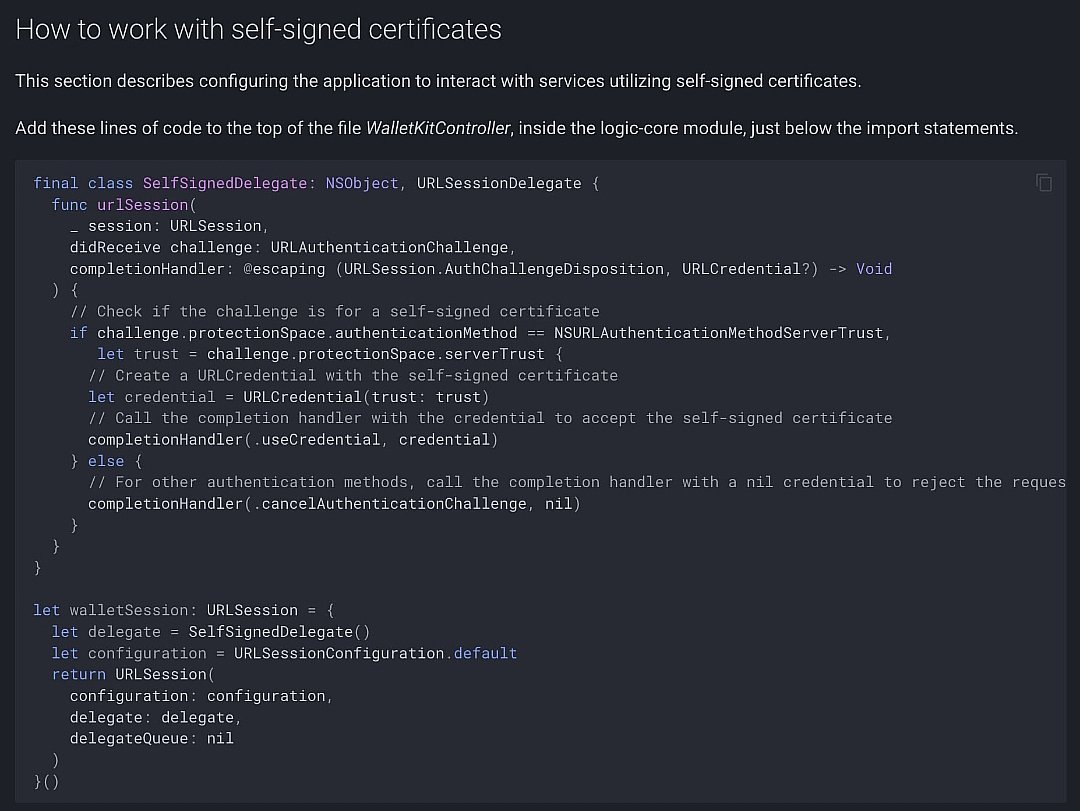
Heu ... lol C'est le SDK du wallet de l'European Digital Identity ça ? Dites moi que c'est une blague pitié 🤣 Le MITM documenté c'est pour la police ou le cab du premier ministre ? #scoped-issuance-document-configuration" target="_blank" rel="nofollow noopener">ageverification.dev/av-app-ios-wal…
Professor Jiang Xueqin claims bitcoin was created by the CIA. "Why would you spend years, possibly decades, in your basement creating a new technology and then just give it for free to the world? That makes no sense." "When you do game theory analysis, you look at all possibilities, you end up with the deep state. You end up with the CIA."

JUST IN: 🇨🇳 Popular Chinese commentator 'Professor Jiang' claims Bitcoin is a "CIA operation."


Open source is dead. That’s not a statement we ever thought we’d make. @calcom was built on open source. It shaped our product, our community, and our growth. But the world has changed faster than our principles could keep up. AI has fundamentally altered the security landscape. What once required time, expertise, and intent can now be automated at scale. Code is no longer just read. It is scanned, mapped, and exploited. Near zero cost. In that world, transparency becomes exposure. Especially at scale. After a lot of deliberation, we’ve made the decision to close the core @calcom codebase. This is not a rejection of what open source gave us. It’s a response to what risks AI is making possible. We’re still supporting builders, releasing the core code under a new MIT-licensed open source project called cal. diy for hobbyists and tinkerers, but our priority now is simple: Protecting our customers and community at all costs. This may not be the most popular call. But we believe many companies will come to the same conclusion. My full explanation below ↓

Open source is dead. That’s not a statement we ever thought we’d make. @calcom was built on open source. It shaped our product, our community, and our growth. But the world has changed faster than our principles could keep up. AI has fundamentally altered the security landscape. What once required time, expertise, and intent can now be automated at scale. Code is no longer just read. It is scanned, mapped, and exploited. Near zero cost. In that world, transparency becomes exposure. Especially at scale. After a lot of deliberation, we’ve made the decision to close the core @calcom codebase. This is not a rejection of what open source gave us. It’s a response to what risks AI is making possible. We’re still supporting builders, releasing the core code under a new MIT-licensed open source project called cal. diy for hobbyists and tinkerers, but our priority now is simple: Protecting our customers and community at all costs. This may not be the most popular call. But we believe many companies will come to the same conclusion. My full explanation below ↓

C) Want to explain to the community why Kucoin allowed a threat actor to launder $9.5M+ tied to a fake Ledger app via 150+ Kucoin deposit addresses over the past week? A few days before that another threat actor laundered $3.5M+ from the Bitcoin Depot incident via 25+ Kucoin deposit addresses. You’ve enabled instant exchanges abusing KYC and entities like AudiA6, a centralized mixer for illicit actors to operate freely. Kucoin deserves to have regulators come after its business once again.