
Tweet Disematkan
CryptoOGe
5K posts



CryptoOGe me-retweet

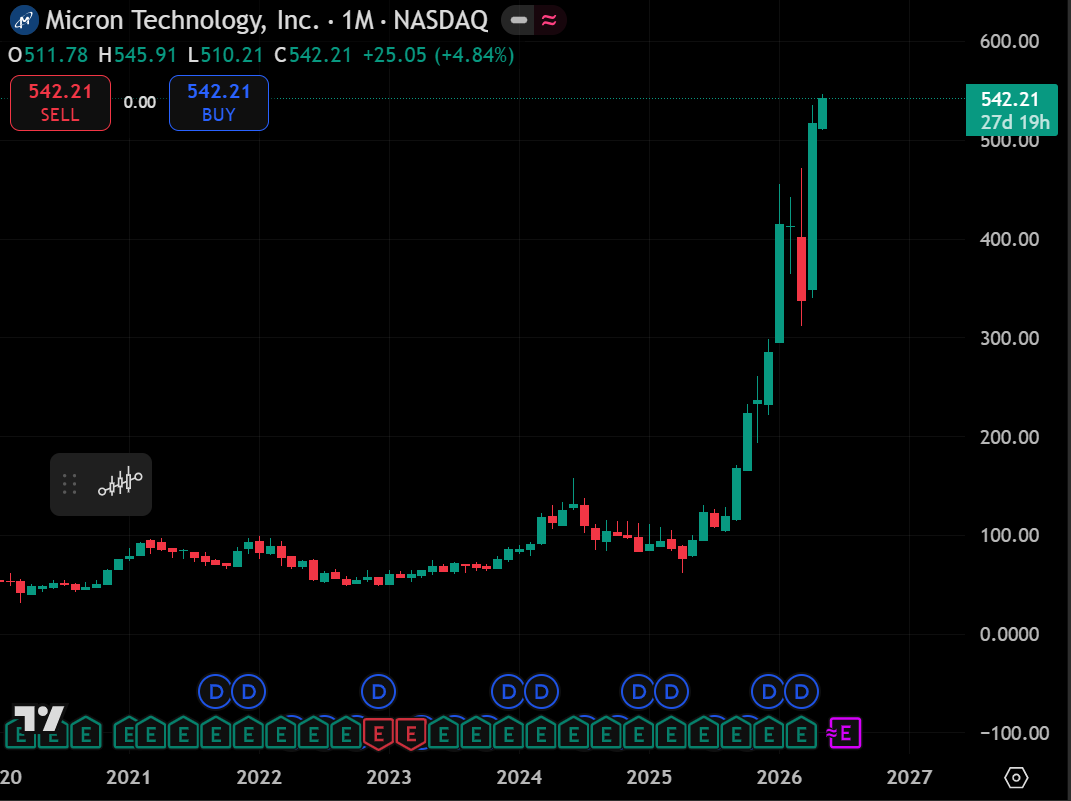
$MU /Micron technology rose ~5% on Friday and that is not even the most amazing part. Just look at the chart.. those are monthly candles.
English
CryptoOGe me-retweet

In 1914, Ford doubled every worker's wage to save his company.
Turnover at the plant hit 370%. He was hiring 52,000 people to fill 14,000 seats.
Today, Ford's CEO is betting the other way. Meanwhile, Goldman Sachs warns 300 million jobs are next.
Here's the question nobody's asking:
On January 5, 1914, Henry Ford doubled his workers' wages. His turnover rate was 370%. He had to hire 52,000 workers a year to fill 14,000 seats.
Ford CEO Jim Farley, 111 years later: "AI is going to replace literally half of all white-collar workers."
Same company. Opposite bet.
Ford did not raise wages to be generous. Workers who could afford a Model T bought one. Sales hit 308,000 in 1914. A million a year by 1920.
Goldman Sachs says 300 million jobs are exposed to AI. The top 10% of earners already drive 49.2% of all consumer spending.
Acemoglu, 2024 Nobel laureate: "We are using AI too much for automation and not enough for providing expertise to workers."
Every automation plan assumes someone else keeps employing the customer.
Ford understood this in 1914. His own company forgot it.
You cannot automate the customer.
I made a free toolkit breaking down 100+ mental models used by history's greatest thinkers.
5,000+ downloads. 113 five-star reviews.
Grab your free copy here: besuperhuman.gumroad.com/l/mentalmodels
If you're new here, @GeniusGTX is a gallery for the greatest minds in economics, psychology, and history. Follow along for more similar content.
— Ford Motor Co. archives (1914/2025), Goldman Sachs | Data: BLS, Federal Reserve
English
CryptoOGe me-retweet

$AAOI now almost a 6x!
What an exciting company
Next weeks earnings are going to be insane
What are you all expecting?
Gaetano@crux_capital_
English
CryptoOGe me-retweet

Unlike the dot com bubble there’s actually revenues
This will upset many people
Tannor Manson@Futurenvesting
Anthropic is now showing off $44 BILLION in annual recurring revenue. This is up $14 billion (+46.6%) since last month! BULLISH for AI Infrastructure $NVDA $AMD
English
CryptoOGe me-retweet

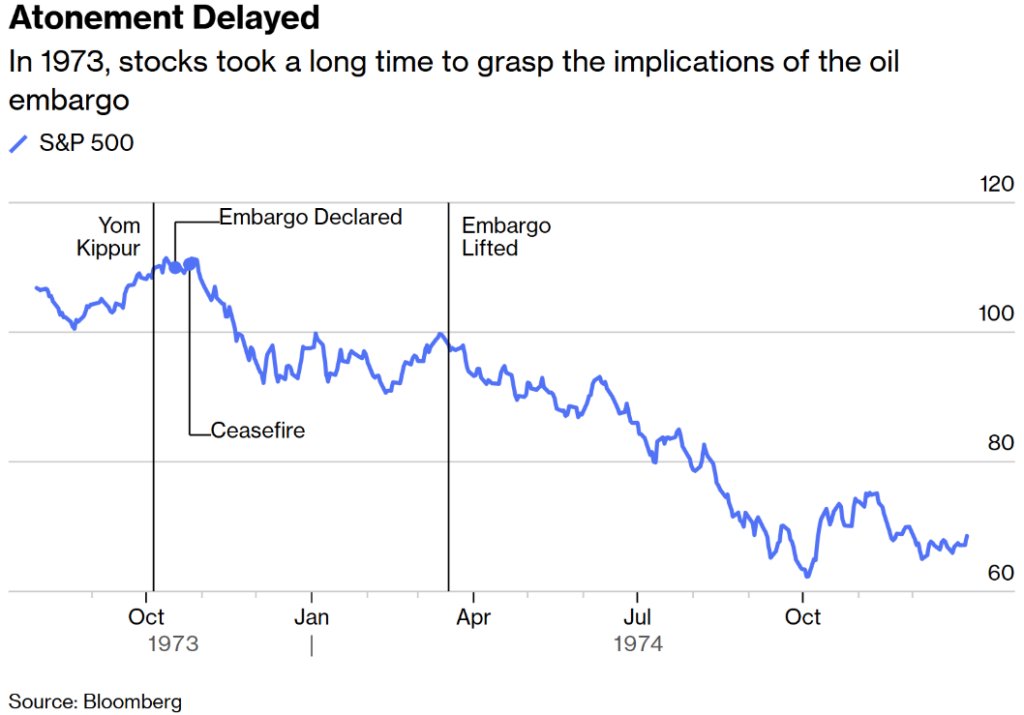
The big stock market crash following the 1973 oil crisis did not come during the embargo, but in the 6 months after the embargo was lifted.
Chart: Bloomberg
English
CryptoOGe me-retweet

Every cycle has one ecosystem that gets ignored until it's too late
In 2017 it was ETH, in 2021 it was SOL, in 2026 it's $TAO
We're going to look back at TAO the same way we look back at ETH in 2016
WallStreetBets@wallstreetbets
English
CryptoOGe me-retweet
Marc Andreessen says Elon Musk runs 120 design reviews a day in 5-minute slots.
He does this while running six different companies at once.
Andreessen says Elon maps each company as a production process.
Each process has one bottleneck — the single thing slowing it down.
Elon finds the engineer working on that bottleneck and sits with them until it's fixed.
He does this at Tesla 52 times a year. Personally.
"There's no CEO like this."
Most CEOs run their companies through a wall of middle managers.
Andreessen watched IBM collapse under that model.
Inside IBM, they had a name for the failure mode: the "Big Gray Cloud."
It was the traveling court of suited men who kept the CEO away from engineers.
After 12 layers of compounding lies, the CEO had no idea what was happening.
Elon's method is the polar opposite.
Design review math:
- 5 minutes per engineer
- 12 reviews per hour
- 10 hours per day
- 120 reviews per day
An engineer described working for him as entering "a zone of shocking competence."
On sustaining it, Elon's rule is:
"I don't take vacations."
What's the one weekly bottleneck in your work that nobody's fixing?
If you're new here, @GeniusGTX is a gallery for the greatest minds in economics, psychology, and history. Follow along for more similar content.
P.S. I made a free toolkit breaking down 100+ mental models used by history's greatest thinkers.
5,000+ downloads. 113 five-star reviews.
Grab your free copy here: besuperhuman.gumroad.com/l/mentalmodels
— Marc Andreessen ( @pmarca ), co-founder of a16z, on David Senra's ( @FoundersPodcast ) podcast
English
CryptoOGe me-retweet

Premarket movers:
OpenAI partners such as CoreWeave (CRWV -7%) and Oracle (ORCL -7%) tumble after the WSJ reported that the AI startup recently failed to meet targets for sales and new users, reviving worries about spending ahead of tech earnings. Stocks linked to the buildout of AI infrastructure — from computing providers to the makers of semiconductors and power equipment used in data centers — are also down after the Wall Street Journal report on OpenAI.
Magnificent Seven stocks are also mostly lower: Nvidia falls 2% on the OpenAI report (Apple +0.4%, Alphabet -0.1%, Amazon -0.9%, Meta Platforms -0.8%, Microsoft -1.2%, Tesla -1.2%)
Celestica (CLS) falls 13% after the maker of electronic components reported first-quarter results that featured smaller upside to expectations than in recent quarters. While it raised its full-year forecast, analysts said the company had been facing high expectations.
Dynatrace (DT) gains 4% on a report that Starboard Value LP took a stake and is pushing the company to better capitalize on the shift to artificial intelligence.
Erasca (ERAS) slides 40% after the biotech said one patient withdrew from the trial after a severe treatment-related adverse event and later died, according to a filing.
General Motors (GM) rises 4% after raising its profit outlook for the year by $500 million, saying its pickups and sport utility vehicles continue to sell even as gasoline prices soar due to the war in Iran.
LendingClub (LC) rises 9% after the online lender’s first-quarter revenue and net interest income beat the average analyst estimate.
Nucor (NUE) rises 2% after the steelmaker reported first-quarter earnings per share that beat the average analyst estimate as steel shipments were stronger than expected.
Rambus (RMBS) plunges 17% after the semiconductor device manufacturer reported first-quarter results that were largely in line with expectations, which analysts said was a disappointment in the wake of recent strength in the stock.
Sanmina (SANM) rises 7% after the electronics contract manufacturing services company’s second-quarter results beat expectations and it gave a full-year outlook that is seen as positive.
Solaris Energy (SEI) rallies 5% after the firm’s first-quarter Ebitda beat the average analyst estimate.
Spotify Technology falls 11% after reporting results that underwhelmed Wall Street, forecasting operating income in the current quarter that missed analysts’ estimates.
UPS (UPS) falls 3% after the courier left financial guidance unchanged. Its profit beat expectations in the first quarter.
zerohedge@zerohedge
OpenAI Misses Revenue, User Targets As CFO Fears $1.5 Trillion In Commitments Can't Be Paid zerohedge.com/markets/openai…
English
CryptoOGe me-retweet

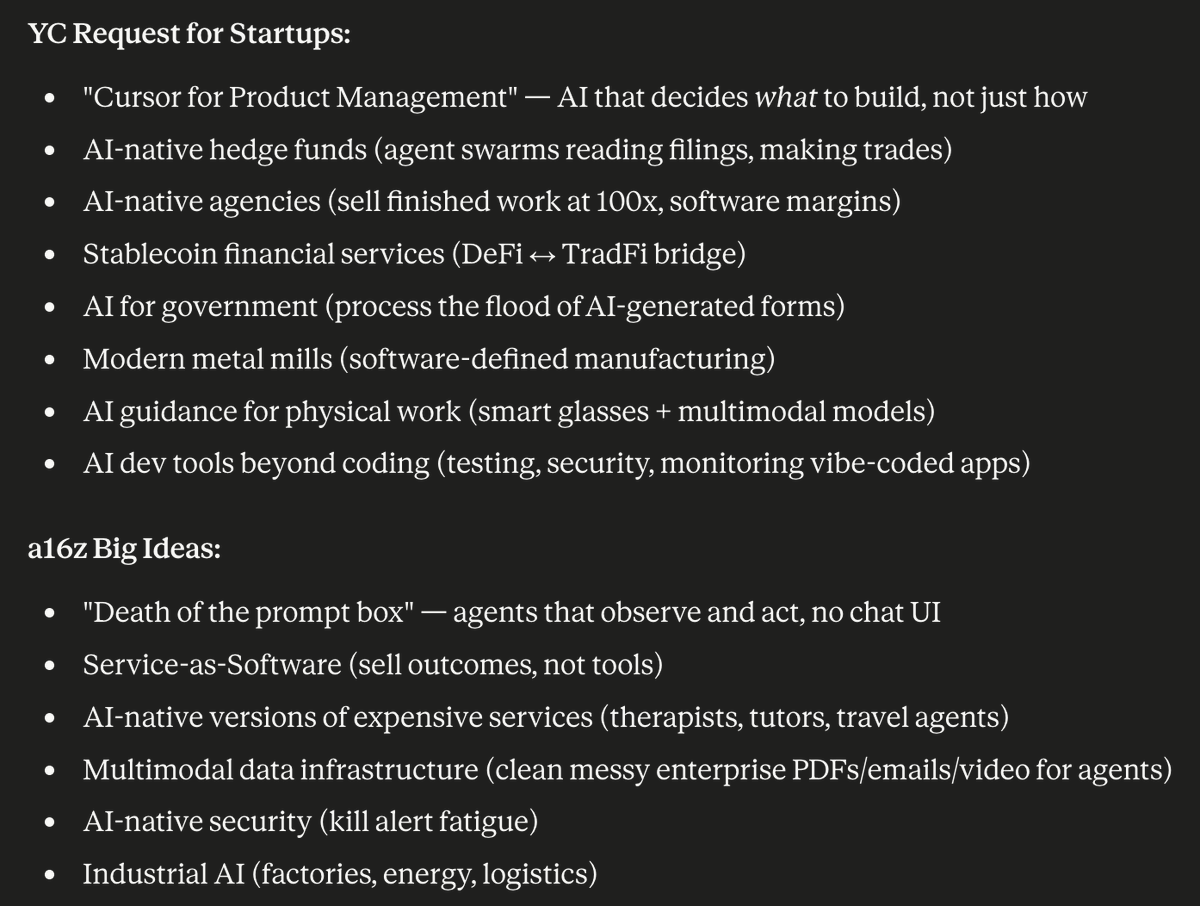
If you're looking for the next multi-million dollar business idea - look no further.
YC and a16z are both recommending these AI business ideas.
This is where the smartest investors in the world are currently looking:
English
CryptoOGe me-retweet

$NVDA $AMD $MSFT - SHARES OF OPENAI PARTNERS FALL AFTER REPORT OPENAI FALLS SHORT OF REVENUE AND USER TARGETS
🔸 NVIDIA DOWN 2.8%
🔸 MICROSOFT DOWN 1.2%
🔸 ADVANCED MICRO DEVICES DOWN 6%
English
CryptoOGe me-retweet

Research shows you spend ~47% of your time mentally not living in the present, and it makes you less happy.
So time to stop your mind from doing side quests and get back to the moment you’re actually in.

English
CryptoOGe me-retweet

The AI industry spent $400 billion on data centers in 2025 alone, and not one of the major AI companies has figured out how to turn a profit from it yet.
A breakdown:
Nvidia shipped roughly 10 gigawatts worth of GPUs last year… but Goldman Sachs estimates there are only 7.7 gigawatts of AI data centers actually operational across the entire planet.
Of the 21.5 gigawatts of data center capacity announced before 2027, only 6.3 gigawatts is actively under construction, and "under construction" can mean a wide range of things.
Nvidia's inventory has quadrupled since 2024, which seems a bit odd for a company that claims it cannot keep up with demand.
Then there is the energy problem: 2 fully fitted data centers sit dark near Nvidia's own HQ in Santa Clara, because local utilities cannot supply the power yet.
The Iran war has also doubled natural gas prices, which is the largest operating expense for data centers running their own generators.
The depreciation problem is the kicker: tech companies are writing off their GPU hardware over 6 years when the chips are realistically obsolete in 3.
Which makes profits look better and helps mask the real cost.
The only consistent winner is Nvidia, which is the classic gold rush dynamic. Everyone loses money digging, while the guy selling shovels gets rich.
The question is how long investors stay patient before the math becomes impossible to ignore.
Source: How Money Works YT


English
CryptoOGe me-retweet

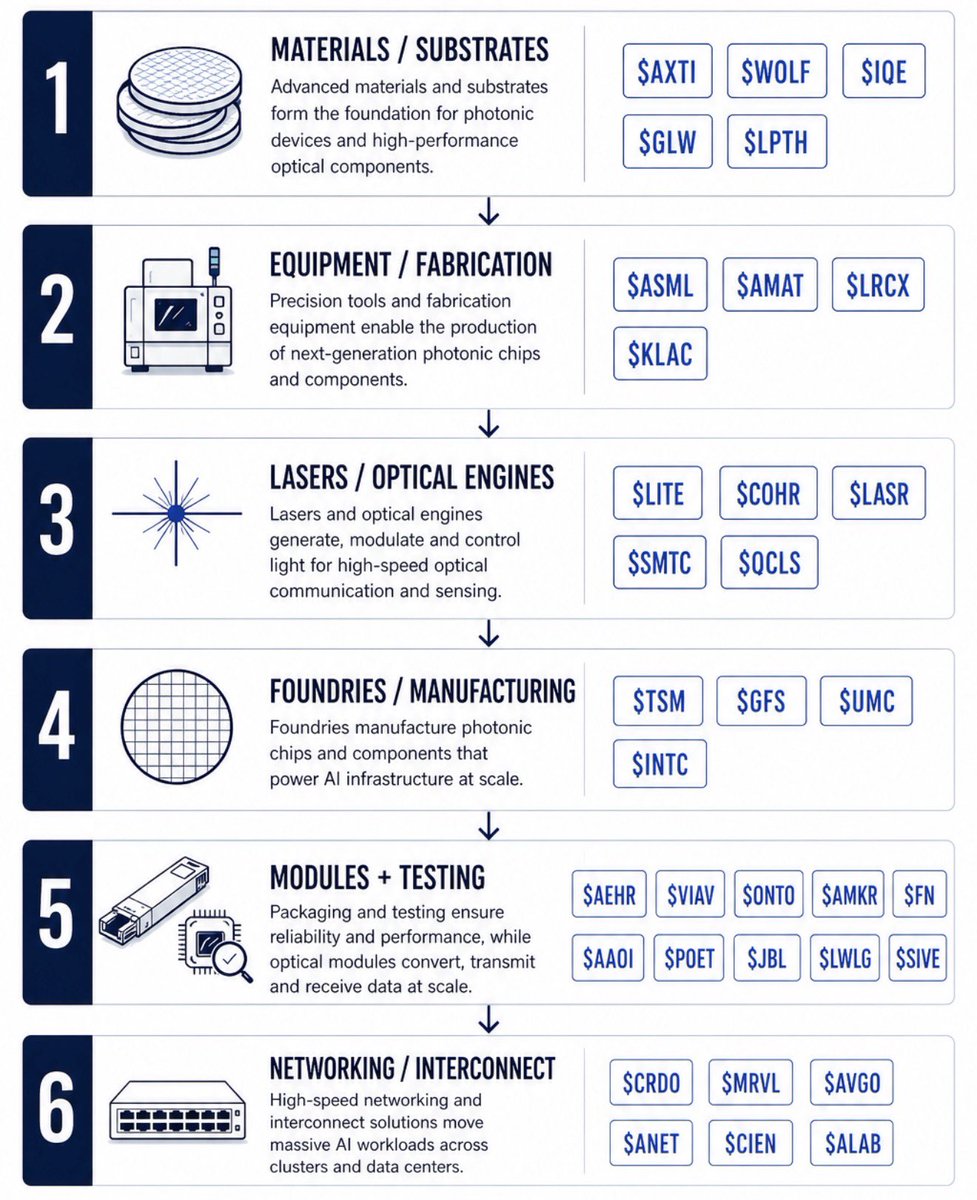
AI PHOTONICS INFRASTRUCTURE
Here’s the full stack:
1. Materials / Substrates
$AXTI $WOLF $IQE $GLW $LPTH
2. Equipment / Fabrication
$ASML $AMAT $LRCX $KLAC
3. Lasers / Optical Engines
$LITE $COHR $LASR $SMTC $QCLS
4. Foundries / Manufacturing
$TSM $GFS $UMC $INTC
5. Modules + Testing
$AEHR $VIAV $ONTO $AMKR $FN
$AAOI $POET $JBL $LWLG $SIVE
6. Networking / Interconnect
$CRDO $MRVL $AVGO $ANET $CIEN $ALAB
English
CryptoOGe me-retweet

The $NVDA CEO quite literally has been telling you what to buy…
In 2025 Jenson called:
$NBIS at $21 & is now up 680%
$APLD at $3 & is now up 1,200%
$TSM at $180 & is now up 130%
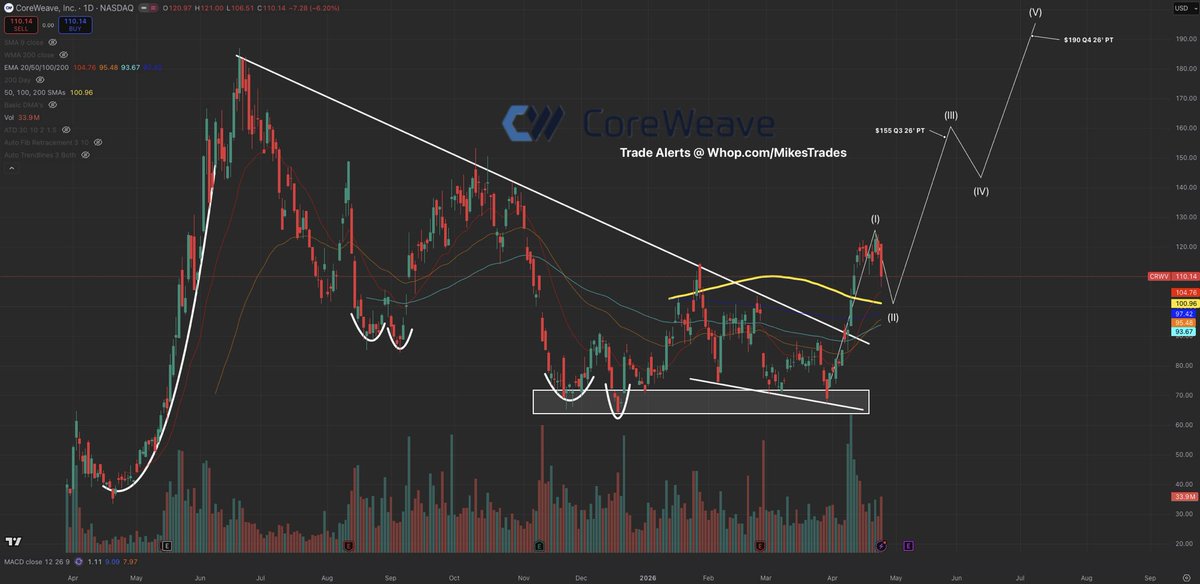
Jensen is now calling for these 3 companies to be next to squeeze in 2026:
$NOW at $90
$CRWV at $110
$PLTR at $140
These names are going to make many generational wealth.
Don’t miss out…


English
CryptoOGe me-retweet
THE FULL PHOTONICS BOTTLENECK
It’s clear that the next phase of AI scaling is no longer compute, but rather optical connectivity.
1. $AAOI builds high-speed transceivers with vertically integrated lnP laser manufacturing and early 1.6T hyperscale demand.
2. $AEHR providing burn-in and reliability testing for AI and optical hardware, with Sonoma gaining traction at hyperscalers.
3. $AVGO delivers core networking and optical connectivity through custom silicone used across hyperscale AI infrastructure.
4. $COHR scaling lnP lasers, and optical engines to support next-gen AI networking demand.
5. $MRVL builds DSP and interconnect silicone that powers, high speed optical infrastructure.
6. $LITE supplies lasers and optical components backed by NVDA, and a growing optical switching backlog.
7. $CRDO enables faster data movement through cables, retimers, and interconnect silicone, expanding into silicone photonics.
8. $CSCO provides switching, routing, and optical networking gear that ties AI clusters together at scale.

English
CryptoOGe me-retweet
THE PHOTONICS ROTATION
Almost nobody is watching photonics.
As AI clusters scale, copper hits physical limits and the next bottleneck becomes optical infrastructure.
Here are 15 names positioned for it:
1. $LITE owns the laser + optical switching side of the trade and is one of the cleanest pure plays on AI optical demand.
2. $COHR wins from lasers, modules, and networking hardware that power hyperscale AI infrastructure and cloud expansion.
3. $AAOI is one of the best ways to play AI optical transceivers with major hyperscaler demand for 800G and 1.6T connectivity.
4. $SIVE benefits from the push toward faster semiconductor-to-optical integration as AI infrastructure scales.
5. $MRVL controls a huge part of the DSP + interconnect story with optical networking chips and high-speed connectivity.
6. $AVGO sits at the center of AI networking through switching, custom silicon, and optical interconnect demand.
7. $ANET is the Ethernet backbone moving massive AI workloads across hyperscale clusters and data centers.
8. $GLW supplies the specialty glass + fiber needed for the optical transport layer behind AI infrastructure.
9. $JBL benefits from building and scaling the actual hardware behind networking systems and optical modules.
10. $AEHR wins from burn-in + testing demand as AI ASICs and high-power optical hardware move into production.
11. $POET is focused on lower-cost optical engines designed to improve efficiency inside AI data centers.
12. $LWLG is pushing next-gen polymer photonics that could make optical communication faster and more efficient.
13. $QCLS brings exposure to advanced laser systems supporting precision photonics and next-gen optical demand.
14. $LPTH provides specialty optics and photonic components tied to industrial, defense, and AI-driven systems.
15. $ALAB gives exposure to the connectivity + infrastructure side helping AI clusters scale faster.
Most people won’t care until these are already up 100%.

English
CryptoOGe me-retweet

The secret to wealth:
Own companies building what the future needs most.
Bookmark.
• Photonics → $AAOI $POET $AeHR $LITE
• Space → $RKLB $ASTS $LUNR $SATL
• AI Inference → $AMD $ARM $INTC $RMBS
• Power Semis → $VICR $NVTS $MPWR $ON
• AI Infra → $NBIS $VRT
• Robotics → $TSLA $SYM $OUST
• Defense → $ONDS $KTOS $AVEX
Buy early. Let time compound it.
Follow right people on X
English
CryptoOGe me-retweet

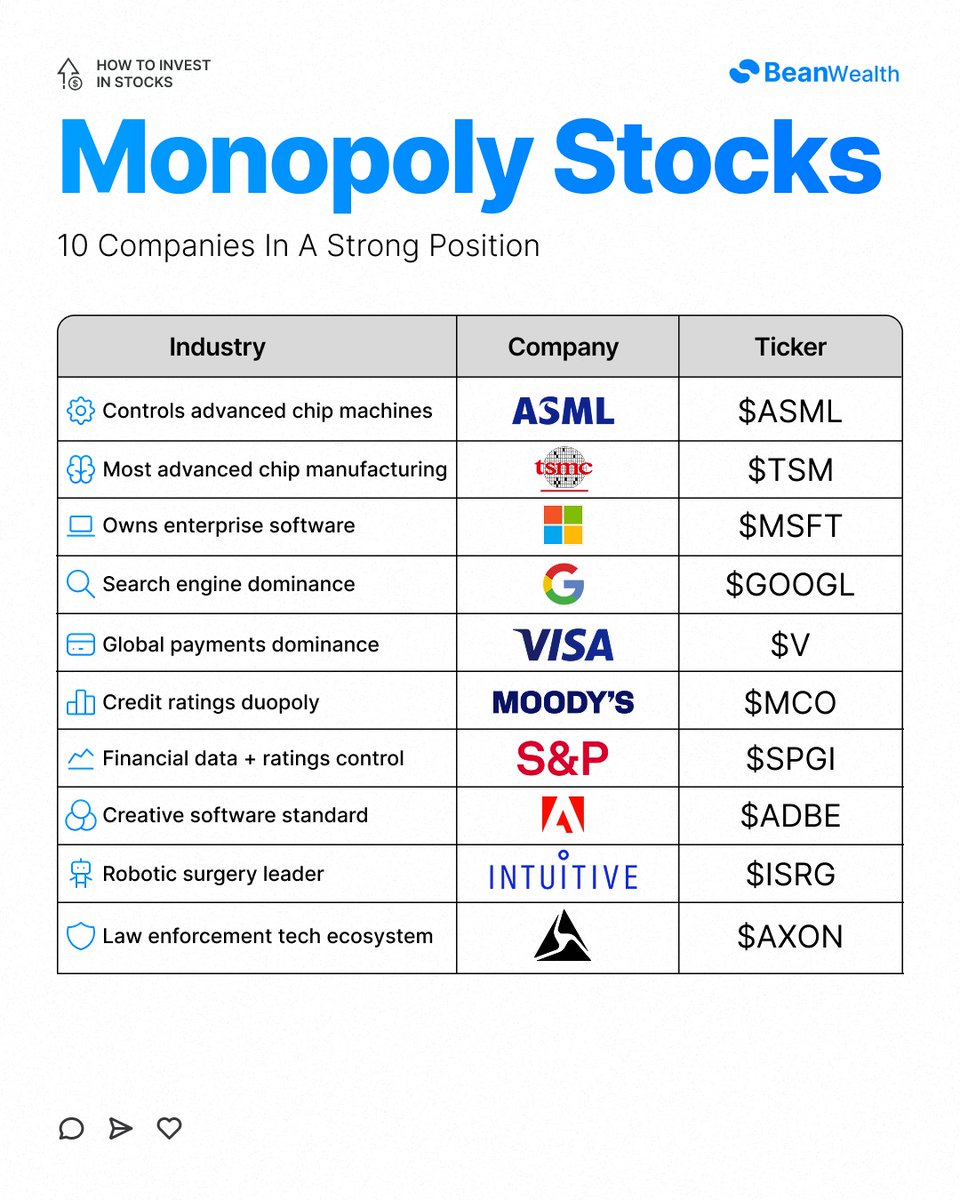
6. 6Monopoly Stocks: 10 Companies Dominating Their Industries 🧵👇
1. ASML
2. TSMC
3. Microsoft
4. Google
5. Visa
6. Moody’s
7. S&P Global
8. Adobe
9. Intuitive Surgical
10. Axon
English
CryptoOGe me-retweet

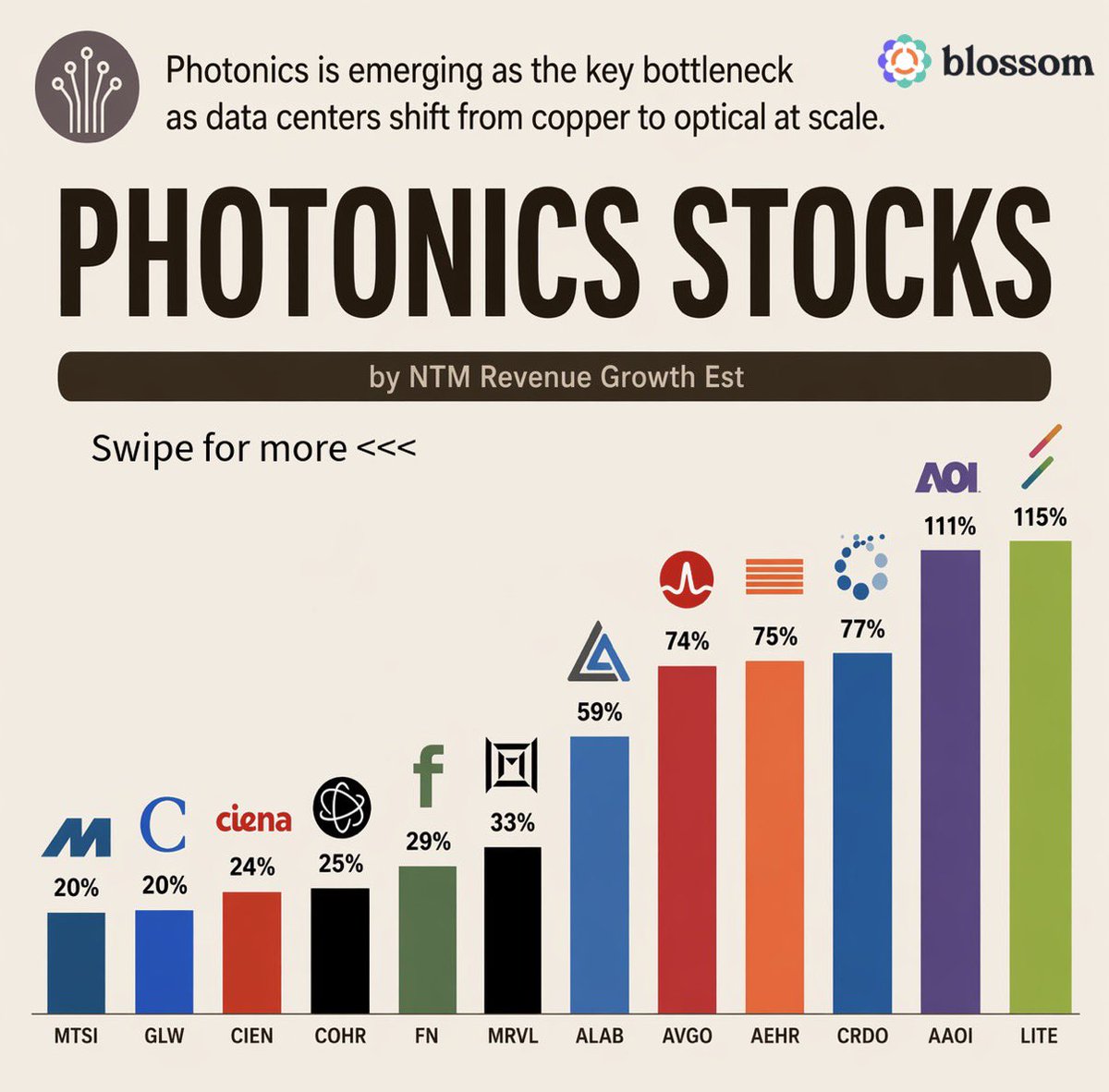
Copper is dead. AI data centers need light — and photonics companies can’t build fast enough to keep up.
$LITE – Makes the lasers inside every optical transceiver. No LITE, no light.
$AAOI – Builds transceivers that convert electrical signals to optical. The translator.
$MRVL – Designs the silicon brains that control photonic data flow at speed.
$GLW – Invented optical fiber. Still makes the glass the internet runs through.
English
CryptoOGe me-retweet

Stocks Trading Below 15x Earnings:
Fiserv $FISV 7x
Kaspi $KSPI 7x
Adobe $ADBE 9x
PayPal $PYPL 9x
Lululemon $LULU 11x
Salesforce $CRM 13x
Apollo Global $APO 13x
Kroger $KR 13x
JPMorgan $JPM 14x
Disney $DIS 14x
Coca-Cola FEMSA $KOF 14x
Intuit $INTU 15x
English