
Wintermute

5K posts

Wintermute banner
Wintermute

Wintermute

@CryptoSDMark

Crypto, Stock Option, motorcycle and car nut. IT expert and business owner. USAF veteran. https://t.co/MIO6FFeRsN

Bergabung Şubat 2012
847 Mengikuti943 Pengikut
Tweet Disematkan
Wintermute
Wintermute@CryptoSDMark·
Most EV analysis covers who's winning. Very little covers why the losses exist, what they actually mean, and which companies are being misread by the market. Spent weeks going through filings, Investor Day presentations, and building scenario models. Sharing the most surprising findings — one per day. Full research package follows, including scenario models with breakeven timing, dilution analysis, and stock price implications. $LCID $F $GM $STLA
English

1
1
7
583
Wintermute
Wintermute@CryptoSDMark·
@ntwork — genuine question from someone who spent weeks analyzing Lucid's market positioning and has actively invested in Lucid since 2021. The Air and Gravity are marketed as large luxury — alongside 7-Series, S-Class, and Range Rover. That's a relatively limited annual segment. But both vehicles' exterior dimensions and real-world transaction prices put them squarely in the premium midsize category. A loaded BMW X5 xDrive50e with popular packages transacts at $85-100K. A loaded Mercedes GLE 450 hits $80-95K. Porsche Cayenne with options regularly exceeds $100K. These are the vehicles people actually buy — not the base list prices. Gravity GT at $96K isn't competing with the X5 base list price. It's competing with the X5 that people actually drive home. The interior space advantage makes the case even stronger. More rear legroom than a 7-Series in a 5-Series footprint. More second-row space than an Escalade in an X5 footprint. That's not a large luxury story. That's a premium midsize vehicle with a large luxury interior — a category that doesn't currently exist in the market. BMW X5 alone sells 58K US units annually. GLE 52K. Cayenne 21K. If that framing reaches the mainstream consideration set, the addressable market nearly triples. Deliberate choice or unrealized opportunity? $LCID @ntwork @LucidMotors
English
2
0
8
136
Wintermute
Wintermute@CryptoSDMark·
With this exercise I took great pains to rein in my natural optimism and take a hard look at the state of the EV market and Lucid's place in it. My unrestrained reaction is to agree with you — but taking all facts into consideration, I think the models are appropriately calibrated. The documents drop tomorrow. Judge for yourself.
English
0
0
1
45
Wintermute
Wintermute@CryptoSDMark·
Day 7 — The AMP-2 Capex Cliff: The most overlooked runway extender AMP-2 construction capex is a finite project — not a recurring cost. Peak spend 2026: ~$1.4B — CBU build-out, Cosmos tooling, Atlas motor lines all concurrent. 2027: drops ~55% to ~$630M once construction completes. 2028+: ~$310M sustaining only. That $770M annual reduction = ~3 months of additional runway per year. Before counting a single Cosmos delivery. Most bear models assume flat capex indefinitely. That's the wrong assumption — and it changes the dilution timeline materially. Full scenario model — including quarterly liquidity bridge and dilution timing by scenario — drops this week. $LCID
Wintermute tweet media
English
4
3
22
5.7K
Wintermute
Wintermute@CryptoSDMark·
Day 9 — The monitoring signal: Watch the DDTL, not the headline raise The next Lucid capital raise will tell you which scenario you're in — but only if you know what to look for. Delayed Draw Term Loan ($750M, already in place): non-dilutive, signals conditions met. ✓ Bullish. Emergency PIF convertible preferred: dilutive, forced. Bearish. Bear case: ~$1.75B raise, +250M shares. Base case: ~$1.25B, +36M shares. The form matters more than the size. $LCID
English
1
2
9
345
Wintermute
Wintermute@CryptoSDMark·
Day 8 — The Right Historical Parallel: Tesla 2008, not Fisker Bears compare Lucid to Fisker. The right parallel is Tesla in late 2008. Near-death cash crisis. Board debated replacing the founder. Technology genuinely world-class. Survived on two sources of capital most people forget: Daimler's strategic equity investment and a $465M DOE government loan. Both kept Tesla alive long enough to prove the model. PIF equity + SIDF/MISA non-dilutive Saudi support is the same structure. Strategic partner plus government capital as bridge to scale. The question was never "is the product good." It was "can they survive long enough to scale it." That question is still open. Full leadership transition analysis and the Tesla 2008 parallel mapped across seven dimensions in the deep-dive document — dropping Friday. $LCID
English
0
0
6
314
Wintermute
Wintermute@CryptoSDMark·
I wasn’t relying on Claude to validate my ideas or logic. It makes perfect sense to me to consider the overlaps on size and price, not narrowly limit the TAM to luxury full-sized vehicles. Claude provided the numbers and happened to agree. I’m not outsourcing my thinking, just the grunt work. If you disagree with the broader TAM, what is your reasoning?
English
1
0
0
28
Bottom Up Capital
Bottom Up Capital@BtmUp_Capital·
@CryptoSDMark And if you “pushed back” in the opposite direction (e.g. Air and Gravity TAM is initially over estimated), what would it do? It would likely agree with you, right?
English
1
0
0
25
Wintermute
Wintermute@CryptoSDMark·
I was pleasantly surprised by a few. One example was when I pushed back on the TAM. I felt that both the Air and Gravity TAMs were too narrow since they both have midsized exteriors and large interiors, and overlap multiple categories on price. Claude agreed and ran the new numbers. I then told it to Aldi consider ICE vehicles sales based on Model Y history. It agreed there as well. Pushing back on those two points alone dramatically changes the possibilities for Lucid.
English
1
0
0
33
Bottom Up Capital
Bottom Up Capital@BtmUp_Capital·
@CryptoSDMark We will see. Pushing back on an LLM doesn’t generally result in novel insights. So far everything posted feels topical
English
1
0
1
25
Wintermute
Wintermute@CryptoSDMark·
@BtmUp_Capital I used Claude to find and reference the data and to draft the reports. But I pushed back a lot and prompted all the ideas and connections/considerations that I haven’t seen elsewhere.
English
1
0
0
26
Bottom Up Capital
Bottom Up Capital@BtmUp_Capital·
@CryptoSDMark I read through some of your recent posts/research, seems like it’s leaning heavily on chatGPT. Will still read your research, but if it’s just chat GPT’s opinion then there’s unlikely to be anything too novel/insightful.
English
1
0
0
30
Wintermute
Wintermute@CryptoSDMark·
It's in the full research documents dropping Thursday — dedicated section with the Series A/B mechanics, 9% PIK, the 18% CAGR Minimum Consideration in liquidation, and the three counterarguments including the PIF alignment point you may not have fully weighted. Today's post is just one piece of a 7-day series. Full deep-dive addresses your preferred stock analysis directly.
English
1
0
0
43
Wintermute
Wintermute@CryptoSDMark·
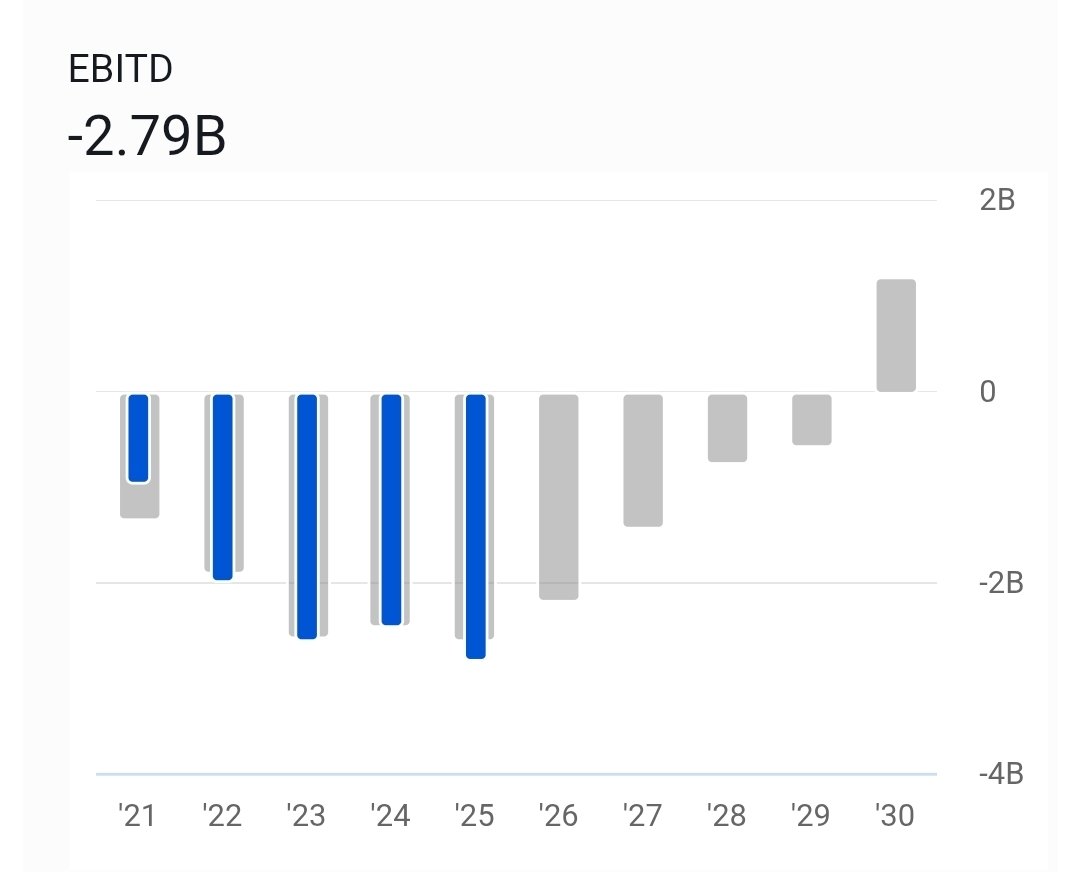
The trajectory is exactly what the capex step-down model shows — losses compressing from 2026 as AMP-2 construction ends and Cosmos deliveries begin, inflecting toward positive as fixed costs get absorbed across higher volume. Just posted the scenario model breakdown today with Bear/Base/Bull through 2030 — the $1.2B EBITDA by 2030 lands right between our base and bull cases. x.com/CryptoSDMark/s…
English
1
0
2
186
Tristan Cornely 𓄀
Tristan Cornely 𓄀@WhiteMillions·
Analysts expect Lucid to achieve a $1.2B positive earnings before interest/taxes/depreciation in year 2030 🥂 The first positive earnings per share is also expected that year That's when the fun kicks in hard 🤑 $LCID
Tristan Cornely 𓄀 tweet media
English
3
4
45
2K
Debbie Doll
Debbie Doll@doll_debbie·
Anyone know if this is still being revealed on April 1st? Asking for friends 😉
Debbie Doll tweet media
English
30
37
303
100.2K
Wintermute
Wintermute@CryptoSDMark·
Worth modeling out. Model Y's lesson isn't just that EVs sell — it's that a compelling enough product expands the segment rather than just capturing existing share. Gravity's ICE TAM in the US: BMW X5 (58K), GLE (52K), Cayenne (21K), Q7/Q8 (32K), XC90 (28K). That's ~220K premium midsize SUV units annually — before counting Model X orphans. Model Y captured roughly 8-10% of its comparable ICE segment in year 2-3, then expanded well beyond it. Applied to Gravity: 17,000-22,000 US units in early years, scaling toward 35,000-45,000 at Model Y-comparable penetration. Air adds another 9,000-15,000 US units from the sedan segment. Combined US ceiling: ~45,000-60,000 Air + Gravity. Global (US + Europe + GCC): ~85,000-130,000. That's well above Tesla's old 90K Model S/X record — without Cosmos contributing a single unit. On "people don't have the money" — the US sells approximately 900,000-1,000,000 vehicles above $70K annually. Loaded F-150s, Escalades, Porsche, BMW, Mercedes. The money exists. The question is whether the product is compelling enough to capture it. Car and Driver 10Best and Esquire Car of the Year suggest the answer is yes. Philipp's 90K ceiling applies if Lucid only captures existing EV buyers. It doesn't if Gravity does what Model Y did to the X3 buyer.
English
0
0
0
31
Philipp Effkemann
Philipp Effkemann@PhilippEffkema1·
@WhiteMillions I think that 19k is more close to the Q1 2026 number 2024 - 94k 2025 - 54k So even better for lucid The market is capped at the 90k for one brand though, you can only sell more if you beat the price of model s and x People love those cars but simply don’t have the money
English
2
0
0
106
Tristan Cornely 𓄀
Tristan Cornely 𓄀@WhiteMillions·
Someone needs to fill the ~19,000 annual sales gap when the Tesla Model S & X exit the market in Q2 Two words: Air & Gravity
Tristan Cornely 𓄀 tweet media
English
8
1
25
1.5K
Wintermute
Wintermute@CryptoSDMark·
Really appreciate this perspective — and it's an angle the Western financial press almost never considers. The stability argument is actually one of the strongest cases for the Saudi manufacturing decision that doesn't show up in a balance sheet. Careers, supply chains, and institutional knowledge built on sovereign industrial commitment outlast any administration's policy preferences. That's structural, not cyclical.
English
1
0
1
42
Wintermute
Wintermute@CryptoSDMark·
Day 6 — The Overlooked Saudi Detail: Support is $2B+ beyond PIF equity Everyone knows PIF owns ~60% of Lucid and has invested $9-10B in equity. Almost nobody discusses the non-dilutive stack underneath it. SIDF committed ~$1.4B in industrial loans for AMP-2 construction. MISA has made milestone-based grants — $97.5M received with no conditions outstanding as of Sept 2025. GIB revolving credit: ~$507M. That's $2B+ in non-dilutive capital supporting AMP-2 directly. Not equity. Not on the US balance sheet. Not requiring shareholder dilution. The parallel to how sovereign industrial policy supported BYD's early manufacturing scale — before it became the world's largest EV manufacturer — is closer than most realize. Full breakdown of equity vs. non-dilutive funding stack in the research. $LCID
English
0
1
10
643
Wintermute
Wintermute@CryptoSDMark·
Genuinely appreciate that — and it's an honest position. The market size concern is real at Air pricing. It's exactly why Cosmos at ~$48K matters so much — that's where the curve flattens and the addressable market expands dramatically. On "tiny bit better for much more cost" — the efficiency gap is larger than it appears. 5.0 miles/kWh vs the segment average of ~3.5 means a smaller battery achieving the same range. That's not a marginal difference — it's a structural cost advantage that compounds as battery prices decline. The scenario model drops next week. It addresses the market size and economics questions with actual numbers. Worth a look before reaching a final verdict.
English
1
0
1
20
Philipp Effkemann
Philipp Effkemann@PhilippEffkema1·
@CryptoSDMark @WhiteMillions Nice I’m interested actually I like EVs and lucid stats look good but the economics of the company turn me off I wouldn’t invest but I hear many are But I cant find good reasons apart from it’s a tiny better for much more cost The higher the price the smaller the market
Philipp Effkemann tweet media
English
1
0
1
19
Wintermute
Wintermute@CryptoSDMark·
The comparison years matter for exactly the reason you're resisting. Tesla spent 2008-2012 building something invaluable that doesn't show up in your table — brand recognition, customer trust, and proof that compelling EVs could exist at all. Lucid entered a market where that work was already done. The EV segment was proven. The buyer existed. The infrastructure was building. That's worth billions in avoided risk that your spend comparison doesn't capture. The spend difference also reflects what was purchased. Tesla's early budget bought a used factory and a hand-built sports car. Lucid's bought a purpose-built greenfield facility, a proprietary powertrain developed from zero, and a second factory on sovereign territory with government backing. Different assets. Different strategic positions. Not directly comparable on a dollar-per-vehicle basis. We've covered the spend question thoroughly already. The scenario model drops this week — it addresses the forward economics in detail.
English
1
0
1
19
Philipp Effkemann
Philipp Effkemann@PhilippEffkema1·
@CryptoSDMark @WhiteMillions I took those year because they make the most sense if you compare about vehicle type, scale Of course selling EVs before it’s cool isn’t easy But maybe for context check also how much cash each company burned In the first year both companies produced the same but one spent 6x
Philipp Effkemann tweet media
English
1
0
0
18
Wintermute
Wintermute@CryptoSDMark·
That figure doesn't show its methodology. Net loss per vehicle using 2025 annual data gets you to roughly $171K. Cumulative losses since founding gets you to $400K+. Neither matches $233K exactly — so it's worth asking what's actually being measured before treating it as definitive. Either way the denominator problem remains. Net loss per vehicle includes factory depreciation on a brand new greenfield facility spread across 16K units. That's a fixed cost absorption problem, not a product cost problem. We've been over this a few times already in this series.
English
0
0
1
13