Srayko Lab

87 posts

Srayko Lab

Srayko Lab

@LabSrayko

Worm lab at @UAlberta. Molecular genetics. Signaling pathways in oocyte activation. Cytoskeleton assembly. Basic/Fundamental Science. Run by various Lab members

Edmonton, Alberta Bergabung Mart 2022
100 Mengikuti41 Pengikut
Srayko Lab me-retweet
EMBL
EMBL@embl·
Anthony A. Hyman will become EMBL’s next Director General. He joins EMBL from MPI-CBG in Dresden. He is also Professor of Molecular Biology at Technische Universität Dresden, and was a group leader at EMBL Heidelberg from 1993 to 1999. embl.org/news/people-pe…
EMBL tweet media
English
1
10
57
6.1K
Srayko Lab
Srayko Lab@LabSrayko·
@CampbellShelagh Interesting read, and we can't wait to hear your amazing music!🎉🎸
English
0
0
1
12
Shelagh campbell
Shelagh campbell@CampbellShelagh·
@LabSrayko I might have to pick up my guitar again!
Massimo@Rainmaker1973

Playing music is a simple way to stop your brain from shrinking. After the age of 40, the human brain typically shrinks about 5% per decade. This gradual change is linked to difficulties with memory, focus, and processing speech in noisy environments. But research published in PLOS Biology shows that older adults with long-term musical training age differently. The study compared three groups: young adults, older adults with no musical background, and older adults who had played instruments for more than 30 years. All participants were placed in an fMRI scanner and asked to identify speech against background noise – a task that usually highlights age-related decline. The results were clear. Older adults without musical training showed heightened activity in certain brain regions, a sign that their brains were working harder to compensate. In contrast, older musicians displayed patterns of brain activity that closely resembled the young adults. Their brains simply processed the task more efficiently, without the strain. Researchers call this effect “neural preservation.” It appears to come not from listening to music, but from playing it. Years of practice – combining rhythm, pitch, memory, and motor skills – seem to strengthen neural circuits in ways that protect against decline. [“Long-term musical training can protect against age-related upregulation of neural activity in speech-in-noise perception.” PLOS Biology, 2025]

English
1
0
1
13
Srayko Lab me-retweet
The Nobel Prize
The Nobel Prize@NobelPrize·
In 1929, Alexander Fleming published his paper outlining the antibacterial properties of penicillin, and began the era of antibiotics. Read the Nobel Prize laureate's full article online: goo.gl/G8mUHd
The Nobel Prize tweet media
English
18
366
971
103.2K
Srayko Lab
Srayko Lab@LabSrayko·
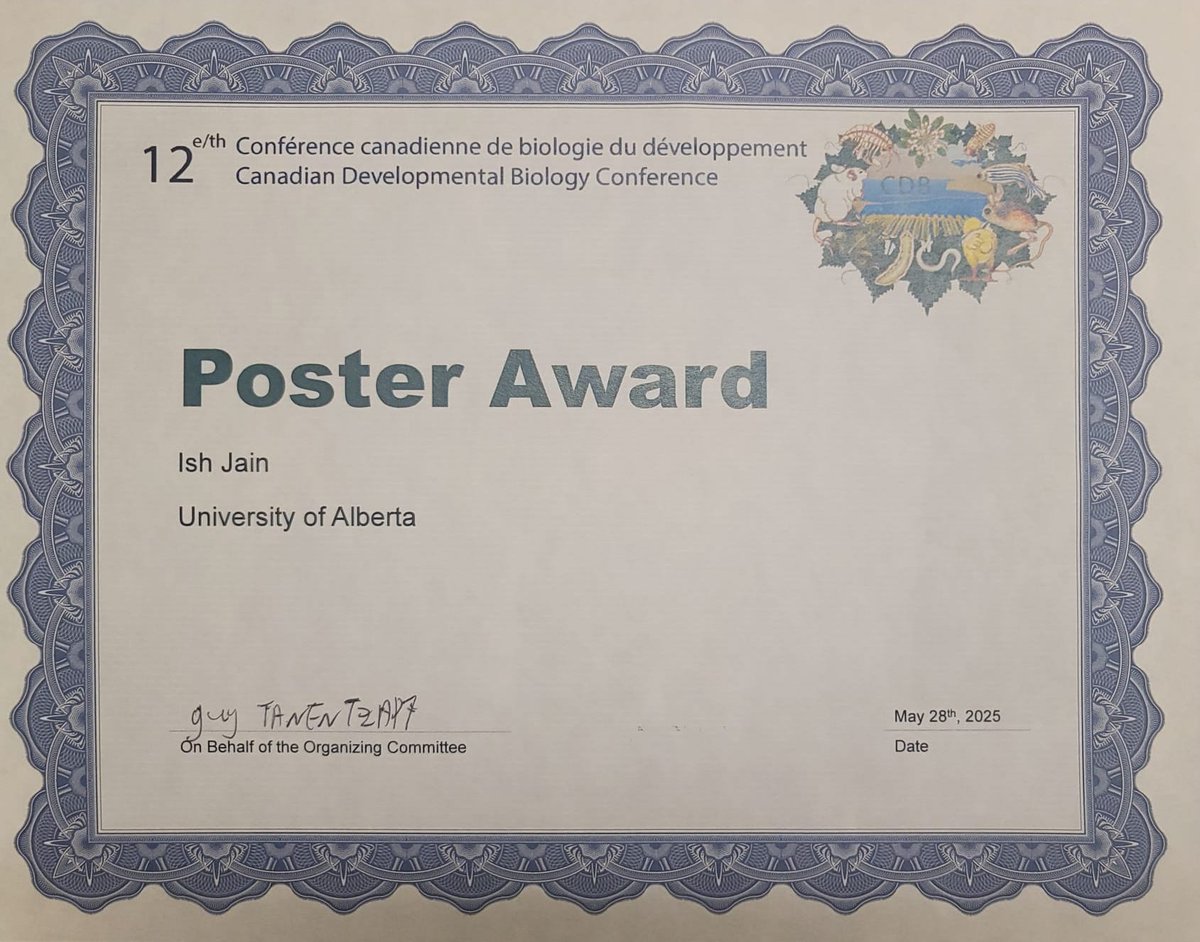
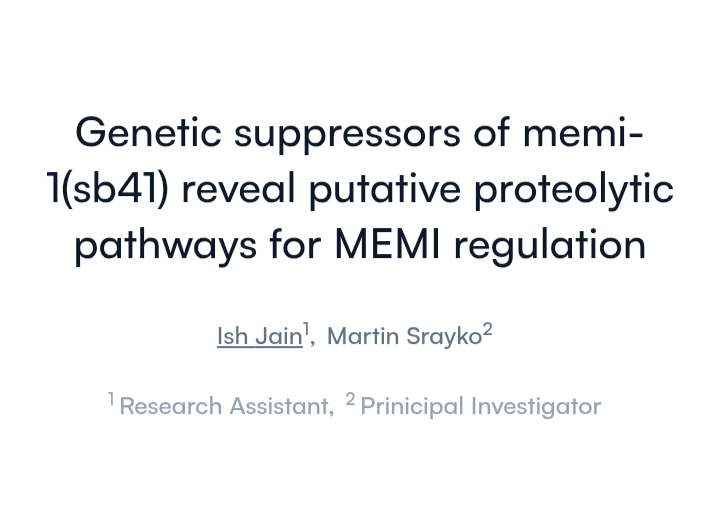
@ishmkjain is presenting his research work on "Genetic suppressors of memi-1(sb41) reveal putative proteolytic pathways for MEMI regulation" at the 12th Canadian Developmental Biology Conference. Well deserved award. Proud of you.🎊🥳
Srayko Lab tweet mediaSrayko Lab tweet media
English
0
0
2
89
Srayko Lab
Srayko Lab@LabSrayko·
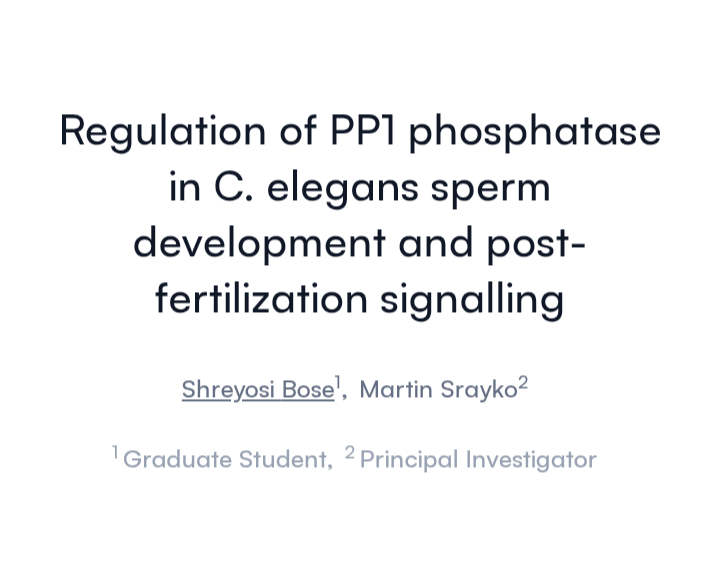
Ms. Shreyosi Bose is presenting his research work on "Regulation of PP1 phosphatase in C. elegans sperm development and post fertilization signalling" at the 12th Canadian Developmental Biology Conference. Many more awards on the way. Proud of you.🥰📷🎉
Srayko Lab tweet mediaSrayko Lab tweet media
English
0
0
3
79
Srayko Lab
Srayko Lab@LabSrayko·
Last week, Ish Jain and Shreyosi Bose presented their research work at at the 12th Canadian Developmental Biology Conference, in Kelowna, organized by the Society for Developmental Biology. We are excited to share that both won the presentation award in the respective category🎉
Srayko Lab tweet mediaSrayko Lab tweet media
English
1
1
5
126
Srayko Lab me-retweet
Ish Jain
Ish Jain@ishmkjain·
Session 3: GROWTH, DIFFERENTIATION, AND PATTERNING (Part II). First talk of the session by Dr. Muhammed Fethullah Simsek @McMasterU
Ish Jain tweet media
English
0
1
1
60
Srayko Lab
Srayko Lab@LabSrayko·
Day 3 - CDBC 25 Ish Jain will be presenting his research on Novel suppressors of MEMI(sb41) and their role in post-fertilization embryonic development. Please join us at EME at 1:00 to know more about our work on MEMI pathway. #cdb25 #biology #Science
Srayko Lab tweet media
English
1
1
2
103
Srayko Lab
Srayko Lab@LabSrayko·
Day 3 - CDBC 25 Role is PP1 phosphatase regulated in C. elegans sperm. Shreyosi Bose from our lab presenting her research work at Session 3: GROWTH, DIFFERENTIATION, AND PATTERNING (Part II) Please join us at EME at 10:30 AM for her talk. #cdb25 #biology #scie
Srayko Lab tweet media
English
1
1
1
57
Srayko Lab me-retweet
Ish Jain
Ish Jain@ishmkjain·
A great way to start the morning session, amazing talk by Dr. Li-Fang (Jack) Chu of @UCalgary on "Species-specific developmental clock models derived from pluripotent stem cells."
Ish Jain tweet media
English
0
1
4
87
Srayko Lab me-retweet
The Nobel Prize
The Nobel Prize@NobelPrize·
This year’s medicine laureates Victor Ambros and Gary Ruvkun studied a relatively unassuming 1 mm long roundworm, C. elegans. Despite its small size, C. elegans possesses many specialised cell types such as nerve and muscle cells also found in larger, more complex animals, making it a useful model for investigating how tissues develop and mature in multicellular organisms. Read how the 2024 medicine laureates’ investigations into C. elegans revealed an entirely new dimension to gene regulation: bit.ly/4dlPE6f #NobelPrize
The Nobel Prize tweet media
English
55
1.2K
3.2K
350.5K
Srayko Lab me-retweet
The Nobel Prize
The Nobel Prize@NobelPrize·
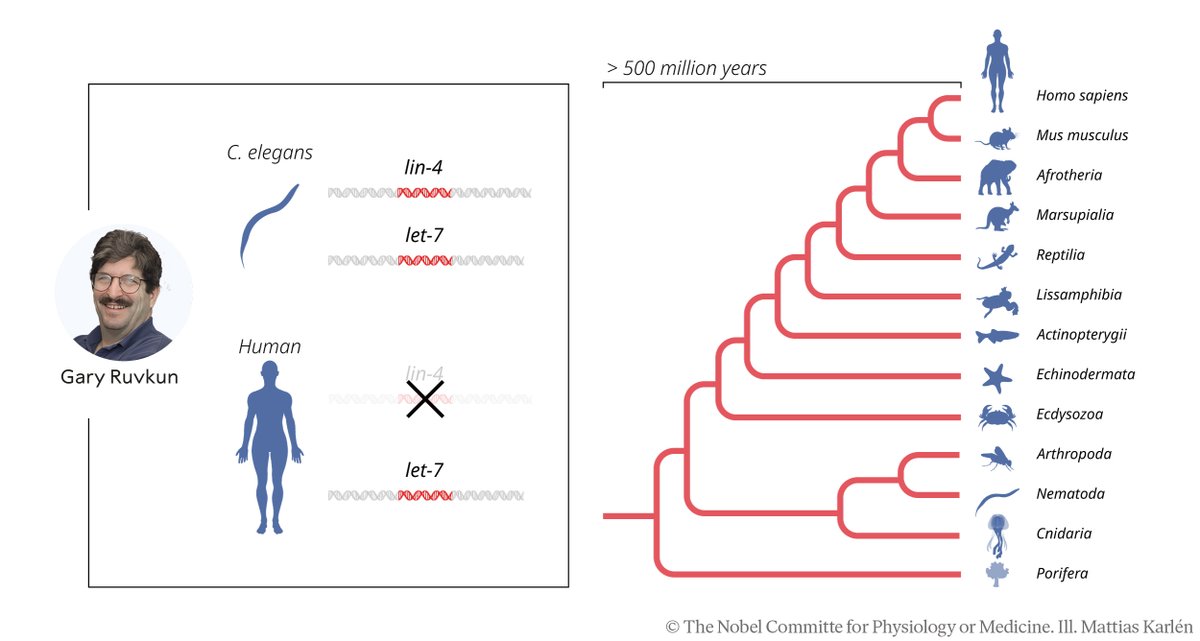
MicroRNA genes have evolved and expanded within the genomes of multicellular organisms for over 500 million years. Today, we know that there are more than a thousand genes for different microRNAs in humans, and that gene regulation by microRNA – discovered by this year’s medicine laureates – is universal among multicellular organisms. #NobelPrize
The Nobel Prize tweet media
English
40
1.2K
3.8K
323.2K
Srayko Lab me-retweet
The Nobel Prize
The Nobel Prize@NobelPrize·
BREAKING NEWS The 2024 #NobelPrize in Physiology or Medicine has been awarded to Victor Ambros and Gary Ruvkun for the discovery of microRNA and its role in post-transcriptional gene regulation.
The Nobel Prize tweet media
English
539
11.3K
27.6K
4.7M