It’s been 10y since we opened our lab at @IcahnMountSinai. What an exciting ride and supportive environment it has been. We are now moving to @Columbia@ColumbiaPeds. Thrilled at the future and discoveries in genetics and immunology to come.
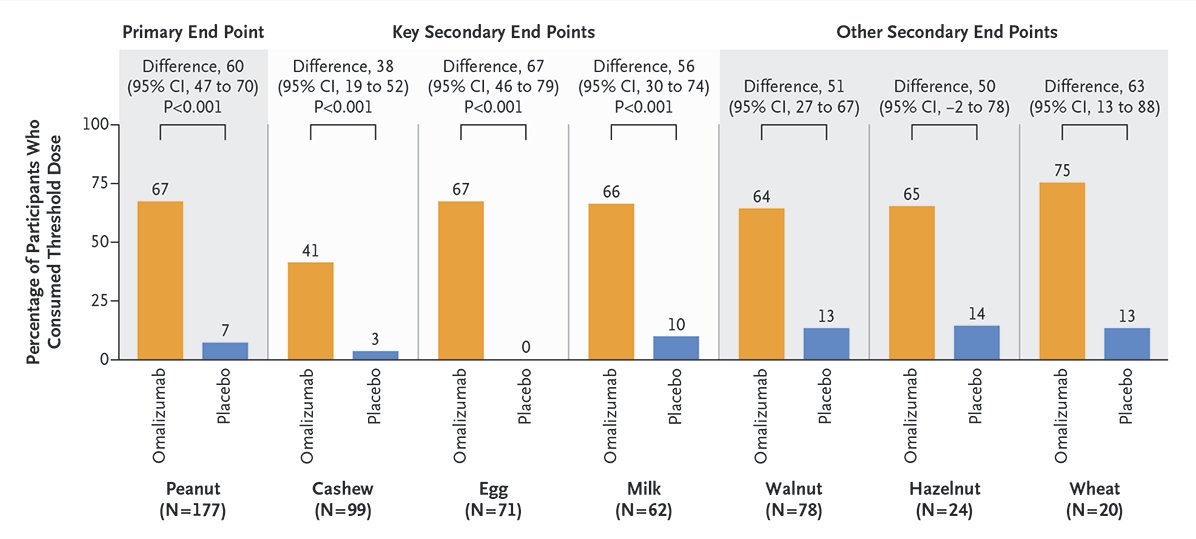
Results of the first stage of the NIAID funded CoFAR OUtMATCH trial, involving 10 sites including Mount Sinai (Scott Sicherer, PI) were just reported nejm.org/doi/pdf/10.105…
Important news for pediatric food allergy!! The FDA approved anti-IgE (Omalizumab) treatment to reduce reactions to accidental exposures to allergenic foods. More in nih.gov/news-events/ne….
Original Article: Omalizumab for the Treatment of Multiple Food Allergies nej.md/4bLW7aS
Editorial: Options for Multiple Food Allergies — Food Avoidance or Pharmacologic Treatment? nej.md/3IaTeD7
This week's new issue of #ScienceTranslationalMedicine has arrived! Researchers uncover stealthy immune saboteurs that drive allergic memory in humans, a new analysis in mice reveals how the brain recovers after stroke, and more. scim.ag/5N7
Therefore, the findings described in our new @ScienceTM manuscript link these Type 2 IgG memory B cells to the production of peanut allergy-causing IgE antibodies, an important discovery for understanding and treating #FoodAllergy. 5/n
When we isolated the cells that directly bind the main peanut allergen Ara h 2, we found that they belong to the Type 2 IgG memory cells, they contain clones that are similar between different individuals, and they produce antibodies that bind Ara h 2 with high affinity. 4/n
Check out our paper in @ScienceTM with insight into how B cell memory for allergen-specific IgE antibodies is stored in CD23+IgG1+ memory B cells in kids with peanut allergies. Similar findings in pollen allergy reported in the same issue by @jfekoenig 1/n science.org/doi/10.1126/sc…