
MacDefender me-retweet
MacDefender
1.9K posts

MacDefender
@MacDefender
Software dev, reverse eng, IT security, smart homes, crypto, geocaching, detectorist…
Germany Bergabung Mayıs 2010
362 Mengikuti352 Pengikut
MacDefender me-retweet

Everyone’s missing the real story here.
Meta’s Ray-Ban glasses need human data annotators to train the AI. When you say “Hey Meta” and ask the glasses to analyze something, that video gets sent to Meta’s servers, then routed to Sama, a subcontractor in Nairobi, Kenya. Workers there manually label objects in your footage. They see everything you recorded, intentionally or not.
7 million pairs sold in 2025 alone. Every single pair generates training data that flows through human eyes in Kenya. Workers told Swedish journalists they see people undressing, using bathrooms, having sex, and accidentally filming bank card details. One worker said “we see everything, from living rooms to naked bodies.”
Meta’s automatic face anonymization is supposed to protect people in the footage. Workers say it fails in certain lighting. Faces that should be blurred are sometimes fully visible. The person you recorded without knowing? A stranger in Nairobi can identify them.
Buried in Meta’s terms of service is one sentence doing enormous legal work: the company reserves the right to conduct “manual (human) review” of your AI interactions. That’s the legal cover for routing intimate footage from Western homes to a $2/hour labor force operating under NDAs, office surveillance cameras, and a strict no-questions policy. Workers say if you raise concerns about what you’re seeing, you’re fired.
This is the same company, Sama, that TIME exposed in 2023 for paying Kenyan workers $2/hour to label graphic content for OpenAI while being billed at $12.50/hour per worker. Workers described the experience as torture. Sama ended that contract, then pivoted to labeling Meta’s glasses footage. Same workforce. Same rates.
Meta markets these glasses as “designed with your privacy in mind.” The privacy design is a tiny LED light on the frame that most people don’t notice. The data pipeline behind it routes your bedroom footage to a contractor with a documented history of worker exploitation, failed anonymization, and union-busting lawsuits.
And the next generation of these glasses? Meta is planning to add facial recognition. The same system that can’t reliably blur faces in training data wants to start identifying them on purpose.
The LED light on the frame is doing about as much for your privacy as the terms of service nobody reads.
Shibetoshi Nakamoto@BillyM2k
why the fuck meta employees watching videos their users are taking
English
MacDefender me-retweet

JUST IN: Meta sold 7 million Ray-Ban smart glasses in 2025 alone.
Workers in Kenya are watching the footage.
Not metadata. Not anonymized clips. The actual videos. People undressing. People in bathrooms. People having sex. Bank cards. Medical documents.
The blurring is supposed to protect privacy. It fails constantly. The contractors see everything.
Here is the part that should stop you cold: You did not buy the glasses. You did not agree to the terms of service. You did not consent to anything. But if someone wearing Meta glasses walks into your bedroom, your bathroom, your doctor's office, your home, a contractor on the other side of the world may be watching you right now.
The person wearing the glasses consented. Everyone else in the room did not.
Meta's defense is that this is all disclosed in the privacy policy. They are technically correct. Buried in language so dense that 99% of users never read it. And even if they did, it would not matter, because the terms govern the wearer's data. Not yours. You are not a party to the contract. You are the product being annotated.
Millions of AI-enabled cameras walking around in public. Recording constantly. Uploading to servers. Reviewed by humans earning a few dollars an hour to label your most intimate moments so the algorithm gets smarter.
This is not a bug. This is the business model.
The EU is already asking questions. MEPs submitted formal inquiries to the Commission this week demanding answers on GDPR compliance. The problem is obvious: European data protection law requires consent from data subjects. Bystanders are data subjects. Bystanders never consented. The entire architecture violates the regulation by design.
Meta's response has been silence and a reference to terms of service that do not apply to the people actually being filmed.
Google Glass died because people called the wearers "Glassholes" and banned them from bars. Meta solved the social problem by making the glasses look normal. They did not solve the privacy problem. They hid it.
Seven million units sold in 2025. The installed base is accelerating. Every unit is a potential surveillance node operated by someone who may not understand what they are feeding into the system and reviewed by contractors who see everything the algorithm cannot process.
The question is not whether this becomes a scandal. The question is whether the scandal arrives before or after the glasses are on 50 million faces.
Watch the EU. If Brussels moves on GDPR enforcement, Meta faces a choice: disable human review in Europe and cripple the AI training pipeline, or accept fines that could reach billions. Neither outcome is priced into the stock.
The glasses are selling faster than ever.
The contractors keep watching.
And somewhere right now, someone you have never met is looking at footage of you that you never knew existed.

AI at Meta@AIatMeta
Introducing Aria Gen 2, next generation glasses that we hope will enable researchers from industry and academia to unlock new work in machine perception, contextual AI, robotics and more. Aria Gen 2 details + sign up for availability updates ➡️ go.fb.me/8rku3b
English

@vxdb I'm using @EnpassApp . Used 1Password for years till they started forcing me to subscriptions and cloud with version 8. Switched to Enpass as its all local and I can sync the vault to all my Macs with syncthing. Never missed 1Password.
English

@vxunderground I also loved using 1Password but stopped using it with their forced subscription model and cloud. Switched to @EnpassApp as a replacement and can recommend it. No passwords into the cloud and all stored local. Vaults is synced on all my Macs automatically with syncthing.
English
MacDefender me-retweet

We have become aware of recent reports concerning legal proceedings in Spain that may affect VPN services, including Proton VPN.
At this stage, we were not aware of any proceedings that may have been underway prior to these reports coming to light and have not been formally notified of any proceedings or judgment.
Moreover, any judicial order issued without proper notification to the affected parties, thereby denying them the opportunity to be heard, would be procedurally invalid under fundamental principles of due process.
Spanish courts, like all courts operating under the rule of law, are bound by procedural safeguards that ensure parties are given a fair opportunity to present their case before any binding judgment is rendered.
English
MacDefender me-retweet

An international group of plaintiffs sued Meta Platforms, alleging the WhatsApp owner can store, analyse, and access virtually all of users' private communications.
mybroadband.co.za/news/security/…
English
MacDefender me-retweet

Major wind turbine manufacturers have been hit by an asbestos scandal.
At Australia's $4 billion Golden Plains wind farm, testing on turbines has come back positive.
Units are now quarantined and the manufacturer is launching global checks across its supply chain.
This follows the asbestos found at a number of Chinese turbine manufacturers.
Serious environmental concerns are now mounting.
Wind blades can't be recycled, not economically or at scale. So tens of thousands of tons of blades are dumped every year, buried in pits with endless more coming as first-generation turbines hit their end of life, which is typically just 15 years.
An industry sold as clean is leaving mountains of toxic waste that can't be recycled.
English
MacDefender me-retweet

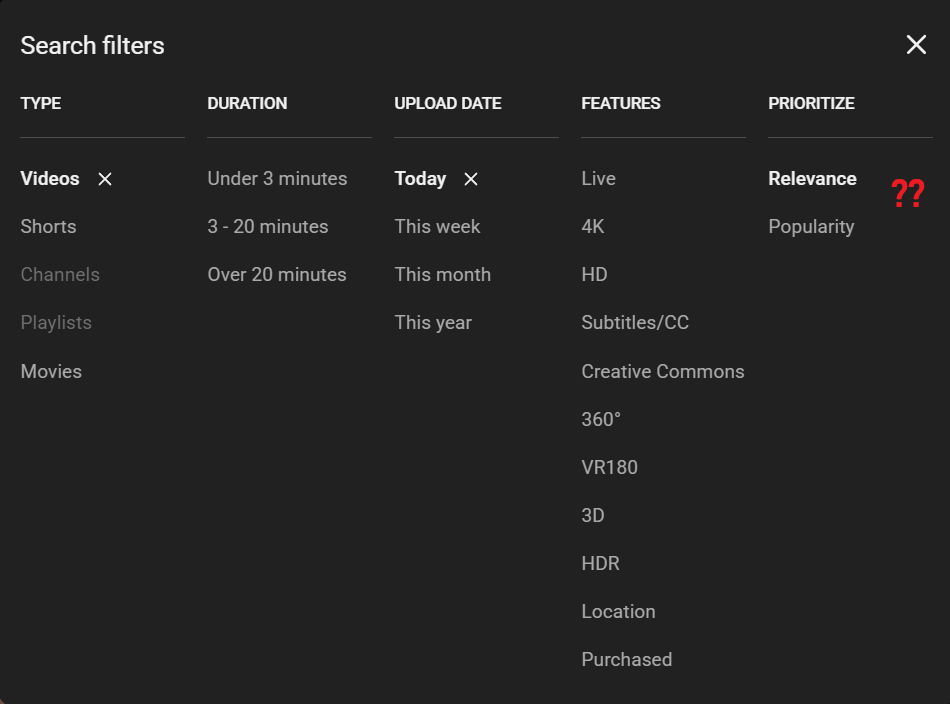
YouTube (@TeamYouTube) has removed the ability to search by upload date.
Removing this basic function will make it impossible to find breaking news from small channels with few viewers.
Evidently, force-feeding people "curated" slop is more important than site usability.

English
MacDefender me-retweet

@Pirat_Nation A good reason beside some others to never buy a product from @LGE_Global again.
English

@CLeiserfluss @LilitThyra Ich habe online gerade Marabou für unter 20€/kg gekauft. Da gefallen mir die Zutaten auch noch deutlich besser als bei den hier sonst so bekannten Marken. Es soll ja 'Schokolade' geben die fast nur aus Zucker/Öl besteht und dann über 20€/kg kostet.
Deutsch

@LilitThyra Man stelle sich vor: Selbst nach der "drastischen" Preissenkung liegt der Preis für die Schokolade bei durchschnittlich 40€/Kg. Immer noch 𝗪𝗨𝗖𝗛𝗘𝗥.
Deutsch

Schokolade plötzlich 60 Prozent günstiger!
Weil den überteuerten Mist keiner gekauft hat, reagieren Supermärkte und Discounter nun mit drastischen Preissenkungen.
bild.de/leben-wissen/m…

Deutsch
MacDefender me-retweet

Let me blow your mind real quick:
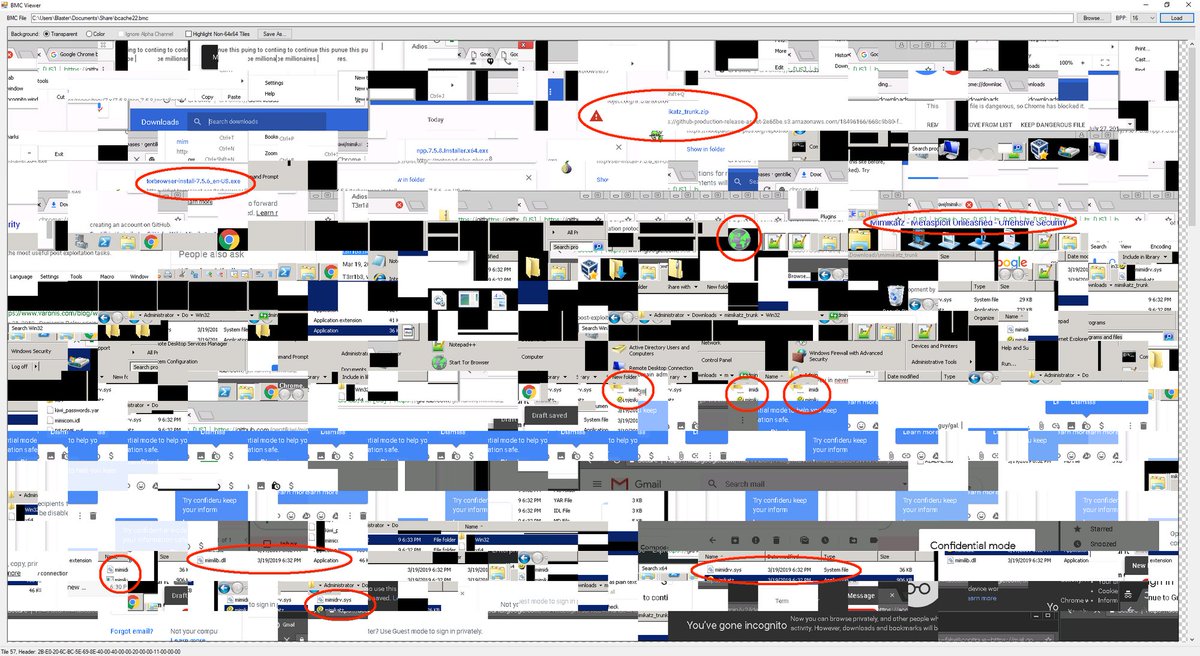
When you use Remote Desktop (RDP), Windows secretly takes screenshots of what you are doing.
It’s called the RDP Bitmap Cache.
To make the connection faster, Windows saves small tiles (images) of the remote screen to your hard drive in a bin file.
Even if the session is over and the remote server is destroyed... your laptop still holds the cache files.
Forensics teams use tools like BMCViewer to stitch those tiles back together.
They won't just see logs but the literal email, document, or picture you were looking at.
💀


IT Guy@T3chFalcon
RDP Bitmap Cache.
English
MacDefender me-retweet

RIP Privacy — AI Glasses Can Now Recognize Anyone, Anywhere.
A Dutch journalist just tested a pair of AI-powered glasses that can instantly identify strangers on the street.
No government database. No police system. Just public data and off-the-shelf AI.
You look at someone and in seconds, their name, LinkedIn, and background appear before your eyes.
The scariest part? You can’t really stop it.
You can ban it, regulate it, add blinking red lights… but once tech like this exists, someone will always find a way to use it.
To me, this marks a turning point.
We’ve officially blurred the line between seeing people and knowing them.
Between being in public and being exposed.
So here’s the question:
When every face becomes a dataset, how do we protect the meaning of being human?
#AI #Privacy #Ethics #Technology #Innovation #Data #Surveillance
English

@dbadol2000 @CR1337 As a website you can query the browser for plugins installed, language set, screen/window size and many other settings. So if you resize the browser window to a not often used width/height and are the only one with a unusual plugin you are unique
English

@CR1337 Thanks for the list!
It’s maybe a bit too much, imo, as it might scare some people off.
Getting more people to use Tor would already be a win. Actually, just normalizing the use of a VPN would already be a good step forward!…
Can you detail a bit point 3 (fingerprinting)?
English
MacDefender me-retweet