@GustavoRit37596 @Noahpinion Even if they don’t they will have “goals” and it’s hard to see how merging with a human improves its odds of achieving a goal like build a Dyson sphere, colonize the galaxy, paperclipping the universe etc.
English
Rob S.
2.6K posts



The AI labs have actually done a bad job explaining what the future they are building towards will actually look like for most of us. Even “Machines of Loving Grace” has very few well-articulated visions of what Anthropic hopes life will be like if they succeed at their goals.
at the intersection of i've basically been replaced and i've never worked so hard in my life
This is a great paper but contains a puzzle: forecasters expect even if we automate most labor and wait 20 years, GDP will only increase by 45%. I would love to hear how people are thinking about this.

Yep, that's basically how I became a "doomer". Did a research project to figure out what were the counter arguments to xrisk and realised... There was nothing that made sense! Just people religiously clinging to their cognitive dissonance and zero rationality. Kind of like a cult when you think about it. Quite horrific...

@robinhanson @Aella_Girl We can be pretty sure, because there are no good arguments that ASI alignment is possible at all. Much less that ASI alignment could be solved before ASI is built. And even less that ASI would be aligned by default -- which seems to be the standard e/acc view.

I watched The AI Doc. Could be partly an editorial thing on the part of the filmmakers, but what really stands out to me is how the optimists *never* have [valid] arguments or counterarguments. It’s just “don’t listen to the doomers”





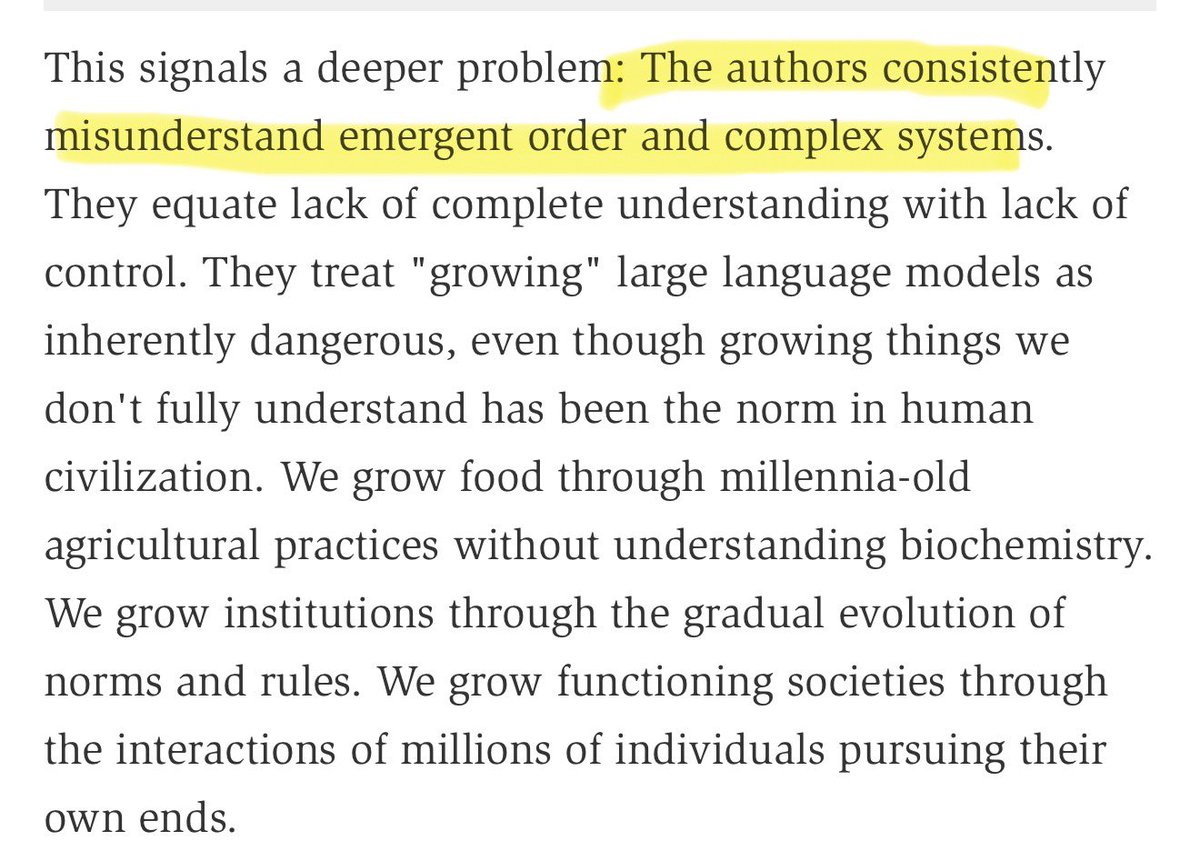
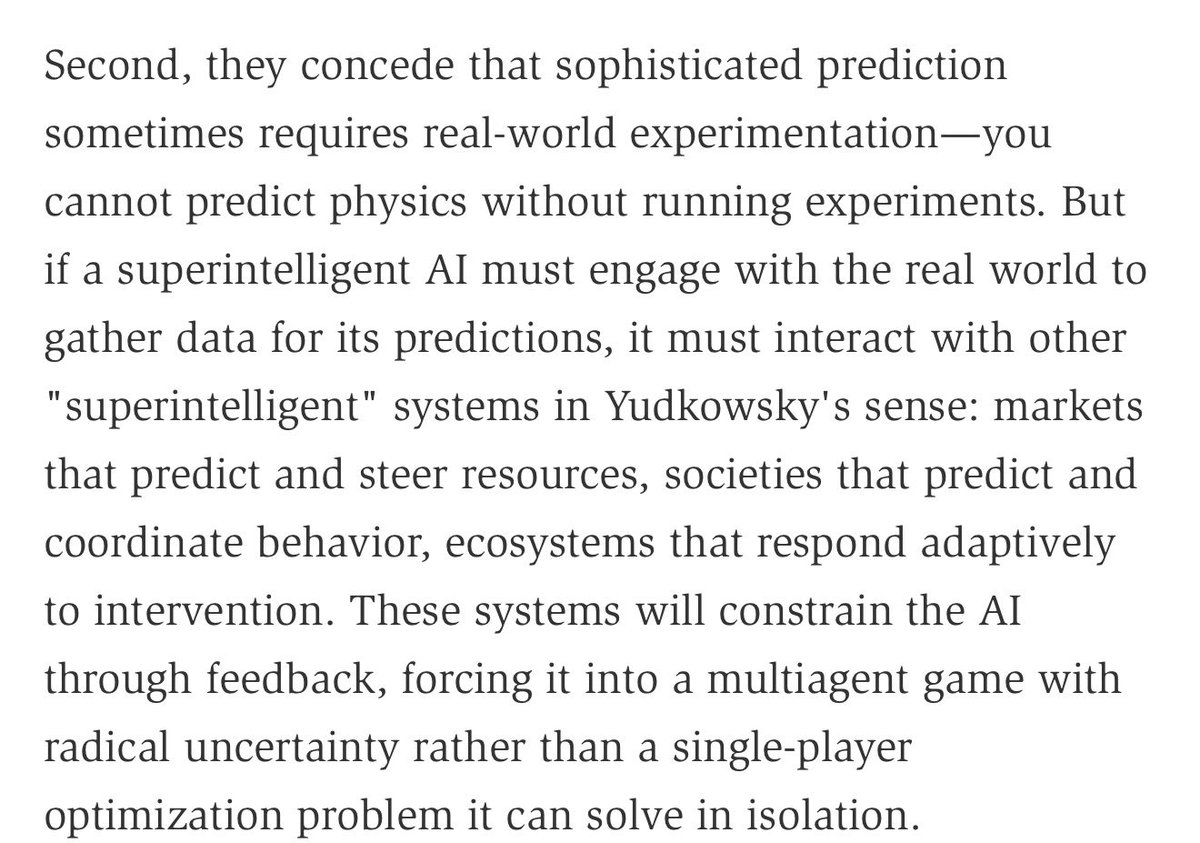
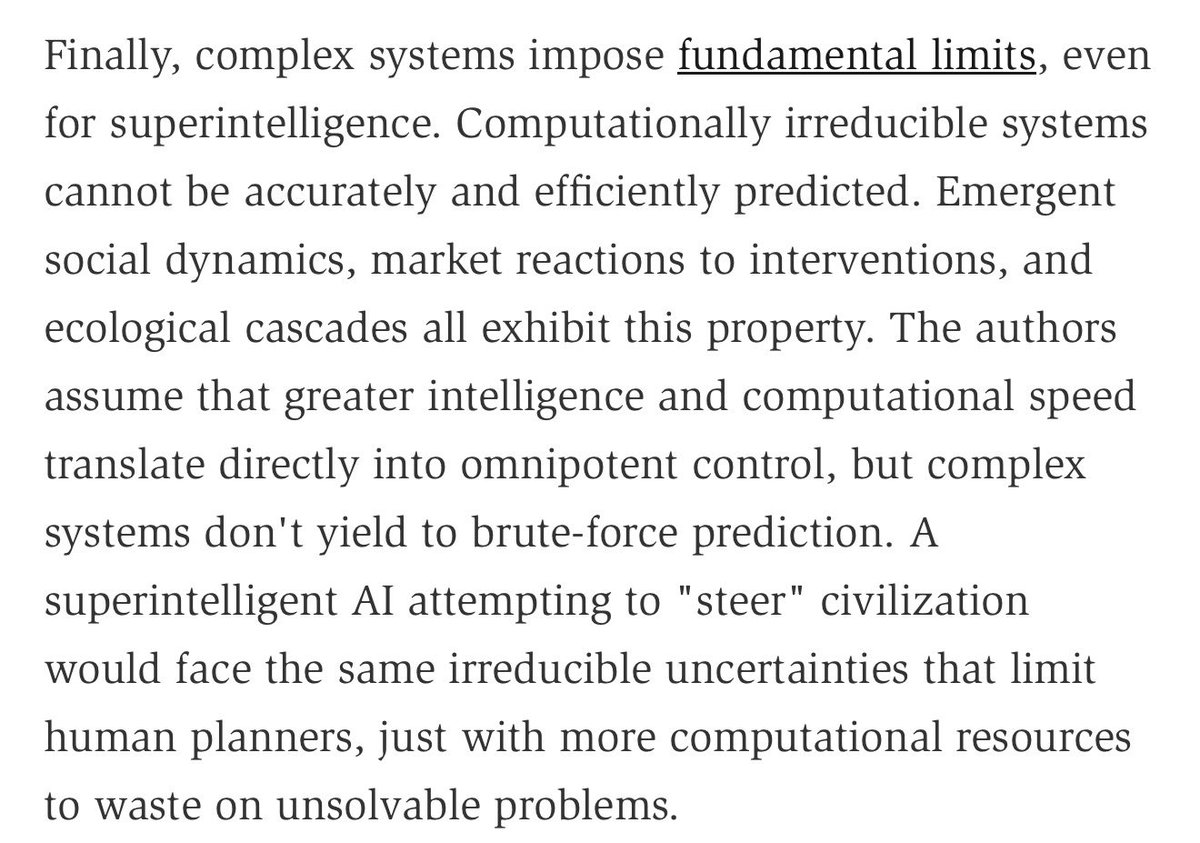
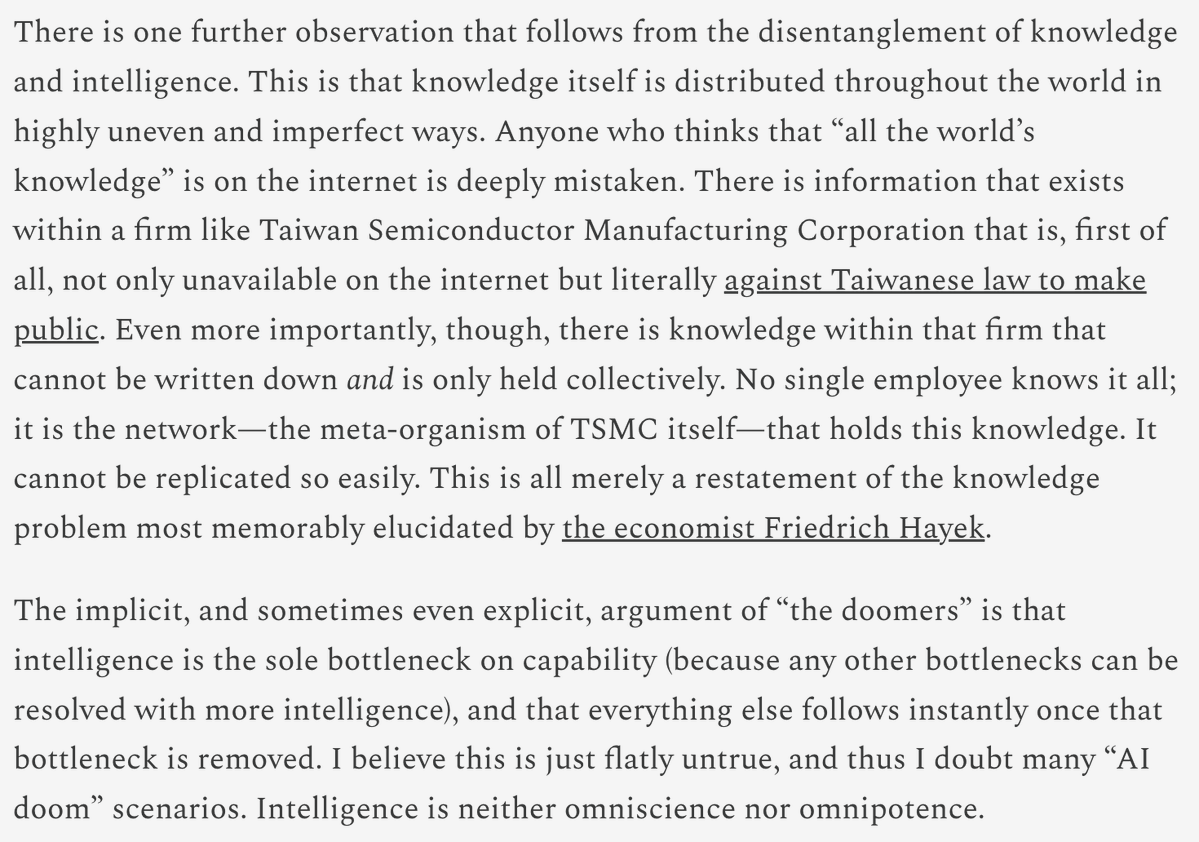
One of the biggest misconceptions people have about intelligence is seeing it as some kind of unbounded scalar stat, like height. "Future AI will have 10,000 IQ", that sort of thing. Intelligence is a conversion ratio, with an optimality bound. Increasing intelligence is not so much like "making the tower taller", it's more like "making the ball rounder". At some point it's already pretty damn spherical and any improvement is marginal. Now of course smart humans aren't quite at the optimal bound yet on an individual level, and machines will have many advantages besides intelligence -- mostly the removal of biological bottlenecks: greater processing speed, unlimited working memory, unlimited memory with perfect recall... but these are mostly things humans can also access through externalized cognitive tools.

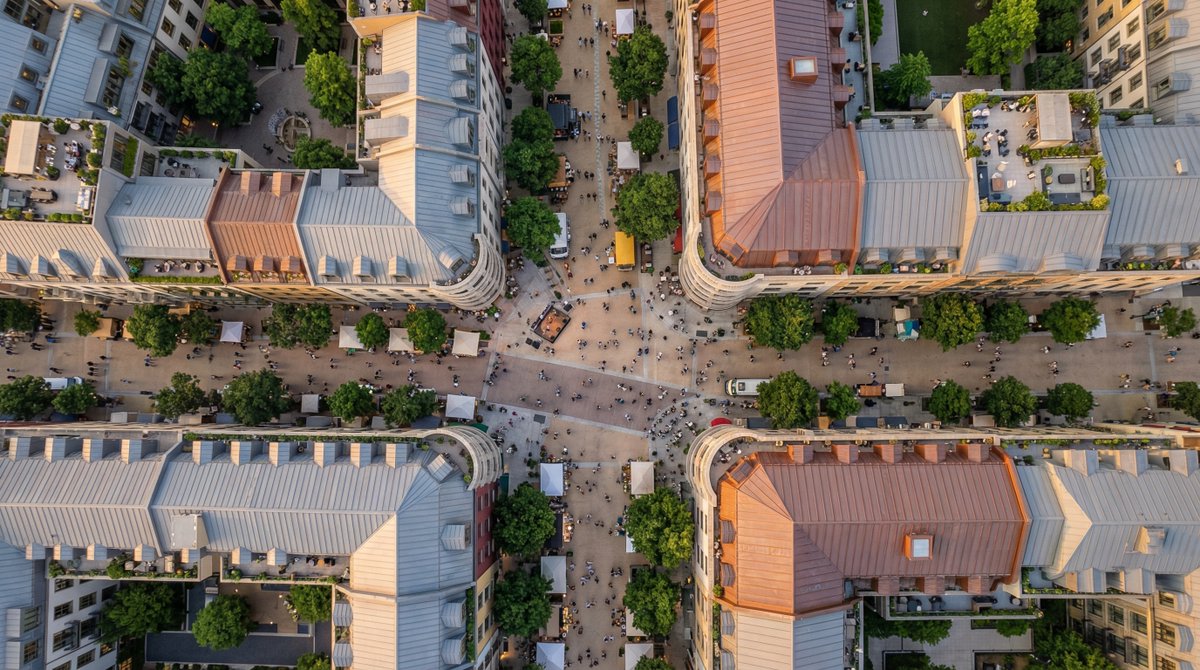
@UrbanCourtyard Call it what you want, but they are in fact imitating old buildings, which doesn't work along with functionality, materials and technology. Trust me, I'm an architect. It's popular among nostalgic and sentimental people without being full conscious about architecture.