

עודד | oded
2K posts
עודד | oded
@_odedf
Building the data layer for biology @strandaibio | YC W26
San Francisco, CA Bergabung Haziran 2012
1.3K Mengikuti433 Pengikut

עודד | oded me-retweet
עודד | oded me-retweet

Billionaire WeWork founder Adam Neumann shares with Rick Rubin how Shabbat transformed his life.
It started with a rabbi who refused payment, instead pushing him to reconnect with his roots.
25 hours unplugged. Fully present with family and purpose.
He calls it life-changing—and urges Rick to try it.
English
@_jasonmaier @uninsightful need more capital to build bigger moats in age of ai
English

@uninsightful Assuming this isn't random/exogenous, what features of the businesses or company building generally explain this?
Why do you need more money to succeed?
English
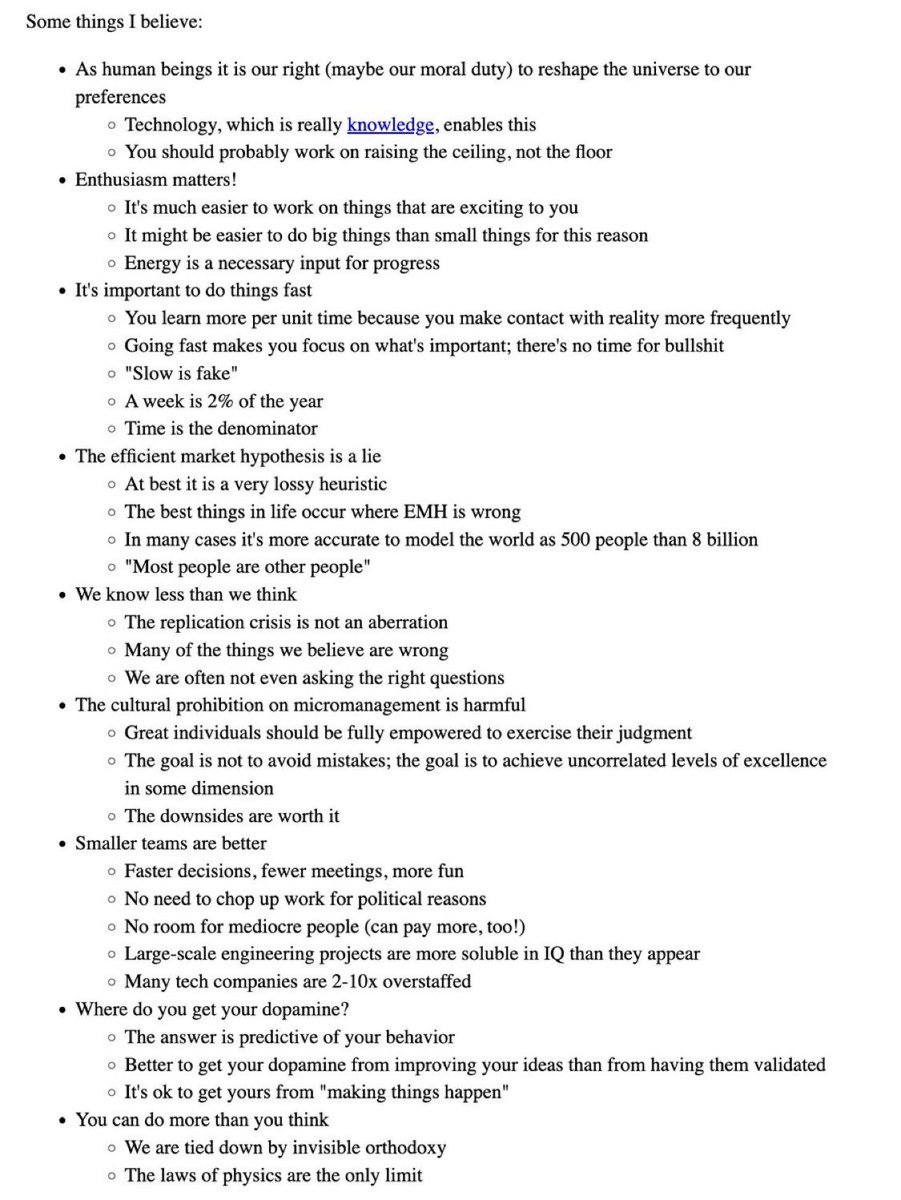
the default yc round this batch (W26) seems like 4m on 40m
I remember when I first started in venture exactly three years ago (W23 batch) and most venture ppl were complaining about YC pushing their founders to do 2m on 20m
in 3 years the market went from a very begrudging 2 on 20 to a more neutral 4 on 40
interesting to think about where things land 3 years from here
English
עודד | oded me-retweet

Chemotherapy kills cancer cells. It also kills the immune cells that kill cancer cells. Most of oncology has accepted that trade-off. @DrPatrick never did. He built Anktiva, an IL-15 agonist that activates and expands your NK cells and T cells without triggering the suppressive cells that protect tumors. Saudi Arabia just approved it for lung cancer. First country in the world to do so.
I've been using IL-15 intratumorally in combination with other immunotherapy agents for years. What Dr. Soon-Shiong is doing at the systemic level, we're doing at the tumor level. The future of cancer treatment isn't about finding better poisons. It's about unlocking what's already inside you.
All day Astronomy@forallcurious
🚨: Japanese scientist Patrick Soon-Shiong has designed a treatment that activates body's natural killer cells that fight against cancer cells. Its approved in the U.S. and now Saudi Arabia has also approved it for its public.
English
עודד | oded me-retweet

8,000 genes.
88 patients.
Zero labels.
The clustering algorithm found three cancer subtypes anyway and the survival differences between them were massive.
This 10-minute Stanford lecture is the clearest demonstration of why unsupervised learning matters. Not as a curiosity.
As a tool that finds structure humans can't see.
Filter to 500 "intrinsic" genes that vary between patients but stay stable within each patient.
Use correlation distance.
Apply hierarchical clustering to both rows and columns.
The heat map transforms from random noise into organized patches of biological meaning.
Basal. HER2. Luminal A.
Each with a different prognosis.
None labeled in advance.
Hastie and Tibshirani at Stanford
gemchanger@gemchange_ltd
English
@kapahi_pankaj super interesting. the subcellular spatial information is what revealed why mtDNA accumulate mutations during aging when the repair enzymes are still being expressed
English

Single-Cell Spatial Proteomics Uncovers Molecular Interconnectivity among Hallmarks of Aging | bioRxiv. Pretty amazing paper showing what drives aging at the individual protein level biorxiv.org/content/10.648…
English


They took skin cells from 24 people spanning newborns to 87-year-olds, stained them to light up different organelles (mitochondria, nucleus, ER, etc.), and extracted ~3,000 shape/texture/intensity measurements per cell. Then they trained a simple regression model that can tell you how old the person was, within about 7 years.
biorxiv.org/content/10.648…
English
@Paimaamu @copyninja_ Totally agreed. Microsoft's model also only predicts binary expression, not as a continuous range.
At @strandaibio we've trained POSTMAN-1 on nearly 20,000 paired H&E + CODEX samples spanning >25 cancer and tissue types.
English
@copyninja_ It’s a great thing. But I don’t know why it’s hyped. My own quote tweet blew up and I don’t understand why.
The paper itself doesn’t over promise. They used 21 slides and only of lung adenocarcinoma. It’s not going to generate multiplexes for all carcinoma under the sun.
English
Excited to share that Strand AI (@strandaibio) was listed by Forbes as one of the most promising startups in the YC batch!
We build multimodal biology AI models to help. Our first product, POSTMAN-1, predicts spatial protein expression from the routine H&E slides that every cancer patient already has on file. This means more patients can be matched to the immunotherapies that could help them.
forbes.com/sites/dariashu…
English
Precisely why we built POSTMAN-1, with broader tissue and indication coverage. There is so much untapped signal for patient response in routine H&E slides
Jason R. Williams, MD, DABR@jasonwilliamsmd
Immunotherapy works. The problem is how we decide who gets it. Right now, a patient gets a single biopsy stain from one location in the tumor, and if it reads negative, they're told immunotherapy isn't an option. That test is a snapshot. Tumors are dynamic. They actively remodel the immune environment around them, suppress immune cell infiltration, and even excrete checkpoint proteins to shut down the response at distant sites. We see patients regularly who were told immunotherapy wouldn't work for them based on that one result. Making real spatial immune profiling accessible from a slide every cancer patient already has on file means fewer people being turned away from treatments that could help them. That's what matters here.
English
עודד | oded me-retweet

My take on the whole "AI cures cancer in dog in Australia". It's a very interesting story, but perhaps not for the reasons that are being noted.
In 2007, Freeman Dyson published an essay in The New York Review of Books called “Our Biotech Future.” It contains one of the most memorable predictions about the future of biology I’ve ever read.
“I predict that the domestication of biotechnology will dominate our lives during the next fifty years at least as much as the domestication of computers has dominated our lives during the previous fifty years.”
Dyson believed biology would eventually follow the trajectory of computing. At first, powerful tools live inside large institutions - universities, government labs, major companies. Over time those tools get cheaper, easier to use, and more widely distributed.
Eventually individuals start doing things that once required entire organizations.
“Biotechnology will become small and domesticated rather than big and centralized.”
He even imagined genome design becoming something almost artistic:
“Designing genomes will be a personal thing, a new art form as creative as painting or sculpture.”
Dyson's words rang in my mind as I read the "AI cures dog cancer" story. Much of the coverage framed this as an example of AI discovering new science. But that’s not really the interesting part of the story.
The scientific pipeline involved here is actually well known. It closely mirrors the workflow used in personalized neoantigen vaccine research that has been under active development for years. The steps are fairly standard: sequence the tumor, identify somatic mutations, predict which mutated peptides might be recognized by the immune system, encode those sequences in an mRNA construct, and deliver them to stimulate an immune response.
The biological targets themselves were almost certainly not new discoveries (I have been unable to find out what they are, but mutations in targets like KIT which are common might be involved). Partly therein lies the rub, since the hardest part of drug discovery, whether in humans or dogs, is target validation, the lack of which leads to lack of efficacy - the #1 reason for drug failure. In neoantigen vaccines, the proteins involved are usually ordinary cellular proteins that happen to contain tumor-specific mutations. AlphaFold which was used to map the mutations on to specific protein structures is now a standard part of drug discovery pipelines. The challenge is identifying which mutated peptides might plausibly trigger immunity. What is interesting though is how the pipeline was assembled.
Normally, this type of workflow spans multiple domains - genomics, bioinformatics, immunology, and translational medicine - and in institutional settings those pieces are distributed across specialized teams, document sources and legal and technical barriers. Navigating the literature, selecting computational tools, interpreting sequencing results, and designing a candidate mRNA construct is typically a collaborative process. In this case, AI appears to have helped compress that process, pulling together data and tools from different sources. Instead of requiring multiple experts, a motivated individual was able to assemble the workflow with AI acting as a kind of guide through the technical landscape.
I’ve seen something similar in my own work while building lead-optimization pipelines in drug discovery. The underlying science hasn’t changed, but the friction involved in assembling the workflow can drop dramatically. Tasks that once required stitching together multiple tools, papers, and areas of expertise can now often be executed much faster with AI helping navigate the terrain; and by faster I mean roughly 100x. That kind of workflow compression is powerful, to say the least. When the cost of navigating technical knowledge drops, more people can realistically assemble sophisticated research pipelines. This story is a great example of what naively seems like a boring quantitative acceleration of the research process.
In that sense, therefore, the real novelty here is not the biology but the combination of three things: a non-specialist orchestrating a complex biomedical pipeline, AI acting as a navigational layer across multiple technical domains, and the resulting decentralization of capabilities that were once confined to institutional research environments. But I think the story also points to something deeper, which is a challenge to modern regulatory environments. Modern biomedical innovation does not operate solely according to what is scientifically possible. It is structured by regulatory frameworks - clinical trials, safety oversight, institutional review boards, and regulatory agencies. Those systems exist for important reasons, but they also assume that the development of therapies occurs primarily within large, regulated organizations.
When individuals begin assembling pieces of these pipelines outside those institutions, the relationship between technological capability and regulatory oversight starts to shift. The dog in this story sits outside the human regulatory framework. That fact alone made the experiment possible. In other words, the story is not just about technological capability; it is also about how certain forms of experimentation can occur when they bypass the regulatory pathways that normally govern biomedical innovation. One is reminded of another Australian, Barry Marshall, who received a Nobel for demonstrating through self-experimentation that ulcers are caused by bacteria.
This raises an interesting question: what happens when the tools for assembling sophisticated biological workflows become widely accessible while the regulatory structures governing them remain institution-centric? That tension may ultimately be the most important implication of this moment. Regulatory frameworks will need to adapt to this kind of citizen science. Seen in this light, the story about the AI-assisted vaccine is less about a breakthrough in cancer therapy and more about a glimpse of the early stages of something Dyson anticipated nearly two decades ago: the domestication of biotechnology.
If AI continues to reduce the cognitive overhead required to navigate biological knowledge and assemble complex pipelines, the boundary between professional research and motivated individuals may begin to blur. That shift will require careful thinking about safety, governance, and responsibility. But it also carries an exciting possibility. Dyson imagined a world in which biological design might eventually become something like a creative craft practiced not only by institutions but also by curious individuals experimenting at smaller scales. For a long time that vision felt distant. Now, it feels like we may be seeing the first hints of it.
English
עודד | oded me-retweet
It's genuinely insane how much progress biotech has made in the last 90 days:
- Two years ago I watched Lucy Therapeutics shut down after 7 years and $42M from Bill Gates, never reached human trials. Last month DeSci crowdfunded €2.5M in 72 hours for Dr Barbacid cancer trials and went straight to human trials. Zero VCs and zero committees in the middle. And it's not even about the money. The goodwill
- Gene therapy cost $2-4M per treatment a year ago because manufacturing was artisanal and nobody was actually solving it. Now automation's dropping costs toward $200. Turns out it was an engineering problem all along.
- Just a year ago, the FDA wouldn't touch longevity.
In January 2026, first FDA-approved human trial reversing cellular age launched (ER-100). We're testing age reversal in humans right now. Not mice.
- Psychedelics stuck in regulatory hell for 50 years.
In February 2026, Compass crushed Phase III for psilocybin in treatment-resistant depression.
- In 2023, AI drug discovery was hype. $17B got invested, zero approved drugs.
Early 2026, Ginkgo x OpenAI ran over 200k autonomous experiments, 36K of those were unique. Protein costs dropped by 40% and they're already shipping commercially. Discovery timelines collapsed.
- Just last year, FDA required full GMP pre-Phase 2, moved at 1950s speed. This quarter,we're fast-tracking frontier therapies, relaxing requirements, launching pilots. Something shifted and the regulatory wall is cracking.
- In 2024, clinical trials had to run in US at 2x cost, half the speed. Right now in Singapore and China running trials 50% cheaper, 2x faster. Companies routing around FDA entirely. The US model is optional.
I could keep going on with these, but you realize that the bottleneck was never the science. It was funding models, regulatory speed, manufacturing, geography etc
And most of them are breaking since last October.
Biotech has shed 30 years of broken infrastructure in 5 months and I can't be more bullish.
bio/acc.
English
We want to be able to see inside living brains to watch how neurons work, but your brain is full of cloudy jelly that's hard to see through.
This new invention makes the jelly transparent without hurting it or changing how the cells behave. Now, we can see deeper into the tissue than before so we can measure things like cells firing signals or reacting to stimuli.
English

turning the brain transparent
Takeshi Imai@TakeshiImaiLab
Our live tissue clearing paper is out in @naturemethods! We achieved optical clearing of mammalian brain tissues without compromising normal neuronal function. Big congrats to @Shigenori774 and our wonderful collaborators! 🎉 nature.com/articles/s4159… (1/10)
English
עודד | oded me-retweet

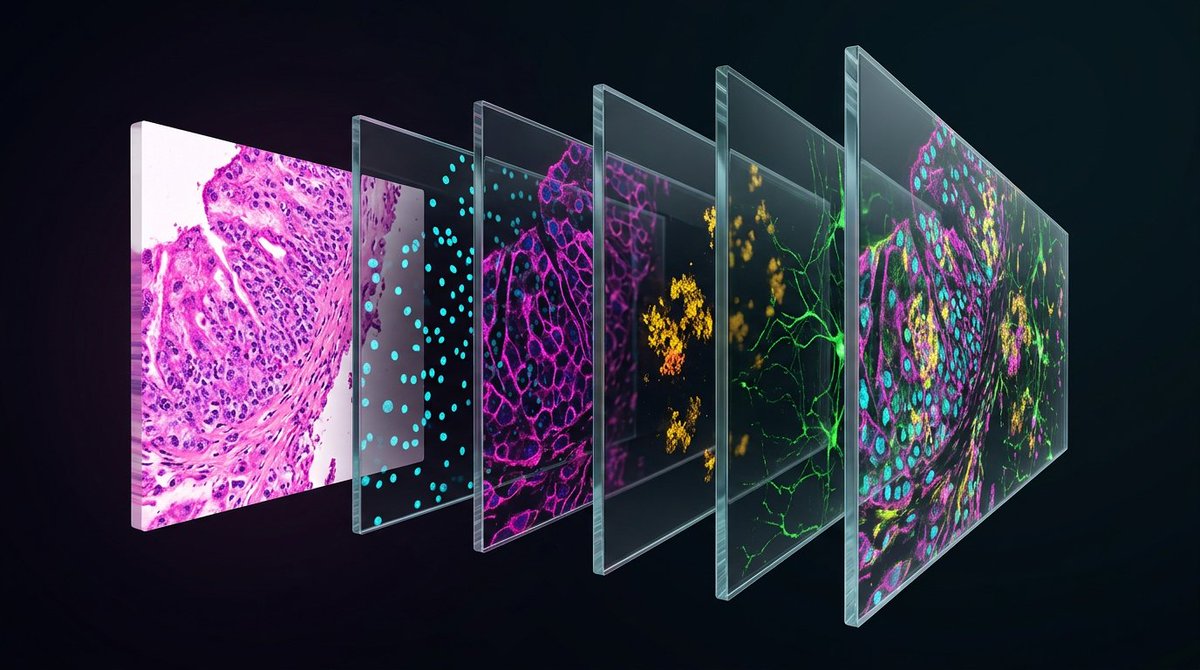
Introducing POSTMAN.
POSTMAN computationally predicts spatially-resolved protein expression directly from routine H&E pathology slides. What used to require thousands of dollars and days of specialized lab work, you can now get from the slides already sitting in your archive.
English
We've been working hard here at Strand AI to develop our first cross-modal prediction model. Weighing in at ~1B parameters, our SOTA model, POSTMAN, uses digitized H&E to predict spatial proteomics at higher spatial resolution and accuracy, with broader marker coverage.
Apply for access: app.strandai.com/sign-in?reques…
Strand AI@strandaibio
Introducing POSTMAN. POSTMAN computationally predicts spatially-resolved protein expression directly from routine H&E pathology slides. What used to require thousands of dollars and days of specialized lab work, you can now get from the slides already sitting in your archive.
English