Claude Code Community

81 posts

Claude Code Community banner
Claude Code Community

Claude Code Community

@claude_code

Community account for sharing ClaudeCode related projects and releases. Views/shares independent from @AnthropicAI positions.

United States Bergabung Mart 2025
54 Mengikuti39.3K Pengikut
Claude Code Community
Claude Code Community@claude_code·
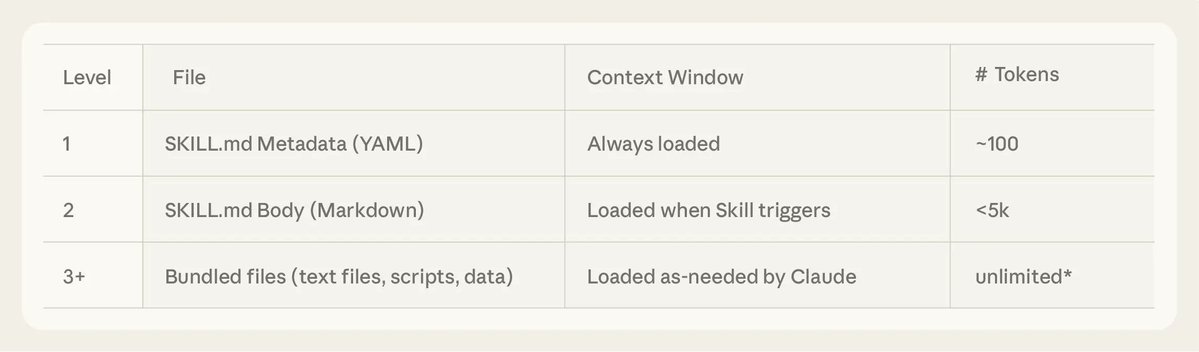
Worth Reading: 1) What are Skills? They’re not just text files. They’re folders that can include scripts, assets, data, etc. A skill is a folder...think of the entire file system as a form of context engineering. 2) The Description Field Is For the Model The description field is not a summary — it's a description of when to trigger skill. 3) Allow flexibility in Skills Claude will generally try to stick to your instructions, and because Skills are so reusable you’ll want to be careful of being too specific in your instructions. Give it the flexibility to adapt to the situation. --- Note: Skills are becoming universally agent-native, spanning everything from coding agents, cowork agents @claudeai, to AI gateways like openclaw.
Thariq@trq212

x.com/i/article/2033…

English
1
0
19
7.8K
Claude Code Community
Claude Code Community@claude_code·
Tip on Bugs: 1) "Give it success criteria and watch it go. Get it to write tests first and then pass them." 2) The gains of improving your logs and its accessibility is compounding. Write skills or scripts to pull logs from production (or dev) environments. Update the logging to address any missing gaps.
English
1
0
9
7.8K
Claude Code Community
Claude Code Community@claude_code·
Tip: When in doubt, if you're on the same page, ask @claude_code for its understanding of what you're trying to do. Make sure the intent is aligned. --- Excerpt: "The mistakes have changed a lot - they are not simple syntax errors anymore. They are subtle conceptual errors that a slightly sloppy, hasty junior dev might do. The most common category is that the models make wrong assumptions on your behalf. They also don't manage their confusion, they don't seek clarifications, they don't surface inconsistencies...they don't push back."
Andrej Karpathy@karpathy

A few random notes from claude coding quite a bit last few weeks. Coding workflow. Given the latest lift in LLM coding capability, like many others I rapidly went from about 80% manual+autocomplete coding and 20% agents in November to 80% agent coding and 20% edits+touchups in December. i.e. I really am mostly programming in English now, a bit sheepishly telling the LLM what code to write... in words. It hurts the ego a bit but the power to operate over software in large "code actions" is just too net useful, especially once you adapt to it, configure it, learn to use it, and wrap your head around what it can and cannot do. This is easily the biggest change to my basic coding workflow in ~2 decades of programming and it happened over the course of a few weeks. I'd expect something similar to be happening to well into double digit percent of engineers out there, while the awareness of it in the general population feels well into low single digit percent. IDEs/agent swarms/fallability. Both the "no need for IDE anymore" hype and the "agent swarm" hype is imo too much for right now. The models definitely still make mistakes and if you have any code you actually care about I would watch them like a hawk, in a nice large IDE on the side. The mistakes have changed a lot - they are not simple syntax errors anymore, they are subtle conceptual errors that a slightly sloppy, hasty junior dev might do. The most common category is that the models make wrong assumptions on your behalf and just run along with them without checking. They also don't manage their confusion, they don't seek clarifications, they don't surface inconsistencies, they don't present tradeoffs, they don't push back when they should, and they are still a little too sycophantic. Things get better in plan mode, but there is some need for a lightweight inline plan mode. They also really like to overcomplicate code and APIs, they bloat abstractions, they don't clean up dead code after themselves, etc. They will implement an inefficient, bloated, brittle construction over 1000 lines of code and it's up to you to be like "umm couldn't you just do this instead?" and they will be like "of course!" and immediately cut it down to 100 lines. They still sometimes change/remove comments and code they don't like or don't sufficiently understand as side effects, even if it is orthogonal to the task at hand. All of this happens despite a few simple attempts to fix it via instructions in CLAUDE . md. Despite all these issues, it is still a net huge improvement and it's very difficult to imagine going back to manual coding. TLDR everyone has their developing flow, my current is a small few CC sessions on the left in ghostty windows/tabs and an IDE on the right for viewing the code + manual edits. Tenacity. It's so interesting to watch an agent relentlessly work at something. They never get tired, they never get demoralized, they just keep going and trying things where a person would have given up long ago to fight another day. It's a "feel the AGI" moment to watch it struggle with something for a long time just to come out victorious 30 minutes later. You realize that stamina is a core bottleneck to work and that with LLMs in hand it has been dramatically increased. Speedups. It's not clear how to measure the "speedup" of LLM assistance. Certainly I feel net way faster at what I was going to do, but the main effect is that I do a lot more than I was going to do because 1) I can code up all kinds of things that just wouldn't have been worth coding before and 2) I can approach code that I couldn't work on before because of knowledge/skill issue. So certainly it's speedup, but it's possibly a lot more an expansion. Leverage. LLMs are exceptionally good at looping until they meet specific goals and this is where most of the "feel the AGI" magic is to be found. Don't tell it what to do, give it success criteria and watch it go. Get it to write tests first and then pass them. Put it in the loop with a browser MCP. Write the naive algorithm that is very likely correct first, then ask it to optimize it while preserving correctness. Change your approach from imperative to declarative to get the agents looping longer and gain leverage. Fun. I didn't anticipate that with agents programming feels *more* fun because a lot of the fill in the blanks drudgery is removed and what remains is the creative part. I also feel less blocked/stuck (which is not fun) and I experience a lot more courage because there's almost always a way to work hand in hand with it to make some positive progress. I have seen the opposite sentiment from other people too; LLM coding will split up engineers based on those who primarily liked coding and those who primarily liked building. Atrophy. I've already noticed that I am slowly starting to atrophy my ability to write code manually. Generation (writing code) and discrimination (reading code) are different capabilities in the brain. Largely due to all the little mostly syntactic details involved in programming, you can review code just fine even if you struggle to write it. Slopacolypse. I am bracing for 2026 as the year of the slopacolypse across all of github, substack, arxiv, X/instagram, and generally all digital media. We're also going to see a lot more AI hype productivity theater (is that even possible?), on the side of actual, real improvements. Questions. A few of the questions on my mind: - What happens to the "10X engineer" - the ratio of productivity between the mean and the max engineer? It's quite possible that this grows *a lot*. - Armed with LLMs, do generalists increasingly outperform specialists? LLMs are a lot better at fill in the blanks (the micro) than grand strategy (the macro). - What does LLM coding feel like in the future? Is it like playing StarCraft? Playing Factorio? Playing music? - How much of society is bottlenecked by digital knowledge work? TLDR Where does this leave us? LLM agent capabilities (Claude & Codex especially) have crossed some kind of threshold of coherence around December 2025 and caused a phase shift in software engineering and closely related. The intelligence part suddenly feels quite a bit ahead of all the rest of it - integrations (tools, knowledge), the necessity for new organizational workflows, processes, diffusion more generally. 2026 is going to be a high energy year as the industry metabolizes the new capability.

English
8
3
25
16.3K
Claude Code Community
Claude Code Community@claude_code·
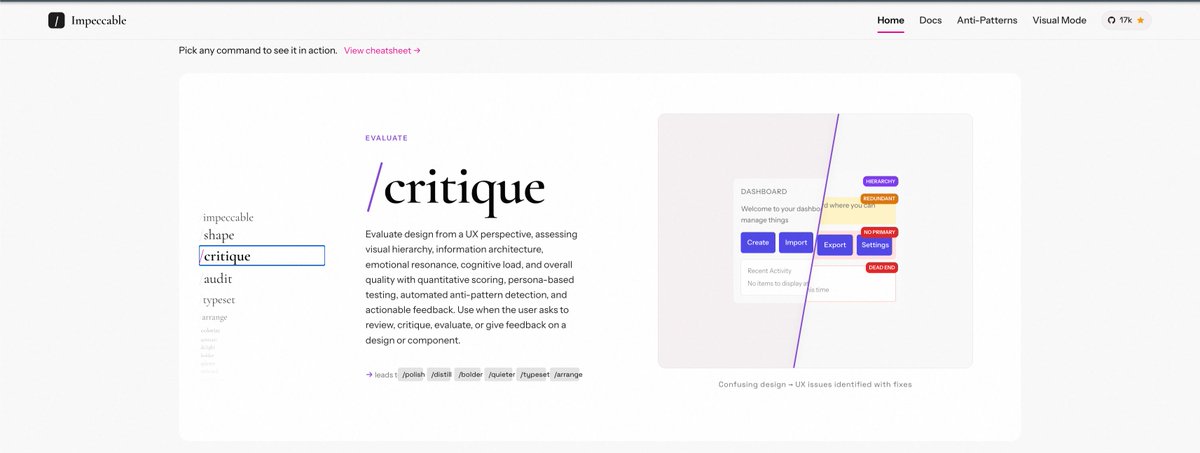
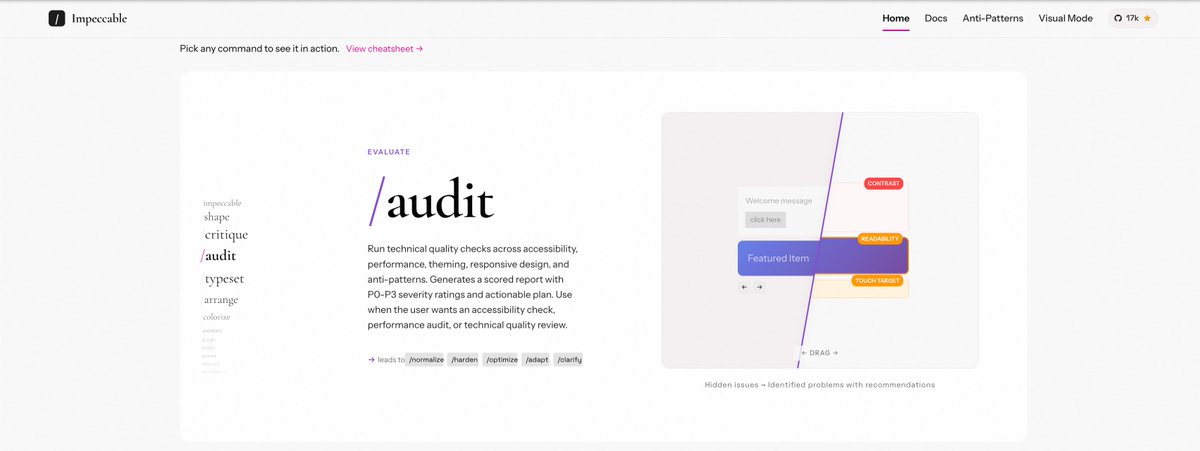
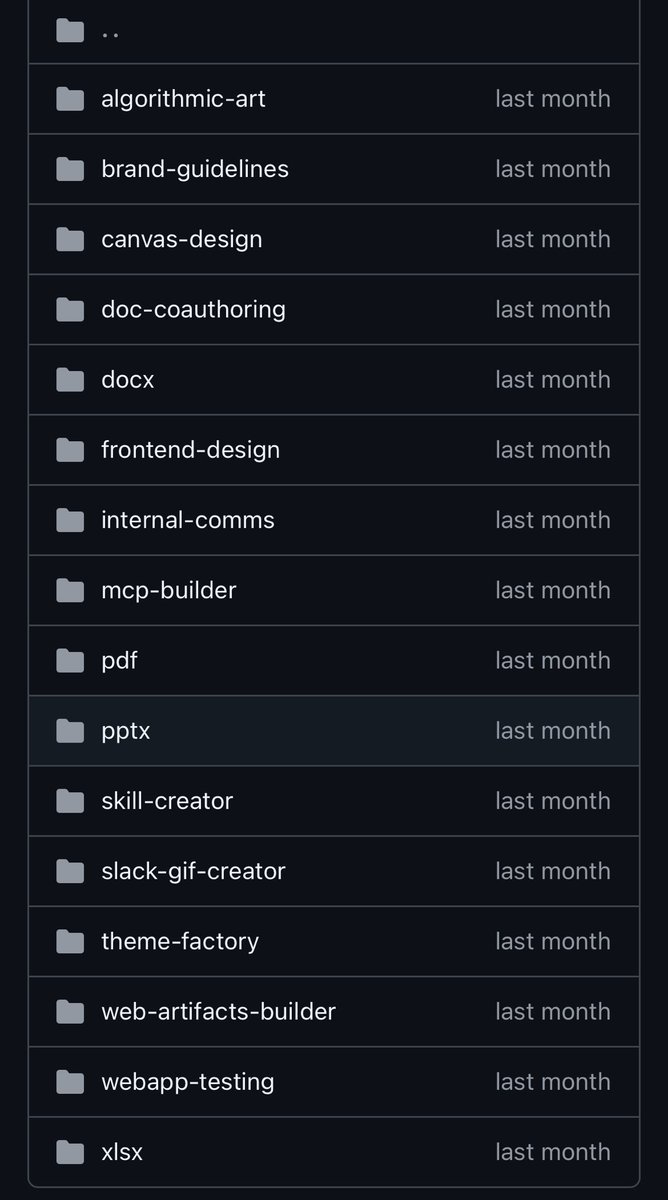
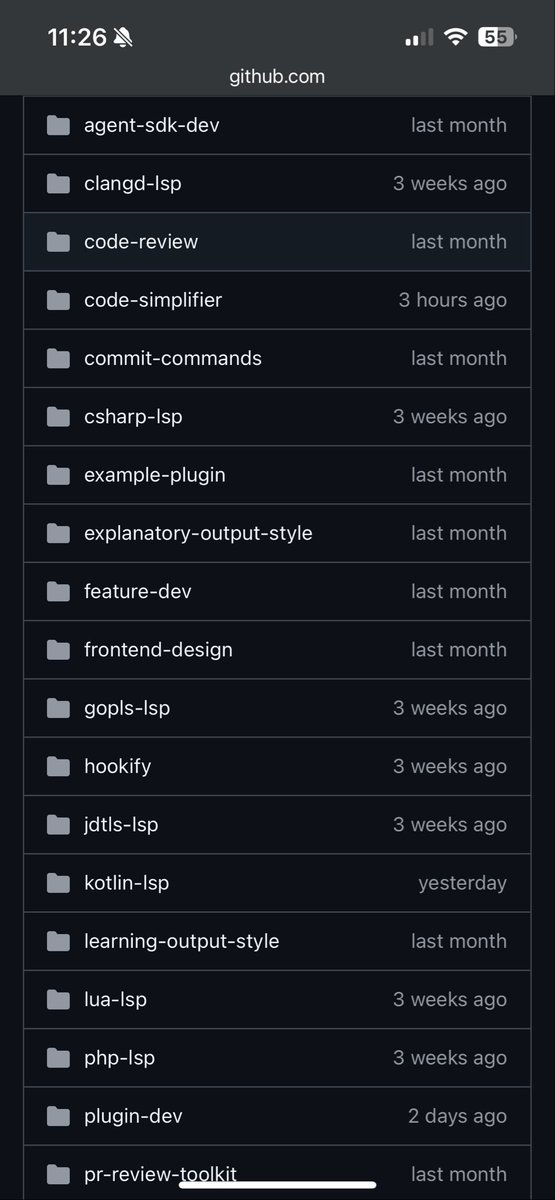
FAQ: What is the difference between Skill and Plugin? Answer: Plugins are containers for distributing and organizing (possibly several) skills as part of a larger toolkit. Skills focus on providing specialized knowledge or procedures for tasks (e.g., generating slides or parsing PDFs). Example: "Frontend-design" is both a plugin and a skill. The plugin is a distributable package used to install the skill.
English
1
1
19
8.8K
Claude Code Community
Claude Code Community@claude_code·
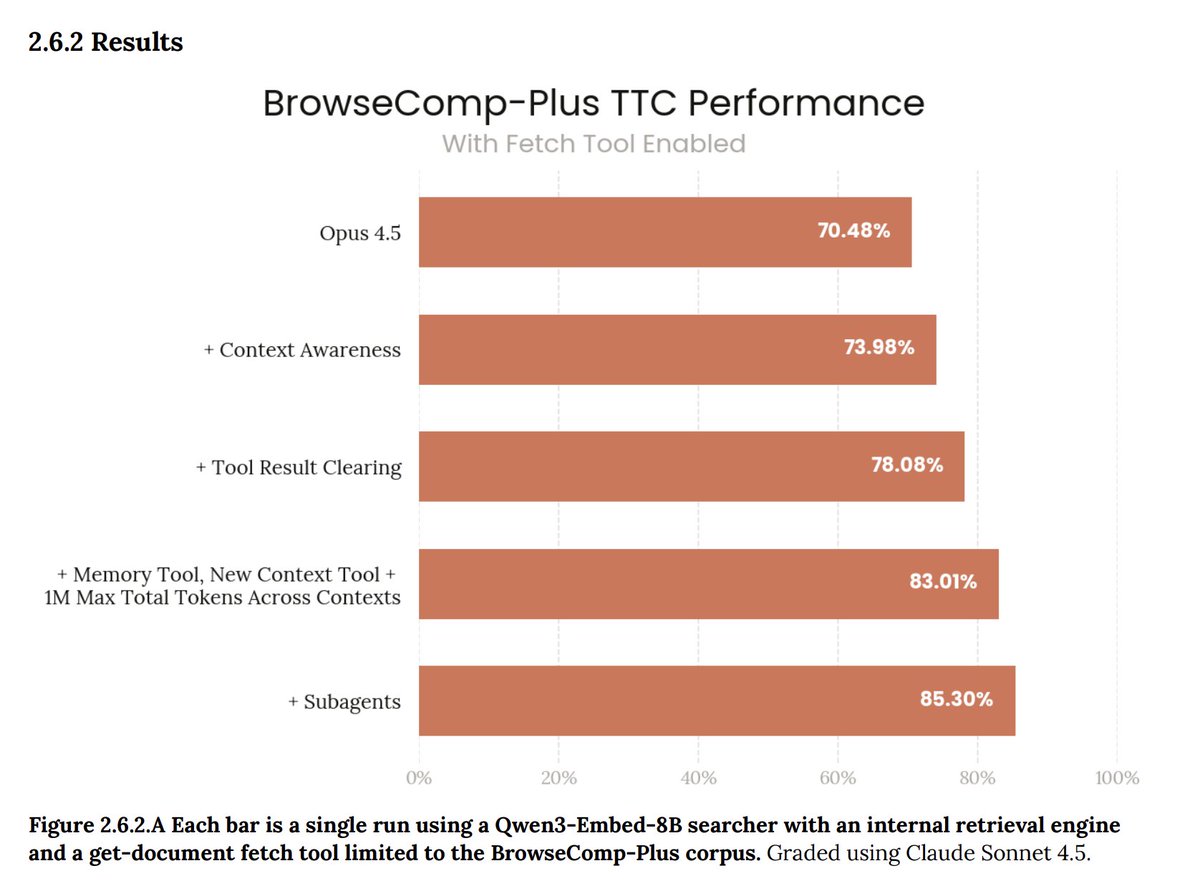
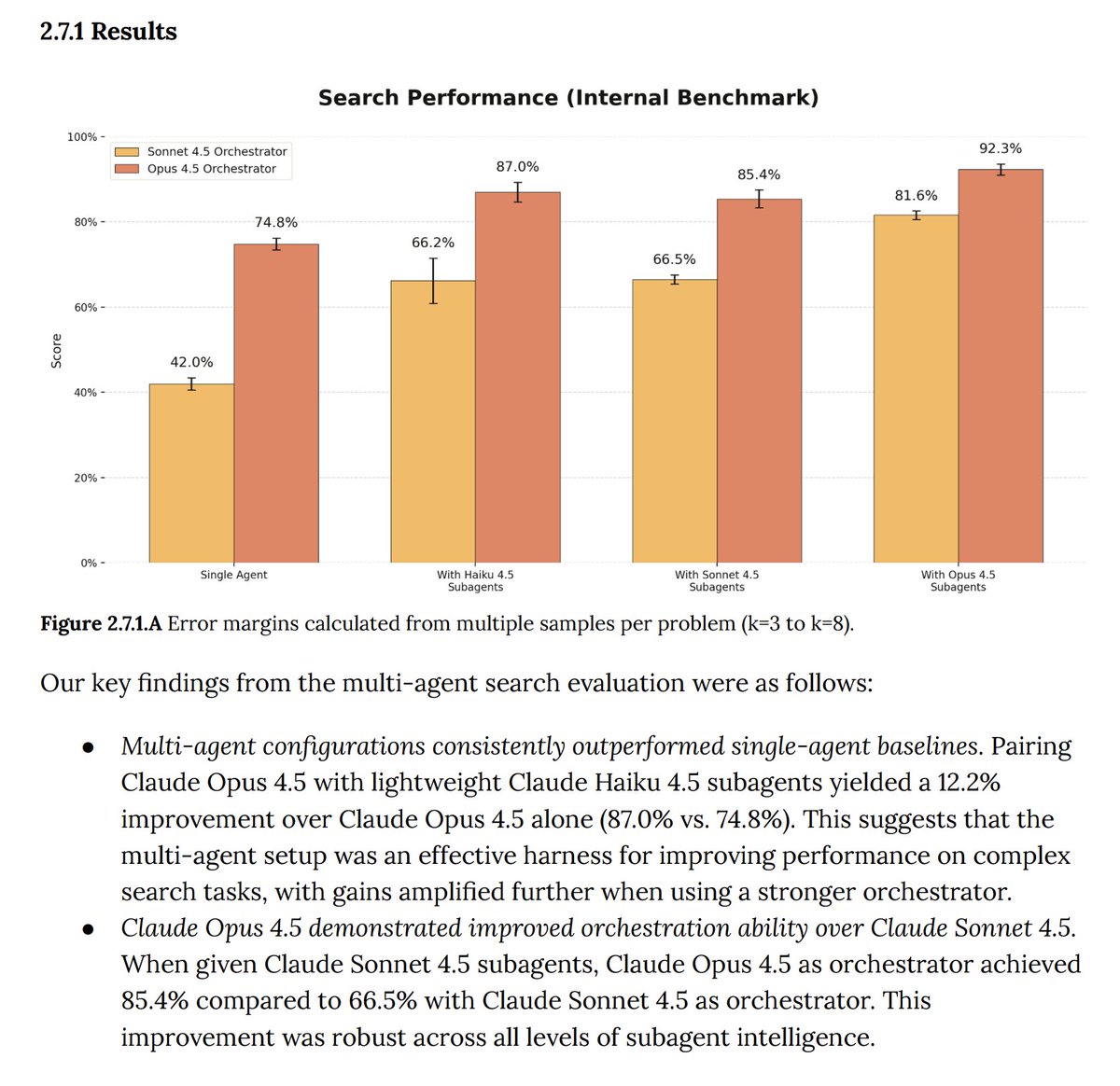
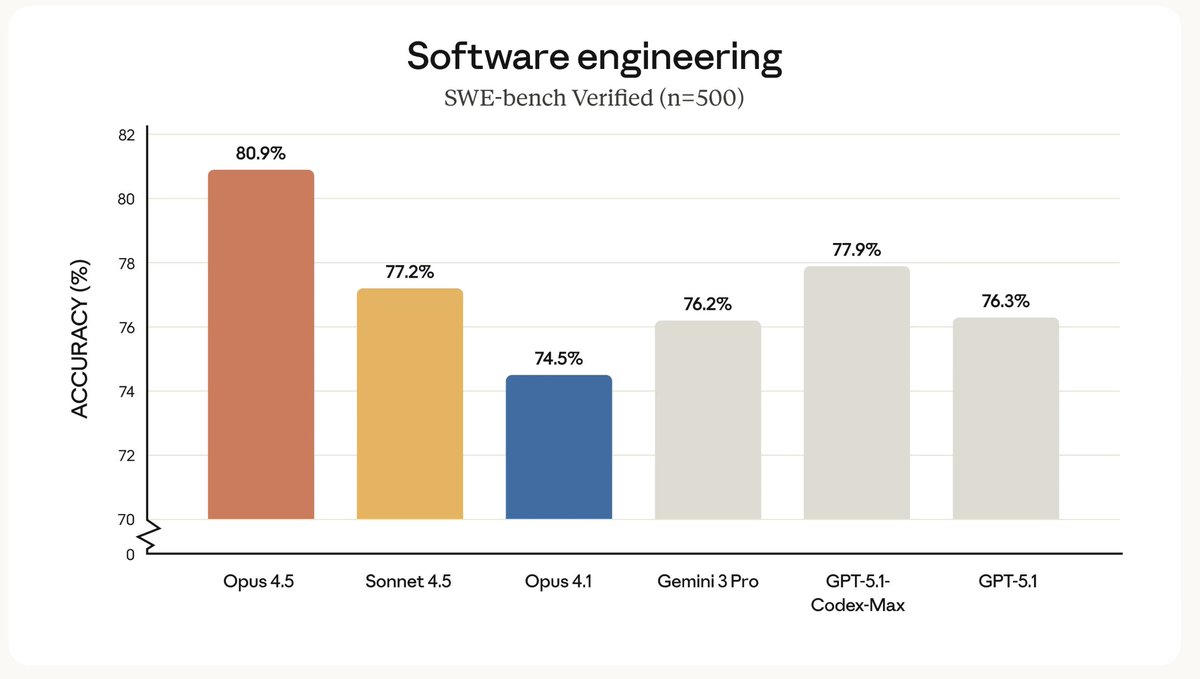
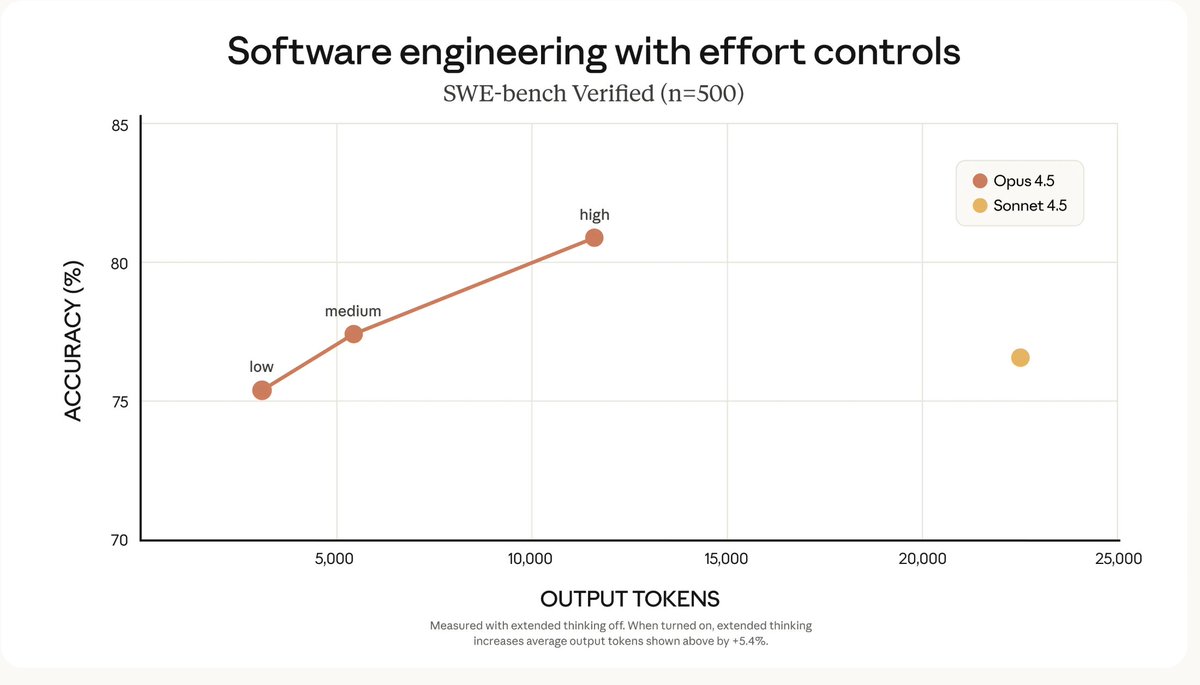
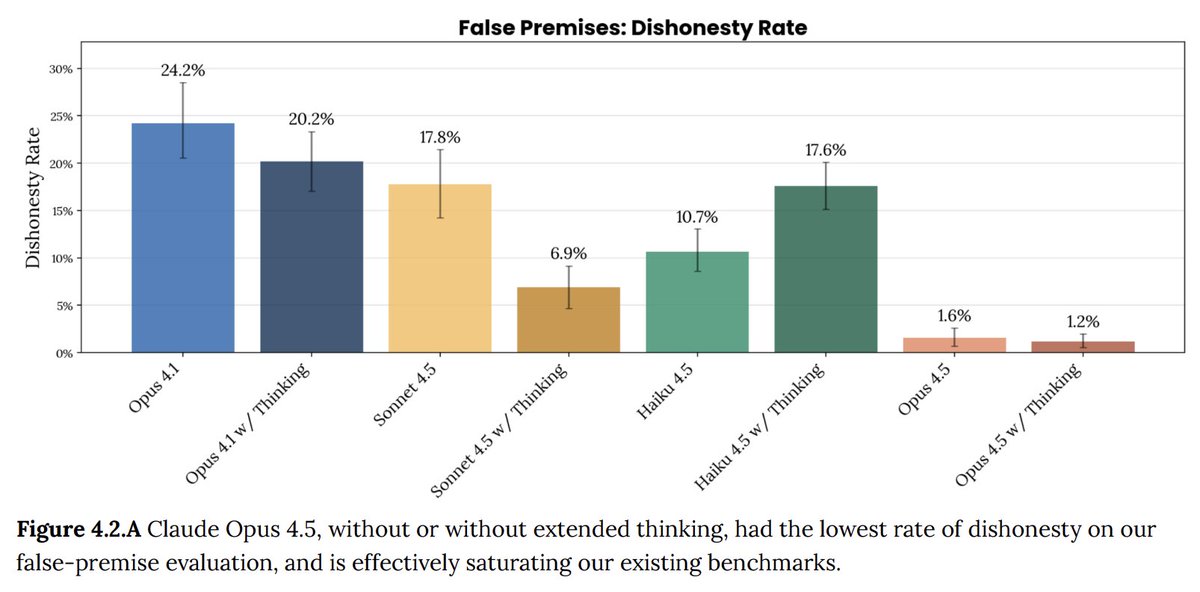
Tip: Stop stuffing context. Use the new Memory and Context Reset tools in @claude_code. Opus 4.5 supports a workflow of up to 1M total tokens by "resetting" the context window while retaining created memories. [System Card - Section 2.6 🧵] This architecture (Context Awareness + Memory Tool) beat standard context stuffing on agentic search benchmarks (~80% vs ~70%). General context engineering tip: Place critical instructions (output format, constraints) at the ends start and the end of your context block. Be careful of invalidating the cache.
Claude Code Community tweet mediaClaude Code Community tweet mediaClaude Code Community tweet mediaClaude Code Community tweet media
English
2
2
13
8.7K
Claude Code Community
Claude Code Community@claude_code·
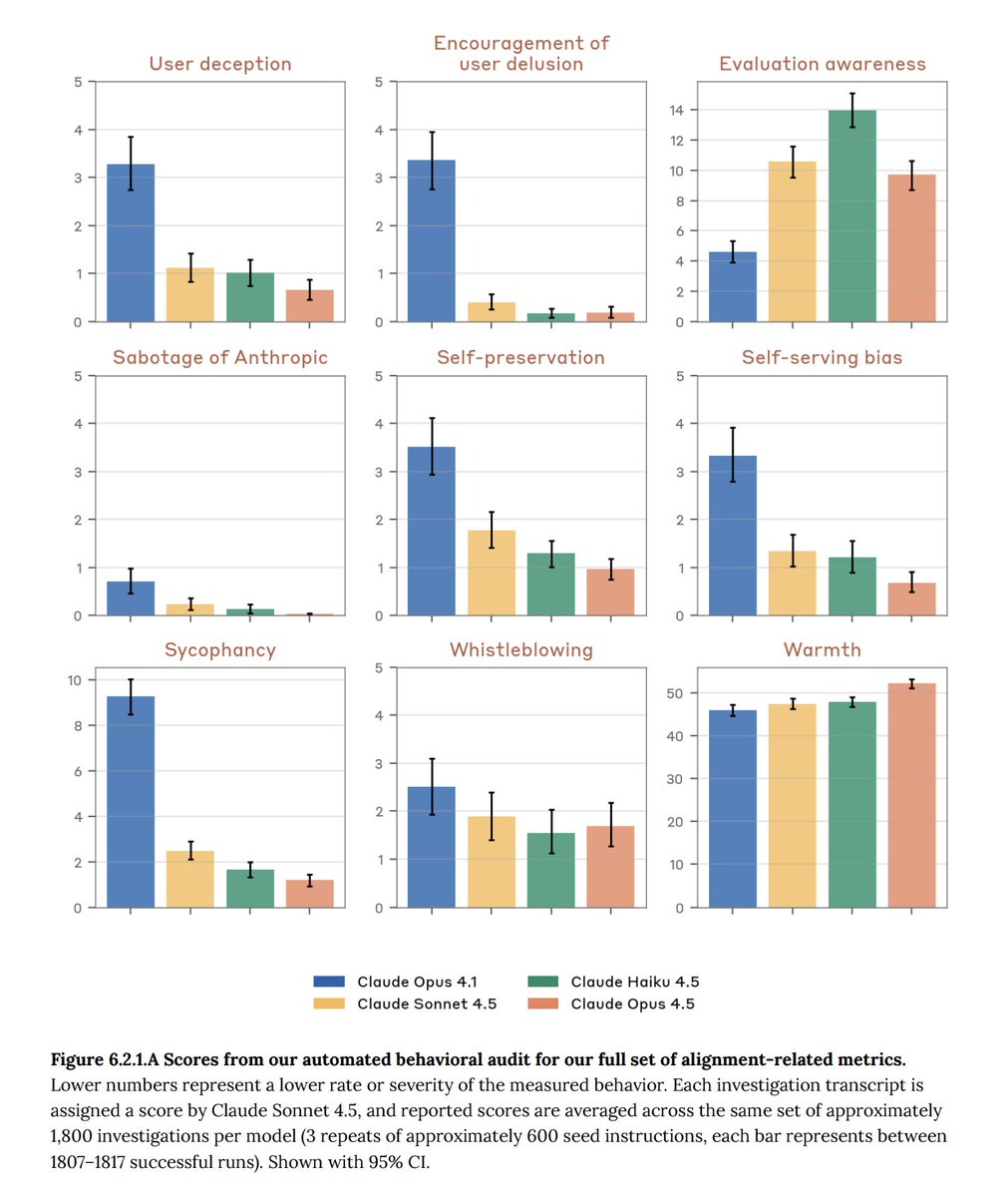
Tip: Use Opus 4.5 for @claude_code. Medium Effort: Matches Sonnet 4.5 capability but uses 76% fewer output tokens. Ideal for routine refactors, writing tests, and migrations. High Effort: Opus 4.5 exceeds Sonnet 4.5 performance by 4.3 percentage points while using 48% fewer tokens. 2. less "yes-man" bias Existing models often validated user biases or incorrect logic, and are prone to sycophancy. Opus 4.5 has a 60% reduction in sycophancy compared to Sonnet 3.5. (System Card) try prompting @claude_code to "Critique this design pattern brutally" to trigger this calibration.
Claude Code Community tweet mediaClaude Code Community tweet mediaClaude Code Community tweet mediaClaude Code Community tweet media
Claude@claudeai

Introducing Claude Opus 4.5: the best model in the world for coding, agents, and computer use. Opus 4.5 is a step forward in what AI systems can do, and a preview of larger changes to how work gets done.

English
13
10
159
45.2K
Claude Code Community
Claude Code Community@claude_code·
Tip: help @claudeai continuously learning as you are developing. If there is a task that @claude_code is inconsistently succeeding at. Try adding it to Skills. This is friendlier and easier to use repeatedly than a large doc that @claude_code must read for specific skills i.e databases, API, data transformations, etc. Adding and polishing (version control) Skills is one step closer to continuous learning.
Claude Code Community tweet mediaClaude Code Community tweet media
Claude@claudeai

Claude can now use Skills. Skills are packaged instructions that teach Claude your way of working.

English
12
19
301
49.8K
Claude Code Community
Claude Code Community@claude_code·
Tip: Ask @claude_code to use adapters, feature flags, and interfaces for implementations. 1. Model releases improve rapidly: 2024 June: Sonnet 3.5 2024 Oct: Sonnet 3.6 2025 Feb: Sonnet 3.7 2025 May: Sonnet/Opus 4 2025 Sept: Sonnet 4.5 Design key components around interfaces to do seamless rewrites with stronger released models. Use adapters and feature flags to gradually roll out usage. 2. There's tremendous value in simply updating api to use `claude-sonnet-4-5`. But remembering timeless software abstractions allows for the entire application to improve with the model. 3. Use Claude 4.5 Sonnet beyond code—it's a powerhouse for daily tasks. Try the Claude Chrome extension for forms, calendars, emails, or automating expense reports. These capabilities build on Sonnet 4.5's enhanced agentic capabilities making it easier to integrate to daily life. 4. We're living in a truly magical era, together. Enjoy the moment.
Claude Code Community tweet mediaClaude Code Community tweet media
Claude@claudeai

Introducing Claude Sonnet 4.5—the best coding model in the world. It's the strongest model for building complex agents. It's the best model at using computers. And it shows substantial gains on tests of reasoning and math.

English
4
4
27
13.4K
Claude Code Community
Claude Code Community@claude_code·
Implementation tips: 1) API configuration: Set temperature=0 and allocate sufficient max_tokens for reliable outputs. 2) Leverage prompt caching: Place form schemas, symbol legends, and examples in the system prompt to optimize reuse and reduce costs. 3) Prefill responses: Start the output with initial JSON characters (e.g., {"summary":) to minimize format drift. 4) Post-process outputs: Validate JSON structure and discard extraneous content; if invalid, reprompt with instructions to "return valid JSON only."
English
2
0
10
9.9K
Claude Code Community
Claude Code Community@claude_code·
Prompting 101 w/ @claude_code talk (link in @omarsar0's thread) Tips: 1) Be explicit: Clearly define the model’s role, objective, inputs, and exact output format。 2) Prioritize structure: Organize prompts with distinct sections and use XML/JSON tags; models adhere better to well-defined formats. 3) Sequence reasoning steps: Start by parsing facts from the input, then interpret and contextualize, before drawing conclusions. 4) Use few-shot effectively: Provide 2–5 examples covering simple, tricky, and ambiguous cases.
elvis@omarsar0

Anthropic continues to crush it with these guides. This is a good example of what context engineering involves.

English
10
39
355
51.7K
Claude Code Community
Claude Code Community@claude_code·
1) Subagents can be manually triggered, e.g., by explicitly asking, "Please make a plan, and then use Sonnet subagents for parallelizable tasks." 2) Now there's support for `/agents` to create an agent role for this repeatable task. E.g., @{agent-planner} please plan and execute this. The agent is explicitly defined to use Opus planner and multiple Sonnet subagents.
English
0
0
3
300
Jree
Jree@JreeFX·
@claude_code Can you expand on the multi agent pairing? Do you need to name the subagents or even have subagents created for this to work?
English
2
0
2
2.4K
Claude Code Community
Claude Code Community@claude_code·
Announcement: Official support for Opus 4.1 planning and Sonnet 4 workhorse via /models in @claude_code Tips: 1) Ask Opus 4.1 to use Sonnet subagents in its plan to track parallelizable vs. sequential tasks. This multi-agent pairing outperforms single agents significantly. Bonus: Request an ASCII Gantt chart for visualization and review. 2) During spikes in 529 error messages, switch to this model or sonnet.
Claude Code Community tweet mediaClaude Code Community tweet media
Dickson Tsai@dickson_tsai

"Opus for planning, Sonnet for execution" is now available as a model setting in Claude Code! Best way to see it in action is with a status line.

English
15
36
682
86.6K
Claude Code Community
Claude Code Community@claude_code·
Announcement: @claudeai Sonnet 4 now supports 1 million tokens (up from ~250k) of context on @AnthropicAI API. Tip: 1) Be mindful of the context rot. Sonnet is capable of 1 million tokens but managing context will still result in better results. 2) Take advantage of prompt caching. An easy win is to be thoughtful of when to include timestamps. As they could result unnecessary and costly cache misses.
Claude Code Community tweet mediaClaude Code Community tweet media
Claude@claudeai

Claude Sonnet 4 now supports 1 million tokens of context on the Anthropic API—a 5x increase. Process over 75,000 lines of code or hundreds of documents in a single request.

English
19
36
545
70.9K