The American Consumer Institute

5.9K posts

The American Consumer Institute banner
The American Consumer Institute

The American Consumer Institute

@consumerpal

Our mission is to promote consumer welfare by improving the understanding and impact that public policies and regulations have on American consumers.

Bergabung Mart 2009
615 Mengikuti1.4K Pengikut
Tweet Disematkan
The American Consumer Institute
🚨🚨🚨@consumerpal just released The Inescapable Link: How Data Policy Still Dominates Tech Policy Debates report. The current lack of a clear, consistent national data privacy framework not only undermines consumer trust but also stifles innovation and economic growth. The report calls for immediate action to establish a federal data privacy standard that aligns technology policy, protects consumers, and enables innovation. theamericanconsumer.org/2026/04/report…
English

1
5
9
1.4K
The American Consumer Institute
This proposal targets credit card costs—but that’s not where most financial pressure comes from. The biggest expenses for households are still housing, food, and transportation. Credit card interest represents only a small share of overall spending, even for households carrying debt. At the same time, most credit card balances are tied to essential purchases, and more consumers are using tools like installment payments just to cover basics like groceries. Restricting access to credit doesn’t solve the affordability problem—it removes a financial tool many rely on to manage it.
English
0
0
0
26
The American Consumer Institute me-retweet
Logan Kolas
Logan Kolas@Logan_Kolas·
🚨🚨🚨 NEW @consumerpal paper with @tzduren 🚨🚨🚨 Without a federally pre-emptive data privacy standard, courts, federal agencies, and state legislatures have been left to interpret our growing patchwork of data rules. Fortunately, Congress still has an opportunity to create a clear and consistent data privacy rule that: - helps protect kids online - clarifies data rules in the AI race - limits government abuses of power - clarifies antitrust cases - simplifies geo-political decisions involving consumer data We suggest Congress look to Tennessee for inspiration.
The American Consumer Institute@consumerpal

🚨🚨🚨@consumerpal just released The Inescapable Link: How Data Policy Still Dominates Tech Policy Debates report. The current lack of a clear, consistent national data privacy framework not only undermines consumer trust but also stifles innovation and economic growth. The report calls for immediate action to establish a federal data privacy standard that aligns technology policy, protects consumers, and enables innovation. theamericanconsumer.org/2026/04/report…

English
1
2
7
469
The American Consumer Institute
Capping interest rates doesn’t eliminate risk—it limits who can borrow. Research shows that interest rate caps lead to a decline in credit availability for higher-risk consumers, without improving delinquency rates. If traditional credit becomes harder to access, borrowers may be pushed toward alternatives like Buy Now, Pay Later (BNPL)—which lack the flexibility of revolving credit.
English
0
0
0
23
The American Consumer Institute
A proposed cap on credit card interest rates may sound consumer-friendly—but it could backfire. The bill would cap interest rates at 15 percent, limit late fees, and ban merchant surcharges. But policies like this often come with tradeoffs. When limits are placed on pricing, access tends to shrink—especially for higher-risk borrowers. And when access to traditional credit tightens, demand doesn’t disappear. It shifts elsewhere. Read more by @leahmlocke: theamericanconsumer.org/2026/03/an-ari…
English
0
0
0
39
The American Consumer Institute
This isn’t just regulatory reform—it’s a direct win for consumers. By streamlining approvals and preempting conflicting state laws, it’s now easier to: • Replace outdated copper networks • Expand faster, more reliable services • Increase competition among providers Providers can now upgrade infrastructure more efficiently—or connect consumers to competitors who can. Read more by @NateKarrenOnX: theamericanconsumer.org/2026/03/the-fc…
English
0
1
1
46
The American Consumer Institute
🚨🚨🚨@consumerpal just released The Inescapable Link: How Data Policy Still Dominates Tech Policy Debates report. The current lack of a clear, consistent national data privacy framework not only undermines consumer trust but also stifles innovation and economic growth. The report calls for immediate action to establish a federal data privacy standard that aligns technology policy, protects consumers, and enables innovation. theamericanconsumer.org/2026/04/report…
English
1
5
9
1.4K
The American Consumer Institute
Some telecom rules date back to 1934—and until recently, they were still shaping today’s networks. Section 214 was designed for a time when one company controlled communications. Today, consumers have multiple high-speed options—but outdated rules kept them stuck on aging copper infrastructure. At the state level, Carrier of Last Resort (COLR) laws added another layer of delay, forcing providers to maintain outdated systems even when better alternatives existed. The result? Consumers paying fiber-level prices for slower, less reliable DSL service.
English
0
0
0
34
The American Consumer Institute
The FCC has removed major barriers to upgrading America’s communications networks. The vote eliminated outdated federal filing requirements and overrode duplicative state rules that slowed infrastructure upgrades. The result? Providers can modernize networks faster and deliver better service to consumers. For years, regulations written for a copper-wire era forced delays—even when better technology was ready to go. Now, those roadblocks are being cleared.
English
0
0
0
34
The American Consumer Institute me-retweet
AAM
AAM@AccessibleMeds·
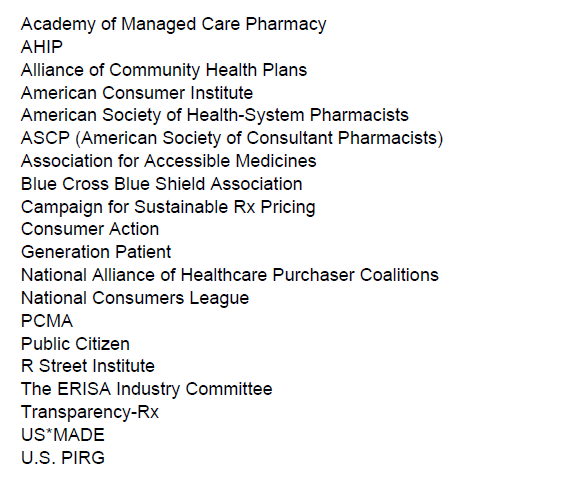
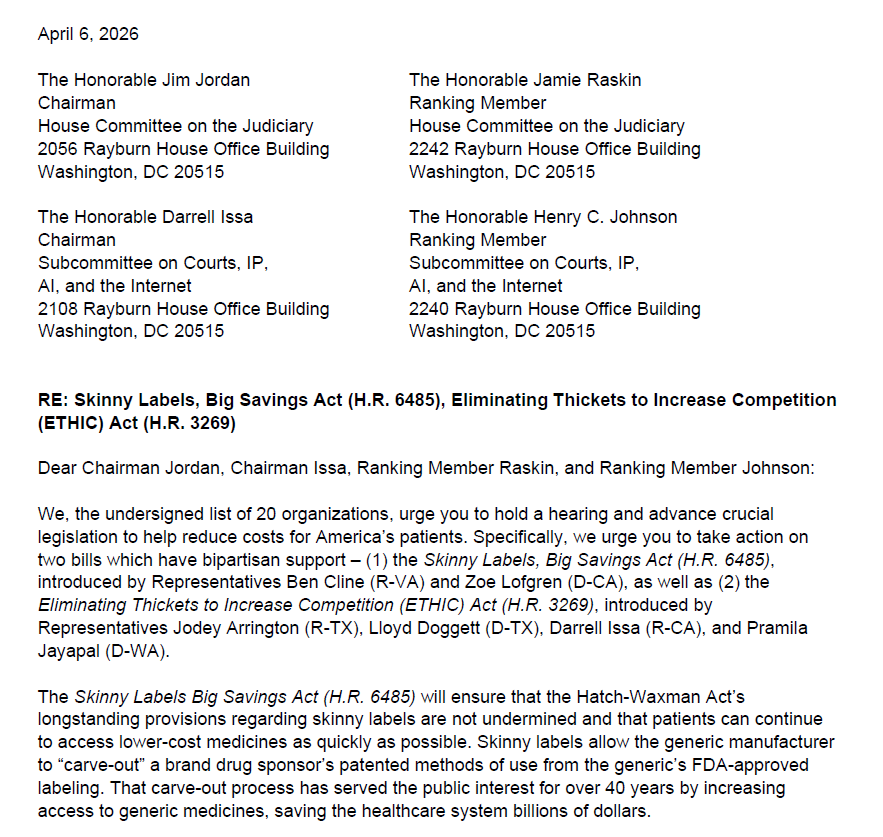
Yesterday, alongside 20 organizations, our AAM team urged a Congressional hearing to help advance crucial legislation to help reduce costs for America’s patients. Specifically, we asked for swift action on two bills: the Skinny Labels, Big Savings Act and the Eliminating Thickets to Increase Competition (ETHIC) Act. As always, we are grateful for the support of our AAM allies (listed below); and we appreciate focused Congressional attention to this important matter. Read the full letter: accessiblemeds.org/wp-content/upl…
AAM tweet mediaAAM tweet media
English
0
7
9
1.7K
The American Consumer Institute
States are split on the future of healthcare competition. Some are moving forward: • North Carolina and West Virginia are considering full repeal • Alabama is exploring targeted exemptions Others are doubling down: • Connecticut is expanding CON restrictions • Maryland is tightening rules on treatment centers The direction matters.
English
0
0
0
42
The American Consumer Institute
CON laws were built on a theory that didn’t hold up. First introduced in the 1960s and expanded nationwide in the 1970s, they aimed to reduce costs and improve quality by limiting “duplicate” services. Even after the federal mandate was repealed in 1987, most states kept these outdated rules in place—leaving barriers that still shape healthcare markets today.
English
0
0
0
26
The American Consumer Institute
What if opening a hospital required proving there aren’t already “too many”? In much of the U.S., that’s reality. Certificate of Need (CON) laws force healthcare providers to get government approval before opening, expanding, or even upgrading equipment—regardless of patient demand. The result is a system that protects incumbents while patients face higher prices and fewer options. Read more by @JustinLeventhal: theamericanconsumer.org/2026/03/how-st…
English
0
1
1
37
The American Consumer Institute
Healthcare access isn’t just a workforce issue—it’s a competition issue. When APRNs and physician assistants are allowed to practice independently: • Patients get more options • Wait times shrink • Costs come down Expanding scope of practice changes that dynamic—bringing more providers into the system and forcing improvements in price and service. Read more from @JustinLeventhal: theamericanconsumer.org/2026/03/the-ec…
English
0
1
1
29
The American Consumer Institute
States are moving—but not fast enough. APRNs are already highly trained and tested. Requiring thousands of additional supervised hours doesn’t improve safety—it limits supply and protects existing provider monopolies.
English
0
0
0
25
The American Consumer Institute
For millions of Americans, getting basic medical care isn’t simple—it’s slow, expensive, or out of reach. Rural communities face provider shortages that force patients to travel hours for routine care. In urban areas, long wait times and overwhelmed clinics delay treatment. The result? Worse outcomes for preventable and chronic conditions. At the same time, thousands of highly trained nurse practitioners and APRNs are ready to help—but are blocked by outdated laws. Expanding their scope of practice isn’t a radical idea. It’s a practical solution to close care gaps and improve access where it’s needed most.
English
0
0
0
17