Tirzah Duren

2.2K posts

Tirzah Duren banner
Tirzah Duren

Tirzah Duren

@tzduren

policy over politics | interested in all thing that help people flourish | President & CEO @consumerpal

Washington, DC Katılım Nisan 2017
330 Takip Edilen557 Takipçiler
Sabitlenmiş Tweet
Tirzah Duren
Tirzah Duren@tzduren·
In my antitrust era
Tirzah Duren tweet media
English
0
5
25
3K
Tirzah Duren retweetledi
Logan Kolas
Logan Kolas@Logan_Kolas·
🚨🚨🚨 NEW @consumerpal paper with @tzduren 🚨🚨🚨 Without a federally pre-emptive data privacy standard, courts, federal agencies, and state legislatures have been left to interpret our growing patchwork of data rules. Fortunately, Congress still has an opportunity to create a clear and consistent data privacy rule that: - helps protect kids online - clarifies data rules in the AI race - limits government abuses of power - clarifies antitrust cases - simplifies geo-political decisions involving consumer data We suggest Congress look to Tennessee for inspiration.
The American Consumer Institute@consumerpal

🚨🚨🚨@consumerpal just released The Inescapable Link: How Data Policy Still Dominates Tech Policy Debates report. The current lack of a clear, consistent national data privacy framework not only undermines consumer trust but also stifles innovation and economic growth. The report calls for immediate action to establish a federal data privacy standard that aligns technology policy, protects consumers, and enables innovation. theamericanconsumer.org/2026/04/report…

English
1
2
7
469
Tirzah Duren
Tirzah Duren@tzduren·
Everyone’s tired of talking about data privacy, but ignoring it doesn’t make it disappear. It’s embedded in nearly every tech policy fight: antitrust, kids’ safety, even national security. @Logan_Kolas and I discuss this in our latest report.
The American Consumer Institute@consumerpal

🚨🚨🚨@consumerpal just released The Inescapable Link: How Data Policy Still Dominates Tech Policy Debates report. The current lack of a clear, consistent national data privacy framework not only undermines consumer trust but also stifles innovation and economic growth. The report calls for immediate action to establish a federal data privacy standard that aligns technology policy, protects consumers, and enables innovation. theamericanconsumer.org/2026/04/report…
English
0
9
18
674
Tirzah Duren retweetledi
The American Consumer Institute
🚨🚨🚨@consumerpal just released The Inescapable Link: How Data Policy Still Dominates Tech Policy Debates report. The current lack of a clear, consistent national data privacy framework not only undermines consumer trust but also stifles innovation and economic growth. The report calls for immediate action to establish a federal data privacy standard that aligns technology policy, protects consumers, and enables innovation. theamericanconsumer.org/2026/04/report…

English
1
5
9
1.4K
Tirzah Duren retweetledi
Brivael - FR
Brivael - FR@BrivaelFr·
Milton Friedman (prix nobel d'économie) a dit un truc il y a 50 ans qui est encore plus vrai aujourd'hui. Et quasiment personne ne le comprend. 🧵 On lui pose la question : "Sans régulation sur les médicaments, des gens pourraient mourir en prenant des produits dangereux. Vous ne trouvez pas ça grave ?" Sa réponse est un des retournements logiques les plus brillants de l'histoire de l'économie. Oui, dit Friedman. Un médicament non régulé peut tuer des gens. C'est visible. C'est dans les journaux. C'est un scandale. Tout le monde le voit. Mais ce que personne ne voit, c'est les gens qui meurent parce qu'un médicament qui aurait pu les sauver a été bloqué pendant 10 ans par le processus de régulation. Ce mort là, personne ne le compte. Personne ne fait sa une. Personne ne connaît son nom. Parce qu'il est mort de l'absence de quelque chose qui n'a jamais existé. C'est l'asymétrie fondamentale de la régulation. Le régulateur a deux types d'erreurs possibles. Erreur 1 : approuver un médicament dangereux. Résultat : scandale public, procès, le régulateur perd son poste. Erreur 2 : bloquer un médicament qui aurait sauvé des vies. Résultat : rien. Personne ne sait. Personne ne proteste. Les morts silencieux n'ont pas de porte-parole. Du coup, le régulateur rationnel optimise pour éviter l'erreur 1. Toujours. Il rajoute des études. Des phases. Des comités. Des délais. Chaque couche de "sécurité" supplémentaire le protège, lui, au détriment des patients qui attendent. Friedman estimait que la FDA avait probablement tué plus de gens en retardant des bons médicaments qu'elle n'en avait sauvé en bloquant des mauvais. C'est impossible à prouver précisément. Mais la logique est imparable. Un exemple concret. Le bêta-bloquant Propranolol était disponible en Europe des années avant d'être approuvé aux États-Unis. Pendant ces années, des Américains mouraient de crises cardiaques qui auraient pu être évitées. Combien ? On ne le saura jamais. Parce qu'on ne compte pas les morts de l'inaction. C'est le même principe partout. Pas que dans la médecine. En France, les taxis autonomes sont bloqués par la régulation. Chaque année de retard, ce sont des accidents de la route qui auraient pu être évités. Mais personne ne compte ces morts là. On compte uniquement le premier accident d'un taxi autonome, qui fera la une de tous les journaux. L'IA dans la médecine est ralentie par des processus d'approbation qui prennent des années. Des diagnostics qui pourraient être faits en secondes par un algorithme attendent des validations pendant que des patients attendent des mois pour un rendez-vous. Le nucléaire a été bloqué pendant des décennies par la peur. Combien de gens sont morts de la pollution des centrales à charbon qui ont tourné à la place ? Personne ne les compte. Le pattern est toujours le même. On voit le risque de l'action. On ne voit jamais le risque de l'inaction. Et comme le risque de l'inaction est invisible, le régulateur choisit toujours l'inaction. Parce que l'inaction ne produit pas de scandale. Friedman résumait ça en une phrase : "Les gens qui ont été sauvés par la FDA sont visibles. Les gens qui sont morts à cause des retards de la FDA sont invisibles. Et dans une démocratie, le visible gagne toujours contre l'invisible." La prochaine fois que quelqu'un vous dit "il faut plus de régulation pour protéger les gens", posez une seule question : combien de gens meurent en attendant que la régulation les autorise à vivre ? La réponse est toujours plus grande que ce qu'on imagine. Mais personne ne la calcule. Parce que les morts de l'inaction n'ont pas de visage.
Brivael - FR tweet media
Français
225
1.7K
4.9K
351.1K
Tirzah Duren
Tirzah Duren@tzduren·
Shoutout to Phoenix for choosing data over panic when it comes to consumer safety. @Waymo
Tirzah Duren tweet media
English
0
1
1
60
Tirzah Duren retweetledi
HotSotin 🇫🇮🇺🇦🇪🇺△
Crazy idea: Let's split a country in socialist and capitalist halves and check in on them in 75 years.
HotSotin 🇫🇮🇺🇦🇪🇺△ tweet media
English
1.3K
5.3K
30.8K
2.8M
Tirzah Duren retweetledi
The American Consumer Institute
ICYMI: The future of U.S. transportation policy is taking shape. The American Consumer Institute recently hosted a webinar on what’s ahead as Congress begins work on the next Surface Transportation Reauthorization. The discussion brought together policy experts to tackle some of the biggest challenges facing the system—from long-term funding issues to the role of new technologies. At the center of the conversation were three priorities: improving how projects get approved and built, ensuring sustainable funding through the Highway Trust Fund, and supporting innovation across highways, transit, and rail. As policymakers look ahead, the focus is clear: build faster, fund smarter, and modernize for the future. theamericanconsumer.org/2026/04/webina…
English
0
2
1
46
Tirzah Duren retweetledi
Logan Kolas
Logan Kolas@Logan_Kolas·
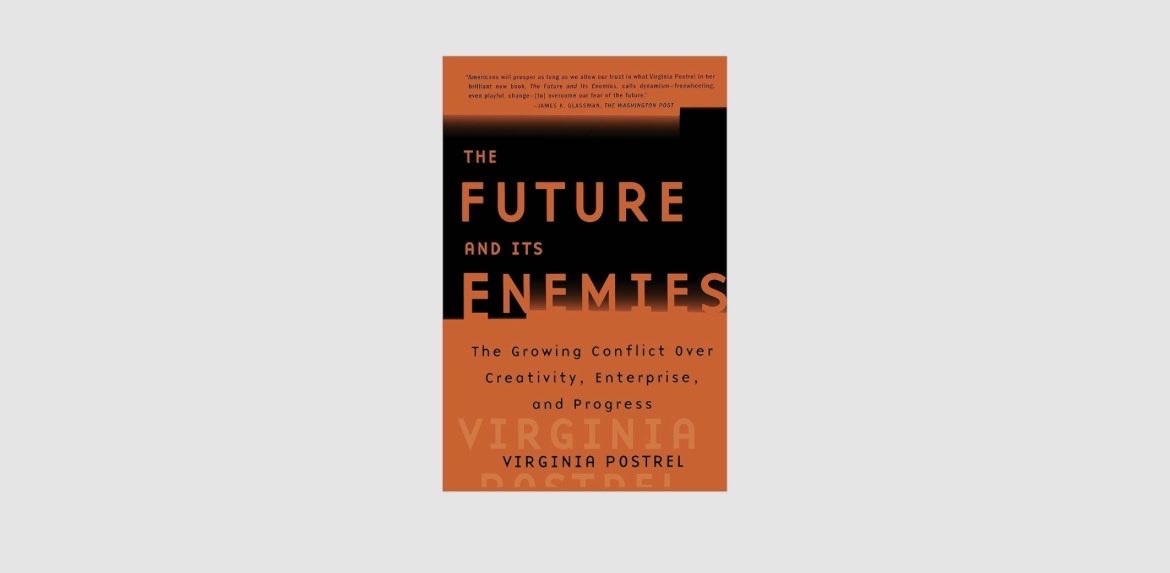
In our most recent op-ed, @AdamThierer and I explain how California is dictating AI policy for everyone from the west coast. Meanwhile, in @CityJournal, we explained how New York is doing the same thing from the east coast. This bi-coastal squeeze threatens AI progress.
Logan Kolas tweet mediaLogan Kolas tweet media
Adam Thierer@AdamThierer

"On Artificial Intelligence Policy, It’s California Versus Congress" new Orange County Register essay from @Logan_Kolas & me on how Calif is attempting to dictate AI policy for the entire nation. The "Sacramento Effect" strikes again, and will do real damage if not curtailed.
English
0
1
9
714
Tirzah Duren
Tirzah Duren@tzduren·
4/ That divide explains why so many debates go nowhere. Different goals, different definitions. However, I still think that if we want real competition, we should focus on keeping markets open and responsive, not engineering a specific outcome.
English
0
0
0
8
Tirzah Duren
Tirzah Duren@tzduren·
3/ That’s a big change. It moves antitrust from protecting how markets work to trying to shape what they look like. Postrel would call this dynamism vs. stasis. I call it process vs. preferred outcomes.
English
1
0
0
11
Tirzah Duren
Tirzah Duren@tzduren·
1/ Just finished The Future and Its Enemies by @vpostrel (I know, a little late to the party). It’s about societal systems—but it maps surprisingly well onto today’s antitrust debates. 🧵
Tirzah Duren tweet media
English
1
0
1
23
Tirzah Duren retweetledi
Neil Siefring
Neil Siefring@NeilSiefring·
AI policy should not pretend the only choices are heavy handed restriction or no rules at all. The right approach is clear guardrails, real accountability, and room for American builders, workers, and innovators to win together. The small businesses of tomorrow need AI today.
English
1
1
7
249
Tirzah Duren
Tirzah Duren@tzduren·
I asked ChatGPT how the definition of addiction in the Meta/Google lawsuit compares to the standard medical definition. I thought the last takeaway was particularly interesting
Tirzah Duren tweet media
English
0
0
3
115
Tirzah Duren
Tirzah Duren@tzduren·
The intersection of IP and antitrust initially appears to be in conflict with one granting monopolies and one trying to end (illegal) monopolies. This is an interesting angle I haven’t thought of before: “….rejecting the idea that patents automatically grant market power. According to the speech, regulators instead assess market power on a case-by-case basis, taking into account factors such as the availability of alternative technologies.” Thoughts? pymnts.com/cpi-posts/doj-…
English
0
0
1
41
Tirzah Duren retweetledi
Luke Hogg
Luke Hogg@LEHogg·
Every time you load a page, your data travels through physical infrastructure - cables under oceans, satellites overhead, fiber under cities. Most people never think about. That's why I decided to map it. This is Project Backbone. It's free, interactive, and live.
Luke Hogg tweet media
English
98
742
4.3K
177.5K
Tirzah Duren
Tirzah Duren@tzduren·
I agree that a focus on output is an essential measure I simply meant to say that there could be other metrics that demonstrate competition. My perspective is that the Facebook/Instagram merger is a prime illustration of this. Output and price are a bit hard to define and competition could be better conceptualized as innovation via new features. In such a case I think that such features and consumer choice (multiple platforms even if there is one parent company).
English
1
0
0
47
Herbert hovenkamp
Herbert hovenkamp@Sherman1890·
@tzduren @Sherman1890 Output is usually the better metric (altho not always as easy to measure), but would you ever want to condemn a strategy that sustainably increased market output as anticompetitive. E.g., what would you do with the Facebook/Instagram merger?
English
1
0
0
25
Tirzah Duren
Tirzah Duren@tzduren·
@Sherman1890 I think some of the critiques about a narrow focus on prices are valid to an extent (not when they push for higher prices.) I would be interested to see how an increasingly digital economy could spur expanded proxies for competition. My immediate thought goes to the use of time spent on an app and how that factored into the relevant market definition in the decision for the FTCs most recent case against Meta
Herbert hovenkamp@Sherman1890

@tzduren Right. So how do you tell the difference? Presumptively, something promotes competition when it leads to lower prices and higher output. Legislation reflects capture when it yields higher prices, often by protecting higher priced or less innovative firms.


English
1
0
0
75
Tirzah Duren
Tirzah Duren@tzduren·
@dystopiabreaker @TaylorLorenz Hope this helps: Moody was argued on first amendment grounds, while this case focused on product design and liability. Since it was about design, it didn’t focus on content which would have bumped into the first amendment and Section 230.
English
1
0
1
126
⚡️🌙
⚡️🌙@dystopiabreaker·
@TaylorLorenz unclear to me how this survives the precedent set by Moody v. NetChoice
English
1
1
13
7.4K