
Tweet Disematkan
Halvar Flake
65.4K posts

Halvar Flake
@halvarflake
Choose disfavour where obedience does not bring honour. I do math. And was once asked by R. Morris Sr. : "For whom?" @[email protected]
Bergabung Haziran 2008
2.6K Mengikuti44.4K Pengikut
Halvar Flake me-retweet

We are also releasing self-contained lecture notes that explain flow matching and diffusion models from scratch. This goes from "zero" to the state-of-the-art in modern Generative AI.
📖 Read the notes here: arxiv.org/abs/2506.02070
Joint work with @EErives40101.
Peter Holderrieth@peholderrieth
🚀MIT Flow Matching and Diffusion Lecture 2026 Released (diffusion.csail.mit.edu)! We just released our new MIT 2026 course on flow matching and diffusion models! We teach the full stack of modern AI image, video, protein generators - theory and practice. We include: 📺 Videos: Step-by-step derivations. 📝 Notes: Mathematically self-contained lecture notes 💻 Coding: Hands-on exercises for every component We fully improved last years’ iteration and added new topics: latent spaces, diffusion transformers, building language models with discrete diffusion models. Everything is available here: diffusion.csail.mit.edu A huge thanks to Tommi Jaakkola for his support in making this class possible and Ashay Athalye (MIT SOUL) for the incredible production! Was fun to do this with @RShprints! #MachineLearning #GenerativeAI #MIT #DiffusionModels #AI
English
Halvar Flake me-retweet

Japan has analysed its future offensive cyber operations mandate and deemed it acceptable under its deeply rooted non-aggression defence principles. Japan views cyberspace as a broader environment involving state and non-state actors, not a war domain. Be more like Japan.
English
Halvar Flake me-retweet

MiMo-V2-Pro & Omni & TTS is out. Our first full-stack model family built truly for the Agent era.
I call this a quiet ambush — not because we planned it, but because the shift from Chat to Agent paradigm happened so fast, even we barely believed it. Somewhere in between was a process that was thrilling, painful, and fascinating all at once.
The 1T base model started training months ago. The original goal was long-context reasoning efficiency. Hybrid Attention carries real innovation, without overreaching — and it turns out to be exactly the right foundation for the Agent era. 1M context window. MTP inference for ultra-low latency and cost. These architectural decisions weren't trendy. They were a structural advantage we built before we needed it.
What changed everything was experiencing a complex agentic scaffold — what I'd call orchestrated Context — for the first time. I was shocked on day one. I tried to convince the team to use it. That didn't work. So I gave a hard mandate: anyone on MiMo Team with fewer than 100 conversations tomorrow can quit. It worked. Once the team's imagination was ignited by what agentic systems could do, that imagination converted directly into research velocity.
People ask why we move so fast. I saw it firsthand building DeepSeek R1. My honest summary:
— Backbone and Infra research has long cycles. You need strategic conviction a year before it pays off.
— Posttrain agility is a different muscle: product intuition driving evaluation, iteration cycles compressed, paradigm shifts caught early.
— And the constant: curiosity, sharp technical instinct, decisive execution, full commitment — and something that's easy to underestimate: a genuine love for the world you're building for.
We will open-source — when the models are stable enough to deserve it.
From Beijing, very late, not quite awake.
English
@aviramyh Ah, I don't quite know if the typo is in an uncommon word such as a company name. It might be an artifact of the tokenizer then...
English

@halvarflake The word has been tokenized and stored as typo and used in training?
Maybe someone should run a grammar benchmark 🙂
The two mistakes were company names - MetalBear to metealbeaer and Daytona to daytoan. Funnily enough the mistake happened with some consistency
English
anyone else encountered agent having typos? a friend told me it never happened to them and to me it happened twice same day with two different harnesses+models (CC, Codex).
English
Halvar Flake me-retweet

@halvarflake Haha, wait till you learn about NCCL/MPI and UCX. You might consider a diaper and then proceed to read about UCM, RCache and xpmem...
If there was a Hague for crimes against m[un]map they would long be in jail.
English
Halvar Flake me-retweet

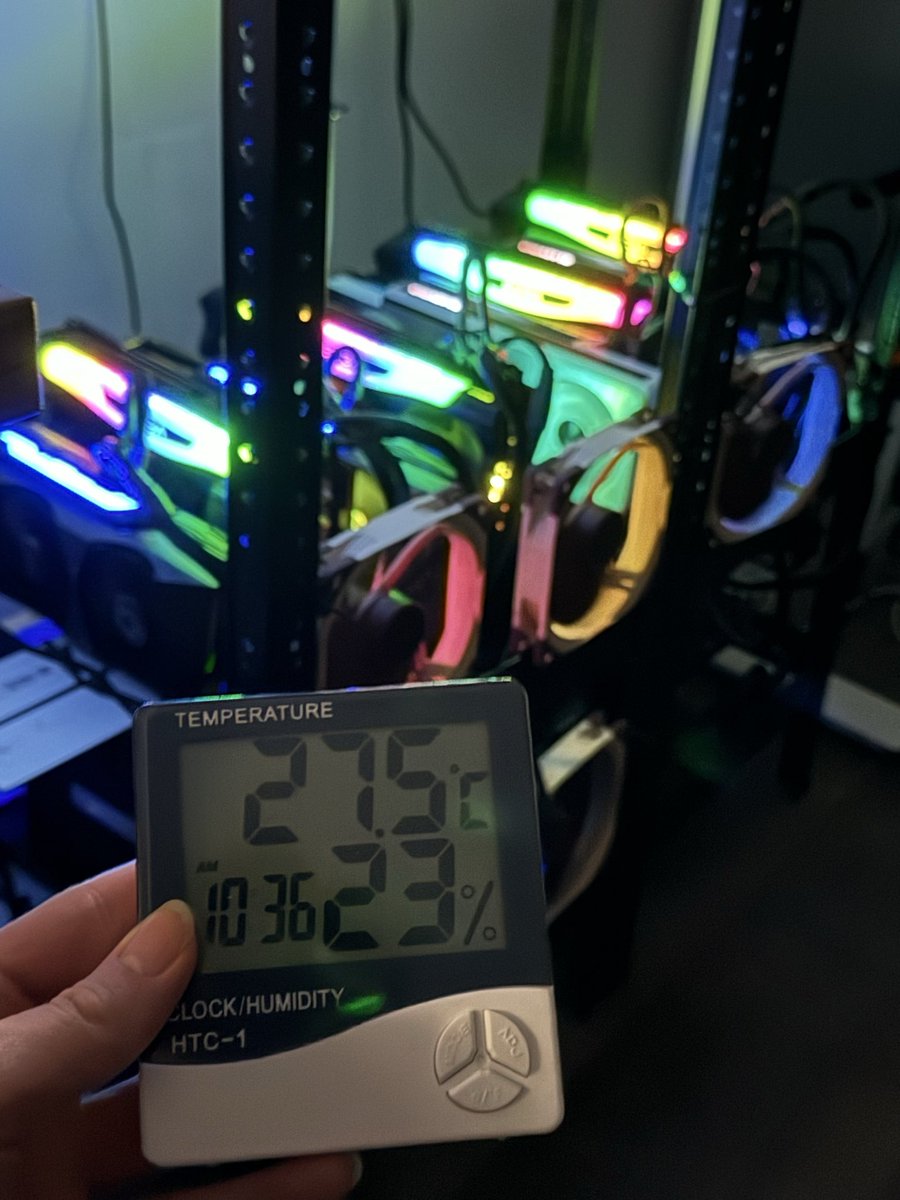
Putting out a wish to the universe.
I need more compute, if I can get more I will make sure every machine from a small phone to a bootstrapped RTX 3090 node can run frontier intelligence fast with minimal intelligence loss.
I have hit page 2 of huggingface, released 3 model family compressions and got GLM-4.7 on a MacBook huggingface.co/0xsero
My beast just isn’t enough and I already spent 2k usd on renting GPUs on top of credits provided by Prime intellect and Hotaisle.
———
If you believe in what I do help me get this to Nvidia, maybe they will bless me with the pewter to keep making local AI more accessible 🙏
Michael Dell 🇺🇸@MichaelDell
Jensen Huang is loving the new Dell Pro Max with GB300 at NVIDIA GTC.💙 They asked me to sign it, but I already did 😉
English
Halvar Flake me-retweet

I am now at 5 GPU providers being completely sold out for a single node of 8xH100s.
I don’t think people understand the gravity of what is about to come.
Suhail@Suhail
The run on inference capacity is coming. You have been warned.
English
Halvar Flake me-retweet

Halvar Flake me-retweet

Incredibly excited to announce Keycard for Coding Agents - no more copy & pasting credentials or approving individual tool calls.
Agents get task-scoped access, so you can stay in flow and actually build. You’re only pulled in when it matters.
Yolo mode, without compromise.
Keycard@KeycardLabs
Your coding agents inherit your credentials and your permissions. No identity system in the stack can tell the difference between you and the agent acting in your name. Today: Keycard for Coding Agents 🧵
English
Halvar Flake me-retweet

The entire AI industry spent a week convinced DeepSeek had secretly launched V4. Reuters reported it. Developers debated it. OpenRouter usage charts broke.
It was Xiaomi.
A smartphone and electric vehicle company just shipped a 1-trillion-parameter model that topped the world's largest API aggregation platform, and nobody guessed the origin because the model was too good to be associated with a hardware company.
The stealth launch as "Hunter Alpha" on March 11 was the most elegant product validation in recent AI history. No brand, no attribution, no expectations. Just raw performance. The model processed over 1 trillion tokens in 8 days. Developers organically chose it over every labeled frontier model on the platform. When Reuters tested the chatbot, it identified itself only as "a Chinese AI model primarily trained in Chinese" with a May 2025 knowledge cutoff, the exact same cutoff DeepSeek reports.
The person behind this is Luo Fuli. Born in 1995. Eight papers at ACL as a graduate student at Peking University. Alibaba DAMO Academy. Then DeepSeek, where she co-developed V2 and contributed to R1. Lei Jun reportedly offered tens of millions of yuan to recruit her. She joined Xiaomi in November 2025. Four months later, she's shipping a model that benchmarks alongside Claude Sonnet 4.6 and GPT-5.2 at one-fifth the API cost.
The detail that tells you everything about how this team operates: when Luo first experienced a complex agentic scaffold, she tried to convince the MiMo team to adopt it. They resisted. So she issued a mandate. Anyone on the team with fewer than 100 conversations with the system by tomorrow can quit. They all stayed. The imagination converted into research velocity.
The architectural bets matter. Hybrid Attention for long-context efficiency. MTP inference for low latency. 1M context window. 42B activated parameters out of 1T total. These are infrastructure decisions optimized for agents that run autonomously for hours, not chatbots that answer one question at a time.
Pricing: $1/$3 per million tokens up to 256K context. $2/$6 for 256K to 1M. Claude Sonnet 4.6 costs roughly 5x that. Xiaomi's shares rose 5.8% on the announcement.
The real DeepSeek V4 still hasn't shipped. The model everyone mistook for it already has a trillion tokens of real-world usage data.
Fuli Luo@_LuoFuli
MiMo-V2-Pro & Omni & TTS is out. Our first full-stack model family built truly for the Agent era. I call this a quiet ambush — not because we planned it, but because the shift from Chat to Agent paradigm happened so fast, even we barely believed it. Somewhere in between was a process that was thrilling, painful, and fascinating all at once. The 1T base model started training months ago. The original goal was long-context reasoning efficiency. Hybrid Attention carries real innovation, without overreaching — and it turns out to be exactly the right foundation for the Agent era. 1M context window. MTP inference for ultra-low latency and cost. These architectural decisions weren't trendy. They were a structural advantage we built before we needed it. What changed everything was experiencing a complex agentic scaffold — what I'd call orchestrated Context — for the first time. I was shocked on day one. I tried to convince the team to use it. That didn't work. So I gave a hard mandate: anyone on MiMo Team with fewer than 100 conversations tomorrow can quit. It worked. Once the team's imagination was ignited by what agentic systems could do, that imagination converted directly into research velocity. People ask why we move so fast. I saw it firsthand building DeepSeek R1. My honest summary: — Backbone and Infra research has long cycles. You need strategic conviction a year before it pays off. — Posttrain agility is a different muscle: product intuition driving evaluation, iteration cycles compressed, paradigm shifts caught early. — And the constant: curiosity, sharp technical instinct, decisive execution, full commitment — and something that's easy to underestimate: a genuine love for the world you're building for. We will open-source — when the models are stable enough to deserve it. From Beijing, very late, not quite awake.
English

@halvarflake I would love to read your slightly more translated thoughts for the lay person who read and enjoyed your rec for The Story of Magic.
Is it surmountable by your assessment due to tech debt? Any timelines?
English
People say CUDA is a moat, but if you stare into this moat, it's an abyss with lovecraftian horrors in it.
People say the moat is deep, and man, technically it is a great old one.
English
Halvar Flake me-retweet

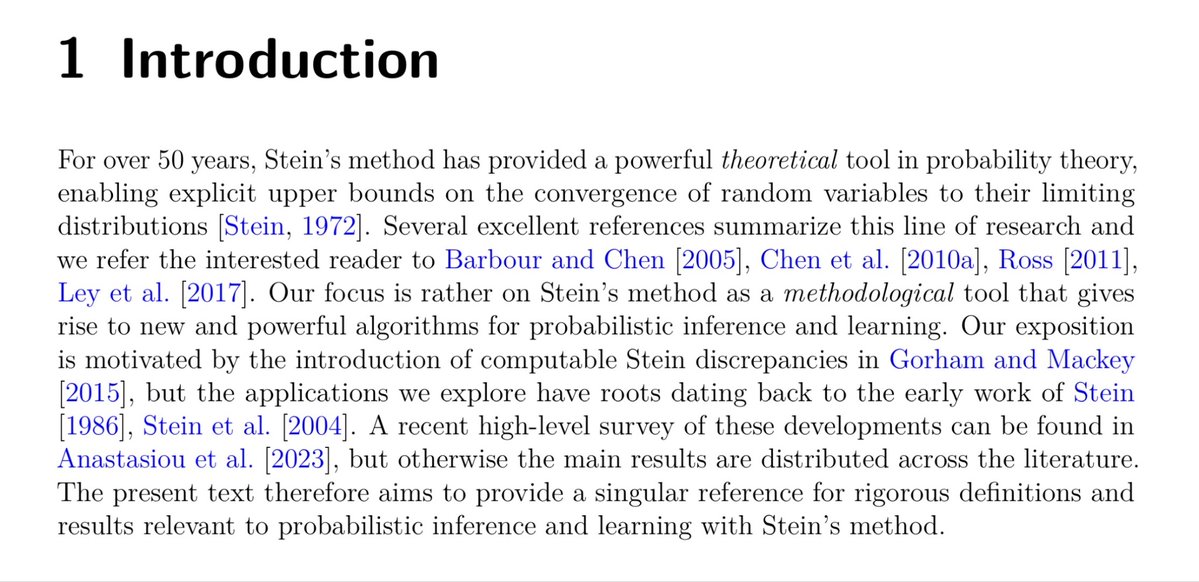
Qiang Liu, Chris Oates, and I are writing a monograph on Probabilistic Inference and Learning with Stein’s Method, and we’d love to get your feedback on the first draft
English
The only real test of theories of war is in operational practice. It follows then that when so many seek despite all other reasons to avoid acknowledgment of live cases, the theory in question cannot be sustained. But they are just hoping you won’t notice, and that events will remain opaque for long enough to bury what would otherwise be very public failure.
English
Halvar Flake me-retweet

Wonder what I mean? Well, for one, even with seamless tool integration, the frontier models are still pretty poor at debugging for xdev purposes. It makes sense — the public training data for that is inexistent…
chompie@chompie1337
@seanhn Im a sceptic for now. I’m building out an agent based system and while im extremely impressed, my benchmarks aren’t being met. Human experts are still way better.
English
Halvar Flake me-retweet

@halvarflake All real moats contain lovecraftian horrors.
English
The number of OS primitives that CUDA breaks is pretty impressive. :-)
Halvar Flake@halvarflake
People say CUDA is a moat, but if you stare into this moat, it's an abyss with lovecraftian horrors in it. People say the moat is deep, and man, technically it is a great old one.
English
Halvar Flake me-retweet

I love this. Tests are a class of “embarrassingly parallel” computer problem and scaling out makes so much sense.
Next step: GitHub Actions replacement
Imbue@imbue_ai
Your parallel agents needed scalable test coverage yesterday Introducing Offload: a Rust CLI that spreads your test suite across 200+ @Modal sandboxes, freeing your CPU to keep your agents shipping. On our Playwright suite, it took a 12 min run to 2, at $0.08 a run
English