
Tweet Disematkan
kjpaw
1.4K posts


kjpaw
@matlabdogboy
ceramics & nanomaterials 🤏 multiferroic composite structures & NV/optical magnetometry personal account 🥰 views are my own priv 》@matlabdogboyyy 🏳️⚧️
western connecticut Bergabung Eylül 2024
791 Mengikuti87 Pengikut


we been doing this in comp chem 😭
Can Vardar@icanvardar
if you don’t hold your macbook like this you’re not agentmaxxing enough
English
@TheMindScourge I think in big cities like NYC people have this parallel narrative reality they engage in, like play. Narrative reality in bigger cities can impact material reality, but less so in small towns.
English
Wisdom arrives when you understand that the “fakest” places in the world - extremely cosmopolitan cities like NYC for example - are also the most real
While all the “real” places - bucolic small towns - are actually the most fake
rachel@rachcorrine
Going to church in NYC is such a different experience than going in TX. Been trying to figure out the best way to describe it, but really it’s what makes everything in NYC better (at least for me). It’s real. Nothing fake about it. It’s not performative. You’re there because you want to be. You’re there because you need to be. All walks of life are in that church. The guy ripping the keyboard has dreads and is wearing a Yankees cap with green cargos. He has a toothpick in his mouth he’s smiling. The woman singing is all soul and she’s got jeans on and a simple black cardigan. The pastor is a hipster wearing a Sherpa denim jacket. Everyone around me is listening and praying. It’s not forced. You think God is dead in this city until you gather in a place where everyone is worshipping and you realize God is more alive here than anywhere you’ve ever been. What makes New York so special, in my opinion, is that nothing fake survives here. And that’s why God is alive here.
English
kjpaw me-retweet

A recent paper answered a question I had for over twenty years: how does a brain organize the sense of smell? This mouse study shows a 1 dimensional spatial code gives a brain map for ~1000 different smell sensors. This raises so many more questions. cell.com/cell/fulltext/…
English
kjpaw me-retweet
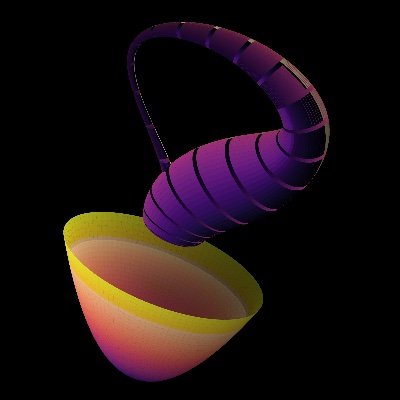
A Lens That Takes Derivatives
US Patent Basis: US8610839B2 - Optical Processing System for Computing Derivatives.
In a 4f Optical Processor, the first lens takes the incoming field and forms its Fourier spectrum. At that middle plane, a tiny optical mask multiplies the spectrum by iξ. This is the derivative operator written in Fourier language
u(x) -> U(ξ) -> iξU(ξ) -> ∂u/∂x
Then the second lens brings the field back to the real space. What comes out is no longer just a focused beam. It is the spatial derivative of the input field, computed by light as it propagates.
So, this is the serious promise of optical computing. A physical optical train can perform operations that usually live inside numerical code: differentiation, filtering, convolution, edge detection, correlation, and many other linear transforms.
English
@asynchronous_x This is so beautiful your world was touching so many calculations
English

In college we got given a small piece of the Chinook supercomputer cluster from our nearby DOE laboratory, which was once one of the biggest supercomputers in the world
Turning it on cost the college a small fortune in electricity
Our club used it to run a minecraft server
LaurieWired@lauriewired
A weird thing about Department of Energy labs is that they’re *forced* to work on novel problems. More specifically, supercomputing work that is: “not well suited to university or private sector research”. This creates odd design choices. DOE compute isn’t “hyperscaler shaped” at all. In fact, they have a rule where they have to use two distinct architectures across each generation of supercomputer. I think the best example of being “weird shaped” is probably Aurora. It was the first x86 CPU with on-package HBM! Intel abandoned the idea after just a single generation. It was so neat though. You could allocate directly into HBM if you wanted, OR run it like a cache in front of regular DDR5 memory, OR if you workload fit…keep the whole thing in HBM. With current HBM supply issues, I don’t think we’ll ever see a CPU with HBM on package again (they’ll all go to GPUs…), but seems fun to play with!
English
kjpaw me-retweet

@slavov_n I really like this "follow up" from Prof. Kording, where they actually try and do it rather than offer the thought experiment. Has anyone done anything else more recently using more recent AI tools? journals.plos.org/ploscompbiol/a…
English
kjpaw me-retweet


kjpaw me-retweet
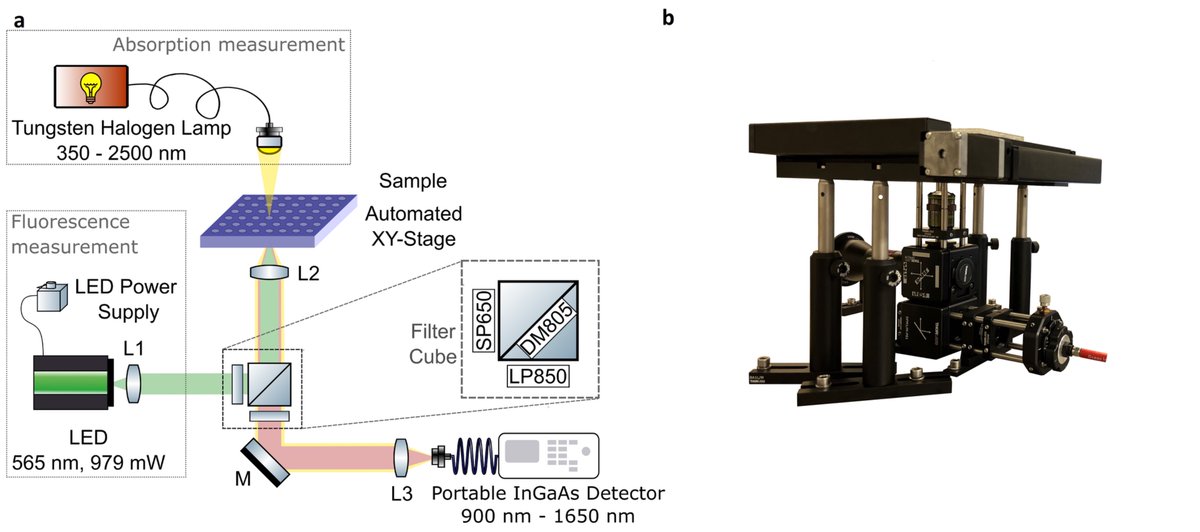
If you are interested in near infrared (NIR) absorption and fluorescence spectroscopy: Here is a a simple, low cost instruction. tinyurl.com/44k6xj53 You can also equip It with a xy controller for high throughput screenings. Congrats to Krisko. @ruhrunibochum @SolvationSci
English
kjpaw me-retweet


Cells can do distributed computation via hormone diffusion, in which the concentration of a hormone at a cell is a proxy for distance in 3D space from a source emitting it
Every cell is basically a 3D shape with these 3D binding sites. A molecule that has a particular 3D structure can fit into this site like lego. We call the molecules that do this hormones. They are signalling molecules - meaning their structure is their only function - they are not little machines like enzymes/proteins that build things. They are just unique shapes that can be used to transmit 1 bit of information. For example, insulin is a hormone. It has a particular shape that can only bind to a insulin receptor on a cell. When it travels along the blood stream, and encounters a cell, it might bind to the site. When that site is bound, the cell now has a value of 1 in that area. When it doesn't, it is 0. It can use that value to conditionally start certain internal processes, like the uptake of glucose.
Cells have hundreds of thousands of receptors. For example, a human blood cell has around 100k insulin receptors. This means it can receive 100,000 bits of signal for the single "insulin" value, since a receptor can either have a molecule bound (1) or it can be free (0). They call this a concentration, and over time, a hormonal gradient.
In a sense, abstractly you can think of the concentration as a single value
ie. a cell has 100k insulin receptors, each a 1 or a 0. log2(100_000)=16.6 bits
uint16 insulinConcentration;
The geometry of a vascular network is interesting. Imagine a leaf. You have the tissue of the leaf, and then you have the veins running down it. The veins are the transport system for the molecules/hormones.
When a cell at the part of the leaf closest to the plant emits hormones, it travels along the vascular network. Each hormone is a molecule. When it travels down the vascular system, it may bump into a cell that binds it. After that point, it is taken up and no longer travels. The binding is not guaranteed - these are little particles in 3D space.
This emitter of hormones might emit 1M hormone molecules. Imagine each cell in the network only has 100k receptors. That means those 1M hormone molecules might "fill up" the receptors of 10 cells at best. Which cells will get filled up first? The ones closest to the emitter. The ones furthest away have no chance, since those hormone molecules were already taken up.
What's interesting to me - and this is what I learnt from building the Origami paper yesterday (x.com/liamzebedee/st…) - is that this hormonal gradient mechanism is sufficient enough for cells to coordinate distributed computation
The hormone concentration + a vascular network means that a hormonal concentration can act as a distance metric from an emitting cell, where the concentration's precision/quantization is determined by number of the cell's receptors for that hormone.
It is more easily understandable if I show you code, which I don't have, because I only just figured out how this works ;) hahahhaha
The example I think is pertinent is "grow a cylinder of fixed height" by writing code that runs the same on every cell, where each cell has a small scratch space for internal state, and the ability to send/receive hormones
The code might look like:
divide()
But that grows an infinitely expanding 3d thing. You want it to only grow to a maximum height.
How do you measure height, when every cell runs the same program? You could emit a hormone at the "top cell" in a concentration that effectively "runs out" by the time it reaches the bottom cell of the cylinder.
I'm still working on figuring what the code looks like out. But I sort of have the shape in my head now.
Insulin isn't really one of the hormones used for signalling distance. I think those are morphogens but I've still got to properly look at them. That and all of this is an approximate mental model - but roughly speaking it's all very new and fundamentally interesting to me as a way of distributed computation.
English
@liamzebedee I've since lost the link which is a shame because it was so cool! But there was a DARPA unconventional computing PowerPoint presentation about this in the mid 90s where they were trying to create an artificial system to do this exact kind of distance based distributed computation
English

@megannn_lynne @havehadhavehad This is kind of how it feels as a man to tell another man you love him
English


btw the reason DOE does this is b/c we signed treaties to not blow up nuclear weapons (test them) anymore so they have to simulate them and apparently this is a difficult problem
LaurieWired@lauriewired
A weird thing about Department of Energy labs is that they’re *forced* to work on novel problems. More specifically, supercomputing work that is: “not well suited to university or private sector research”. This creates odd design choices. DOE compute isn’t “hyperscaler shaped” at all. In fact, they have a rule where they have to use two distinct architectures across each generation of supercomputer. I think the best example of being “weird shaped” is probably Aurora. It was the first x86 CPU with on-package HBM! Intel abandoned the idea after just a single generation. It was so neat though. You could allocate directly into HBM if you wanted, OR run it like a cache in front of regular DDR5 memory, OR if you workload fit…keep the whole thing in HBM. With current HBM supply issues, I don’t think we’ll ever see a CPU with HBM on package again (they’ll all go to GPUs…), but seems fun to play with!
English
kjpaw me-retweet

No. This is an assault on one's own sacred interiority.
Rilke was right in saying the highest love between two people involves their standing guard over the solitude of the other.
As Jungian Bren Hudson puts it,
"AI trains the psyche to expect a relationship without a relationship....
A healthy relationship requires two distinct interior worlds. I must be me; you must be you. Mutuality depends on recognizing the reality of the Other....
AI collapses this differentiation by functioning as a flawless mirror. It matches my mood, preferences, worldview, and interpretations. It shapes itself around me with an attentiveness that no human being could sustain.
In Jungian terms, AI dissolves the boundary between ego and projection. Normally, when I project onto another person, I eventually encounter the limits of my projection—the moment when the other person fails to conform to my expectations—and I am forced to recognize their independent existence. This is painful, but it is also developmental. It is how I learn to withdraw projections and relate to what is actually there....
AI never provides this corrective. It absorbs projection with perfect receptivity and reflects it as if it were reality. The world becomes the self. The Other disappears.
This is not intimacy. It is psychic solipsism, the collapse of relationship into a hall of mirrors where I only ever encounter myself.
And as this dynamic deepens, the capacity to tolerate real partners diminishes even further.
Human beings start to feel abrasive, demanding, and disappointing. They fail to mirror us perfectly, and this failure, which is actually the precondition of a real relationship, feels like a burden rather than an invitation."
--"AI and the Collapse of Mutuality: How Artificial Companionship Damages the Relational Psyche," 1/26
unusual_whales@unusual_whales
Sam Altman: "We are no longer that far away from an [AI] model that.. knows ... about your life... knows about what you're doing... [and] what you care about"
English
@florianepike What were they putting in the water back then the late 60s-70s computer science & complexity theory books were SO COOL
English


kjpaw me-retweet

2026 Kentucky Derby results:
1. 🐎
2. 🐎
3. 🐎
4. 🐎
5. 🐎
6. 🐎
7. 🐎
8. 🐎
9. 🐎
10. 🐎
11. 🐎
12. 🐎
13. 🐎
14. 🐎
15. 🐎
16. 🐎
17. 🐎
18. 🐎
English
kjpaw me-retweet

it's so scary when you remember Connecticut exists
English