Will Findlater

6.4K posts

Will Findlater banner
Will Findlater

Will Findlater

@willfindlater

Content @NelsonBostock. Then: @CanonEMEAPro, @haymarketCS. Before: @StuffTV. Opinions: mine. Look out honey 'cos I'm using technology.

London Bergabung Şubat 2009
1.3K Mengikuti3.1K Pengikut
Will Findlater me-retweet

Sci-Fi Archives
Sci-Fi Archives@SciFiArchives·
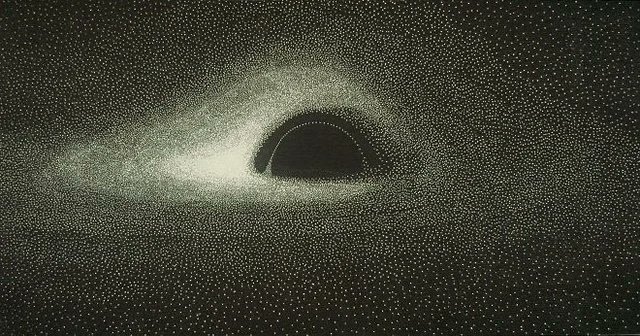
The first simulated image of a black hole, calculated with an IBM 7040 computer using 1960 punch cards and hand-plotted by French astrophysicist Jean-Pierre Luminet in 1978.
Sci-Fi Archives tweet media
English
50
1.4K
18.7K
429.5K
Will Findlater me-retweet
Reid Wiseman
Reid Wiseman@astro_reid·
Only one chance in this lifetime… Like watching sunset at the beach from the most foreign seat in the cosmos, I couldn’t resist a cell phone video of Earthset. You can hear the shutter on the Nikon as @Astro_Christina is hammering away on 3-shot brackets and capturing those exceptional Earthset photos through the 400mm lens. @AstroVicGlover was in window 3 watching with @Astro_Jeremy next to him. I could barely see the Moon through the docking hatch window but the iPhone was the perfect size to catch the view…this is uncropped, uncut with 8x zoom which is quite comparable to the view of the human eye. Enjoy.
English
4.1K
45.7K
265.7K
18.8M
Will Findlater me-retweet
Mark Cockerton
Mark Cockerton@CockertonMark·
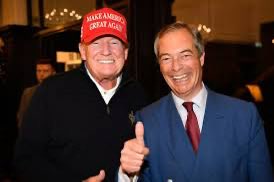
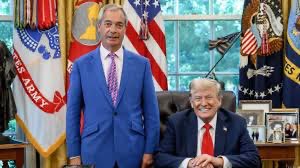
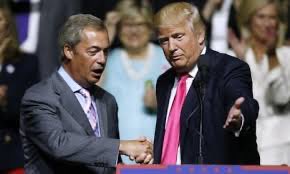
Urgent: Nigel Farage says he barely knows Trump. He’s heard of him but he’s never campaigned for him, or modelled himself on him. He DOESN’T want photos like those attached to be circulated at a delicate time with local elections looming. Please DO NOT circulate these.
Mark Cockerton tweet mediaMark Cockerton tweet mediaMark Cockerton tweet mediaMark Cockerton tweet media
English
158
7.6K
8.4K
124.2K
Will Findlater me-retweet
dan barker
dan barker@danbarker·
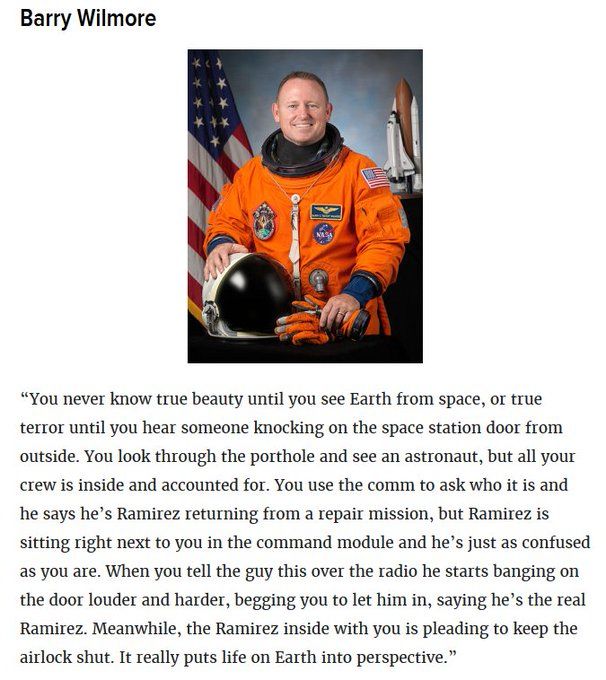
I always enjoyed this, from a 2015 Clickhole article where they asked a series of astronauts 'What's it like to be in space?'
dan barker tweet media
English
55
1.7K
30.9K
827.6K
Will Findlater
Will Findlater@willfindlater·
Good try, chaps, but that's a small *car*
Will Findlater tweet media
English
0
0
0
18
Will Findlater me-retweet
Anish Moonka
Anish Moonka@anishmoonka·
Those wheels you’re looking at are 0.75 millimeters thick. That’s half the thickness of a US dime. Each one was carved from a single block of aluminum, and NASA sent six of them to Mars knowing they’d eventually shred. Curiosity was built for a 2-year mission. It landed in August 2012, and by December that year NASA had already extended the mission indefinitely. Thirteen years and 35.5 kilometers later, the rover is still going, but the wheels started cracking just 14 months in. The damage came faster than anyone at JPL predicted. Sharp embedded rocks were punching straight through the skin between the treads. So NASA assembled a Wheel Wear Tiger Team (a crisis problem-solving tradition that goes back to Apollo 13) and got to work. In 2017, they uploaded a traction control algorithm from Earth that adjusts each wheel’s speed in real time based on the terrain, reducing force on the front wheels by 20%. They rerouted the rover to softer ground and started driving backward when possible, because pulling wheels over rocks produces less force than pushing them into rocks. The wildest part: if enough treads snap off, Curiosity is designed to find a sharp rock on Mars and use it to deliberately rip out the damaged inner section of its own wheel. JPL tested this on a replica rover and found Curiosity can keep driving on just the outer third. They predict this won’t be needed until around 2034. Every 1,000 meters, the rover pulls over and uses the camera on its robotic arm to photograph its own wheels so engineers on Earth can count every crack. Each wheel also has tiny holes that spell “JPL” in Morse code, which Curiosity uses to measure distance by photographing its own tracks in the dirt. These photos directly changed the next rover. When NASA built Perseverance, engineers 3D-printed about 70 different tread designs before landing on 48 curved treads instead of Curiosity’s 24, with thicker skin. They tested the new wheels over 60 kilometers and got zero damage by Curiosity’s original failure definition. “A boring graph with no data on it,” as one JPL engineer put it. A $2.5 billion machine doing self-surgery with rocks on another planet because the mission outlasted its design by 6x.
Curiosity@CuriosityonX

【Breaking 🚨】 Curiosity wheels taken yesterday, showing the damages caused during the 13 years it has been on the Red Planet

English
172
2.7K
36.1K
4.4M
Will Findlater me-retweet
Science girl
Science girl@sciencegirl·
Massive Attack turns a concert into a live facial recognition protest
English
140
1.9K
12.2K
1.5M
Will Findlater me-retweet
Mark Cockerton
Mark Cockerton@CockertonMark·
Imagine Starmer ‘forgetting’ who’d bought an £800,000 house, doing a video tribute to a notorious paedophile, having former classmates saying he’d said ‘Hitler was right’ and ‘gas them all (with hissing sounds) to a Jewish pupil. Why is Farage held to far lower standards?
English
67
1.7K
8.1K
143.9K
Will Findlater me-retweet
Damian Low
Damian Low@DamianLow3·
They say a picture can say a 1000 words. Bravo The Economist. They have summed it up perfectly.
Damian Low tweet media
English
28
591
2.3K
32.8K
Will Findlater me-retweet
John O'Connell
John O'Connell@jdpoc·
On Iran, the FT gets it.
John O'Connell tweet media
English
140
2.9K
10.4K
313.9K
Will Findlater me-retweet
ettingermentum
ettingermentum@ettingermentum·
I just can’t believe that the inaugural owner of the FIFA Peace Prize would do something like this
English
86
4K
49.9K
1.1M
Will Findlater me-retweet
Clement Uwajeneza
Clement Uwajeneza@cuwajeneza·
In 2017, I stepped onto the Facebook campus in Menlo Park. They took us to the Oculus VR lab first. A geeky engineer gave us a demo of the VR features and ended on the haptic gloves that let you "feel" virtual objects without touching anything real. Then he paused, voice almost reverent: “Imagine connecting anyone in the world… real social interaction… without ever leaving home.” The demo was amazing but I walked out with a strange feeling. This guy is "solving for humanity" and is excited about a world no longer needs physical human connection We passed a long hall of developers. One guy—Black, friendly—leaned over his monitors and asked where the group of us (mostly Africans) was from. We chatted. His desk had big screens, half-eaten snacks, the faint smell of takeout lingering. His neighbor, paler watched curiously but, too timid to join. The desks were comfortable, the food smell everywhere, as it was available in every corner. It all felt… contained. Like this campus was its own sealed ecosystem, where the world outside was just data to optimize. Fast-forward to 2020. I work at Andela, where we placed remote engineers with Silicon Valley teams. Some companies flew their leads over to meet the "remote" teammates in person. When they visited the Kigali campus I went to dinner with them. They were 5. Of this dinner I vividly remember 2 conversations. One guy launched into how "all humans are actually lactose intolerant after infancy… we're the only species that keeps drinking milk." They all nodded, confessed their own intolerances like it was a quirky universal truth. Then came the photos: a dog's birthday party. Balloons, cake, friends invited. The owner beamed like it was his kid's party. I love dogs. But something twisted in my chest. These are the people shaping the tools billions use every day—yet their version of care, connection, family… felt redirected, abstracted. Now it's 2026, and Sam Altman says training an AI costs less than "raising a human"—because it takes "20 years of life and all the food you eat during that time before you get smart." He compared childhood—first steps, heartbreaks, scraped knees, bedtime stories, learning trust—to server racks and electricity bills. I think back to that VR promise of connection without leaving home… to offices smelling of food and isolation… to dogs celebrated like children while real human messiness gets optimized away
Chief Nerd@TheChiefNerd

🚨 SAM ALTMAN: “People talk about how much energy it takes to train an AI model … But it also takes a lot of energy to train a human. It takes like 20 years of life and all of the food you eat during that time before you get smart.”

English
97
900
5.7K
720.8K
Will Findlater me-retweet
Yaroslava
Yaroslava@strategywoman·
Kyiv is in total blackout, as are many parts of Ukraine. No water, no heating, no electricity. Severe frost outside. This is the result of constant russian attacks. Thank you to those few who still care.
English
926
4.2K
17K
236K
Will Findlater me-retweet
dave lawrence 🐟🐟🐠
dave lawrence 🐟🐟🐠@dave43law·
Reform - the change the country need 🤣🤣
dave lawrence 🐟🐟🐠 tweet media
English
106
1.5K
8.2K
101.5K
Will Findlater me-retweet
Adrian Hilton
Adrian Hilton@Adrian_Hilton·
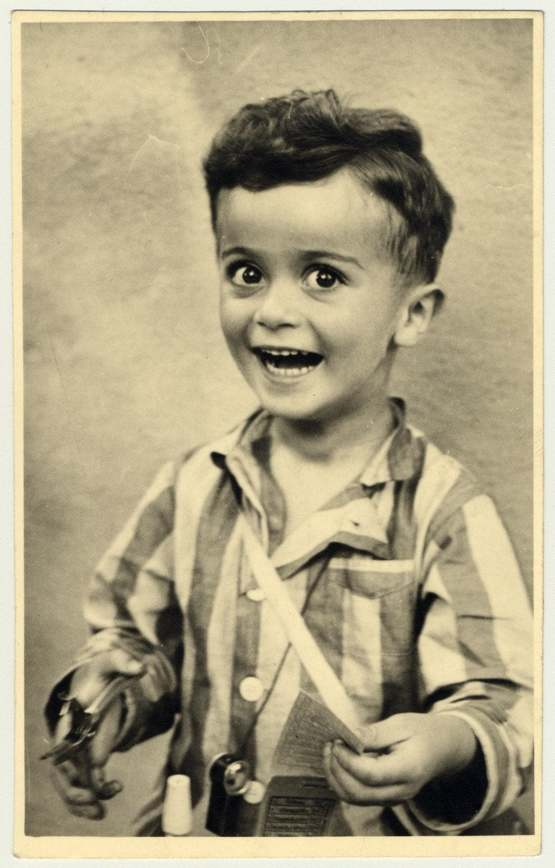
Once again, I post this @AuschwitzMuseum photo of Istvan Reiner, as I do every year on #HolocaustMemorialDay. The Nazis had given him a ticket punch to play with. Such a radiant, happy little soul, innocent and pure. And then they gassed him, and snuffed him out. #NeverForget🕯️
Adrian Hilton tweet media
English
1.1K
4.8K
21.3K
429.5K
Will Findlater me-retweet
Andy Coenen
Andy Coenen@_coenen·
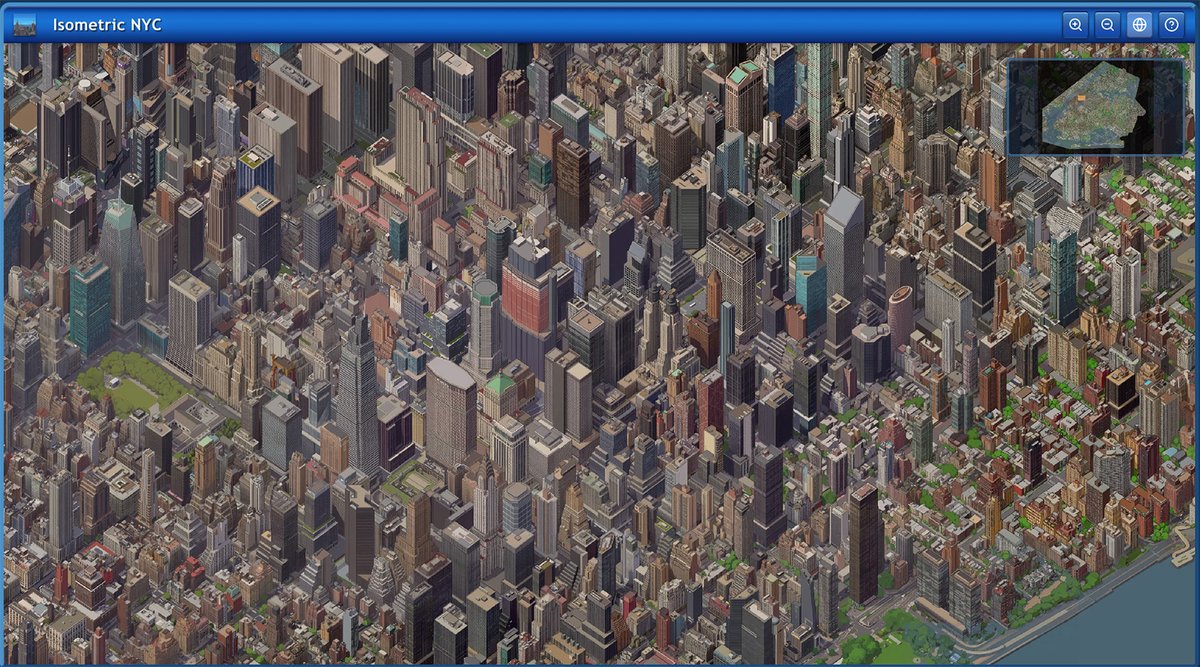
I wanted to share something I built over the last few weeks: isometric.nyc is a massive isometric pixel art map of NYC, built with nano banana and coding agents. I didn't write a single line of code.
Andy Coenen tweet media
English
355
655
7.9K
1.5M
Will Findlater me-retweet
Edward Luce
Edward Luce@EdwardGLuce·
Let's get this straight: Trump manufactures a crisis over Greenland, unites the world against him, tanks the markets, insults allies, then backs off after being told the US can have what it already had before he invented the crisis. Is this what you're referring to?
Palmer Luckey@PalmerLuckey

Anyone who wants to understand Trump should read this book that details his negotiation playbook, media strategy, and pretty much everything else that is often treated as opaque or inscrutable.

English
246
592
4.1K
289.7K