Post

@sweatystartup I’d have the same mindset if I had an offshore recruiting agency that was going to be non existent in the next 2-3 years because of AI
English

@sweatystartup AI could be 100x more expensive and still be cheaper than training and retaining employees.
English

@sweatystartup @sweatystartup Companies are not going to “depend on AI”… they will “take advantage of AI” to become more efficient and drive more revenue at a faster pace. What about this don’t you understand?
English

@sweatystartup Counterpoint. The energy cost argument assumes no efficiency improvements on the model side. Inference costs have dropped 10x in 18 months. That trend has to be part of the math too.
English

@sweatystartup AI costs will definitely go up. But will they exceed what companies spend on hiring, training, and retaining employees? Only time will tell.
English

@sweatystartup The data doesn't support this. Modern inference farms hit ~10-15W per A100 at steady state. Even at 2x power costs, inference would go from ~$0.002 to $0.004 per query. The real cost driver is memory bandwidth, not electricity.
English

I have a slightly different take. I agree that the cost will go up for the current so called frontier models. But there is something a lot of people are missing. The open source models are fraction of the price and they are like 10-20% worse. So I think at some point people might decide that they are willing to sacrifice a bit of performance to pay 10x less.
English

Possible. But unlikely.
What separates AI from previous “bubbles” is its rapid ability to pay for itself.
.com popped and paid for itself (albeit, over the course of several years). The housing bubble popped and did not pay for itself, overvalued and mediocre ROI.
AI is a major multiplier. Value is real and tangible. Could “pop”, but won’t be significant impact.
English

Are you taking into account how much more intelligent / efficient AI will become that will help offset the electricity and compute expended. I'm not saying you're wrong, I'm just saying if AI is getting smarter by the day then by the time it doubles in electricity others get more cost effective.
English

@sweatystartup While challenges like costs are real, innovation and demand tend to balance things out AI is evolving fast, not fading away 🚀
English

@sweatystartup The energy cost argument makes sense, inference costs fell about 100x over the past 2 years, which is remarkable progress.
Even if electricity prices double, efficiency improvements will happen even faster in the other direction.
English

@sweatystartup Also if the AI bubble pops thats means China has won not good. China expands their electrical grid every year by the value of our entire grid. Elon will save us
English

@sweatystartup India already has huge AI usage at a fraction of the revenue per user.
If compute gets expensive, people don’t stop, they move to smaller models, cheaper regions, more tuning.
The optimizations flow back upstream.
Just another infra cycle.
English
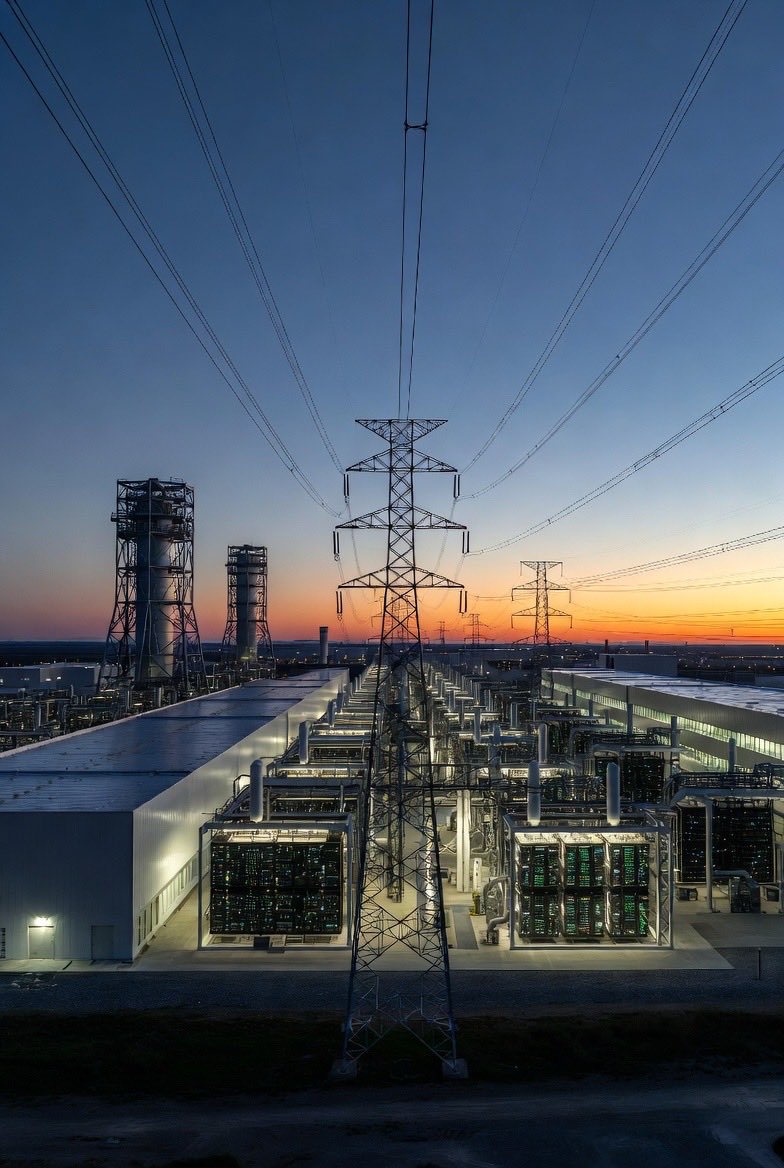
@sweatystartup If energy costs are the real constraint on AI scaling - does that make nuclear energy the most important AI investment of the next decade, and is anyone pricing that in yet?
English

Feels a little apocalyptic 😂
More likely we get a shakeout, not the end of the world. Some companies overextend, a few go under, everyone tightens things up, and then business keeps moving like it always does.
Same cycle we’ve seen a hundred times. Hype goes up, reality checks it, survivors adjust, life goes on. Nobody disappears, and the market doesn’t just fall off a cliff overnight.
English

@sweatystartup Elon with launch data centers into space. No slow governance impeding it. Solar panels will power them. Space is a cold place no need for cooling. Let’s come back to this in a few years
English

@sweatystartup Predicting the end of AI because of energy costs feels like predicting the end of the internet in 2000 because dial-up was too slow. The market doesn't plummet because things get expensive; it pivots to whoever solves the efficiency problem first.
English

@sweatystartup That’s a tall order, given that AI tools are clearly and dramatically useful.
Now we could see big compute investments paying out more to society (or AI tool users) than AI model trainers. But a full collapse is pretty ridiculous.
English

@sweatystartup The compute cost argument has been made every decade since the 60s. Mainframes → PCs → Internet → Cloud → AI. Each time: costs collapse, utility explodes. The 5x price scenario assumes no innovation. History disagrees. 📉
English

@sweatystartup @grok I would greatly appreciate your thoughts on this one good sir!
English

@sweatystartup The economist are in a spilt decision on this. I wonder what the actual timeline of these events will be.
I don't want to be offered another Claude bot ever my goodness.
English

@sweatystartup It wasn't really different during the internet revolution, we were able to support it with more power grids. So, the government will make sure AI doesn't fail. It's not just companies wanting AI to succeed
English

@sweatystartup Please don't say things like this - we have a war in Iran. We have some straight fella named Hormuz getting bent over. We are running low on daycares for Somalian children in Minnesota.
I need to believe that the next token predicted can save humanity. Please don't take this.
English

@sweatystartup The danger isn't that AI isn't useful—it’s that it might become too expensive to be ubiquitous.
When the cost to "think" increases, AI shifts from a universal tool back to a luxury reserved for the highest-value industrial problems.
English

@sweatystartup When I was an analyst people said the exact same thing about FANG. Facebook, Amazon, Netflix and Google. Guess what they were all wrong, and the portfolio managers who hung in made fortunes. But I might be wrong for once, just hasn't happened yet and I am 60.
English

@sweatystartup counterpoint: AI is deflationary by nature. models getting 10x cheaper every 18 months. electricity costs are a rounding error by the time inference runs locally 🐱
English

The electricity constraint on AI is real and arriving sooner than expected. Data centers are pulling enormous loads while power infrastructure struggles to catch up.
A second doubling of costs would break many current economics. Only applications that deliver outsized productivity will survive the reset.
This kind of pressure historically drives the biggest leaps forward in efficiency and energy innovation. The hype fades but the core technology gets stronger.

English