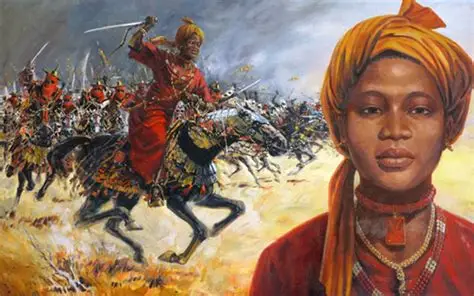
The Greatest Yoruba Warriors in History
Throughout history, the Yoruba people produced many renowned military leaders whose courage, strategy, and leadership shaped the history of Yorubaland. While opinions differ on who was the greatest, the following figures are among the most celebrated.
1. Afonja of Ilorin
Afonja was the Aare Ona Kakanfo (commander-in-chief) of the Oyo Empire in the early 19th century. A brilliant military leader, he later rebelled against the Alaafin of Oyo. His alliance with Fulani forces transformed the political landscape of northern Yorubaland and contributed to the decline of the Oyo Empire.
2. Kurunmi of Ijaye
Kurunmi was the Aare Ona Kakanfo of Ijaye and one of the most respected Yoruba generals. He is best remembered for leading Ijaye during the Ijaye War (1860–1862), fighting to uphold the traditional Oyo succession system. His bravery and determination made him a legendary figure in Yoruba history.
3. Balogun Ibikunle
Balogun Ibikunle was one of Ibadan's greatest military commanders. He played a key role in expanding Ibadan's influence during the 19th century and led the city in several successful campaigns.
4. Ogunmola
Basorun Ogunmola was one of the most successful military leaders in Ibadan's history. Known for his tactical skill and leadership, he helped strengthen Ibadan as the dominant military power in Yorubaland after the fall of the Oyo Empire.
5. Ogedengbe Agbogungboro
Ogedengbe Agbogungboro of Ijesaland was one of the most famous commanders of the Ekiti-Parapo alliance during the Kiriji War (1877–1893). He earned a reputation for courage, discipline, and battlefield strategy while resisting Ibadan's expansion.
6. Fabunmi of Okemesi
Fabunmi became a key leader of the Ekiti-Parapo movement after the incident that sparked the Kiriji War. His leadership united several eastern Yoruba kingdoms in their struggle against Ibadan's dominance.
7. Lisabi Agbongbo Akala
Lisabi was the legendary Egba hero who led a successful revolt against the Ajaka rulers of the Oyo Empire in the 18th century. His leadership secured Egba independence and made him one of the most revered figures in Yoruba history.
Legacy
These warriors helped shape the political history of Yorubaland through military leadership, courage, and strategic vision. Some fought to expand powerful kingdoms, while others defended their people or sought independence. Their stories continue to be remembered in Yoruba oral traditions, historical writings, festivals, and cultural heritage.
Although historians may rank them differently, figures such as Afonja, Kurunmi, Ogunmola, Ogedengbe, Fabunmi, Balogun Ibikunle, and Lisabi remain among the most influential warriors in Yoruba history.
Queen Amina: The Brave Warrior Queen
Long ago, in the Kingdom of Zazzau, there lived a courageous princess named Amina. From a young age, she loved riding horses, learning battle skills, and protecting her people. While others expected her to live a quiet royal life, Amina dreamed of becoming a great leader.
When Amina became queen, she built a strong army and led her soldiers with bravery and wisdom. She expanded her kingdom through courage and smart planning, making Zazzau one of the most powerful kingdoms in the region. To protect her cities, she ordered strong walls to be built around them. These became known as Amina's Walls.
Queen Amina was respected not only because she was a fearless warrior but also because she worked to bring peace, trade, and prosperity to her people. Her leadership inspired many, proving that determination and courage can overcome any challenge.
Today, Queen Amina is remembered as one of Africa's greatest leaders. Her story continues to inspire people to be brave, confident, and dedicated to making a positive difference.
The Fall of the Oyo Empire
The Oyo Empire was one of the greatest and most powerful kingdoms in West Africa, reaching its peak between the 17th and 18th centuries. Renowned for its strong cavalry, organized government, and thriving trade, Oyo dominated much of present-day southwestern Nigeria and parts of neighboring countries. However, by the early 19th century, the empire had collapsed due to a combination of internal and external pressures.
Causes of the Fall
1. Internal Political Conflicts
Power struggles between the Alaafin (king), influential chiefs known as the Oyo Mesi, and military leaders weakened the central government. Disputes over succession and authority reduced the empire's ability to govern effectively.
2. Rebellion of Provincial States
Several tributary kingdoms and provinces began to resist Oyo's authority. As more territories sought independence, the empire lost both revenue and military support.
3. The Rise of Afonja
A major turning point came when Afonja, the Aare Ona Kakanfo (commander-in-chief) of Oyo, rebelled against the Alaafin. During the conflict, Afonja sought military assistance from Fulani Muslim scholars and warriors who had settled in Ilorin. This alliance eventually shifted the balance of power in the region.
4. The Capture of Ilorin
After Afonja's death, Ilorin came under the control of Fulani leaders and became part of the Sokoto Caliphate's sphere of influence. Oyo was unable to regain control of this important frontier city.
5. External Pressure
As the Sokoto Caliphate expanded southward in the early 19th century, Oyo faced increasing military pressure. Combined with its internal divisions, the empire could no longer effectively defend its territory.
The Final Collapse
In the 1830s, the old capital, Oyo-Ile (Old Oyo), was abandoned following repeated attacks and growing insecurity. The political center of the kingdom shifted farther south, and the once-powerful empire fragmented into independent Yoruba states such as Ibadan, Ijebu, Egba, and others.
Legacy
Although the Oyo Empire fell, its influence endured. Its political institutions, military traditions, language, and culture continued to shape Yoruba society. Many of the city-states that emerged after Oyo's decline became major centers of Yoruba political and cultural life, and the history of the empire remains a source of pride and an important part of West African heritage.
The Strongest Yoruba Empire in History
The Oyo Empire is widely regarded by historians as the strongest and most powerful Yoruba empire in history. From approximately the 17th to the late 18th century, Oyo dominated much of present-day southwestern Nigeria and extended its influence into parts of modern-day Benin and Togo.
Why Was the Oyo Empire So Powerful?
1. A Strong Military
The Oyo Empire possessed one of the most effective armies in West Africa. Unlike many neighboring forest kingdoms, Oyo maintained a powerful cavalry, using horses extensively to expand and defend its territory.
2. Effective Government
The empire was ruled by the Alaafin (king), whose authority was balanced by the Oyo Mesi, a council of influential chiefs. This system helped maintain political stability and prevented absolute rule.
3. Prosperous Trade
Oyo became wealthy through trade in kola nuts, agricultural products, textiles, leather goods, and other commodities. It controlled important trade routes linking the interior of West Africa with coastal markets.
4. Wide Territorial Influence
At its height in the 18th century, the Oyo Empire exercised authority over many neighboring Yoruba kingdoms and several non-Yoruba states, collecting tribute from vassal territories and extending its political influence across the region.
Decline of the Empire
The Oyo Empire began to weaken in the late 18th century due to internal political disputes, succession crises, rebellions by tributary states, and external pressures, including conflicts associated with the expansion of the Sokoto Caliphate. By the early 19th century, the empire had fragmented, leading to the rise of powerful Yoruba city-states such as Ibadan, Abeokuta, and Ijebu.
Legacy
Although the Oyo Empire eventually declined, its influence remains visible today. Its system of governance, military organization, language, traditions, and royal institutions helped shape Yoruba civilization and continue to influence Yoruba culture. The title of Alaafin of Oyo remains one of the most respected traditional royal titles in Yorubaland.
For these reasons, the Oyo Empire is generally considered the most powerful and influential Yoruba empire in recorded history.
Significant Wars in Yoruba History
Yoruba history is marked by several important wars that shaped the political, social, and cultural development of the region. These conflicts influenced the rise and fall of kingdoms and the emergence of new cities.
1. The Kiriji War (1877–1893)
The Kiriji War, also known as the Ekiti-Parapo War, was one of the longest and most significant civil wars in Yoruba history. It was fought between the Ekiti-Parapo alliance (including Ekiti, Ijesa, and other eastern Yoruba groups) and the Ibadan Empire. The war lasted for about 16 years and ended through British mediation, paving the way for increased colonial influence in Yorubaland.
2. The Owu War (1821–1826)
The Owu War involved the Owu Kingdom against a coalition of Ibadan, Ijebu, and Ife forces. The conflict resulted in the destruction of the Owu capital, forcing many survivors to migrate and establish new settlements, including present-day Owu communities in Abeokuta.
3. The Jalumi War (1878)
The Battle of Jalumi was fought between the Ibadan army and the Ekiti-Parapo alliance. The conflict earned its name from the Yoruba expression meaning "fall into the river" because many Ibadan soldiers drowned while retreating across a flooded river after suffering defeat.
4. The Ijaye War (1860–1862)
The Ijaye War was fought between the forces of Ibadan, led by Balogun Ibikunle, and Ijaye, led by Kurunmi, the Aare Ona Kakanfo. The war arose from political disagreements over succession in the Oyo Kingdom. Ibadan's victory strengthened its influence across Yorubaland.
5. The Fulani–Yoruba Conflicts
During the early 19th century, the expansion of the Sokoto Caliphate brought Fulani forces into conflict with the Oyo Empire. These wars weakened Oyo's authority, contributing to the empire's decline and the rise of independent Yoruba city-states.
The Significance of Tribal Marks in Yorubaland
Tribal marks, known in Yoruba as ilà, have been an important part of Yoruba history and culture for centuries. Before modern forms of identification, these facial marks served practical, social, and cultural purposes within Yoruba communities.
One of their primary functions was identification. Tribal marks helped distinguish a person's family, clan, town, or kingdom. In times of war, migration, or the transatlantic slave trade, these marks could help identify an individual's place of origin and reconnect separated families.
Tribal marks also represented heritage and identity. Different Yoruba towns had distinct patterns. For example, people from Oyo, Ijebu, Egba, Ekiti, and Ondo often had unique facial markings that reflected their ancestry and community.
In some cases, tribal marks were believed to offer spiritual protection. Certain families and traditional practitioners considered them symbols that could protect a child from evil spirits or repeated childhood deaths, although these beliefs varied across communities.
Some marks also indicated social status or lineage, identifying members of royal families, noble households, or respected clans. They could signify a person's connection to a prominent family or traditional institution.
Beyond identity, tribal marks were sometimes viewed as a form of beauty and cultural pride. In many communities, they were considered attractive and symbolized courage, maturity, and belonging.
Today, the practice of giving tribal marks has declined significantly due to changing cultural attitudes, urbanization, education, and concerns about children's rights and health. Many younger Yoruba people no longer receive facial marks, although existing tribal marks remain an important reminder of family history and cultural heritage.
While tribal marks are less common today, they continue to hold historical and cultural significance as symbols of identity, ancestry, and the rich traditions of the Yoruba people.
A Short History of the Yoruba Empire
The Yoruba people are one of the largest ethnic groups in West Africa, primarily found in southwestern Nigeria and parts of Benin and Togo. According to Yoruba tradition, the ancient city of Ile-Ife is regarded as the cradle of Yoruba civilization and the spiritual homeland of the Yoruba people.
Over time, several powerful Yoruba kingdoms emerged, the most famous being the Oyo Empire. Founded around the 14th century, the Oyo Empire grew into one of the most influential states in West Africa. Its strength came from a well-organized government, a powerful cavalry, thriving trade, and an efficient military.
The Alaafin (king) ruled the empire, but his authority was balanced by the Oyo Mesi, a council of chiefs that advised the king and helped maintain good governance. This system of checks and balances contributed to the empire's stability for many years.
The Oyo Empire became wealthy through trade in agricultural products, textiles, kola nuts, and other goods. It established trade routes that connected the Yoruba people with neighboring kingdoms and distant markets across West Africa.
By the late 18th and early 19th centuries, internal political conflicts, succession disputes, and external attacks weakened the empire. Eventually, the Oyo Empire declined, leading to the rise of independent Yoruba city-states such as Ibadan, Ijebu, and Abeokuta.
Today, the legacy of the Yoruba kingdoms lives on through their rich language, art, religion, festivals, traditional institutions, and cultural influence. The history of the Yoruba people remains an important part of Nigeria's heritage and continues to inspire pride across the Yoruba diaspora.
Good morning, fam! 🌅🙏
When you stand before God, don't be vague.
Tell Him exactly what you want.
Tell Him exactly what you need.
Stop packaging your prayers. Be honest. Be specific.
I pray for you today: May God make a way for you where there seems to be no way. Amen. ❤️
Now, tell me in one sentence:
What do you want God to do for you?
Drop it in the comments. Then pray for someone else's request.
Who knows? God may use someone here to answer your prayer. ✨🤲