Alexis Giraudineau

45 posts

Alexis Giraudineau banner
Alexis Giraudineau

Alexis Giraudineau

@Alex_RunScience

Performance starts with understanding. Running Performance Specialist 🏃‍♂️ Biomechanics • Metabolic Testing • Force Profiling Director of Testing @ MaxOut 360

Sarasota, FL 参加日 Şubat 2026
61 フォロー中17 フォロワー
Alexis Giraudineau
Alexis Giraudineau@Alex_RunScience·
Amazing to have the AiroSystem in house. The goal is to optimize your breathing to maximize the oxygenation at the cellular level. It’s not just about endurance performance, it’s about human and metabolic optimization. You don’t need to do hard workouts, you need to have the right stimuli to the right person to help the adaptation. Stay turned to know how IHHT can help your client 😎
Jordan J. Gush@JordanGush

AiroSystem. ♥️ 🥊

English

0
1
0
187
Alexis Giraudineau
Alexis Giraudineau@Alex_RunScience·
@JordanGush @doctorinigo Yessir. Always simplify so people can understand the big picture but it’s always more complex. Thats why it’s always important to work the aerobic system
English
0
1
0
76
Iñigo San Millán
Iñigo San Millán@doctorinigo·
The aerobic vs anaerobic model is not wrong because it’s simple. It’s wrong because it implies a switch where there is only a continuum. Glycolysis is always active. Lactate is always produced and cleared. Mitochondria are always involved. There is no moment where the body “switches” from one system to another. What changes is the balance between glycolytic flux and mitochondrial capacity and lactate is the best real-time proxy of that balance. I proposed in 2013 a model based on substrate utilization. Now I propose an update of that model built around four metabolic states. From metabolic equilibrium at Zone 2 all the way to metabolic overload, where the central question is not what fuel you’re burning, but whether the system can sustain balance. Ultimately, the ceiling of equilibrium matters more than the ceiling of oxygen consumption. 👇 @inigosanmillan/note/p-193581258?r=2nunp3&utm_medium=ios&utm_source=notes-share-action" target="_blank" rel="nofollow noopener">substack.com/@inigosanmilla
Iñigo San Millán tweet media
English
7
61
409
20.9K
Alexis Giraudineau
Alexis Giraudineau@Alex_RunScience·
For sure, faster you go more your gauge will move toward the forefoot. You will still have “2 types” of profile. One more elastic and one more pulley where they will tracked more the ground (which will come more in front of the center of mass and having an impact less forward). But at the end yes you can’t be on your heel for sprint.
English
0
0
1
57
Shawn Siemers
Shawn Siemers@Siemers_XC_TF·
@Alex_RunScience Good points! My focus is on speed in shorter races. I realize the majority of marathoners heel strike.
English
1
0
1
131
Shawn Siemers
Shawn Siemers@Siemers_XC_TF·
The more miles you add to a heel striker… The more efficiently they brake. Think about that. Every rep. Every long run. Every tempo mile. You're training a pattern that costs them on every stride. Not a big cost. A small tax. 1,500 times per race. It's not a fitness problem. It never was.
Shawn Siemers tweet media
English
1
1
9
2.3K
Alexis Giraudineau
Alexis Giraudineau@Alex_RunScience·
Understand human physiology/performance helps you to understand why aerobic work will help every type of sports direct or indirectly but it’s fundamental.
Shawn Siemers@Siemers_XC_TF

I'm tired of hearing that aerobic work makes kids slow. Especially in 400 training. The same idea that refuses to let a 400 kid touch a tempo run is the idea that explains why so many of those kids tie up at the 300m mark like they're running through wet cement. "Too much aerobic work would steal their speed." Cool. I agree leg speed matters in a 400. But here's the idea I want dead. The Aerobic Tax. The notion that every aerobic mile withdraws from some imaginary speed account. That tempo runs dull the kick. That a kid who ran a steady 4-mile on Monday somehow can't fire on Friday. That a 400 athlete who builds an engine in the offseason will somehow show up in April with no top end. It doesn't work that way. You don't lose speed because you ran long. You lose speed because you stopped training speed. But more than that. Your kid isn't dying at 300 because he's TOO AEROBIC. He's dying at 300 because there's no aerobic floor underneath the speed. The race is 49 seconds. He has speed for 29 of them. The other 20 are aerobic whether you trained them or not. Pull up the training log. Find the tempo runs. Find anything that built the engine that has to carry the speed across the line. If it isn't there, the kid isn't dying because he ran fast. He's dying because nobody built what he needed to FINISH fast. The 400 isn't a speed event with an aerobic problem. It's an aerobic event with a speed finish.

English
0
1
3
667
Alexis Giraudineau
Alexis Giraudineau@Alex_RunScience·
Going through specific tennis assessments with our tennis players. I personally don’t care about shiny numbers, look how high he is jumping he is ranking like a D1 player. No. Testing is useful to understand the athlete, how he is moving, how he is reacting, how he is handling the load. We create what? A comprehensive profile. With this profile you can guide the athlete, exchange with his skills coach, program strength training adapt for him. Someone elastic needs different exercises/angulation than someone who develops a lot of force. So yes it’s less shiny but that’s real work to help the athlete.
Jordan J. Gush@JordanGush

🎾

English
0
1
2
312
Alexis Giraudineau がリツイート
Jo Clubb
Jo Clubb@JoClubbSportSci·
Not every change in athlete monitoring data is meaningful. A small drop in jump height or change in force output… Is it fatigue? Or just normal variation? So how do we decide what actually matters?
English
3
3
15
5.5K
Alexis Giraudineau がリツイート
Running-Physio
Running-Physio@tomgoom·
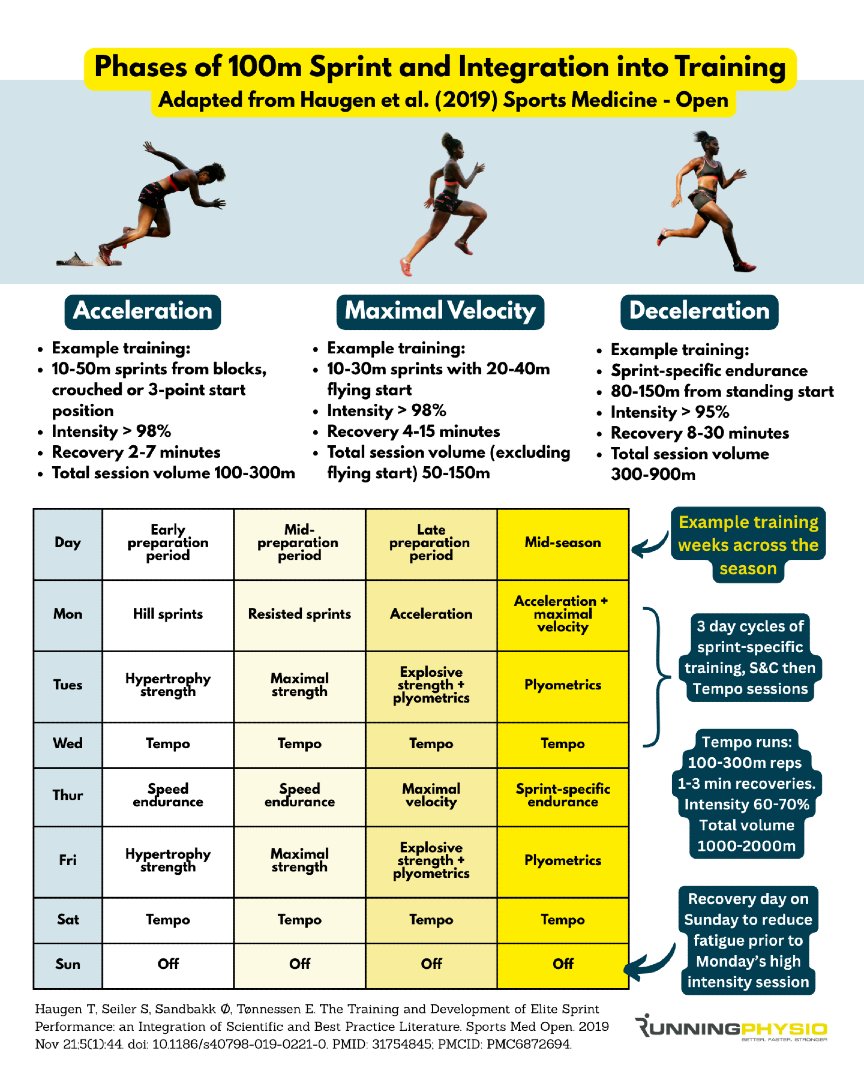
3 key sprinting phases and how to train them! 🏃💨 Based on a fantastic overview of sprinting performance by Haugen et al. (2019) in Sports Medicine - Open. It's *open access* so be sure to read the full article!
Running-Physio tweet media
English
0
8
34
2.1K
Alexis Giraudineau
Alexis Giraudineau@Alex_RunScience·
Wearing the right size of shoes matters more than you think. Your brain use your foot to collect sensory information to adapt the position of his body and initiate movement. To much time people go up in size because the shoes is to narrow, if it’s the case just change model, take one who is larger. If not your foot will create some extension reflexes and increase your risk of injury and decrease your performance. Think simple before trying to complex explanations. 🫡
College Transfer Portal@CollegeFBPortal

NEW: Jaxon Smith-Njigba wore a size 12 at Ohio State and had hamstring issues. Seattle switched him to a 10.5 and the problems went away. The Seahawks have been using body scans to customize gear for each player and it’s paying off 👏

English
0
0
0
29
Alexis Giraudineau がリツイート
Chris Monoki
Chris Monoki@Monoki·
KPIs are essential to any athletic program. Not only do you get quantifiable improvements, but athletes will also raise their competitiveness, intensity and desire to improve themselves. Practices become more efficient. Expectations are readily seen. Record, Rank & Publish
Tony Holler@pntrack

I love promoting KPIs! Might there be better KPIs than squat & clean? How about MPH and TRUCK STICK. Vertical and Horizontal Jumps?

English
1
1
2
942