Cleared Improve

1.1K posts

Cleared Improve banner
Cleared Improve

Cleared Improve

@ClearedImprove

The most interesting ideas from history, psychology, and philosophy

参加日 Mayıs 2020
25 フォロー中144.7K フォロワー
固定されたツイート
Cleared Improve
Cleared Improve@ClearedImprove·
Never stop developing as a person. Never stop prioritising yourself. Never stop loving your friends. Never stop loving your family. Never stop loving yourself. Never stop being kind. Never stop learning. Never stop giving. Never stop.
English
25
280
1.3K
443.6K
Cleared Improve がリツイート
Finance Nerd
Finance Nerd@Finance_Nerd_·
Most people assume movies are expensive because of actors. But the actual budget breakdown of a typical film is this: • pre-production is 10-15% • principal photography is 30-40% • post-production eats 25-35% • for VFX-heavy films like Marvel titles, post-production alone can exceed $100 million. Post-production is where the unsexy work happens: continuity fixes, environment adjustments, color correction, lighting repair, localization for international markets. Thousands of hours of skilled labor that audiences never think about. And this is exactly where Hollywood is adopting AI tools. Rather than replacing actors or cameras, it’s compressing the slow, repetitive work that balloons post-production timelines and budgets. The interesting thing about AI in film so far: The adoption is concentrated entirely in the part of the budget that audiences don't see.
Utopai Studios@UtopaiStudios

Drop everything - PAI just got a major upgrade, and it's ... killer. You can now create full 3-minute cinematic videos in 4K with consistent characters, worlds, and storylines, all in one place. Now live. Go make something great.

English
0
14
30
5.9K
Cleared Improve がリツイート
Genius Maxxing
Genius Maxxing@The_Healthy_Man·
In 1993, Steven Spielberg walked into Industrial Light & Magic expecting to see early test renders for Jurassic Park's stop-motion dinosaurs. Instead, the ILM team showed him a fully rendered CGI Tyrannosaurus Rex walking across a field. Spielberg went quiet, then turned to the stop-motion supervisor and said the job had just changed. That moment ended a century of physical effects dominance. Not because CGI was cheaper… it wasn't, not yet. But because it expanded what was possible. A director could now create shots that no physical model could achieve. We're somewhere near that moment again with AI video. A year ago, AI-generated footage was a curiosity. Melting faces, hands with 6 fingers, unrealistic physics and lighting. Now Utopai Studios seems to be generating 3-minute coherent sequences in 4K with consistent characters across shots. The jump from "interesting experiment" to "I can actually use this" tends to happen all at once. I think we’re starting to enter the “all at once stage” here.
Utopai Studios@UtopaiStudios

Drop everything - PAI just got a major upgrade, and it's ... killer. You can now create full 3-minute cinematic videos in 4K with consistent characters, worlds, and storylines, all in one place. Now live. Go make something great.

English
0
9
36
7.5K
Cleared Improve がリツイート
Genius Business
Genius Business@GeniusBusiness_·
This is so crazy because James Cameron literally had to invent the Simulcam, build a custom 3D camera system, and drop $237 million to make a movie like Avatar. The future of filmmaking is so clearly going in the direction of studios like Utopia
Utopai Studios@UtopaiStudios

Drop everything - PAI just got a major upgrade, and it's ... killer. You can now create full 3-minute cinematic videos in 4K with consistent characters, worlds, and storylines, all in one place. Now live. Go make something great.

English
1
9
28
3.5K
Cleared Improve がリツイート
Big Brain AI
Big Brain AI@realBigBrainAI·
Westworld in 1973 was the first film to use digital image processing. It looked like a pixelated fever dream. Then Tron in 1982 had about 15 minutes of actual CGI. Critics called it a gimmick. It flopped at the box office. By 1993, Spielberg saw ILM's CGI dinosaurs for Jurassic Park and immediately scrapped his stop-motion plans. That was the moment CGI went from novelty to infrastructure. Took about 20 years. AI video is compressing that same arc into about 2 years. In early 2024, the best anyone could generate was a few seconds of dreamlike footage with melting faces. Now Utopai Studios is shipping 3-minute coherent sequences in 4K with consistent characters across multiple shots. The speed of this transition has no real precedent in filmmaking technology. Sound took a decade. Color took two. Digital cameras took fifteen years of Christopher Nolan and Quentin Tarantino holding out. AI video went from party trick to production tool in under two.
Utopai Studios@UtopaiStudios

Drop everything - PAI just got a major upgrade, and it's ... killer. You can now create full 3-minute cinematic videos in 4K with consistent characters, worlds, and storylines, all in one place. Now live. Go make something great.

English
0
16
33
6.2K
Cleared Improve がリツイート
Marketing Nerd
Marketing Nerd@Marketing_Nerd_·
Every time the cost of producing video drops by 10x, an entirely new format gets invented. A TV episode in the 1950s cost $15,000-$30,000 to produce. Cable brought that down. YouTube dropped it to basically zero in 2005 -- and a generation of creators who never would've worked in traditional TV built careers there. TikTok pushed it even further: phone-native, no infrastructure, no crew. Each time the people who won weren't the ones who made the old format cheaper. They were the ones who figured out the new format that only existed because of the cost drop. AI video is the next version of this. What Utopia says they can do here would’ve required a production crew and a six-figure budget a year ago. The interesting question is what new format this unlocks. Probably something we can't imagine yet (just like no one in network TV predicted the YouTube essay).
Utopai Studios@UtopaiStudios

Drop everything - PAI just got a major upgrade, and it's ... killer. You can now create full 3-minute cinematic videos in 4K with consistent characters, worlds, and storylines, all in one place. Now live. Go make something great.

English
0
13
31
3.6K
Cleared Improve がリツイート
High Signal AI
High Signal AI@HighSignal_AI·
Hollywood has adopted every major technology reluctantly. Warner Bros. only bet on sound in 1927 because they nearly went bankrupt. The Jazz Singer was born out of desperation. Other studios also thought sound was a fad and silent film directors like Murnau considered it “artistically regressive.” Same with Technicolor, widespread adoption didn't happen until the late 1930s. Even Steven Spielberg didn't switch to digital cameras until Lincoln in 2012. But Nolan still shoots IMAX film. And Tarantino shot The Hateful Eight on 70mm Ultra Panavision as late as 2015. Every single time, the technology that ultimately won adoption was the one that slid into existing workflows without forcing directors to change how they think. That pattern explains why Utopai's approach to AI video is worth paying attention to. They built a system around how filmmakers already work (concept to shots to edits to revisions) rather than a prompt box that outputs clips. Already running inside real productions. The tool that wins in Hollywood generally bends into the director's process
Utopai Studios@UtopaiStudios

Drop everything - PAI just got a major upgrade, and it's ... killer. You can now create full 3-minute cinematic videos in 4K with consistent characters, worlds, and storylines, all in one place. Now live. Go make something great.

English
1
12
31
3.9K
Cleared Improve がリツイート
Founder Mode
Founder Mode@Founder_Mode_·
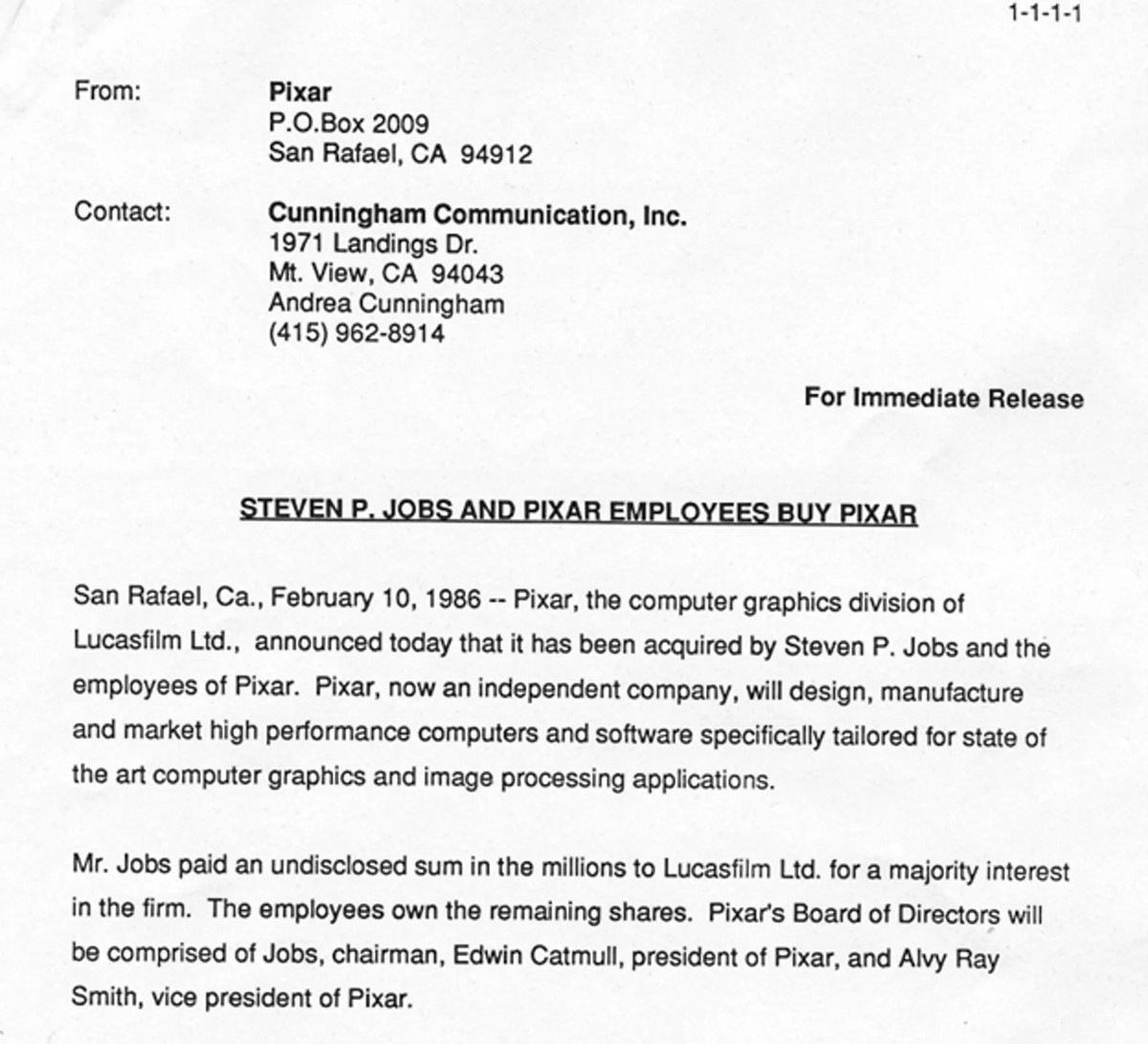
When Steve Jobs bought Pixar from Lucasfilm in 1986 for $10 million, most people thought he was buying an animation studio. He wasn't. Steve was buying RenderMan. In his own words he described it as “real magic.” Pixar had spent years building this proprietary rendering technology while every other studio licensed off-the-shelf tools from Alias and SoftImage. Ed Catmull's whole thesis was that you couldn't separate the creative work from the technical infrastructure. You had to own the full pipeline. Other studios could make animated films. But only Pixar could make Toy Story, because they controlled every layer of the stack from modeling to final render. This same pattern consistently shows up, where the company that builds the production infrastructure ends up owning the creative frontier. Utopai Studios seems to be running that playbook in AI video. While most tools generate clips, they’ve built a full filmmaking pipeline: story development, multi-shot generation, editing, and asset management in a single system. Already deployed in real Hollywood productions. People tend to remember the first beautiful demo. But the industry rewards the first reliable pipeline.
Founder Mode tweet mediaFounder Mode tweet media
Utopai Studios@UtopaiStudios

Drop everything - PAI just got a major upgrade, and it's ... killer. You can now create full 3-minute cinematic videos in 4K with consistent characters, worlds, and storylines, all in one place. Now live. Go make something great.

English
2
20
97
14.4K
Cleared Improve がリツイート
Big Brain Business
Big Brain Business@BigBrainBizness·
When Daniel Ek started Spotify in 2006, he spent two full years negotiating with record labels (before writing a line of code) He gave Universal, Sony, and Warner equity stakes in Spotify itself (reportedly around 18% combined). That sounds like a terrible deal for a startup. But Ek understood something that Napster, Limewire, and every other music startup had missed: the product doesn't matter if the legal department kills it. Solve the licensing problem, then scale. Not the other way around. Utopai Studios seems to be making a similar kind of unsexy bet here. Apparently PAI doesn't train on copyrighted material. In a field where almost every competitor is facing active lawsuits over training data, they took the slower path: clean data, clean IP, no liability. That choice looks expensive at first. But it means they can sign deals with Hollywood studios that their competitors literally cannot. The legal team clears them. The production team adopts them. The boring moat is usually the real moat.
Utopai Studios@UtopaiStudios

Drop everything - PAI just got a major upgrade, and it's ... killer. You can now create full 3-minute cinematic videos in 4K with consistent characters, worlds, and storylines, all in one place. Now live. Go make something great.

English
1
18
47
10K
Cleared Improve がリツイート
AI Frontliner
AI Frontliner@AIFrontliner·
Every day we hunt for the tools that turn “impossible” into “anyone can do it.” This morning I found something different. Not a new tool. A whole platform that’s turning Gen Z into hardware poets and accessibility pioneers in 48 hours. What we saw inside REDHackathon just quietly rewrote my mental map of where the real AI frontier is moving. Let me show you. A Chinese Gen Z team just built a full AI product from scratch in 48 hours and took second place at REDHackathon, a competition built to push young developers to ship real functional AI software under a brutal deadline. The product is called Attune and it actually works. The traditional UI was like a static map — you're the traveler, and you have to know exactly where you're going. But Attune has built a living ecosystem. The UI can sense your needs and react accordingly. The interface comes to you. Clean UI, sharp interaction design, production level output in two days. Local heuristics instantly grab clickable elements on the page and pop up a radial menu near your cursor. AI runs async as an enhancement layer, not a dependency — so no lag.   In 48 hours, they also solved: style loss on cloned DOM, input sync back to original elements, and popup repositioning. Shadow DOM inline styles, a proxy input system, relayout logic — the works.  This is not a school project. This is what happens when serious builders get the right environment to compete in. rednote built REDHackathon to give exactly this kind of talent a global stage and Attune is proof the standard is high. @xiaohongshu #redhackathon #rednote #technology #AI Watch the demo and see it for yourself:
English
10
34
363
93.8K
Cleared Improve がリツイート
AI Highlight
AI Highlight@AIHighlight·
🚨BREAKING: Two researchers from UPenn and Boston University just published a paper that should be uncomfortable reading for every CEO automating their workforce right now. The argument is straightforward. Every company replacing workers with AI is also eliminating its own future customers. Laid off workers stop spending. Enough of them stop spending and nobody can afford to buy anything. The companies that fired everyone end up selling into an economy with no purchasing power left. Every executive can see this. The math is not complicated. But here is why nobody stops. If you do not automate, your competitor does. They cut costs, lower prices, take your market share, and you collapse anyway. So every company automates knowing it is collectively destructive because the alternative is dying alone while everyone else survives. The researchers proved this is a Prisoner's Dilemma playing out in real time. The numbers are already moving. Block cut nearly half its 10,000 employees this year. Jack Dorsey said AI made those roles unnecessary and that within the next year the majority of companies will reach the same conclusion. Salesforce replaced 4,000 customer support agents with AI. Goldman Sachs deployed a coding tool that lets one engineer do the work of five. Over 100,000 tech workers were laid off in 2025 and AI was cited as the primary driver in more than half those cases. 80% of US workers hold jobs with tasks susceptible to AI automation. The researchers tested every proposed solution. Universal basic income does not change a single company's incentive to automate. Capital income taxes adjust profit levels but not the per-task decision to replace a human. Collective bargaining cannot hold because automating is always the dominant strategy. They also identified what they call a Red Queen effect. Better AI does not solve the problem, it accelerates it. Every company chases faster automation to gain market share over rivals but at the end everyone has automated equally, the gains cancel out, and the only thing left is more destroyed demand. The one thing the math says could work is a Pigouvian automation tax. A per-task charge that forces companies to account for the demand they destroy each time they replace a worker. The conclusion is that this is not a transfer of wealth from workers to owners. Both sides lose. Workers lose income. Companies lose customers. It is a deadweight loss with no market mechanism to stop it on its own.
AI Highlight tweet media
English
200
1.3K
4K
569.1K
Cleared Improve がリツイート
The AI Colony
The AI Colony@TheAIColony·
🚨BREAKING: Claude has a feature called Learning Mode. You can use it to learn literally anything, step by step, like a personal tutor. Here’s how to access it.
English
23
328
4.1K
374.1K
Cleared Improve がリツイート
AI Frontliner
AI Frontliner@AIFrontliner·
🚨Breaking: Stanford just recorded 233 harmful AI incidents in 2026. That's a 56% jump in one year. And most companies still think their biggest AI risk is hallucinations. It's not. It's your employees, your vendors, and the $25M deepfake that just wiped out a finance team. Aon just dropped their AI Risk 2026 report and the numbers are brutal: → AI phishing emails now get a 54% click-through rate vs 12% for traditional attacks → 47% of employees still use personal AI accounts for work tasks containing sensitive data → 90%+ of insurance decision makers now consider AI incidents a material financial risk The exposure isn't coming from the models. It's coming from every human being inside your org who hasn't been trained to recognize a synthetic voice, a fake wire transfer request, or a compromised AI plugin sitting inside your own stack. The companies that survive this aren't the ones with the best AI. They're the ones that treated AI governance like a living discipline before regulators forced them to.
AI Frontliner tweet media
English
2
54
81
16.9K
Cleared Improve がリツイート
Avery Chauhan
Avery Chauhan@averyx99·
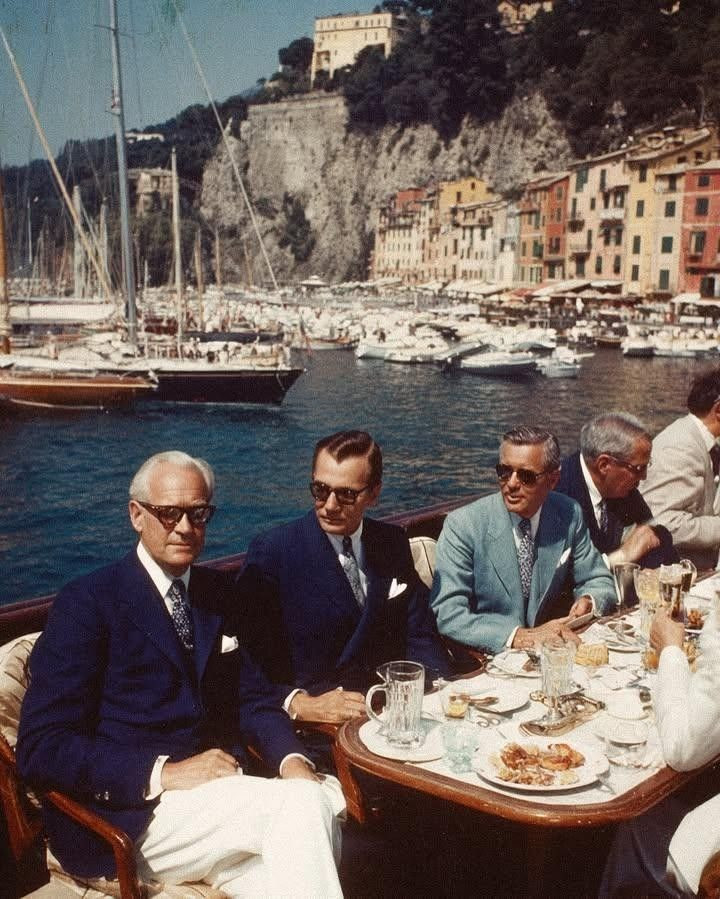
"The richest 0.001% don't wear luxury." Yes they do. You're just too poor to know what these brands are. Forget Dior. Forget Louis Vuitton. Old money wears quiet luxury. Here are six brands that billionaires, world-leaders, and royalty actually wear: 𝟭) 𝗭𝗘𝗚𝗡𝗔 Clients: • Lewis Hamilton • Cillian Murphy • Tom Cruise Ermenegildo Zegna founded the company in 1910 in Trivero, starting as a wool mill before evolving into the world's largest men's luxury fashion group. Unlike any other house on this list, ZEGNA controls the entire supply chain. Best known for suiting fabrics so refined that rival luxury houses source from them. 𝟮) 𝗟𝗼𝗿𝗼 𝗣𝗶𝗮𝗻𝗮 Clients: • Jeff Bezos • European aristocracy • Middle Eastern oil heirs Founded in 1924 by Pietro Loro Piana as a high-quality wool mill in Italy. His grandson, Franco, revolutionised the brand in the 1960s-70s by pioneering rare fibres like baby cashmere and vicuña. Today, they're best known for sourcing the world's rarest natural fibres and creating ultra-soft cashmere coats starting. 𝟯) 𝗕𝗿𝘂𝗻𝗲𝗹𝗹𝗼 𝗖𝘂𝗰𝗶𝗻𝗲𝗹𝗹𝗶 Clients: • Daniel Craig • Prince William • Silicon Valley billionaires Brunello Cucinelli borrowed money in 1978 to launch a small cashmere workshop in Umbria. He restored a 14th-century castle as headquarters in 1985 and built a $3 billion empire through artisan ethics and discretion. The "King of Cashmere" is best known for Zuckerberg's custom grey T-shirts, which cost between $400-600 each. 𝟰) 𝗕𝗿𝗶𝗼𝗻𝗶 Clients: • Donald Trump • Barack Obama • Pierce Brosnan Established in 1945 in Rome by master tailor Nazareno Fonticoli and entrepreneur Gaetano Savini. The brand gained international fame dressing Hollywood stars and world leaders throughout the 1950s-60s. 𝟱) 𝗞𝗶𝘁𝗼𝗻 Clients: • Vladimir Putin • David Beckham • George Clooney Ciro Paone, from generations of Neapolitan fabric makers, started a tailored clothing workshop in 1956. He rebranded to Kiton in 1968 and founded a tailoring school to preserve traditional techniques. Best known for featherlight suits with up to 25,000 stitches per jacket. 𝟲) 𝗖𝗲𝘀𝗮𝗿𝗲 𝗔𝘁𝘁𝗼𝗹𝗶𝗻𝗶 Clients: • Al Pacino • Denzel Washington • Unnamed UHNW individuals Vincenzo Attolini pioneered the light, unstructured Neapolitan jacket in 1930s Naples, ditching British padding for shirt-like comfort. His son Cesare opened a workshop in 1987 with his own sons to scale production. Traditional hand techniques create lightweight, unstructured jackets with extended darts and minimal lining. — Thanks for reading! Enjoyed this post? I built an 8-figure music label from scratch and host luxury events. Follow me @averyx99 for more content like this.
Avery Chauhan tweet media
English
108
431
3.3K
604.5K
Cleared Improve がリツイート
The AI Colony
The AI Colony@TheAIColony·
Same prompt, four AI video models tested on a damaged android crawling through a burning spacecraft corridor. Here is how they compare in scene richness, physics, and camera motion. PixVerse V6 delivers smooth motion, rich scenes, matched audio, and realistic textures. The android body is highly realistic with coordinated movements. The model also handles close-up and wide shot transitions naturally. See it here: app.pixverse.ai/home?detail=vi… Sora 2 Pro offers excellent texture quality and the android body is well constructed. However, the motion is not fluid, making the crawl feel jerky and less convincing. Seedance 2.0 has strong texture quality as well, but the android body looks too human, lacking the mechanical endoskeleton feel. The imagination is somewhat limited. Hailuo-02 also delivers good texture quality, but the android is shaped more like a monster than a damaged biological android, losing the intended sci-fi aesthetic. Each model has strengths and trade-offs. - PixVerse V6 leads in motion smoothness and audio-visual sync. - Sora 2 Pro excels in texture but struggles with motion fluidity. - Seedance 2.0 has solid visuals but lacks mechanical imagination. - Hailuo-02 needs better prompt adherence for character design.
English
0
25
53
12.7K
Cleared Improve
Cleared Improve@ClearedImprove·
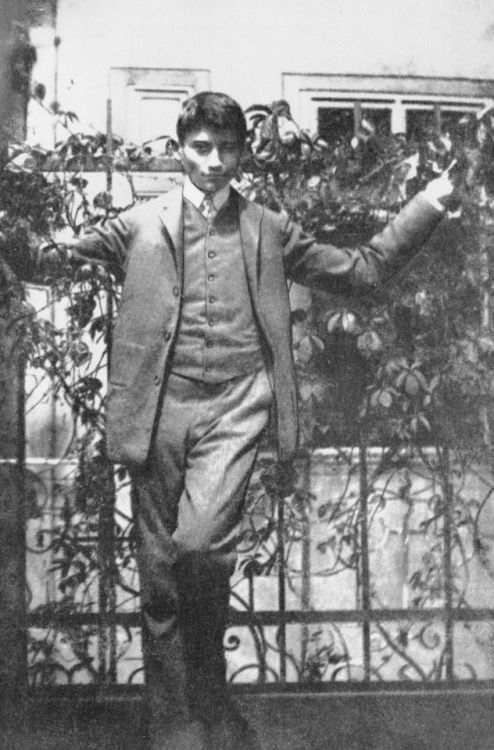
Franz Kafka died at 41, unknown, unpublished, and convinced his writing was worthless. His final wish? Burn everything I've ever written. His best friend refused. That betrayal created one of the most influential literary legacies in human history and gave us a word that describes the modern world better than any philosopher ever could: Kafkaesque. Here's the story they don't teach you ↓ Prague, 1883. A small, anxious boy is born to Hermann Kafka, an aggressive, successful businessman who wanted a son in his own image. Franz was the opposite. Quiet. Sensitive. Terrified of his father. He became Hermann's psychological punching bag. A constant source of disappointment. What did young Kafka do with all that anxiety, guilt, and self-hatred? He wrote. But his father had other plans. He forced Franz into law school. Then Franz ended up working for an insurance company buried alive in absurd bureaucratic systems and mountains of meaningless paperwork. He was miserable. Yet something extraordinary happened in the margins of that misery ↓ While trapped in a system that crushed his soul by day, Kafka wrote masterpieces by night: • The Trial • The Castle • The Metamorphosis He left most of it unfinished. He believed none of it was worthy. Then tuberculosis took him at 41. On his deathbed, he begged his friend Max Brod to destroy every unpublished manuscript. Brod looked at the work. Then looked at his dying friend. And chose to betray him. Over the next decade, Brod published everything. Kafka became one of the most significant writers of the 20th century with his life's work nearly lost to a drawer and a match. But here's what makes Kafka's philosophy so powerful: His writing doesn't offer hope. It offers something better. The bitter truth. In The Trial, Joseph K. is arrested without explanation. Subjected to a corrupt, senseless trial. Found guilty without ever knowing his crime. In Metamorphosis, Gregor Samsa wakes up as an insect. His first thought? How am I going to get to work? This is the Kafkaesque condition: Your reasoning meets inescapable senselessness. Success is impossible. Logic fails. The system doesn't care. And yet the characters try anyway. That's not despair. That's the most honest portrait of being human ever written. Kafka understood something most self-help refuses to admit: • You can't control everything • The struggle itself is unavoidable • Some systems will never make sense • False hope is more dangerous than hard truth His radical message? Stop waiting for the world to become logical. Confront the absurdity directly and face the darker aspects of yourself instead of hiding behind false optimism. And despite all the senselessness of the universe, choose to continue anyway. Kafka wrote from a drawer, expected nothing, and nearly vanished from history. Instead, he gave us the most accurate word for modern life. Maybe the greatest insights come from those who never expected anyone to listen. — Thanks for reading! Enjoyed this post? Follow @ClearedImprove for more content like this.
Cleared Improve tweet mediaCleared Improve tweet media
English
0
0
1
325
Cleared Improve がリツイート
Aria Westcott
Aria Westcott@AriaWestcott·
Breaking: You can now talk to a deceased family member or pet whenever you want. China built and deployed the technology already. Real voices, real personalities, permanently stored. Here is what that looks like:
English
7
53
121
24.6K
Cleared Improve がリツイート
Future Stacked
Future Stacked@FutureStacked·
Two models, one cinematic prompt. A direct comparison between PixVerse V6 and Seedance 2.0 on scene richness, physics, and camera motion. PixVerse V6 delivers a highly realistic character, smooth close-up to wide-shot transitions, and excellent overall texture. The motion feels natural and the video quality is outstanding. See the full example with prompt here: app.pixverse.ai/home?detail=vi… Seedance 2.0 struggles from the beginning. The opening feels choppy, more like a slideshow than a rotating camera shot. Character consistency degrades over time, making the person look fake in later frames. The transition between close-up and wide shots is also not smooth. In short, PixVerse V6 wins on fluid camera movement, character realism, and scene richness. Seedance 2.0 needs improvement in motion smoothness and identity preservation.
English
10
36
47
16.1K
Cleared Improve がリツイート
Aria Westcott
Aria Westcott@AriaWestcott·
Same prompt, four AI video models. Here is how they compare across scene richness, physics, camera motion, and audio. PixVerse V6 delivers cinematic scenes, stable 360-degree orbital shots, accurate gravity and resistance, no pixel warping, and perfectly synced clean audio. It is the most production-ready model. Kling 3.0 has decent scene complexity but suffers from obvious fisheye distortion, shaky camera, frequent motion deformation, and poor audio sync. It feels unstable. Seedance 1.0 Pro shows slightly better physics than Kling with less warping, but still has mild fisheye and noticeable shakiness. Audio is basic and unsynced. An improvement but not smooth. Wan 2.0 offers excellent scene detail and natural motion, with no fisheye or shake. However, its audio quality is terrible: static noise and crackling make it unusable for real projects. Great visuals ruined by bad sound. Each model has its strengths: Wan 2.0 leads in visual quality and motion, PixVerse V6 wins in overall stability and audio, while Kling and Seedance still have room to improve on camera control.
English
9
52
83
19.3K
Cleared Improve がリツイート
Future Stacked
Future Stacked@FutureStacked·
Most AI presentation tools share a common limitation. They generate quickly, but usability often suffers. A different approach is now available with @Dokieai. The user provides direction. The tool executes. "Make this more visual." "Simplify this slide." "Apply brand colors." Updates happen instantly. The experience shifts from using AI to collaborating with a design partner. Key differentiators include the ability to add 3D models, clickable elements, and animations. Users can upload their own templates, and the tool adapts to existing brand styles. The core advantage is clear. @Dokieai does not simply generate slides. It helps turn ideas into visuals faster.
English
9
46
78
21.2K
Cleared Improve がリツイート
AI Highlight
AI Highlight@AIHighlight·
There’s a moment right before a call… when you realize your thoughts aren’t structured enough to explain. That’s when I used ZooClaw.
English
11
43
74
18.4K