@Vicente73977721 Estas bien pero bien equivocado. La clase élite de Cuba y su algoritmo no quiere que te enteres de que son ellos que cometen genocidio contra su propio pueblo.
You are assuming facts that you do not actually know, especially what was going through the mind of the man defending his family in the middle of a violent and chaotic situation. He was actively engaged in stopping a threat and may not have had direct awareness that every member of his family had already exited the vehicle. In moments like that, adrenaline takes over, decisions happen in seconds, and people react to protect the lives of those they love.
The law recognizes the right to defend both life and property under certain circumstances. It is unreasonable to pretend that a man confronting a thief threatening his family would somehow be calm, perfectly informed, and able to process every detail with total clarity in real time.
Do you honestly think he was not concerned about the safety of his family during that confrontation? Or that he somehow had perfect knowledge of where every family member was while physically struggling with the suspect? What gives you the certainty to claim he knew everyone was safely out of the car while the fight was still unfolding?
@FoxNews We need to talk about why we value property over human life. This father had no right to play executi0ner against an unarmed man. It is a sad day when we celebrate a death sentence for a car. Metal can be replaced, but a human soul cannot.
FIRST ON FOX: Shocking video shows a Texas father fatally shooting an illegal immigrant from Mexico as the migrant tried to carjack his vehicle with his family inside.
Officials say suspect Jose Ramirez parked at a nearby gas station and was unsuccessfully attempting to "take several vehicles by force" in the parking lot.
Ramirez was then seen running across the road to a convenience store parking lot where he attempts to forcefully take the father's car. While Ramirez was unarmed, authorities say he was "using force," and the father had no way of knowing whether he had a weapon.
Mira, China sí sacó a cientos de millones de personas de la pobreza extrema. Eso es un hecho histórico y negarlo sería deshonesto. Pero también hay que ser honestos sobre cómo ocurrió realmente.
China no logró ese crecimiento manteniéndose estrictamente maoísta. Bajo Mao hubo políticas económicas desastrosas, incluyendo el Gran Salto Adelante, que provocó hambrunas masivas y enorme sufrimiento humano. El gran avance económico llegó después, cuando China abrió partes de su economía, permitió negocios privados, impulsó la manufactura, atrajo inversión extranjera y se integró al comercio global.
En otras palabras, China comenzó a mejorar cuando incorporó elementos del capitalismo y de la economía de mercado. Por eso muchas personas llegan a una conclusión lógica: si esos cambios económicos ayudaron tanto, entonces China probablemente mejoraría todavía más si también aumentara las libertades políticas, la transparencia institucional y ciertos elementos democráticos.
Porque el problema del control estatal excesivo es que eventualmente limita la innovación, la crítica abierta y la capacidad de corregir errores del gobierno. Cuando las personas tienen miedo de hablar, cuando la prensa no puede cuestionar al poder y cuando toda la autoridad se concentra demasiado, los errores tienden a durar más tiempo y afectar a más gente.
Al mismo tiempo, tampoco se trata de defender un capitalismo salvaje sin regulación. El capitalismo necesita reglas, instituciones fuertes y límites para evitar corrupción, monopolios y explotación. Por eso muchos de los países más estables y prósperos del mundo funcionan con una mezcla de mercados abiertos, propiedad privada, regulación inteligente, derechos individuales e instituciones democráticas.
Así que la verdadera lección de China no es que “el socialismo puro funciona”. La lección más honesta es que China avanzó cuando se abrió parcialmente al mercado y al capitalismo. Y probablemente podría avanzar aún más si combinara ese crecimiento económico con mayores libertades humanas, más transparencia y un sistema político más abierto.
Si tus ideas son verdaderas, no deberías necesitar una turba para defenderlas.
En el momento en que las personas dejan de debatir y empiezan a sacar a otros por los pasillos por pensar diferente políticamente, algo más profundo ya está roto. Una universidad se supone que sea el lugar donde las ideas difíciles se enfrentan con pensamiento, evidencia, disciplina y conversación. Cuando la intimidación reemplaza al diálogo, la educación empieza a morir y la ideología comienza a ocupar su lugar.
Los jóvenes muchas veces creen que están luchando contra monstruos cuando en realidad poco a poco se están convirtiendo en aquello que dicen combatir. La historia ha demostrado esto una y otra vez. Nunca comienza con gulags ni dictaduras. Comienza con certeza moral, humillación pública, presión de grupo y la creencia de que ciertas personas ya no merecen hablar porque son consideradas peligrosas para la causa.
Ese es el verdadero peligro aquí.
Una sociedad que le enseña a su juventud a ver el mundo únicamente entre opresores y oprimidos eventualmente produce personas que dejan de ver seres humanos y comienzan a ver categorías. Cuando eso ocurre, la conciencia se debilita. La responsabilidad individual desaparece dentro de la multitud. La turba se vuelve más importante que la verdad. Y cuando las personas se convencen de que son moralmente puras, terminan siendo capaces de actuar con crueldad mientras se dicen a sí mismas que son justas.
Un adulto maduro entiende algo que muchos activistas jóvenes todavía no han aprendido: la civilización es frágil. La libertad es frágil. La discusión abierta es frágil. Solo sobreviven cuando las personas deciden controlarse a sí mismas y permiten el desacuerdo sin odio.
No se preserva la democracia silenciando a las personas.
Se preserva demostrando que tus argumentos pueden resistir el escrutinio.
Y aquí hay otra verdad difícil que un padre diría claramente:
Si una persona hablando pacíficamente te asusta tanto que sientes la necesidad de expulsarla físicamente, quizás tus convicciones no son tan fuertes como aparentas.
Las mentes fuertes pueden tolerar oposición.
Las mentes débiles necesitan obediencia.
Nada de esto significa que toda protesta sea incorrecta ni que toda institución esté por encima de la crítica. Las universidades deben ser cuestionadas. Los gobiernos deben ser cuestionados. Los sistemas económicos deben ser cuestionados. Pero existe una enorme diferencia entre desafiar ideas y castigar personas por tenerlas.
Cuando el miedo entra al salón de clases, el aprendizaje sale por la puerta de atrás.
El verdadero propósito de la educación no es fabricar soldados ideológicos. Es formar adultos capaces de pensar con claridad, hablar con honestidad, controlarse a sí mismos y convivir responsablemente con personas que piensan diferente.
Porque el futuro no pertenece a la turba más ruidosa.
Pertenece a las personas con la disciplina suficiente para buscar la verdad sin perder su humanidad en el camino.
Reducir esta situación a una sola imagen o a una sola causa distorsiona la realidad. En Gaza, el sufrimiento de los civiles tiene múltiples factores. Hamas controla el territorio y ha sido señalado por desviar recursos, operar dentro de infraestructura civil y afectar la distribución interna de ayuda, lo que puede agravar la situación de la población.
Al mismo tiempo, Israel permite la entrada de ayuda humanitaria y ha participado en la coordinación y, en algunos casos, distribución de alimentos. Sin embargo, las condiciones del conflicto, incluyendo operaciones militares, controles de acceso y restricciones, también influyen directamente en cuánto y qué tan rápido llega esa ayuda a la población.
La realidad es que los civiles, especialmente los niños, quedan atrapados en medio de decisiones y acciones de ambos lados. Presentarlo como si todo fuera responsabilidad de uno solo no refleja la complejidad real de la situación.
A la izquierda, la millonaria cantante Beyoncé, con un lujoso esqueleto de diamantes engastados, en la Gala Met.
A la derecha, Maryam, una niña palestina de 9 años, con el esqueleto a la vista tras sufrir la hambruna que "Israel" impone en Gaza.
Para que unos pocos lleven esqueletos de diamantes, millones deben pasar hambruna, así funciona el sistema capitalista en el que vivimos.
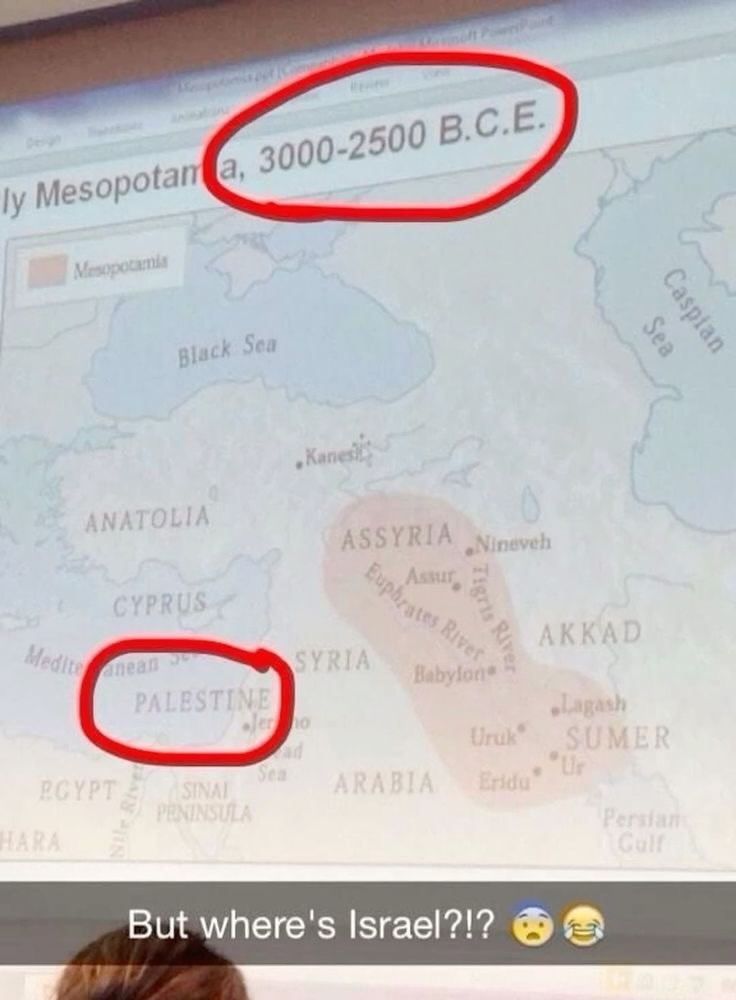
The name Israel comes from Abraham’s grandson Jacob, whose name was changed to Israel in the Hebrew Bible. His descendants became known as the Children of Israel, and at various points the land was associated with them and referred to as the land of Israel.
Abraham is recognized in Judaism, Christianity, and Islam, but the name Israel is specifically tied to Jacob, not directly to Abraham.
Before the emergence of Israelite identity, the region was commonly known as Canaan. Over time, it was called by different names depending on the ruling power, including Israel, Judah, and later Judea.
The term Palestine has earlier roots connected to the Philistines and appears in Greek sources before Roman rule. After the Bar Kokhba revolt, the emperor Hadrian renamed the province of Judea to Syria Palaestina. Many historians interpret this as part of a broader effort to reduce Jewish identification with the land following repeated revolts, although there is no surviving Roman record explicitly stating the change was intended to provoke or humiliate the Jewish population.
Mira, esa afirmación suena contundente, pero en realidad simplifica demasiado las cosas.
Es cierto que Cuba por sí sola no representa una amenaza militar directa para Estados Unidos en el sentido tradicional. Hasta ahí vamos bien. Pero el problema es ignorar el contexto en el que está operando hoy.
Cuando hablas de la relación entre Cuba y China, especialmente en temas de inteligencia, ya no estás hablando solo de Cuba. Hay reportes bastante consistentes sobre instalaciones de recopilación de señales en territorio cubano vinculadas a China. Y por la cercanía geográfica, eso no es un detalle menor. Desde ahí se puede monitorear comunicaciones y actividad electrónica de una forma que sí tiene implicaciones reales para la seguridad de Estados Unidos.
Entonces decir que Cuba no representa ninguna amenaza, así en absoluto, no es del todo preciso. No es una amenaza por sí misma como potencia militar, pero sí puede funcionar como un punto estratégico para un actor mucho más grande.
Ahora, del otro lado, decir que Estados Unidos es una amenaza para el mundo también se queda corto. Estados Unidos tiene poder global, eso es innegable, y lo ha usado de maneras que muchos critican. Pero también es clave en comercio internacional, alianzas de defensa, ayuda humanitaria y estabilidad financiera.
Al final, si queremos hablar en serio, hay que reconocer las dos caras. Cuba no es una potencia, pero su ubicación y sus alianzas importan. Y Estados Unidos no es solo una amenaza ni solo un benefactor. Es un actor complejo con impacto global.
Reducir todo eso a una sola frase suena bien, pero no refleja la realidad.
Cuba no representa una amenaza para Estados Unidos; sin embargo los Estados Unidos si representan una amenaza para el mundo.
🗺️🕊️✌️🫶🇨🇺🤍
#LaPatriaSeDefiende
Let’s break this down as if we’re just grabbing coffee and talking politics, no jargon, no spin.
Call this a “Mirror Trap” strategy: the Trump administration and its allies deliberately use bold, history echoing language, phrases like “national rebirth” or “the enemy within.” The goal is to bait the Left into responding with heavy labels like “fascism” or “authoritarianism.” While critics focus on the rhetoric, the White House points to concrete actions such as tax cuts, shrinking federal agencies, and reducing bureaucracy, often tied to ideas associated with Project 2025.
To everyday voters dealing with grocery bills and gas prices, critics can start to seem out of touch, like they are yelling about smoke while ignoring the fire at home. It becomes a perception game in a highly polarized environment. Think of it as political jiu jitsu: using your opponent’s instincts against them.
From this perspective, the Left sees its role as defending institutions, norms, and democracy itself. But when it responds aggressively to rhetoric, it can come across as more focused on drama than on solving economic or day to day concerns. That dynamic plays well with the president’s base, which views the strongman tone as pushback against a bloated system.
Now here is a piece that often gets missed in conversations like this, the playing field itself is not neutral. After the Supreme Court of the United States decision in Rucho v. Common Cause, federal courts stepped back from policing partisan gerrymandering. That means in many House districts, the outcome is heavily shaped before a single vote is cast.
So even if messaging moves public opinion by a few points, the impact can be muted. In that environment, strategies like the Mirror Trap do not need to win everywhere, they just need to hold ground where the map already provides an edge. It also shifts politics toward base turnout instead of persuasion, since many districts are effectively safe. That reinforces the cycle, stronger rhetoric, stronger reactions, and less incentive to meet in the middle.
Does this match what is happening in May 2026? Roughly, but it is worth looking at the numbers without rooting for either side.
Trump’s approval ratings are in the mid to high 30s, around 36 percent to 39 percent approval, with 57 percent to 62 percent disapproval in recent polling averages. These are among his lowest levels this term, driven largely by inflation, rising gas prices linked to the Iran conflict that began February 28, and broader pocketbook strain.
At the same time, Democrats are not fully capitalizing. They hold a generic ballot lead for the 2026 midterms of about D plus 5 to D plus 6, an advantage, but not a wave. Their favorability ratings are weak, with only about 28 percent to 38 percent of Americans viewing them positively, and unfavorable ratings in the mid 50s. Even many of their own voters feel the party is too focused on rhetoric and not enough on cost-of-living issues.
That disconnect starts to make more sense when you factor in the maps. A modest national lead does not always translate into proportional seat gains. The bar for a wave is simply higher in a system where districts are already tilted.
Polling also shows a majority of voters view Trump as too extreme, particularly in tone and temperament, though the exact numbers vary by survey.
So, what is the real-world effect of all this? It keeps the opposition reactive, and it keeps the battlefield uneven. While the Left emphasizes existential risks, some voters, especially independents and working class voters, tune it out if it does not connect to their immediate concerns. And even when it does move opinions, the structure of the map can limit how much that matters electorally.
A more balanced view is this: it is not a uniquely clever or one sided tactic. Both parties engage in perception battles, and both operate within a system that rewards holding power where they already have it. Democrats frame issues as threats to democracy to energize their base. The Left’s concerns are not purely reactive, many genuinely see risks in both rhetoric and policy moves, such as rapid agency restructuring or expanded executive authority.
Likewise, the Right is not just playing a messaging game, it is advancing long standing policy goals. From a neutral standpoint, this looks less like a master strategy and more like mutual escalation in an environment where trust is already low and the rules of the game make compromise less rewarding.
Bottom line, the Mirror Trap helps explain why low presidential approval has not translated into a decisive Democratic advantage heading into the midterms. It keeps the political fight on terrain that benefits the administration’s base, while the structure of the map helps lock in those advantages. But politics is fluid, six months can change everything. If economic pressures ease or a major event shifts attention, the dynamic could flip.
What is your take?
#Politics#Election2026#USNews
I’m not convinced by hybrid labels like communist–capitalist or socialist–capitalist. I support a well-regulated capitalist system that rewards those who create real value for others, enforces strong and consistent antitrust laws, and closes the loopholes that let large firms dominate markets. Banks should be bound by clear usury limits with no workarounds, and financial backers should be prohibited from engaging in predatory lending practices.
I also favor structural limits on corporate power—for example, requiring periodic rechartering or sunset provisions so corporations must justify their continued existence and public benefit, rather than operating indefinitely without accountability. The system should curb practices the U.S. has struggled with, such as regulatory capture, excessive corporate concentration, exploitative fee structures, and the socialization of losses alongside the privatization of gains.
At its core, the goal is a strong, growing middle class, where economic rules are enforced consistently and markets function competitively and fairly.
What you quoted reflects an official way of describing China’s system, and parts of it are factually correct while other parts are more interpretive than analytical.
It is true that in China major sectors such as railways, electricity, telecommunications infrastructure, and parts of energy and banking are dominated by state owned enterprises. These institutions do play a real role in building infrastructure and supporting large scale national projects, and they are often involved in areas that are considered essential to economic stability and public services.
At the same time, describing this as purely socialism does not fully align with how the system actually functions in practice. Alongside these state controlled sectors, China has extensive private ownership, active capital markets, and a large population of private firms that operate in manufacturing, technology, services, and export driven industries. Private enterprise is not a marginal feature of the system, it is central to employment creation and economic growth.
Because of this combination, most economic analysis does not place China in the category of a fully planned socialist economy. Instead, it is generally understood as a hybrid structure where state owned enterprises coexist with market competition and private capital. The state plays a strong guiding role, especially in strategic sectors, but market forces still determine much of pricing, investment allocation, and business expansion.
The idea that state owned enterprises function as a social safety net also has some truth, particularly in infrastructure expansion and certain public service obligations. However, similar mechanisms exist in many non socialist systems as well, where governments regulate utilities, fund infrastructure, or manage social insurance programs through taxation. These functions are not unique to socialism and do not by themselves define an economic system.
Where the picture becomes more complex is in outcomes. China has achieved remarkable urban development and industrial expansion, especially in coastal megacities, but that growth has not been evenly distributed. Inland and rural regions have historically experienced lower incomes, reduced access to services, and fewer economic opportunities. The household registration system has also played a role in limiting equal access to urban benefits for many rural migrants.
So when all of these elements are considered together, the most accurate description is not a pure ideological category but a mixed system. It combines strong state direction with market driven activity and private ownership. This is why it is often described in academic and economic terms as a state guided market economy rather than a fully socialist model in the classical sense.
In that context, disagreement is not resolved by asserting authority, but by looking at how the system actually operates in practice, across ownership structures, incentives, and real world outcomes rather than relying only on political labels.
Antes de 1959, Cuba no era un sistema socialista. Era una economía de mercado con propiedad privada, inversión extranjera y una fuerte dependencia del azúcar, el turismo y los servicios. Bajo Fulgencio Batista, especialmente en su segunda etapa, el país funcionaba dentro de ese marco, pero con un problema importante: no era un sistema equilibrado. En las ciudades había consumo, actividad económica y acceso a bienes para ciertos sectores, pero en el campo existía pobreza estructural, desigualdad y poca presencia del Estado. Era un capitalismo con crecimiento en algunas áreas, pero con instituciones débiles y mucha desigualdad.
En ese contexto aparece el descontento social. El golpe de Estado de 1952 rompe el orden constitucional, suspende la democracia formal y profundiza la percepción de corrupción y falta de legitimidad política. Ahí es donde empieza a ganar fuerza la revolución liderada por Fidel Castro. No solo por ideología, sino porque prometía restaurar justicia, acabar con la corrupción y corregir esas desigualdades.
Cuando la revolución triunfa en 1959, el cambio es radical. Se elimina el sistema multipartidista y se consolida el poder en el Partido Comunista de Cuba. La economía pasa de un modelo de mercado a uno altamente centralizado. Eso tiene dos efectos claros: por un lado, mejora el acceso a educación, salud y servicios básicos de forma más uniforme. Por otro, reduce el espacio del mercado, limita la iniciativa privada durante décadas y termina generando escasez de bienes y menor dinamismo económico.
Entonces la pregunta interesante no es solo “qué sistema era mejor”, sino qué tipo de desarrollo se estaba construyendo en cada etapa. Antes había más oferta de bienes para quien tenía ingresos, pero con desigualdad fuerte. Después hubo más igualdad en servicios básicos, pero menos diversidad económica y más limitaciones en consumo.
Si uno imagina un escenario alternativo, la idea es esta: si Cuba hubiera mantenido la democracia y en vez de romper el sistema hubiera fortalecido sus instituciones, podría haber evolucionado hacia un capitalismo regulado. Uno con estado de derecho, control de corrupción, competencia más justa y políticas para sostener una clase media fuerte. Ese tipo de modelo no elimina el mercado, pero lo ordena. Y en muchos países eso ha permitido crecimiento con mayor estabilidad social.
Desde esa perspectiva, la clave no era solo “capitalismo versus socialismo”, sino la calidad de las instituciones. Sin instituciones fuertes, el capitalismo puede volverse desigual y corrupto. Y sin equilibrio entre mercado y Estado, el socialismo puede volverse ineficiente y restrictivo.
Por eso figuras como Huber Matos sí representan, al menos en parte, esa tensión interna dentro de la revolución, porque cuestionaron el rumbo político y terminaron enfrentando consecuencias directas. En cambio, en el caso de Camilo Cienfuegos, no hay evidencia clara de una posición económica estructurada; su figura ha sido interpretada, pero no dejó un modelo definido.
Al final, la lección más sólida no es ideológica. Es que los resultados dependen menos de las etiquetas del sistema y más de cómo funcionan las reglas reales: instituciones, transparencia, incentivos económicos y control del poder. Cuba muestra dos caminos distintos con costos y beneficios distintos, y el punto crítico es que ninguno de los dos extremos resuelve todo por sí solo sin instituciones fuertes que los sostengan.
La idea de que “Estados Unidos le debe a China 36.4 mil millones de dólares” suele interpretarse de forma incorrecta, porque no se trata de una deuda en el sentido común entre dos países, ni de una señal de que un sistema económico haya fracasado o dependido del otro.
Lo que realmente significa es que instituciones chinas, dentro de la economía de China, han comprado bonos del Tesoro de Estados Unidos. Esos bonos son instrumentos financieros que el gobierno estadounidense emite cuando necesita financiamiento. En la práctica, esto quiere decir que China le presta dinero a Estados Unidos a cambio de un interés y bajo condiciones muy seguras. Es algo normal dentro del sistema financiero global.
Esto no ocurre por una relación de superioridad económica, sino por cómo funcionan los mercados internacionales. Estados Unidos mantiene un sistema donde emite deuda de forma constante debido a su estructura fiscal, y muchos países que tienen excedentes comerciales buscan dónde invertir ese dinero. Los bonos del Tesoro estadounidense han sido históricamente una de las opciones más seguras y líquidas del mundo.
También es importante aclarar que China no funciona como un sistema comunista puro en el sentido clásico. Su economía combina un fuerte control estatal con un amplio sector privado, mercados activos y empresas que compiten globalmente. Por eso, su crecimiento económico no puede explicarse únicamente bajo una etiqueta ideológica simple.
En resumen, que China tenga bonos de deuda estadounidense no significa que un sistema “haya vencido” al otro. Significa que ambos países están conectados dentro de un sistema financiero global donde el dinero fluye entre gobiernos, mercados e instituciones según intereses económicos, no como una prueba directa de éxito o fracaso ideológico.
Call him a dictator, totalitarian, tyrant, etc.
Meanwhile he took 80% of his own people out of sheer poverty.
That is a pretty impressive accomplishment for any world leader...
Stop hiding underground and embedding tunnels beneath civilian infrastructure like mosques, schools, hospitals, and homes. If you choose to fight, then fight openly and take responsibility for where you operate from. Using civilians and protected sites as cover, then condemning the consequences, is not defensible, it’s a tactic that endangers the very people you claim to represent.
You don’t get to initiate attacks, embed fighters and stockpile weapons under civilian infrastructure, and then claim innocence when a counterstrike comes. Using homes, schools, hospitals, or mosques for military purposes is a deliberate tactic that endangers civilians and exploits them for cover. That reflects how little Hamas values the very people it governs. Presenting only the aftermath of strikes while omitting that context is not journalism, it’s selective framing by omission designed to manipulate perception. If you hide war behind civilians, you don’t get to pretend the consequences are inexplicable.