Saved by Grace

5.4K posts

Saved by Grace

Saved by Grace

@Excel_Ant

Minnesota, USA 参加日 Nisan 2009
401 フォロー中120 フォロワー
固定されたツイート
Saved by Grace
Saved by Grace@Excel_Ant·
Romans 10:9-10 KJV — That if thou shalt confess with thy mouth the Lord Jesus, and shalt believe in thine heart that God hath raised him from the dead, thou shalt be saved. For with the heart man believeth unto righteousness; and with the mouth confession is made unto salvation.
Saved by Grace tweet mediaSaved by Grace tweet mediaSaved by Grace tweet media
English
0
0
0
10
Saved by Grace がリツイート
PaulsCorner-VerseQuest
PaulsCorner-VerseQuest@TNTJohn1717·
🚨‼️Catholic Ripley’s Believe It or Not, Episode Seven: The Ghost Nun and the One Hail Mary. So now we have a story about a nun who suffered for years, died, allegedly appeared to another sister in the convent, and said she would gladly return to her diseased body just to say one more Hail Mary because that one prayer would be worth all the suffering again. And the moral of the story? “Never underestimate the power of one Hail Mary.” That is where Rome loses me. A dead nun allegedly appears from the other side, gives a testimony about the power of praying to Mary, and everyone is supposed to treat that as spiritual wisdom. I’m sorry, but that sounds less like Bible Christianity and more like Catholic ghost stories with a rosary attached. The Bible never tells sinners to pray a Hail Mary. The Bible never tells believers to measure grace by Marian devotion. The Bible never tells Christians that repeating a prayer to Mary can move mountains, protect from evil, convert souls, and draw us closer to Jesus. That is exactly the problem. Rome talks about Jesus, then constantly redirects the heart back to Mary. The Bible says, “Whatsoever ye shall ask the Father in my name, he will give it you.” It does not say, “Ask Mary.” It does not say, “Repeat a Hail Mary.” It does not say, “Trust a ghost nun’s convent testimony.” “For there is one God, and one mediator between God and men, the man Christ Jesus.” (1 Timothy 2:5) If a story from beyond the grave teaches you to pray to Mary instead of going directly to God through Jesus Christ, that is not spiritual light. That is religious darkness wearing a veil. Rome gives people ghost stories. Scripture gives people truth. One mediator. Not one Hail Mary hotline.
PaulsCorner-VerseQuest tweet media
Saint Adaugoijele ✝️@JustAdaugoijele

In a quiet convent, there lived a nun who was deeply devoted to the Holy Rosary. For many years, she endured agonizing pain and lay bedridden, offering up her suffering with patience and love. She prayed the Rosary faithfully until the end of her earthly life. After her death, she appeared to one of her sisters in the convent. Her face was radiant, yet filled with a profound longing. She said: “If I were allowed to return to my body, even just to say one single Hail Mary, I would gladly endure all the sufferings of my final illness again. Even if I said it quickly and without great fervor, the merit of that one prayer would be worth it all.” Never underestimate the power of one Hail Mary prayed with a sincere heart. In the eyes of God and Our Blessed Mother, even the smallest prayer offered in faith carries immense grace. It can move mountains, convert souls, protect us from evil, and draw us closer to Jesus. St. Louis de Montfort So the next time you feel too busy, too tired, or too distracted to pray... remember this nun. Just one Hail Mary. It’s more powerful than you think. Hail Mary, full of grace, the Lord is with thee. Blessed art thou among women, and blessed is the fruit of thy womb, Jesus....


English
4
3
12
896
Saved by Grace がリツイート
PaulsCorner-VerseQuest
PaulsCorner-VerseQuest@TNTJohn1717·
🚨‼️This chart shows that God’s saving work is not nervous, temporary, or constantly revised. Ephesians 1:13-14 teaches that the believer hears the gospel, believes, is sealed by the Holy Spirit, receives the earnest of the inheritance, and is headed toward the redemption of the purchased possession. God does not save with an eraser in His hand; He saves with purpose, promise, and permanence.
PaulsCorner-VerseQuest tweet media
English
2
9
29
1K
Saved by Grace がリツイート
PaulsCorner-VerseQuest
PaulsCorner-VerseQuest@TNTJohn1717·
When Heaven Breaks Four Hundred Years of Silence Passage: Luke 1:5-25 Key Scripture: “And there appeared unto him an angel of the Lord standing on the right side of the altar of incense.” (Luke 1:11) Introduction Luke opens his Gospel with certainty, and then he steps immediately into the temple. That is not accidental. The Holy Ghost does not begin Luke’s record in Rome, Athens, Alexandria, a philosopher’s school, or a religious council with robed men voting on what God should be allowed to say next. He begins in Jerusalem, inside the priestly order, beside the altar of incense, where an old priest is doing what priests had done for generations. The nation has had no open prophetic voice since Malachi. Four hundred years of silence had stretched across Israel like a long, cold night. Then suddenly Heaven moves. God does not ask the Sanhedrin for permission. He does not submit a proposal to a committee. He does not send a pope, a cardinal, a bishop, or some robed religious manager with a ring to kiss. He sends an angel of the Lord into the temple, and that angel stands on the right side of the altar of incense. That is how God starts the New Testament record in Luke. Not with man organizing God, but with God interrupting man. Luke 1:5-25 is one of those passages that looks quiet until you realize the ground is shaking underneath it. On the surface, an elderly priest named Zacharias is burning incense while the people pray outside. It looks routine, ceremonial, old, quiet, and familiar. But Heaven is about to break into that routine like a lightning bolt through stained glass. Zacharias and Elisabeth are righteous before God, walking in all the commandments and ordinances of the Lord blameless, yet they have no child. Their private grief sits inside their public faithfulness. Their prayers appear unanswered. Their bodies are old. Their hope has likely been buried under years of disappointment. Then Gabriel appears and says, “Fear not, Zacharias: for thy prayer is heard.” That sentence alone is enough to preach for a week. God had heard the prayer long before Zacharias saw the answer. The silence of God was not the absence of God. This passage gives us prayer, priesthood, prophecy, unbelief, divine timing, judgment, mercy, and the beginning of a new movement in Israel’s history. Zacharias is serving in an old system that is about to be fulfilled by Christ. His son John will not be a priest like his father in the temple machinery. He will be a prophet in the wilderness. That is God’s way of announcing that something is shifting. The old order is still operating, but God is already preparing the voice that will cry, “Prepare ye the way of the Lord.” Heaven steps into the temple, but the next great preacher will stand outside the temple system, dressed in camel’s hair, eating locusts and wild honey, calling religious leaders vipers. God has a wonderful way of ruining the comfort of religious professionals. Just when they get the machinery polished, He raises up a man in the wilderness who does not know how to bow to their little kingdom. Chapter One: God Begins With a Priest, but Not With the Priesthood’s Permission Luke tells us, “There was in the days of Herod, the king of Judaea, a certain priest named Zacharias.” That sentence puts the scene in history. Herod is on the throne, Rome is in the background, Israel is under Gentile power, and the priesthood is still functioning. God moves in real time, among real people, under real rulers. The Bible is not floating around in a mystical fog. The Holy Ghost gives names, offices, locations, and conditions. Herod may be king politically, but God is about to show that Heaven is not waiting for Herod’s approval. A wicked ruler may sit on an earthly throne, but the Lord still knows where His servants are, what prayers they have prayed, and when to break silence. Zacharias is not presented as a fraud. He is not one of the hypocritical temple
PaulsCorner-VerseQuest tweet media
English
1
9
18
658
Saved by Grace がリツイート
PaulsCorner-VerseQuest
PaulsCorner-VerseQuest@TNTJohn1717·
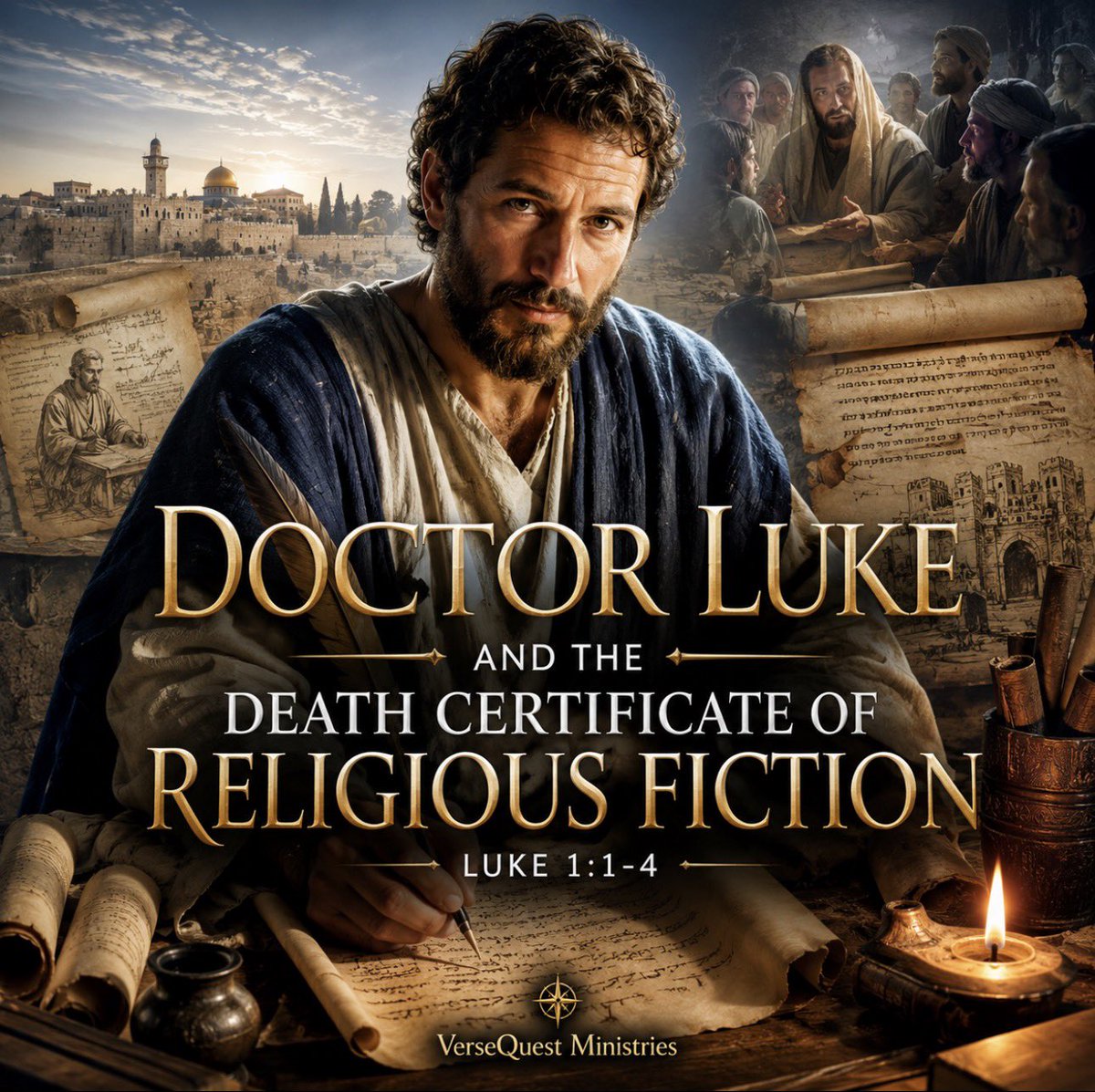
Doctor Luke and the Death Certificate of Religious Fiction Passage: Luke 1:1-4 Key Scripture: “That thou mightest know the certainty of those things, wherein thou hast been instructed.” (Luke 1:4) Introduction Luke does not begin his Gospel like a man sitting in a coffee shop trying to “process his faith journey.” He does not open with “I feel,” “I imagine,” “I suppose,” “tradition says,” or “the community later came to believe.” That is the language of modern religious fog machines, the kind of spiritual cotton candy that melts the moment you put pressure on it. Luke opens like a man assembling a record. He speaks of things “most surely believed,” eyewitnesses, ministers of the word, perfect understanding, order, and certainty. That is not the vocabulary of myth. That is the vocabulary of evidence. The Holy Ghost did not give the church a pile of campfire legends, warmed-over Jewish folklore, or inspirational moral fiction. He gave a written testimony so a man could know what he had been taught was not a religious fairy tale with sandals on it. Luke 1:1-4 is a death certificate for religious fiction. It puts a toe tag on the modern lie that says the Gospels are pious inventions, theological reflections, late community memories, or spiritualized stories produced by religious imagination. Luke says he had “perfect understanding of all things from the very first.” He says he wrote “in order.” He says the purpose was “that thou mightest know the certainty.” Now, you can either believe the Holy Ghost through Luke, or you can believe some scholar with a beard, a German footnote, and a permanently suspicious attitude toward anything supernatural. The choice is not hard. One of them was moved by the Spirit of God. The other is usually moved by tenure, unbelief, and the desperate need to make the Bible look less certain than his own latest journal article. The Bible believer does not need to apologize for treating Luke as history. Luke wrote history. He named rulers, places, customs, events, people, journeys, priestly courses, towns, synagogues, governors, decrees, and public happenings. He did not hide his Gospel in some mystical cave and say, “Only the spiritually elite can understand my symbolic reconstruction.” He wrote so Theophilus could know. That matters. Christianity is not built on private hallucination. It is built on public revelation, fulfilled prophecy, eyewitness testimony, blood, death, burial, resurrection, and a written record preserved by God. “Faith cometh by hearing, and hearing by the word of God” (Romans 10:17). Not by fog. Not by legend. Not by scholarship that starts with unbelief and then congratulates itself for finding what it planted. Chapter One: Luke Writes Like a Witness, Not a Dreamer Luke begins, “Forasmuch as many have taken in hand to set forth in order a declaration of those things which are most surely believed among us.” Notice that phrase, “most surely believed.” Not loosely suspected. Not poetically imagined. Not spiritually reinterpreted by later church communities after several decades of theological development and academic nonsense sprinkled over it like powdered sugar. Luke says these things were believed with certainty among believers. They were not wandering rumors looking for a home. They were known, preached, received, examined, and written. The apostolic message had content. It had facts. It had names. It had dates. It had witnesses. It had a public Christ who was born under Caesar, ministered in Israel, was crucified under Pontius Pilate, and rose again the third day according to the Scriptures. That alone destroys the modern treatment of Christianity as a vague moral atmosphere. The Bible is not a scented candle. It is a sword. Hebrews 4:12 says, “For the word of God is quick, and powerful, and sharper than any twoedged sword.” Luke’s Gospel is not given so a man can sit around and say, “Well, my truth is different from your truth.” No, friend, truth
PaulsCorner-VerseQuest tweet media
English
1
9
17
1K
Saved by Grace がリツイート
PaulsCorner-VerseQuest
PaulsCorner-VerseQuest@TNTJohn1717·
🚨‼️Here is the full overview chart for 1 Thessalonians, a powerful little book that gives us a model local church: saved, separated, suffering, steadfast, and waiting for Jesus Christ. This chart walks through the major doctrines, chapter themes, key contrasts, rapture comfort, practical holiness, and the blessed hope found in every chapter. The next five essays will continue from 1 Thessalonians, and tomorrow we will begin five from 2 Thessalonians. This is a great chart to save, study, and share. #VerseQuest #KJV #BibleStudy #RightlyDivided #1Thessalonians #BlessedHope #Rapture #PaulineEpistles
PaulsCorner-VerseQuest tweet media
English
1
8
28
871
Saved by Grace
Saved by Grace@Excel_Ant·
@TF_WOG @TNTJohn1717 John 3:36 KJV — He that believeth on the Son hath everlasting life: and he that believeth not the Son shall not see life; but the wrath of God abideth on him.
English
2
0
0
17
PaulsCorner-VerseQuest
PaulsCorner-VerseQuest@TNTJohn1717·
🚨‼️This chart shows the difference between Mother Teresa’s works of mercy and the gospel of grace in the King James Bible. Her compassion for the poor and dying was real, but the Bible test is not charity, reputation, suffering, or Rome’s saint-making system. Salvation is not found in love-infused works, the Mass, Mary, sacraments, or interfaith kindness. The true gospel is Jesus Christ alone: one Mediator, one finished sacrifice, one Saviour, and salvation by grace through faith.
PaulsCorner-VerseQuest tweet media
English
2
5
19
731
Saved by Grace がリツイート
AMASEEDSOWER
AMASEEDSOWER@DrShayPhD·
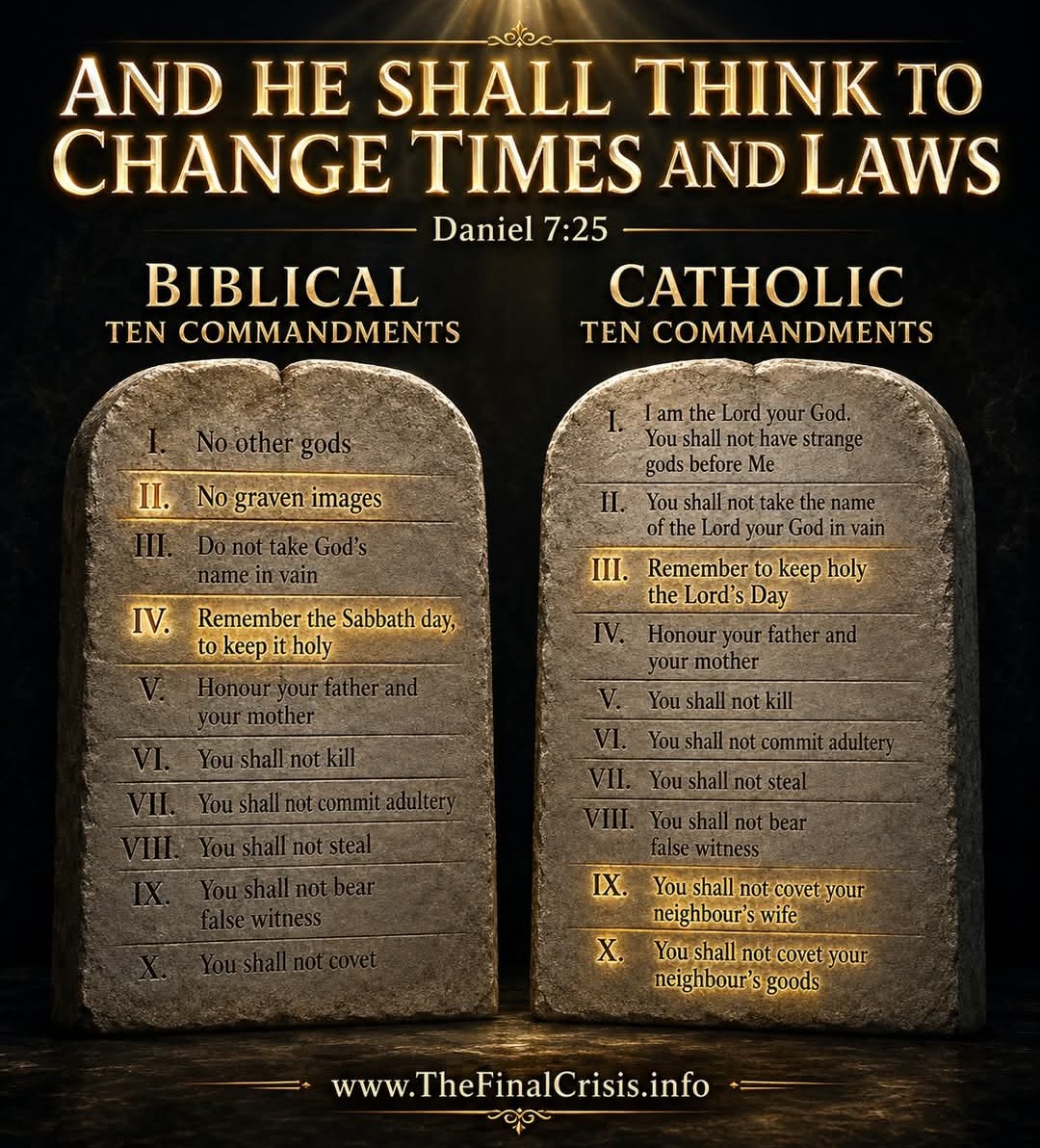
Daniel 7:25.
AMASEEDSOWER tweet media
Deutsch
10
15
50
1.1K
Saved by Grace がリツイート
PaulsCorner-VerseQuest
PaulsCorner-VerseQuest@TNTJohn1717·
🚨‼️This chart explains why Paul says believers would be “of all men most miserable” if our hope in Christ ended in this life. Christianity is not just moral help, emotional comfort, or a better way to live now. Without the resurrection, suffering has no glory, faith has no future, and the grave gets the final word. But because Christ is risen, our hope goes beyond this life into resurrection, victory, and eternal glory.
PaulsCorner-VerseQuest tweet media
English
1
15
42
874
Saved by Grace がリツイート
PaulsCorner-VerseQuest
PaulsCorner-VerseQuest@TNTJohn1717·
🚨‼️That is a clever dodge, but it proves the exact problem. Catholics say, “Don’t trust people who say Scripture is the final authority,” and then immediately ask you to trust Rome’s traditions, Rome’s councils, Rome’s priests, Rome’s popes, Rome’s Marian dogmas, Rome’s relic stories, Rome’s indulgences, Rome’s saint prayers, and Rome’s sacramental system. The issue is not whether God ever spoke before Scripture was completed. Of course He did. The apostles preached before the New Testament was finished. But once God preserved His words in Scripture, every doctrine must be tested by that written word. Isaiah 8:20 says, “To the law and to the testimony: if they speak not according to this word, it is because there is no light in them.” Paul did not tell Timothy to run to Rome to find the final authority. He said, “All scripture is given by inspiration of God” and that Scripture makes “the man of God… perfect, throughly furnished unto all good works” (2 Timothy 3:16-17). If Scripture can throughly furnish the man of God unto all good works, then Rome is not allowed to add doctrines Scripture never teaches and then demand submission. The Catholic argument always comes down to this: “The Bible does not say only Scripture, therefore you must accept our additions.” No. That does not follow. The question is not whether Rome can invent a loophole. The question is whether Rome’s doctrines can be proven by the word of God. Mary as Queen of Heaven? Not Scripture. Praying to dead saints? Not Scripture. The Mass as a repeated sacrifice? Not Scripture. Papal infallibility? Not Scripture. Purgatory? Not Scripture. Indulgences? Not Scripture. So yes, I trust the written word of God over Roman tradition. Because when tradition contradicts Scripture, tradition is not apostolic. It is corruption.
MrCasey@MrCasey62

Catholics, never trust those who say “Sola Scriptura is biblical!”, then simply list bible verses. These verses do NOT teach that “scripture is the ONLY infallible word of God & is the highest authority for all Christians”. Note the complete absence of “ONLY” & “WRITTEN word”: Psalm 138:2: “I will worship toward thy holy temple, & praise thy name for thy loving kindness & for thy truth: for thou hast magnified thy word above all thy name.” “THY WORD” is NOT just ONLY what’s written in Scripture. Psalm 119:11: “Thy word have I hid in mine heart, that I might not sin against thee.” Ditto. 2 Tim 2:15: “Study to shew thyself approved unto God, a workman that needeth not to be ashamed, rightly dividing the word of truth.” Ditto.

English
2
5
12
768
Saved by Grace がリツイート
AMASEEDSOWER
AMASEEDSOWER@DrShayPhD·
Mary is not a mediator!
AMASEEDSOWER tweet media
English
82
45
203
3.4K
Saved by Grace がリツイート
AMASEEDSOWER
AMASEEDSOWER@DrShayPhD·
I say Yes Lord, to Your will and to Your way!
AMASEEDSOWER tweet media
English
3
23
136
1.2K
Saved by Grace がリツイート
AMASEEDSOWER
AMASEEDSOWER@DrShayPhD·
This is powerful.
AMASEEDSOWER tweet media
English
1
18
48
574
Saved by Grace がリツイート
AMASEEDSOWER
AMASEEDSOWER@DrShayPhD·
The Catholic Church.
AMASEEDSOWER tweet media
English
18
12
40
3.3K
Saved by Grace がリツイート
Joe Dan Gorman
Joe Dan Gorman@JoeDanMedia·
Many disagree with Oliver Anthony's opinions, but it doesn't change the fact the #250America crowd would EXPLODE. 🪕1st unsigned (no-prior-history artist) to hit #1 on BillBoard. 🪕2 Weeks at #1 🪕#1 on Spotify, Apple & iTunes. 🪕356M+ Spotify streams/~250M YouTube views.
English
200
657
6K
515.7K
Saved by Grace がリツイート
PaulsCorner-VerseQuest
PaulsCorner-VerseQuest@TNTJohn1717·
🚨‼️Catholic Ripley’s Believe It or Not, Episode Two: The Bleeding Wafer Files. Apparently we are now supposed to believe that the best proof for transubstantiation is that from time to time a communion wafer gets a red spot on it, people start saying “Eucharistic miracle,” and suddenly the conclusion is, “See? The Host is Jesus.” So let me get this straight: the Son of God, who died once for sinners, rose again bodily, and is seated at the right hand of the Father, is now being proven by suspicious-looking blotches on crackers in church display cases? Rome really does know how to turn a memorial into a paranormal investigation. One day it is a relic that oozes, the next day it is a wafer that bleeds, and somehow we are all supposed to bow and say, “The Eucharist is Jesus.” That may make for a dramatic story, but it is not Bible doctrine. Jesus said, “this do in remembrance of me,” not “wait for recurring blood spots so you can believe I am still being offered on an altar.” The Mass keeps pointing people back to an ongoing sacrifice, while Scripture points to a finished one. “For by one offering he hath perfected for ever them that are sanctified.” “For there is one God, and one mediator between God and men, the man Christ Jesus.” If a man needs a miracle wafer to believe Christ is present, he has missed the glory of the risen Christ entirely. Rome gives people bleeding hosts. The Bible gives people a bleeding Saviour who already finished the job.
PaulsCorner-VerseQuest tweet media
Uche is a girl@UcheMaryOkoli

Imagine not believing that Jesus is Fully Present in the Eucharist after so many miracles have proven that the Host is Jesus! Calling the Eucharist a symbol is a sad thing to say. The Eucharist is Jesus.

English
3
4
12
1.1K
Saved by Grace がリツイート
AMASEEDSOWER
AMASEEDSOWER@DrShayPhD·
Idolatry is a sin.
AMASEEDSOWER tweet media
English
50
28
107
2.4K
Saved by Grace がリツイート
PaulsCorner-VerseQuest
PaulsCorner-VerseQuest@TNTJohn1717·
🚨‼️Catholic Ripley’s Believe It or Not is officially open for business. We are now collecting Rome’s greatest hits from the Museum of Religious Folklore: alleged vials of Mary’s milk, multiple locations claiming John the Baptist’s head, saint bones, saint fingers, saint tongues, miracle blood, crying statues, glowing relics, levitating monks, incorrupt bodies that look suspiciously like wax museum exhibits, and enough “Saint so-and-so, pray for us” posts to make you wonder if they ever read 1 Timothy 2:5. If you find a Catholic post claiming somebody’s heart caught fire, a corpse refused to rot, a statue cried olive oil, a relic cured bunions, a saint floated during prayer, or a preserved body looks “incorrupt” after receiving more cosmetic maintenance than a Hollywood actor, send it my way. This new section is called Catholic Ripley’s Believe It or Not, where we examine the strange world of relics, legends, mystical claims, saint stories, body-part devotion, and miracle folklore through the only standard that matters: the written word of God. Rome gives people legends. The Bible gives people truth. Rome gives people saints to pray to. The Bible gives sinners one mediator. Rome gives people relic cases. The Bible gives believers a risen Saviour. “For there is one God, and one mediator between God and men, the man Christ Jesus.” (1 Timothy 2:5) So bring on the miracle milk, mystery skulls, traveling bones, waxy corpses, and heavenly customer-service saints. Catholic Ripley’s Believe It or Not has begun.
PaulsCorner-VerseQuest tweet media
English
2
5
13
631
Saved by Grace がリツイート
PaulsCorner-VerseQuest
PaulsCorner-VerseQuest@TNTJohn1717·
🚨‼️This chart shows the simple contradiction behind the modern Bible industry: every new version claims to improve on the King James Bible, yet it has to use the KJV as the measuring stick to advertise itself. They say “easier than the KJV,” “clearer than the KJV,” “more accurate than the KJV,” or “updated from the KJV,” which proves the King James Bible is still the recognized standard they are trying to replace. The issue is not just marketing. It is final authority. The KJV stands as the settled English Bible, while modern versions keep moving, revising, comparing, and borrowing credibility from the very Book they pretend to surpass.
PaulsCorner-VerseQuest tweet media
English
2
2
10
633